Author: Truth & Hammer

  • What is Advanced Oxidation Process (AOP) for Swimming Pool Sanitization?

    What is Advanced Oxidation Process (AOP) for Swimming Pool Sanitization?

    —AOP systems safely and effectively disinfect water without the typical chlorine aggravation

    With advanced oxidation process (AOP)—a remarkably powerful and efficient method for disinfecting swimming pools—you can have swim-ready water without the harsh effects of typical chlorine sanitizing treatments.

    This potent treatment safely neutralizes a wide range of contaminants in pool water—including some dangerous pathogens that traditional chlorine treatments cannot tackle.

    AOP systems have been used successfully for years in large commercial water-treatment facilities, including those that produce water we drink. Recently, this technology has been adapted for backyard pools, and the results are paying off for pool owners across the country.

    What is Advanced Oxidation Process?

    Used in tandem with a small amount of chlorine, AOP works by oxidizing both organic and inorganic matter that contaminate swimming environments.

    Oxidation may sound like a complicated scientific term. But it’s a basic process that occurs all the time in nature. Have you ever wondered why an apple turns brown after you peel it? That’s oxidation in action.

    In a nutshell, oxidation is the loss of electrons which causes a substance to break down. Chlorine—the most widely used pool sanitizer—also works through oxidation.

    How AOP works in swimming pools

    AOP delivers better results than off-the-shelf chlorine alone. For starters, it provides three times the oxidation potential as chlorine.

    It’s also more lethal than two other popular alternative water sanitizers: ozone—a triple-charged form of oxygen—and ultraviolet light (UV). Bottom line, you cannot find another pool sanitation tool that packs the same wallop as AOP!

    AOP systems produce ozone molecules and then zap them with UV rays inside an enclosed equipment chamber. This action produces elements known as hydroxyl radicals.

    Hydroxyl radicals may sound a little intimidating, but they are completely harmless to swimmers. Time for a quick science lesson: Hydroxyl radical ions form when an oxygen atom bonds with a hydrogen atom.

    While AOP devices produce hydroxyl radicals using technology, these elements also exist in nature. In fact, scientists often refer to hydroxyl radicals as a kind of “detergent” for the atmosphere because they help eliminate many airborne pollutants, including greenhouse gasses such as methane.  

    Why hydroxyl radicals attack contaminants

    Because hydroxyl radicals are unstable, they seek equilibrium. So as soon as they form, hydroxyl radicals seek out both organic and inorganic substances to combine with to help them stabilize.

    By attaching to the cells in other various substances, hydroxyl radicals disrupt the composition of those substances—causing them to break down. That’s what makes hydroxyl radicals so effective at removing contaminants

    Even better: They complete their work without any chemical after-effects. Here’s why: Once in the pool water, hydroxyl radicals oxidize all contaminants in the water in mere seconds. Then, they simply convert back to oxygen.

    This process makes hydroxyl radicals completely safe for pool users while providing fresher, healthier water than any other pool-disinfection weapon.

    How AOP devices work: Pairing ozone with

    ultraviolet light produces hydroxyl radicals.

    10 benefits of hydroxyl-based pool sanitation

    Growing numbers of pool owners are seeking alternatives to standard chlorine treatments—and the hassles and hazards they often cause.

    Driven by this demand—coupled with technological advances that have lowered the price tags on AOP systems—this technology is becoming increasingly popular in backyards around the country.

    Let’s look at the key reasons AOP systems are quickly becoming a favorite choice for maintaining clean, healthy water conditions.

    Unmatched cleaning power:

    AOP systems easily outperform other pool-water treatment methods, including chlorine, salt-chlorine generation, ozone, and ultraviolet light. AOP’s hydroxyl radicals destroy 99% of organic and inorganic contaminants in pool water.

    Hydroxyl radicals also prevent the formation of icky biofilm. Biofilm is an accumulation of slimy, bacterial colonies that sticks to areas of a pool such as the tile line and any stone surfaces. Hydroxyl radicals also inhibit growth of stubborn algae blooms as well.

    Greater water clarity:

    AOP technology remove the colloids—tiny particles from dissolved metals, gels, lotions, and other inorganic substances—that make the water look cloudy.

    It’s worth noting that your pool filter cannot remove all of these compounds. But AOP systems enable your filter to achieve what is typically impossible: AOP produces “micro-flocculation,” a process of aggregating tiny particles into clumps.

    Although these clumps are not visible to the human eye, they are big enough for your pool filter to trap and remove from the water. So, instead of a hazy pool, you get brilliant, sparkling water!

    Comprehensive disinfection:

    AOP’s hydroxyl radicals fully oxidize all kinds of organic contaminants. The range includes sweat, body oils, bacteria, viruses, human waste, and toxins such as pesticides.

    AOP also outperforms chlorine on some important fronts. Among the nasty bugs that chlorine cannot eliminate: E. coli, Giardia, Listeria, Salmonella, Legionella, Pseudomonas, and Cryptosporidium parvum (aka “Crypto”).

    However, AOP technology has the power to take down these chlorine-resistant microorganisms. For example, it goes after the Crypto parasite by destroying its cell walls. No other pool disinfectant currently in use is as effective in protecting against this serious health threat.

    Safer, gentler sanitization:

    AOP is lethal to unwanted microorganisms, but not to people and pets who enter the pool. It removes contaminants with no effect on swimmers.

    Its efficacy comes without producing toxic byproducts, making AOP much gentler than traditional chlorine treatments. Chlorine creates chloramines—harsh byproducts that wreak havoc for pool users with bleach-like odors, itchy eyes, dry skin, sore throats, parched rough hair, and faded swimsuits. Highly sensitive swimmers may even experience nausea or vomiting.

    Unlike chlorine, AOP does not produce these irritating byproducts and the rash of physical side effects that often accompany them. In fact, AOP destroys chloramines, removing some of the unwanted effects they cause.

    Faster performance:

    Within the first 24 to 48 hours of using AOP, hydroxyl radicals clean, sanitize, and micro-flocculate the water. They work in seconds to oxidize contaminants. Virtually instantaneously, hydroxyl radicals deal a blow to pathogens that chlorine alone would take hours to kill.

    Lower chemical demand:

    AOP pool systems do not eliminate the need for chlorine and other chemicals. However, they dramatically reduce the requirements for them.

    In addition, AOP helps boost the overall effectiveness of the small amount of chemicals that are used.

    Easier on your pool:

    AOP systems work using a gentle, but effective process. By helping sanitize water without the usual chlorine levels, the odds decrease for damage to certain pool components and systems. The reason: With traditionally chlorinated pools, it’s easy for the water to fall out of balance.

    High chlorine levels lower the pH of the water, making it more acidic. Over time, water with low pH can lead to corrosion of metal piping and certain components of pool equipment. Serious water imbalances can also erode pool plaster.

    Better water quality:

    With lower chemical levels in your pool, AOP-treated water is easier on your eyes, skin, and lungs—making swimming and pool play safer and more enjoyable for everyone.

    Due to AOP’s micro flocculent action helping pool filters remove more contaminant particles—including certain metals—many AOP-pool owners say the water not only looks better, it even feels better to the touch.

    Environmentally safe:  

    After hydroxyl radicals oxidize organic and inorganic contaminants in the water, they quickly convert back to oxygen. No noxious byproducts are produced or left behind.

    This process makes AOP an eco-friendly technology. It disinfects pool water better than any other method without damaging the environment. You can feel good that any water that splashes out of the pool won’t harm nearby plants with caustic effects the way heavily chemical-laden water or saltwater-chlorinated water can.

    Overall value:

    AOP systems deliver maximum sanitation results, and for that, the units’ price tags certainly run more than a bottle of chlorine or bucket of tablets. Initially, this technology also costs more than saltwater, ozone, or combination UV/ozone systems.

    The cost for an AOP unit will ultimately depend on the size of your pool. In general, a quality AOP system for a typical pool averages between $700 and $1900 without installation.

    However, over the long term, AOP’s many advantages make it a very smart investment. For starters, consider the savings on money for chemicals. AOP requires only minimal chlorine: Fewer chemicals going into the pool translates to less money going out of your wallet.

    From a pool-ownership perspective, AOP produces immediate payoffs with water that looks great and provides healthier, more comfortable swimming.

    The technology ensures softer, crystal-clear water that’s beautiful to gaze at and that’s free of typical chlorine aggravation. For many pool owners, their families, and their pets, this more attractive, more enjoyable pool experience is hard to put any price on!

    Should you install an AOP system in your new or remodeled pool?

    The sanitation system is one of the most important components of maintaining your aquatic backyard resort. If you’re thinking about building a pool at your home or modernizing an existing one, you will certainly want to consider including an AOP unit in your equipment line up.

    Ultimately, your choice in sanitizing systems will come down to the features and benefits that are most important to you and your family: Easier to keep pool water properly balanced? Amount of chemicals required? Wiping out stubborn pathogens? Stunning water clarity? Silky feel of the water? Environmental impact? Comfort in the water? Overall, long-term value?

    All of these factors will play an important role in your decision. The fact remains that AOP represents the pinnacle in pool & spa disinfection—the superior technology on the market. Hydroxyl radicals sanitize quickly and safely, and they will give you polished, healthy sparking pool water like no other system can.

    This content was originally published here.

  • YouTube and its users face an existential threat from the EU’s new copyright directive

    YouTube and its users face an existential threat from the EU’s new copyright directive

    Samuel Jones largely lives off the money he makes from YouTube as a TV and film reviewer.  “In terms of paying rent, buying food, buying cigarettes, it’s all YouTube money,” he said.  While his channel’s co-creator Max Bardsley is in university, Jones works on “NitPix ” full-time. The U.K.-based pair also nurture a small fashion business on the side that mostly provides some spending change.  Recently, Jones and Bardsley have been thinking about a backup plan. Like other content creators who have built brands and businesses on tech platforms like YouTube, they fear their livelihood and creative outlet could be threatened by a new copyright directive passed by the European Union in March.

    Under the new rules, which member states have two years to formally write into law, tech platforms like YouTube could be held liable for hosting copyrighted content without the proper rights and licensing. That’s a big change from the status quo, which generally assumes platforms are not legally liable for their users’ uploads so long as they take down infringing content once flagged. But according to the directive, companies like YouTube can soon be held liable unless they can also prove they made “best efforts” to get authorization for the content and prevent it from being shared without rights in the first place.

    YouTube and other tech platforms have argued that the only practical way to avoid liability will be to install even more restrictive content filters than the ones they currently have to prevent infringement. The EU directive does not require tech companies to do that and it makes exceptions for using copyrighted material in parody or commentary, as would be the case in Jones and Bardsley’s reviews.  But experts say it will be difficult for platforms to create automated filters that can distinguish this context, at least at first. That could mean a channel like “NitPix” would have to avoid using any movie or TV clips in their reviews to ensure their videos upload to the site in a timely manner.

    read more

  • A reporter declined to reveal his source. Then police showed up at his front door with guns.

    A reporter declined to reveal his source. Then police showed up at his front door with guns.

    Bryan Carmody, a freelance reporter in San Francisco, awoke Friday to the sounds of someone trying to break into his house.  About 10 officers from the San Francisco Police Department were bashing the front gate of his home in the Outer Richmond neighborhood with a sledgehammer, he said. It was just after 8 o’clock in the morning.  Carmody called out and said he would let them into the house. The officers showed him a search warrant and proceeded to go through his home — from “top to bottom” he says — with their guns drawn.  “They treated me like I was some kind of drug dealer,” he said in an interview with The Washington Post.  Carmody was being raided in connection with a criminal investigation.  Two weeks before, police investigators showed up at his home to ask him, politely he says, to identify the source who provided him with a confidential police report about the February death of the city’s public defender, Jeff Adachi. Carmody, who said he worked with three local television news stations on the story, declined.  He wasn’t about to give up his source on Friday either, despite the escalation — not to the police or two FBI agents in suits who questioned him about the case, he said.  “I’m smart enough not to talk to federal agents, ever,” Carmody said. “I just kept saying ‘lawyer, lawyer, lawyer.’ ”

    So he stayed handcuffed for the next six hours, he says — a certificate of release from the police department that he distributed says he was in custody from 8:22 a.m. until 1:55 p.m. — as investigators searched his home, then his office, where they found the report in a safe. A search warrant filed in the case notes that it was issued as police investigated “stolen or embezzled property.”  “There’s only two people on this planet who know who leaked this report — me and the guy who leaked it,” Carmody said.  The raid on Carmody’s home and office drew wide First Amendment-related attention in the Bay Area over the weekend. And it added a new twist to the intrigue that surrounded the death of Adachi, who had built up a high profile as a public defender in the 16 years he had held the office.  The only elected public defender in California, Adachi was known as an watchdog on police misconduct. His death, on Feb. 22, at the age of 59, was attributed in early reports to a heart attack.

    On Feb. 24, ABC 7 published a story after it said it obtained a police report and photos about Adachi’s death, which included unflattering details about the public defender’s last hours. The story reported that he had been with a woman named Caterina — not his wife — and that he was found unresponsive in an apartment with “an unmade bed, empty bottles of alcohol, cannabis gummies, and two syringes that may have been left by paramedics.”  The publication of those details, which did little to illuminate the nature of Adachi’s death and more to call into question his character, prompted some to wonder if the police department was retaliating against Adachi, even after his death.  “It’s curious that we’re reading leaked details about another ‘woman,’ the renting of an apartment, and entirely unnecessary mentions of alcohol, cannabis, and syringes,” SFist noted at the time. “Certainly the incident ought to be investigated, as any death should, but the information coming out makes it seem like Adachi’s decades-old battles with law enforcement — on behalf of defendants and otherwise — may continue even after his passing.”

    Tim Redmond, editor of the San Francisco news site 48 Hills, called the local coverage “repugnant,” noting how disliked Adachi was by many police officers in the city in a post he wrote at the time.  “Where do you supposed those came from? Why do you suppose they wound up with the sensation-driven TV stations?” he wrote of the provenance of the police report. “The photos have been widely publicized with no context at all. There are photos of ‘an unmade bed’ — a salacious innuendo with no relevance.”  Carmody declined to give specifics about the three outlets he had worked with on the story.  A “stringer” in the parlance of TV news, Carmody occupies the small niche in the world of broadcast journalism that was satirized in the Hollywood film “Nightcrawler.”  He works every night from about 10 p.m. to 6 a.m., when he chases news, such as car crashes, crime scenes, disasters, weather stories, the release of a new video game — “anything that happens overnight,” he says — then sells his services and materials he gathers to local stations for their morning broadcasts. His name is rarely included on the report or corresponding material, he said.  His company, North Bay Television, which is run out of an office stocked with police scanners, computers, and a coffee machine downtown, employs three or four other people, down from a one time peak of 10.  “Like all media, we are shrinking,” he said.  He said he has never paid any of his sources of information or material.

    Asked about tensions between the police department and Adachi, Carmody declined to comment on the politics of the case.  “I had no beef with him, I had no beef with anyone, I’m just a journalist in the middle of this,” he said.  He said he believed he was being targeted because he was a freelancer, noting that details in the police report had appeared in other publications, such as the San Francisco Chronicle.  “I don’t think there was a police raid at the Chronicle with a sledgehammer yesterday,” he said.  A medical examiner’s report, which was released to the media in March, filled in more details about Adachi’s death. The office ruled his death an accident due to the effects of cocaine and alcohol combined with a preexisting heart condition it said Adachi had.  The San Francisco Police Department defended the investigation Saturday in a statement sent to local reporters.  “The citizens and leaders of the City of San Francisco have demanded a complete and thorough investigation into this leak, and this action represents a step in the process of investigating a potential case of obstruction of justice along with the illegal distribution of confidential police material,” it said.

    An FBI spokeswoman said that the bureau’s agents did not participate in the execution of the search warrant but confirmed that they were present to interview Carmody.  A law enforcement source, who spoke on the condition of anonymity, said that Carmody was handcuffed for procedural issues related to “multiple weapons” in the house. Carmody said that he is the lawful owner of an unspecified number of guns.  Carmody says his ability to work is now crippled by the seizure of his electronics. A search warrant and affidavit he distributed noted that police took at least at least four tablets, seven computers, 10 hard drives, a dozen phones, two cameras, reporters’ notebooks and a thumb drive from his home. He has started a GoFundMe page to raise money to buy more equipment.  Thomas R. Burke, a First Amendment lawyer in the Bay Area who represents Carmody, said that he believes the police overreached significantly.  “The appropriate thing was to issue a subpoena, not a search warrant,” he said, noting the breadth of Carmody’s material they had control over in all of this devices and notebooks. He said he wants to know whether the judges who signed the warrants were aware that they were for a reporter’s home and office.  Carmody said he had never been pressured by law enforcement to give up a source before in 29 years of reporting — mentioning as an example the leaked photographs from San Francisco’s public transportation agency he recently acquired that exposed a safety issue with some trains.

    “I am shocked at how far this has gone already,” he said. “It’s already gotten way out of hand.”  Source


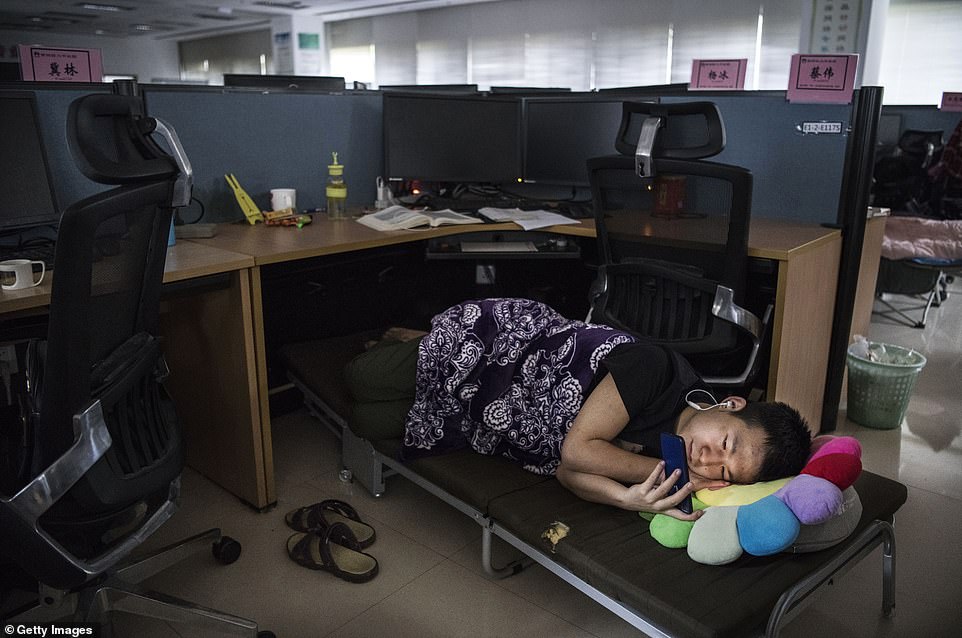
  • Inside Huawei’s manufacturing empire – including the £1.2billion ‘research and development’ campus where staff sleep under desks during shifts

    Inside Huawei’s manufacturing empire – including the £1.2billion ‘research and development’ campus where staff sleep under desks during shifts

    The photos give Westerners a rare-glimpse into the sprawling factories that keeps British and American spies up at night.  One shot shows young employees hunched over as they graft on a production line.  Another shows them glued to their smartphones as they queue for European-style cuisine in a lavish canteen.  One base at Songshan Lake near Dongguan, China, is known as the Huawei Xiliu Beipo Village – but is nicknamed the Ox Horn Campus in English.  One sector is based on French capital Paris – with other areas taking inspiration from Friboug, Switzerland, Heidelberg, Germany, Bruges, Belgium, and Oxford, England.  Each zone is linked by red trams imported from Switzerland.  Huawei’s President Ren Zhengfei said: “140 years ago, the world’s centre was in Pittsburgh because of steel; 70 years ago, the world’s centre was in Detroit because of cars; now where is the centre of the world? I don’t know, but it will be decentralised.  “Companies will move to places where the cost is low. High cost will destroy your competitiveness.”  It comes after Theresa May gave Huawei the green light to supply part of Britain’s 5G network.  The US has banned Huawei from government networks and urged the UK and other intelligence partners such as Australia to do the same.  Chinese firms are legally obliged to cooperate with Beijing’s state intelligence agencies.

    see more

  • More ‘Heartbeat’ Abortion Bans Advancing in South, Midwest

    More ‘Heartbeat’ Abortion Bans Advancing in South, Midwest

    State governments are on a course to virtually eliminate abortion access in large chunks of the Deep South and Midwest

    f a new Mississippi law survives a court challenge, it will be nearly impossible for most pregnant women to get an abortion there.

    Or, potentially, in neighboring Louisiana. Or Alabama. Or Georgia.

    The Louisiana legislature is halfway toward passing a law — like the ones enacted in Mississippi and Georgia — that will ban abortions after a fetal heartbeat is detected, about six weeks into a pregnancy and before many women know they’re pregnant. Alabama is on the cusp of approving an even more restrictive bill.

    State governments are on a course to virtually eliminate abortion access in large chunks of the Deep South and Midwest. Ohio and Kentucky also have passed heartbeat laws; Missouri’s Republican-controlled legislature is considering one.

    Their hope is that a more conservative U.S. Supreme Court will approve, spelling the end of the constitutional right to abortion.

    “For pro-life folks, these are huge victories,” said Sue Liebel, state director for the Susan B. Anthony List, an anti-abortion advocacy group. “And I think they’re indicative of the momentum and excitement and the hope that’s happening with changes in the Supreme Court and having such a pro-life president.”

    For abortion rights supporters, meanwhile, the trend is ominous. Said Diane Derzis, owner of Mississippi’s sole abortion clinic, the Jackson Women’s Health Organization: “I think it’s certainly more dire than it ever has been. They smell blood and that’s why they’re doing this.”

    Already, Mississippi mandates a 24-hour wait between an in-person consultation. That means women must make at least two trips to her clinic, often traveling long distances.

    Other states have passed similar, incremental laws restricting abortion in recent years, and aside from Mississippi, five states have just one clinic — Kentucky, Missouri, North and South Dakota, and West Virginia. But the latest efforts to bar the procedure represent the largest assault on abortion rights in decades.

    Lawmakers sponsoring the bans have made it clear their goal is to spark court challenges in hopes of ultimately overturning the 1973 Roe v. Wade decision legalizing abortion.

    source

  • This is what the world’s largest single-room speaker system sounds like

    This is what the world’s largest single-room speaker system sounds like

    London — It’s been almost 150 years since Queen Victoria opened Royal Albert Hall in honor of her beloved late husband, Prince Albert. Since then, the London concert venue has seen decades of world-class performances, but not with world-class sound. That’s since changed in a big way with the installation of what’s said to be the world’s largest single-room speaker system.

    It’s one of Britain’s most distinctive performance venues, but royal architects at the time didn’t take acoustics into account when they built its majestic domed ceiling, reports CBS News’ Imtiaz Tyab. From the very beginning, the venue suffered from an ear-rattling performance echo.

    “You would hear it for four or five times in different places. And, actually, if you paid to hear it, you don’t hear it five times. You want to hear it once,” said Ollie Jeffery, the chief technician at Royal Albert Hall.

    Still, the world’s biggest acts kept coming. The advent of amplified sound brought electrifying acts like the Jimi Hendrix Experience and Led Zeppelin. The recording of Adele’s 2011 performance of “Someone Like You” at Royal Albert Hall became a bestseller.

    The last major fix of the sound system was back in 1969, when giant discs or mushrooms, as they’re called, were attached to the ceiling.

    “They are made of fiber glass, and the design of those is in essence is that the sound goes up, and then it comes back down but it’s much more controlled in how that works,” Jeffery said.

    The now-iconic mushrooms helped, but that echo was still there. So in 2017, the green light was given for the biggest-ever overhaul of the acoustics. Engineers worked overnight installing 50,000 feet of new cables and 465 new speakers. $2.7 million later, the world’s biggest single-room sound system has been installed.

    It’s a fix 150 years in the making, for a beloved venue.

    “It provides something so unique from the variety of what we do, but I think that intimacy, the look of the building, it’s absolutely beautiful.”

    Royal Albert Hall now sounds as beautiful as it looks.

    source

  • Flatirons Fall: Climber Shares Terrifying Video Of Own 60-Foot Plunge In Boulder

    Flatirons Fall: Climber Shares Terrifying Video Of Own 60-Foot Plunge In Boulder

    A man who fell while climbing the Flatirons in Boulder is hoping video of the incident will serve as a warning to others. On April 16, Kyle Walker was climbing the second Flatiron in Boulder.

    “Once I got on it, I realized the holds weren’t as prominent as I thought and I was a lot more tired,” he told CBS4’s Dominic Garcia.

    Kyle says there was lichen all over the rocks making them slick and that his feet gave out. He wasn’t using any climbing ropes and didn’t have proper climbing shoes when he fell 60 feet.

    see more

  • VP Pence Warns Liberty Univ. Grads: Prepare to Be ‘Shunned or Ridiculed’ for Your Faith

    VP Pence Warns Liberty Univ. Grads: Prepare to Be ‘Shunned or Ridiculed’ for Your Faith

    Vice President Mike Pence told the graduating class of Liberty University this weekend that they need to be ready for attacks on their Christian faith as they move into the world.  “Throughout most of American history, it’s been pretty easy to call yourself Christian,” he said. “It didn’t occur to people you might be shunned or ridiculed for defending the teachings of the Bible. But things are different now.”  Pence himself has come under attack for some of his Christian beliefs, including his biblical views on traditional marriage.  “Some of the loudest voices for tolerance today have little tolerance for traditional Christian beliefs,” Pence continued. “So as you go about your daily life, just be ready. Because you’re going to be asked not just to tolerate things that violate your faith, you’re going to be asked to endorse them. You’re going to be asked to bow down to the idols of popular culture.”


    “So you need to prepare your minds for action, men and women,” the vice president warned.  “You need to show that we can love God and our neighbor at the same time through words and deeds.”  “Men and women of Liberty University Class of 2019, as you strive for greatness, know that you will face challenges. You’ll face opposition,” Pence noted. “But just know this. If like Shadrach, Meshach, and Abednego, you end up in the fire, there’ll be another in the fire.  Delivering the keynote address at Liberty University’s 46th Commencement ceremony Saturday, Vice President Pence also told graduates they graduated at the right time due to President Donald Trump’s growing economy.

    source

  • Introducing Switzerland’s first ‘VIP bedroom’ cinema

    Introducing Switzerland’s first ‘VIP bedroom’ cinema

    Opening on Thursday 9 May, the VIP bedroom area of the cinema complex looks almost like an ordinary bedroom, except it’s filled with eleven freshly-made double beds.  Designed to entice consumers away from Netflix and back to the cinema, this new concept offers a cosy home-like movie experience – and to ensure that customers don’t fall asleep, cinema beds are equipped with electronically adjustable headrests.  Venanzio Di Bacco, CEO of Pathé Switzerland, told Swiss local news site 20 minuten that customers can be assured that the beds are freshly made after every film screening: “The hygiene aspect is very important to us,” he said.  Dia Biacco also rejected the idea that the hall will be used for immoral or inappropriate activity. “The offer is unique in Switzerland. But we tested the concept abroad and had no problems so far.”

    Besides a bedroom area, the cinema complex also has an Imax cinema with over 350 seats and a hall with single and double sofas. For customers wanting to try these VIP areas, the cost is 49 Swiss francs ($48.50) and means cinema-goers can jump the queue and enjoy free snacks and soft drinks.  For younger moviegoers, the children’s cinema area includes beanbags, a slippery slide, and a ball pit. The cost is 14.50 francs per child.  For those wishing to stick to a more conventional cinema experience, a ticket costing 19.50 francs is available to watch the latest film releases in the other six non-VIP halls located within the cinema complex.  Pathé cinema in Spreitenbach is located right next to the Shoppi Tivoli and holds its grand opening on Saturday 11 May 2019 between 10am and 4pm.

    source

  • Humans ‘BIOHACKING’ their own bodies with blood transfusions to achieve ‘DIY IMMORTALITY’

    Humans ‘BIOHACKING’ their own bodies with blood transfusions to achieve ‘DIY IMMORTALITY’

    Anti-ageing science has never been more hyped, with breakthroughs in genetic engineering and drug discovery pushing the boundaries of what was once dismissed as science fiction.  Although futurologists have said immortality is possible, most scientists believe delaying the onset of ageing is more ethical — and research into this is booming.  Longevity biotech firms received $800 million in funding in 2017 compared with less than half that in 2014, according to data from cbinsights.com.  The process of taking such a drug through clinical trials takes around seven years — with the majority failing to get approved for safety reasons or because they just don’t work for humans.  And some people — dubbed biohackers — are willing to dabble in DIY anti-ageing medicine and other “hacks” which have not passed these stringent tests, despite the high risks.  “We know biohacking happens all the time,” Lynne Cox, a biochemist at the University of Oxford, told New Scientist. “There’s a lot of DIY,” she added.

    From unregulated blood transfusions to off-label pill-popping, biohackers are putting their health in their own hands rather than those of qualified doctors.  The grim, somewhat vampiric, practice of swapping blood between a young person and an older person is called parabiosis.  Scientists discovered in the 1970s that fusing the circulatory systems of animals together — sometimes for weeks on end — had surprising results.  The younger animal would age prematurely, whereas the older animal was rejuvenated.  But a stark warning was issued by the FDA, who said it feared some Americans were receiving rogue blood transfusions.  The FDA said people seeking parabiosis therapy were being “preyed upon by unscrupulous actors touting treatments of [blood] plasma from young donors as cures and remedies”.  “Such treatments have no proven clinical benefits for the uses for which these clinics are advertising them and are potentially harmful,” it added.

    Other so-called hacks include diabetes drug metformin, which has been shown only to increase the lifespan of some animals.  Similarly, spermididne — yes, it was originally isolated from semen — restores mitochondria function in older mice.  Meanwhile chemotherapy drug dasatinib and dietary supplement quercetin are being probed as a senolytic combination.  Senolytics are believed to destroy aged and worn-out cells before they become dangerous, but there are serious risks taking untested drugs — including death.  “I’m deeply worried about biohackers because if somebody dies taking a senolytic it’s going to damage the field for quite some time,” Prof Cox added.  For those who want to delay the dying of the light without resorting to these crazy and unproven secret hacks, boring but sure methods are exercise and intermittent fasting.

    source