Author: Truth & Hammer

  • How Neuroscience Explains Your Teenager’s Impulsive Behavior

    How Neuroscience Explains Your Teenager’s Impulsive Behavior

    The following was produced in partnership with the Lieber Institute for Brain Development and the Maltz Research Laboratories whose mission it is to translate genetic insights into next generation treatments for brain disorders.

    Have you ever wondered why your teen seems to act impulsively? Why their actions seem to be taken without regard to consequences? While some of these acts are relatively harmless, others — swilling a few beers at a party or cliff-jumping into a lake at night — can be downright dangerous. Parents of teenagers often find themselves scratching their heads and wondering what on Earth their kids were thinking. A more productive question would be for parents to ask themselves, “What do I need to understand about my teen to help them through this turbulent time in their development?”

    For one, adolescence is a critical period of neurological development that can explain a lot of behaviors that, to parents, may seem inexplicable. While we accept that a kindergartner’s brain is still forming, we often expect teenagers to think and act just like adults. The truth is, massive developmental changes occur at this time and require parenting skills to help. Most notably, by better understanding the biological aspects of teenage brain development, parents can not only improve their empathy, but also facilitate safe and moderately structured environments to assist them with the multitude of competing priorities emanating from their environment.

    “It’s so important for parents — and teachers, and school administrators, and decision-makers, and young people themselves — to understand how an adolescent’s brain develops,” says Cynthia Germanotta, president of Born This Way Foundation (which she co-founded with her daughter Lady Gaga), a partner of the Lieber Institute for Brain Development. “That understanding is key for effectively supporting youth as they move into early adulthood, creating environments in which they can thrive and providing the resources they need to navigate the obstacles and opportunities of adolescence and lead happy, healthy lives.”

    Dr. Daniel Weinberger, director and CEO of the Lieber Institute for Brain Development at Johns Hopkins University, concurs.“The human brain is a constantly changing organ, and a lot happens to it during adolescence,” he says. “When you are born, your brain is two-thirds to three-fourths the size of an adult’s brain, but it undergoes an enormous amount of change over the next 20 years — more than it will undergo for the entire rest of your life.”

    Among the connections that have yet to be fully forged in a teenager’s brain are those that govern reason and emotion — and the ability to make decisions and behave based on reason and emotion. “When the adolescent brain, with its less-than-fully-developed prefrontal cortex, is exposed to hurt, aggression, disappointment, and other feelings, it doesn’t have all the resources of a mature brain to inhibit immediate and emotionally driven responses,” explains Weinberger.

    “All human experiences affect the brain. If they didn’t, we couldn’t learn things or acquire new skills.”

    Whether it’s firing back an insult when they feel slighted or slamming down on the gas pedal to show off their car’s speed to their friends, the seemingly impulsive acts of teenagers can be explained biologically. “To be able to inhibit impulsive tendencies or [say no to] a tantalizing experience, you need to be able to understand the implications of the action,” Weinberger says. “You have to understand cause and effect, not just in the immediate moment but in the future. It takes a high-functioning brain to understand that something that would be really fun in the moment could have consequences down the road.”

    What does that mean for parents?

    Given their still-developing prefrontal cortexes, teens often don’t have the wherewithal for such long-term thinking. “The older you get, the more likely you are to not chase every fox that runs out of the bush,” Weinberger says. “As an adolescent, you chase after many foxes, but eventually, as the prefrontal cortex develops, you learn that everything that glitters is not gold.” This is why it’s so important for parents to invite dialogue through empathy, understanding, and patience. When necessary, parents also need to offer hard guidance away from clear and present dangers — like drugs and alcohol.

    “Adolescence is like a perfect storm that kids have to get through.”

    Along with talking with your teen about the real brain dangers, you can support their development just by being there: being present, patient, and understanding. “Adolescence is like a perfect storm that kids have to get through,” Weinberger says. “What does it take to make it all work? It takes an environment that is stable, caring, empathic, and tolerant. It takes sensitivity to the difficulties they may have. Understand that adolescence is a real biological transition, not that they are just lazy or obstinate.”

    But having patience and compassion doesn’t mean letting teens rule the roost, either. “Good parents lend teenagers their ego — that part of us that lets us think in an adaptive way based on behavior,” Weinberger says. “Adolescents need to know that their parents are there when they need them to provide structure and logic and limits.”

    Parents also need to understand that as teens mature, their allegiances move from the home to peers. That is why friendships suddenly becomes so important to them. It’s critical to understand that hypersensitivity to social exclusion impacts adolescent risk-taking. Studies consistently show teens’ susceptibility to peer pressure is not, in other words, a character flaw, but a neurological drive. So next time you have a particularly frustrating run-in with your teen, take a deep breath, count to 10, and try to appreciate the complexities their still-developing brain.

    A Day in the Life of an Adolescent Brain

    It’s a typical day in the neighborhood and your son is out with his friends on their bikes. They are pressuring him to ride off a giant jump, one he knows he doesn’t have the skills to clear, not to mention the fact that he broke his arm playing lacrosse last season and is not yet fully recovered. Still, the stunt looks thrilling, and all the other teens, albeit more experienced riders, have already tackled it. Now they are laying it on thick, trying to coax your kid into taking the jump and taunting him for being chicken.

    Your son feels a mix of emotions that would match that of most adults put in this situation: nervousness, excitement, fear, social anxiety, inadequacy. But how he copes with these is where he struggles. The pressure to conform combined with a developing prefrontal cortex, his decision making is maybe compromised, and studies show he’s more likely to follow along with what his friends are doing.

    In other words, your son’s underdeveloped brain doesn’t have the cortical-processing abilities to run a cost-benefit analysis. His fear of being judged will likely push him to launch off the jump and, sigh, crawl home with a busted-up bike and re-injured arm.

    This content was originally published here.

  • 5 Research-Backed Reasons Your Wife Is Colder Than You

    5 Research-Backed Reasons Your Wife Is Colder Than You

    Your wife is (probably) not shivering to be dramatic, asking for your coat to look fashionable, or messing with the thermostat to pick a fight. Studies suggest women legitimately feel colder than men, on average, for a combination of physiological, hormonal, and psychological reasons.

    Here’s what the science has to say about your freezing-cold wife:

    She Has Less Blood in Her Extremities

    When you get cold, the blood vessels in your hands and feet constrict to redirect blood flow (and heat) toward the center of your body, keeping your most vital organs toasty. Since women tend to have less blood to begin with, this redirection happens faster and leaves their fingers and toes particularly cold. Indeed, studies suggest women conserve more heat than men overall — at the cost of their frozen hands and feet, which are 2.8 degrees Fahrenheit colder than men’s, on average.

    She’s Warm on the Inside, but Cold on the Outside

    While it’s true that women run hotter than men when it comes to their core temperatures, researchers have argued that skin temperature may be a more effective way to measure cold sensitivity than core temperature. And, as it turns out, women have lower skin temperatures than men, on average. 

    You Have Important Hormonal Differences

    Estrogen can slow blood flow to the hands and feet, and raise women’s core temperatures, making them more sensitive to temperature drops, especially during menstruation. Hormonal birth control can make this even worse. At the same time, male sex hormones like testosterone might desensitize one of the main cold receptors in the skin, research reveals, making men feel ever warmer.

    She’s Not as Buff as You

    Men have a metabolic rate that’s about 23 percent higher than women’s, which means they burn calories and heat up their bodies faster, on average. And while it’s true that women have larger fat stores (which presumably add some warmth) fat is not nearly as good at keeping us warm as muscle.

    And, you guessed it — men have more muscle mass too.   

    All of Her Friends Are Cold

    If a woman is cold, her gal pals are probably cold, not just because of their shared biology or flimsy coats, but because of something social scientists call “cold contagion.” One study found that people’s hand temperatures dropped significantly after they viewed videos of hands being submerged in cold water, indicating that the perception of chilliness can be spread socially. So even if her body isn’t making her cold, her mind is. Either way, be a gentleman. Just hand her your coat. 

    This content was originally published here.

  • Canada’s inflation rate ticks up to 2% in April | CBC News

    Canada’s inflation rate ticks up to 2% in April | CBC News

    Canada’s inflation rate rose to two per cent in April, from 1.9 per cent the previous month.

    The uptick, reported by Statistics Canada on Wednesday, was in line with what economists polled by Bloomberg had been expecting.

    While gasoline and other energy prices have risen sharply since the fall, on an annual basis they are actually cheaper than they were this time last year — so much so that if the impact of gas prices were to be stripped out, the inflation rate would have been 2.3 per cent.

    While gasoline is cheaper than it was 12 months ago, compared to March there was a huge jump, largely because of a new carbon tax being implemented in New Brunswick, Ontario, Manitoba, P.E.I. and Saskatchewan, while British Columbia hiked its existing levy.

    All told, gasoline prices were 10 per cent higher in April than they were in March — but still cheaper on average than they were a year ago.

    Scotiabank economist Derek Holt noticed an interesting one-time factor that nudged the rate higher: travel.

    The price of travel and tours was 8.4 per cent higher in April than it was a year ago partly because Easter came during the month.

    “The increase was partly attributable to the fact that the first two days of the Easter long weekend, a popular time for travel, took place in April this year,” Statistics Canada said.

    Also, hundreds of Boeing 737 Max jets being grounded increased the price of airline tickets to much higher than usual, because of the sudden lack of seats.

    “Boeing’s challenges and the Easter bunny therefore provided a bit of a false lift to inflation last month that won’t be sustained going forward,” Holt noted.

    Food prices going up, but slower

    Food prices have also risen sharply in the past year, but at a slower rate than in previous months.

    Statistics Canada said food prices have risen by 2.9 per cent between April 2018 and last month. While higher than the overall inflation rate, that’s down from a 3.6 per cent pace of gain between March 2018 and 2019.

    The price of fresh vegetables has risen by 14.5 per cent over the past year, while fresh fruit has increased by 7.8 per cent, the data agency calculates. In terms of food prices, between April 2018 and April 2019:Toronto-Dominion Bank economist James Marple said that all in all, the numbers were a mixed bag.”Higher energy prices, but slowing food price inflation left overall prices up two per cent in April,” he said, adding that he doesn’t think the inflation rate will change enough to convince the Bank of Canada to change its interest rate policy in either direction for a while.”Overall … inflation remains well contained and is likely to remain there over the foreseeable future.”This content was originally published here.

  • AT&T Is Taking “Friends” and Other Shows Away From Netflix

    AT&T Is Taking “Friends” and Other Shows Away From Netflix

    At a tech and media conference on Tuesday AT&T CEO Randall Stephenson said that the company will yank WarnerMedia content from other streaming services so that the assets will be exclusive to the streaming service his company is launching soon. That would mean that Netflix would lose popular shows like Friends and Hulu is going to lose audience favorites like ER.

    AT&T “will be bringing a lot of these media rights, licensing rights back to ourselves to put on our own SVOD (subscription video-on-demand) product,” Stephenson said, according to The Dallas Morning News, which covered Stephenson’s comments at the conference.

    As the Verge points out, Stephenson only reinforces what TBS and TNT president Kevin Reilly—who is overseeing the new WarnerMedia streaming service—said in February. At the Television Critics Association press tour, Reilly told attendees to “expect the crown jewels of Warner” to land on their new streaming service.

    “Pulling it away (from Netflix)? It’s certainly something we’re willing to do,” Reilly said, according to Deadline—adding that he doesn’t think sharing assets is a good model and his “belief is that they should be exclusive.”

    The move would be a major blow to Netflix. The company paid $100 million for exclusive streaming rights for Friends through 2019. Analytics firm Jumpshot showed late last year that Friends was the second- or third-most watched show on Netflix. And, as Wall Street Journal highlighted, 72 percent of Netflix viewers’ watch time is spent on non-original content, much of which is owned by WarnerMedia. The move would only add to Netflix’s incoming difficulties with the launch of Disney’s new streaming service. A recent survey conducted by Hollywood Reporter and Morning Consult showed that 28 percent of Netflix users said they would cancel their account if Disney pulled all their titles—including Marvel and Star Wars properties—from Netflix.

    This news comes on the same day that Disney announced that it would take over full control of Hulu from its partner Comcast in a multi-billion dollar deal. That means that Netflix will be facing the sharp elbows of the most powerful media company in the world on multiple streaming fronts. It also means that Netflix could have an opportunity to license Comcast’s content. Alas, Comcast subsidiary NBCUniversal is expected to launch its own streaming service soon and it will, of course, want to keep the best content to itself.

    When AT&T was pushing to get federal approval to purchase Time-Warner, the company argued that the merger was necessary for AT&T to compete with the likes of Amazon, Apple, and Netflix. But that argument completely ignored the fact that AT&T owns the assets that many of those platforms have come to rely on. This imminent power move by AT&T shows exactly why the Department of Justice should have stopped the merger before it was too late.

    This content was originally published here.


  • Easy, Natural Ways to Keep Bugs Away From Your Yard

    Easy, Natural Ways to Keep Bugs Away From Your Yard

    Gathering with friends and family for barbecues and backyard parties is a hallmark of summer. But warm weather doesn’t just bring people out — it also brings out pesky little bugs. If mosquitoes, flies, ants or other insects are hindering your backyard fun, try these simple, DIY bug repellent ideas.

    Preventive Measures

    One of the best ways to keep bothersome bugs out of your yard is to make sure you aren’t unknowingly attracting them. According to the Connecticut Mosquito Management Program, tall grass is a great hangout for adult mosquitoes. Consumer Reports notes ticks also make their home in tall grass because of the shade it provides. In addition to mowing regularly, keep leaves and debris out of the grass so there are fewer places for these critters to hide.

    Another surefire way to attract bugs to your yard is with standing water. Mosquitoes, for example, lay their eggs on the surface of water, says the American Mosquito Control Association (AMCA), which means water in pools or ponds is potentially inviting these pests to make a home.

    But, large areas with permanent standing water aren’t the only potential mosquito attractions in your yard. Anything that can catch rainwater — a wheelbarrow, a bucket, clogged gutters — is a potential mosquito breeding ground, says HGTV, and should be cleared when possible. You should also avoid over-watering your lawn and fix dripping outdoor faucets, both of which can create pooling water.

    Along with keeping your lawn short and limiting standing water in your yard, the Environmental Protection Agency advises that you keep trash covered. This is because common stinging bugs, like yellow jackets, love to rummage in old food, and garbage cans can become a prime spot for them to forage.

    Taking Action

    If you have taken all the necessary precautions to keep bugs away from your yard but are still pestered by them when the family gets together, there are a few natural ways to help keep bugs away from where people are congregated. These actions include:

    • Switch out light bulbs: Many bugs are attracted to light and will swarm to bulbs, which are usually where the people are. Consumer Reports suggests using LED or yellow light bulbs around your yard and porch to help prevent this.

    Don’t let pesky bugs ruin your outdoor gatherings. If you prepare ahead of time and jump to action to keep these critters away from your yard, you can better enjoy the time you spend with friends and family this year.

    This content was originally published here.

  • How to Make a Tree Stump Planter

    How to Make a Tree Stump Planter


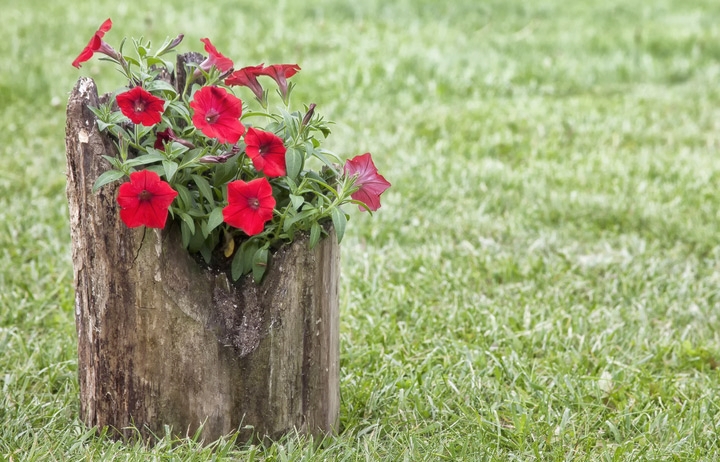
    Making a tree stump planter is a great way to turn an otherwise unsightly feature into something beautiful. The nutrients in a decaying stump will help your plants grow without the use of fertilizer, and the organic vessel will retain water naturally requiring very little care all season long.

    How to Make a Tree Stump Planter

    How to Make a Tree Stump Planter

    Flowers and plants can be switched out for the seasons just as you would with a window box. Read on to learn how to make a tree stump planter from elements in nature which can be found in your own back yard.

    HOW TO MAKE A TREE STUMP PLANTER

    Materials to Make a Tree Stump Planter

    • An old stump or log
    • Small axe and/or hoe
    • Potting soil, plants
    • Moss (optional).

    Instructions to Make a Tree Stump Planter

    1. Choose a location. It is important to take into consideration the location of the stump or log before selecting plants to place in it. If the stump or log is in a sunny area, be sure to choose plants that require full sun. If it is in a shady area, look for plants that thrive in the shade.
    2. If the stump or log has been sitting for a while, hollowing it out should be easy. The inside contents should be spongy. You can wet the wood to make it easier to remove the contents as well.
    3. Use an ax if the wood is hard, or a hoe if it is soft to loosen and remove the inside contents — hollow out enough of the wood that you’ll be able to cover the roots of the plants, allowing a few extra inches at the base for soil.
    4.  Add a layer of soil approximately 1 inch deep to the bottom of the hollowed-out wood. While the plants are still in the pots, experiment with arrangements and depth needs. Once an arrangement is decided, remove the plants from the pots and loosen the roots gently if they are clumped.
    5. Place the plants in the wood and cover the roots and sides with more soil.
    6. Tuck moss around the base of the plants to add a woodsy effect and to aid in water retention.
    7. Check for soil dampness once a week and only water when needed.

    PLANTS FOR A TREE STUMP PLANTER

    Plants for Full Sun: Sunflower, marigold, geranium, pansy, creeping phlox.

    Plants for Shade: Forget-me-not, creeping Laurel, ferns, hosta, begonia, impatiens.


    This content was originally published here.

  • Elite Survival Systems Recon 3 Sleeping Bag

    Elite Survival Systems Recon 3 Sleeping Bag

    Elite Survival Systems Recon 3 Sleeping Bag

    • Extremely compact and lightweight
    • Designed for 23 degree Fahrenheit (-5C) locations
    • Outer top shell made from 210T Ripstop Nylon with a Teflon finish
    • 100gm per square meter Dupont Thermolite Micro insulation
    • Dims packed in compression sack: 9″ x 8″; unpacked: 87″ long, 33.5″ at shoulders, 22″ at feet; Weight 3 lbs
    Click Here for more information

  • CNN Poll: Overwhelming Majority Want Investigation into Obama DOJ Spying on Trump | Trending

    CNN Poll: Overwhelming Majority Want Investigation into Obama DOJ Spying on Trump | Trending

    A new poll from CNN is bad news for Obama and the Democratic Party. With the Mueller report complete and the Russian collusion narrative collapsed, Americans seem ready to move on.

    “The American public increasingly feels that Democrats in Congress are going too far in investigating the President,” CNN reports. “44% say Democrats are doing too much on that score, up from 38% saying so in March. That shift stems largely from independents, 46% of whom now say congressional Democrats are going too far.” And that was before Democrats wasted a whole day moaning and groaning about Attorney General William Barr’s memo about the Mueller report, which Robert Mueller told Barr was accurate.

    But the most interesting part of the is that “69% think Congress ought to investigate the origins of the Justice Department’s inquiry into Russian interference in the 2016 election, including 76% of Democrats, 69% of independents and 62% of Republicans.” In other words, an overwhelming majority of Americans believe that the Obama Justice Department’s actions in 2016 should be investigated.  The American people want answers about the Steele dossier, the FISA court approval of the wiretap, everything. What did Obama know, and when did he know it? Why did the Obama administration not do more to prevent or stop Russian cyber attacks?

    As John Nolte at Breitbart explains, this was a poll of random adults and such polls tend to skew left, but they are “useful in looking at trends, and this poll shows that the trends are almost all moving in Trump’s direction.” He continues:


    We saw how Bill Clinton’s impeachment actually improved his poll numbers, so it is easy to infer from the polling trends we’re seeing now that even if Democrats don’t pursue impeachment, endless investigations are likely to work in President’s Trump favor. If Senate Republicans do their jobs and thoroughly investigate Obama-era abuses of power that led to the illegal spying on Donald Trump’s presidential campaign, we could see the tide turn even more in Trump’s favor in 2020.

    Matt Margolis is the author of The Scandalous Presidency of Barack Obama and the bestselling The Worst President in History: The Legacy of Barack Obama. His new book, Trumping Obama: How President Trump Saved Us From Barack Obama’s Legacy, will be published in July 2019. You can follow Matt on Twitter @MattMargolis

    This content was originally published here.

  • “Ridiculously Rare” Gemstones Found in Northern Canada

    “Ridiculously Rare” Gemstones Found in Northern Canada

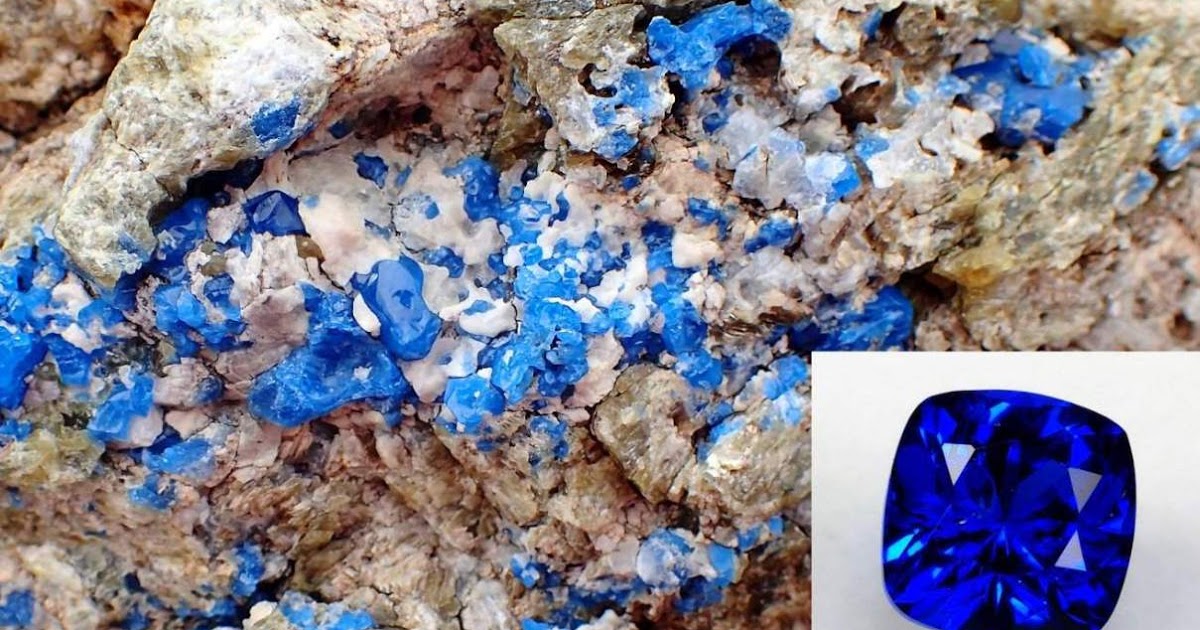
    Vivid blue spinel with white carbonate in calc-silicate rock, Kimmirut area (Philippe Belley) and a cobalt-blue spinel gemstone, Kimmirut area. Credit: B.S. Wilson Researchers from the University of British Columbia published the first scientific study of cobalt-blue spinel in Canada, a mineral that produces fine gemstones that range from red and pink to violet and blue. When Philippe Belley came to the University of British Columbia to study how gemstones form, he didn’t think he would need to learn how to protect himself from polar bears. But when some of those precious stones are buried in the Canadian Arctic on Baffin Island, where the world’s largest land predator also roams, sometimes you roll the dice in the name of science. “We spotted four polar bears but luckily there were no close encounters,” said Belley, a recent PhD graduate of the department of earth, ocean and atmospheric sciences. “But we did learn a lot about how some unique gems are formed, which will change the way people look for them.” Belley and UBC mineralogist Lee Groat have published the first scientific study of cobalt-blue spinel in Canada, a mineral that is largely unknown to the general public but produces rare gems that are coveted by collectors and connoisseurs worldwide. Spinel comes in a variety of colours ranging from red and pink to violet and blue and the fine gemstones are prized for their intense natural colour and high transparency, both measures of gem quality. “There’s considerable interest in cobalt-blue spinel for gems and jewelry,” said Belley. “There are few stones that match its intense blue colour.” Even small stones with good transparency and fine cobalt-blue colour can sell for about ten times the price of a comparable sapphire. But supply is an issue and even production from the most significant source, Vietnam, is limited and sporadic. “Exploration for coloured gemstones is generally difficult due to challenging terrain or thick vegetation in major gem-producing areas like the Himalayas and Vietnam. Most new deposits are found by accident,” said Belley. “But there’s excellent rock exposure on Baffin Island, which facilitates exploration and the use of more advanced techniques like imaging using drones or satellites.” The researchers analyzed fourteen occurrences of spinel on Baffin Island, including two occurrences of cobalt-blue spinel, to better understand how it forms. “It’s a simple recipe but you need to combine the right proportions of chemical ingredients,” said Belley. On Baffin Island, spinel formed 1.8 billion years ago from sedimentary deposits of dolomitic marls and dolomite-bearing limestones. These sedimentary rocks metamorphosed at temperatures of about 800 C under immense pressure. Belley and Groat found that the magic ingredient that produces the distinct blue colour – cobalt – was only present in high-enough concentrations to produce gem quality stones in small, localized areas. “We found that cobalt was added at some point during sediment deposition or up to early metamorphism,” said Groat. “Previous work on other deposits suggested that cobalt was transported during high temperature metamorphism, so our results change the way in which people would explore for cobalt-blue spinel deposits.” According to Belley, Baffin Island spinel contains up to 500 parts-per-million of cobalt, which gives it a vivid blue colour that is comparable to the best sources worldwide. While accessing the area for scientific study was extremely challenging and involved long boat rides through thick fog in the Hudson Strait, stormy conditions, scouting for polar bears and a lengthy permit process to protect the ecologically sensitive environment, the geology of Baffin Island has been a veritable gem field of scientific discovery for the researchers. The team has also analyzed Beluga sapphires which were used in the Queen’s sapphire jubilee brooch and an occurrence of lapis lazuli. “Baffin Island is geologically similar to the Himalayas, where some of the world’s finest gems have been found,” said Belley. “Canada hasn’t been widely recognized as a source for fine, coloured gemstones but our research suggests that we have all the right ingredients.” The above story is based on materials provided by  the University of British Columbia.

    This content was originally published here.

  • Lady’s Slipper, Moccasin Flower: Appalachia’s Vanishing Flower

    Lady’s Slipper, Moccasin Flower: Appalachia’s Vanishing Flower

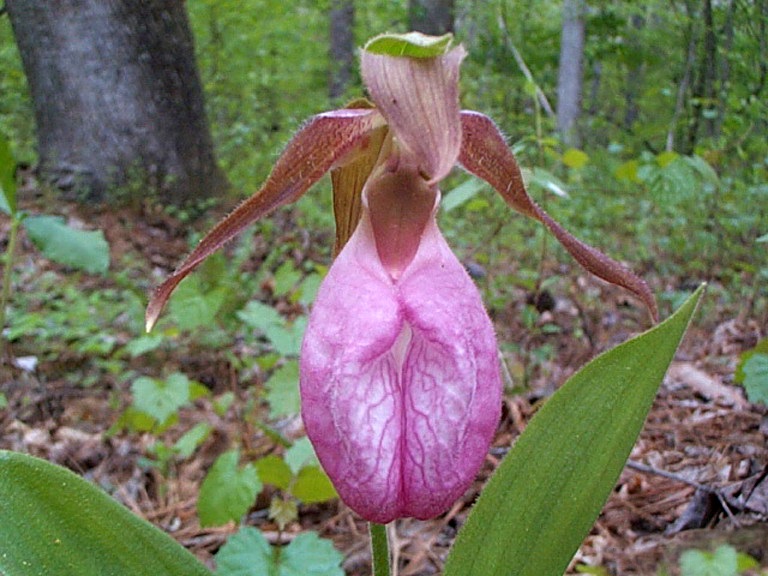
    Photo: Lady Slippers growing in the wild in Dawson County, Georgia. Courtesy of James Henderson
    Photo: Lady Slippers growing in the wild in Dawson County, Georgia. Courtesy of James Henderson

    Sometime long before the arrival of European colonists, a young Native American maiden whose tribe was dying of an unknown disease went out in search of medicine to save her people.  The winter’s snow was deep and the woman’s bare feet swelled and became frostbit as she frantically searched the wilderness for the herbs that would bring healing.

    Sadly, the woman who had hoped to deliver her tribe from certain doom succumbed to her injuries and died all alone in the wilderness.

    Though she was not successful in completing her mission, the woman’s courage and bravery was honored by a beautiful and new plant springing up from the place she had died: The Lady Slipper flower, also known in older days as “Moccasin Flower”.  A rare and beautiful plant whose flower was in the shape of a young woman’s shoe.

    This is story is an ancient Native American legend and it is believed that the plant only grew in the exact location where the young woman’s feet had trod while she searched for good medicine.

    The medicinal plant which serves as the official wildflower of New Hampshire is native to places generally east of the Mississippi River; however, it is more common in the northern United States and southern Canada than elsewhere.

    In the early years of Appalachian settlement, Lady Slippers — and Pink Lady Slippers in particular — could historically be spotted in North Carolina, Tennessee, Virginia and Kentucky, though a combination of water changes, wetland draining, habitat destruction and over picking have left the plant severely depleted in many parts of Appalachia.  The State of Tennessee has even gone so far as to declare the plant to be an endangered species, while it is listed as vulnerable in New York and considered “unusual” in Georgia.

    In 1918, the American Forestry Magazine featured the plant, calling it “a truly wonderful story in botany,” adding that the flowers are “delightfully fragrant and it is a pleasure to meet with the plant in the deep woods… it is a pleasure that remains with one for a lifetime.”

    Even in 1918, the magazine article went on to decry the plant’s widespread vanishing, stating, “This is due to thoughtless and uninstructed picnickers and joy-riders, who leave their machines to ramble far and wide through the woods where formerly the moccasin flowers grew in numbers.  Many of these people cannot forbear picking every pretty flower they can reach, and our beautiful pink lady-slipper, for very obvious reasons, is one that is most often destroyed.

    Another thing that has led to the plant to reaching a place where it is endangered in some states is the fact that Lady Slippers are difficult to transplant or to grow in a non-natural location; perhaps this is connected to the native legend of the plants only growing in the location of the woman’s many steps!

    According to the USDA, “The plant grows 6 to 15 inches tall and flowers generally between May and July… The root of lady’s slipper was used as a remedy for nervousness, tooth pain, and muscle spasms. In the 1800s and 1900s it, and other orchids, were widely used as a substitute for the European plant valerian for sedative properties.”

    Pink lady’s slipper takes many years to go from seed to mature plants; the plants may live up to 50 years, taking up to 16 years to flower for the first time.

    Pink lady’s slipper lives in a variety of habitats, growing in mixed hardwood coniferous forests of pine and hemlock on rocky/mossy slopes, and in semi-open or in deep humus and acidic but well-drained soil under birch and other deciduous trees of eastern United States forests.

    If you ever have the privilege of “meeting one in the wilderness” savor the moment, but do not attempt to transplant it and certainly don’t pick it, after all, it takes up to sixteen years for the plant to flower for the first time.

    Like the people who named it, the Moccasin Flower is steeped in legend, beauty and serves as a fascination to the rest of us; but sadly it enjoys but a fraction of its once splendid glory.

    Like articles like this? Then you would love Appalachian Magazine’s Mountain Voice: A Collection of Memories, Histories, and Tall Tales of Appalachia!  Click here to check out the book on Amazon!

    This content was originally published here.