Category: World News

  • Public debt in Africa rises to $707b in 2017

    Public debt in Africa rises to $707b in 2017

    … Ghana’s public debt rose to 145% in the same year

    Not long ago the ‘Africa Rising’ narrative was in vogue. The continent was touted as the next big thing with prospects of high economic growth, leading to job creation and prosperity. Flames of hope were stirred for the continent imbued with some of the most precious sought after natural resources, like gold, diamond, cocoa, coffee, copper, cobalt, uranium, oil and gas.

    But that hope soon dipped, turning into despair, as the indicators for the predicted economic boom slumped, Africa became desperate and gasping for breath, countries on the continent, in spite of the abundant resources, including human, turned to what most of its leaders thought was the only way out – seek loans! With rising debt, the continent is now being suffocated and some countries are in distress with others facing the risks of debt distress.

    Africa’s stock of public external debt averaged about $309 billion over 2000–2006 and then rose further to $707 billion in 2017, with a 15.5 per cent increase from 2016 alone.

    The Economic Report on Africa, notes that in 2017 debts rose to the highest levels in Eritrea (131 per cent of GDP), Cabo Verde (126 per cent), Sudan (126 per cent), Gambia (123 per cent), Congo (119 per cent), Egypt (103 per cent) and Mozambique (102 per cent). At the same time, ratios of public debt to GDP have been rising steadily, giving rise to worries about sovereign defaults and fiscal vulnerabilities, it says.

    The Report by the Economic Commission for Africa, released March 23, 2019 at the ongoing 52nd Session of the Conference of African Ministers of Finance, Planning and Economic Development, in Marrakech, Kingdom of Morocco paints a distressing picture of the debt situation in Africa.

    According to the Report, public debt rose in Africa in 2017, reaching 59.1 per cent of GDP. The high and rising debt created debt vulnerabilities for many African countries.

    “About 40 per cent of low-income countries now face debt servicing challenges, and an increasing number of countries are at high risk of debt distress or in debt distress. Five countries are in debt distress today (Chad, Mozambique, South Sudan, Sudan and Zimbabwe) compared with none in 2014,” it said.

    And for Ghana, the public debt rise was close to 145 per cent between 2010 and 2017 (from $9 billion to $22 billion), the Report said.

    The Report shows that with 16 African countries in debt distress or high risk of debt distress, low government revenue is the most common factor, pointing out that to ensure debt sustainability, countries need to increase the mobilization of tax and non-tax revenue and deepen the domestic capital market with increased reliance on local currency—denominated loans.

    The Report indicates that with the slowdown in economic growth and low commodity prices, Africa’s fiscal deficit also peaked at 11.3 per cent of GDP in 2015 before declining to 5.0 per cent in 2018.

    “As one of the instruments used by many African countries to partly finance their fiscal deficit, total public debt (general government gross debt) also increased, from 40 per cent of GDP in 2012 to 59 per cent in 2017. However, Africa’s average debt to GDP ratio conceals widely different experiences, in part reflecting different resource endowments. The median public debt increased most noticeably among oil-exporting countries. Public and publicly guaranteed debt soared from an average of just over 20 per cent of GDP in 2011–2013 to 57 per cent in 2017. A similar level of public indebtedness was recorded in non-resource-rich economies with a history of government borrowing,” it said.

    It indicates that Cabo Verde’s high public debt reflects the government’s fiscal policy focus since 2005 on expanding the tax base and increasing public investment.

    “These policies reduced the fiscal deficit (from 5.6 per cent in 2015 to 4 per cent in 2017), but domestic resource mobilization fell short of spending targets. Government borrowing increased, aimed at addressing the public expenditure challenges, declining productivity and restructuring of public enterprises, as well as the negative effects of external shocks (including weak economic growth in Europe, which reduced tourism),” the Report said..

    In West Africa, the Report finds that Benin’s public debt exceeded 50 per cent of GDP, while Ghana’s borrowing rose even higher, from 39.2 per cent of GDP in 2004–2008 to 71.8 per cent in 2017.

    According to the Report, most of the rise reflects increased external borrowing by middle-income countries, with five of the six largest economies on the continent accounting for more than half of public external borrowing in 2017. South Africa borrowed $176 billion externally, followed by Egypt at $82 billion, Morocco at $49 billion, Nigeria at $40 billion and Angola at $37 billion.

    The total debt stock was lower in some of the frontier markets than in middle-income countries, but the increase over the past few years was nonetheless considerable. For instance, Ethiopia’s external debt stock rose more than 250 per cent, from $7.3 billion in 2010 to $26.5 billion in 2017. Kenya’s pace of external debt accumulation was similar, with external debt stocks rising from $8.8 billion in 2010 to $26.4 billion in 2017 (nearly a 200 per cent rise).

    “Ghana’s public debt rise was close to 145 per cent between 2010 and 2017 (from $9 billion to $22 billion),” it said.

    Authors of the Report note that the increase in external debt accumulation raises concerns about debt sustainability in many African countries, especially as external debt stocks have risen much faster than economic growth owing to rising interest rates in international capital markets.

    While it is expected that the debt levels would drop or even level, there is need for African countries to put in place among others, policies to address the need for resource mobilization and responsible governance that enables transparency and accountability, doing business as usual would not address the issues that has brought the continent to this route.

    By Emmanuel K. Dogbevi, in Marrakech, Morocco
    Copyright ©2019 by Creative Imaginations Publicity
    All rights reserved. This article or any portion thereof may not be reproduced or used in any manner whatsoever without the express written permission of the publisher except for the use of brief quotations in reviews.

  • Recording Reveals Oil Industry Execs Laughing at Trump Access

    Recording Reveals Oil Industry Execs Laughing at Trump Access

    Lance Williams is a senior reporter for Reveal, focusing on money and politics.

    Gathered for a private meeting at a beachside RitzCarlton in Southern California, the oil executives were celebrating a colleague’s sudden rise. David Bernhardt, their former lawyer, had been appointed by President Donald Trump to the powerful No. 2 spot at the Department of the Interior.

    Just five months into the Trump era, the energy developers who make up the Independent Petroleum Association of America had already watched the new president order a sweeping overhaul of environmental regulations that were cutting into their bottom lines — rules concerning smog, fracking and endangered species protection.

    Story Continued Below

    Dan Naatz, the association’s political director, told the conference room audience of about 100 executives that Bernhardt’s new role meant their priorities would be heard at the highest levels of Interior.

    “We know him very well, and we have direct access to him, have conversations with him about issues ranging from federal land access to endangered species, to a lot of issues,” Naatz said, according to an hourlong recording of the June 2017 event in Laguna Niguel provided to Reveal from The Center for Investigative Reporting.

    The recording gives a rare look behind the curtain of an influential oil industry lobbying group that spends more than $1 million per year to push its agenda in Congress and federal regulatory agencies. The previous eight years had been dispiriting for the industry: As IPAA vice president Jeff Eshelman told the group, it had seemed as though the Obama administration and environmental groups had put together “their target list of everything that they wanted done to shut down the oil and gas industry.” But now, the oil executives were almost giddy at the prospect of high-level executive branch access of the sort they hadn’t enjoyed since Dick Cheney, a fellow oilman, was vice president.

    “It’s really a new thing for us,” said Barry Russell, the association’s CEO, boasting of his meetings with Environmental Protection Agency chief at the time, Scott Pruitt, and the then-Interior Secretary, Ryan Zinke. “For example, next week I’m invited to the White House to talk about tax code. Last week we were talking to Secretary Pruitt, and in about two weeks we have a meeting with Secretary Zinke. So we have unprecedented access to people that are in these positions who are trying to help us, which is great.”

    This story was produced by Reveal from The Center for Investigative Reporting, a nonprofit news organization.

    In that Ritz-Carlton conference room, Russell also spoke of his ties to Bernhardt, recalling the lawyer’s role as point man on an association legal team set up to challenge federal endangered species rules. “Well, the guy that actually headed up that group is now the No. 2 at Interior,” he said, referring to Bernhardt. “So that’s worked out well.”

    Today, Bernhardt is in line for a promotion: the former oil industry lobbyist has been nominated by Trump to be secretary of the Interior. The Senate Energy and Natural Resources Committee will hold a confirmation hearing Thursday, March 28. Bernhardt has been running the department since early January, when Zinke resigned amid an ethics scandal. The post gives Bernhardt influence over regulations affecting energy production on millions of acres of public lands, deciding who gets to develop it, how much they pay and whether they are complying with the law.

    An Interior Department spokeswoman, Faith Vander Voort, said, “Acting Secretary David Bernhardt has had no communication or contact with either Barry Russell or Dan Naatz.” The IPAA executives were not available to comment on this story, a spokeswoman said.

    At the meeting, the association’s leaders distributed a private “regulatory update” memo that detailed environmental laws and rules that it hoped to blunt or overturn. The group ultimately got its way on four of the five high-profile issues that topped its wish list.

    Trump himself was a driving force behind deregulating the energy industry, ordering the government in 2017 to weed out federal rules “that unnecessarily encumber energy production.” In a 2017 order, Zinke called for his deputy secretary—Bernhardt—to make sure the department complied with Trump’s regulatory rollbacks.

    The petroleum association was just one industry group pushing for regulatory relief — the American Petroleum Institute, the U.S. Oil and Gas Association and the Western Energy Alliance also were active. But since IPAA created its wish list, the Interior Department has acceded to nearly all its requests:

    * Rescinded fracking rules meant to control water pollution. Frackers pressure-inject water and chemicals into the ground to break up rock and release oil and gas. In 2015, the Interior Department’s Bureau of Land Management moved to minimize water pollution caused by fracking, setting standards for well construction and proper management of fracking fluids. For the first time, the new rule also required frackers to get federal permits, a costly and time-consuming process, the industry complained.

    The IPAA sued, contending the rule was not needed because fracking was already regulated by states. Under Trump, Interior sided with the energy industry, and in 2017 the rule was rescinded.

    * Withdrawn rules that limit climate-change causing methane gas releases. An oil strike can release clouds of methane, a potent greenhouse gas. When producers lack the means to capture methane and sell it as natural gas, they either burn it or release it into the air. In 2016, to fight global warming, the BLM issued a rule sharply limiting these practices and imposing a royalty fee on operators who wasted natural gas on public lands.

    IPAA sued, complaining producers would face huge financial losses. Trump’s Interior Department sided with the industry and in 2018 rescinded key provisions of the rule.

    * Abandoned environmental restoration of public land damaged by oil development. To offset the harm of oil production, the BLM often required producers to pay for restoration projects as a condition of their permits. This practice of “compensatory mitigation” is used by many government agencies. In 2015, then-President Obama ordered Interior to set a goal of “no net loss for natural resources” when issuing development permits.

    IPAA pushed back hard against the “no net loss” standard, arguing that developers might be saddled with exorbitant mitigation costs. In 2017, Trump himself ordered the repeal of the Obama mitigation rule. Interior Secretary Ryan Zinke attacked the concept as Un-American.

    * Ended long-standing protections for migratory birds. Every year, millions of migratory birds are killed when they fly into power lines, oil waste pits and other energy development hazards, the U.S. Fish and Wildlife Service says. Since the 1970s, the service has promoted industrial safety practices to protect birds from accidental harm—and has prosecuted and fined energy companies responsible for the deaths of these birds.

    IPAA complained it was unfair to prosecute energy companies engaged in legal activities that unintentionally harmed birds. In 2017, Trump’s Interior Department called a halt to prosecuting companies for the “incidental” deaths of birdlife. Bernhardt played an important role in crafting the legal opinion that gutted these protections, emails obtained through the Freedom of Information Act show.

    “The IPAA’s wish list was granted as asked, in the executive order, and in the actions taken by the Department of the Interior,” said Nada Culver, senior counsel for the Wilderness Society environmental group, who reviewed the document for Reveal. “It pains me to say it.”

    Bernhardt’s began his career in government as an aide to then-Rep. Scott McInnis, a Colorado Republican elected in 1992. In 1998, he quit to work at the powerhouse Washington lobbying firm of Brownstein, Hyatt.

    After President George W. Bush took office, Bernhardt returned to government as a political aide to Secretary of the Interior Gale Norton, a fellow Coloradan. He worked on the administration’s push to reverse a congressional ban on drilling for oil in Alaska’s Arctic Wildlife Refuge. In 2006, he was promoted to solicitor, the department’s top lawyer.

    In 2009, he rejoined the Brownstein firm and became head of its natural resources department. Over the years, he lobbied or provided legal advice to about 40 clients, many of them companies seeking to block the force of environmental regulations administered by Interior. Among his clients were 18 energy concerns, including offshore oil drillers, frackers and operators of coal-fired power plants. His federal ethics report showed he had worked for IPAA since at least 2015.

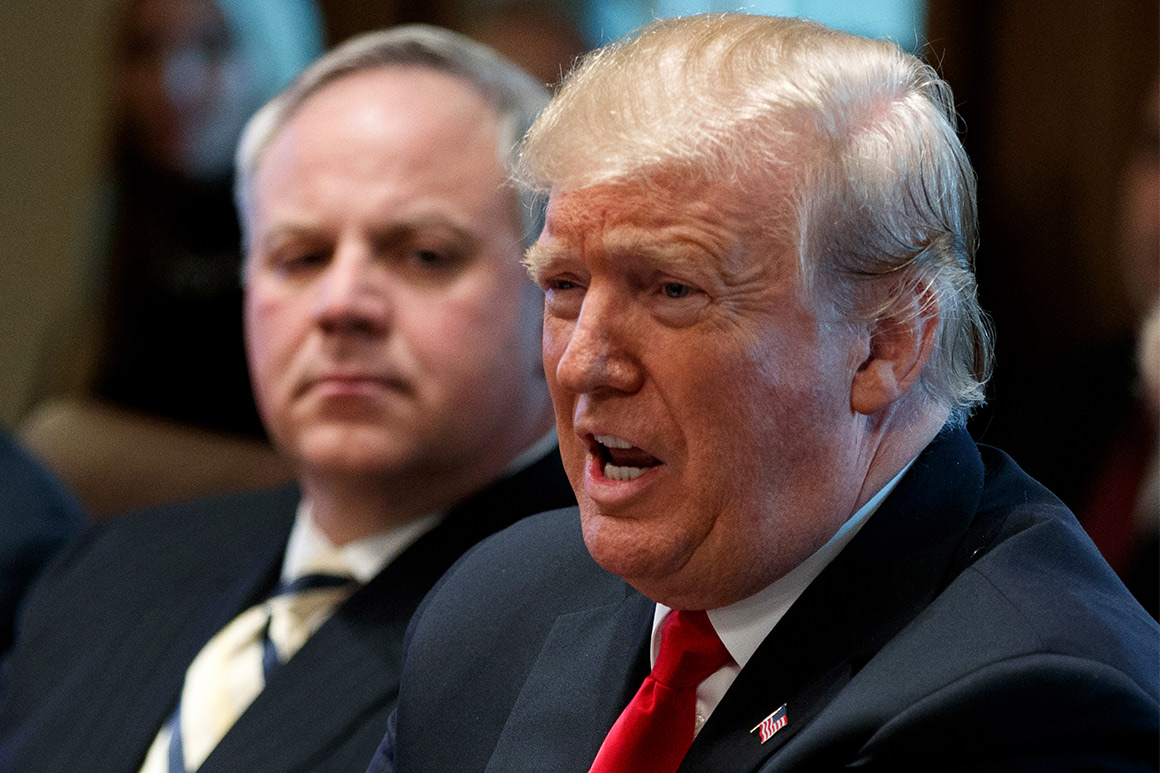
    In July 2018, then-Deputy Secretary of the Interior David Bernhardt listens as Jack Gerard, president and CEO of the American Petroleum Institute, speaks at a luncheon in Denver sponsored by the Colorado Petroleum Council. | AP

    After Trump was elected, Bernhardt served on the new administration’s transition team, then was named Zinke’s deputy. A coalition of 150 environmental groups opposed Bernhardt’s appointment, calling him a “walking conflict of interest” because so many of his former clients were subject to Interior Department regulations.

    Bernhardt’s Senate confirmation hearings were roiled when a collection of his emails, reported by Reveal, showed he had continued to give political advice to the Westlands Water District, a California agribusiness concern, for months after he told Congress he had quit lobbying.

    Bernhardt promised to follow Interior’s ethics rules, which call for him to recuse himself for up to two years on matters involving former clients.

    “I believe that public trust is a public responsibility and that maintaining an ethical culture is important,” he told senators, and the Senate confirmed his appointment. At Interior, to remind himself of conflict of interest concerns, Bernhardt carries a wallet-sized card listing former clients covered by his ethics recusals, the Washington Post reported.

    Interior Department lawyers say Bernhardt is permitted to work on matters affecting his former clients, such as the petroleum association, as long as the issues affect a broad group of players, not just the one client. But the watchdog group Campaign Legal Center has filed a complaint accusing Bernhardt of ethics violations for working on California water issues favored by Westlands, his former lobbying client.

    Bernhardt’s recusal concerning the petroleum association expires in August and his official calendars do not reflect any meetings to date with IPAA officials.

    The oil lobby has had ready access to top administration officials, both inside the Interior and out, according to public records and the lobby leaders themselves. Since Bernhardt began work at the department, the IPAA has spent more than $1.3 million lobbying the department and other federal agencies, according to data from the Center for Responsive Politics.

    In April 2018, an IPAA contingent led by Naatz, the political director, met with Bernhardt’s top aide, Todd Willens, concerning two issues from the wish list: migratory birds and mitigation. Hours later, Willens met with Bernhardt, but a copy of Willens’ calendar doesn’t state the topic of their meeting.

    It was the kind of access the group had begun to marvel at the year before in the plush confines of their Southern California resort. On the recording, Russell, the IPAA’s CEO, described an extended meeting he had already had with Pruitt, a former Oklahoma attorney general and climate-change doubter whose tenure at EPA would be cut short by ethics scandals. What started as a simple meet-and-greet became an invitation to critique the EPA’s air pollution regulations, the oil executive said.

    “Scott Pruitt, he came from Oklahoma, and we have a lot of friends in common and I thought that’s what we were going to talk about, we did that for about three minutes,” Russell said. “And then he started asking very technical questions about methane, about ozone … and if Scott Pruitt thought he was going to go deep nerd …”

    The audience began laughing.

    “And what was really great is there was about four or five EPA staffers there, who were all like, ‘Write that down, write that down,’ all the way through this,’’ Russell continued. “And when we left, I said that was just our overview.”

    The audience laughed again.

    “So it’s really a new world for us and very, very helpful.”

    There was about four or five EPA staffers there, who were all like, ‘Write that down, write that down,’ all the way through this,’’ Russell continued. “And when we left, I said that was just our overview.”

    Naatz predicted Bernhardt would actually run the department while Zinke would play a ceremonial role.

    “What secretaries of Interior do is go out to Yellowstone, go out to Tetons … have big vision for what they’re going to do,” he said. “David is going to be the COO. David’s going to move the pieces. David’s going to be part of that, and we know him well.”

    He also warned of what could go wrong in the Trump era.

    Trump was slow to make middle-level appointments at the regulatory agencies to carry out the pro-industry policies he ordered, Naatz contended. Without supervision, career federal employees might well slow-walk, or resist the sweeping regulatory changes the industry favors, he said.

    “If you don’t have the politicals pushing down, bureaucracy is going to take over and push up,” Naatz said.

    Another problem was what he called “the gorilla in the room.” The investigation into Trump’s ties to Russia was “hampering everything that is going on,” he said. He groused about Trump’s “inane tweets that come out after midnight,” and faulted the entire White House for lack of focus.

    “They have got to be better on message because they are going to lose the opportunity. It’s an unbelievable opportunity, you have Republicans controlling both houses of Congress, and the administration and so they need to get their act together and start to move,” he said.

    When “you are talking about issues that are important to you, the Republicans win,” he continued. “If you are talking about Michael Flynn and Russia, you are going to lose. And so it’s really important to carry that narrative on energy, on infrastructure, on all these issues.”

    Reveal reporter Elizabeth Shogren contributed reporting for this story.

    Source

    https://www.politico.com/magazine/story/2019/03/23/trump-big-oil-industry-influence-investigation-zinke-226106
  • Cambridge University withdraws visiting fellowship of academic who refuses to refer to transgender people by chosen pronouns

    Cambridge University withdraws visiting fellowship of academic who refuses to refer to transgender people by chosen pronouns

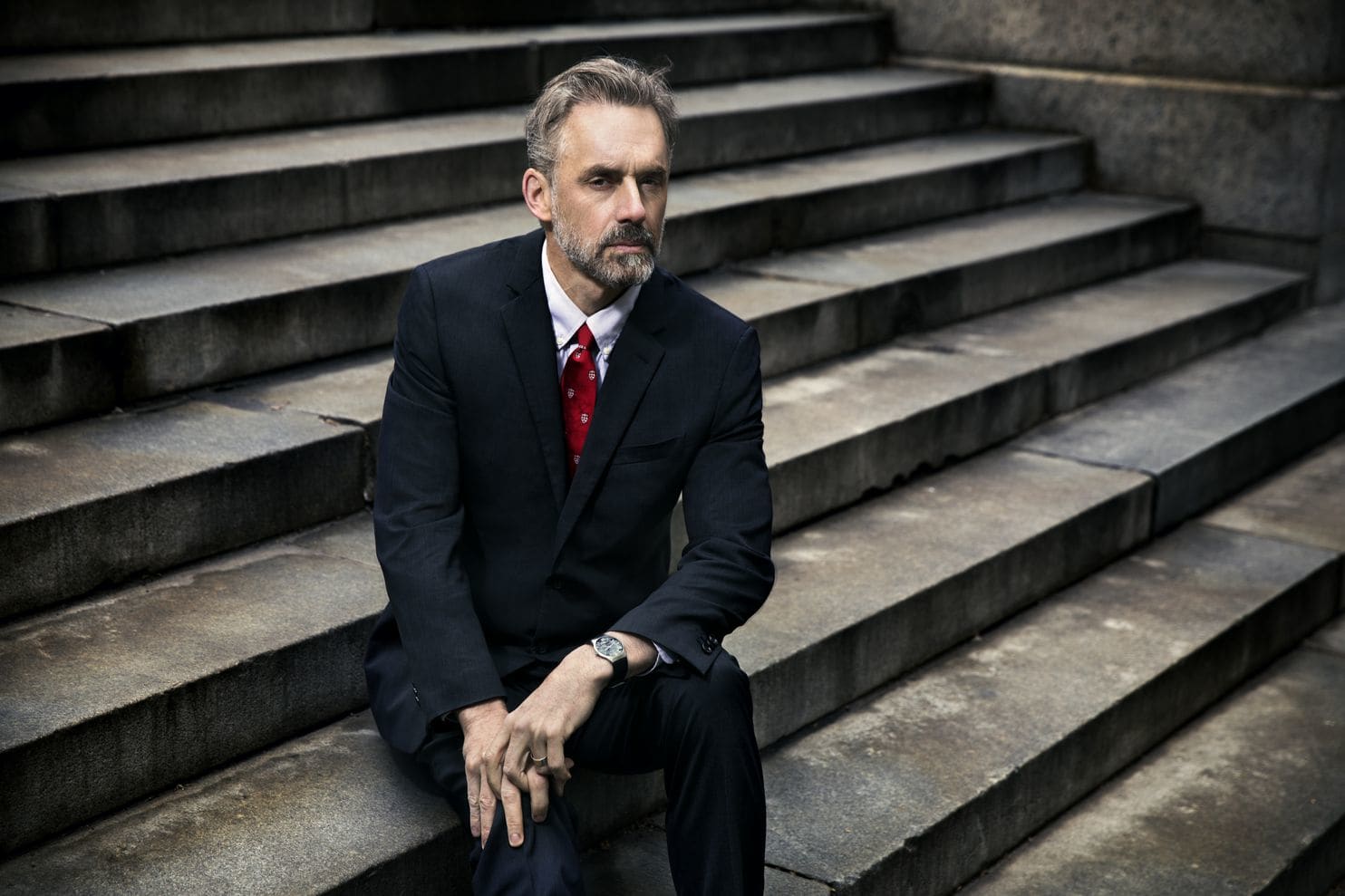
    Cambridge University has rescinded its offer of a visiting fellowship to controversial academic Jordan Peterson, who refuses to refer to transgender people by their chosen pronouns, after an outcry from faculty and students.

    The Canadian psychologist, who has hundreds of thousands of fans, styles himself as the “professor against political correctness”, and has argued for enforced monogamy, and pushed the view that men are victims of gender discrimination.

    He has also said that the idea of white privilege is a “Marxist lie.”

    The professor first came to fame in 2016 because he opposed an anti-discrimination bill that meant he had to use the preferred pronouns of his students and colleagues. He said that the law infringed on his free speech, refusing to use any other pronoun than “he” or “she”.  Students protested across the university’s campus and caused a media storm in Canada and the US.

    He was due to take part in a two-month academic fellowship at the Faculty of Divinity, planning to run around ten public lectures on the Bible, which would be a continuation of his work at the University of Toronto.

    Academics and the student union publicly protested his appointment, with lecturer PriyamvadaGopal sarcastically tweeting: ” Jordan Peterson to be my colleague later this year? So EXCITED. So much to learn, so much wisdom to glean. Well done, Cambridge, no better way to signal our commitment to diversity and decolonization.”

    Hours later, the university U-turned, writing in a statement: “We can confirm that Jordan Peterson requested a visiting fellowship, and an initial offer has been rescinded after a further review.”

    Cambridge Student Union said in a statement to student paper Varsity: “We are relieved to hear that Jordan Peterson’s request for a visiting fellowship to Cambridge’s Faculty of Divinity has been rescinded following further review. It is a political act to associate the University with an academic’s work through offers which legitimize figures such as Peterson.

    “His work and views are not representative of the student body and as such we do not see his visit as a valuable contribution to the University, but one that works in opposition to the principles of the University.”

    “I heard about the rescinded offer through the grapevine, via a colleague and friend, and gathered what I could about the reasons from social media and press coverage.

    “I think the Faculty of Divinity made a serious error of judgment in rescinding their offer to me (and I’m speaking about those unnamed persons who made that specific decision). I think they handled publicizing the rescindment in a manner that could hardly have been more narcissistic, self-congratulatory and devious.

    “I believe that the parties in question don’t give a damn about the perilous decline of Christianity, and I presume in any case that they regard that faith, in their propaganda-addled souls, as the ultimate manifestation of the oppressive Western patriarchy, despite their hypothetical allegiance to their own discipline.”

    source

  • Journalist Criminally Investigated for Allegedly Using the Wrong Pronoun in Tweet

    Journalist Criminally Investigated for Allegedly Using the Wrong Pronoun in Tweet

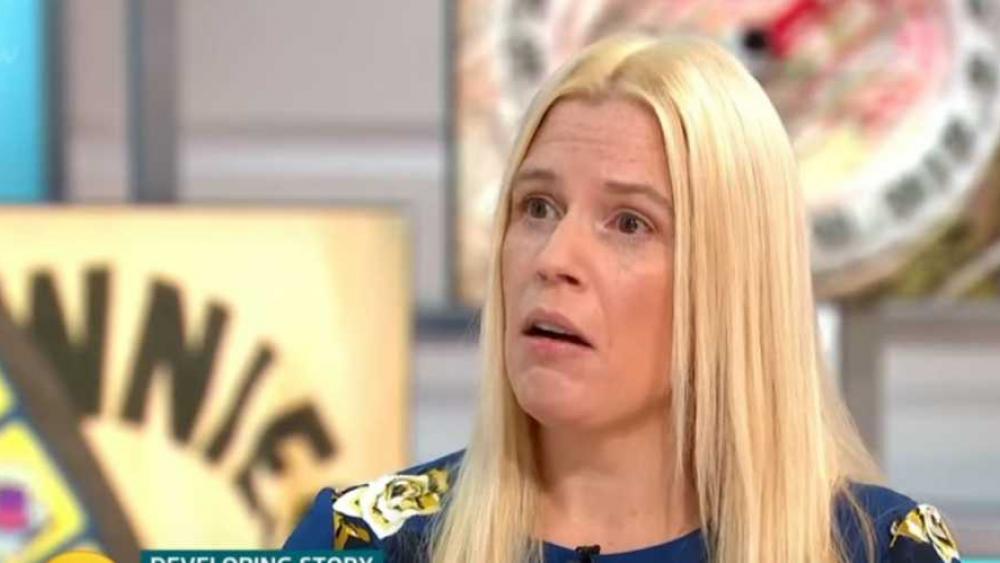
    A British Catholic journalist is being investigated by the police for allegedly “misgendering” someone in a tweet. Caroline Farrow was contacted by authorities after making an appearance on “Good Morning Britain,” in which she engaged in a debate with a transgender activist, Susie Green, who has a trans child. Following this appearance, which took place last September, Farrow allegedly referred to Green’s daughter, Jackie, by the wrong pronoun.

    In a series of tweets, Farrow noted that the police had told her she would “need to be interviewed under caution for misgendering Susie Green’s child.”

    Farrow pointed out that, since the police announce that they would be taking action against her, online trolls have been sending the mother of five horrific, expletive-laden and sexually violent messages. However, while the police are highly concerned about Farrow’s alleged misgendering, they appear unbothered by this onslaught of cyber abuse.

    “I have done nothing wrong, nothing illegal and will happily do jail time for my right to say that people cannot change sex,” Farrow added. “I have pointed out to the police that I am a Catholic journalist/commentator and it is my religious belief that a person cannot change sex. That we are in the middle of a national conversation about what it means to be male and what it means to be female.”

    Later on last night, Farrow updated her Twitter once again, summarizing the case against her. “I can’t sleep I am so furious,” she wrote. “According to the police I ‘misgendered’ which implies that I used the wrong pronouns/nouns and this potentially constitutes a criminal offense. Let that sink in.”

    Following the announcement of a police investigation, Farrow said she has been “overwhelmed by media requests,” but needed to “concentrate on a parent consultation about how my son is getting on in pre-school (he has a speech delay) and tonight my daughter is singing the solo in a choral society production of Vivaldi’s Gloria & is a bag of nerves.”

    A person who is found guilty of this offense can be subject, upon “conviction on indictment” to  “imprisonment for a term not exceeding two years or a fine (or both).”

    Having allegedly engaged in misgendering, Farrow says she is “not in breach” of this piece of legislation.

    source

  • Paris tops list of world’s most expensive cities

    Paris tops list of world’s most expensive cities

    Paris and Hong Kong for the first time joined Singapore as the world’s most expensive cities to live in, a study revealed on Tuesday, with the French capital jumping six places in just two years.

    It was the first time in more than 30 years that three cities shared the top spot, a sign that pricey global cities are growing more alike, said the report’s author, Roxana Slavcheva.

    “Converging costs in traditionally more expensive cities … is a testament to globalization and the similarity of tastes and shopping patterns,” she said in a statement.

    “Even in locations where shopping for groceries may be relatively cheaper, utilities or transportation prices drive up the overall cost of living,” she said.

    Rising costs in cities are often driven by a vibrant job market attracting skilled workers with high wages, said Anthony Breach, an analyst with the British think tank Centre for Cities – which was not involved in the study.

    Urban planners need to plan ahead and build more housing to keep prices affordable and overall costs down, Breach told the Thomson Reuters Foundation.

    Aimed at the business community, the EIU survey is designed to help companies calculate cost-of-living allowances and build compensation packages for expatriates and travelers.

    Researchers compared the cost of more than 150 items such as cars, food, rent, transport and clothing in 133 cities, tracking whether prices have gone up or down by comparing them with the cost of living in New York, which is used as a benchmark.

    A woman’s haircut was about US$15 (€13) in Bangalore, India, compared to $210 (€185) in New York, for example, while a bottle of beer was about half a dollar in Lagos, Nigeria, and more than $3 (€2.6) in Zurich.

    Paris – where the high cost of living has been one of the factors behind weeks of violent protests by Yellow Vest demonstrators – has ranked among the top 10 most expensive cities since 2003, with only transport and alcohol offering value for money compared to other European cities.

    British cities recovered a few positions a year after reaching the cheapest level in more than two decades due to Brexit uncertainty, with London ranking 22nd and Manchester 51st, up eight and five spots respectively.

    Political turmoil in Venezuela plummeted Caracas to the bottom of the ranking, followed by Damascus, Syria, with Karachi, Pakistan, Buenos Aires, Argentina, and New Delhi, India also featuring among the 10 cheapest cities.

    But a city’s drop in the index does not necessarily mean life automatically gets cheaper for people living there, as prices adjust to inflation often quicker than wages, said Gunes Cansiz of think tank the World Resources Institute (WRI).

    “The cost of living in Istanbul, for example, might seem to have decreased, but since household expenses have increased, this has no positive reflection on the daily life of Istanbulites,” said Cansiz, director at WRI’s Turkey Sustainable Cities programme.

    source

  • Everyone In England Will Be Automatic Organ Donors From Next Year

    Everyone In England Will Be Automatic Organ Donors From Next Year

    Adults in England will be considered potential organ donors from 2020 unless they opt-out or are excluded.

    The Organ Donation (Deemed Consent) Bill received Royal Assent yesterday (March 15), which is known as Max and Keira’s Law, after nine-year-old Keira Bell donated her heart to 10-year-old Max Johnson.

    Keira saved four lives in total, including Max’s, who suffered from dilated cardiomyopathy, a disease which affects the heart muscle.

    The new system will come into force spring 2020, replacing the current opt-in voluntary system.

    According to government statistics, there are more than 6,000 people in the UK currently waiting for an organ. Three people die every day while on the waiting list.

    Currently, only 38 percent of people in England have opted in.

    In a press release, Prime Minister Theresa May said she hopes the new law will save hundreds of lives:

    I’m delighted Max and Keira’s law has passed today. It marks a momentous step for thousands of people in need of a life-saving transplant, and could save as many as 700 lives a year.

    With significantly more people willing to consider organ donation than are actually registered as donors, this vital step will presume consent unless people choose to opt out of being a donor.

    It’s important that everyone takes the time to discuss their choices on donation with their families and register their wishes, whatever their preference may be.

    The government will also launch a public awareness campaign to ensure people understand what choices they have, and how the new system works.

    While anyone can choose to opt-out, if you are under 18 years old, lack the mental capacity to understand the changes for a significant period before your death, and have not lived in England for at least 12 months before your death, you will be excluded from the plan.

    The government will look into whether certain organs should be excluded from the opt-out system.

    Wales introduced an opt-out system in 2015, while Scotland is currently considering reform.

    The news has been welcomed by many and is being regarded as a monumental change going forward.

    Max himself told NHS Organ Donation he’s delighted by the news:

    Thank you to everyone who has supported this law change. Even if it saves just one life, it will be worth it. I know what it is like to wait for an organ, so I hope the change in law will mean people won’t have to wait as long in the future.

    I feel happy because I think the law change will make a difference.

    My father had a life-saving liver transplant two years ago which helped me realize the importance of organ donation. It really is a wonderful gift!

    source

  • Robocalls about your bills can pour in every day, all day

    Robocalls about your bills can pour in every day, all day

    IN THE CAR WHERE Paula Hanson lives, often parked outside a local sheriff’s station in Lancaster, California, her phone wouldn’t stop ringing.

    Hanson tried to explain to the employees at Discover Bank all that had happened to her. First, she had been laid off from her job, and then her father fell ill and she moved into his house to take care of him. Shortly after he died, last year, Hanson, 62, became homeless. She simply didn’t have the money to tackle the $17,000 in credit card debt she owed Discover.

    Still, the calls continued: “At first, it was once a day,” Hanson said, “but then they began to become, like, three times a day.” Eventually, her lawyer said, the bank was ringing her five times a day.

    In an effort to end the calls, Hanson agreed at one point to make a one-time payment of $50 to Discover, though she had less than $200 in her bank account.

    “I have to make sure I have money to eat,” she said, “but the way they pressure you — they make you feel like you have to do this.”

    MORE THAN A QUARTER of consumers currently receive automated calls about past-due bills, according to data provided to CNBC by YouMail, a robocall-blocking service. For many, the calls are relentless. “Some people get hundreds of calls in a single month about a late payment or debt,” said Alex Quilici, chief executive of YouMail.

    People often associate the flood of robocalls with scammers. Yet on one ranking this year of robocallers by volume, 8 out of the top 10 were seeking a late payment (although that list doesn’t account for when companies deploy many different phone numbers to reach people).

    COMPANIES USE autodialers to collect their debts because they’re cheap and easy to use, said Jeff Hansen, an information technology expert. When he worked at a calling center, Hansen said, they were dialing more than 1 million people an hour for less than a penny per call.

    But the way technology works makes it difficult for consumers to stop the calls, he said.

    “You get 10 calls in one day, and on the first call, you say, ‘I don’t have the money. Stop calling,’ but these automated procedures keep people out of the loop,” he said. “The dialer has been loaded for the whole day, and so it’s going to keep calling you.”

    Employees at Discover come up with the right strategy for each individual who is struggling to make their payments, said Derek Cuculich, senior manager of public relations at the company. “We determine their situation and work with them to find a solution to help them through tough times,” Cuculich said.

    TONYA STEVENS BOUGHT a few items, including a washer and dryer, back in 2014 from Conn’s HomePlus, a furniture store chain headquartered in Texas.

    She said she made many of her monthly payments, but sent them in later than the store wanted. Employees of Conn’s called her morning, noon and night, Stevens, 49, said. “I was getting anywhere from five to 11 calls a day,” she said.

    Stevens was pushed over the edge, she said when she was tending to her dying grandmother. “I called them screaming, bawling, ‘Let me bury my grandmother,’” she said.

    All together, Conn’s called her more than 1,800 times, according to her lawyer.

    “As a standard operating procedure, our team follows all applicable statutes and regulations, only calling customers that have an outstanding debt,” said Ivette Faulkner, a spokeswoman for Conn’s. “Once payment is arranged, we discontinue customer calls.”

    source

  • The Navajo Celebration of a Baby’s First Laugh – The Aesthetics of Joy

    The Navajo Celebration of a Baby’s First Laugh – The Aesthetics of Joy

    While I was in Santa Fe earlier this week, I spent some time at the Museum of Indian Arts and Culture researching Native American weaving, basketry, and ceramics patterns for the book. Pretty much every culture on Earth makes patterns—on walls, objects, or their own bodies—and one of the things I’ve been curious about is to what extent weavers and makers are aware of the structures that make patterns so universally appealing, and to what extent it’s purely intuitive. 

    At the museum, I happened upon one of those deliciously joyful discoveries that I couldn’t wait to share. Did you know that the Navajo (Diné) people have a specific tradition around celebrating a baby’s first laugh? Around three months, they watch the baby closely for that first real giggle. The person who has the good fortune of eliciting that first laugh is then responsible for throwing a party, with the baby technically playing the role of host. Of course, a baby can’t host a party, so the relative or friend who coaxed out that first laugh hands out rock salt, candy, and gifts on the baby’s behalf. 

    The belief behind the tradition is that when a baby is born, she belongs to two worlds: the spirit world and the physical one. The first laugh is seen as a sign of the baby’s desire to leave the spirit world and join her earthly family and community. Perhaps it was because of the fragility of new life that infants were treated as still “between worlds” for those delicate first few months until parents heard a sign of joy and wellbeing that reassured them their baby was healthy enough to survive. On reflection, I realized that other cultures also celebrate a milestone around the same time in a baby’s life. For example, the Korean dol tradition celebrates a baby’s first hundred days, which is just over the three-month mark where the Diné anticipate the first laugh. 

    Without taking away any of the sacredness of the A’wee Chi’deedloh, I love the idea of celebrating the arrival baby’s giggle — her first expression of joy — as the first big milestone in a child’s life. Joy is a big part of what makes us human, so it makes sense that we are only fully human once we have the capacity for laughter. Which sounds like it’s worth a party, or a glass of champagne at least! 

    Do you have any unique milestones you celebrate in your culture or family? If so, I’d love to hear them!

    source

  • No U.S. city cracks the top 30 on this well-regarded list of the world’s best places to live

    No U.S. city cracks the top 30 on this well-regarded list of the world’s best places to live

    Maybe we do need to make America great — to live in — again.

    Global consulting firm Mercer has released its quality-of-living rankings, and, for a 10th year in a row, Vienna took the No. 1 spot. It was followed by Zurich, with Auckland, Munich, and Vancouver tying for third place.

    The company ranks hundreds of global cities based on a number of factors, including recreation, housing, economy, public services and transport, political and social environment, education, medical and health considerations, and the natural environment.

    European cities continue to have the highest quality of living in the world, with Vienna (1), Zurich (2) and Munich (3) not only ranking first, second and third in Europe but also globally,” the report revealed, adding that “as many as 13 of the world’s top 20 spots were taken by European cities.”
  • Pastors Knocked Out, Christians Killed as Persecution Spikes Dramatically in India

    Pastors Knocked Out, Christians Killed as Persecution Spikes Dramatically in India

    India is seeing a dramatic rise in persecution as more and more churches and Christians are coming under attack in 2019.

    The newest figures show cases of hate and violence against India’s minority Christians have jumped 57 percent in the first two months of this year.

    According to the Evangelical Fellowship of India, a total of 77 incidents were documented against Christians between January and February.

    Referring to two murder cases in two different Indian states in February,  EFI General Secretary Rev. Vijayesh Lal said, “We have reasons to believe that both men, who were in their 40s, were killed because of their faith.”

    “We have recorded cases where Christians have been facing a social boycott and have been excommunicated from their villages, and in a few instances have had to flee to save their lives,” Lal said.

    Morning Star News describes another incident that took place this year on Jan. 13 in Uttar Pradesh: “Police officers disrupted a Sunday worship service and arrested four women and two men, including the female pastor leading worship. At the police station, a female police officer physically assaulted the woman pastor, Sindhu Bharti, who fell unconscious.”

    “Boiling tea was forcibly thrust in her mouth because the police thought that she was feigning her unconsciousness,” an eyewitness, Madhu Bharati, told Morning Star News. “When that did not work, they poured two jugs of cold water on her face, not caring that it was already severely cold due to winter.”

    Christians were arrested and charged with intent to hurt religious feelings, defilement of a place of worship and rioting, among other charges. The intervention of Christian leaders resulted in police freeing the arrested female Christians, but the men were kept in custody.

    Violent attacks against Christians have steadily increased since a radical Hindu party took control of India’s government in 2014.

    Since then, Open Doors has ranked India as the tenth-worst country in the world for Christian persecution.

    source