Category: World News

  • Poland is pushing the EU into crisis

    Poland is pushing the EU into crisis

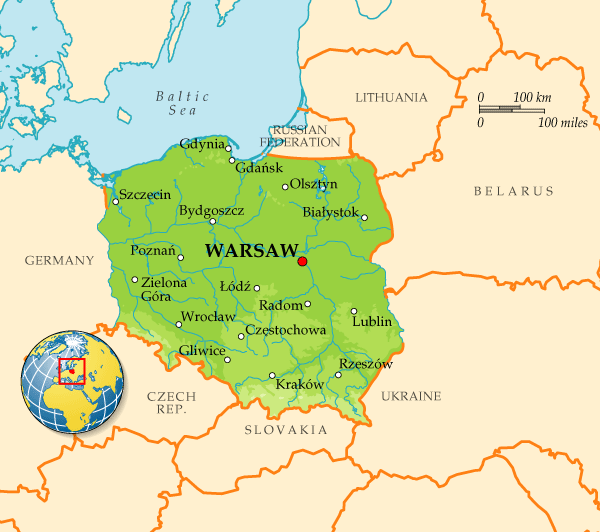
    Poland is changing. Every year the country celebrates its national Independence Day in the capital, Warsaw. There are parades and speeches But in 2017, Poland’s Independence Day made worldwide news because of these signs: 60,000 people showed up for a march led by Nationalist and white-supremacist groups. That’s because they have reason to celebrate, too. Poland’s right-wing political party, PiS, is in power. After winning the Presidency and a majority in Parliament, they’ve ignored the constitution, Taken over the courts, purged the military, and cracked down on the media. PiS is bringing authoritarianism back to Poland and openly rebelling against the European Union. It’s a shocking turn for a country that, just a few years ago was hailed as one of Europe’s most promising young democracies.

    So, how did this happen? And can it be stopped? It was an old story to the Polish population – conquest, subjugation, enslavement. it had happened before in Poland’s troubled history but never with such inhumanity Poland had a traumatic 20th century. It was invaded twice during World War Two. First by the Germans and then by the Soviets… …who re-established the country after the war, but as a communist state under their control. In fact, Soviet dictator Joseph Stalin directly contributed to a draft of Poland’s constitution, which was formalized in 1952. These are his handwritten notes. For the next several decades, Poland developed very little while it was cut off from the rest of the world. It became one of several Soviet-backed, communist countries in Central and Eastern Europe that made up the Soviet bloc.

    The rest of the Soviet bloc soon followed. This posed a challenge for Western Europe. We cannot aim at anything less than the union of Europe as a whole and we look with confidence for the day that union is achieved Since the end of World War Two, the continent’s democracies had been growing closer; signing free trade deals that became the precursor to today’s European Union. At first, the trade deals just covered coal and steel, but as they grew to include agriculture, energy, and other markets, more countries joined– making Europe more economically and politically integrated than it had ever been before. As the former Soviet bloc countries started establishing democracies of their own; Western Europe needed to find a way to include them. So in 1993, the established EU countries came up with a strict checklist for admitting new members. New member-states needed to have a free market economy, respect human rights and the rule of law.

    Meaning courts had to be independent and impartial– so everyone could get a fair trial. These EU rules helped bring former-communist countries in while also keeping them from sliding back into authoritarianism. They were designed to keep the peace in Europe. Poland joined the EU in 2004 and because of Solidarity’s success it became one of the most promising new member. Poland was given more money than any other EU country which it used to build highways, schools, hospitals, and modern infrastructure.

    The country’s economy grew more than any other ex-communist country. Each year after it joined, Poland received millions of Euros to help fund highways, schools, hospitals, and modern infrastructure. By 2014, Poland became one of the EU’s strongest and most resilient members. It even avoided the recession in 2009 that crippled economies worldwide. Polling showed 72% of Poles were satisfied with EU membership. More than any other member state. Minister of Foreign Affairs Radosław Sikorski: “Ladies & Gentleman, 10 years ago we joined the European Union. We did not become part of the EU on a whim. We became part of the union because we put in tremendous efforts to build a democracy and a free market economy; two pillars of a united Europe.” And Poland’s charismatic, pro-EU Prime minister, Donald Tusk, was chosen to become president of the EU’s European Council.

    But in his absence, leaders with a very different vision for Poland’s future rose to power. In 2015 PiS, Poland’s right-wing party, shocked the world and won an absolute majority in the parliament. Since 2001, PiS had been led by former-Solidarity leaders Lech and Jaroslaw Kaczynski, who felt that Poland’s center-left parties had become elitist and corrupt. It appealed to Poland’s conservative population in rural areas. PiS only earned 38% of the vote in 2015, on par with the previous election results, but after Tusk left for the EU, his coalition of center-left parties fell apart, making room for the right-wing party to take over.h According to PiS, after decades of Soviet control, Poland was now being controlled by the EU. So when it came into power, it pledged to take back Poland’s independence … legally or illegally. The party already controlled BOTH HOUSE OF Parliament and the Presidency, so it initiated a hostile takeover of the judicial branch. First it packed this Constitutional court with loyal judges and then forced out more than a third of the judges in this other court. Both acts were illegal under the Polish constitution, but the PiS-majority parliament and Presidency signed them into law anyway.

    The party also fired over 11,000 civil-service workers and at least 280 military officers, calling them ex-communists. It cracked down on the media. It started leveling fines on news organizations when it didn’t like their coverage. Meanwhile, it’s been using Polish nationalism to justify these moves. Remember this 2017 controversial march? A PiS politician called it “a beautiful site” While the party cracked down on protests against their authoritarian moves. As PiS tightened its grip on Poland, the EU issued several warnings to stop it from breaking its rules…. But PiS ignored them. “It is with a heavy heart that we have decided to initiate Article 7.1”, “But the facts leave us with no choice.” In December 2017, the EU invoked Article 7– its nuclear option– for the first time in its history.

    It allows the EU to strip a member of its voting rights if it feels it is breaking the criteria it established in 1993. // a significant number of laws have been adopted… which put at serious risk the independence of the judiciary and separation of powers, in Poland//. According to the EU, the PiS purging of the courts violates the country’s commitment to respecting the rule of law. The problem for the EU is that Article 7 is not going to work. The punishment requires a unanimous vote by all EU countries — and there is one country that has sworn to protect Poland… Hungary, another former Soviet bloc country, has taken a turn towards authoritarianism under President Viktor Orban. And he vowed to veto any punishment against Poland. So PiS continues to systematically strip… on Poland while still receiving huge sums of money from the EU. It’s proving that a member country can stay in the EU, reap its economic benefits, while ignoring its rules on rule of law.

    PiS is proving that it’s possible to reap the economic benefits of EU membership while flouting the rule of law. And that has sparked an existential crisis for the EU… The rules that were written to prevent authoritarianism from ever re-appearing in Europe, aren’t being followed, and there’s not much it can do about it. The EU could try cutting off Poland’s funding but it’s unclear how that would work.

    source:  YouTube

    So for now, the EU remains in a crisis. For decades it’s tried to keep Europe democratic. But Poland, once the EU’s most promising new addition, is Is now threatening to unravel the whole thing. .
  • 5 Interesting Chinese New Year Facts

    5 Interesting Chinese New Year Facts

    Xīnnián kuàilè! (新年快乐) to all of you~ (aha~ I butchered it didn’t I?) Anyways that means Happy New Year in Chinese and the Chinese New Year is coming real soon. So here are facts about the Chinese New Year to give a general understanding about it. 1. The date is always changing What I mean is that, the date of the Chinese New Year doesn’t use the normal calendar of January to December, which people call the Gregorian calendar or Western calendar. So rather than using the Gregorian calendar, the Chinese lunar calendar follows the lunar cycle of moon phases where the start of the day is at midnight and the start of the month is when there is a new moon. Now, the Chinese New Year always fall in between the end of January and early February which they call the start of spring. Currently, the Chinese calendar is not used on a day to day basis because the Gregorian calendar is used universally.

    But the Chinese calendar are mostly used for important dates such as traditional Chinese holidays like the moon festival and the hungry ghost festival. They are also used for selecting lucky days for weddings, funerals, starting a business and other important events in life. 2. Each year has an animal representative Well, 1 animal per year and 12 in rotation. There’s a folklore story about how that came to be and I’ve actually made a video about it. So you could go and check that out later. So, this Chinese New Year, which is said to be on the 8th February 2016, will be the year of the monkey. Currently, while I’m making this video, it is still the year of the goat. Now, the animals in the 12 year rotation are the rat, ox, tiger, rabbit, dragon, snake, horse, goat, monkey, rooster, dog and the pig. Here are the list of years and the animals they correspond with. And apparently, it is believed that the year you were born or the animal year you were born under could determine some of your luck, prosperity and even personality. A bit like the Astrology Zodiac signs and the horoscopes. 3. Red packets They are red packets or envelops filled with money that people give to acquaintances.

    It’s a gesture for wishing someone good wishes and good luck. Its not really the money that is significant but instead wrapping money in a red wrapping is the main thing here. So it is usually rude to check the contents of the envelops in front of the giver. The red packets are usually given by those who are working or those who have gotten married, anyone else does not need to give the red packets. Those who should be given red packets are the elders especially parents and grandparents, young people such as your own children, your friend’s children or your relatives or any acquaintances who needs it. So mostly you give red envelops to those who have no or less income than you as a gesture of kindness and wishing the best would come for them. Thus, how much you should give can range between $5 to however generous you are.

    4. New Year sales and celebration The Chinese New Year is celebrated more like Christmas than the new years because that is the time when shopping is done and the New Years sale is the best. So, if you’re planning a shopping holiday, think of the East and South East Asian countries during the Chinese New Year season for a good experience. The sales are crazy during this time because it is the time of the year for the house to be decorated with new things and be rid of old stuff to welcome the new year with a fresh and clean start.

    It’s also a way for the business owners to do a good deed, because : karma. Then other than new things for the new year, they would also need to decorate the house with a new years theme like how people during Christmas decorates the house all Christmas-y. They would decorate the house with red lanterns, new year paintings, banners of good wishes at the door frame and more. Food would also be cheap during this time because, what is a celebration without food? So during new years eve, this is when people have a family reunion and have a big feast while waiting for the new year to come. 5. Fire crackers and the monster Once upon a time, as stated in legends, there was a monster that would come out in the first night of Spring, which we now know as the New Years Eve. The monster’s name was Nián and it would destroy their homes, farms and maybe even, you know, feed. Apparently they like children, probably because they’re easier prey. So people were scared of the monster, they usually just hide or flee at the sight of it and it just became a common yearly occurrence.

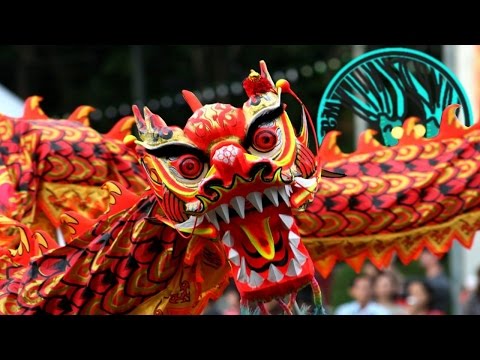
    But one day, the night of the first Spring, while Nián was approaching the village, villagers were burning some bamboo to keep themselves warm, so loud pops and crackles could be heard. To their surprise, Nián did not attack them that night. So they did it again the next year and again Nián did not attack. So since then, to ward themselves from the monster, they made it a yearly thing to make loud noises every new year’s eve. Now rather than bamboo burning, people light fire crackers and fireworks to create loud noises as a tradition and the lion dances that you see during Chinese New Year, it originated from the legend of the Nián. Also, “Nián” became the word for “Year”, so again I say, Xīnnián kuàilè! (新年快乐) to all of you~~

    source:  YouTube

  • Why is Finland building an underground city?

    Why is Finland building an underground city?

    We’re under the streets of Helsinki, the capital of Finland, and I’m going to show you the elaborate tunnels and passageways they have. A lot of it is public space that looks like they’re sporting fields. People use this all the time and yet you can see the granite rock and the fact that this space can be turned into bedding for 1,500 people in three days. That’s the time limit they give themselves to turn this from a sporting field into a shelter if required. We’re going to walk through here, I’m going to show you some of the other tunnels, because they go right across, underneath the streets of Helsinki. It’s all part of their civil defence. They won’t say that it’s to do with a threat, possibly from Russia, it could be a nuclear attack, it could be chemical warfare, it could be anything. But they want to be prepared. So now we’re coming into one of the other tunnels. Have a look at this – these are the beds that they have prepared, bunk beds that people can sleep on. They’ve got medical equipment ready, and then over here this is how they would go to the toilet. So the toilets would be here, they’ve got the ventilation up there. The yellow lines on the floor are where each of the toilets would be put. And have a look at that tunnel there behind me, so you can imagine this runs all the way, if we kept following this, you would keep coming into some of those public areas that could be sporting fields, or swimming pools, areas that can be easily turned into some kind of shelter for the people of Helsinki. They could fit 700,000 people in here, that’s more than the entire population, if they have to. They maintain them very well, they make sure they’ve got their own air supply in case it is a nuclear accident from eastern Europe, and they have to come down here and protect themselves. They make sure that they’ve got everything set and ready to go. They are more advanced with this than just about any other city in Europe, and although they share this massive border with Russia, and there is this question about whether Russia is a threat to Finland, they say they’re taking into consideration any worse case scenario, and they’re ready for it.
    source:  YouTube

    .

  • Australian government to recognize Jerusalem as Israels Capital

    Australian government to recognize Jerusalem as Israels Capital

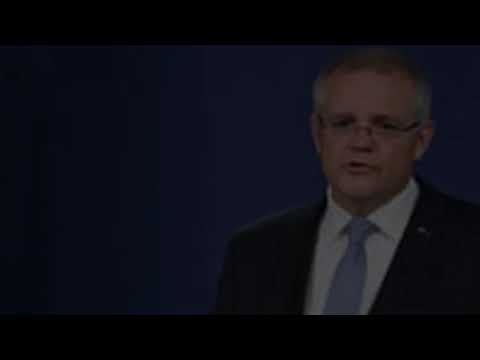
    Australian government to recognise Jerusalem as Israels capital World news Scott Morrison, the prime minister, to say that embassy will leave Tel Aviv when city’s status is finalised Scott Morrison, the prime minister, to say that embassy will leave Tel Aviv when city’s status is finalised The Australian government will formally recognise West Jerusalem as Israel’s capital, but the embassy will not be moved from Tel Aviv until the city’s status is finalised under a peace settlement. The prime minister, Scott Morrison, will announce the foreign policy shift in a speech to the Sydney Institute on Saturday, The Australian reports. The government will also commit to recognising a future state of Palestine with its capital in East Jerusalem after a settlement has been reached on a two-state solution. While the embassy move is delayed, the government will establish a defence and trade office in Jerusalem and will start looking for an embassy site.

    “The Australian government has decided that Australia now recognizes West Jerusalem – as the seat of the Knesset and many of the institutions of government – is the capital of Israel,” Morrison will say in his speech, according to The Australian. “And we look forward to moving our embassy to West Jerusalem when practical, in support of, and after, final-status determination.” In May, when the US moved its embassy to Jerusalem, it sparked massive protests in Gaza which saw 58 Palestinians killed. Ever since Donald Trump’s declaration in December last year, Israel has been pushing hard to persuade other countries to follow.

    In October, Morrison said he was “open to” to the move, describing it as a “sensible” proposal. Morrison, an evangelical Christian, immediately faced questions about whether his religious views had played a part in his decision to float the proposal, something he denied. “My faith and religion has nothing to do with this decision,” he said. Instead, he argued the status quo in Israeli-Palestinian relations had failed to make headway. “The orthodoxy that’s driven this debate which says issues like considering the question of the capital are taboo. I think we have to challenge that,” he said.

    source:  YouTube

  • The Norwegian King’s speech on love, religion and acceptance

    The Norwegian King’s speech on love, religion and acceptance

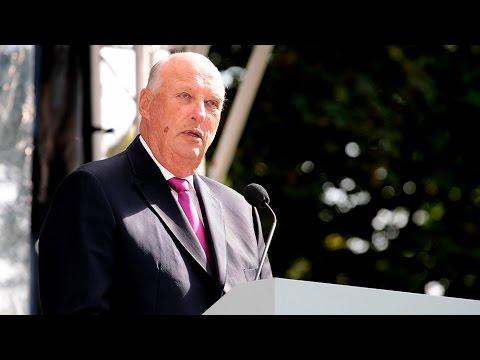
    Norwegians come from the north of Norway, from the middle, – – from the south and all the other regions. Norwegians are also immigrants from Afghanistan, Pakistan, Poland, – – Sweden, Somalia and Syria. It is not always easy to say where we come from. To which nationality we belong. Home is where the heart is. That cannot always be placed within country borders. Norwegians are girls who love girls. Boys who love boys. And boys and girls who love each other. Norwegians believe in God, Allah, everything and nothing. Norwegians like Grieg, Kygo, Hellbillies (Norwegian country rock band) – – and Kari Bremnes (Norwegian singer). In other words: You are Norway. We are Norway. My biggest hope for Norway is that we will manage to take care of each other.

    That we can build this country further on trust, sodality and generosity.

    source:  YouTube

  • US Intelligence Chiefs Contradict President Donald Trump On North Korea, ISIS, Iran |

    US Intelligence Chiefs Contradict President Donald Trump On North Korea, ISIS, Iran |

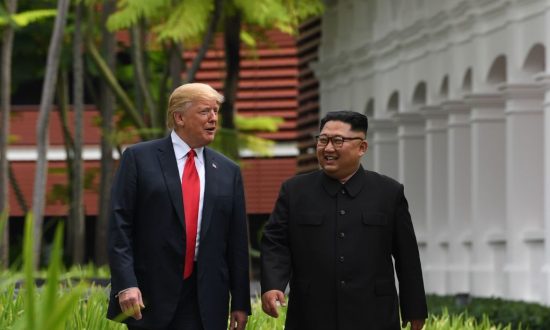
    This is yet another extraordinary moment the nation’s top intelligence officials publicly disagreeing with President Trump on key foreign policy and national security issues everything from North Korea to Russia and it comes in a critical moment with a major summit on the horizon with just weeks before president Trump is poised to have his second nuclear summit with North Korean leader Kim jong-un u.s. intelligence chiefs giving this stunning public rebuke sharply disagreeing with the president’s recent declaration that North Korea is no longer a nuclear threat we currently assess that North Korea will seek to retain its WMD capabilities and is unlikely to completely give up its nuclear weapons and production capabilities the regime is committed to developing a long-range nuclear or missile that would pose a direct threat to the United States and Don Isis just a month after mr.

    Trump declared victory we have won against Isis intelligence officials contradicting the president saying the terror group is weakened but not defeated well Isis is nearing territorial defeat in Iraq and Syria the group has returned to its guerrilla warfare roots while continuing to plot attacks and direct its supporters worldwide and already the president pushing back this morning tweeting when I became president Isis was out of control in Syria and running rampant since then tremendous progress made especially over last five weeks on Iran US intelligence agencies say Tehran is still not restarting its nuclear program despite the u.s.

    Withdraw from the nuclear deal accusing the country of violating the agreement at the moment technically they’re in compliance and a striking difference over one of the biggest issues looming over the white house Russia we expect Russia will continue to wage its information war against democracies and to use social media to attempt to divide our societies president the president again this morning tweeting about North Korea Kristen what’s the headline there well how did the president is shifting his tone on North Korea this morning after his previous declaration that the country no longer poses a nuclear threat today tweeting decent chance of denuclearization time will tell what will happen with North Korea I look forward to seeing Kim jong-un shortly look this is a much more measured tone from the president and the softer language likely aimed at lowering expectations as he prepares to meet with the North Korean leader for a second time sometime next month you

    source:  YouTube

  • France’s Rungis to develop Egypt’s wholesale markets

    France’s Rungis to develop Egypt’s wholesale markets

    Egypt’s government, represented by the Ministry of Supply and Internal Trade, signed a cooperation protocol with Rungis, the largest French company specializing in the management of wholesale markets in Europe, to rehabilitate and develop the markets of vegetables and fruits in Egypt.

    Minister of Supply and Internal Trade Ali al-Meselhy said that the ministry is exerting great efforts to develop the infrastructure for internal trade, especially wholesale markets and logistics areas, which will contribute to facilitating the transfer and distribution between governorates.

    Wholesale markets are an essential component of the internal trade system and their management process had become very complex, he added.

    Meselhy added that France is the number one country in Europe in terms of the management of wholesale markets.

    He said that an agreement was signed between the governments of the two countries to develop logistics areas, wholesale markets and production chains in Egypt, as well as provide technical support and training of Egyptian cadres in a grant of 80 million euros.

    First Assistant to the Minister for Investment and head of the Internal Trade Development Authority Ibrahim Ashmawy said that the agreement with Rungis includes management of the wholesale markets in Egypt and providing technical support for a period of six months as a first stage, which is scheduled to start in February.

    He pointed out that the agreement aims to reduce the rings of circulation and reduce losses while providing good management, which would lead to a reduction in prices for the consumer by 15-20 percent during 2019.

    Ashmawy stressed that the first phase of the agreement includes developing, operating and managing markets for vegetables and fruits. The next phase targets the French company entering the stage of partnership to finance and establish new markets.

    Rungis Project Manager Benoît Juster confirmed the importance of the Egyptian market on the company’s future investment map in the Middle East, pointing out that the company hopes to establish a long-term partnership with Egypt in the establishment and management of wholesale markets.

    Juster said that his company manages, operates and provides support to wholesale markets in France, as well as other countries such as Russia, Kazakhstan, Benin, the Philippines and Budapest. He added that the company’s annual sales volume exceeds 10 billion euros.

    Edited translation from Al-Masry Al-Youm

    source:  Egypt Independent

  • UK firms plan mass exodus if May allows no-deal Brexit

    UK firms plan mass exodus if May allows no-deal Brexit

    Thousands of British companies have already triggered emergency plans to cope with a no-deal Brexit, with many gearing up to move operations abroad if the UK crashes out of the EU, according to the British Chambers of Commerce.

    Before a crucial week in parliament, in which MPs will try to wrest control from Theresa May’s government in order to delay Brexit and avoid a no-deal outcome, the BCC said it believed companies that had already gone ahead with their plans represented the “tip of the iceberg” and that many of its 75,000 members were already spending vital funds to prepare for a disorderly exit.

    It said that in recent days alone, it had been told that 35 firms had activated plans to move operations out of the UK, or were stockpiling goods to combat the worst effects of Brexit.

    Matt Griffith, director of policy at the BCC’s west of England branch, said that many more companies had acted to protect themselves since May’s Brexit deal was decisively rejected by MPs in the Commons earlier this month.

    He said: “Since the defeat for the prime minister’s deal, we have seen a sharp increase in companies taking actions to try and protect themselves from the worst effects of a no-deal Brexit. No deal has gone from being one of several possible scenarios to a firm date in the diary.”

    Labour MP Yvette Cooper has revealed to the Observer that two major employers in her West Yorkshire constituency – luxury goods manufacturer Burberry and confectioner Haribo – had both written to her, warning of the damaging effects of no deal on their UK operations. Burberry employs 750 people in Castleford, and Haribo 700 across her constituency.

    Cooper is pushing for a Commons amendment – likely to be voted on in Tuesday’s debate – that would pave the way for Brexit to be delayed until the end of this year.

    Last week some of the UK’s largest employers – including Airbus, Europe’s largest aerospace manufacturer, which employs 14,000 people in the UK and supports another 110,000 through supply chains – warned of potentially disastrous effects of no deal on its UK activities.

    Tom Enders, the boss of Airbus, said: “Please don’t listen to the Brexiters’ madness, which asserts that because we have huge plants here we will not move and we will always be here. They are wrong.”

    Ever since the vote to leave the EU in 2016, business groups including the BCC and the Confederation of British Industry have lobbied ministers, arguing that our exporters need access to the EU’s customs union, which allows goods to be imported tariff-free.

    But the prime minister has insisted that the UK must leave both the customs union and EU single market if it the referendum result of 2016 is to be fully respected.

    Business concerns are growing as Downing Street braces for a series of Commons ambushes over Brexit this week. As well as moves to delay the date of leaving beyond 29 March, MPs worried about a cliff-edge exit or a hard Brexit are also planning to force a series of “indicative votes” in parliament on a range of alternative ways forward. These include a Norway-style arrangement and a second referendum.

    Some ministers, including Amber Rudd, the work and pensions secretary, and Richard Harrington, the business minister, have signalled they could quit if May does not allow them to back plans to delay Brexit by granting all Tory MPs including ministers a free vote on the issue.

    Meanwhile, some pro-Brexit cabinet ministers are pushing the PM to submit her own amendment pledging to renegotiate her Brexit deal, in a bid to win over Tory Brexiters and the Northern Irish DUP. Concerns are growing within the Tory party that the impasse may end in a snap election.

    Today, writing in the Observer, cabinet minister David Lidington says he shares the concerns of those worried about no deal and says the government intends to put a revised deal back to the Commons for another “meaningful vote” next month. “Once we have a blueprint for a plan that can secure the support of the House, the prime minister will go back to the EU,” Lidington writes. “MPs will then have another meaningful vote as soon as possible.”

    Meanwhile European commission president Jean-Claude Juncker has warned Theresa May in a private phone call that shifting her position in favour of a permanent customs union is the price she will need to pay for the EU revising the Irish backstop.

    He said without a major shift in the PM’s position, the current terms of the withdrawal agreement were “non-negotiable”. Details of the call, contained in a leaked diplomatic note, emerged as Juncker’s deputy, Frans Timmermans, told the Observer that there had been no weakening of the resolve in Brussels in support of Ireland, and accused the Tory Brexiters of a “cavalier” approach to peace. “Let me be extremely clear: there is no way I could live in a situation where we throw Ireland under the bus,” Timmermans said.

    source:  The Guardian

  • UK retirees in EU will lose free healthcare under no-deal Brexit

    UK retirees in EU will lose free healthcare under no-deal Brexit

    British nationals who have retired to EU countries including Spain and France will no longer have their healthcare covered by the NHS in the event of no Brexit deal, the government has said.

    The confirmation will come as a blow to around 190,000 British citizens retired in the EU in places such as the Spanish Costas, Provence in France and Tuscany in Italy.

    It could also add to the burden on the NHS if pensioners believe they have no option but to return to the UK for treatment. The government has previously admitted it is cheaper to pay Spain and France to look after British nationals than have them fly home.

    Currently pensioners can get treatment reimbursed by the NHS under an EU-wide set of reciprocal arrangements.

    “It is another example of how those advocating no deal are playing with the lives of British citizens living in other EU countries,” said Colin Yeo, an immigration lawyer and freedom of movement campaigner. “Many of these politicians and pundits probably haven’t bothered to find out how their policies would actually affect such people.”

    Pensioners who have paid in to the national insurance system for the qualifying number of years benefit from the “S1” reciprocal healthcare rules if they retire in EU/EEA countries or Switzerland.

    An S1 certificate is available to anyone in receipt of a state pension, and to some workers who are sent overseas on a temporary basis by their UK employers.

    In a little-publicised no-deal technical notice published this week, the UK government said: “An S1 certificate helps you and your dependents access healthcare in the EU/EEA country where you live. If you have an S1 certificate, it will be valid until 29 March 2019. After this date, the certificate may not be valid, depending on decisions by member states.”

    Sue Wilson, who chairs the Bremain in Spain campaign group, said the change could be devastating. “All along we’ve been told our healthcare is protected. This is a big shock to everyone and our members are really, really scared,” she said.

    She called on the government to agree to ringfence their rights. “We’ve been hearing about EU citizens in Britain getting settled status. Well, we have unsettled status,” she said.

    The government’s “overseas healthcare” phoneline has updated its recorded messages to include a no-deal warning, telling those who are considering moving to another country within the EEA or Switzerland that their S1 application will only be processed if they apply “in the next four weeks”.

    The campaign group British in Europe also said the loss could have a devastating effect on people with continuing healthcare needs. “Just think of the impact of this on a 75-year-old in the middle of vital cancer treatment on 30 March,” said Jeremy Morgan, a spokesman for health issues for the group.

    The Spanish and UK governments said they were confident a bilateral agreement would be in place despite the no-deal notice.

    The Department of Health said it was “working closely with countries, including Spain and France, to make sure patients can continue to access healthcare, whatever the outcome”.

    The Spanish government’s Brexit advice website outlines “contingency measures” that would “guarantee healthcare provision for British citizens in Spain” in the event of no deal.

    The technical notice advises retirees to investigate taking up private healthcare in the country in which they now reside, something that is likely to be come as shock to some, especially in the Costa del Sol in Spain where many have retired in order to make ends meet.

    The government has suggested worried pensioners research the state healthcare system in the country where they now live and find out if they are eligible for treatment.

    There are 70,000 British pensioners in Spain, 44,000 in Ireland, 43,000 in France and 12,000 in Cyprus.

    A senior civil servant in the Department of Health told a select committee in 2017 that Spain charged an average of €3,500 per pensioner signed up to the S1, Ireland charged an average of €7,500 and the UK charged about €5,000.

    In total, the government paid out about £500m – or £2,300 per pensioner – which he said was significantly lower than the cost of treating pensioners in the UK.

    source:  The Guardian

  • Clashes on Gaza’s Border With Israel as Protests Start

    Clashes on Gaza’s Border With Israel as Protests Start

    Clashes on Gaza’s Border With Israel as Protests Start


    Photo
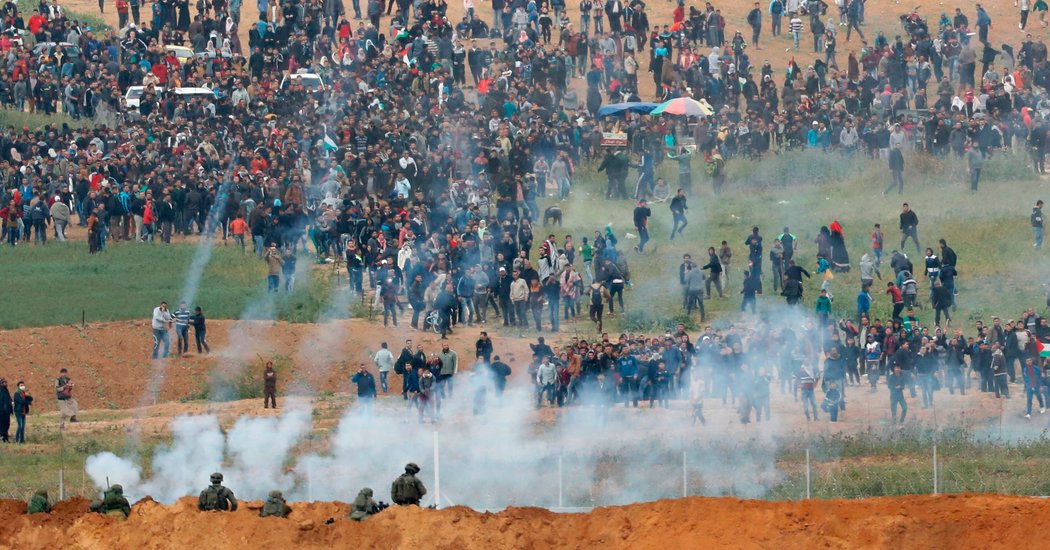
    Israeli soldiers shot tear gas across the border with Gaza on Friday as Palestinians gathered for demonstrations expected too last six weeks.Credit Jack Guez/Agence France-Presse — Getty Images


    JERUSALEM — Clashes broke out along Gaza’s volatile border with Israel on Friday as thousands of Palestinians set up tent cities, beginning a six-week protest campaign meant to culminate in mass marches, posing a new kind of challenge for Israel.

    Soon after the protest began, the Israeli military reported that thousands of Palestinians were rioting in six locations along the border, rolling burning tires and hurling stones at the fence and at Israelis soldiers beyond it.

    Declaring the area surrounding the Gaza Strip a closed military zone, the military said it was “responding with riot dispersal means and firing towards main instigators.”

    Continue reading the main story


    Photo
    Protesters carried a wounded man in eastern Gaza City on Friday.Credit Khalil Hamra/Associated Press


    The Palestinian organizers had called for peaceful protests, with men, women and children bused to tent encampments that popped up in recent days about 700 yards from the border with Israel.

    Hamas, the Islamic militant group that dominates Gaza and is known for its armed resistance, has joined the call for a different form of popular struggle, referred to as the Great March of Return, or the March of the Million.

    Continue reading the main story

    The idea was to protest Israel’s more than decade-long blockade of Gaza, which restricts the movement of people and goods in and out of the coastal territory, which Israel calls a security imperative, and to highlight Palestinian demands for a right of return to the lands that became Israel 70 years ago. A majority of Gaza’s two million residents are refugees of the 1948 war that surrounded Israel’s creation, or their descendants.

    Girding for violence, Israel had almost doubled its forces along the border, deploying snipers, special units and drones, and warning that it would act to prevent any breach of the border fence or violation of Israel’s sovereignty. The country faces the challenge of trying to maintain deterrence by threatening harsh measures, while also trying to avoid mass civilian casualties.

    Continue reading the main story


    Photo
    Palestinian protesters fleeing as tear gas was fired across the border.Credit Mahmud Hams/Agence France-Presse — Getty Images


    Amos Harel, a military analyst for the liberal newspaper Haaretz, wrote on Friday that the Israeli military “will have to maneuver between two goals likely to be contradictory.”

    B’Tselem, an Israeli human rights organization, warned in a statement that any shoot-to-kill policy against unarmed demonstrators would be unlawful, unless the soldiers’ lives were threatened.

    The idea for the border encampments, in about half a dozen locations, was initiated by a Gazan social-media activist, Ahmed Abu Artema, a political independent, and was soon adopted by Hamas, which has been promoting the protest on its social media platforms and urging Palestinians to participate.

    “Our will in achieving the actual return to our lands is more powerful than jet fighters and a gun,” Mr. Abu Artema said by phone on Friday as he was on his way to the protest. “This march is rightful and will not be used and exploited for political agendas.”

    Continue reading the main story


    Photo
    Setting up a large tent in preparation for the demonstrations on Thursday.Credit Adel Hana/Associated Press


    The Palestinian Health Ministry in Gaza reported one Palestinian man killed near the border zone early Friday by Israeli artillery fire. The Israeli military said the man was acting suspiciously; the Palestinians said he was a farmer.

    With Gaza’s economy collapsing, fears of an explosive response have mounted. In recent years, first Egypt and then the Palestinian Authority in the West Bank joined Israel in squeezing Gaza financially.

    Israel’s hard-line defense minister, Avigdor Lieberman, warned Gazans to keep away from the border in a post on Twitter written in Arabic. “The Hamas leadership is risking your lives,” he wrote. “I advise you to get on with your normal everyday lives and not to participate in the provocation.”

    The protest came at a particularly charged time, as Jews prepared for the start of the Passover holiday on Friday, and as Palestinians observed Land Day. The day commemorates the events of March 30, 1976, when Israeli security forces shot and killed six Arab citizens of Israel during protests over the state’s expropriation of Arab-owned land in northern Israel.

    Continue reading the main story


    Photo
    Palestinians carried a fellow protester waving a Palestinian flag on Friday.Credit Mohammed Abed/Agence France-Presse — Getty Images


    The Gaza protest is billed to reach its crescendo on May 15, when Palestinians commemorate the Nakba, or catastrophe, the anniversary of Israel’s declaration of independence and the 1948 war in which hundreds of thousands of Palestinians lost their homes through flight and expulsion.

    This year, May 15 is expected to be particularly explosive. It comes a day after the planned move of the United States Embassy to Jerusalem from Tel Aviv, a step that has provoked international criticism and Palestinian outrage, and it coincides with the start of Ramadan, the Muslim holy month.

    Organizers of the border protest had hoped to create an almost festival-like atmosphere to attract families, setting up portable washrooms and providing free food, water and Wi-Fi.

    But tensions in Gaza were building up for weeks. Palestinian militants have planted explosives along the border, and individuals have cut through the fence, some armed with knives and grenades, and set fire to Israeli military equipment, apparently testing Israeli preparedness and putting local communities on edge.

    Continue reading the main story


    Photo
    With Gaza’s economy collapsing, fears of an explosive response there have mounted.Credit Mahmud Hams/Agence France-Presse — Getty Images


    The protest feeds on Palestinian anger over the long blockade and the failing reconciliation process between Hamas and Fatah, the rival, mainstream movement led by President Mahmoud Abbas, whose Western-backed Palestinian Authority holds sway in parts of the West Bank.

    Mr. Abbas, whose forces were routed from Gaza during factional violence in 2007, has vowed to tighten economic sanctions on the enclave, where most of the population lives in poverty and lacks such basics as regular electricity.

    Hamas appeared eager to direct Gazan anger toward Israel.

    “The memory of Land Day renews in our consciousness the power of blood, which bled like a waterfall to defend the land, and which erupted like a volcano in the face of the occupiers,” Hamas said in a statement.

    Israel has fought three wars in Gaza over the past decade and has invested heavily in combating the threat posed by rockets fired by Hamas and other militant groups, and from tunnels crossing under the border.

    Continue reading the main story


    Photo
    Palestinians are protesting the more than a decade-long economic blockade of Gaza by Israel, and to demand a right of return for Palestinian refugees to the lands that became Israel 70 years ago.Credit Mohammed Abed/Agence France-Presse — Getty Images


    But the tent encampment and planned marches add a new dimension that observers feared could lead to bloodshed and escalation. Even before the protests started, Israel had started a campaign holding Hamas responsible for any violence.

    “The campaign organized by Palestinian leaders is in fact a dangerous, premeditated provocation meant to fan the flames of the conflict and increase tension,” the Israeli Ministry of Foreign Affairs said in a statement.

    “Hamas uses its resources for armament, smuggling tunnels, and other militaristic purposes, instead of investing in the civilian infrastructures in Gaza,” it added, asserting that Hamas had spent more than $10 million on the campaign, paying Gazans to get them to participate.

    Brig. Gen. Ronen Manelis, the chief spokesman of the Israeli military, described Hamas as “an organization in crisis” and accused its commanders of hiding behind women and children.

    “This is not Scouts summer camp,” he said of the border encampment in a radio interview on Thursday. “It’s a battle zone.”

    Isabel Kershner reported from Jerusalem, and Iyad Abuheweila from Gaza. Ibrahim El-Mughraby contributed reporting from Gaza.

    Continue reading the main story

    Source: NYTIMES