Category: World News

  • Ancient Bones And Teeth Found In A Philippine Cave May Rewrite Human History

    Ancient Bones And Teeth Found In A Philippine Cave May Rewrite Human History

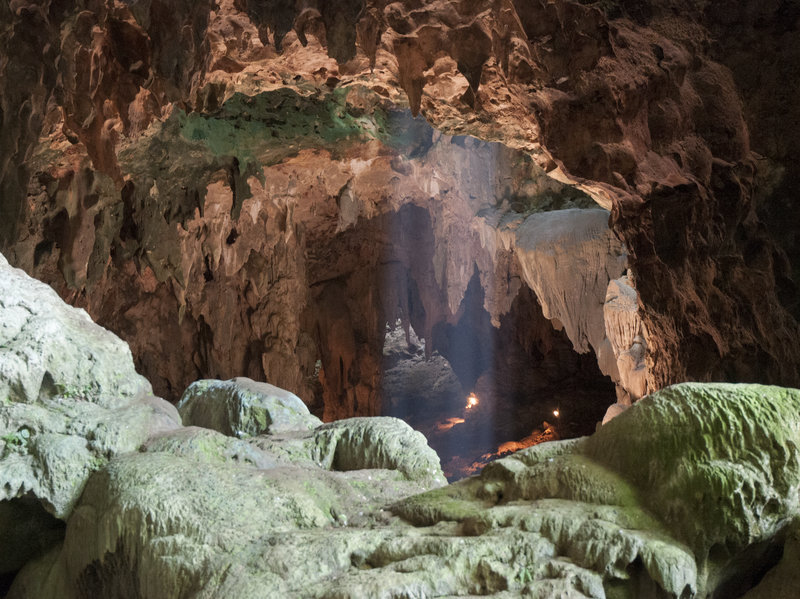
    An unusual species of human apparently lived on the island of Luzon in the Philippines as recently as 50,000 years ago. Based on teeth and bones found there, scientists suspect that these early humans probably stood less than 4 feet tall and had several apelike features. Yet, the researchers say, the bones are distinctly human — from a previously undiscovered species.

    The first clue was a bone that surfaced in 2007. Archaeologist Armand Salvador Mijares was digging in a cave on the island of Luzon and found a toe bone. He says it didn’t look like a modern human bone. “There’s something peculiar with this bone,” he recalls thinking. But one bone wasn’t enough to say for sure who or what it belonged to.

    Mijares, who’s with the University of the Philippines, was part of a team looking for bones of early humans. They kept digging for four more years. In 2011, they hit pay dirt — more toe bones, as well as finger bones, part of a thigh bone and seven teeth. And none looked like it belonged to modern humans. “We agreed that this could probably be a new species,” Mijares says.

    Discovering a new species of ancient human is a career-maker in anthropology — or career-breaker, if you’re wrong. So the team spent another eight years studying the bones and teeth. They now conclude that the skeletal fragments are from three individuals who lived sometime between 50,000 and 67,000 years ago. Writing this week in the journal Nature, the scientists call them Homo luzonensis, after the island.

    And, says paleoanthropologist Shara Bailey of New York University, these three are pretty unusual.

    “We tend to define species based on unique combinations of traits,” Bailey says, “and that seems to be what’s going on here.” She says it’s “super-surprising” how the teeth and bones exhibit some “very primitive traits” along with modern ones.

    For example, one toe bone is more curved than modern human toe bones. In fact, it looks just like the toe of a tree-climbing, ape-like creature, Australopithecus, that lived millions of years ago — well before the first humans evolved.

    Even the mouth combines an unusual mix of past and present: Some of the teeth look much like ours, while others are more like the teeth of ancestors that lived millions of years ago.

    Bailey calls the find a “mosaic” species: “I think it just opens up so many new questions,” she says. “It’s exciting.”

    One question is: Were these creatures related to the Hobbits (no, not the movie characters).

    “Hobbit” is the widely used nickname for another tiny, primitive human species that lived on an Indonesian island from about 100,000 years ago until 50,000 years ago. More formally called Homo floresiensis, the Hobbits were discovered 15 years ago. They, too, had a surprising mix of primitive and humanlike bones and teeth.

    read more

  • No Facebook for China

    No Facebook for China

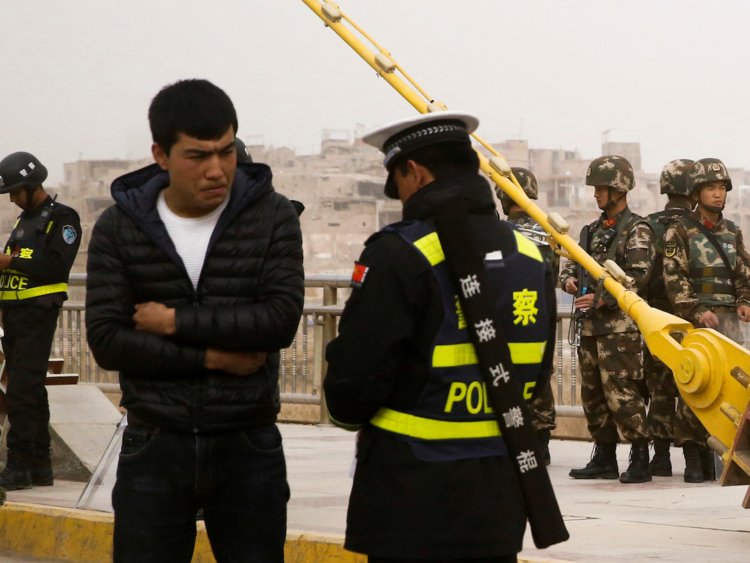
    COPS are sending people to “concentration camps” if they’re found with Facebook on their phones during random stop and searches in China, it is claimed.  Western social media is banned in China’s Xinjiang region where police are accused of seizing residents’ phones and installing spyware.  Pictures uploaded to Twitter show buildings in China that are allegedly being used as ‘re-education’ camps . Offenders are said to be sent to “re-education” camps to clamp down on social media use.  Mandatory spyware is downloaded onto citizen’s phones to restrict what citizens can access.

    And he said living in China is “like Nazi Germany” and likened the Chinese Communist Party to ISIS.  He said: “If you [have] got Twitter or Facebook in your phone, you will be sentenced to 15 years in concentration camps.”  Kasim told The Sun Online: “China doesn’t want you to know what’s happening outside of China, so they’ve built a firewall.  “Police check your phone looking for Facebook, Twitter, Instagram – any app not made in China.  “If they catch you with any of these apps, or in contact with someone abroad – even someone from China who has now left the country – they accuse you of hating communism, of hating China.

    “Almost every police [officer] has handheld equipment they connect to your phone with a USB where they can scan everything on your phone, all your photos, everyone you’ve ever spoken to.  “They transfer everything to their own system, iPhones only take about three minutes to scan – other phones can take hours.”  Images shared by another activist claim to show cops on a tube train approaching passengers to check their phones.  Sun Online has been unable to verify the authenticity of the pictures.

    COPS CHECKING PHONES

    But reports of Chinese police manually checking phones are not uncommon and have been confirmed by rights groups.  Maya Wang, China senior researcher from Human Rights Watch, told Sun Online: “Police [in Xinjiang] are checking people’s phones.  “There have been several testimonies from people who have been detained in these political re-education facilities for using Whatsapp.”  Kasim also shared pictures of what he says are two of these facilities, calling them “concentration camps” and saying he risked his life to photograph them.  He claimed one camp is a now-abandoned hospital that can allegedly hold up to 7,000 people.  Another image shows a white building with high walls and an impenetrable-looking fence.  Political re-education facilities are legal in the region and implemented by the Chinese government as “counter-terrorism measures”.

    Read More


  • Benjamin Netanyahu Is Re-Elected

    Benjamin Netanyahu Is Re-Elected

    Jerusalem (AFP) – Despite corruption allegations and stiff opposition from a new centre party, Israeli premier Benjamin Netanyahu has managed to boost his party’s share of the vote and looks set to keep power.

    While his right-wing Likud party and a centrist coalition appear set to have around the same number of parliamentary seats after Tuesday’s general elections, the man called ‘King Bibi’ by admirers has a clear path to forming a coalition.

    The 69-year-old is now likely to form another right-wing government and become the longest-serving Israeli prime minister later this year.

    The elections appear to prove Netanyahu’s enduring domestic appeal despite the graft accusations, and a fifth term in office would have knock-on implications for the peace process with Palestinians and for his potential indictment.

    Speaking after preliminary results were announced early Wednesday, Netanyahu hailed a “magnificent victory.”

    “It will be a right-wing government, but I will be prime minister for all,” he said.

    In Israel’s proportional political system, no party has ever won an outright majority. Instead the largest parties fight to form a coalition of at least 61 members of the 120-seat parliament.

    With ex-military chief Benny Gantz’s centrist Blue and White coalition leading in the polls, Netanyahu pulled out all the stops to shore up right-wing support.

    On March 11 he said Israel was “the national state, not of all its citizens, but only of the Jewish people,” sparking fierce criticism.

    Nearly 20 percent of Israeli citizens are Arabs.

    Then, two days before the election, in a seeming bid to steal votes from other right-wing parties, Netanyahu controversially pledged to annex settlements in the occupied West Bank.

    Critics say any such move would be a final nail in the coffin of the two-state solution, which envisions an independent Palestinian state alongside Israel.

    – Alliance-building –

    In the final days of the campaign Netanyahu was everywhere, giving interviews to all major Israeli media and constantly posting on social media.

    In the end his Likud party far out-performed expectations and is projected to have won around 35 seats, like Gantz.

    Ofer Zalzberg from the International Crisis Group think-tank said Netanyahu understood the right-wing had an inbuilt advantage in Israel and so could stick with his base.

    The right-wing bloc is predicted to have around 65 seats, compared with 55 for the centre and left, similar to the make up of the outgoing parliament.

    Even before the election, all the smaller right-wing parties had pledged to back Netanyahu for prime minister, meaning his victory was always likely, Zalzberg said.

    “He demonstrated again his mastery of alliance-building among the different political tribes of Israel — he is unmatched in this.”

    Dore Gold, a former advisor to Netanyahu, said the secret of his success is that he “understands the DNA of the Israeli voter.”

    With US President Donald Trump’s administration providing unprecedented support, as well as diplomatic breakthroughs in Africa and improving relations with Gulf Arab states, Gold said Netanyahu had improved Israel’s standing in the world without having to give away much in exchange.

    Traditional proposals had predicated improved relations between Israel and Arab states and others on achieving peace with the Palestinians, but Netanyahu has not made that a priority.

    “The people of Israel saw this, that he was not a throwback to the past but had an orientation for the future. That set the stage for an extraordinary election victory,” Gold said.

    – Corruption battle –

    Two major issues face Netanyahu in the coming months.

    The first is the allegations of corruption including receiving thousands of dollars in undeclared gifts, as well as offering legal reforms in exchange for favourable media coverage.

    In February Israel’s attorney general recommended he be indicted on charges of bribery, fraud and breach of trust.

    Netanyahu has consistently rejected the allegations, labelling them a left-wing witch hunt.

    Analysts said the victory could strengthen his hand against the charges, with talk even of introducing a law that sitting leaders cannot be indicted until after their term ends.

    “He is still in survival mode and is likely to try to pass the immunity legislation or find a way to end the indictments against him for once and all,” Hugh Lovatt, Israel analyst at the European Council on Foreign Relations think-tank, said.

    “After the election he can play the democracy card.”

    Israeli policy in the occupied Palestinian territories will also remain a prominent issue.

    Trump is expected to finally present a long-delayed peace proposal in the coming months.

    Details of the plan remain closely guarded.

    Israel occupies the West Bank and east Jerusalem, while more than 600,000 Israeli settlers live there in communities considered illegal under international law.

    Netanyahu has long been sceptical of a two-state solution, saying Israel needs to control Palestinian territory for security reasons.

    “In this election he came out clearly and embraced his ideological opposition to Palestinian freedom,” Palestinian political analyst Diana Buttu said.

    source

  • This Canadian clothing brand found a brilliant way to undermine the symbolism of the MAGA hat

    A powerful new advocacy video repurposes the Make America Great Again (MAGA) hat to tell the stories of immigrants and refugees — and to welcome them to Canada, Ad Week reports. “For many immigrants, refugees and other people of color already established in America, the deceptively plain-looking MAGA hat represents an ideology that could cost them their security, their health and their lives,” Ad Week observes. The ad agency Zulu Alpha Kilo and Canadian lifestyle …

    This content was originally published here.

  • A Parent for the Internet

    A Parent for the Internet

    Be ready for the parent view of what is going on in the internet.  Just maybe this is a good idea.

    The UK government is taking a hard line when it comes to online safety, moving to establish what it says is the world’s first independent regulator to keep social media companies in check.

    Companies that fail to live up to requirements will face huge fines, and senior directors who are proven to have been negligent will be held personally liable. They may also find access to their sites blocked.

    The new measures, designed to make the internet a safer place, were announced jointly by the Home Office and Department of Culture, Media and Sport. The introduction of the regulator is the central recommendation of a highly anticipated government white paper, titled Online Harms, published Monday in the UK.

    The regulator will be tasked with ensuring social media companies tackle a range of online problems, including:

    • Incitement of violence and the spread of violent (including terrorist) content
    • Encouragement of self-harm or suicide
    • The spread of disinformation and fake news
    • Cyberbullying
    • Children’s access to inappropriate material
    • Child exploitation and abuse content

    As well as applying to the major social networks, such as FacebookYouTube and Twitter, the requirements will also have to be met by file-hosting sites, online forums, messaging services and search engines.

    “For too long these companies have not done enough to protect users, especially children and young people, from harmful content,” UK Prime Minister Theresa May said in a statement. “We have listened to campaigners and parents, and are putting a legal duty of care on internet companies to keep people safe.”

    Google and Facebook didn’t immediately respond to a request for comment.

    The UK government is trying to decide whether to appoint an existing regulator to the job or to create a brand-new regulator position purely for this purpose. Initially the position will be funded by the tech industry, and the government is debating a levy for social media companies.

    “The era of self-regulation for online companies is over,” Digital Secretary Jeremy Wright said in a statement. “Voluntary actions from industry to tackle online harms have not been applied consistently or gone far enough.”

    The global move toward regulation

    The measures announced by the UK on Monday are part of a larger global movetoward greater regulation for big tech. The efforts originated in Europe, but have been gaining traction in the US, as well as with the leaders of tech companies, including Mark Zuckerberg and Tim Cook.

    At a time of great political upheaval in the UK, the government is deciding to stand up to Silicon Valley tech companies, while hoping they’ll continue to create local jobs once the country has departed the EU. There are still some elements of the new regulatory process that are up for debate.

    I wish them well on this global journey!

    Read More

  • Is China a Threat to the World?

    Is China a Threat to the World?

    China has and always will be a world power, even if the news or other countries do not talk about it.  They stand alone in their decisions to govern themselves.

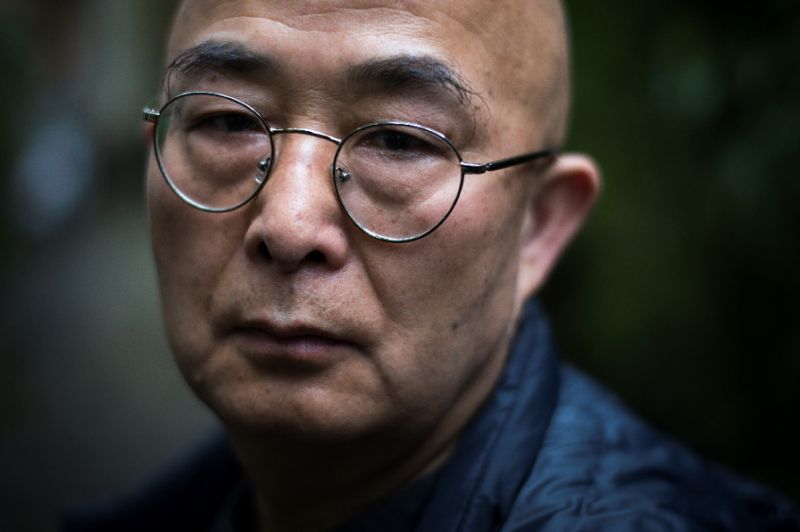
    A dissident writer dubbed the “Chinese Solzhenitsyn” said Friday that his homeland is a “threat for the whole world”.  Liao Yiwu, who was jailed for writing a poem called “Massacre” about the Tiananmen Square protests, told AFP that it would be better for mankind if the economic superpower “splits up”.  “My dream is that China splits up into 10 or so countries. Because China as it is today is a threat for the whole world,” he said as his latest book, “Bullets and Opium”, was published in France.  The book, which has been banned in China, recounts the stories of dozens of victims of the Tiananmen massacre, when troops killed thousands of pro-democracy protesters in Beijing in 1989.

    The massacre, which is also known as the “June Fourth Incident”, is a major taboo in China.  Liao, who has been living in exile in Berlin since 2011, said, “Returning to China is not a big concern for me. I would like to go back to my native Sichuan — when it’s independent. Then I would be delighted to return.”  Liao, a poet and musician who also reported on the lives of the Chinese poor, was tortured in prison, according to human rights groups, and harassed by the police on his release.  He told AFP that he was “very pessimistic” about his country under the increasing authoritarian rule of President Xi Jinping.

    – ‘Executioners’ in power –

    “Thirty years ago we thought we might develop towards democracy. Today it is all about making money.  “Every one of the Western countries which criticised China after the (Tiananmen) massacre fight with each other now to do business with the executioners even as they continue to arrest and kill people,” Liao added.  He poured scorn on the fact that Xi Jinping’s daughter studied at Harvard along with the children of other Communist Party leaders. “Even the leaders’ mistresses are getting grants to study” at the US university, he claimed.  “Those who have scruples are marginalised while those who make money without criticising the party can do what they want,” said the 60-year-old.  But Liao insisted that Tiananmen is the major turning point in recent Chinese history.  “For me, as for all Chinese people, it was a cataclysmic moment,” he said.

    – ‘Struggle for the truth’ –

    “You cannot mention the massacre in China, it’s taboo. My struggle is to make the truth of what happened known to as many people as I can.”  The writer said that three decades on “we still don’t know the exact number of victims”.  Human rights groups believe that between 2,600 and 3,000 people died after 200,000 soldiers were brought in to encircle the Chinese capital.  British diplomatic cables declassified in 2017 put initial estimates of the death toll at around 10,000.  “The Mothers of Tiananmen group have published 202 names but we know there was a lot more than that,” Liao added.  As for the young man standing in front of a tank, who became a symbol of the peaceful protest, “we still don’t know his name or his fate,” he added.

    “The name Wang Weilin given to him by Western journalists was invented. We know nothing about him even though he is the symbol of the millions of people who opposed the tyranny of June 4,” the writer said.  Liao’s book “Testimonials” about his time in prison has been compared to the Soviet dissident Alexander Solzhenitsyn’s “The Gulag Archipelago”, and was praised by Chinese Nobel Peace Prize winner Liu Xiaobo, who died in 2017 after spending years in prison.  Territorial issues are deeply sensitive in China and any suggestions that the country could be broken up are likely to stoke outrage.  Last year hotel chain Marriott was strongly criticised by Chinese authorities for listing Taiwan — along with Tibet and Hong Kong — as separate countries, all regions which Beijing claims under its authority.

    In May, US clothing retailer Gap apologised to China over a T-shirt with a map showing the mainland but omitting Taiwan — self-ruled since 1949 — which Beijing considers a rebel province awaiting reunification.

    source

  • Japanese space probe drops explosive on asteroid Ryugu

    Japanese space probe drops explosive on asteroid Ryugu

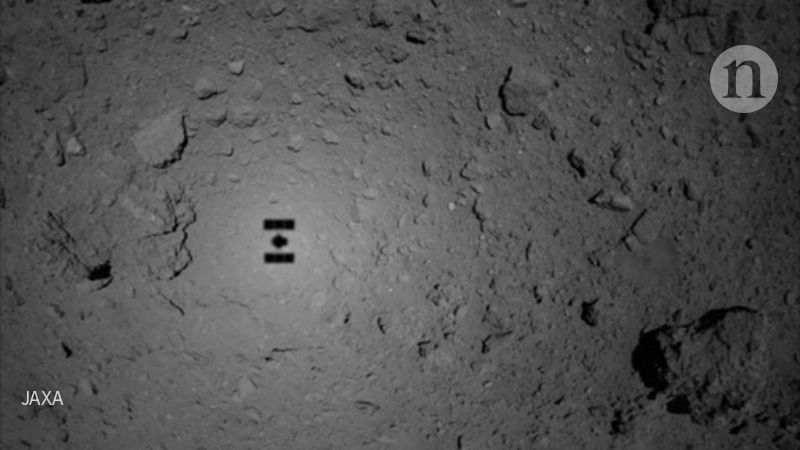
    Hayabusa2 hovering above asteroid Ryugu in October. Credit: JAXA For the past year, space probe Hayabusa2 has pelted asteroid Ryugu with bouncing probes, shot a bullet at it, and taken a bite of it — all for science. But now, the mission has performed its most daring manoeuvre yet: it dropped an explosive on the surface of the asteroid to create a small crater. If the explosion went as planned — the mission team are yet to confirm the detonation — it will expose some of the asteroid’s subsurface layers that the probe will gather during a later touchdown. The operation took place on 5 April. First, the probe lowered itself from a parking altitude of 20 kilometres down to 500 metres above the asteroid’s surface. From there it dropped an explosive device. After partially ascending, it then released a second device carrying a camera. The Japan Aerospace Exploration Agency (JAXA) confirmed that the probe had released the device and was safe at 11:56 am Japan time (3:36 am UT). “We conducted a lot of experiments, but when we did this for real, I was still very nervous,” said Osamu Mori, an engineer from JAXA’s Institute of Space and Astronautical Science (ISAS) in Sagamihara who was involved in the operation of the impactor, during a live broadcast. In Ryugu’s extremely weak gravity, the bomb took about 40 minutes to reach the surface. Meanwhile, the spacecraft manoeuvred itself to a safe zone behind the asteroid. That way, when the 9.5 kilograms of explosive charge went off, the debris it kicked up could not harm the probe. The one-use camera device, however, was still hovering above the target, ready to take pictures of the explosion and upload them back to the mother ship via a radio link.Images will confirm whether the charge detonated and created a crater. Hayabusa2’s mission manager Makoto Yoshikawa , also from ISAS, told Nature in June that the manoeuvre would be “a very risky operation”, but one with big potential payback. The experiment will give astronomers the opportunity to study material under the asteroid’s surface, which can shed light on the early Solar System. In the following weeks, the probe will image the crater from high up. Then at a later date, mission scientists plan to execute the final major step of the mission. They will lower the probe right into the crater and collect a sample. This will be the second sample collected from Ryugu: Hayabusa2 already touched down on 22 February , and collected some of its space dirt after kicking it up with a bullet. Space agencies have blown craters on Solar System bodies before. In 2005, NASA’s Deep Impact mission released a washing-machine-sized impactor at high speed onto a comet called Tempel 1. And on multiple occasions over the decades, researchers have sent impactors and deliberately crashed probes on the Moon’s surface — including most recently the Lunar Atmosphere and Dust Environment Explorer — and studied the effects. Hayabusa2 left Earth in late 2014 and arrived at Ryugu in June 2018 . In two separate phases in September and October, it then released three small probes onto the surface. The spacecraft is scheduled to head back to Earth before the end of 2019. A year later, a re-entry capsule will take samples down with it so that scientists can study them in their labs.

    This content was originally published here.

  • Trump cuts aid to Central American countries as migrant crisis deepens

    Trump cuts aid to Central American countries as migrant crisis deepens

    Trump has claimed that the countries had “set up” caravans of migrants in order to export them into the United States

    By Julia Harte and Tim Reid

    WASHINGTON/EL PASO, Texas, March 30 (Reuters) – The U.S. government cut aid to El Salvador, Guatemala, and Honduras on Saturday after President Donald Trump blasted the Central American countries for sending migrants to the United States and threatened to shutter the U.S.-Mexico border.  A surge of asylum seekers from the three countries has sought to enter the United States across the southern border in recent days. On Friday, Trump accused the nations of having “set up” migrant caravans and sent them north.

    Trump said there was a “very good likelihood” he would close the border this week if Mexico did not stop immigrants from reaching the United States. Frequent crossers of the border, including workers and students, worried about the disruption to their lives the president’s threatened shutdown could cause.  At a rally on the border in El Paso, Texas, Democratic presidential hopeful Beto O’Rourke denounced Trump’s immigration policies as the politics of “fear and division.”  A State Department spokesman said in a statement it was carrying out Trump’s directive by ending aid programs to the three Central American nations, known as the Northern Triangle.  The department said it would “engage Congress in the process,” an apparent acknowledgment that it will need lawmakers’ approval to end funding that a Congressional aide estimated would total about $700 million.

    New Jersey Senator Bob Menendez, the top Democrat on the Senate Foreign Relations Committee, called Trump’s order a “reckless announcement” and urged Democrats and Republicans alike to reject it.  Trump told reporters at his Mar-a-Lago resort in Florida on Friday that the United States was paying the three countries “tremendous amounts of money,” but received nothing in return.  Mario Garcia, a 45-year-old bricklayer in El Salvador, said he was setting off for the United States regardless of the president’s threat to close the frontier.  “There is no work here and we want to improve (our lives), to get ahead for our families, for our children. I don’t give a damn (what Trump says), I’m determined,” Garcia said.

    Garcia was one of a group of at least 90 people who left the capital San Salvador over the weekend on buses heading north, in what locals said was the tenth so-called caravan to depart for the United States since October.  The government of El Salvador has said it has tried to stem the flow of migrants.  The Honduran Foreign Ministry on Saturday called the U.S. policies “contradictory” but stressed that its relationship with the United States was “solid, close and positive.”  Trump, who launched his presidential campaign in 2015 with a promise to build a border wall and crack down on illegal immigration, has repeatedly threatened to close the frontier during his two years in office but has not followed through.  This time, Homeland Security Secretary Kirstjen Nielsen and other U.S. officials say border patrol officers have been overwhelmed by sharp increase asylum seekers, many of them children and families who arrive in groups, fleeing violence and economic hardship in the Northern Triangle.

    March is on track for 100,000 border apprehensions, Homeland Security officials said, which would be the highest monthly number in more than a decade. Most of those people can remain in the United States while their asylum claims are processed, which can take years because of ballooning immigration court backlogs.  Nielsen warned Congress on Thursday that the government faces a “system-wide meltdown” as it tries to care for more than 1,200 unaccompanied children and 6,600 migrant families in its custody.  Trump has so far been unable to convince Congress to tighten asylum laws or fund his border wall. He has declared a national emergency to justify redirecting money earmarked for the military to pay for the wall.  Mexico has played down the possibility of a border shutdown. Its foreign minister, Marcelo Ebrard, said the country is a good neighbor and does not act on the basis of threats.  It was not clear how shutting down ports of entry would deter asylum seekers because they are legally able to request help as soon as they set foot on U.S. soil.

    But a border shutdown would disrupt tourism and U.S.-Mexico trade that totaled $612 billion last year, according to the U.S. Census Bureau. A shutdown could lead to factory closures on both sides of the border, industry officials say, because the automobiles and medical sectors especially have woven international supply chains into their business models. (Reporting by Julia Harte and Richard Cowan in Washington, and Tim Reid in El Paso; Additional reporting by Jose Luis Gonzalez in Ciudad Juarez, Julia Love in Mexico City, Omar Younis in San Diego, Nelson Renteria in San Salvador and Orfa Mejia in Tegucigalpa; Writing by Daniel Wallis; Editing by Rosalba O’Brien)

    source

  • WordPress.com vs WordPress.org

    WordPress.com vs WordPress.org

    WordPress.com vs WordPress.org what to choose from?

    This is most obvious that whenever a relatively new blogger makes his entry to this blogging world, he definitely would like to start with a free blogging option. Basically, we Indians are resistant to spend money online. We all have fears of any kind or another that what we will be forged or our money will be lost. So, one option which remains with us is to trying out free options.

    WordPress.com is an option where you can host your site for free with them. They provide this service for free, whereas, wordpress.org is for self-hosted.

    “Now the question is, which one is good and should be opted”

    It’s not a rocket science to know that which one is good. Obviously, self-hosted wordpress blog is the best option.  Because it gives you full control of your website. But with authority there comes responsibility also it has some cons also. But, at the end it’s definitely better to start your Self-hosted WordPress Blog. This will be clear to you after reading the full article.

    “This is good for me or not”

    When I started blogging, a good 4 years back, I had no knowledge of blogging. I started it on my own instincts. What actually made me to start this journey, I really don’t remember. But it’s a great story for me. At that time, I had to make decisions at every point. And the only question I faced was whether this is good for me or not. At that time, I made a decision to start my website on self-hosted wordpress.org. Which I feel today that I took right decision then. It was actually a fluke that worked for me.

    Now, come to the point…..

    Pros of wordpress.com

    • The most important benefit is that your website is totally free and they offer up to 3 GB space. But beyond that they charge at $19.95 per year for 5 GB or $289.97 per year for 100 GB.
    • You don’t have to worry about plugins and all
    • You don’t need to worry about tweaking your server or blog.
    • Easy to use
    • They will take backups

    Cons of wordpress.com

    • Your website will show their ads and you will have no control over them
    • You cannot use plugins unless you join their VIP Plans of $3750 per month. Are you okay…!!
    • You can’t use custom themes and will have to stick to their themes.
    • You can’t show ads or sell ads on your website unless you have more than 25000 visitors per month and you have signed with them for 50-50 partnership.
    • You will not have any control over your analytics to measure your success.
    • Your account may be terminated anytime if it violates their terms and conditions.
    • And many more…….

    Now, Pros of wordpress.org

    • It’s free and super easy to use
    • You are the boss of your website and have full control over it.
    • You can install whatever plug ins you want.
    • You can install your customized themes.
    • You can have your analytics installed.
    • You are free so show any ad of your choice.
    • You can simply do whatever you want to do man..

    Cons of wordpress.com

    It too has some disadvantages.

    • You required to have some basic knowledge of web hosting
    • You have to tweak your hosting environment
    • Definitely there are some charges involved into this.
    • You have to choose your plug ins carefully.
    • You have to take care of its security issues.
    • You will have to take backups an all

    The post WordPress.com vs WordPress.org appeared first on Blognexx.

    This content was originally published here.

  • Angry Canadians Claim “Toxic Splashdown” From Spaceships Is Ruining Our Oceans – Narcity

    Angry Canadians Claim “Toxic Splashdown” From Spaceships Is Ruining Our Oceans – Narcity

    While space travel and exploration has advanced in the past few decades, the technology that is being used to launch these rockets and satellites into space is still fairly unknown by a majority of the world. After a group of Canadians expressed their anger about Russian spacecraft allegedly ruining Canadian waters, a global ocean group is being formed in order to study possible toxic material falling into oceans from space debris. 

    The group that is being formed is a global agency run by the International Maritime Organization. This group decided to launch their study of toxic splashback after hearing the concern from Canadians. 

    An Inuit group was among the first to express their concerns about this toxic space debris that was falling into Canadian waters. These Canadians stated that Russian launches had allowed for a variety of toxic waste to ruin the waters in which hunters depended on for food. 

    In 2017, after hearing these complaints from the Inuit people, Greenpeace conducted a study which found at least eleven toxic splashdowns from spacecrafts since 2002. However, this research also shows that there could be many other toxic splashdowns that researchers are still unaware of. 

    This ‘toxic splashback’ that is said to contaminate waters after the launching of a spacecraft is thought to be the leftover fuel from the launch, which is often made of highly toxic hydrazine. 

    According to CP24, Canadian and European officials state that a majority of this toxic fuel is burned up before it hits the Earth. However, research that has been conducted on Russian launch sites state that some fuel does reach the water after takeoff.  

    This new global ocean group will be conducting research of this “toxic splashback” and study the environmental effects that it has on the world’s oceans. 

    The group has requested information from government bodies as well as international bodies that are involved in space studies, so they can collect clear data on how badly these toxic splashbacks are harming the environment. 

    This new study is being conducted a month after Canada has announced their participation in a groundbreaking space program that will allow for further exploration of Mars and humans living on the moon. 

    This content was originally published here.