
Today the PM claimed she had done all she could to take Britain out of the EU with a deal, saying: “Ever since I first stepped through the door behind me as Prime Minister, I have striven to make the United Kingdom a country that works not just for a privileged few, but for everyone. And to honour the result of the EU referendum. “If you give people a choice you have a duty to implement what they decide. I have done my best to do that. “Sadly I have not been able to do so. I tried three times – I believe it was right to persevere even when the odds against success seemed high.” Her voice cracking, she attempted to defend her legacy and insisted she has helped to fix Britain’s “burning injustices”. Mrs May concluded: “I will shortly leave the job it has been the honour of my life to hold – the second female Prime Minister, but certainly not the last. “I do so with no ill will but with enormous and enduring gratitude to have had the opportunity to serve the country I love.” After her speech, the PM and Philip May drove off to spend the Bank Holiday weekend at their home in Sonning, Berkshire.
Category: World News
-
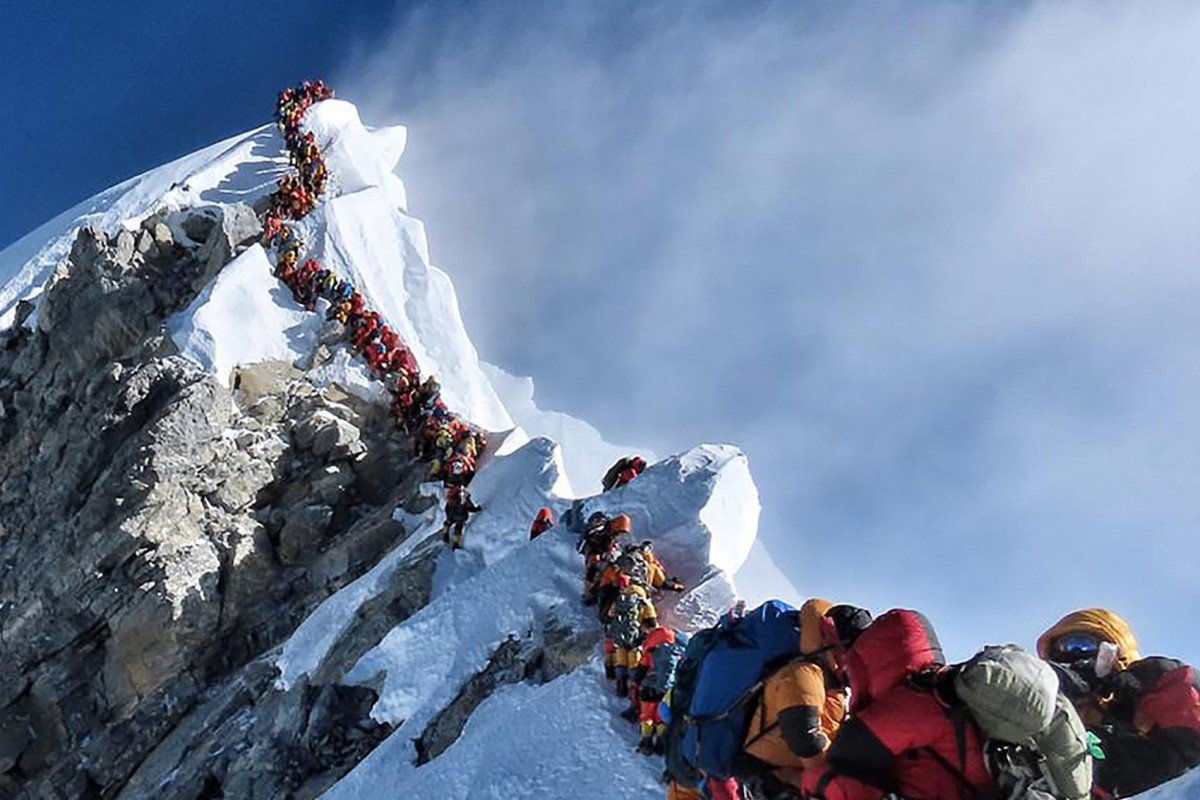
Four more deaths on traffic-jammed Everest
A traffic jam of climbers in the Everest “death zone” was blamed for two of four new deaths reported Friday, heightening concerns that the drive for profits is trumping safety on the world’s highest peak. Nepal has issued a record 381 permits costing $11,000 each for the current spring climbing season, bringing in much-needed money for the impoverished Himalayan country. But a small window of suitable weather before the short season ends has in recent days triggered bottlenecks of hundreds of climbers wanting to achieve for many — although perhaps not for purists — the ultimate in mountaineering. The four latest deaths reported on Friday, taking the toll from a deadly week on the overcrowded peak to eight, include two Indians and a Nepali on the Nepal side and an Austrian on the way down on the northern Tibetan side, officials and expedition organisers said. Ang Tsering Sherpa, former president of the Nepal Mountaineering Association, said that the weather window to summit this season was narrow, meaning that many teams had to wait to go up.
“Spending a long time above the death zone increases the risk of frostbite, altitude sickness and even death,” he said. Kalpana Das, 52, reached the summit but died on Thursday afternoon while descending, as a huge number of climbers queued near the top. The other Indian, Nihal Bagwan, 27, also died on his way back from the summit. “He was stuck in the traffic for more than 12 hours and was exhausted. Sherpa guides carried him down to Camp 4 but he breathed his last there,” said Keshav Paudel of Peak Promotion. A 33-year-old Nepali guide died at the base camp on Friday after he was rescued from Camp 3 for falling sick. Wednesday claimed the lives of an American and another Indian. Donald Lynn Cash, 55, collapsed at the summit as he was taking photographs, while Anjali Kulkarni, also 55, died while descending after reaching the top. Kulkarni’s expedition organiser, Arun Treks, said heavy traffic at the summit had delayed her descent and caused the tragedy.
“She had to wait for a long time to reach the summit and descend,” said Thupden Sherpa. “She couldn’t move down on her own and died as Sherpa guides brought her down.” Pasang Tenje Sherpa, of Pioneer Adventure, told AFP that Cash collapsed on the summit and died close to Hillary Step as guides were bringing him back. Last week, an Indian climber died and an Irish mountaineer went missing after he slipped and fell close to the summit and is presumed dead. The Irish professor was in the same team as Saray Khumalo, 47, who this week became the first black African woman to climb Everest and who is hoping to conquer the highest summits on each of the seven continents.
Mountaineering in Nepal has become a lucrative business since Edmund Hillary and Tenzing Norgay made the first ascent of Everest in 1953. Most Everest hopefuls are escorted by a Nepali guide, meaning more than 750 climbers were expected to tread the same path to the top in the current season. At least 140 others have been granted permits to scale Everest from the northern flank in Tibet, according to expedition operators. This could take the total past last year’s record of 807 people reaching the summit. “About 550 climbers have summited the world tallest mountain by Thursday according to the data provided by expedition organizers to us,” said Mira Acharya, spokeswoman for Nepal’s Tourism Department
-

IQ rates are dropping in many developed countries and that doesn’t bode well for humanity
People are getting dumber. That’s not a judgment; it’s a global fact. In a host of leading nations, IQ scores have started to decline.
Though there are legitimate questions about the relationship between IQ and intelligence, and broad recognition that success depends as much on other virtues like grit, IQ tests in use throughout the world today really do seem to capture something meaningful and durable. Decades of research have shown that individual IQ scores predict things such as educational achievement and longevity. More broadly, the average IQ score of a country is linked to economic growth and scientific innovation.
So if IQ scores are really dropping, that could not only mean 15 more seasons of the Kardashians, but also the potential end of progress on all these other fronts, ultimately leading to fewer scientific breakthroughs, stagnant economies and a general dimming of our collective future. As yet, the United States hasn’t hit this IQ wall — despite what you may be tempted to surmise from the current state of the political debate. But don’t rush to celebrate American exceptionalism: If IQs are dropping in other advanced countries but not here, maybe that means we’re not really an advanced country (too much poverty, too little social support).
Or — just as troubling — if we are keeping up with the Joneses (or Johanssons and Jacques) in terms of national development, that means we are likely to experience similarly plummeting IQs in the near future. At which point, the U.S. will face the same dangers of intellectual and economic stagnation.
-

Following US Export Ban, Mobile Carriers Worldwide Drop Huawei Phones From Lineup
In light of the U.S. administration’s export ban on Chinese telecom giant Huawei, mobile carriers around the world have announced that they would discontinue selling Huawei models of smartphones, owing to concerns that the U.S. restrictions would affect the phones’ maintenance.
Meanwhile, UK-based chip designer ARM suspended its business with Huawei, which is the world’s largest manufacturer of telecommunications equipment.
Huawei smartphones use Google’s Android operating system. After the U.S. Commerce Department added Huawei and its 70 affiliates to its trade blacklist on May 15, Google announced that it would suspend its business with Huawei.
Losing access to Google’s products means Huawei phones would no longer be able to access many of the U.S. tech giant’s most popular apps, such as Gmail and Google Maps.
To give current Huawei clients time to adjust to the restrictions, the Commerce Department granted Huawei a temporary exemption for 90 days, allowing them to maintain existing networks and provide software updates to existing Huawei phones.
-
Nepalese Sherpa Sets Mount Everest Record (Again), Climbing Mountain Twice In A Week
A Nepalese mountain
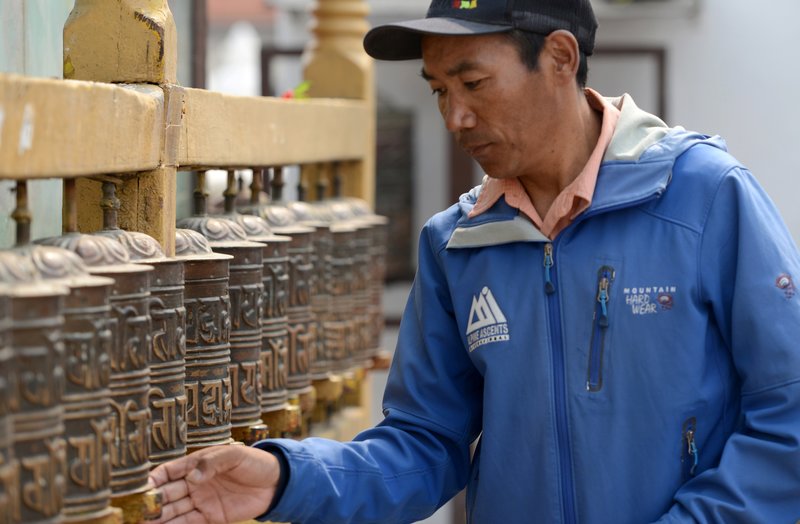
climber has now climbed Mount Everest a record 24 times — and he’s hoping to do it one more time before he retires. Kami Rita Sherpa, 49, has been climbing Everest since 1994. “It’s also the second time in a week that he’s made the arduous trek,” NPR’s Sushmita Pathak reports from Mumbai. “The 49-year-old Sherpa guide had already broken his own record on May 15, when he scaled the summit for the 23rd time.” Rita started his most recent climb just three days after his 23rd summit of Everest. Early Tuesday morning, he stepped on the tallest peak in an area known as the roof of the world, leading a team of Indian police officers on the climb, according to The Kathmandu Post. The highest mountain on Earth, Mount Everest’s summit is more than 29,000 feet above sea level. The first time it was successfully scaled was in 1953 — and the southeast route that was taken by Sir Edmund Hillary and Sherpa Tenzing Norgay is the same one Rita and many other climbers still use today.. In addition to Everest, Rita has climbed a number of other imposing mountains, including K2 and Cho-Oyu. Mountaineers who hope to climb Everest have a brief window each May in which weather conditions are most favorable. In the current season, 381 people have received permits to carry out expeditions on the mountain, as part of 44 teams, according to Nepal’s Department of Tourism. Of those climbers, 14 are natives of Nepal. As of Monday, at least 75 climbers had reached the top of Everest in the current season, according to The Rising Nepal.
-

5G Danger: Hundreds Of Respected Scientists Sound The Alarm About Health Effects As 5G Networks Go Up Nationwide
Even though many in the scientific community are loudly warning about the potential health effects that 5G technology could have on the general population, Verizon and AT&T are starting to put up their 5G networks in major cities all across the nation. Today, the total number of cell phones exceeds the entire population of the world, and the big cell phone companies are making a crazy amount of money providing service to all of those phones. And now that the next generation of cell phone technology has arrived, millions of cell phone users are looking forward to better connections and faster speeds than ever before. In fact, President Trump says that 5G networks will be up to 100 times faster than the current 4G networks that we are using right now…
5G will be as much as 100 times faster than the current 4G cellular networks. It will transform the way our citizens work, learn, communicate, and travel. It will make American farms more productive, American manufacturing more competitive, and American healthcare better and more accessible. Basically, it covers almost everything, when you get right down to it. Pretty amazing.
And just as 4G networks paved the way for smartphones and all of the exciting breakthroughs — they made possible so many things — this will be more secure and resilient. 5G networks will also create astonishing and really thrilling new opportunities for our people — opportunities that we’ve never even thought we had a possibility of looking at.
Sounds great, right?
But in order to achieve such vastly superior performance, 5G networks will use technology that is completely different from 4G networks.
5G waves are “ultra high frequency” and “ultra high intensity”, but they are also easily absorbed by objects such as buildings and trees. So although cell towers will be much, much smaller, but they will also have to be much, much closer together than before. According to CBS News, it is estimated that the big cell phone companies will be putting up at least 300,000 of these small towers, and it has been projected that it will cost hundreds of billions of dollars to fully set up the 5G network nationwide.
Needless to say, there is a tremendous amount of money at stake, and the big cell phone companies are trying very hard to assure everyone that 5G technology is completely safe.
But is it?
Today, there is a growing body of scientific evidence that indicates that the electromagnetic radiation that we are constantly being bombarded with is not good for us. Hundreds of scientists that are engaged in research in this area have signed the “International EMF Scientist Appeal”, and this is how that document begins…
We are scientists engaged in the study of biological and health effects of non-ionizing electromagnetic fields (EMF). Based upon peer-reviewed, published research, we have serious concerns regarding the ubiquitous and increasing exposure to EMF generated by electric and wireless devices. These include–but are not limited to–radiofrequency radiation (RFR) emitting devices, such as cellular and cordless phones and their base stations, Wi-Fi, broadcast antennas, smart meters, and baby monitors as well as electric devices and infra-structures used in the delivery of electricity that generate extremely-low frequency electromagnetic field (ELF EMF).
In the next paragraph, we are told that “cancer risk”, “genetic damages”, “functional changes of the reproductive system”, and “neurological disorders” are some of the health risks that have been discovered by the scientific research that has been conducted so far…
Numerous recent scientific publications have shown that EMF affects living organisms at levels well below most international and national guidelines. Effects include increased cancer risk, cellular stress, increase in harmful free radicals, genetic damages, structural and functional changes of the reproductive system, learning and memory deficits, neurological disorders, and negative impacts on general well-being in humans. Damage goes well beyond the human race, as there is growing evidence of harmful effects to both plant and animal life.
And remember, 5G technology is going to take all of this to an entirely new level.
Because the 5G towers are going to be so powerful and so close together, it will essentially be like living in a closed radiation chamber 24 hours a day.
Over in Israel, one scientist has discovered that the surface of the human body actually draws in 5G radiation “like an antenna”…
What’s further disturbing about 5G radiation is how the human body responds to and processes it. Dr. Ben-Ishai from The Hebrew University of Jerusalem discovered as part of a recent investigation that human skin acts as a type of receptor for 5G radiation, drawing it in like an antenna.
“This kind of technology, which is in many of our homes, actually interacts with human skin and eyes,” writes Arjun Walia for Collective Evolution about the study.
“… human sweat ducts act like a number of helical antennas when exposed to these wavelengths that are put out by the devices that employ 5G technology,” he adds.
In other words, our bodies are essentially magnets for 5G radiation.
So will it be worth it?
Will you be willing to risk your life in order to have better connections and faster speeds?
Sure, your phone will be more useful than ever before, but there is also the possibility that you could get cancer. Even the American Cancer Society acknowledges the risk…
A recent large study by the US National Toxicology Program (NTP) exposed large groups of lab rats and mice to RF energy over their entire bodies for about 9 hours a day, starting before birth and continuing for up to 2 years (which is the equivalent of about 70 years for humans, according to NTP scientists). The study found an increased risk of tumors called malignant schwannomas of the heart in male rats exposed to RF radiation, as well as possible increased risks of certain types of tumors in the brain and adrenal glands.
Of course all previous studies have been done on existing cell phone technology.
No studies have been done on the health effects of our new ultra-powerful 5G technology, and this has many scientists extremely concerned.
Dr. Martin Pall, a PhD and Professor Emeritus of Biochemistry and Basic Medical Sciences at Washington State University, says that rolling out 5G without any safety testing whatsoever “has got to be about the stupidest idea anyone has had in the history of the world”.
Unfortunately, there is no organized opposition and 5G networks are going up all over the country right now.
So it won’t be too long before you are being bombarded by “ultra high frequency” and “ultra high intensity” cell phone radiation wherever you go, and most people won’t even realize what is happening.
And if you do get sick, the cell phone companies sure aren’t going to pay the bill.
About the author: Michael Snyder is a nationally-syndicated writer, media personality and political activist. He is the author of four books including Get Prepared Now, The Beginning Of The End and Living A Life That Really Matters. His articles are originally published on The Economic Collapse Blog, End Of The American Dream and The Most Important News. From there, his articles are republished on dozens of other prominent websites. If you would like to republish his articles, please feel free to do so. The more people that see this information the better, and we need to wake more people up while there is still time.
This content was originally published here.
-
DNA tests reveal 30% of suspected fraudulent migrant families were unrelated
Some of the migrant families arrested at the southern border weren’t actually families.
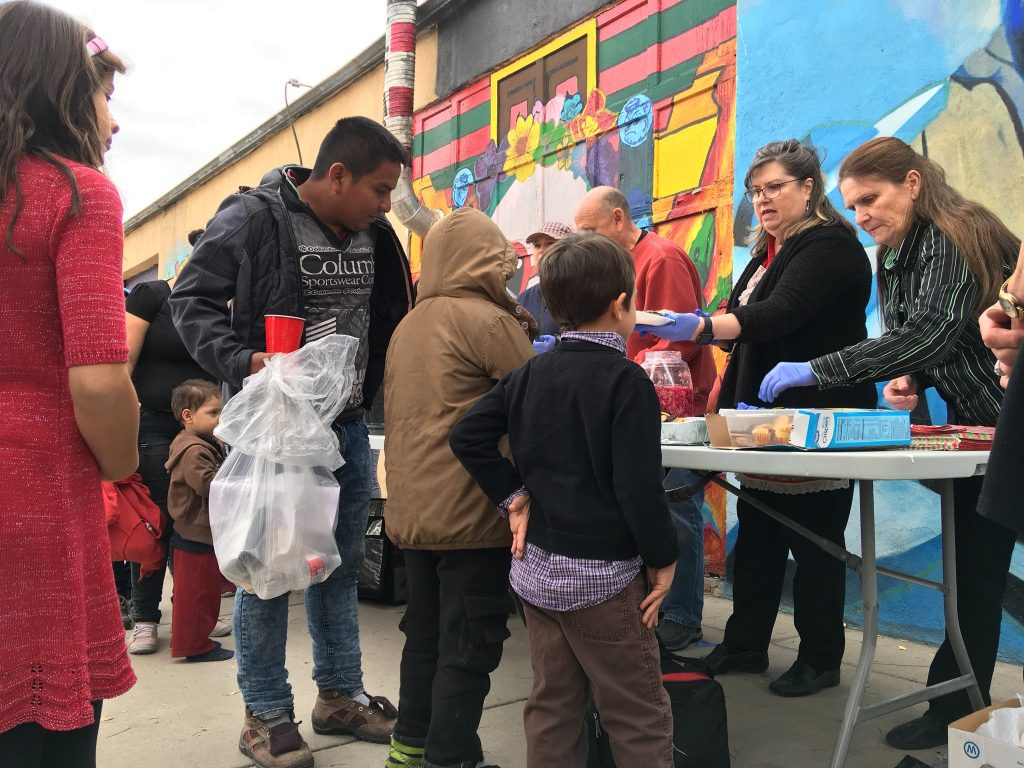
In a pilot program, approximately 30% of rapid DNA tests of immigrant adults who were suspected of arriving at the southern border with children who weren’t theirs revealed the adults were not related to the children, an official involved in the system’s temporary rollout who asked to be anonymous in order to speak freely told the Washington Examiner Friday.
“There’s been some concern about, ‘Are they stepfathers or adopted fathers?’” the official said. “Those were not the case. In these cases, they are misrepresented as family members.”
In some incidents where Immigration and Customs Enforcement told the adults they would have to take a cheek swab to verify a relationship with a minor, several admitted the child was not related and did not take the DNA test, which was designed by a U.S. company.
The pilot lasted a few days earlier this month and was used only in McAllen, Texas, and El Paso, Texas. ICE said the Department of Homeland Security would look at the results to determine if it will be part of its comprehensive solution to border issues. Homeland Security has not issued a public statement on its intentions going forward.
“This is certainly not the panacea. It’s one measure,” said the official.
One upside, the source said, was that in addition to verifying bogus relationships, it also verified many when Homeland Security personnel were unsure.
The Examiner reported in March the Department of Homeland Security and ICE were looking at adopting the test, made by a company called ANDE. On May 1, DHS announced it would launch a pilot of the program in instances where ICE Homeland Security Investigations agents could not verify a family unit’s relationships.
The debut marked the first time DNA testing of any sort has been at the border. Currently, ICE and U.S. Customs and Border Protection must use verbal statements and written documents to verify family connections.
-

ICE to hire contractor to transport 225,000 migrants to shelters across the US
The Trump administration is looking to hire a private contractor that will be responsible for transporting approximately 225,000 migrant children and families to shelters across the country over the next five years as they wait for their asylum claims to be processed. ICE (the federal Immigration and Customs Enforcement agency) is seeking the services of a “highly responsible” contractor that “fully embraces the philosophy” of treating all unaccompanied minors (UACs) and family units (FAMUs) with “dignity and respect,” according to a federal procurement document dated May 13. The private company will be hired to transport approximately 60,000 people a year. It will work to arrange commercial flights and ground transportation for migrant children up to age 17 as well as adults with children and will provide food, clothing and hygiene products during transit. “Sometimes the contractor will have to plan commercial or charter flights in a period of less than 24 hours,” the document states, highlighting an increased need for “on demand escort-services” as the Trump administration addresses a large influx of migrants from Central America who come to the U.S.-Mexico border to claim asylum.
President Trump announced a plan to “transform” America’s immigration system on Thursday, introducing a system to favor admissions based on job skills rather than family ties. The proposal would judge immigrants with a points-based system that would favor high-skilled workers — accounting for age, English proficiency, education and whether the applicant has a well-paying job offer. Over the course of a five-year contract, the migrants will be relocated from their points of entry or staging locations to Office of Refugee Resettlement shelters or family residential centers across the nation. The document did not specify where exactly the migrants will be moved but said the Office of Refugee Resettlement has the “sole authority” to place unaccompanied minors and families. “ICE has zero tolerance for any forms of sexual abuse and assault,” the document states while delegating the responsibility to vet new hires to the contracting company, business publication Quartz, which originally obtained the copy of the federal document, reported.
-
‘It’s Only God’: Genocide Survivor Shares How She Forgave Man Who Cut Her Baby in Half
This year marks the 25th anniversary of the Rwandan Genocide. During that time of violence, at least 800,000 people were killed in just 100 days, mainly Tutsis at the hands of radical Hutus.
On April 6, 1994, Rwanda’s Hutu President, Juvenal Habyarimana, was killed in a plane crash. The incident is credited with igniting the genocide. Radical Hutus accused Tutsis of shooting down his plane. It is still not known who was responsible, but the violence that followed the incident will never be forgotten.
During the genocide, Alice Mukaruinda spent her days in hiding.
Hiding Among Dead Bodies
“We would either hide under the dead bodies when we heard them come to start shooting or dig a place to hide. Because I had a baby, a young baby I couldn’t do any of that. I would just sit in the water,” she recalled.
“They Took My Baby and Cut Her in Two Pieces”
“The Interahamwe Militia had operating hours. There was a whistle that would go at 10 a.m. and then that marking the start and 3 p.m. marking the end. And so we knew those hours and we would go and hide. And on that day we did the same,” said Alice.
“They took my baby and cut her in two pieces,” said Alice.
Today she still has the scars that show the beating and mutilation she endured. Attackers also brutally beat her husband, but he was saved by rescue workers.
“When he started to come back to his senses. He remembered that they had left me. And he asked the military and the police to take him back to where I was,” she said.
The Long Road to Reconciliation
After the genocide humanitarian organizations like World Vision were on the ground, with first aid, food, and medicine. The group also played a major role in reconciliation efforts.
“You cannot think of long term development if people are disconnected, not united,” said Ananias Sentozi, Operations Manager for World Vision Rwanda.
During and before the genocide Hutu Militia pushed propaganda and encouraged citizens to participate in the killing of Tutsis and moderate Hutus. After the genocide many of those responsible flooded the criminal system.
Allowing Criminals to Seek Forgiveness
President Paul Kagame, Rwanda’s current President, refused to use killing as punishment and abolished the death penalty. Instead, he offered another solution; a system of community courts called Gacaca. It allowed criminals to confess and seek forgiveness.
“I started forgiving myself when I stood in front of the court,” said Emmanuel Nadayisaba.
He confessed his crimes and after prison became a community-building volunteer. While working he realized he was actually on a team with one of his victims, although she had no idea who he was.
“We both joined that association of peacebuilding and reconciliation that World Vision was involved in,” said Alice as she recalled meeting Emmanuel.
After her attack, Alice said a prayer and asked God to bring her to those who wronged her and to lead her to forgiveness. “I wanted to be close to God and not just be on the surface.”
Alice Meets Her Attacker Face-to-Face
She didn’t think her prayer would be answered, and then one day Emmanuel asked to speak with her.
“I was all sweaty. I was very nervous. Everything was hot everywhere. I fell down on my knees and raised my hands up and told her that I’m the person who was responsible,” said Emmanuel.
When Alice heard his confession, she fainted. “The next thing I remember I was at the hospital. I didn’t respond. I guess I was in shock.”
“I was still on my knees when she fainted and they took her away, said Emmanuel.
Days later Alice asked to meet with Emmanuel, all she asked of him was that he apologize to her family. She then became an advocate for him in court.
“She helped me open the case. And plead for mercy. I was able to not go back to prison,” said Emmanuel.
Alice said The Lord gave her the strength to forgive Emmanuel, “it’s only God. I can’t explain it. It’s only God nothing else. No one else.”
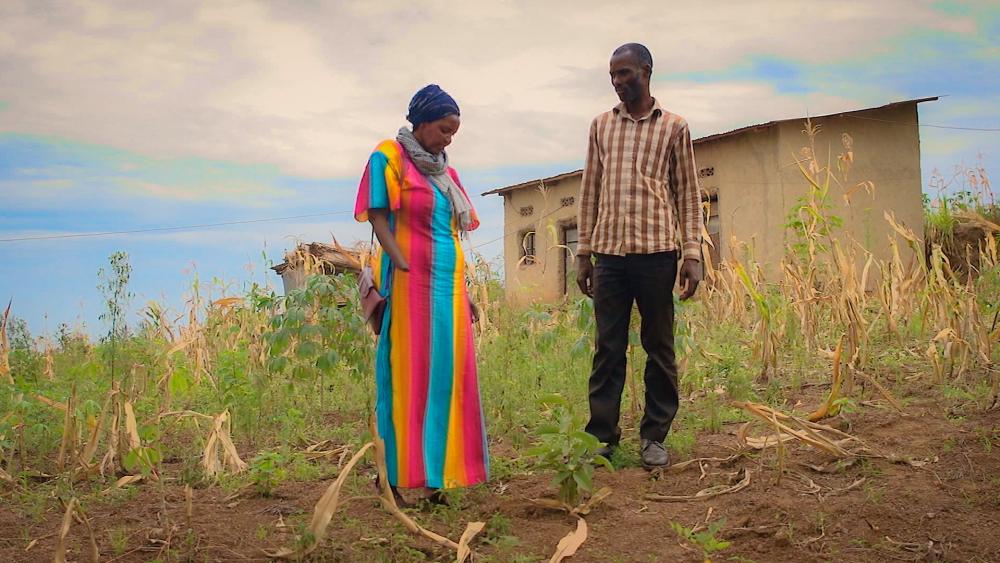
As a symbol of unity, Alice and Emmanuel planted fruit trees together in front of each of their homes. Their hope is that their grandchildren and others will eat the fruit of their reconciliation.
-
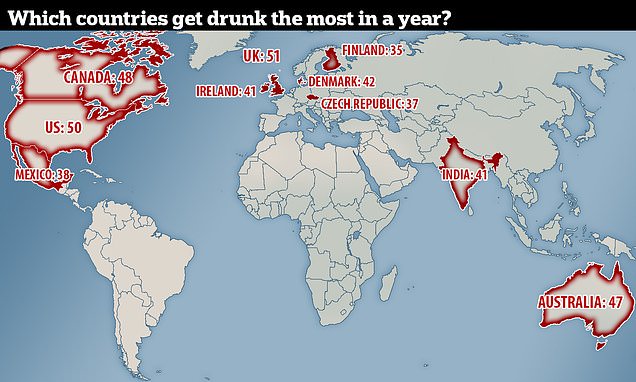
UK adults get drunk more often than anywhere else in the world | Daily Mail Online
Teenage drinking has declined more dramatically in the UK than many other European countries, a World Health Organisation (WHO) report found last year.
A large reduction in weekly alcohol use among adolescents was observed between 2002 and 2014 in the majority of the 36 countries featured in the report.
The largest decline in prevalence for both boys and girls was in England, where spirit and beer consumption has also fallen significantly.
The WHO report, which examines alcohol-related behaviour among 15-year-olds in Europe, was led by researchers at the University of St Andrews.
More than half (50.3 per cent) of teenage boys in England drank weekly in 2002, compared with just 10 per cent in 2014, the research found.
Wales had the second largest drop in prevalence for boys, from 47.6 per cent to 11.8 per cent across the same period.
More than two in five (43.1 per cent) girls in England drank alcohol weekly in 2002, falling to fewer than one in 10 (8.9 per cent) in 2014.
This was the largest decline for girls across the 36 countries, followed by Scotland which saw prevalence drop from 41.1 per cent to 10.7 per cent.
Dr Jo Inchley, lead editor of the report, said: ‘Overall reductions in harmful drinking have been greatest in countries that traditionally have had higher prevalence, such as Great Britain and the Nordic region.
‘This makes it clear that change is possible; however, more should be done to ensure that adolescents are effectively protected from the harms caused by alcohol.’
The largest decreases in beer consumption were observed among 15-year-old boys in Wales, Denmark and England.
Almost two in five (39.7 per cent) boys in England drank beer weekly in 2002, compared with just 7.6 per cent in 2014.
The largest decline in spirit drinking was among teenagers in England, Scotland and Denmark, the report said.
Almost a third (32.8 per cent) of boys and girls in England drank spirits weekly in 2002, dropping to 4.1 per cent by 2014.
Meanwhile, only 28.1 per cent of teenagers said they had been drunk two or more times in their life in 2014.
This compares with more than half (54.9 per cent) 12 years previously.
This content was originally published here.