Category: World News

  • Cuba forced into rationing as US sanctions and Venezuela crisis bite | World news | The Guardian

    Cuba forced into rationing as US sanctions and Venezuela crisis bite | World news | The Guardian

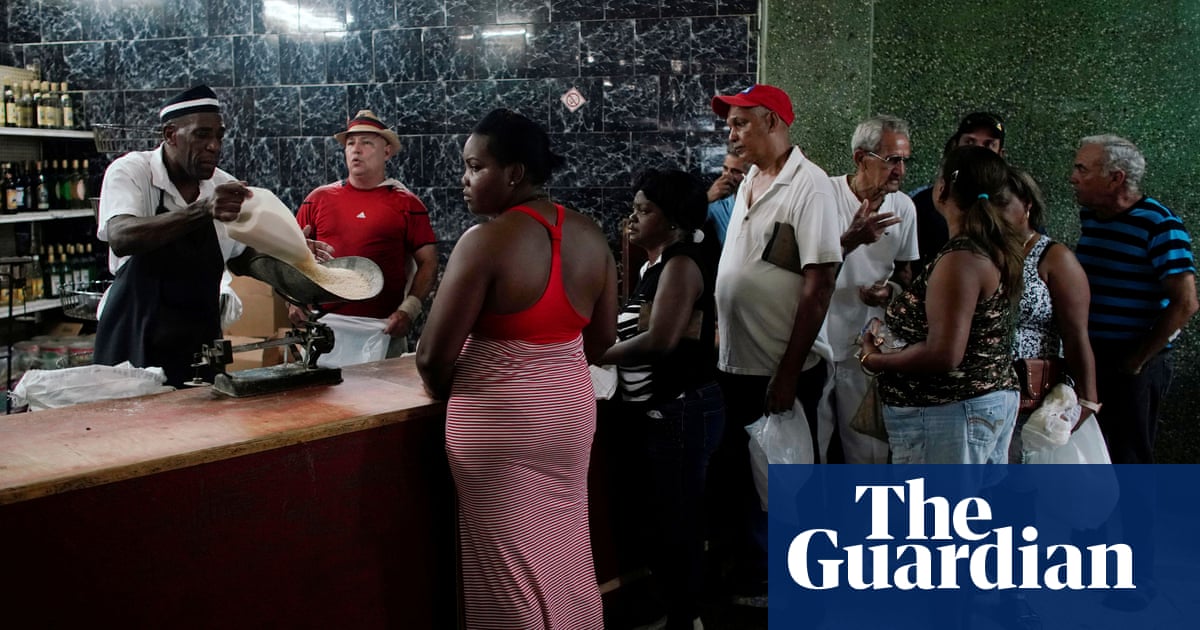
    The Cuban government has announced that it is launching widespread rationing of chicken, eggs, rice, beans, soap and other basic products in the face of a grave economic crisis.

    Betsy Díaz Velázquez, the commerce minister, told the state-run Cuban News Agency that various forms of rationing would be employed in order to deal with shortages of staple foods. She blamed the hardening of the US trade embargo by the Trump administration.

    Economists give equal or greater blame to a plunge in aid from Venezuela, where the collapse of the state-run oil company has led to a nearly two-thirds cut in shipments of subsidised fuel that Cuba used for power and to earn hard currency on the open market.

    “We’re calling for calm,” Díaz said, adding that Cubans should feel reassured that at least cooking oil would be in ample supply. “It’s not a product that will be absent from the market in any way.”

    Shop shelves on the Caribbean’s largest island have been increasingly empty of late with scarcity of basic products such as eggs, flour and chicken, and massive, hours-long queues for them whenever they come into stock.

    Cubans have been flooding social media with photos of the queues they are in, under the hashtag #lacolachallenge (queue challenge) to highlight the problem.

    Cuba imports 60% to 70% of its food. A handful of agricultural reforms in recent years have failed to boost output and it also suffers from a decades-old US trade embargo.

    A decline in aid from key ally Venezuela and lower exports have left it struggling to find the cash to import. More US sanctions since Donald Trump became president have worsened its liquidity crisis.

    Diaz said another problem was hoarding by Cubans worried about whether products would disappear and speculators aiming to resell goods on the black market.

    As a result Cuban supermarkets would from now on limit how much each person can buy of certain products like chicken and soap, she said. Other products such as eggs, rice, beans and sausages, would only be available to purchase with the ration card, and limited to a certain quantity each month.

    “Our mission is to fracture all the measures the US government imposes, and today we are setting priorities,” Diaz said on the midday state-run news broadcast.

    Some Cubans, particularly those on low state salaries and pensions who cannot afford black market prices, expressed relief.

    “These measures are important for those Cubans most in need,” said pensioner Elizabeth Ortega, 72.

    Others said it highlighted the mismanagement of the economy.

    “These measures are a temporary remedy but they do not resolve Cubans’ problems in the long run,” said Ihosvany Perez Rodriguez, 34, who runs a small shop in Havana. “The country produces too little and so does not have enough money.”

    The head of the Communist party, Raúl Castro, introduced a series of reforms around a decade ago in the hope of opening up and boosting the economy, which is one of the world’s last Soviet-style command economies.

    However that reform drive has tapered off in recent years partly due to discontent with some of its consequences such as rising albeit still low inequality and less state control.

    The move on Friday represents a setback to one of the proposed reforms, to end the universal rationing system, introduced just after the 1959 revolution.

    This content was originally published here.

  • And the least feminist nation in the world is… Denmark?

    And the least feminist nation in the world is… Denmark?

    A poll of more than 25,000 people in 23 major countries found that just one in six Danes consider themselves a feminist . It is one of the best places in the world to be a woman, with a narrow gender pay gap, equal employment rights, universal nursery care, and some of the happiest female retirees on the planet.

    So it comes as a surprise to find, in a global survey of attitudes towards gender, equal rights and the #MeToo movement, that Denmark is one of the least feminist countries in the developed world.

    The poll, conducted by the YouGov-Cambridge Globalism Project of more than 25,000 people in 23 major countries, found that just one in six Danes consider themselves a feminist, a third said that wolf whistling at women in the street was acceptable, and two in five had an unfavourable view of the #MeToo movement.

    “It’s a difficult question. What is a modern feminist?” muses Helene Frost Hansen, a 37-year-old accountant, as she bites into her sandwich outside her office on Copenhagen’s City Hall Square. “I don’t want to be equal in all senses.”

    “It depends what you mean. I’m just ordinary, says Charlotte Venvike, a 55-year-old taking her break from the bank where she works. “I’m not marching in the streets.”

    According to the data, only a quarter of Danish women consider themselves feminists, a stark contrast to neighbouring Sweden, where 46% do, and a smaller share even than in countries like Italy, Spain and the UK, which otherwise lag far behind Denmark on gender equality.

    Even Denmark’s Equality Minister Karen Ellemann declared that she didn’t consider herself one when she took up the post three years ago.

    Of a dozen women approached in the Danish capital, only one had time for the f-word.

    “Yes, and I had three daughters and raised them all as feminists,”
    says Charlotte Mathiesen. “The man has to do exactly the same jobs as the women.”

    source

  • Living amid fear and oppression in Xinjiang

    Living amid fear and oppression in Xinjiang

    The small bedroom is frozen in time. The two little girls who used to sleep here left two years ago with their mother and now can’t come home.  Their backpacks and school notebooks sit waiting for their return. A toy bear lies on the bed. Their clothes hang neatly in the closet.  The girls’ grandmother says she can’t bring herself to change it.  “The clothes still smell like them,” she says, her words barely audible through heavy sobs.  Ansila Esten and Nursila Esten, ages 8 and 7, left their home in Almaty, Kazakhstan, with their mother, Adiba Hayrat, in 2017.  The three traveled to China where Adiba Hayrat planned to take a course in makeup application and visit her parents in the western border region of Xinjiang, leaving her husband, Esten Erbol, and then 9-month-old son Nurmeken behind in Kazakhstan, Esten told CNN.  Not long after she arrived, however, her husband says she was detained. He hasn’t heard from her for more than two years.  “My son wasn’t even 1 when she left,” Esten Erbol said. “When he sees young women in the neighborhood, he calls them mama. He doesn’t know what his own mother looks like.”  Adbia Hayrat’s two daughters, Ansila Esten and Nursila Esten, in a family photo kept by their father.  Adiba Hayrat and her two daughters are Chinese citizens, of Kazakh minority descent. She grew up in China, as did their daughters. Their young son was born in Almaty.

    The family was in the process of becoming citizens of Kazakstan when Esten Erbol says Adiba Hayrat was taken by Chinese authorities.
    Her family in Kazakhstan says she was held in a detention camp in Xinjiang for more than a year, while her children were sent to live with distant relatives.  She has since been released, according to her family. But they say Adiba Hayrat is now living with her parents and working in a forced labor facility, earning pitiful wages, unable to contact her family in Kazakhstan for fear of being sent back into detention.
    According to the US State Department, up to 2 million Uyghurs, Kazakhs, Kyrgyzs and other predominantly Muslim ethnic minorities have been held against their will in massive camps in Xinjiang.  An unknown number are working in what rights groups have described as forced labor facilities, and like Adiba, they are unable to leave China.  Activists and former detainees allege the Xinjiang internment camps were built rapidly over the last three years, the latest stage in an ongoing and widespread crackdown against ethnic minorities in the region.
    Allegations of torture inside the camps are rampant, including in accounts given to CNN by former detainees. The Chinese government has faced a rising tide of international criticism over its Xinjiang policies, including from the United States.
    Critics claim the camps are Beijing’s attempt to eliminate the region’s Islamic cultural and religious traditions — a process of sinicization, by which ethnic minorities are forcibly assimilated into wider majority Han Chinese culture.
    Beijing denies any allegations of torture or political indoctrination, and says the camps are “vocational training centers” designed to fight terrorism.
    Even if you buy that explanation, Esten Erbol said, it wouldn’t apply to his wife. “My wife is not a terrorist,” he said.
  • 168,000 illegal released into communities!  Why?

    168,000 illegal released into communities! Why?

    Why does anyone bother with laws, regulations, and boarders?  Why are we at war with other countries and people and are being invaded here in the US and do nothing to stop these people.  If they are arrested, put them in self sustaining camps. Teach them English, practical working skills, and when they have paid their bill to live in this camp and graduated with sufficient english and working skills they are free to leave and be a citizen of the US.  Why do they get all the breaks, handouts, freebies, and our people do not.  There are any number of homeless that might like to join them, or elder folks as well, or that matter other immigrants not just the ones south of us.

    She revealed the numbers to senators Wednesday during a high-stakes hearing in which she and other immigration officials pleaded with Congress for more money and more legal tools to try to stop the surge of illegal immigrants.  Nearly 110,000 were nabbed at the southwestern border in April, including nearly 100,000 caught by the Border Patrol trying to sneak into the U.S. The other 10,000 were encountered when they showed up at ports of entry demanding to be let in, despite lacking permission.  That total is the highest in more than a decade.  Still more troubling is the number of illegal immigrants traveling as families, which neared 62,000 in April alone. That shattered the all-time monthly record and represented a doubling of the number from just three months earlier.

    That surge is being fueled by lax U.S. policies, and particularly a court ruling in 2015 that illegal immigrant parents who travel with children must be released within 20 days. That is too little time to complete a court case, meaning the government has no choice but to set the families free on the vain hope that they return for deportation hearings.  “They have received the message loud and clear: Bring a child, you will be released,” said Carla Provost, chief of the Border Patrol.  A staggering 1% of the populations of Guatemala and Honduras have made the journey north to the U.S. and jumped the border in just the past seven months, acting Homeland Security Secretary Kevin McAleenan said this week.  If the trends continue, that number will be 2% by the end of this fiscal year in September.  Democrats doubted Chief Provost’s claim.

    Sen. Richard J. Durbin, Illinois Democrat, said the problem is not U.S. legal protections for illegal immigrants but rather U.S. drug consumption, sales of weapons and the cash that flows into the Central American countries, fueling violence there.  He blamed President Trump for fueling the chaos, saying his upheaval at Homeland Security has left the department spinning, with four heads of the department so far.  He also said Mr. Trump’s threats to shut down the border are spurring more people to make the trip now.  “It’s cruel, it’s unpredictable and it’s ineffective,” Mr. Durbin said.  The senator also said there is “zero evidence” that the 2015 court ruling is a factor in the surge.  The experts told him that just wasn’t so.  Chief Provost said her agents interview the migrants they apprehend, and most say they are not fleeing violence but rather seeking jobs — and they know to bring children.  “From interviews that we have done with the families we are apprehending, they are hearing that message loud and clear. They are hearing that from the smugglers, they are hearing that from the media down in the Northern Triangle,” she said.

    She said agents have caught 3,500 “fraudulent” families so far this fiscal year, which began Oct. 1.  Those include groups in which an adult brings a niece, nephew, grandchild or other relative and poses as a parent; in which an adult brings a child who is 18 or older and claims to be a juvenile; and even cases in which unrelated children are kidnapped, borrowed or sold to help someone pose as a parent.  Chief Provost said her agency just encountered such a case.  “The child admitted to basically being sold by his father,” she testified.  Mr. Durbin downplayed family fraud, saying even with 3,500 cases it was only a few percentage points of the total number of families.  Chief Provost countered that those were only the ones they detected.  A recent intensive enforcement by ICE found three in 10 families were suspect, Ms. Asher testified“The fraud, the exploitation, is rampant, and it’s not stopping,” she said.  The witnesses asked Congress to change the 2015 court ruling so families can be detained, to alter a law to allow unaccompanied illegal immigrant children from Central America to be quickly deported, to add more beds to hold people awaiting deportation and to change the standards to cut down on asylum abuse.

    Republican lawmakers have promised legislation dealing with those issues.  Mr. Durbin said Democrats will counter with their own bill next week that would siphon money to Central America for nation-building, allow for migrants to apply for asylum from outside the U.S., crack down on smuggling cartels and surge immigration judges to try to hear cases faster.  Ms. Asher, though, said more judges won’t work unless Congress also pumps money into ICE for more prosecutors. She said it takes three lawyers to handle enough cases for every immigration judge and that unless ICE has space and power to detain people, they are difficult to deport.

  • U.S. seizes North Korean ship suspected of violating U.N. sanctions

    U.S. seizes North Korean ship suspected of violating U.N. sanctions

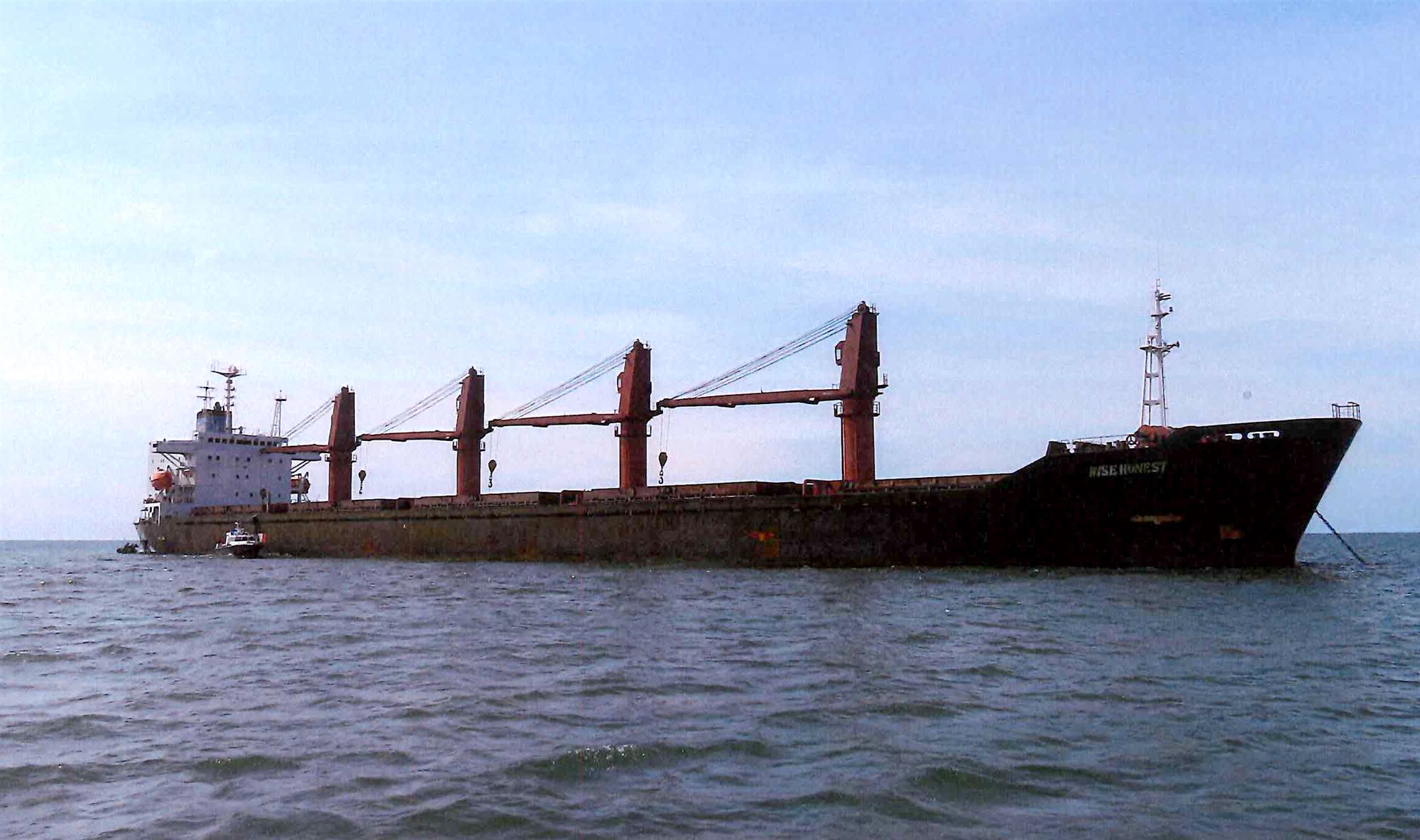
    The U.S. has seized a North Korean freighter that was caught shipping coal in violation of U.N. sanctions, the Justice Department revealed Thursday.  The 17,000-ton cargo ship, called the Wise Honest, was stopped in Indonesia last year after it was found to be carrying coal. The ship’s captain was charged with violating Indonesian law, and last July, the U.S. filed an action to seize the ship, according to court papers.  Federal prosecutors said the seizure marks the first time the U.S. has taken possession of a North Korean ship for violating international sanctions.  “This sanctions-busting ship is now out of service,” said John Demers, assistant attorney general for the Justice Department’s National Security Division.  The Wise Honest, North Korea’s second-largest ship for carrying bulk cargo, was on its way to American Samoa, U.S. officials said.  On Thursday, the Justice Department asked a federal judge to give the U.S. ownership of the vessel through a civil forfeiture action — the same thing prosecutors do when they seek to take ownership of planes or boats used by drug smugglers. The Justice Department says the U.S. is entitled to take this action because payments to maintain and equip the vessel were made through American banks.

    “Our office uncovered North Korea’s scheme to export tons of high-grade coal to foreign buyers by concealing the origin of their ship, the Wise Honest,” said Geoffrey Berman, U.S. Attorney for the Southern District of New York. “This scheme not only allowed North Korea to evade sanctions, but the Wise Honest was also used to import heavy machinery to North Korea, helping expand North Korea’s capabilities and continuing the cycle of sanctions evasion.”  The announcement of the seizure came just hours after North Korea launched suspected short-range missiles — the second such weapons test in a week. But Berman said the effort to take control of the Wise Honest had been in the works for some time and was not spurred by North Korea’s overnight actions.  The Justice Department said the Korea Songi Shipping Company used the Wise Honest from at least November 2016 through April 2018 — and broke American law by paying U.S. dollars to “unwitting” banks for several improvements, equipment purchases and service expenditures for the vessel.  The March 2018 cargo shipment yielded payments totaling more than $750,000, the Justice Department said.

    source

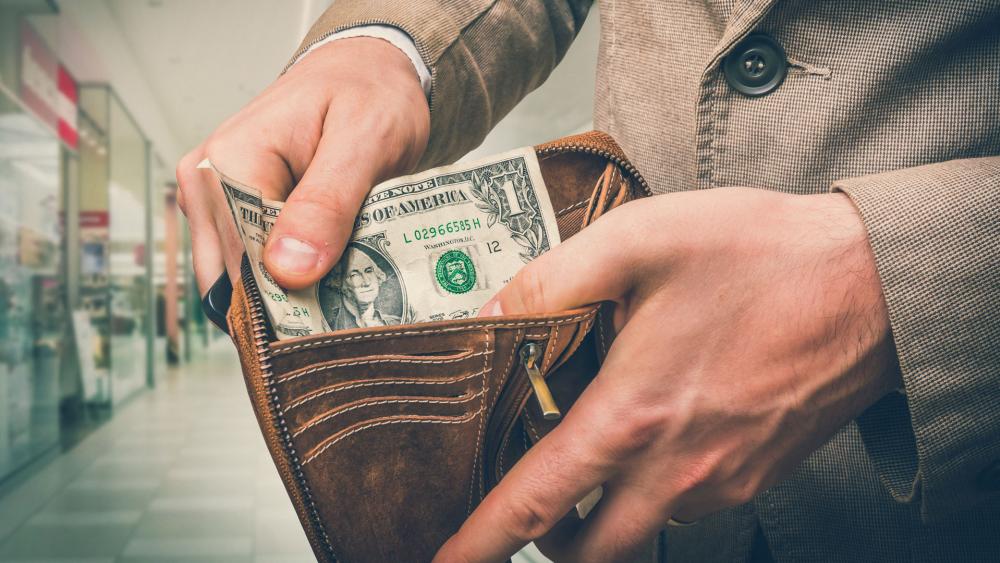
  • San Francisco Bans Credit-Only Stores, Sweden Tells Citizens to Hide Cash Under Their Beds

    San Francisco Bans Credit-Only Stores, Sweden Tells Citizens to Hide Cash Under Their Beds

    The move toward a totally cashless society is running into some roadblocks in the US and abroad.

    The San Francisco Board of Supervisors voted Tuesday to become the latest municipality to require retail stores to take cash.

    “I just felt it wasn’t fair that if someone wanted to buy a sandwich in a store, and they had cash, that they would be turned away,” Supervisor Vallie Brown, who introduced the legislation told The Associated Press. “We also have our homeless population. They’re not banked.”

    Critics say going cashless discriminates against low-income people who don’t have credit cards or bank accounts.

    And some people prefer to use cash because they don’t want to leave a digital trail of what they’ve bought and where they’ve been.

    Some retailers argue going cashless is safer and more efficient.

    But the city of Philadelphia and the state of New Jersey already require stores to take cash and a similar measure has been introduced in New York City.

    The efforts come after the rollout last year of cashless Amazon Go stores, which require customers to scan an app to enter. Whatever items customers take are automatically tallied in a virtual cart and charged to a credit card. The retail giant bowed to pressure last month and agreed to accept cash at more than 30 cashless stores.

    The AP reports Amazon opened its first cash-accepting store Tuesday in a high-end New York City shopping mall frequented by office workers. Anyone who wants to pay with cash will be swiped through the turnstile entrance by employees. After shoppers grab what they want, an employee will scan the items with a mobile device, take the cash and give customers their change.

    Meanwhile, Sweden is telling its citizens to hide banknotes and coins in their homes just in case of a cyber attack on the nation’s banks.

    The Daily Mail reports just like in the US and Britain, digital payments in Sweden have become convenient for both buyers and retail establishments alike.  Swedish government experts have warned people that they could be left without the ability to purchase anything if its computer networks were knocked offline due to accidents, malfunctions, terrorism or cyber-warfare.

    Sweden’s Civil Contingencies Agency has issued guidance to every household telling residents to stockpile ‘cash in small denominations’ for use in emergencies.  The government has also recommended that each citizen keep cash under their bed, according to The Times.

    Sweden became the first European country to issue modern banknotes, in 1661 – ahead of the Bank of England, which followed in 1694, according to The Daily Mail.

  • Iran Says It Will Stop Complying With Some Parts of Nuclear Deal – The New York Times

    Iran Says It Will Stop Complying With Some Parts of Nuclear Deal – The New York Times

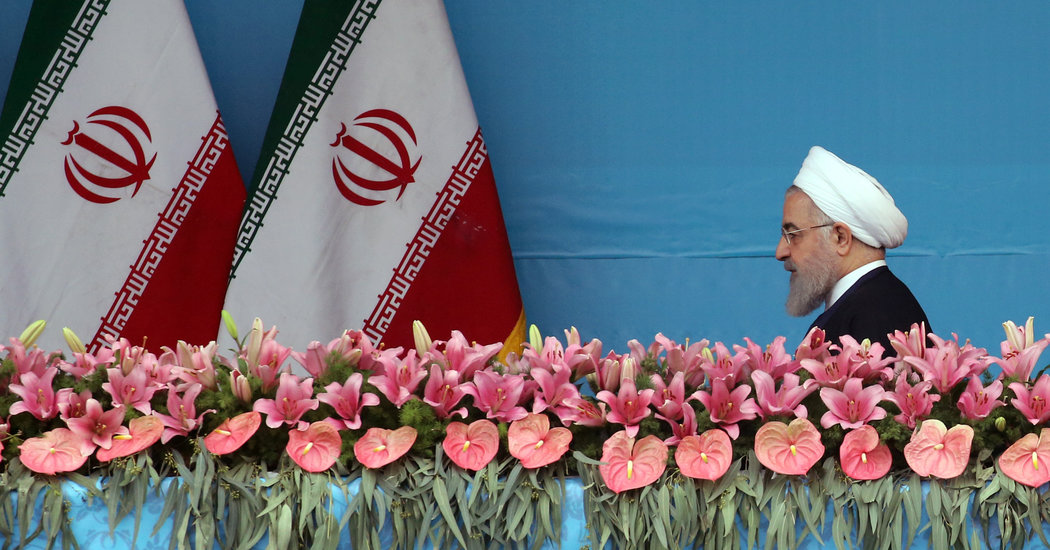
    Starting on Wednesday, he said, Iran would begin to build up its stockpiles of low enriched uranium and of heavy water, which is used in nuclear reactors — including a reactor that could give Iran a source of bomb-grade plutonium. If the Europeans fail to compensate for the unilateral American sanctions, he said, Iran will resume construction of the Arak nuclear reactor, a facility that was shut down, and its key components dismantled, under the deal.

    None of those actions would get Iran to a weapon anytime soon. But they would resume a slow, steady march that the 2015 agreement temporarily stopped.

    Mr. Rouhani’s announcement marked another sharp blow to an agreement that President Barack Obama hoped would end 40 years of hostility between the two countries, and which he bet could open a new era of cooperation. While Iran scupulously followed the deal, that cooperation never happened: Iran continued to test missiles — which were not covered in the arrangement — and to fund terror groups and the government of Bashar al-Assad in Syria.

    Mr. Trump threatened to kill what he called the “worst deal in history,” and over the objections of several of his advisers he withdrew from it exactly a year ago. He complained that it was too narrow, and that the 15-year limit on Iran producing nuclear fuel simply kicked the problems down the road. Advocates of the arrangement said those provisions bought vital time, delaying a program that otherwise might have resulted in an Iranian bomb in just a year.

    It is not clear how Washington will respond. While the United States abandoned its side of the arrangement, it has long demanded that Iran fulfill its commitments to international inspections and moratoriums on nuclear work. The national security adviser, John Bolton, a fierce opponent of the deal, has often said that Iran never intended to give up its nuclear ambitions — and he may cite Mr. Rouhani’s speech as further evidence.

    Iran’s foreign minister, Mohammed Javad Zarif, said in an interview during a recent visit to New York that the country’s leadership was under growing pressure to respond to Mr. Trump’s effort to strangle Iran’s revenue. He called the continuing effort to starve Iran of the ability to engage in trade — which was enshrined in United Nations resolutions endorsing the 2015 agreement — a “war crime” against the Iranian people.

    In an effort to contrast their behavior with Mr. Trump’s, Iran’s leaders have for now rejected calls that they, too, terminate the agreement. Instead, for the past year Tehran has remained fully in compliance, according to inspectors from the International Atomic Energy Agency.

    But domestically, the failure to gain sanctions relief has put huge pressure on Mr. Rouhani to strike back at the United States.

    “We don’t want anyone interfering in their country, certainly not by attacking another nation inside of Iraq, and there was complete agreement,” he said.

    But European officials say they remain mystified why Mr. Trump did not take on the Iranians for their support of terrorist groups while remaining within the deal. The result, they say, could well be a resumed nuclear crisis, as the Iranians seek to raise the pressure.

    This content was originally published here.

  • Famed Photographer Sebastião Salgado Plants Two Million Trees With His Wife And 20 Years Later, Creates New Forest

    Famed Photographer Sebastião Salgado Plants Two Million Trees With His Wife And 20 Years Later, Creates New Forest

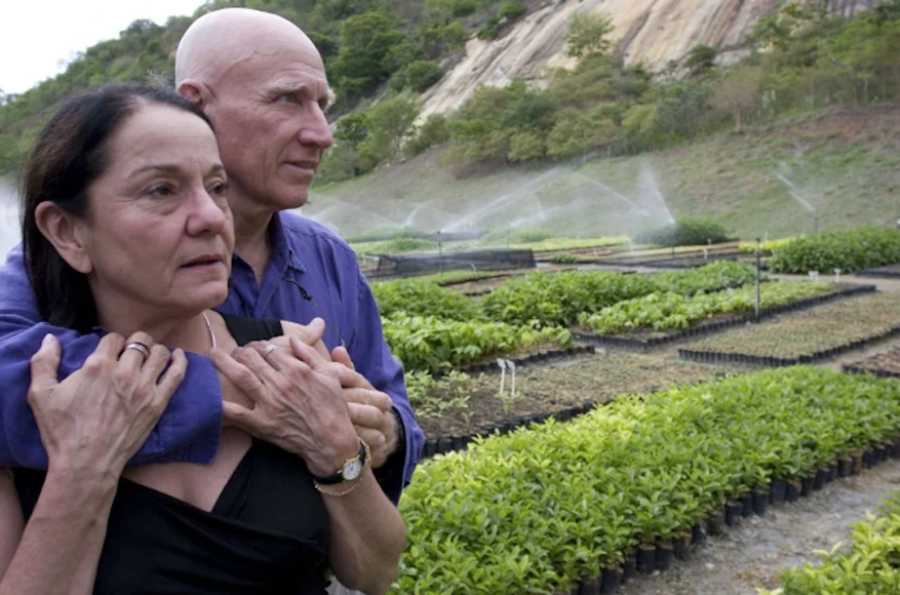
    Formerly barren land in Brazil is now thriving with hundreds of new flora and fauna thanks to the efforts of Sebastião Salgado and his wife Lélia.

    Growing deforestation is a big issue for the sustainability of our environment. But individuals like famed photographer Sebastião Ribeiro Salgado and his wife Lélia are trying to save it. The Brazilian couple started a project to plant two million trees and now, 20 years later, the seeds have grown into a lush forest in the Minas Gerais region of Brazil.  It all started in 1994 when Salgado had just returned home from a traumatic project covering the devastations of the genocide in Rwanda. Looking to heal himself, Salgado decided to take a break by taking up the family farm which was located in the Minas Gerais area.  But what he saw there devastated him even more: what was once a rich forest had morphed into a severely damaged landscape due to rampant deforestation and disappearing wildlife.  “The land was as sick as I was — everything was destroyed,” Salgado toldThe Guardian.  The land, he said, was about only 0.5 percent covered in trees. However, the damaged environment sparked inspiration in Salgado’s wife Lélia, who came up with the idea to replant the forest.  What sounded like an impossible feat was realized in the founding of Instituto Terra, an environmental organization dedicated to the sustainable development of the area of the Valley of the River Roce just four years later.

    read more

  • Children from Philadelphia Islamic Center Issue Threat in Video, ‘We Will Chop Off Their (Christian) Heads’

    Children from Philadelphia Islamic Center Issue Threat in Video, ‘We Will Chop Off Their (Christian) Heads’

    A video from an event at an Islamic center in Philadelphia, Pennsylvania, shows Muslim children saying they are willing to sacrifice themselves and chop off the heads of the enemies of Islam.  The Muslim American Society Islamic Center in Philadelphia posted the video on its Facebook of the children participating in the center’s “Ummah Day” celebration on April 17.  The Middle East Media Research Institute posted the video on YouTube, as well as a translation of the children’s statements on its websit . “Those who reject oppression are the ones who assert their existence, and they eliminate the injustice from the land of the Arabs,” one child said, according to MEMRI’s translation.  The children then sing, “Rebels! Rebels! Rebels! Glorious steeds call us and lead us onto paths leading to the Al-Aqsa Mosque. The blood of martyrs protects us. Paradise needs real men!”

    “The land of the Prophet Muhammad’s Night Journey is calling us. Our Palestine must return to us. Oh Saladdin, your men are among us — shame will be washed away!”  The song continues, “Take us, oh ships, until we liberate our lands – until we reach our shores and crush the treacherous ones! Blow, oh winds of Paradise — flow, oh rivers of martyrs! My Islam is calling, who is going to heeds its call? Rise, oh righteous ones!”  One young girl then reads a passage about martyrdom and violence.  “Our martyrs sacrificed their lives without hesitation. They attained Paradise, and the scent of musk emanates from their bodies. They compete with one another to reach Paradise. Will Jerusalem be their capital city, or will it be a hotbed for cowards?” she read.

    “We will defend the land of divine guidance with our bodies, and we will sacrifice our souls without hesitation. We will chop off their heads, and we will liberate the sorrowful and exalted Al-Aqsa Mosque. We will lead the army of Allah fulfilling His promise, and we will subject them to eternal torture,” she read, according to the translation.  “We warn the West from what we fled from in the Middle East, but the West doesn’t want to listen. This is your next generation,” he tweeted.  We warn the West from what we fled from in the Middle East, but the West doesn’t want to listen. — Imam Mohamad Tawhidi (@Imamofpeace) May 3, 2019

    ‘These are not isolated incidents; they are happening in major centers of the country — including in Pennsylvania,” MEMRI said in a statement to Fox News.The video was not the only one from the Philadelphia center in which children sang songs with disturbing messages.

    IPT Exclusive Video: Philadelphia #Muslim school students sing song with violent anti-Semitic pro-terrorist lyrics pic.twitter.com/5tPSqypd2V

    — InvestigativeProject (@TheIPT) May 1, 2019

    IPT Exclusive Video: Children at a Muslim school run by @mas_national in #Philadelphia sing about the “Blood of Martyrs” and fighting #Israel pic.twitter.com/Rw9dTEfaqm

    — InvestigativeProject (@TheIPT) May 1, 2019

    The Muslim American Society, which has 42 chapters in the United States, did not respond to a request to comment, Fox News reported.

    We are committed to truth and accuracy in all of our journalism. Read our editorial standards.

    This content was originally published here.
  • Wall Street bankers make triumphant return to Saudi Arabia just in time for mass beheadings — RT Business News

    Wall Street bankers make triumphant return to Saudi Arabia just in time for mass beheadings — RT Business News

    Big investors, particularly from Wall Street, joined panels at the two-day financial forum which began on Wednesday in Riyadh.

    Larry Fink, CEO of US investment corporation BlackRock, told the conference that his company had bought some of Saudi state-owned oil giant Aramco’s bonds and was looking for other “opportunities” in the kingdom.

    “This is an economy that we have a lot of confidence in, I think the future is bright,” he said, adding: “We are excited about the role that we can continue to play here.”

    Fink added: “The changes here in the kingdom in the last two years are pretty amazing.”

    He was joined by HSBC CEO John Flint, co-president of JPMorgan Chase Daniel Pinto, and others. Goldman Sachs CEO David Solomon reportedly visited Riyadh earlier this month, just days before the bank helped arrange a multibillion dollar bond sale for Aramco.

    The summit is taking place as Riyadh announced on Tuesday it had executed 37 people in connection with alleged ‘terrorism crimes.’ The majority of those killed were Shiite Muslims.

    United Nations High Commissioner for Human Rights Michelle Bachelet condemned the mass executions, calling them “shocking” and “abhorrent.” “At least 3 [of the men] were minors when sentenced & one of the men’s bodies was put on public display,” her office said in a statement on Twitter.

    The presence of global leaders is in sharp contrast to a similar event last year. Many political and business elite decided to skip that forum due to the international scandal over the killing of Washington Post journalist Jamal Khashoggi. After initial denials, Riyadh admitted that Khashoggi was murdered by “rogue” agents of the Saudi government while visiting the country’s consulate in Istanbul last October.

    Despite that, big investors appear to be focused on potential deals in the largest Arab economy.

    Saudi Energy Minister Khalid al-Falih told the forum that Aramco would be active in debt markets and that the $12 billion it raised in its debut bond issue was “only the beginning.” The country’s stock market, which has seen an upsurge in foreign fund flows since the start of 2019, is one of the best performing in the region, up nearly 18 percent year-to-date.

    For more stories on economy & finance visit RT’s business section

    This content was originally published here.