Category: World News

  • Tax rises forecast as Scotland faces £1bn spending black hole – The Scotsman

    Tax rises forecast as Scotland faces £1bn spending black hole – The Scotsman

    Scotland is facing a £1 billion spending black hole in the coming years – with a stark warning that it could lead to fresh austerity or tax hikes.

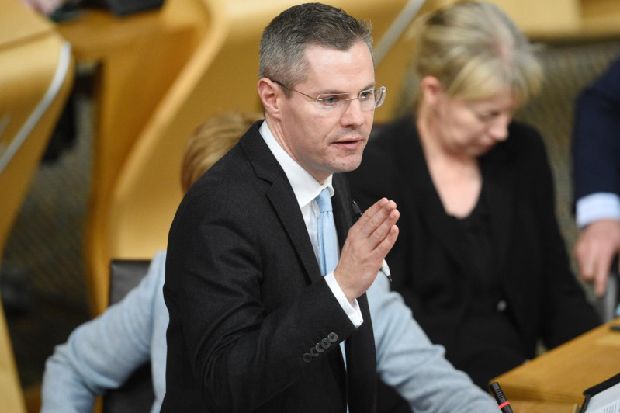
    A shortfall in the expected income tax take has prompted the country’s economic watchdog to warn that Finance Secretary Derek Mackay may have to impose cuts in his annual £35 billion budget or “increase taxes.”

    The Scottish Fiscal Commission unveiled fresh estimates for 2019/20 which paint a gloomy picture for the nation’s public finances and economic growth.

    Conservative finance spokesman Murdo Fraser said: “This is a devastating blow for Scotland’s finances totalling more than £1 billion.

    “For years the SNP has been warned about the poor economic performance for which it is responsible, and now we see the consequences of that.

    “This is disastrous news for public services as well as hardworking Scots who may be in line for even more of their payslip being seized by the SNP government.”

    Scotland has recently taken on fresh powers over income tax and next year, 2020/21, will mark the first time that new “reconciliations” are imposed which mean the Scottish Government must tailor its public spending to keep this in line with devolved taxes being raised.

    But Scotland is facing a income tax shortfall of £229 million next year, the estimates show. This stems from the taxes raised in 2017/18, as there is a three year lag in discovering the actual tax data.

    The black hole rises to £608 million in 2021/22 and £188 million the year after that, the figures show.

    Scottish GDP growth will continue to lag behind the rest of the UK with the economy expanding by 0.8% this year, down 0.4% on original estimates, and 0.9% next year, down 0.1%.

    Mr Mackay said that Scottish Government has been putting cash into the Scottish reserve to manage volatility and there are borrowing powers which could be considered.

    He added that the reason for subdued growth in Scotland was down to Brexit.
The scale of the reconciliation will be “uncertain” until the actual figures available, the minister said.
”There will always be volatility,” he added.

    This content was originally published here.
  • China Gears Up to Weaponize Rare Earths in Trade War

    China Gears Up to Weaponize Rare Earths in Trade War

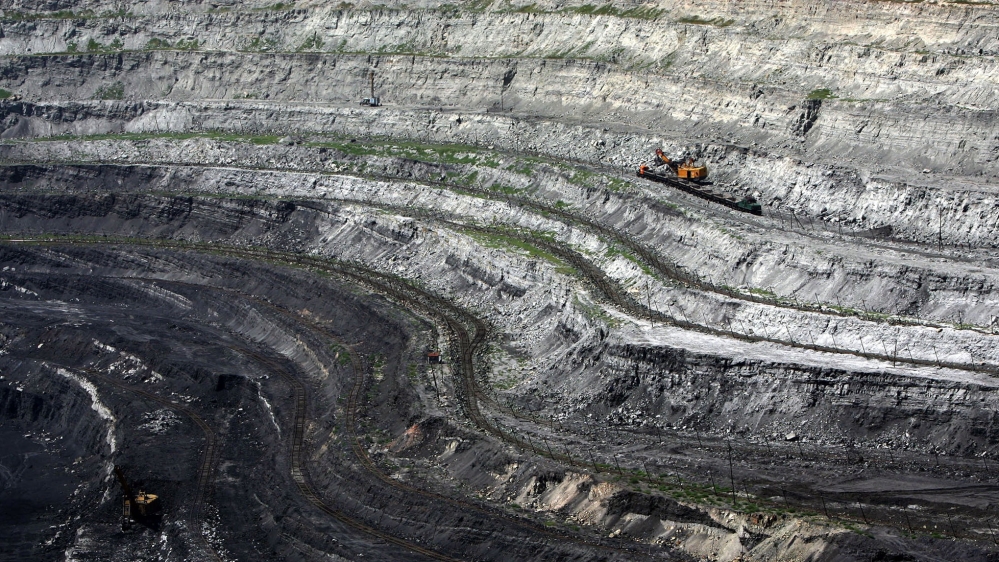
    A flurry of Chinese media reports on Wednesday, including an editorial in the flagship newspaper of the Communist Party, raised the prospect of Beijing cutting exports of the commodities that are critical in defense, energy, electronics and automobile sectors. The world’s biggest producer, China supplies about 80% of U.S. imports of rare earths, which are used in a host of applications from smartphones to electric vehicles and wind turbines.

    The threat to weaponize strategic materials ratchets up the tension between the world’s two biggest economies before an expected meeting between Presidents Xi Jinping and Donald Trump at the G-20 meeting next month. It shows how China is weighing its options after the U.S. blacklisted Huawei Technologies Co., cutting off the supply of American components it needs to make its smartphones and networking gear.

    “China, as the dominant producer of rare earths, has shown in the past that it can use rare earths as a bargaining chip when it comes to multilateral negotiations,” said George Bauk, Chief Executive Officer of Northern Minerals Ltd., which is producing rare earth carbonate from a pilot-scale project in Western Australia.

    The U.S. shouldn’t underestimate China’s ability to fight the trade war, the People’s Daily said in an editorial Wednesday that used some historically significant language on the weight of China’s intent.

    The newspaper’s commentary included a rare Chinese phrase that means “don’t say I didn’t warn you.” The specific wording was used by the paper in 1962 before China went to war with India, and “those familiar with Chinese diplomatic language know the weight of this phrase,” the Global Times, a newspaper affiliated with the Communist Party, said in an article last April. It was also used before conflict broke out between China and Vietnam in 1979.

    On rare earths specifically, the People’s Daily said it isn’t hard to answer the question whether China will use the elements as retaliation in the trade war.

    China is “seriously” considering restricting rare earth exports to the U.S. and may also implement other countermeasures, the editor-in-chief of the Global Times, said in a tweet. An official at the National Development & Reform Commission told CCTV that people in the country won’t be happy to see products made with exported rare earths being used to suppress China’s development.

    Editorials in the Global Times and Shanghai Securities News took similar tacks in their Wednesday editions.

    The nation’s producers have rallied hard in recent weeks on the view that rare earths could be an ace in the trade war. President Xi Jinping visited a plant earlier this month, accompanied by his chief trade negotiator with the U.S., fueling speculation that the strategic materials could be weaponized in China’s tit-for-tat with the U.S.

    Rare earths have already featured in the trade dispute. The Asian country raised tariffs to 25% from 10% on imports from America’s sole producer, while the U.S. excluded the elements from its own list of prospective tariffs on roughly $300 billion worth of Chinese goods to be targeted in its next wave of measures.

    Rare earths aren’t particularly rare. Cerium, the most abundant, is more common in the Earth’s crust than copper. All other rare-earth elements, besides promethium, can be found more widely than silver, gold, or platinum, according to the U.S. Geological Survey. However, concentrated and economic deposits are scarce, and production is dominated by a handful of countries. China is the biggest by far, accounting for almost 70% of global production and 40% of the world’s reserves, USGS data show.

    China’s rare earth market is dominated by a handful of producers including China Northern Rare Earth Group, Minmetals Rare Earth Co., Xiamen Tungsten Co. and Chinalco Rare Earth & Metals Co. The nation has form in using the elements to make a political point. It blocked exports to Japan after a maritime dispute in 2010, although the consequent spike in prices saw a flurry of activity to secure supplies elsewhere, which would be the risk again if Beijing follows through with its threat of retaliation.

    source

  • Fake social media accounts spread pro-Iran

    Fake social media accounts spread pro-Iran

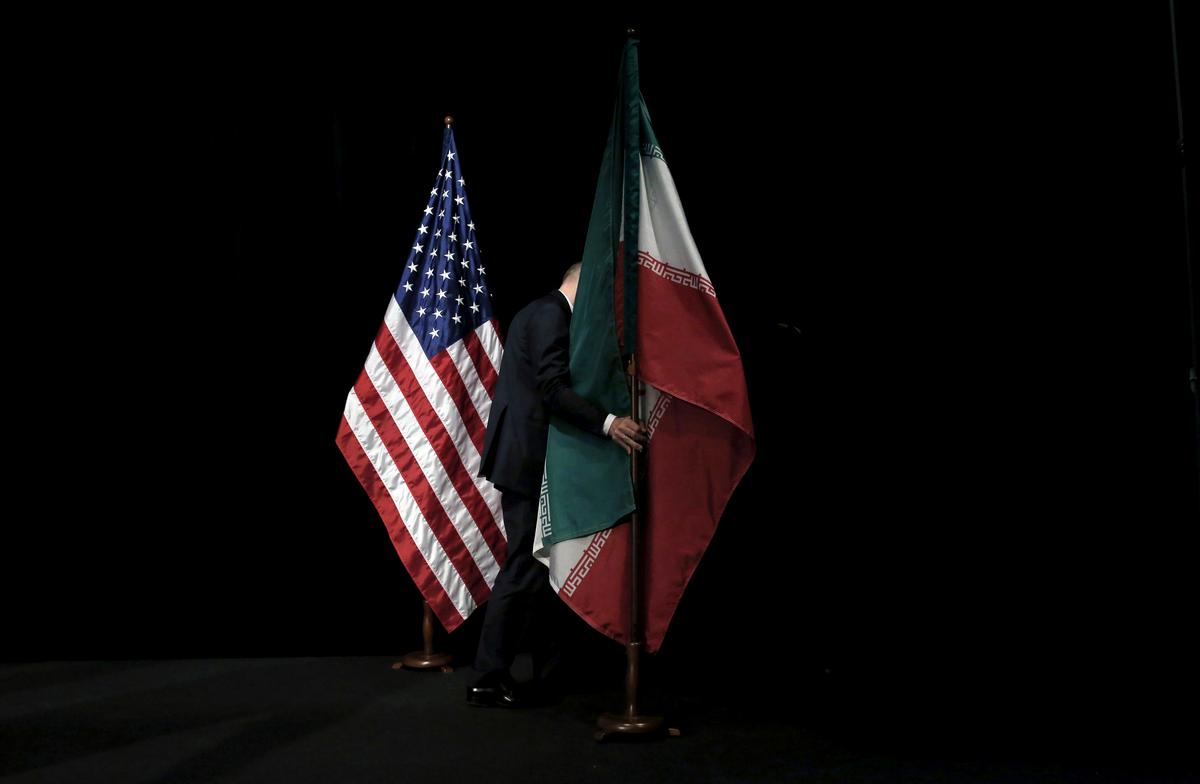
    A network of fake social media accounts impersonated political candidates and journalists to spread messages in support of Iran and against U.S. President Donald Trump around the 2018 congressional elections, cybersecurity firm FireEye said on Tuesday.

    The findings show how unidentified, possibly government-backed, groups could manipulate social media platforms to promote stories and other content that can influence the opinions of American voters, the researchers said.

    This particular operation was largely focused on promoting “anti-Saudi, anti-Israeli, and pro-Palestinian themes,” according to the report by FireEye.

    The campaign was organized through a series of fake personas that created various social media accounts, including on Twitter and Facebook. Most of these accounts were created last year and have since been taken down, the report said.

    Spokespersons for Twitter and Facebook confirmed FireEye’s finding that the fake accounts were created on their platforms.

    Lee Foster, a researcher with FireEye, said he found some of the fake personas – often masquerading as American journalists – had successfully convinced several U.S. news outlets to publish letters to the editor, guest columns and blog posts.

    These writings displayed both progressive and conservative views, the report said, covering topics including the Trump administration’s designation of Iran’s Islamic Revolutionary Guard Corps (IRGC) as a terrorist organization.

    source

  • Is the fish you eat caught by ‘slaves’?

    Is the fish you eat caught by ‘slaves’?

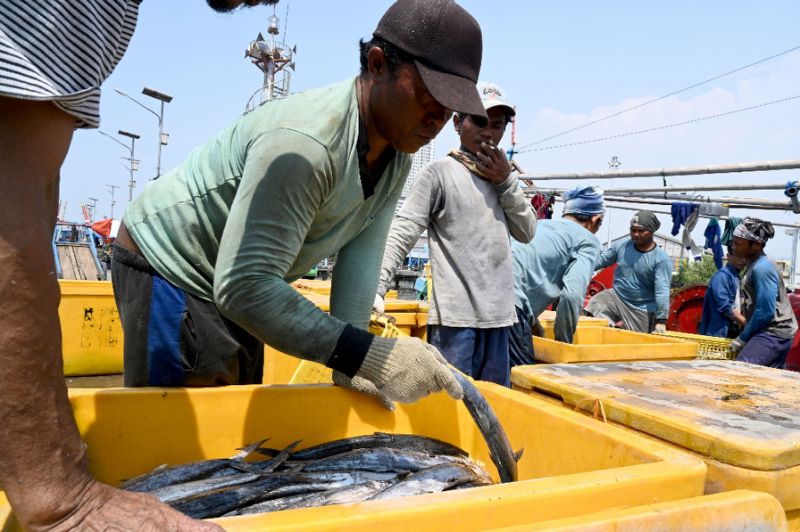
    Enslaved, beaten, malnourished, and so desperate for water he had to collect condensation to drink: Rahmatullah left Indonesia seeking better prospects at sea — instead he endured a living hell. The global fishing industry is riddled with forced labour, anti-trafficking experts say, warning that consumers are unaware of the “true cost” of the seafood they buy in stores and restaurants. Exploited workers face non-payment, overwork, violence, injury, and even death. Indonesia and Southeast Asia are major sources of such labour and unscrupulous brokers target the poor and uneducated with promises of good wages at sea. Rahmatullah was told he was heading to Peruvian waters where he would receive $400 a month salary, plus a per ton bonus, but he was allegedly duped by an Indonesian recruiting agency and trafficked to Somalia, where he spent nine brutal months aboard a Chinese fishing vessel, working 18-hour days. “I felt like a slave,” the 24-year-old told AFP, adding: “The Chinese crew drank clean water while we had to collect water from the air conditioning.” “We were often beaten when we didn’t catch enough, even if we were sick.”

    – ‘Couldn’t fight back’ –

    Rahmatullah is one of 40 Indonesians pushing for compensation after allegedly being tricked with false promises by recruiter PT Maritim Samudera. Some were sent to vessels in the seas off Japan, and others to boats sailing the Somalian coast. In interviews with AFP and accounts provided to police and government officials, the men recounted beatings and psychological abuse, hunger, and dehydration. Two crewmates died from thirst and exhaustion, according to Rahmatullah’s testimony. Most of the men subsisted on white rice scattered with cabbage or boiled fish, while some grew so desperate for water they collected condensation from the air conditioning unit. “The food was terrible,” said 21-year-old Arianus Ziliwu, who was on a boat in Japanese waters. “And the sleeping conditions didn’t seem fit for humans,” he explained. Cellphone video footage and images provided to AFP showed some men slept without mattresses in a grimy cargo hold. “We couldn’t fight back — I’m from a village and didn’t know any better,” added Rahmatullah, who had never worked on a fishing boat before. Both groups were rescued after sending SOS messages in brief windows of access to mobile internet.

    – Targeting the vulnerable –

    The young men spent between six and nine months manning nets and packing fish before being saved, and all are owed thousands of dollars in unpaid wages, according to sworn statements to police. Faced with plummeting global fish stocks due to overfishing, seafood companies have increasingly turned to vulnerable migrant workers in a bid to remain profitable, anti-trafficking advocates said. “If you want cheap tuna or squid, the way to do it is with cheap labour,” said Arifsyah M. Nasution, oceans campaigner at Greenpeace Indonesia. “And cheap labour comes from Southeast Asia,” he added. The Global Slavery Index says labour exploitation and modern slavery in some fisheries are well documented. But few shoppers know about these high-seas horrors. “There is still very little awareness among consumers about the true costs and hidden facts of the seafood products that they buy at stores and supermarkets,” he said. Critics say the Indonesian government is not doing enough to combat widespread abuse of its migrant sailors, despite efforts to clamp down on human rights violations in its own territorial waters. Although there are no reliable estimates on the number of Indonesian migrant fishermen that fall victim to trafficking, authorities estimated in 2016 that some 250,000 Indonesians were working as “unprotected” crew on foreign fishing vessels. Most are destined for fishing fleets that often obscure their origins through foreign flagging, a system that complicates monitoring and jurisdictional oversight by allowing ships to register in a country other than the owner’s own, to avoid strict labour and environmental standards. Both public and private agencies in Indonesia are licensed to send people abroad, but some recruiters — and fishermen — choose to work outside formal channels, and poor oversight puts workers at risk. “The first problem is lack of supervision, the second is toothless enforcement,” said Imam Syafi’i, from the Indonesian Seafarers’ Movement (PPI).

    – ‘No more victims’ –

    PT Martim Samudera Indonesia, the company that recruited Rahmatullah, was not legally registered to send people abroad and falsified documents for some workers, according to PPI, the union which is advocating on behalf of the 40 men. Despite paying about $100 in processing fees, Rahmatullah was sent overseas without basic training, a seaman’s book or a medical certificate, Syafi’i said. Indonesia’s manpower ministry, which is responsible for overseeing migrant workers, has recommended that the men be compensated for their ordeal, but the recruiter has so far refused to pay, according to the union.Police are looking into possible trafficking charges, although progress on the case has been slow, Syafi’i said. The firm declined to answer AFP’s questions about the allegations and said it was cooperating with the police investigation. Although the government has taken steps to minimise the problem by revising regulations, enforcement is haphazard and complicated by overlapping laws and poor cooperation between agencies, observers said. Yuli Adiratna, head of Indonesia’s sub-directorate for protecting workers abroad, conceded that “supervision of seafarers could improve”, adding that his inspectors have been more focused on other migrant workers at risk. Jakarta is looking to beef up monitoring and inter-agency cooperation, Adiratna said.That can’t come quickly enough for some, who want to stop the exploitation. “I want the company to be punished so that there are no more victims,” said Lufti Awaludin Fitroh, another fishermen allegedly tricked by PT Maritim Samudera.

    “It’s enough for me and my friends to be the last — no more.”

    source

  • Venezuela’s murderous ‘Crazy Boys’ who make their living by kidnapping

    Venezuela’s murderous ‘Crazy Boys’ who make their living by kidnapping

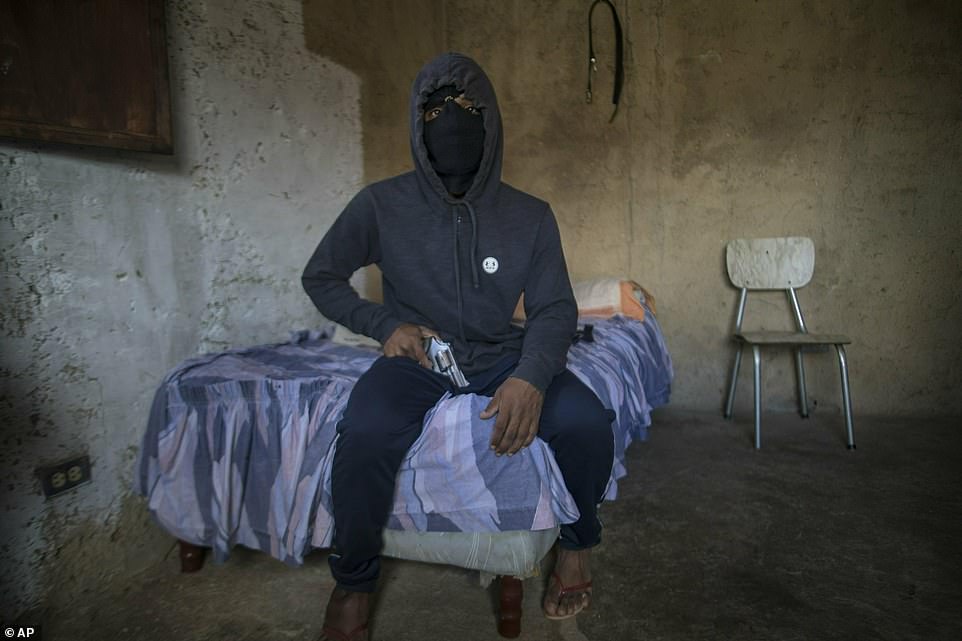
    Venezuela’s murderous ‘Crazy Boys’ gang who make their living by kidnapping in one of the world’s most violent cities – Caracas – have given an astonishing interview shedding light on the reality of life inside the failing socialist state. The gangsters make money by kidnapping ordinary citizens off the streets and demanding ransoms that can be as little as a car or fancy watch, but such meagre items still represent a tidy profit in the impoverished nation. Venezuela has been ruled by Russian-backed Nicolás Maduro for five years, and the country was at the centre of a stand off between Vladimir Putin and Donald Trump this year as the White House tried to support Juan Guadio who claimed to have won an election. However Maduro clung to power and socialist rule continues in the nation amid soaring hyper inflation that is making many of Caracas’ hardened criminals consider leaving the country. Feared Caracas street gangster El Negrito, 24, sleeps with a silver revolver under his pillow and says he’s lost track of his murder count. El Negrito says the hyperinflation has disrupted his bloody track record and firing his gun has become an expensive luxury. Ten bolivars – now worth just $1 – used to get you a gun, now that doesn’t even get you a pack of cigarettes.

    ‘If you empty your clip, you’re shooting off $15,’ said El Negrito, speaking to The Associated Press on the condition he be identified only by his street name and photographed wearing a hoodie and face mask to avoid attracting unwelcome attention. ‘You lose your pistol or the police take it and you’re throwing away $800.’ He leads for-hire hoodlums called the Crazy Boys, a band that forms part of an intricate criminal network in Petare, one of Latin America’s largest and most feared slums.  The gangster, who agreed to an interview with two associates at their hillside hideout in Caracas, said his group now carries out roughly five kidnappings a year, down considerably from years past.  Such express abductions are big business. Typically, a victim is nabbed and held hostage for up to 48 hours while loved ones scramble to gather as much cash as they can find, with kidnappers focused on speed and a quick return rather than on the size of the payout. El Negrito said the ransom they set depends on what a victim’s car costs, and a deal can turn deadly if demands aren’t met.

    But like many of his associates, he has considered leaving the trade in Venezuela and emigrating. He said some people have quit the world of crime and sought more honest work abroad, fearing stiff penalties in other countries where laws are more enforced.  While explaining that he struggles to support his wife and young daughter, El Negrito passed his silver pistol between his hands. A Bible lay open to Proverbs on a dresser as a breeze turned the pages.  Another Crazy Boy called Dog, said, ‘A pistol used to cost one of these bills,’ crumpling up a 10 bolivar ($1) note that can no longer be used to buy a single cigarette. ‘Now, this is nothing.’ Bullets are expensive at $1 each and with less cash circulating on the street, he says robberies just don’t pay like they used to.  Officials of Maduro’s socialist administration stopped publishing statistics charting crime trends long ago.

    source

  • Dangerously High Levels of Antibiotics In World Rivers

    Dangerously High Levels of Antibiotics In World Rivers

    Why are we really surprised when the rest of the world is as polluted as our own country.    Wonder what it does to the fish?  Hundreds of sites in rivers around the world from the Thames to the Tigris are awash with dangerously high levels of antibiotics, the largest global study on the subject has found. Antibiotic pollution is one of the key routes by which bacteria are able develop resistance to the life-saving medicines, rendering them ineffective for human use. “A lot of the resistance genes we see in human pathogens originated from environmental bacteria,” said Prof William Gaze, a microbial ecologist at the University of Exeter who studies antimicrobial resistance but was not involved in the study. The rise in antibiotic-resistant bacteria is a global health emergency that could kill 10 million people by 2050, the UN said last month. The drugs find their way into rivers and soil via human and animal waste and leaks from wastewater treatment plants and drug manufacturing facilities. “It’s quite scary and depressing. We could have large parts of the environment that have got antibiotics at levels high enough to affect resistance,” said Alistair Boxall, an environmental scientist at the University of York, who co-led the study.

    The research, presented on Monday at a conference in Helsinki, shows that some of the world’s best-known rivers, including the Thames, are contaminated with antibiotics classified as critically important for the treatment of serious infections. In many cases they were detected at unsafe levels, meaning resistance is much more likely to develop and spread. Samples taken from the Danube in Austria contained seven antibiotics including clarithromycin, used to treat respiratory tract infections such as pneumonia and bronchitis, at nearly four times the level considered safe. The Danube, Europe’s second-largest river, was the continent’s most polluted. Eight per cent of the sites tested in Europe were above safe limits. The Thames, generally regarded as one of Europe’s cleanest rivers, was contaminated, along with some of its tributaries, by a mixture of five antibiotics. One site on the river and three on its tributaries were polluted above safe levels. Ciprofloxacin, which treats infections of the skin and urinary tract, peaked at more than three times safe levels.

    Even rivers contaminated with low levels of antibiotics are a threat, Gaze said. “Even the low concentrations seen in Europe can drive the evolution of resistance and increase the likelihood that resistance genes transfer to human pathogens,” he says. The researchers tested 711 sites in 72 countries and found antibiotics in 65% of them. In 111 of the sites, the concentrations of antibiotics exceeded safe levels, with the worst cases more than 300 times over the safe limit. Lower-income countries generally had higher antibiotic concentrations in rivers, with locations in Africa and Asia performing worst. They peaked in Bangladesh, where metronidazole, used to treat vaginal infections, was found at more than 300 times the safe level. The residues were detected near a wastewater treatment facility, which in lower-income countries often lack the technology to remove the drugs. Inappropriate disposal of sewage and waste dumped straight into rivers, as was witnessed at a site in Kenya, also resulted in high antibiotic concentrations of up to 100 times safe levels.

    “Improving the safe management of health and hygiene services in low-income countries is critical in the fight against antimicrobial resistance,” said Helen Hamilton, health and hygiene analyst at the UK-based charity Water Aid.  The research team is now planning to assess the environmental impacts of antibiotic pollution on wildlife including fish, invertebrates and algae. They expect severe effects. The drug levels in some Kenyan rivers were so high that no fish could survive. “There was a total population crash,” Boxall said.

  • Salvini wins majority and says a ‘NEW Europe is born’

    Salvini wins majority and says a ‘NEW Europe is born’

    he group has around 32 percent of the vote so far on the night, way ahead of the Democratic Party. Interior minister Matteo Salvini leads League, which came third in the 2018 general election. Following his victory, Mr Salvini said in Milan: “A new Europe is born.

    “I am proud that the League is participating in this new European renaissance.”

    He said previously: “As far as I’m concerned, if the League wins nothing changes in Italy, everything will change in Europe, starting from tomorrow.”

    The head of the party’s Senate Riccardo Molinari added: “The League has probably become the top party in Italy.”

    The exit poll suggests that League will claim between 27 and 31 percent of the vote.

    The group’s coalition partner, the anti-establishment Five Star Movement (M5S) was beaten by the centre-left Democratic Party (PD) which came second with 21-25 percent, exit polls showed after voting ended.

    Mr Salvini had hoped to gain significant ground in the EU.

    He stepped up intensive campaigns to attempt to claim a majority in Italy.

    source

  • America’s ‘Explicit Covenant with God’: How a Nation Pledged to God Can Save a World…or Lose It

    America’s ‘Explicit Covenant with God’: How a Nation Pledged to God Can Save a World…or Lose It

    Covenants are viewed as the most sacred and binding of deals – an oath that’s never to be broken. America’s earliest settlers made a covenant with God to serve and proclaim Him throughout the earth.  These days, however, Americans appear to have forgotten this covenant and that can have dire consequences.  Christian leader Dutch Sheets explained to CBN News how God’s relationship with us is set by sacred covenant.  This author of Giants Will Fall said, “It’s even what He based our salvation on: ‘I’m coming to bring a new covenant through Jesus. The shedding of His blood ratifies this covenant.’ It is a binding together that in Him is unbreakable.”

    America Began in Covenant

    Early English settlers also wanted their new land to share such a binding covenant with God. Christian historian Eddie Hyatt, author of The Great Prayer Awakening of 1857-58, said those who came to Jamestown starting in 1607 put it in their Virginia Compact.  “To propagate, to expand the gospel, the kingdom of the Lord Jesus Christ and to take the gospel to people who were ‘lying in darkness and had no knowledge of the one true God.’ They said that was the reason they had come,” Hyatt stated.  The Pilgrims arriving in Massachusetts stated the same in 1620. Jerry Newcombe, author of The Book That Made America, paraphrased what they wrote down: “‘Having undertaken a voyage for the glory of God and the advancement of the Christian faith.’”  Newcombe explained of the Pilgrims and Puritans who followed, “They came for God as opposed to coming for gold.”  Hyatt says John Winthrop, leading 700 Puritans to Massachusetts in 1631, said it like this: “‘Others may come to the New World for wealth and furs.’ He said, ‘We have another goal, another end. We have entered into an explicit covenant with God to be His people in this New World.’  And they wanted to be that city on a hill. They wanted to be a model of Christianity for the rest of the world to see.”  David Barton of Wallbuilders said as these early settlers wrote out their covenants, “They were very cognizant of the fact that we answer to God. We need to get God at the center of what we do. If we do, He’ll bless us.  If we don’t, we’re in trouble.”

    These Covenants Became Models for the US Constitution

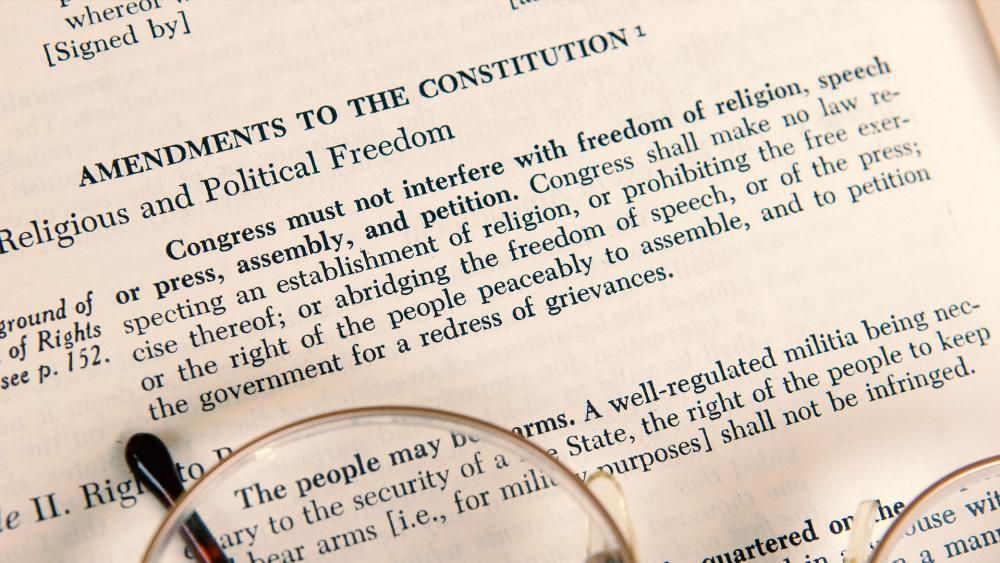
    These early covenants pledged the signers to each other and to obeying the laws they’d form with God’s guidance.  As Newcombe put it, “This was something that would bind each man and each person to the whole community as an agreement under God.” According to historian William Federer, such compacts became the model for the US Constitution, whose authors were also very much guided by their Christian faith. The writer of the online AmericanMinute.com stated, “George Washington at the beginning of the Constitutional Convention, he said ‘the event is in the hand of God.’”

    How Has America’s Constitution Lasted So Long?

    “They saw the Constitution as being a very religiously-based document,” said Barton. “It was also a very covenantal-based document. We made a covenant. The Constitution is a covenant of these states.” He went on, “The average length of a constitution in the history of the world was 17 years. So how have we gone 230 when everybody else was going 17?   And so political science professors looked to see where the Founders got their ideas.” Barton pointed out they studied 3,154 direct quotes from these Founders’ political writings and discovered how much God’s Word figured in them. He summed up, “The number one source was the Bible: 34 percent of all those quotes in those political documents, etc., came out of the Bible.” Sheets explains in his book Giants Will Fall  that the makeup of the government was shaped by biblical passages like Isaiah 33:22, writing, “Our nation’s form of government was actually taken from scripture.  ‘The Lord is our Judge {Judicial Branch}…Lawgiver {Legislative Branch}…and King {Executive Branch}.’” The Founders put God first and foremost in the Declaration of Independence.  Federer stated, “It says right in there ‘appealing to the Supreme Judge of the world.’ In this founding document, we appealed to God. We invited Him to be a part of this American experiment.” The Founders put Scripture on the Liberty Bell, Leviticus 25:10: “Proclaim liberty throughout the land to all the inhabitants thereof…”The concept of this being one nation UNDER God harkens back to Jesus telling Jerusalem in Luke 13:34 that He wanted to “…hide you UNDER my wings, covering and protecting you.”

    Dire Consequences of Deserting Covenant

    What happens though, as parts of the nation don’t want to be under God, disregard parts of the Constitution, and no longer honor sacred oaths? Sheets warned, “We have walked away from covenant with Him.” And even from the marriage covenant, with the divorce rate soaring 302 percent in the 20th century.  Newcombe argued, “A lot of the things that we’re experiencing in America today are because we’ve disregarded God’s covenant.” America, once the number one exporter of the Gospel, is now the number one importer of illegal drugs and the number one exporter of pornography. Newcombe explained God warned about this, saying, “‘Obey me then I will bless you. But if you disobey me, I will remove my blessing.’”

    So Much Is on the Line

    If America really is to be the place from which the Gospel is spread to the whole world, then the salvation of billions hangs in the balance. Sheets believes there’s hope, but only if Americans return to honoring their covenant with God, because that makes us His family. Sheets gave an example, saying, “If the kids across the street I don’t know, if they do something evil or wrong, I feel no responsibility to try to bring them back into the fold, because I’m not in covenant with them. I’m not in that relationship. God is the same way.” Barton pointed out the long-suffering faithfulness of the Lord, saying, “We’re told in Psalm 105 He keeps His covenant for a thousand generations.”Sheets added, “I don’t think there’s a stronger force in the world.” So there’s a chance the nation can still someday completely fulfill the prophecy of destiny Jamestown chaplain Robert Hunt said in 1607 as he came ashore in Virginia, just a few miles from where the Christian Broadcasting Network’s headquarters are located. Hyatt explained, “He made this declaration which I believe was prophetic. He said ‘from these very shores the Gospel shall go forth, not only to this New World, but to all the world.’ And that was just not very far from CBN!” It just takes getting back to covenant. As Joel 2:13 says, “Now return to the Lord your God, for He is gracious and compassionate, slow to anger, abounding in loving-kindness.”

  • ‘Revolution’ in Poland as nation confronts priestly abuse

    ‘Revolution’ in Poland as nation confronts priestly abuse

    One victim spoke out, and then another, and another. A statue of a pedophile priest was toppled in Gdansk, put back by his supporters, and finally dismantled for good. A feature film about clerical abuse was a box office hit.

    Poland thought it had started confronting the problem of clerical abuse and its cover-up by church authorities. Then a bombshell came: A documentary with victim testimony so harrowing it has forced an unprecedented reckoning with pedophile priests in one of Europe’s most deeply Catholic societies.

    Poland’s bishops acknowledged this week they face a crisis and made a rare admission that they have failed to protect the young. It’s also a crisis for the country’s conservative government, which is closely aligned with the Catholic Church, putting the ruling Law and Justice party on the defensive before Sunday’s European Parliament vote in Poland.

    The documentary ”Tell No One ” was directed by journalist Tomasz Sekielski. Before its release on May 11, ruling party leader Jaroslaw Kaczynski had described discussion about clerical abuse as a “brutal attack” on the church and portrayed the LGBT rights movement as the key threat to children in the country. But the revelations in the documentary have pushed the party to face up to the cleric abuse crisis. It has vowed stiffer penalties for pedophilia, although its leaders have avoided pointing a finger at the church specifically.

    Across the country, the film has triggered soul searching and raised questions, including whether the same bishops who moved perpetrators from parish to parish for years will be capable of cleansing the church. Some wonder if Poland, which is already being reshaped by economic growth and secularization, could eventually follow Ireland, where the abuse crisis broke the Catholic Church’s hold on society.

    Crowdfunded and free on YouTube, “Tell No One” has gotten more than 21 million views so far and has prompted a new wave of survivors to come forward. About 150 people have contacted a foundation helping victims of clerical abuse, “Have No Fear.” One was an 86-year-old man who was molested when he was 6 and had never told anyone until now.

    “He finally understood that he is not alone,” said Anna Frankowska, a lawyer for the organization who took his call.

    “A huge tsunami has come, and there is no way this issue can be swept under the rug now,” she said. “It has to be addressed.”

    more

  • Trump takes war on abortion worldwide as policy cuts off funds | World news | The Guardian

    Trump takes war on abortion worldwide as policy cuts off funds | World news | The Guardian

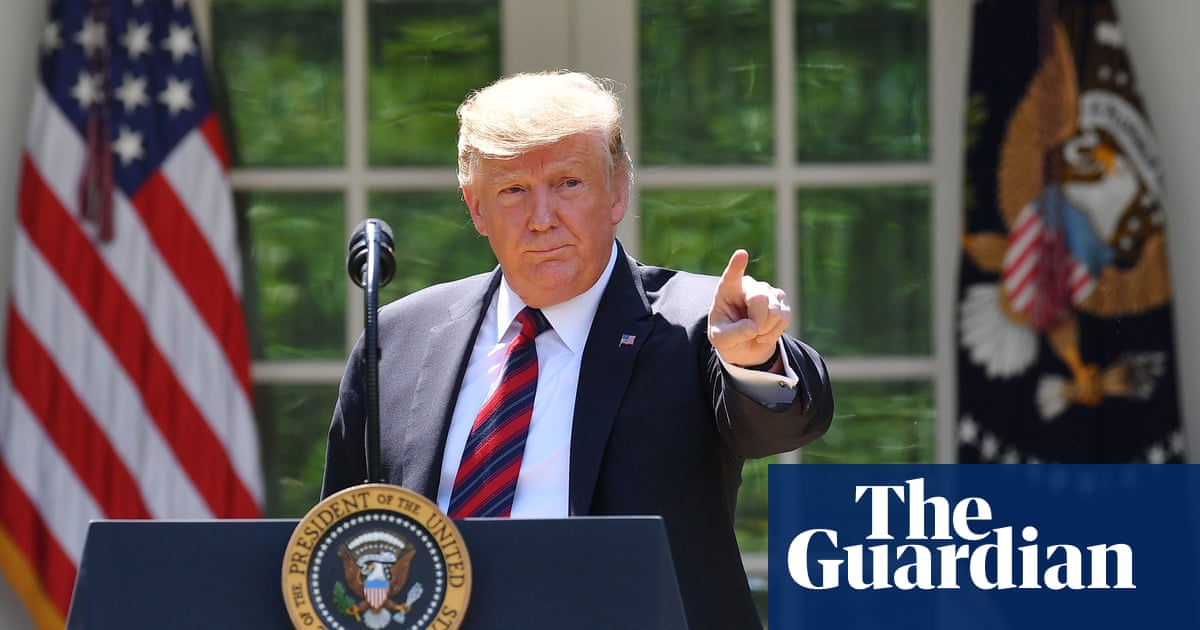
    The Trump administration has taken its war on abortion worldwide, cutting off all funding to any overseas organisation or clinic that will not agree to a complete ban on even discussing it.

    The Mexico City policy, dubbed the “global gag” by its critics, denies US federal funds to any organisation involved in providing abortion services overseas or counselling women about them. It was instituted by the then US president Ronald Reagan and has been revoked by every Democrat and reinstated by every Republican president since.

    But, under Trump, the net has been thrown wider and pulled tighter than ever. Sexual health organisations have said women will die as a consequence as they pursue dangerous DIY solutions or “back street” abortions instead.

    In March, the US extended the gag, stating that any organisation counselling women on abortion and using funds from elsewhere – even from its own government or a donor in another country – will no longer be eligible for any US funding. The diktat applies to all global health organisations. HIV and children’s charities must sign up to the pledge, alongside those running sexual and reproductive health clinics.

    What that means for organisations such as Marie Stopes International and the International Planned Parenthood Federation (IPPF) is a blight on sexual and reproductive health services even in countries where abortion is never offered because it is illegal.

    Every time the global gag has been reimposed by a Republican president, rates of back street and self-administered abortions sometimes ending in death have gone up, along with unwanted pregnancies. Two years since Trump’s original edict, on the day he came into office and in line with his pledge to religious groups he courted for votes, it is still early to assess the impact, but it is likely to be considerable.

    “The global gag rule hits hardest the women living at the margins – the poorest, the most remote and those under 25,” said Ana Maria Bejar, the director of advocacy at IPPF. “Progress can only be made when we can expand access for women and girls, not by reducing it.

    “The policy has had a disastrous impact for IPPF in [more than] 30 countries. Tailored services for contraception, Zika information, maternal health, antenatal care, reproductive cancers, and HIV prevention and treatment felt the brunt.

    “Any cuts to critical, affordable, high-quality, integrated reproductive healthcare is denying a woman or girl the right to decide what to do with her body, her life and her future.”

    IPPF had 49 projects run by local member organisations in 31 countries in Latin America and the Caribbean, sub-Saharan Africa, and South Asia in January 2017 when the rule came in. Services in some areas shrunk by up to 42% within the year and the impact is already visible.

    In Kibera, one of Nairobi’s biggest slums, volunteers report a rise in sexually transmitted infections, such as syphilis, and unsafe abortions. An outreach family planning clinic arrives once a month instead of three to four times. In some rural areas of Kenya, such clinics have stopped completely. Some HIV clinics have closed.

    In Dakar, Senegal, volunteers report a rise in unsafe abortions, teenage pregnancies and sexually transmitted infections in an impoverished neighbourhood where three out of five clinics that had been funded by IPPF have closed.

    Marie Stopes International is the other big funder of family planning services across the world. John Lotspeich, its director of external affairs, called the latest extension of the gag “quite outrageous … what they are saying is, even if an organisation’s money mainly comes from other organisations, say the Danish government, there is a ban on that money from being used to discuss abortion”.

    US funds, he points out, have never gone towards paying for abortion. There is a separate piece of legislation that prevents it.

    Marie Stopes International supports family planning services in many countries where abortion is illegal. Some of those have ended.

    “It happened very quickly in 2017,” Lotspeich said. “Most outreach services in Uganda had to stop.” In Madagascar, they had to give their trucks back to the US Agency for International Development (USAid). “They wouldn’t even let us buy them from them.

    “Then there are examples in countries like Malawi, where only we and [the] IPPF are the providers.” They have had to stretch their resources, meaning fewer services are allocated across the country.

    Sexual and reproductive health is a sensitive area, highly vulnerable to changes in the political and moral climate.

    Lotspeich said that within three to four months of Tanzania banning pregnant girls from attending school “some of our providers say they were seeing teenage girls coming in having tried to self-abort. Being pregnant, they couldn’t go to school, so they tried to take matters into their own hands.” There can be tragic consequences.

    The Danish and Canadian governments have given MSI funding. The movement She Decides was started in response to Trump’s reimposition of the gag by the Dutch government minister Lilianne Ploumen, along with her counterparts in the governments of Belgium, Denmark and Sweden. It has raised funds and championed women’s rights to sexual and reproductive healthcare, including abortion, but it cannot match the loss of funds from the United States.

    US money is being switched from the big family planning providers to faith groups that have a specifically anti-abortion stance. Some are also opposed to modern contraception. They will say they do family planning – but they teach “natural” methods and abstention. There is a change in the atmosphere and the argument.

    In Verona in March, the World Congress of Families held its annual rally, declaring its commitment to “the right to life” from conception, as well as marriage being solely the union of one man and one woman for life. Just as hostile to LGBTI rights and abortion is the ultraconservative CitizenGO, started in Spain but now promoting petitions in 50 countries. These movements are reinvigorated by Trump’s global war on abortion.

    “We are starting to see this is a hugely political play,” Lotspeich said. “The Trump administration is giving a lot of air cover for people to express these views that women’s rights are not paramount, even though they are enshrined in the Beijing declaration and so on.”

    The rhetorical battle has intensified. She Decides is leading the fight back, taking on the cause of women’s rights all over the world. But while US money is denied to those who would help women have control over their bodies, the deaths and serious mental and physical harm will inevitably continue.

    This content was originally published here.