Category: Science&Technology

  • ‘Dead Zone’ in Gulf of Mexico Could Soon Grow Larger Than the Size of Massachusetts

    ‘Dead Zone’ in Gulf of Mexico Could Soon Grow Larger Than the Size of Massachusetts


    Why Global Citizens Should Care
    Pollution generated by human activities like urbanization and agriculture often end up in water bodies, where they disrupt the ecosystem and can ultimately wipe out marine life. Chemical nutrients commonly used in farming can upset marine ecosystems to the point of creating large “dead zones” where no life can thrive. You can join the movement to protect our oceans and life below water here.   

    This year’s “dead zone” in Gulf of Mexico, where oxygen is too scarce to support marine life, is predicted to be one of the area’s largest in history, according to a report released by National Oceanic and Atmospheric Administration (NOAA) on Monday.

    “Dead zones” occur cyclically in the Gulf and are caused by excessive nutrient pollution that makes its way from agricultural sites into water bodies. This year’s is expected to grow to roughly 7,829 square miles, or about the size of Massachusetts, the NOAA said. However, a similar study released by the Louisiana State University (LSU) last week, predicts the zone will be even bigger than that, reaching approximately 8,717 square miles, about the same size as New Jersey.

    Both estimates put the size of this year’s “dead zone” just slightly behind the record of 8,766 square miles observed in 2017. Still the predictions exceed the five-year average of 5,770 square miles by a hefty amount.

    “We think this will be the second-largest, but it could very well go over that,” Nancy Rabalais, marine ecologist and co-author of the LSU report, told CNN.

    The NOAA blames unusually heavy spring rainfalls and enormous amounts of pollutants in rainwater runoff for the alarming forecast.

    Nitrogen and phosphorus from fertilizers are carried by rainwater into the Gulf of Mexico where they encourage the growth of excessive amounts of phytoplankton (microscopic algae) blooms. These eventually die and sink to the bottom of the Gulf, where, as they decompose, they eat up the water’s oxygen supply. The low oxygen levels then threaten all living organisms in the water body — creating a “dead zone” — including fish, shrimp, and crabs, both an important source of food and income for people in the area.

    Embed from Getty Images

    Water from 41% of the US drains into the Mississippi River, which eventually joins the Gulf of Mexico. The US Geological Survey reported that the average river discharge carried 156,000 metric tons of nitrate and 25,300 metric tons of phosphorus into the Gulf this past May alone — 67% higher than the long-term average over the past four decades.

    The US Environmental Protection Agency has employed a task force to monitor the issue and several US states are also working to reduce the amount of nutrients that run into the Gulf.

    While little can be done to reduce the expected size of the “dead zone” and reverse the impact of this nutrient runoff on the Gulf this year, farmers can take action to prevent similar destruction in the future. Switching to eco-friendly and natural fertilizers can help reduce the amount of nitrogen and phosphorus at risk of entering the Gulf. Farmers can also plant more crops like wheat grass that have longer roots and can retain soil nutrients more easily.

    “It is all a part of how we treat our ecosystem and our consumptive nature,” Rabalais said.

    “It’s all connected to our carbon footprint and the nitrogen used in farming and used to feed animals that we don’t need to eat. It is all tied together with the global economy and now tariffs and the way subsidies are given to farming.”

    This content was originally published here.

  • Study of olfactory bulb ratio in modern birds suggests dinosaurs may have had strong sense of smell

    Study of olfactory bulb ratio in modern birds suggests dinosaurs may have had strong sense of smell

    beak
    Credit: CC0 Public Domain

    A team of researchers at University College Dublin has found evidence that suggests some dinosaurs may have had a very strong sense of smell. In their paper published in Proceedings of the Royal Society B, the group describes their study of the olfactory bulb ratio in modern birds and how they used it to predict possible olfactory strength in certain dinosaurs.


    In most modern animals, the size of the olfactory bulb correlates with the strength of their sense of —its size relative to the rest of the brain is its olfactory bulb ratio. For many years, scientists have used the olfactory ratio as a means of estimating how well an animal can smell. Prior research has shown that the size of the olfactory bulb is related to the number of smell receptor genes in the DNA of a given animal, and how much diversity they represent. Taken together, it is called the olfactory repertoire (OR). In this new effort, the researchers used the OR of and an alligator to estimate the olfactory ability of several types of .

    The brains of dinosaurs do not fossilize, of course, so there are no examples of olfactory bulbs from dinosaurs to examine. But there are endocasts—brain imprints found on the inside of a skull. The researchers used them to estimate the size of the olfactory bulb in several dinosaurs. They then gathered OR data on a large variety of birds and one alligator. In looking at average ORs for alive today and comparing them with olfactory size in non-avian extinct dinosaurs, the researchers were able to come up with estimates of the strength of their sense of smell.

    The researchers found that many of the larger dinosaurs likely had very good senses of smell—Tyrannosaurus Rex, for example, was likely able to rely on its sense of smell for various purposes, including obtaining food. They point out that their study does not, however, clear up the controversy regarding whether the fearsome dinosaur was a strong predator or simply a scavenger.

    This document is subject to copyright. Apart from any fair dealing for the purpose of private study or research, no part may be reproduced without the written permission. The content is provided for information purposes only.

    This content was originally published here.

  • Bigelow aims to sell rides to space station on SpaceX Dragon ships for $52M a seat

    Bigelow aims to sell rides to space station on SpaceX Dragon ships for $52M a seat

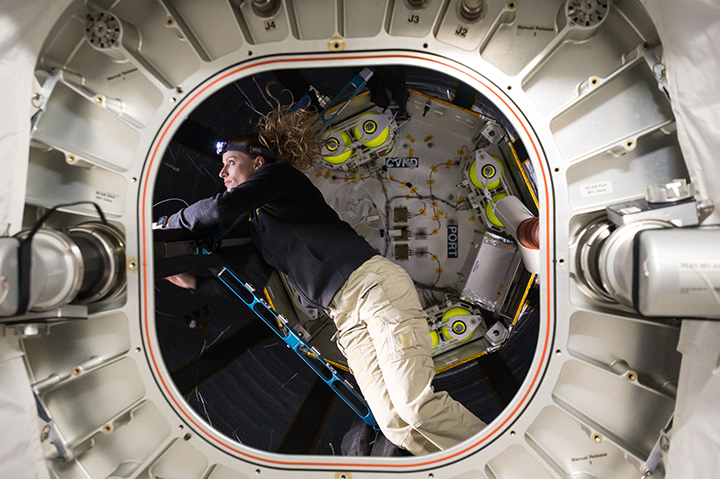
    Kate Rubins in BEAM module
    NASA astronaut Kate Rubins conducts tests and replaces parts inside the International Space Station’s Bigelow Expandable Activity Module in 2016. (NASA Photo)

    Just days after NASA laid out its ground rules for commercial travel to the International Space Station, Nevada-based Bigelow Space Operations says it’s targeting a fare of roughly $52 million a seat for rides that will make use of SpaceX’s Falcon 9 rocket and Crew Dragon capsule.

    Bigelow Space Operations is the service subsidiary of Bigelow Aerospace, the space venture founded by Nevada real-estate development magnate Robert Bigelow. Three years ago, Bigelow Aerospace had one of its expandable modules attached to the space station for testing, and it’s still being used.

    Following up on Friday’s NASA announcement, Bigelow said his company has put down substantial deposits and reservation fees for up to four SpaceX launches to the space station. Each launch would be capable of sending up to four people into orbit for a stay of up to one or two months, in accordance with the space agency’s ground rules.

    Bigelow, who holds the title of president at Bigelow Aerospace as well as Bigelow Space Operations, said NASA’s requirements would be thoroughly digested “so that all opportunities and obligations to properly conduct the flights and activities of new astronauts to the ISS can be responsibly performed.”

    “In these early times, the seat cost will be targeted at approximately $52,000,000 per person,” he wrote in a statement released today.

    That cost presumably doesn’t include the roughly $35,000-a-night fee that NASA plans to charge as reimbursement for station-related expenses such as life support and food.

    “The next big question is, when is this all going to happen?” Bigelow wrote. “Once the SpaceX rocket and capsule are certified by NASA to fly people to the ISS, then this program can begin.  As you might imagine, as they say, ‘the devil is in the details,’ and there are many. But we are excited and optimistic that all of this can come together successfully, and BSO has skin in the game.”

    Bigelow isn’t the only one with skin in the game: Virginia-based Space Adventures says it will be selling seats on Boeing’s CST-100 Starliner capsule, which will be launched on a United Launch Alliance Atlas 5 rocket. Neither Space Adventures nor Boeing has named a precise price, but Boeing spokesman Josh Barrett told GeekWire last week that NASA’s estimate of $58 million per seat was in the right ballpark.

    In contrast to the full-flight reservations that Bigelow has with SpaceX, Space Adventures plans to sell the “fifth seat” on Starliner trips that will take four NASA-funded astronauts to the space station. Private-sector astronauts would fly alongside public-sector astronauts.

    The first crewed Starliner mission to the space station will set the model for this arrangement: Boeing test pilot Chris Ferguson, a former space shuttle commander, will be flying as a private astronaut alongside NASA’s Nicole Mann and Mike Fincke.

    That mission, and SpaceX’s first crewed Dragon trip to the station, are currently expected to take place by the end of this year – with the caveat that the flight schedule has repeatedly slipped and may well do so again. Only after those demonstration flights will NASA assess the space taxis’ performance and issue certification for regular service.

    This content was originally published here.

  • In the 1970s, Scientists Discovered a 2 Billion-Year-Old Nuclear Reactor in West Africa

    In the 1970s, Scientists Discovered a 2 Billion-Year-Old Nuclear Reactor in West Africa

    In June 1972, nuclear scientists at the Pierrelatte uranium enrichment plant in south-east France noticed a strange deficit in the amount of uranium-235 they were processing. That’s a serious problem in a uranium enrichment plant where every gram of fissionable material has to be carefully accounted for.
    The problem lay in the ratio of uranium isotopes in their samples. Natural uranium contains three isotopes, always in the same ratios: uranium-238 (99.2744 per cent), uranium-235 (0.7202 per cent) and uranium-234 (0.0054 per cent).
    The problem was with the uranium-235 of which there was only 0.600 per cent.
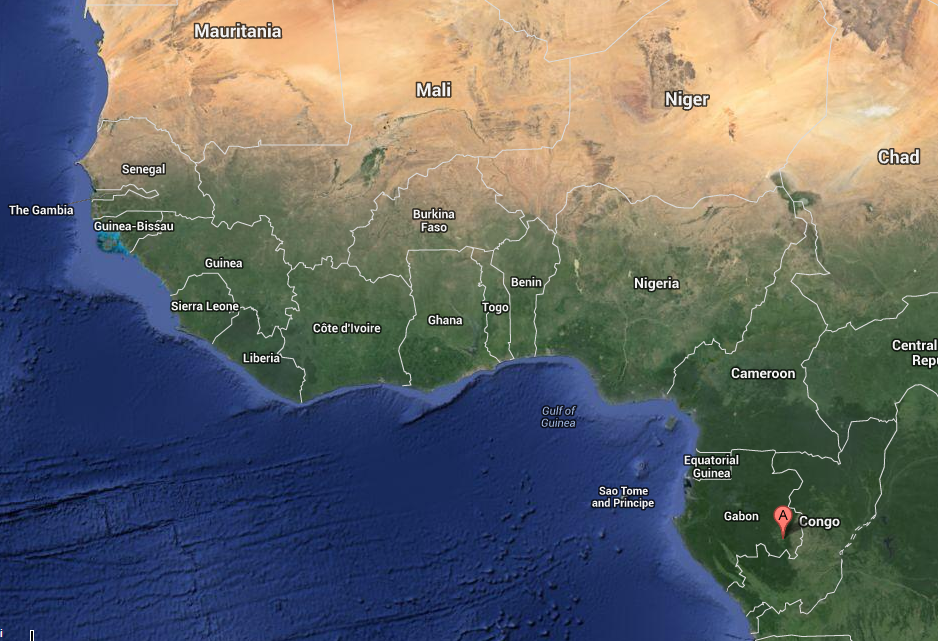
    Physicists soon traced the anomaly to the supply of uranium ore from Gabon in West Africa, which contained far less uranium-235 than the ore from anywhere else on the planet, a problem that caused some consternation among nuclear scientists.
    So France’s top nuclear scientists began an investigation and, in the process, made one of the more remarkable discoveries in recent history.
    This kind of depleted uranium is only found inside nuclear reactors, which burn uranium-235. That set off a hunt for a reactor that could have produced this stuff.
    On 25 September 1972, they announced that the depleted uranium had come from Gabon where nuclear scientists had discovered a 2 billion year-old nuclear reactor at the site of the Oklo uranium mines near a town called Franceville. This was a naturally occurring deposit of uranium where the concentration of uranium-235 had been high enough to trigger a self-sustaining nuclear reaction.
    Today, say Edward Davis at Kuwait University and a couple of pals who review the scientific history of the discovery at Oklo, one of the most extraordinary natural phenomena on the planet.
    Since its discovery, the Oklo reactor has been a significant driver of important research in nuclear physics. In particular, physicists have used it to study how buried nuclear waste might spread through the environment. And since the reactor began operating some 2 billion years ago, they’ve also used it to study how the universe’s fundamental constants may have changed during that time.
    But the first puzzle that physicists had to deal with in 1972 was how a naturally-occurring reactor could work at all. Nuclear scientists well know that reactors do not work with natural uranium because the level of uranium-235 is too low at only 0.7202 per cent. Instead, the uranium-235 has to be enriched so that it is about 3.5 per cent of the total. So how did so much end up at Oklo?
    The answer to this puzzle is that uranium-235 has a shorter half-life than other uranium isotopes and so would have been present in much higher quantities in the Earth’s distant past. When the Solar System was created, for example, about 17 per cent of uranium would have been the 235 isotope. That percentage has fallen steadily since then.
    When the ore in Gabon was laid down some 2 billion years ago, the concentration of uranium-235 would have been about 4 per cent, more than enough for a self-sustaining nuclear reaction.
    The idea is that when a neutrons hits an atom of uranium-235, the atom splits producing two smaller nuclei and several neutrons. These neutrons go on to split other atoms in an ongoing chain reaction.
    However, the liberated neutrons are high-energy particles that tend to fly away rapidly. So nuclear reactors usually contain a moderating material that slows down the neutrons so that they can interact with other uranium atoms.
    It turns out that water is a reasonable neutron moderator. So an important component of this natural reactor was the presence of water seeping through the uranium ore. And this had an interesting impact on the way the reactors operated.
    Nuclear scientists believe that the Oklo reactors operated in pulses. As water flowed into the rock, it moderated the neutrons, allowing a chain reaction to occur. But this increased the temperature of the rock, boiling the water into steam which escaped.
    When this happened, the neutrons were no longer able to interact with and split uranium nuclei and the chain reaction stopped. The rock then cooled allowing water to flow back in.
    So the Oklo reactors operated in pulses. Today, nuclear scientists have calculated that the chain reaction probably lasted for 30 minutes and then switched off for about 2.5 hours, a pulsing process that continued for about 300,000 years..
    While they were on, the reactors were powerful devices. “The reactors likely operated under conditions similar to present day pressurized water reactor systems, with pressures about 150 atmospheres and temperatures of about 300 degrees C,” say Davis and co.
    French nuclear scientists carried out a detailed survey of the Oklo site, discovering not just one reactor zone but up to 17 of them over an area of several tens of square kilometres. Some of these were close to the surface and so had been influenced by weathering processes, while others were at depths of up to 400 metres and were more or less pristine.
    In addition to the depleted uranium-235, these zones contained numerous fission fragments such as isotopes of zirconium, yttrium, neodymium and cerium. The unusual ratios of these isotopes was an important indicator of what had gone on there almost 2 billion years earlier.
    The presence of these fission by-products immediately piqued the interest of nuclear scientists, particularly in the US. Perhaps the biggest challenge facing the nuclear industry is to find a way to deal with the highly radioactive waste that reactors produce. One idea is to bury it but that raises the question of what would happen to this waste over the millions of years during which it remains toxic.
    The Oklo reactors were a natural test of this question. So US scientist, in particular, began a program to measure the way in which different fission products migrated away from the reactor zones. “One of the most important, and surprising, early findings was that uranium and most of the rare earth elements did not experience significant mobilization in the past two billion years,” say Davis and co. “Because the wastes were contained successfully in Oklo, it appears not unrealistic to hope that long term disposal in specially selected and engineered geological repositories can be successful.”
    This evidence has since become one of the main arguments in favour of nuclear waste repositories such as the one planned at Yucca Mountain in Nevada.
    Oklo has also become the focus of physicists studying the possibility that the universe’s fundamental constants may have changed over time. The reason that Oklo may be able to help is that it stopped operating over 1.5 billion years ago. So the nuclear processes that occurred at that time must’ve been governed by the fundamental constants as they were then.
    In particular, physicists are interested in the fine structure constant which determines the strength of the electromagnetic interaction. This in turn determines the way neutrons are absorbed in chain reactions and consequently the yields of different fission products.
    The focus of most research has been on the amount of samarium-149 produced by these natural reactors. The data places bounds on how much the constant may have changed in the past. The consensus is that the data is consistent with the fine structure constant being actually constant although it doesn’t rule out tiny changes.
    Davis and co point out that the Oklo data can also constrain changes in other constants, such as the ratio of light quark masses to the proton mass. To date, this work is consistent with these constants being constant.
    The Oklo story ends with a damp squib. After a period of intense interest in the early 1970s, mining continued at Oklo and eventually all the natural reactors were mined out. The one exception was a shallow reactor zone at a place called Bangombé, some 30 kilometres from Oklo, although this has largely been washed out by ground water.
    So these zones have been largely lost to science. That’s a shame. It also means that nuclear scientists are unlikely to get better data on natural nuclear reactors using the advanced techniques than those of available in the 1970s.
    No other natural reactors have been discovered anywhere on Earth, making Oklo unique. At least for the moment.
    Ref: arxiv.org/abs/1404.4948 : Oklo Reactors And Implications For Nuclear Science


    This content was originally published here.

     

  • Mystery as mass 5 times the size of Hawaii found under moon crater

    Mystery as mass 5 times the size of Hawaii found under moon crater

    The remains of the asteroid could be buried beneath the SouthPole-Aitken basin – a crater that measures approximately 1,553 miles across and eight miles deep. Dr Peter James, a professor of planetary geophysics from Baylor University in Texas, said: “Imagine taking a pile of metal five times larger than the Big Island of Hawaii and burying it underground. The discovery – which was published in the journal Geophysical Research Letters in April – was made after astronomers measured slight differences in the moon’s gravity using data collected by NASA’s Gravity Recovery and Interior Laboratory mission (GRAIL). They found the force of gravity was affected by the gigantic mass, as it weighed the basin floor downward by more than half a mile. Renowned conspiracy theorist Tyler Glockner has since posted a video offering his take on the find on YouTube channel secureteam10. Tyler has often published clips exposing the “mysteries” of the lunar surface – from supposed alien structures to UFOs in its atmosphere. In his latest video, he said: “There are a ton of craters on our moon and, strangely enough, none of them appear to have giant pieces of metal five times bigger than Hawaii underneath.

    “Something is strange about this, something massive is buried underneath the moon. “We know that it is a massive metallic structure and that the astronauts said the moon rang like a bell. “We know about all the strange artificial structures on the moon’s surface so, with that, it’s a total mystery. “One of many mysteries about our moon – there’s just something not right about our moon.” More than 118,000 people have seen Tyler’s video since it was posted yesterday. I’ve always been open to the idea that the moon is a satellite or ship with a possible civilisation still inside,” one viewer bizarrely said. Another wrote: “Honestly, that is really strange.” And a third commented: “That’s crazy how all this comes together.” It comes just days after Tyler claimed to have found underground bases on Mars, using mapping software Google Earth. And Professor Brian Cox recently revealed how “extraterrestrial life”  could be hiding in a 900-mile-wide crater on the Red Planet.

    source

  • Stanford engineers make editing video as easy as editing text

    Stanford engineers make editing video as easy as editing text

    In television and film, actors often flub small bits of otherwise flawless performances. Other times they leave out a critical word. For editors, the only solution so far is to accept the flaws or fix them with expensive reshoots.

    A new algorithm makes it possible to perform text-based editing of videos of “talking heads”; that is, speakers from the shoulders up.

    Imagine, however, if that editor could modify video using a text transcript. Much like word processing, the editor could easily add new words, delete unwanted ones or completely rearrange the pieces by dragging and dropping them as needed to assemble a finished video that looks almost flawless to the untrained eye.

    A team of researchers from Stanford University, Max Planck Institute for Informatics, Princeton University and Adobe Research created such an algorithm for editing talking-head videos – videos showing speakers from the shoulders up.

    The work could be a boon for video editors and producers but does raise concerns as people increasingly question the validity of images and videos online, the authors said. However, they propose some guidelines for using these tools that would alert viewers and performers that the video has been manipulated.

    “Unfortunately, technologies like this will always attract bad actors,” said Ohad Fried, a postdoctoral scholar at Stanford. “But the struggle is worth it given the many creative video editing and content creation applications this enables.”

    source

  • London to get ‘world’s first’ infinity pool with 360-degree views

    London to get ‘world’s first’ infinity pool with 360-degree views

    Plans to build a rooftop infinity pool — with 360-degree views of the London skyline — are in motion. The designs for the 600,000-liter pool and 55-story building, named Infinity London, have been unveiled by Compass Pools. The designers claim the concept is a world-first, describing the structure as “the only building in the world to incorporate a 360-degree infinity pool.” The pool will be made from cast acrylic and will feature transparent sides and floors, so visitors below will be able to see swimmers splashing around above them. Tulip skyscraper given approval to soar over London To keep views pristine, there are no stairs on the outside of the pool or the building — instead, a spiral staircase that rotates and rises through the water provides access for swimmers. The designers envisage that the pool will sparkle like “jewel-topped torch” at night, with the building fitted with a collection of lights. “We faced some quite major technical challenges to this building, the biggest one being how to actually get into the pool,” said Compass Pool’s swimming pool designer and technical director Alex Kemsley in an interview on the company’s website.
    “The solution is based on the door of a submarine, coupled with a rotating spiral staircase which rises from the pool floor when someone wants to get in or out — the absolute cutting edge of swimming pool and building design and a little bit James Bond to boot!” Photographer captures Hong Kong’s mesmerizing ‘cocoon’ buildings
    The pool will also be fitted with a built-in anemometer to monitor wind speed, and will be linked to a computer-controlled building management system that will regulate the pool’s temperature and ensure water doesn’t spill onto the streets below. The water will be heated using waste energy from the building’s air conditioning system. The designers also plan for a five-star hotel to sit underneath the pool in the top stories of the skyscraper.
  • Look Out! Here Comes the Jetson!

    Look Out! Here Comes the Jetson!

    The space agency plans to open the floating lab up to private astronauts as well as commercial companies, it said. That could include film crews, for instance, who could be allowed to make ads or whole films in space. The first space tourists could head up to the ISS in 2020, Nasa said. The plans allow private companies to lease out time on Nasa’s part of the International Space Station. They will also be able to borrow its own astronauts for their commercial work, and take their technologies to the floating lab – though they are expected to pay heavy prices for the opportunity. Nasa has long been resistant to the idea of commercialising its operations, including the ISS. Previously, anything that was taken up to the ISS needed to have an educational or research component. But in recent times it has become more open to the idea, with administrator Jim Bridenstine even suggesting that the US could allow companies to buy the naming rights to rockets, for example. The missions will be part of Nasa’s broader plan to allow commercial companies into space. It hopes that private industry can develop the space technologies of the future, and help with its plans to return to the Moon in 2024, taking the first ever woman and the first person in decades. Nasa hopes that the missions help test out and encourage future private missions into space, which could provide funding for further exploration in years to come.

    The space agency will keep using the ISS as a place for research and testing in low-Earth orbit, doing work that will help contribute towards its plans to head to the Moon, it said. But it will also work with the private sector to allow it to use the ISS to test technologies, train astronauts and encourage the development of the “space economy”, it said. The tourists – whom Nasa refers to as “private astronauts” – will go on missions of up to 30 days. While there they will perform duties that can include commercial and marketing activity, which will be limited by Nasa’s rules. There can be two of those short-duration missions each year, Nasa said. They will go on privately funded, dedicated spaceflights that will use a US spacecraft, developed under Nasa’s plan to encourage the private sector to build new spacecraft. The private astronauts will still have to pass Nasa’s medical standards and the training procedures to ensure they are safe on board the ISS. Eventually, private companies could use floating habitations like the ISS to stop off at on their way to further destinations deeper in the solar system. Nasa’s decision to open up the space station comes as a variety of companies start to offer the possibility of space tourism in the future. Elon Musk’s SpaceX, for instance, will send a Japanese billionaire and eight artists around the Moon in a private mission slated for 2023.

    source

  • NYC to Shanghai in 40 minutes: SpaceX’s goal for point-to-point space travel

    NYC to Shanghai in 40 minutes: SpaceX’s goal for point-to-point space travel

    Sending everyday people to space has been a dream since the days of the Apollo missions but space travel has long been out of reach for all but a select few humans in history. However, space tourism is slowly coming closer to reality, with companies like Richard Branson’s Virgin Galactic and Jeff Bezos’ Blue Origin closing in on taking short trips up to the edge of space and back. But what if spaceships went farther — and faster? A recent UBS report analyzed the market for what’s known as point-to-point space travel. It’s been touted by SpaceX as one of the business lines of the massive Starship rocket that Elon Musk’s company is developing. In essence, point-to-point space travel would be the equivalent of flying on an airplane across the world — but in less than an hour, rather than 16 hours. UBS believes that, if the obstacles to point-to-point space travel can be overcome, the service would represent an annual market of more than $20 billion. But some disagree, saying the technology’s safety is nowhere close to being reliable or that the travel method doesn’t solve key logistical issues to long haul air travel.

    source

  • How AI is catching people who cheat on their diets, job searches and school work

    How AI is catching people who cheat on their diets, job searches and school work

    Artificial intelligence is putting new teeth on the old saw that cheaters never prosper.

    New companies and new research are applying the cutting edge technology in at least three different ways to combat cheating — on homework, on the job hunt and even on one’s diet.

    In California, a new company called Crosschq is using machine learning and data analytics to help employers with the job reference process. The technology is meant to help companies avoid bad hires and compare how job candidates present themselves with how their references see them.

    In Pennsylvania, Drexel University researchers are developing an app that can predict when dieters are likely to lapse on their eating regimen, based on the time of day, the user’s emotions — even the temperature of their skin and heart rate.

    And in Denmark, University of Copenhagen professors say they can spot cheating on an academic essay with up to 90% accuracy. The results add to the growing amount of technology that pinpoints plagiarism in schoolwork.

    source