Category: Science&Technology

  • NASA to land first woman on moon as part of Artemis mission space exploration, moon landing project

    NASA to land first woman on moon as part of Artemis mission space exploration, moon landing project

    NASA announced that it plans to land the first female ever on the moon in 2024. According to NASA, it has been 45 years since U.S. astronauts set foot on the moon, but the upcoming Artemis mission aims to establish a sustainable human presence on the Moon by 2028 with the “first woman and the next man,” greeting the lunar surface.

    During the original Apollo missions, multiple American male astronauts stepped foot on the Moon, the last occurring during the Apollo 17 in 1972. Sally Ride became the first American woman to enter space in 1983 on the STS-7 mission.

    Artemis aims to chart a radically new path for the nation’s space exploration. NASA’s Artemis mission seeks to “demonstrate new technological advancements and lay the foundation for private companies to build a lunar economy.” Named after the twin sister of Apollo in Greek mythology, Artemis will have humans explore the moon’s South Pole surface for the first time ever and lay the groundwork for human missions to Mars this century.

    To this end, the space agency is building the new Orion spacecraft as well as the highly-advanced Space Launch System (SLS), which aim to propel heavier payloads off the Earth’s surface and send humans into space for longer durations than previously achieved. NASA will also build a small spaceship, Gateway, that will orbit the moon and enable easier access to and from Earth.

    In a promotional video about the upcoming projects, NASA scientists explain that millions of tons of water-ice were discovered beneath the moon’s surface in 2009. NASA believes this ice can be extracted by machines and converted into either drinking water or oxygen for astronauts, or it can be separated from hydrogen and used as lunar surface rocket fuel.

    While there had been previous calls by politicians for U.S. astronauts to return to the moon, NASA’s impetus to once again create a lunar presence with astronauts gained new traction under the Trump administration. In May 2019, President Trump added $1.6 billion to NASA’s $21 billion 2020 budget to kickstart plans to return humans to the moon.

    “President Donald Trump has asked NASA to accelerate our plans to return to the Moon and to land humans on the surface again by 2024,” NASA Administrator Jim Bridenstine said in a statement. “We will go with innovative new technologies and systems to explore more locations across the surface than was ever thought possible. This time, when we go to the Moon, we will stay. And then we will use what we learn on the Moon to take the next giant leap — sending astronauts to Mars.”

    This content was originally published here.

  • Moral emotions, a diagnostic tool for frontotemporal dementia?

    Moral emotions, a diagnostic tool for frontotemporal dementia?


    Frontotemporal dementia is a cognitive and behavioral disease caused by degenerative alteration of anterior regions of the brain. The disease is characterized by behavioral disorders such as a progressive apathy, loss of interest, social withdrawal, loss of inhibition and the processing of emotions.

    “We have known for a long time that these patients demonstrate impairment of emotion recognition and of the theory of mind i.e. the ability to figure out the mental states of others: what they think, what they feel, what they like… But does this emotional blunting also affect a specific kind of emotions called moral emotions, which are crucial for human interactions?” asks Marc Teichmann, coordinator of the study.

    Moral emotions can be defined as “affective experiences promoting cooperation and group cohesion” including emotions such as admiration, shame or pity. They are distinct from other emotions in that they are strongly linked to the cultural context, moral rules and innate moral representations. In the context of FTD, which are primarily characterized by an impairment of behavior and social interactions, studying these particular set of emotions is a major issue to better understand the disease and to refine diagnostic accuracy.

    In the present study, researchers and clinicians from the ICM – Brain and Spine Institute and the Pitié-Salpêtrière Hospital developed a test to assess moral emotions. It is composed of 42 scenarios for which the subject has to select, out of 4 response possibilities, the feeling s/he has in the scenario situation. La performance des patients FTD (N=22) are compared to the performance of 45 healthy subjects and to 15 patients with Alzheimer’s disease. To evaluate the specificity of the impairment of moral emotions in FTD the researchers contrasted the 42 moral scenarios involving an inter-human context and eliciting moral emotions with scenarios eliciting similar emotions without any moral valence. For example, it is possible to feel admiration for both an altruistic act and the architecture of a building. In both cases, the emotion is identified as admiration but the context is entirely different (moral versus extra-moral).

    The results show that moral emotions are much more impaired than emotions without moral valence. The image is in the public domain.

    The results show that moral emotions are much more impaired than emotions without moral valence. In contrast, patients with Alzheimer’s disease had no impairment as compared to healthy subjects and they had similar performance with moral and extra-moral emotions.

    “Our findings confirm that emotions, in general, are impaired in FTD and they reveal a particularly profound alteration of moral emotions. Our novel test tool appears to provide an early, sensitive and specific marker for FTD diagnosis while reliably distinguishing FTD from Alzheimer’s disease patients. It could also be a marker for other diseases involving the breakdown of moral emotions as for example in the case of psychopathic individuals.” concludes Marc Teichmann.

    Moral Emotions in Frontotemporal Dementia

    Background: Emotions, with or without moral valence, appear to be altered in the behavioral variant of frontotemporal dementia (bvFTD) but the relative degree of moral emotion breakdown, which could be a marker of bvFTD diagnosis, remains unexplored. Objective:To assess moral emotions in bvFTD, to differentiate bvFTD from typical Alzheimer’s disease (AD) based on moral emotion processing, and to provide a sensitive and specific assessment tool contributing to bvFTD diagnosis.

    Methods: We investigated moral emotions in 22 bvFTD patients, 15 patients with typical AD having positive CSF AD biomarkers, and 45 healthy controls. The ‘Moral Emotions Assessment’ task consisted in 42 scenarios exploring positive and negative moral emotions. To control for moral-specificity, we contrasted the 42 moral scenarios with 18 extra-moral scenarios eliciting the emotions without involving any inter-human moral context.

    Results: bvFTD patients were more impaired in emotion processing than AD patients and healthy controls and had significantly poorer performance in the processing of moral emotions than of emotions without moral valence. ROC analyses of data on moral scenarios showed a high area under the curve (83%), and indicated a cut-off score (

    Conclusion: Our findings demonstrate that bvFTD patients have disorders in emotion processing which is mainly related to failure regarding moral emotions. They also show that this deficit is reliably detected by the ‘Moral Emotions Assessment’ which represents a sensitive and specific diagnostic tool detecting bvFTD and differentiating it from AD.

    This content was originally published here.

  • Delightful claymation describes how a fungus is used to control an insect pest / Boing Boing

    Delightful claymation describes how a fungus is used to control an insect pest / Boing Boing

    https://www.youtube.com/watch?time_continue=4&v=BXsv-H4UX_c I’ve praised Max Helmberger’s excellent claymation videos about insects in the past. He has produced another, this time for the New York State Integrated Pest Management Program. From the YouTube description: The Hajek Lab group at Cornell University has been researching methods for biological control of Asian longhorned beetles using entomopathogenic fungi. This video…

    This content was originally published here.

  • Jellyfish Are Wreaking Havoc In The Ocean Around The World

    Jellyfish Are Wreaking Havoc In The Ocean Around The World

    Jellyfish are wreaking havoc around the world in a variety of ways. In some parts of the world, jellyfish are jamming the piping of nuclear facilities. In others, they are killing fish and destroying fishing industries. Around the world, coastal areas are struggling about what to do with these jellyfish swarms.

    Although one or two jellyfish may not seem like a problem, swarms of jellyfish are.

    According to Lucas Brotz, a researcher at the University of British Columbia, the jellyfish swarms have slowly been increasing since 1950. It’s not just inconvenient; these swarms are costing industries around the world millions of dollars. The global economy could be shaken by the tiny jellyfish.

    Jellyfish of all kinds are spreading, even the Box jelly and the Irukandji which are extremely venomous. The dangerous jellyfish were once only found in SE Asia and the Australian coast. Now, both are being found around the world.

    No one is quite sure why these jellyfish are spreading so quickly. However, from their evolutionary standpoint, these creatures are meant to swarm the oceans. Jellyfish have a few advantages over other sea creatures including few predators, an ability to eat both fish and their eggs to collapse endure populations, and their ability to reproduce quickly through polyps.

    With humans altering the natural processes of the ocean, jellyfish seem to be able to explore their population levels and expand worldwide.

    Learn more about the trouble jellyfish are creating around the world here.

    This content was originally published here.

  • Research uncovers elusive process essential to plant greening

    Research uncovers elusive process essential to plant greening

    It's not easy being green
    Pictured here is an unadulterated (left) Arabidopsis seedling, alongside two tall-and-albino mutants identified by the Chen lab, rcb-10 and ncp-10, which are almost blind to light. Credit: Chan Yul Yoo / UC Riverside

    Despite how essential plants are for life on Earth, little is known about how parts of plant cells orchestrate growth and greening. By creating mutant plants, UC Riverside researchers have uncovered a cellular communication pathway sought by scientists for decades.


    Both plants and humans have specialized light-sensitive proteins. In humans these proteins reside in the retina, allowing us to see. In plants, they are called phytochromes and are housed mainly in the nucleus, which serves as for the cell’s activities.

    The process of photosynthesis, which converts carbon dioxide into sugar and fuels plant growth, begins when light hits the phytochromes in the nucleus. The nucleus then has to send a command to a sub-organ called a plastid to transform itself into a chloroplast, which manufactures the green pigment chlorophyll.

    “The nucleus is like the federal government of the cell, while a sub-organ called the plastid functions more like the state,” said UCR’s Meng Chen, an associate professor of cell biology whose lab is one of few in the world focused on phytochrome communications. “Until now, we did not know how the nucleus sent the ‘turn green’ command to the plastids, telling them to activate their .”

    The way Chen’s team arrived at the answer is detailed in two new papers published today in the journal Nature Communications.

    Historically, part of the challenge has been identifying which of the 25,000 nuclear genes is responsible for regulating the cell’s greening process. To find the regulators, Chen and his team reasoned that the same genes must control not only plant greening, but other processes as well, such as height.

    “The regulator we were looking for would control both qualities, height and color,” Chen said.

    They took a small flowering plant and chemically created versions of it unable to manufacture chloroplasts, even when exposed to light. Next, they looked for mutants that are both albino and tall. As luck would have it, Chen’s team found they’d created some mutants with both qualities.

    Comparing the wild plant DNA with the mutated plant DNA allowed the team to identify two genes responsible for regulating greening.

    “Plants without either of these genes fail to respond to light, becoming tall and albino seedlings,” said study co-author Chan Yul Yoo, a UCR and first author of both papers.

    Understanding the master control of chloroplast development could have for new technologies to improve and help plants cope with climate change. But the benefits of this discovery are not limited to plants. Chen’s laboratory is funded by the National Institutes of Health because of the implications of this work on .

    Mitochondria, the power generators of plant and animal cells, play a role in cancer because they are involved in programmed cell death. Communications between a cell’s nucleus and mitochondrion are analogous to communications between a plant cell nucleus and chloroplasts.

    “Uncovering the -chloroplast communication pathway in could yield new insights into gene expression in human cells and its misregulation in cancers,” Chen said.

    Citation: Research uncovers elusive process essential to plant greening (2019, June 14) retrieved 14 June 2019 from https://phys.org/news/2019-06-uncovers-elusive-essential-greening.html
    This document is subject to copyright. Apart from any fair dealing for the purpose of private study or research, no part may be reproduced without the written permission. The content is provided for information purposes only.

    This content was originally published here.

  • Explore Shipwrecks And Coral Reefs From The Comfort Of Your Home With This Virtual Experience

    Explore Shipwrecks And Coral Reefs From The Comfort Of Your Home With This Virtual Experience

    Getting out into the ocean to explore a coral reef or a shipwreck can be one of the best experiences ever. However, it’s not always possible to grab your dive gear and find a shipwreck to explore but luckily, there is another option. You can virtually explore watery shipwrecks from the comfort of your home.

    At the Department of Interior’s Bureau of Ocean Energy Management, you can dive into a Virtual Archaeology Museum.

    There are videos and mosaic maps of 19th and 20th-century shipwrecks. Currently, you can explore 5 separate shipwrecks, each of the wrecks are thousands of feet below the surface. Four of the wrecks are in the Gulf of Mexico and the fifth wreck is located off the coast of North Carolina.

    According to Mike Celata, the regional director of the Bureau of Ocean Energy Management for the Gulf of Mexico, “with the ROVs, we can clearly examine the artifacts in these shipwrecks up close, in thousands of feet of water. Through the use of 3-D models, we can see each shipwreck site as a whole and monitor changes to it over time.”

    If you don’t anticipate having the opportunity go on a deep sea dive in the near future, then consider checking out this museum to get a taste for deep ocean exploration.

    Visit the Bureau of Ocean Energy Management for more information!

    This content was originally published here.

  • Physicists See a Quantum Leap, Halt It, and Reverse It | WIRED

    Physicists See a Quantum Leap, Halt It, and Reverse It | WIRED

    When quantum mechanics was first developed a century ago as a theory for understanding the atomic-scale world, one of its key concepts was so radical, bold and counter-intuitive that it passed into popular language: the “quantum leap.” Purists might object that the common habit of applying this term to a big change misses the point that jumps between two quantum states are typically tiny, which is precisely why they weren’t noticed sooner. But the real point is that they’re sudden. So sudden, in fact, that many of the pioneers of quantum mechanics assumed they were instantaneous.

    Quanta Magazine

    Original story reprinted with permission from Quanta Magazine, an editorially independent publication of the Simons Foundation whose mission is to enhance public understanding of science by covering research develop­ments and trends in mathe­matics and the physical and life sciences.

    A new experiment shows that they aren’t. By making a kind of high-speed movie of a quantum leap, the work reveals that the process is as gradual as the melting of a snowman in the sun. “If we can measure a quantum jump fast and efficiently enough,” said Michel Devoret of Yale University, “it is actually a continuous process.” The study, which was led by Zlatko Minev, a graduate student in Devoret’s lab, was published on Monday in Nature. Already, colleagues are excited. “This is really a fantastic experiment,” said the physicist William Oliver of the Massachusetts Institute of Technology, who wasn’t involved in the work. “Really amazing.”

    But there’s more. With their high-speed monitoring system, the researchers could spot when a quantum jump was about to appear, “catch” it halfway through, and reverse it, sending the system back to the state in which it started. In this way, what seemed to the quantum pioneers to be unavoidable randomness in the physical world is now shown to be amenable to control. We can take charge of the quantum.

    All Too Random

    The abruptness of quantum jumps was a central pillar of the way quantum theory was formulated by Niels Bohr, Werner Heisenberg and their colleagues in the mid-1920s, in a picture now commonly called the Copenhagen interpretation. Bohr had argued earlier that the energy states of electrons in atoms are “quantized”: Only certain energies are available to them, while all those in between are forbidden. He proposed that electrons change their energy by absorbing or emitting quantum particles of light—photons—that have energies matching the gap between permitted electron states. This explained why atoms and molecules absorb and emit very characteristic wavelengths of light—why many copper salts are blue, say, and sodium lamps yellow.

    Bohr and Heisenberg began to develop a mathematical theory of these quantum phenomena in the 1920s. Heisenberg’s quantum mechanics enumerated all the allowed quantum states, and implicitly assumed that jumps between them are instant—discontinuous, as mathematicians would say. “The notion of instantaneous quantum jumps … became a foundational notion in the Copenhagen interpretation,” historian of science Mara Beller has written.

    Another of the architects of quantum mechanics, the Austrian physicist Erwin Schrödinger, hated that idea. He devised what seemed at first to be an alternative to Heisenberg’s math of discrete quantum states and instant jumps between them. Schrödinger’s theory represented quantum particles in terms of wavelike entities called wave functions, which changed only smoothly and continuously over time, like gentle undulations on the open sea. Things in the real world don’t switch suddenly, in zero time, Schrödinger thought—discontinuous “quantum jumps” were just a figment of the mind. In a 1952 paper called “Are there quantum jumps?,” Schrödinger answered with a firm “no,” his irritation all too evident in the way he called them “quantum jerks.”

    The argument wasn’t just about Schrödinger’s discomfort with sudden change. The problem with a quantum jump was also that it was said to just happen at a random moment—with nothing to say why that particular moment. It was thus an effect without a cause, an instance of apparent randomness inserted into the heart of nature. Schrödinger and his close friend Albert Einstein could not accept that chance and unpredictability reigned at the most fundamental level of reality. According to the German physicist Max Born, the whole controversy was therefore “not so much an internal matter of physics, as one of its relation to philosophy and human knowledge in general.” In other words, there’s a lot riding on the reality (or not) of quantum jumps.

    Seeing Without Looking

    To probe further, we need to see quantum jumps one at a time. In 1986, three teams of researchers reported them happening in individual atoms suspended in space by electromagnetic fields. The atoms flipped between a “bright” state, where they could emit a photon of light, and a “dark” state that did not emit at random moments, remaining in one state or the other for periods of between a few tenths of a second and a few seconds before jumping again.

    Since then, such jumps have been seen in various systems, ranging from photons switching between quantum states to atoms in solid materials jumping between quantized magnetic states. In 2007 a team in France reported jumps that correspond to what they called “the birth, life and death of individual photons.”

    In these experiments the jumps indeed looked abrupt and random—there was no telling, as the quantum system was monitored, when they would happen, nor any detailed picture of what a jump looked like. The Yale team’s setup, by contrast, allowed them to anticipate when a jump was coming, then zoom in close to examine it. The key to the experiment is the ability to collect just about all of the available information about it, so that none leaks away into the environment before it can be measured. Only then can they follow single jumps in such detail.

    The quantum systems the researchers used are much larger than atoms, consisting of wires made from a superconducting material—sometimes called “artificial atoms” because they have discrete quantum energy states analogous to the electron states in real atoms. Jumps between the energy states can be induced by absorbing or emitting a photon, just as they are for electrons in atoms.

    Michel Devoret (left) and Zlatko Minev in front of the cryostat holding their experiment.
    Yale Quantum Institute

    Devoret and colleagues wanted to watch a single artificial atom jump between its lowest-energy (ground) state and an energetically excited state. But they couldn’t monitor that transition directly, because making a measurement on a quantum system destroys the coherence of the wave function—its smooth wavelike behavior—on which quantum behavior depends. To watch the quantum jump, the researchers had to retain this coherence. Otherwise they’d “collapse” the wave function, which would place the artificial atom in one state or the other. This is the problem famously exemplified by Schrödinger’s cat, which is allegedly placed in a coherent quantum “superposition” of live and dead states but becomes only one or the other when observed.

    To get around this problem, Devoret and colleagues employ a clever trick involving a second excited state. The system can reach this second state from the ground state by absorbing a photon of a different energy. The researchers probe the system in a way that only ever tells them whether the system is in this second “bright” state, so named because it’s the one that can be seen. The state to and from which the researchers are actually looking for quantum jumps is, meanwhile, the “dark” state—because it remains hidden from direct view.

    The researchers placed the superconducting circuit in an optical cavity (a chamber in which photons of the right wavelength can bounce around) so that, if the system is in the bright state, the way that light scatters in the cavity changes. Every time the bright state decays by emission of a photon, the detector gives off a signal akin to a Geiger counter’s “click.”

    The key here, said Oliver, is that the measurement provides information about the state of the system without interrogating that state directly. In effect, it asks whether the system is in, or is not in, the ground and dark states collectively. That ambiguity is crucial for maintaining quantum coherence during a jump between these two states. In this respect, said Oliver, the scheme that the Yale team has used is closely related to those employed for error correction in quantum computers. There, too, it’s necessary to get information about quantum bits without destroying the coherence on which the quantum computation relies. Again, this is done by not looking directly at the quantum bit in question but probing an auxiliary state coupled to it.

    The strategy reveals that quantum measurement is not about the physical perturbation induced by the probe but about what you know(and what you leave unknown) as a result. “Absence of an event can bring as much information as its presence,” said Devoret. He compares it to the Sherlock Holmes story in which the detective infers a vital clue from the “curious incident” in which a dog did not do anything in the night. Borrowing from a different (but often confused) dog-related Holmes story, Devoret calls it “Baskerville’s Hound meets Schrödinger’s Cat.”

    To Catch a Jump

    The Yale team saw a series of clicks from the detector, each signifying a decay of the bright state, arriving typically every few microseconds. This stream of clicks was interrupted approximately every few hundred microseconds, apparently at random, by a hiatus in which there were no clicks. Then after a period of typically 100 microseconds or so, the clicks resumed. During that silent time, the system had presumably undergone a transition to the dark state, since that’s the only thing that can prevent flipping back and forth between the ground and bright states.

    So here in these switches from “click” to “no-click” states are the individual quantum jumps—just like those seen in the earlier experiments on trapped atoms and the like. However, in this case Devoret and colleagues could see something new.

    Before each jump to the dark state, there would typically be a short spell where the clicks seemed suspended: a pause that acted as a harbinger of the impending jump. “As soon as the length of a no-click period significantly exceeds the typical time between two clicks, you have a pretty good warning that the jump is about to occur,” said Devoret.

    That warning allowed the researchers to study the jump in greater detail. When they saw this brief pause, they switched off the input of photons driving the transitions. Surprisingly, the transition to the dark state still happened even without photons driving it—it is as if, by the time the brief pause sets in, the fate is already fixed. So although the jump itself comes at a random time, there is also something deterministic in its approach.

    With the photons turned off, the researchers zoomed in on the jump with fine-grained time resolution to see it unfold. Does it happen instantaneously—the sudden quantum jump of Bohr and Heisenberg? Or does it happen smoothly, as Schrödinger insisted it must? And if so, how?

    The team found that jumps are in fact gradual. That’s because, even though a direct observation could reveal the system only as being in one state or another, during a quantum jump the system is in a superposition, or mixture, of these two end states. As the jump progresses, a direct measurement would be increasingly likely to yield the final rather than the initial state. It’s a bit like the way our decisions may evolve over time. You can only either stay at a party or leave it—it’s a binary choice—but as the evening wears on and you get tired, the question “Are you staying or leaving?” becomes increasingly likely to get the answer “I’m leaving.”

    The techniques developed by the Yale team reveal the changing mindset of a system during a quantum jump. Using a method called tomographic reconstruction, the researchers could figure out the relative weightings of the dark and ground states in the superposition. They saw these weights change gradually over a period of a few microseconds. That’s pretty fast, but it’s certainly not instantaneous.
    What’s more, this electronic system is so fast that the researchers could “catch” the switch between the two states as it is happening, then reverse it by sending a pulse of photons into the cavity to boost the system back to the dark state. They can persuade the system to change its mind and stay at the party after all.

    Flash of Insight

    The experiment shows that quantum jumps “are indeed not instantaneous if we look closely enough,” said Oliver, “but are coherent processes”: real physical events that unfold over time.

    The gradualness of the “jump” is just what is predicted by a form of quantum theory called quantum trajectories theory, which can describe individual events like this. “It is reassuring that the theory matches perfectly with what is seen” said David DiVincenzo, an expert in quantum information at Aachen University in Germany, “but it’s a subtle theory, and we are far from having gotten our heads completely around it.”

    The possibility of predicting a quantum jumps just before they occur, said Devoret, makes them somewhat like volcanic eruptions. Each eruption happens unpredictably, but some big ones can be anticipated by watching for the atypically quiet period that precedes them. “To the best of our knowledge, this precursory signal [to a quantum jump] has not been proposed or measured before,” he said.

    Devoret said that an ability to spot precursors to quantum jumps might find applications in quantum sensing technologies. For example, “in atomic clock measurements, one wants to synchronize the clock to the transition frequency of an atom, which serves as a reference,” he said. But if you can detect right at the start if the transition is about to happen, rather than having to wait for it to be completed, the synchronization can be faster and therefore more precise in the long run.

    DiVincenzo thinks that the work might also find applications in error correction for quantum computing, although he sees that as “quite far down the line.” To achieve the level of control needed for dealing with such errors, though, will require this kind of exhaustive harvesting of measurement data—rather like the data-intensive situation in particle physics, said DiVincenzo.

    The real value of the result is not, though, in any practical benefits; it’s a matter of what we learn about the workings of the quantum world. Yes, it is shot through with randomness—but no, it is not punctuated by instantaneous jerks. Schrödinger, aptly enough, was both right and wrong at the same time.

    Original story reprinted with permission from Quanta Magazine, an editorially independent publication of the Simons Foundation whose mission is to enhance public understanding of science by covering research developments and trends in mathematics and the physical and life sciences.

    More Great WIRED Stories

    This content was originally published here.

  • Nepal To Host International Conference On Engineering And Technology

    Nepal To Host International Conference On Engineering And Technology

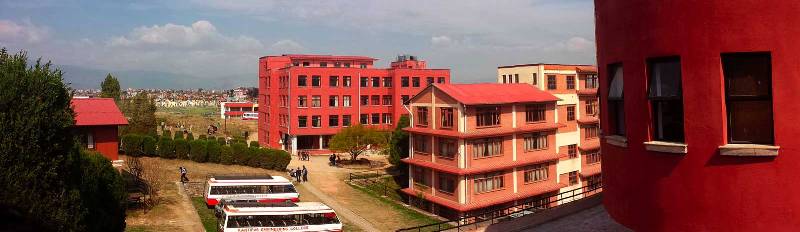
    Kantipur Engineering College is organizing a one-day “KEC CONFERENCE 2019”

    Kantipur Engineering College, one of the oldest and leading engineering colleges in Nepal, is organizing a one day ‘Second International Conference on Engineering and Technology’  at its premises on 26th September 2019 (9th Ashwin, 2076) with the motto ‘Enhancing Research in Engineering and Technology’. This is the second installment of its type. The first was first held in 2018 and was a successful one.

    Kantipur Engineering College has long recognized the need and urgency of inculcating the habit of research along with the sound academic foundation. The establishment of Research, Training and Consultancy Division along with the other academic departments is proof of what the college values and stands for. The major objective of this conference is to enhance the academic foundation of the students so that they can compete in the professional world. This event also aims at developing the independent critical thinking ability as well as the written and oral presentation skills which is a necessity to stand out in the industry today.

    So, if you are someone who is interested in research and who wants to stand out in the crowd by giving a solid foundation to your academic excellence, you are cordially invited by the organizing committee to take part in this event.

    Event Details: 

    Paper Accepted From:

     Undergraduate/Graduate Students & National/International Researchers under the following streams:

    Conference Organizer: Kantipur Engineering College (Affiliated to TU), Dhapakhel, Lalitpur) & Research Partner: Center For Cyber Security Research and Innovation

    Submission Deadline: 15th July 2019 (20th Ashad, 2076)

    Acceptance /Rejection Information: 31st August 2019(14th Bhadra, 2076)

    Registration / Paper Submission Deadline: 7th September 2019(21st Bhadra, 2076)

    This content was originally published here.

  • Mount Agung Blows to 30,000 feet (9.1 km), continuing it’s Powerful Eruptive Uptick

    Mount Agung Blows to 30,000 feet (9.1 km), continuing it’s Powerful Eruptive Uptick

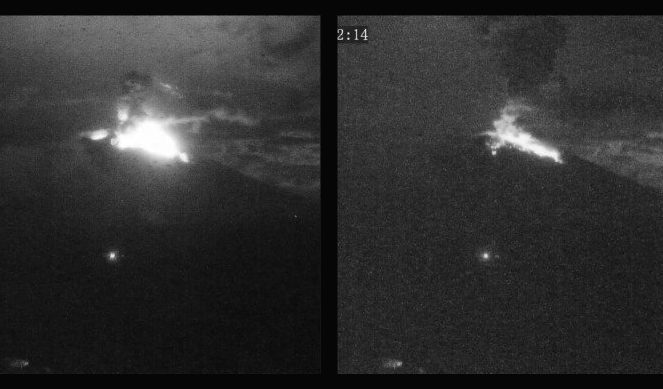
    Bali’s Mount Agung continued its powerful eruptive uptick today at 01:40 a.m. local time, June 13 (17:40 UTC, June 12). 

    The Volcanic Ash Advisory Center (VAAC) Darwin has warned of a large volcanic ash plume rising to at least 30,000 feet (9.1 km), and moving in a westerly direction.

    A secondary ash plume reportedly rose to 18,000 feet (5.5 km) soon after.
     

    Mount Agung Bali Volcano, eruption 13.06.2019, 02:00 Bali Time pic.twitter.com/93wHj6cl0E

    — Rita Bauer (@wischweg) June 12, 2019

    The Aviation Color Code remains Red.

    “The danger area is within a radius of 4 km (2.5 miles) from the summit,” said a BNPB spokesperson.
     

    Mount Agung Bali Volcano, eruption 13.06.2019 pic.twitter.com/oJSi4os2py

    — Rita Bauer (@wischweg) June 12, 2019

    Eruption at #Agung volcano just now, at 01:38 local time 13th June. Its night in Bali, and Incandescence could be clearly observed. Now 10min. after the eruption, incandescence (hot material) can still be seen on the upper flanks of the summit. Sreenshot: from volcanoYT webcam pic.twitter.com/rdQ4KwUOPM

    — Øystein Lund Andersen (@OysteinLAnderse) June 12, 2019

    Agung is a GSM stratovolcano, easily capable of producing a level 5 eruption on the Volcanic Explosivity Index (VEI) — just as it did back in 1963 (during solar minimum of cycle 19) and 1843 (during the Dalton Minimum), according to .

    And now, after five and a half decades of quiescence, the mountain is once again rocking — with this latest eruptive phase, which began in late 2017, already ranking as VEI 3.
     

    Agung is one to watch as we continue our descent into this next Grand Solar Minimum.
     

    A powerful pop (VEI 6+) will dramatically cool the planet, almost overnight.

    BACKGROUND

    Stratovolcano:  3142 m (10,308 ft) 
    Bali, Indonesia:  -8.34°S / 115.51°E 
    Current statusERUPTION WARNING

    Eruption list: 1808, 1821(?), 1843, 1963-64 (large Plinian eruption on March 16, 1963), 2017
     

    For more see VolcanoDiscovery.com

    UPTICK

    Seismic and Volcanic activity has been correlated to changes in our sun.

    The recent global uptick in earthquakes and volcanic eruptions is likely attributed to the drop-off in solar activity, coronal holes, a waning magnetosphere, and the increase in Cosmic Rays penetrating silica-rich magma.

    Check out these link for more info: 

    https://principia-scientific.org/do-cosmic-rays-trigger-earthquakes-volcanic-eruptions/

    https://www.researchgate.net/publication/234022172_Explosive_volcanic_eruptions_triggered_by_cosmic_rays_Volcano_as_a_bubble_chamber


    Grand Solar Minimum + Pole Shift

    The post Mount Agung Blows to 30,000 feet (9.1 km), continuing it’s Powerful Eruptive Uptick appeared first on Electroverse.

    This content was originally published here.

  • Magnitude 4.1 Earthquake Shakes Central Greece | GreekReporter.com

    Magnitude 4.1 Earthquake Shakes Central Greece | GreekReporter.com

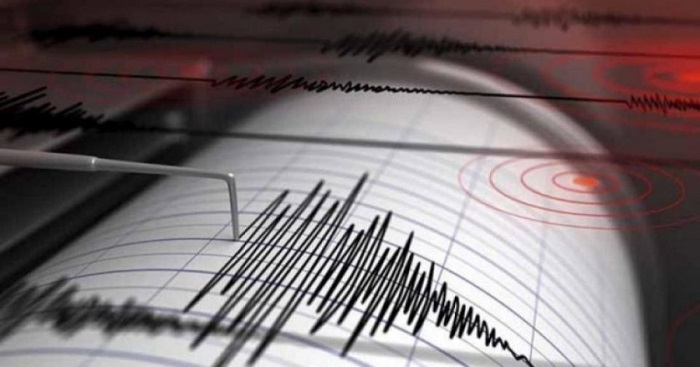
    Αn earthquake measuring 4.1 on the Richter scale hit central Greece early on Thursday.

    The tremor, which was felt in parts of Athens, struck at 12.54 am on Thursday in Elateia.

    The focal depth was 13.6 km with a focal point of 8 km west-southwest of Atalanti according to the Geodynamic Institute at the Athens Observatory, and hit 21 km north of Leivadia, 52 km southeast of Lamia and 100 km north of Athens.

    No injuries or damages have been reported.

    This content was originally published here.