Category: US News

  • America’s Most Important Natural Gas Export Market

    America’s Most Important Natural Gas Export Market

    June 13, 2019//-Recently the Trump Administration announced plans to impose a 5 percent tax on all goods imported from Mexico unless “the illegal migration crisis is alleviated.” These tariffs would potentially rise to 25 percent by October.

    Many business groups immediately came out against the idea. Neil Bradley, chief policy officer for the U.S. Chamber of Commerce, said “Imposing tariffs on goods from Mexico is exactly the wrong move. These tariffs will be paid by American families and businesses without doing a thing to solve the very real problems at the border.”

    Iowa Republican Chuck Grassley, who has seen farmers impacted by retaliatory tariffs in our trade war with China, blasted the idea, stating that “trade policy and border security are separate issues. This is a misuse of presidential tariff authority and counter to congressional intent.”

    Whenever implementing new policies, the risk of unintended consequences is always present. This means that there can be potential outcomes that are not foreseen by a change in policy. In some cases, new policies have led to worse outcomes because of unintended consequences.

    We have already seen this with the trade war with China. After raising tariffs on Chinese goods, China retaliated by raising tariffs on many U.S. goods, including agricultural products. Farmers have been hit hard by this change of policies, which is why Senator Grassley is so sensitive about the issue.

    That long preamble brings me to my point, which is the potential impact on our most important natural gas export market.

    U.S. natural gas production has surged as a consequence of the shale revolution. After hitting the lowest point in decades in 2005, U.S. natural gas production has risen nearly every year since. Along the way, the U.S. became the world’s top natural gas producer. In 2018, U.S. natural gas production was 73 percent higher than in 2005.

    There have been many consequences of this boom. One is that carbon dioxide emissions in the U.S. declined by more than any other country over the past decade, largely a result of utilities switching from coal to natural gas. Low natural gas prices benefited consumers, and many industries took advantage by locating new manufacturing capacity in the U.S.

    Another consequence is that U.S. export trade in natural gas skyrocketed. In 2005, the U.S. exported about 700 billion cubic feet (Bcf) of natural gas, primarily to Canada and Mexico by pipeline. By 2018, total natural gas exports had increased by a factor of five to 3.6 trillion cubic feet (Tcf).

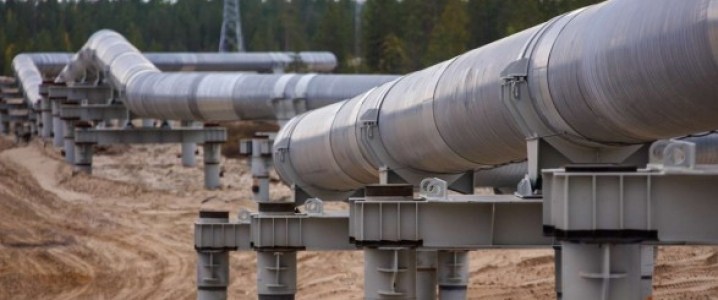
    Most of this growth was in exports to Mexico, which imported 1.7 Tcf of U.S. natural gas in 2018. This is a far greater total than for any other country, and is in fact more than all liquefied natural gas (LNG) exports to all countries.

    Natural gas exports to Mexico

    To put this number into perspective, pipeline exports to Mexico are now equivalent to 5.2 percent of total U.S. natural gas production. These exports are a boon to U.S. natural gas producers, as well as pipeline companies that are building out the pipeline infrastructure to move the gas south of the border.

    Natural gas demand in Mexico is projected to continuing growing, as a result of new electrical generation capacity additions. That demand will be primarily satisfied by more imports from the U.S. That is, unless Mexico retaliates and natural gas producers end up paying the sort of price U.S. farmers have paid as casualties in a trade war.

    By Robert Rapier, Oilprice.com:

    This content was originally published here.
  • Government Running Biggest Budget Deficit in History

    Government Running Biggest Budget Deficit in History

    If you were thinking federal government spending might slow down a bit after the national debt crossed the $22 trillion mark – well, it didn’t.

    Last month, the federal budget deficit came in at $208 billion, according to Treasury Department data. It was the largest May deficit in history.

    Uncle Sam spent $440 billion last month, up 21% year-on-year. Receipts increased to $232 billion, up 7% from May 2018.

    There were some calendar effects that shifted about $50 billion in payments from June into May. Even so, the May deficit reflects a broader trend. The deficit for the fiscal year to date stands at $739 billion. That compares with $532 billion through the same period in fiscal 2018 — a 38.8% increase.


    Mike Adams exposes the agenda of the private Fed as a war against the prosperity of Americans that simply want to make America great.

    The current budget deficit is well ahead of Congressional Budget Office projections. The CBO estimated the 2019 budget deficit (government spending over revenue) would come in at $897 billion. That would be a 15.1% increase over the 2018 deficit of $779 billion.  (If you’re wondering how the debt can grow by a larger number than the annual deficit, economist Mark Brandly explains here.) According to the CBO, the deficit will hit $1 trillion by 2022 and remain at that level or higher through 2029. Keep in mind, the CBO tends toward conservative projections. At the current rate, the federal government may well run a $1 trillion deficit this year. In fact, the Treasury Department’s deficit projection for fiscal 2019 was higher than the CBO’s, coming in at $1.085 trillion.

    Commentators tend to place the blame for surging deficits on Trump tax cuts, but spending is the biggest factor. For the first time in US history, the federal government spent more than $3 trillion in the first eight months of the fiscal year. Spending is up 9.3% on the year so far.

    Although the economy is supposedly in the midst of a boom, US government borrowing looks more like we’re in the midst of a deep recession. The only other time the federal government has run deficits this high was during the four years from 2009 through 2012 when the Obama administration boosted spending to grapple with the 2008 financial crisis.

    Meanwhile, revenues have risen modestly by 2.3%.

    The boost in receipts last month came primarily from Trump’s tariffs. Gross tax revenues from corporations fell to $6 billion in May from $7 billion a year earlier.


    (Photo by Henry Han / Wiki)


    As the debt spirals upward, the cost of servicing that debt goes up as well. Interest on the $22 trillion-plus national debt ranks as one of the fastest growing budget items.  Net interest payments totaled $268.3 billion last month, up 15.6% from a year ago.

    Growing debt coupled with soaring interest payments creates a vicious upwardly spiraling cycle. As debt grows, it costs more money to service it. That requires more borrowing, which adds to the debt, which increases the interest payments — and on and on it goes. At the current trajectory, the cost of paying the annual interest on the US debt will equal the annual cost of Social Security within 30 years, according to a report released by the Congressional Budget Office last year.

    The enormous US debt is an underlying reason why the Federal Reserve cannot normalize interest rates.

    Republicans insist that tax cuts will eventually pay for themselves by generating faster economic growth But as we have said repeatedly, high levels of debt retard economic growth. Several studies estimate that economic growth slows by about 30% when the debt to GDP ratio rises to about 90%. The CBO projects the US will hit 106% debt to GDP ratio in the next decade, but many analysts say the US economy is already in the 105% range. Ever since the US national debt exceeded 90% of GDP in 2010, inflation-adjusted average GDP growth has been 33% below the average from 1960–2009, a period that included eight recessions.

    And yet the politicians and bureaucrats in Washington D.C. have absolutely no intention of addressing the spending issue. They just keep kicking the can down the road. Of course, at some point, the will run out of road.


    This content was originally published here.

  • Joe Biden’s fight with Amazon sums up battle over corporate taxes

    Joe Biden’s fight with Amazon sums up battle over corporate taxes

    This was not the result Republicans were going for when they drove the overhaul of the tax code through Congress two years ago with party-line votes in both chambers. The legislation, which President Donald Trump signed into law in late 2017, lowered the corporate tax rate from 35% to 21% and allowed companies to immediately expense their capital investments.

    On the flip side, the new law offset some of the cost of those cuts by requiring companies to pay taxes on overseas earnings, a move intended to incentivize investing in America instead.

    Republicans touted the tax cut as fuel for a new era of prolonged economic growth that would eventually cover the cost of not only the corporate rate cuts, but also steep reductions in individual tax rates.

    That scenario has yet to materialize. GDP has surpassed projections by continuing to grow at a 3% rate. But it has come at a price: ballooning deficits and dwindling corporate tax revenue.

    The Congressional Budget Office estimates the deficit to be $738 billion so far this fiscal year, up nearly 39% from the same period last year. Corporate tax receipts were down $11 billion, or nearly 9%.

    “Well that’s what happens when you cut the rate by 40%,” said William Gale, co-director of the nonpartisan Urban-Brookings Tax Policy Center. “You would need heroic growth to make up the difference.”

    But the pace of decline has been taken even the experts by surprise. As recently as January, the CBO had projected that corporate tax revenue would rebound this year, as some of the immediate benefits of the new law wore off.

    Instead, the opposite has occurred, and no one is really sure why.

    “Corporate revenue has fallen off a cliff faster than I think anyone has anticipated,” said Seth Hanlon, senior fellow at the Center for American Progress and a former adviser to President Barack Obama.

    Perhaps it’s because companies have not repatriated their overseas profits as quickly as forecast. Maybe tariffs are reducing corporate income and thereby lowering corporate tax receipts. (Side note: Revenue from customs duties are up more than 80 percent this year to nearly $45 billion.)

    No matter the reason, the numbers add up to a giant headache for Republicans and a guarantee that cases like Amazon will remain political punching bags well into the 2020 election.

    Correction: This story was updated to reflect correct deficit and corporate tax receipt data for the fiscal year.

    This content was originally published here.
  • Death Spiral Continues as CNN Loses One-Third of Primetime Audience

    Death Spiral Continues as CNN Loses One-Third of Primetime Audience

    Well, you can’t blame a slow news week because not only was President Trump on an overseas trip, but as you will see, CNN stands completely alone with this massive audience implosion. By comparison, in primetime, MSNBC and Fox News only lost four percent of their viewers compared to last year and seven and five percent of their total day viewers, respectively. Let me lay this out for you as starkly as I can.

    Primetime Viewership Compared to Same Week Last Year

    Fox News: -4 percent

    MSNBC: -4 percent

    CNNLOL: -33 percent

    Total Day Viewership Compared to Same Week Last Year

    Fox News: -7 percent

    MSNBC: -5 percent

    CNNLOL: -21 percent

    And that is the good news for CNN chief Jeff Zucker’s Hate Network. Brace yourselves because you are not going to believe this…

    CNN lost — wait for it, wait for it — 55 percent (that is not a typo) of its viewers aged 25-54 during primetime last week. The fake news outlet also lost 45 percent of its total day viewers aged 25-54. The 25-54 age demo is hugely important because it sets advertising rates. Let me once again lay this out as starkly as possible…

    Primetime Demo Viewership Compared to Same Week Last Year

    Fox News: -25 percent

    MSNBC: -32 percent

    CNNLOL: -55 percent

    Total Day Demo Viewership Compared to Same Week Last Year

    Fox News: -22 percent

    MSNBC: -31 percent

    CNNLOL: -45 percent

    In other words, CNN is a total outlier in this audience collapse. The erosion we are seeing in Fox and MSNBC’s total viewership is more like a fluctuation, hardly worth mentioning. CNN’s total viewership collapse, however, is jaw-dropping. As far as demo viewers, it appears as though young people are overall tiring of cable news, and who can blame them? But CNN’s demo collapse is simply staggering. Per TVNewser, here are the raw demo numbers from last week:

    Cable News Average Audience (Adults 25-54)
    Fox News: Prime Time (341,000) and Total Day (213,000)
    MSNBC: Prime Time (215,000) and Total Day (113,000)
    CNN: Prime Time (178,000) and Total Day (126,000)

    In total viewers last week: Fox News averaged 2.34 million in primetime and 1.3 million in total day. MSNBC averaged 1.58 million primetime and 869,000 in total day. CNNLOL averaged a pathetic and humiliating 726,000 primetime viewers and only 531,000 in total day. This is no anomaly and has nothing to do with a slow news week. After weeks and weeks and weeks of CNN’s ratings bottoming out, it is safe to say that the bottom is falling out of CNN overall. After six years of Jeff Zucker’s serial lies, bigotry, hate, booing rape victims, and encouraging violence, CNN has lost anything resembling respectability and a respectable audience. No one trusts CNN, so no one watches CNN.  But…

    Let’s not forget that 89.5 million people who do not watch CNN are still subsidizing all this hate and bigotry.

    source

  • Your Tax Dollars Wasted on Outrageous Pet Projects

    Your Tax Dollars Wasted on Outrageous Pet Projects

    The Treasury Department estimates federal deficit spending for 2019 will exceed $1 trillion. The watchdog group Citizens Against Government Waste says a lot of that is due to earmarks, an old tactic some thought had gone away. “The 2019 Pig Book shows that Congress still has Pork Barrel Fever and their only prescription has been more earmarks,” said CAGW President Tom Schatz at a report rollout event this week.   The report exposes 282 earmarks in fiscal year 2019, costing tax payers $15 billion – more than a 20 percent increase from 2018, despite the fact that earmarks were banned in 2011.   “The increase in pork barrel spending has occurred behind closed doors and hidden from taxpayers,” explained Schatz. “There are no names of legislators attached and really no information about where the money is being spent.”

    The report highlights several eyebrow raising examples:

    • $1.8 billion for military fighter planes that are eight years behind schedule and double the original cost
    • $65 million for the “Pacific Coastal Salmon Recovery Fund”
    • $13.8 million for “Wild Horse and Burro Management”
    • $12 million for the “Aquatic Plant Control Program”
    • $9 million for a ‘Fruit Fly Quarantine Program”

    “There was a study last year spending $2 million to discover if the person in front of you in the cafeteria sneezes on the food, are you more or less likely to eat that food? This is crazy,” said Sen. Rand Paul (R-KY) at the rollout of the Pig Book. Paul’s “Pennies Plan” to balance the budge in five years and cut spending by $11 trillion was defeated. “I think the only way we’ll ever fix it – we can try to have process reforms where we tell them not to be wasteful – but the bottom line is, if you have $100 and next year I give you 95, you’re going to be better with your spending. You’ll cut out the fluff. You’ll cut out the waste,” said Paul.Stephen Moore with the Heritage Foundation says DC is in the midst of a bipartisan spending spree.

    “I fear it might take another financial crisis before Congress acts, but then it might be too late,” Moore told CBN News. “We’ve seen a rocketing of our debt especially in the last 10 years where Obama took the debt from 10-to-20 trillion.” CAGW attributes the recent increase in pork barrel spending to the 2018 passage of the Bipartisan Budget Act which obliterated 2011 spending restraints. “Like my momma used to say, she’s in heaven, but I can hear her say, ‘Baby if you got it, doesn’t mean you’ve got to spend it,’” said Rep. Tim Burchet (R-TN). “And I’m afraid we don’t have it and we’re still spending it.” These lawmakers say it’s up to voters to hold their representative accountable, and for those who have less than stellar scores to be voted out of office.

    source

  • Morgan Stanley: The Fed’s Interest Rate Cut Will NOT Stop A Recession

    Morgan Stanley: The Fed’s Interest Rate Cut Will NOT Stop A Recession

     Morgan Stanley’s economists have taken to changing their forecasts for global growth to stagnation through year-end rather than a continued recovery. This is a result of “sustained escalation and incremental tariffs further slowing growth projections to the point of recession.”

    Morgan Stanley also stated that even if the Federal Reserve cuts interest rates, the economy won’t be saved from a deep recession.  There is simply too many bubbles and too much debt for any rate cut to help in any meaningful capacity. Morgan Stanley’s Mike Wilson, already the most bearish of Wall Street’s sell-side research analysts, turned his bearishness up a notch once more when he slashed his EPS forecast for next year, according to ZeroHedge.

    Wilson summarizes his “doom and gloom” outlook as follows: “we believe an exogenous cost shock would be very hard to absorb. Autos, electrical equipment and machinery, textiles, computers/electronics, and certain chemical/commodity sectors appear the most exposed to rising tariffs on goods from China.

    Goldman Sachs: Tariffs Costs Fall “ENTIRELY” On U.S. Households & Businesses

    Although president Donald Trump isn’t the only one to blame, he’s certainly not helping by applying tariffs to imports either.

    Decades of easy money and money printing has caused so much untold damage to the economy that only a complete collapse of the entire debt-based system will reveal the true scopes of just how much carnage the central banks have caused and a rate cut won’t be able to help. The entire system is just too far gone.

    Financial Crisis: The Trade War Cost AMERICANS $1.4 Billion PER MONTH Last Year

    Morgan Stanley also sees more downgrades to the economy as necessary because of the trade war. Not only is Wilson predicting a further decline in earnings in 2019 but also unchanged earnings in 2020. That’s a downward revised trend from a prior forecast of a +5% increase in EPS, as corporate profit hit their plateau for this cycle. And obviously, once the recession hits, it’s only downhill from there.

    The basis of Wilson’s latest cut to corporate profits is a scenario analysis which assesses economic growth in three distinct paths around U.S.-China trade tensions and uses these paths to scenario test the S&P itself.

    We further use the results to adjust our official S&P forecasts, though we note that since our forecasts take into account additional considerations beyond trade, our bull, base,and bear cases do not match the three trade paths one for one. Even in the absence of incremental trade escalation, our earnings model is already calling for negative EPS growth over the next 12 months and trade tensions add to the downside in earnings growth.

    “Investor enthusiasm around the idea of easier Fed policy is understandable,” Wilson writes, but cautions that  “if the Fed were to cut out of concern that we are entering a real unemployment cycle, such a cut should not be bought.” In other words, a Fed cut – precautionary or not – may hit as soon as July “but it may not halt [the coming] slowdown/recession,Wilson added according to ZeroHedge.

    As a result, until there is further clarity on the employment picture (which was absolutely abysmal in May), Wilson thinks “Friday’s rally should be faded and investors should continue to skew portfolios defensively with a cautious eye toward expensive growth stocks that are now at a greater risk of missing earnings estimates due to these very real macroeconomic risks that are independent of the trade outcome or monetary policy.”

    On Friday, Bank of America’s CIO warned that a rate cut now would be a “huge risk” to the market as it would prompt a furious scramble for stocks. Macro data does not actually require a rate cut either, let alone three of them. As such, cuts by Jerome Powell would precipitate the next big bubble – a sentiment which was echoed just days later by One River’s Eric Peters – similar to the mistake the Fed did in 1998 which spawned the dot com bubble and the crash of 2000.

    A recession is imminent. We could argue semantics and timing all day, but the truth is, if you haven’t started preparing for an economic crisis, you could be in trouble within a year. This isn’t meant to scare anyone or be “fear porn,” rather it’s meant to prompt you to prepare.  Many were caught with their proverbial pants down in the last recession, and many have still not learned the lessons of the past. 

    This content was originally published here.
  • House panel passes 9/11 victims fund bill a day after Jon Stewart’s emotional testimony – CBS News

    House panel passes 9/11 victims fund bill a day after Jon Stewart’s emotional testimony – CBS News

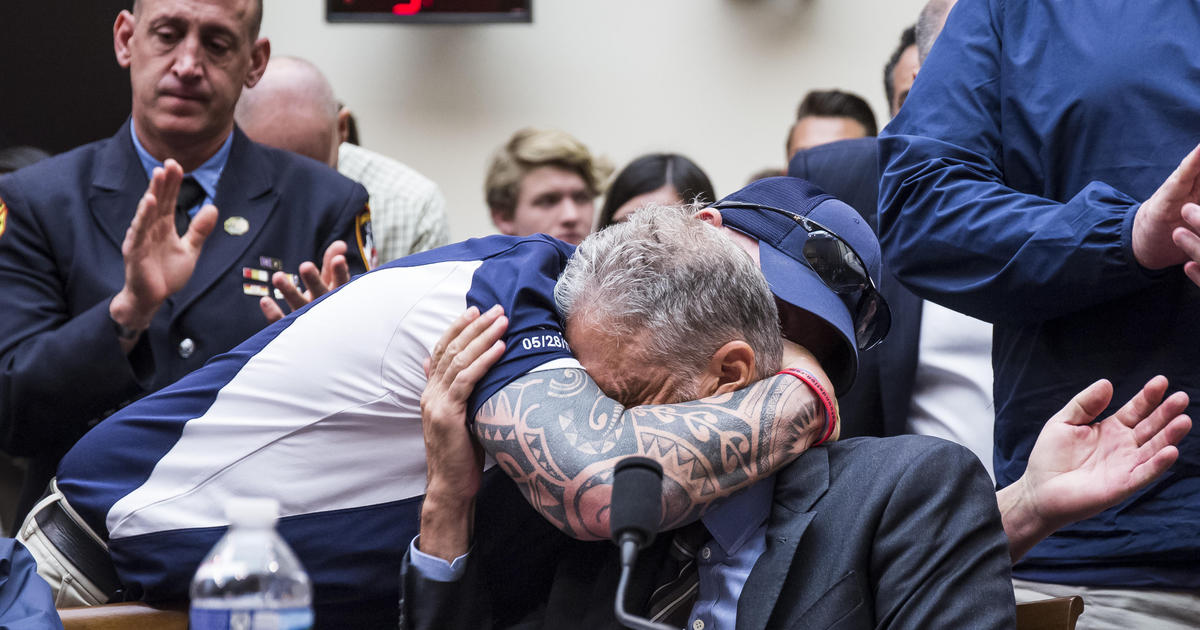
    The House Judiciary Committee unanimously passed a bill which would permanently reauthorize the 9/11 Victim Compensation Fund Wednesday, the day after comedian Jon Stewart gave impassioned testimony in support of the bill in video that quickly went viral.

    The bill will now go to the floor for a full vote in the House of Representatives, where it is likely to pass. It’s unclear whether Senate Majority Leader Mitch McConnell will take up the bill in the Senate, although Senate Minority Leader Chuck Schumer of New York said Wednesday that he was “imploring, pleading, even begging” McConnell to bring the bill to the floor as soon as it passes in the House.

    Stewart, the former host of “The Daily Show,” gave emotional testimony before the House Judiciary Subcommittee on Civil Rights and Civil Liberties on Tuesday, at times broke down in tears and shouted at the lawmakers, calling them “shameful.”

    “I can’t help but think what an incredible metaphor this room is … a filled room of 9/11 first responders and in front of me, a nearly empty Congress. Sick and dying, they brought themselves down here to speak to no one … shameful,” said Stewart at the outset of his remarks. A little over half of the 14-member subcommittee members were present, mostly Democrats.

    Congress passed the James Zadroga 9/11 Health and Compensation Act in 2010, over opposition from some Republicans who balked at its $7 billion price tag. The act was reauthorized in 2015 for 90 years. But a portion of the law — the Victim Compensation Fund — was only funded for five years, through the end of 2020.  The fund aimed to provide necessary financial support for the thousands who suffered serious medical issues, including a spate of cancer diagnoses, after the 2001 attacks. 

    Several members of the New York congressional delegation, including House Judiciary Committee Chairman Jerry Nadler and Rep. Carolyn Maloney, both Democrats, and GOP Rep. Peter King, have introduced the Never Forget the Heroes Act of 2019 to reauthorize the Victim Compensation Fund. It also has the support of New York’s two senators, Minority Leader Chuck Schumer and Kirsten Gillibrand.

    Stewart has long been a champion for the cause, first devoting an entire episode of “The Daily Show” to the political debate over the Zadroga Act back in 2010. He’s since become one of the most vocal advocates for 9/11 responders, repeatedly defending the right to health care coverage for those who responded and ran toward the falling towers.

    Stewart was disgusted by the small number of members assembled for Tuesday’s hearing, calling the showing an “embarrassment to this country” and a “stain on this institution.”

    “You should be ashamed of yourselves for not being here,” he added. “Accountability appears to not be something that occurs in this chamber.” Stewart expressed concern that such legislation like the Never Forget Act would just be punted like a “political football” and attached to riders in massive budget bills.

    “Why this bill is not unanimous consent is beyond my comprehension,” Stewart admonished. He also lambasted Congress for those that consider the measure a “New York” issue.

    “More of these men and woman are going to get sick and they’re going to die, and I’m awfully tired of hearing this is a ‘New York issue,’” he said. “Al-Qaeda didn’t shout ‘death to Tribeca.’ They attacked America.”

    This content was originally published here.
  • U.S. CITIES OVERWHELMED WITH NUMBERS OF ILLEGAL MIGRANTS ARRIVING FROM EBOLA-STRICKEN COUNTRIES

    U.S. CITIES OVERWHELMED WITH NUMBERS OF ILLEGAL MIGRANTS ARRIVING FROM EBOLA-STRICKEN COUNTRIES

    Some U.S. cities are becoming overwhelmed with the number of illegal African migrants arriving from Ebola-stricken countries, with Portland, Maine, complaining that they are beyond capacity.

    Large groups of migrants are arriving from the Democratic Republic of the Congo, which has been hit by one of the biggest ebola outbreaks in history, with 2,000 recorded cases in the last 10 months.

    source

  • INVASION: ILLEGALS CRAWL OUT OF MANHOLE IN US BORDER TOWN

    INVASION: ILLEGALS CRAWL OUT OF MANHOLE IN US BORDER TOWN

    Footage from El Paso, Texas, shows the moment several men crawl out of a manhole in the middle of a city street near the US-Mexico border.

    An anonymous viewer sent us this video of people coming out of a manhole in the middle of the road in south El Paso Saturday night.

    In a Twitter clip uploaded by apparel company Uncle Sam’s Misguided Children, several people suspected of being illegal aliens are witnessed crawling out of a sewage manhole at the intersection of 4th Ave. and S. El Paso St.

    “An anonymous viewer sent us this video of people coming out of a manhole in the middle of the road in south El Paso Saturday night. #BuildTheWall” the company wrote in a tweet.

    The intersection, near a business called Dyana’s Fashions, is less than half a mile away from the US-Mexico border.

    source

  • California’s Budget Proposal Would Expand Health Care To Some Undocumented Immigrants | KTEP

    California’s Budget Proposal Would Expand Health Care To Some Undocumented Immigrants | KTEP

    California lawmakers are poised to offer low-income young adults living in the country illegally access to full health benefits, putting the state on track to become the first in the country to expand its insurance program to all working poor under the age of 26 regardless of immigration status.

    The Democratic-controlled state legislature agreed on Sunday to allow 19 to 25-year-old undocumented residents to receive Medi-Cal, the state’s health insurance program partly funded by federal dollars.

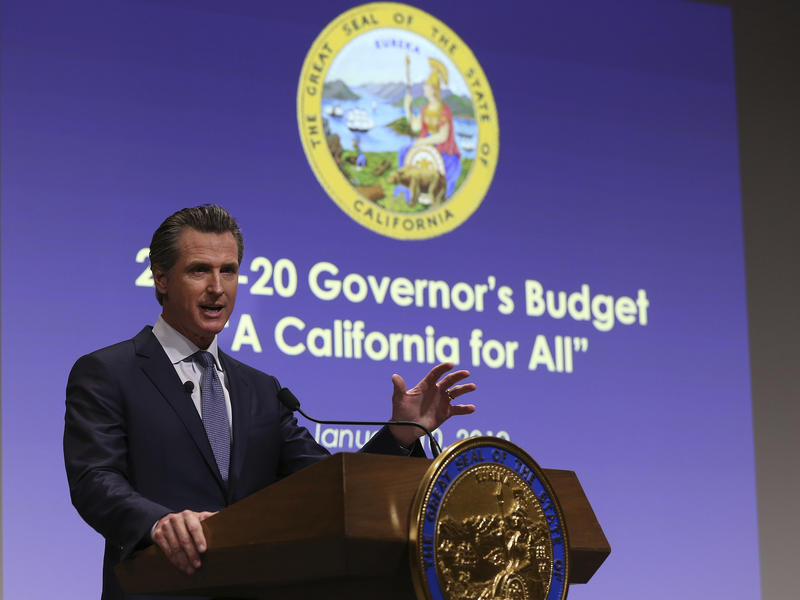
    Gov. Gavin Newsom applauded negotiation efforts by committee chairs Sen. Holly Mitchell and Assembly member Phil Ting in a statement, saying the budget — which includes a $21.5 billion surplus for the state — “is structurally balanced and invests in a California for All.”

    State officials estimate the health care program would provide coverage for about 138,000 residents at a cost of $98 million in the first year. The vast majority — 75% — are already covered by the Medi-Cal system, and are either receiving restricted-scope benefits or services under SB 75, the Governor’s Budget Summary states.

    Efforts by some Democrats to include undocumented seniors in the plan were rejected by Gov. Gavin Newsom and other legislators.

    Cynthia Buiza, executive director of the California Immigrant Policy Center, called the move a “wise investment in legal representation for immigrants facing deportation in a cruel and callous system.”

    But Buiza said lawmakers failed to achieve universal health care coverage, as they had pledged to do. “The exclusion of undocumented elders from the same health care their U.S. citizen neighbors are eligible for means beloved community members will suffer and die from treatable conditions.”

    The agreement is part of a sweeping $213 billion budget plan that includes another national first: It would stretch eligibility for health insurance subsidies under Covered California to middle-class families earning up to 600% of the federal poverty level. That means a family of four can earn up to $154,500 per year and still qualify for a discount.

    The programs would be partially funded by tax dollars collected from fines paid by Californians who forego health insurance coverage. It is similar to the federal penalty imposed by the Obama administration’s Affordable Care Act called the individual mandate, which was rolled back in 2017. Enrollment will begin in the fall and the plans will go into effect on Jan. 1.

    Legislators cited a recent study favoring the expansion, saying that without state action “the uninsured rate will rise to 12.9 percent by 2023—a 24-percent increase from 2016.”

    Republicans pushed back on the idea, arguing that Californians enrolled in the Medicaid program already face difficulties getting in to see a doctor, Capitol Public Radio’s Ben Adler told NPR.

    “Reimbursement rates to doctors are so low that doctors aren’t willing to take Medicaid patients,” Adler said. Instead, Republicans lobbied for the governor to shore up the program as it exists now.

    Immigrant children are already covered in California under Medi-Cal, as they are in six other states under their respective Medicaid programs, according to the Kaiser Family Foundation. California, the District of Columbia, Illinois, Massachusetts, New York, Oregon and Washington cover income-eligible children who are not otherwise eligible due to immigration status using state-only funds.

    The full state Legislature is expected to vote and pass the budget later this week. California law sets a June 15 deadline to enact a budget, otherwise lawmakers face losing their pay.

    Copyright 2019 NPR. To see more, visit https://www.npr.org.

    This content was originally published here.