
A 75-year-old grandmother in Alabama helped capture a suspect wanted for car theft, holding him at gunpoint Monday until deputies arrived. “I walked out and said, ‘can I help you?’ And he said, ‘yes ma’am, I’d like to use your phone,’” Marcia Black, a grandmother of four, told WAAY. Investigators said the suspect, Cameron Powers, had been on the run for some four hours after crashing a stolen car during a high-speed chase with deputies near Black’s home in Limestone County. I was just calm as could be. I knew what I was doing. I was in control,” she said. Black said she talked to Powers from her front porch, all the while keeping him at bay with her hunting rifle. “I wanted to keep him at a distance,” she said. “I didn’t intend to kill him. I just wanted him to think that I would shoot him.” When Powers inched closer to her home, Black reacted because two of her grandchildren were inside watching after calling 911. “He wouldn’t get down, so I shot in the air, and he realized I meant business, so he got down on his knees,” Black said. It wasn’t long after when deputies arrived. “He feared the deputy more than he feared my rifle,” Marcia Black said. “And he jumped up and ran zig-zag right across the field.” But Powers didn’t make it very far before he was apprehended and handcuffed. “It’s just amazing to me that I got to witness my grandmother in action,” said Black’s 15-year-old granddaughter, Allie Ruth Black. Powers was booked into the Limestone County jail on $6,000 bond. “It’s just another day,” Marcia Black said. “If something happens, you take care of it and that’s it.”
Category: US News
-

InfoWars Host Calls For Obama To Be Lynched: ‘Find The Tallest Tree And A Rope’
InfoWars “War Room” host Owen Shroyer has called for the lynching of “treasonous” former President Barack Obama, telling viewers to “find the tallest tree and a rope.”Shroyer made the controversial remark while discussing an article by far-right news site Breitbart titled, “Emails Show Obama’s State Department’s Role in Anti-Trump Coup Cabal.”
The host launched into a tirade against the former president during a livestream on Tuesday, accusing Obama of trying to bring down Trump and being a traitor to the nation, before suggesting that he should be killed.
“Folks, Obama was emailing Hillary Clinton on her illegal server under a secret name, that came out in emails,” Shroyer said, according to Newsweek. “And he claimed he didn’t know she had it. Barack Obama is a treasonous…he belongs in jail. He belongs in Guantanamo Bay. I mean look, I’m not saying this should happen but Barack Obama, you know, find the tallest tree and a rope.”
Newsweek notes:
Shroyer, who hosts an InfoWars show called “War Room,” InfoWars founder and owner Alex Jones and InfoWars itself are banned from YouTube—but at the time of reporting versions of the video uploaded by other users are available to watch on the platform.
YouTube’s violent or graphic content policies prohibit videos that incite others to commit violent acts against individuals or a defined group of people. YouTube did not respond to a request for comment from Newsweek at the time of reporting.
When journalist Judd Legum tweeted about Shroyer’s lynching remark, the InfoWars host responded by saying, “Do you support free speech?”
Do you support free speech? https://t.co/0WaeOzyvLA
— J Owen Shroyer (@allidoisowen) June 20, 2019
This content was originally published here.
-

A Rocky Start for U.S.-Japan Cooperation in Myanmar
Myanmar is proving to be a major test of strategic economic cooperation between the United States and Japan – one which reveals wider foreign policy differences between the allied nations. Those differences make substantial collaboration towards realizing a “free and open Indo-Pacific” (FOIP) in specific countries difficult, despite joint strategic interests and aligned high-level political visions.
In Japan’s pursuit of a policy response to China’s infrastructure Belt and Road Initiative (BRI), economic cooperation with partners in third countries to beef up the financing on offer has emerged as a key component. Strategic commercial cooperation is arguably most opportune and necessary in Myanmar because the country is at a fraught stage in its democratization, set into motion in 2010 when it pivoted to form closer ties with countries like the United States and Japan in order to reduce economic over-dependence on China.
However, despite similar headline commitments under FOIP by the United States and Japan to promote rule of law and needs-based economic development, the extent of cooperation in Myanmar has been limited to Japanese trading houses subcontracting to General Electric and U.S. aluminum can manufacturer Ball investing in the Japan-led Thilawa Special Economic Zone (SEZ). Why has the type of economic cooperation much touted by their FOIP strategies come to so little fruition in Myanmar? Is there a way forward?
Cooperation in Myanmar is revealing substantial differences in foreign policy between the United States and Japan
A major issue preventing cooperation is the dire state of U.S. economic relations with Myanmar. Japanese officials and business executives view, perhaps not wrongly, the costs of cooperating with U.S. government bodies and corporations to outweigh potential benefits. A prerequisite for substantial joint economic cooperation is the United States lifting sanctions, to allow for its own economic ties with Myanmar to flourish.
The United States has not put garments and textiles – Myanmar’s biggest potential export product to the United States – on its Generalized System of Preferences, a scheme that eliminates tariffs for goods imported from developing countries. The specter of targeted sanctions against perpetrators of the Rohingya crisis, despite not being fully enforced, poses a reputational risk to U.S. investors.
Furthermore, the United States has not lifted Section 312 of the USA Patriot Act, placing burdensome due diligence requirements on the movement of trade or investment finance in or out of Myanmar. Other than Myanmar, only North Korea, Iran, and Cuba also have this restriction placed upon them, resulting in the absence of American financial institutions there. With the United States unable to freely trade with and invest in Myanmar, economic cooperation with Japan is a non-starter.
The United States places primary importance to human rights – Japan gives primacy to rule of law and development
This is not just a practical matter but points to a wider foreign policy divergence. The United States places primary importance on the human rights agenda as a prerequisite to economic ties. Japan, however, gives primacy to the rule of law and economic development, viewing them as the basis from which to solve human rights problems. Disengagement means no leverage. Japanese ambassador to Myanmar Ichiro Maruyama recently reiterated strong disagreement with international pressure and sanctions on Myanmar – previously condemning it in strong language (for a diplomat) as “utter nonsense”. A Japanese business leader in Myanmar expressed to me his lack of faith in U.S. companies’ commitment to the country.
Japan, by contrast, has a robust presence in Myanmar, with a 3.5 percent share of investment into the country and strong trading ties. It led the establishment of the enormously successful Thilawa SEZ near Yangon, which acts as a “laboratory” to test regulatory reforms to then be rolled out across the rest of the country. Toyota recently announced that it will assemble pick-up trucks there, likely bringing auxiliary industries with it. Japan’s development bank has strategically taken a stake in the Dawei SEZ, the ocean outlet which lies west of the Thai capital Bangkok. Japanese investments, particularly in transportation infrastructure, are beginning to spread north from Yangon to Mandalay, where Chinese influence is stronger.
Japan’s influence goes beyond commerce. Along with 57 staff deployed in Myanmar’s ministries, Japan has established the Myanmar-Japan Joint Initiative (MJJI), an exclusively bilateral dialogue that aims to provide technical assistance to promote a favorable business environment. Japan has established these dialogues across Southeast Asia, focusing on detailed regulations and rule-making for areas such as visas, imports and exports, tax, industrial policy and insurance – a purportedly tedious task that distinguishes Japan from China in its economic offering.
It makes sense for the United States to reinforce and complement Japan’s economic and diplomatic efforts
The United States and Japan share deep strategic interests in promoting responsible economic development in Myanmar, a gateway to the Indian Ocean sandwiched between China and India, to ensure that it does not become economically over-dependent on China. Therefore, it makes much sense for the United States to reinforce and complement Japan’s economic and diplomatic efforts, following its lead.
Steps towards improving economic cooperation – and ultimately building Myanmar’s economic resilience – are not untenable. First, each country has actions that they can individually take to make collaboration more feasible. The United States should place Myanmar as centrally important to its Asia strategy, and promote deeper business ties, as encouraged by the top Asia official in the National Security Council. This should be achieved via the removal of restrictions where politically possible and by the American Chamber of Commerce doubling down to systematically explain troubles faced by its businesses to relevant Myanmar government agencies. Despite strong resistance, Japan should be more open to exploratory dialogue and should improve information sharing with other embassies and chambers of commerce.
A second lesson is that to tackle BRI regionally, the United States and Japan have to find creative ways to collaborate on the country level in a manner that benefits development, not merely blocking or out-doing China. In Myanmar, there are four good places to begin. First, search for opportunities to collaborate on Myanmar’s agriculture industry, including construction of transportation infrastructure to reach markets. Second, look for synergies to build capacity in banking, infrastructure finance, procurement and so on. Third, encourage U.S, investment into Thilawa and Dawei. Fourth, jointly assist Naypyidaw, its capital, with building policies and regulation that encourage investment.
A major investment by China, perhaps in Kyaupkyu, the terminus for an oil and gas pipeline to Kunming and potential site of a deep-sea port and SEZ, may jolt the United States and Japan into joint action. But after all, the U.S.-Japan alliance treaty mandates them to “encourage economic collaboration” in Article II – before it ever mentions military cooperation or U.S. bases – and China has shown through BRI that a strategic economic vision is best built from the ground up, project by project. Sustained, long-term efforts, rather than reactionary pushbacks, to strengthen economic cooperation from the bottom up would better benefit Myanmar’s development, as well as U.S. and Japanese businesses.
The post A Rocky Start for U.S.-Japan Cooperation in Myanmar appeared first on Tokyo Review.
This content was originally published here.
-

Facebook announces dates for Oculus Connect 6
After a busy year, Facebook’s VR arm is returning to San Jose, Calif. on September 25 and 26 for the sixth annual Oculus Connect.
Oculus has had a transformative year with the release of its Quest and Rift S headsets, turning the high-end gaming company into one more focused on meeting the needs of mainstream consumers. Oculus Connect 6 will give the company an opportunity to hit a stride on content and software optimizations, without the specter of missing hardware features hanging heavy.
“With Quest and Rift S bringing more people into VR than ever before, OC6 is the perfect moment to think bigger, build smarter, and realize the true potential of what we’re creating together,” the company wrote in a short blog post.
For developers, this could be a more contentious meeting as Facebook’s top virtual reality hardware product remains a walled garden with only certain content permitted in the store. Apple has shifting its efforts over the past two years to nabbing top game developers and offering less monetary support to indies that are experimenting in VR for the first time.
In the teaser post, the company is already highlighting that one of the main announcements will be a first-person combat title created by Respawn Entertainment, the maker of Apex Legends.
This content was originally published here.
-
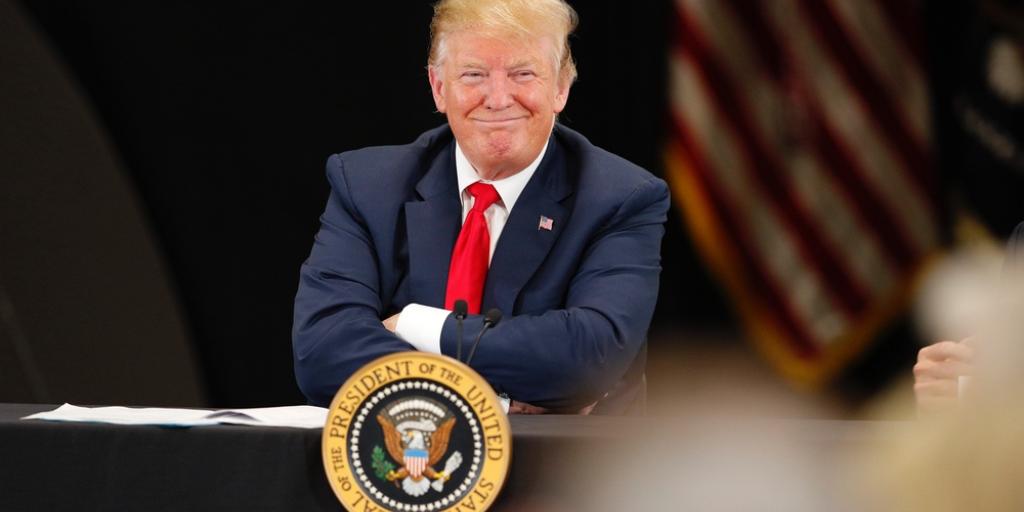
BREAKING: Court rules Trump admin can ax Planned Parenthood funding, as much as $60 million
June 20, 2019 (LifeSiteNews) – A panel of the 9th U.S. Circuit Court of Appeals today allowed the Trump administration to deny federal funding to entities that commit abortions on site, a temporary but significant victory for the pro-life movement. The court will continue to consider lawsuits against the rule while it is in effect.
In February, the Trump administration rolled out rules requiring facilities that receive family planning grant money Title X services to be physically separate from those that commit or refer for abortions. Under the previous rules, Title X services and abortions could “co-locate” in the same center, as long as the abortions were privately funded. The facilities receiving federal money must also be financially separate from abortion centers.
This new regulation, called the Protect Life Rule, is expected to reduce Planned Parenthood’s federal subsidies by $60 million.
According to the Department of Health and Human Services, the Rule also ends “referral for abortion as a method of family planning,” eliminates a “requirement that Title X providers offer abortion counseling and referral,” and requires “more complete reporting by grantees about subrecipients and more clarity about informal partnerships with referral agencies.”
“This ruling is a victory for President Trump and the majority of Americans who do not want to fund the abortion industry with their tax dollars,” said Marjorie Dannenfelser, President of the Susan B. Anthony List. “The Protect Life Rule simply draws a bright line between abortion and family planning, stopping abortion businesses like Planned Parenthood from treating Title X as their private slush fund without reducing funding by a dime. Similar regulations were upheld by the Supreme Court nearly three decades ago. We are encouraged by this news and confident the Trump administration will prevail.”
According to Politico, “Some states challenging the rule, including Oregon and Washington, have said they will withdraw from the Title X program if the new rules are allowed to take effect, potentially forfeiting millions of dollars.”
Yesterday, the Democrat-controlled U.S. House of Representatives passed a spending package that would block the Protect Life Rule from going into effect. That bill presumably won’t make it past the U.S. Senate or President Trump.
Planned Parenthood President Leana Wen called today’s news “devastating” and the pro-life policy “unethical, illegal, and harmful to public health.”
This content was originally published here.
-

S&P 500 stock index climbs to record high on betting Federal Reserve will cut interest rates
The S&P 500 stock index closed at an all-time high Thursday, following the Federal Reserve’s announcement on Wednesday that it would consider cutting interest rates to keep the economy in expansion mode.
The S&P 500 added 28 points, or nearly 1%, to close at 2,954 — that topped the previous high of 2,946 on April 30. The Dow added 249 points, rising 1% to 26,753, marking its highest trading level since its Oct. 3, 2018, close of 26,828. The Nasdaq added 64 points, climbing 0.8% to 8,051. That’s just 0.7% below its May 3 all-time high of 8,164.
Stocks are rising amid signs of an economic slowdown. IHS Markit forecasts U.S. GDP growth of 1.8% for the second half of 2019 — that would be down sharply from growth of 3.1% in the first three months of the year and 2.9% for all of 2018. Declining economic activity, muted inflation and trade tensions with China could also spur the Fed to dial back rates, according to economists.
Federal Reserve Chairman Jerome Powell on Wednesday said the central bank would hold interest rates steady but signaled it’s willing to lower them later this year if trade tensions and the global economy worsen. The Fed’s current benchmark interest rate is set at a range between 2.25% and 2.5%.
“The Fed left the funds rate unchanged but delivered a dovish message, even relative to market expectations,” Goldman Sachs analysts said in a note assessing the Fed’s policy statement on Wednesday.
With investors counting on the Fed to lower borrowing costs sooner rather than later, Morgan Stanley analysts predicted in a report on Thursday that policymakers will cut rates by a half-percentage point in July. The Fed hasn’t pared its benchmark rate since 2008.
This content was originally published here.
-

Raised in a log cabin in Canada, Slack chairman is now worth $1.3 billion | Financial Post
Canadian entrepreneur Stewart Butterfield helped found Slack Technologies Inc. after selling his earlier startup, Flickr, to Yahoo for more than US$20 million. The latest venture is bringing a bigger windfall.
His 8 per cent stake in the workplace communication company would be worth US$1.3 billion if Slack goes public this week at US$16 billion, the low end of Wall Street’s expected range. Slack co-founder Cal Henderson, 38, owns 3 per cent worth about US$533 million.
Butterfield, the 46-year-old chairman and chief executive officer, has come a long way from the log cabin where he lived in a remote part of Canada without electricity and running water for the first few years of his life. He was introduced to computers in the second grade but lost interest in the technology as he got older and went on to study philosophy in college.
“By the time I finished my master’s degree I really had no idea of what I was going to do except for be an academic because, you know, the big five philosophy firms aren’t always hiring,” Butterfield told Bloomberg last year.
After brief stints in the startup world at Communicate.com and Gradfinder.com, Butterfield came up with the idea for Flickr, a photo and video hosting service that he sold to Yahoo in 2005. Butterfield worked at Yahoo until 2008 and later founded Glitch, which became the multibillion-dollar company now called Slack.
Slack, an acronym for “Searchable Log of All Conversation and Knowledge,” will begin trading Thursday on the New York Stock Exchange under the ticker symbol WORK.
This content was originally published here.
-
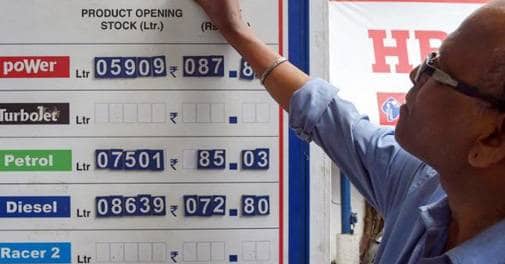
You may soon be able to buy petrol, diesel from supermarket
The government is likely to soon permit supermarkets to retail petrol and diesel in its bid to ease fuel access to end consumers. The Ministry of Petroleum and Natural Gas in this regard may come up with a Cabinet note to relax existing norms, the Business Standard reported, citing sources.
The government is expected to ready the note within the first 100 days of it coming to power. As it was sworn in on May 30 that means the note might be finalised in the first week of September.
It is likely to suggest bringing down the minimum requirement for companies trying to get into the retail fuel segment. This means that the government could lower the basic infrastructure investment of about Rs 2,000 crore in the domestic market, or providing bank guarantees for 3 million tonnes (30 lakh tonnes) or equivalent amount, the report said.
If the government goes ahead with the changes, it could open the gates for multi-brand retail majors such as Future Group and Reliance Retail as well as global majors of the likes of Saudi Aramco to enter the lucrative Indian fuel retail space.
A committee led by economist Kirit Parikh had proposed relaxing norms in India. The other members on the committee were former petroleum secretary GC Chaturvedi, former Indian Oil (IOC) Chairman MA Pathan, and Ashutosh Jindal, joint secretary in charge of marketing under the petroleum ministry, the report added.
Meanwhile, the government on March 16 last year had launched the concept of fuel home delivery in Pune. At present, state-run fuel retailers such as Indian Oil Corp (IOC), Bharat Petroleum Corporation (BPCO) and Hindustan Petroleum Corporation (HPCL) provide home delivery of diesel in Pune, Delhi, Jaunpur, Chennai, Bengaluru, Aligarh, Dudaipur, Rewari and Navi Mumbai.
ALSO READ:Expert panel suggests scrapping investment norm for setting up petrol pumps
The conception of this idea to allow supermarkets to retail fuel comes from the successful model undertaken by the United Kingdom (UK). As per the evaluation of the Petrol Retailers Association (PRA), a trade association which represents the independent fuel retailers in the UK, supermarket sites comprise around 49% of the petrol and 43% of all diesel retailed in the country in April 2019.
The government is hoping to replicate the same model in India given the sheer size of the country’s fuel consumption appetite.
This content was originally published here.
-

The one issue every economist can agree is bad: Rent control
There aren’t that many things you can get economists to agree on. Fiscal stimulus, minimum wages, monetary policy, health care, bank regulation — on almost all the major issues of the day, you can find a respected economist to argue for either side.
But there are a few questions where there’s near unanimity, and rent control is one of them. Pretty much every economist agrees that rent controls are bad. And in the last decades of the 20th century, economists had some success persuading state and local governments to curb these policies.
Now the policy appears to be making a comeback. Two rent-control bills have cleared the housing committee in California’s state legislature, and New York state looks like it’s about to stiffen New York City’s rent-stabilization regime and offer other cities the option to copy it. City governments may have to relearn why their predecessors pruned back rent-control policies.
Rent control is supposed to protect poor, deserving tenants from the depredations of greedy landlords. And it does, up to a point. Research on rent control shows that many of the beneficiaries are low-income, and that controlling their rents makes it more likely that they’ll stay in their apartments for a good long time.
The problem is that rent control doesn’t do anything about the reason that rents are rising, which is that there are more people who want to live in desirable areas than there are homes for them to live in. Housing follows the same basic laws of economics as other goods that consumers need: When the demand for a product consistently exceeds the supply, prices will rise until the quantity demanded is equal to the amount that suppliers have available.
As long as there’s no new construction, controlling that natural increase is just a game of musical chairs. You can change which people get to live in a city, but you still leave just as many people out in the cold. Actually, a few more, because rent control also reduces the incentive to supply rental housing.
All this suggests an actual solution to skyrocketing rents: Build more housing, so that the rent controls won’t be necessary, and offer subsidies to the smaller number of low-income people who simply can’t afford decent housing. To do that, cities would need to ease the costly land-use regulations that make it so difficult for developers to fill the unmet demand. And in many cases, cities would also need to get rid of rent control, both to reassure potential landlords that they can build without fear of new controls and to encourage landlords to tear down smaller buildings and put up bigger ones, something that rent protections often prevent.
Alas, that’s not going to happen, so coastal urbanites should brace for what will. Declining housing stock is just one of the many potential costs of rent controls; others include a deteriorating housing stock as landlords stop investing in their properties, and higher rents. Yes, higher, because rent control creates a two-tier housing market. There are cheap, price-stabilized apartments that rarely turn over, because why would you give up such a great deal? Then there are the uncontrolled apartments, which everyone else in the city has to fight over, bidding up the price.
Perversely, the people paying above-market rent are often worse off than the people enjoying a hefty subsidy from their landlords. There’s no means test for rent-stabilized housing, and while the average income of people in New York’s rent-stabilized apartments is somewhat lower than that of people in market-rate housing, a recent analysis by The Wall Street Journal showed that the people getting the biggest benefit are white, affluent Manhattanites who presumably landed the apartments decades ago and held on while rents rose around them.
That could be an argument for controlling the rent on all the housing stock. But cities don’t do that for a reason: If you force the price of something below market level, people will supply less of it. Since cities tend not to impose rent controls unless they’re already experiencing a severe housing shortage, that would be bad. Thus, rent control usually applies only to older buildings, since you can’t go back and unbuild an apartment house that was constructed before 1947. It doesn’t completely solve the problem, since landlords still withdraw less-profitable units from the market, shrinking the housing stock over time. But it turns what would be a disastrous policy into one that is merely terrible.
“Merely terrible” is a low aspiration for something as important as housing policy, but at this point it’s probably the best that New Yorkers and Californians can hope for.
This content was originally published here.
-

Forex- The Dollar Has Hit A Two
The dollar has reached a two-week high. This happened today when strong and economic data led investors to thinking about the Federal Reserve. This is going to be impacted by the monetary policy meeting and it could mean very interesting things for the industry in general. The broader markets appeared to be much quieter. Traders are now way more hesitant because they don’t want to put out on large positions before the two-day meeting. The meeting is going to involve some of the EU Central Bank policymakers who are in Portugal, and then the Bank of England’s decision regarding interest rates.
The strong US retail sales that happened on Friday really did show that the reduced rates are present and that they are lifting the dollar. The FED chairman may however choose to lay down the groundwork so that a rate cut could happen later on in the year.
The expectations of a rate cut at the meeting have fallen to around 20%. The bets of a monetary easing however do appear to be high right now. The market’s pricing over the last 24 hours are now cutting from the current rate. Investors are scaling back some of their dollar-long positions according to the data that has been published by the CFTC data. That being said, analysts are not convinced about the Euro, and they are not sure that it can seize on the dollar to try and move higher. Even though this should be a softer environment for the dollar this time around, there are some EUR negatives out there and there is a high chance that this could break out later on this year. The index is going to measure against an entire basket of currencies and it has also reached a two-week high of well over 97.603.
The euro doesn’t look to have changed much. It stands at $1.1213 and investors and even policymakers are all waiting to make their decision. They are going to attend an ECB meeting which is going to be held at the Sintra in Portugal, and this is going to be done using the Euro inflation zone data. Sure, fears have protracted that a Sino and US standoff could actually tip the whole economy into recession. They have also progressed rate cuts with the prospect of being more stimulus overall.
Markets are now pricing at a very high level of probability and there is even an unusually high level of uncertainty regarding trade. That being said, it’s safe to say that there isn’t a high chance of them cutting rates if there is a post-G20, or de-escalation with China. The sterling has slid to a 2019 low and now it is at 1.2573. This is the weakest that it has been since January and investors are worried that if Boris Johnson was to replace Theresa May, this could put Britain on the long and winding path of the dreaded no-deal Brexit.
This content was originally published here.