Category: Health

  • Brain functions better with a slower movement practice | Feel Good

    Brain functions better with a slower movement practice | Feel Good

    Brain functions to help improve our body (updated)

    By

    When you play with the brain in a mindful way, the body can get a boost.

    Targeting the brain’s sensory-motor cortex can help relieve stiffness, stress, ease pain, and improve the body and mind.

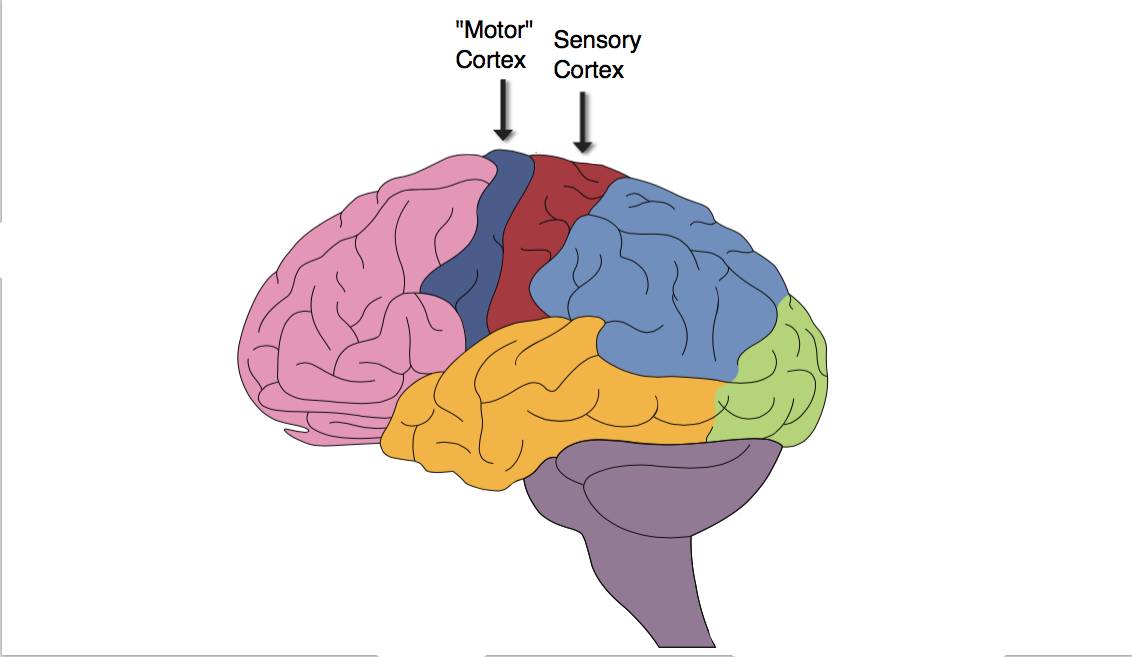
    The brain’s motor cortex sits atop the brain adjacent to the sensory cortex.

    The motor part is where you can “turn on” the motor of movement. The sensory part lets you perceive or feel a variety of sensations or feelings about the quality of movement itself.

    This feedback loop of information can help you in effect, move well and be freer to move around.

    This little guy is called the homonculus, the little man.

    This represents how our body parts are reflected in the brain in terms of how we use them and sense them.

    As you can see from this representation:

    The hands and mouth have the largest areas in terms of how we sense ourself.

    In order to help both the brain and body as you age, you can zero in on your sensory-motor cortex so both a movement in and of itself and the quality of how you move your body is addressed by paying attention to the information you can perceive or feel.

    Plus, you can do this in a playful type of manner without a lot of hard work.

    You see, the brain functions better with a variety of movements which opens up the possibilities of new neural connections since the brain itself can be changed, formed, and reformed.

    Brain Exercises

    Normally, we think of brain exercises like doing a crossword puzzle or doing some type of cognitive training. Any number of ways can sharpen us mentally such as learning to play an instrument, trying new recipes and good old fashioned doing math in your head.

    Regular exercise itself, is good in general, and can help the brain too.

    The brain thrives on novelty and our 600 muscles and 17 layers of muscles and fascia (which surround the muscles) can be used in a unique un-exercise approach by focusing our awareness on the conscious nature of movement itself.

    This wakes up the brain and body since we can tap into the flow of information in our nervous system.

    This non-traditional approach can augment any traditional type of exercise and can actually let us exercise pain free or be able to do the necessary movements you engage in with less tension and a different felt sense of ability.

    Less Tension

    The brain can be used to lessen tension through a natural process of updating our movement software.

    When we have less tension or when we can sustain more neutral levels of tension, then we can move easily and agilely over the long run.

    So when our brain gets challenged with paying attention, our body can actually feel the difference. Even when small, easy, gentle micro-movements are used to help set up or be the foundation for the moveable building blocks of overall coordination of movement.

    Slow movements help brain functions

    Watching someone do small movements, is similar to watching grass grow.

    We might think not a lot can be accomplished by little or slow movement.

    When you shift upstairs to target your motor cortex and do conscious specific types of movements slowly, gently and with as much awareness as possible – the brain can help the body make a number of changes.

    A slow movement practice is about how you pay attention to a number of areas of the body.

    The conscious application of movement done slowly forms the system of somatics exercises which is essentially brain based.

    9 Advantages of a Brain Based Practice

    1 – Pain Relief Using the Brain

    Since the brain thrives on novelty, the brain and body can be used in unique ways to affect the flow of information in the nervous system.

    This is set up with simple movements that can be done in a lazy, gentle manner where the mind is highly engaged.

    One of the brain functions of the motor cortex is that it can reset the resting levels of the muscles. The muscles are left more relaxed.

    As the muscles become more relaxed, the brain creates more feelings of relaxation and pleasure.

    2 – Improved Memory

    Movement is memory.

    The lower part of the brain, the cerebellum remembers much like a programmed computer program which does our quick, fast movements. We don’t have to think about it, we get up and go.

    Using the brain’s motor cortex allows us to change the program by noticing what is happening in our overall quality of movement as well as the actual movement.

    By improving the quality of how well we can move at any age, the brain functions at a higher level since the brain’s software is getting updated.This helps us remember and experience our former youthful movement.

    3 – Gain Strength

    Normally we exercise our muscles to get stronger.

    Strength is also resiliency and flexibility.

    So rather then a brawn approach, you can use the brain to lose excessive or amped up tension and stress.

    Our body becomes more balanced. We remain strong like animals in the wild who reset their muscles naturally since the slow movements are done along certain chains of connections which help us move more effectively.

    4 – Posture Changes

    We can change our shape.

    By losing compensations such as a curved spine which has our belly hanging over or the reverse when we’re too slumped.

    Our new appearance results from letting go of the tension which held us in place by the lower brain and its programmed ways.

    Change Posture, Gain Strength, Improve Memory and Find Pain Relief – the Easy, Brain Way

    When the brain remembers to reset to neutral, the brain functions much better and now we appear more easily upright and relaxed.

    5 – Natural Stress Alleviation

    The brain can create powerful chemicals of relaxation.

    Healthy animals with a spine tap into this natural source.

    They do this through the act of pandiculation as they target the brain and body.

    You can zone in on the brain in a similar conscious manner to create natural chemicals of relaxation so you’re left feeling content, relaxed and in control.

    6 – Regain Natural Flexibility

    Regaining flexibility is not about getting longer or going for range of motion.

    Simply being able to squat is one thing, getting up is another.

    When we let go of the binds of stress, tension and long held-injuries and compensations, the body knows where to reset to neutral so it can in effect move easy and be in comfortable positions.

    You can move more freely and naturally by reprogramming the brain so a natural flexibility can be easily maintained.

    7 – Improve the Immune System

    When we’re constantly triggering flight or fight response in our busy lives, we’re not giving our self the chance to calm things down.

    Resetting our brain and body so we can ramp it up and then back it down, allows us to live more easily with a nervous system which can be reset so our immune system is less burdened as the inflammatory response is cooled down.

    This allows more good feelings to flow through us so it can aid in healing, for instance.

    8 – Sleep Better

    Tuning down tension levels using the brain relaxes our body.

    The body and brain functions much better when we can rest easy so our tissues can repair.

    Resting easy happens when we feel calmer and can let go of the body and the mind.

    9 – Greater Sense of Peace and Tranquility

    When you use the brain to reset the entire body system of movement, you can move with greater ease and comfort like any other healthy vertebrate animal.

    As our earlier sense of freedom returns, movement can nurture us towards more tranquil states.

    This also brings us a vibrant sense of confidence to move, relax and have a calm mind.

    As you use the brain and target certain functions, you can return again and again to levels of comfort where you can fully understand or appreciate the mind and body connection.

    Better brain functions

    When we go back to the well of movement itself and harness the power of the brain to tap into our very awareness.

    The brain’s intelligence is aroused (with a little practice) so you end up with a better brain and body.

    When you reset yourself with a certain level of conscious awareness, the brain functions at levels which may continue to delightfully surprise you as you age.

    Get the Brain and Body on Your Side

    This content was originally published here.
  • How To Relieve Sciatic Nerve Pain And Back Pain With Just a Tennis Ball

    How To Relieve Sciatic Nerve Pain And Back Pain With Just a Tennis Ball

    The sciatic nerve is the largest body nerve, stretching from the lower back, through the buttock, down to the lower limb.

    Sciatic pain (sciatica) is a not a disease, but a symptom of some other issue with the nerve, like compression or irritation of the sciatic nerve, a herniated disc, degenerative disc disease, or a narrowing of the spinal canal.

    The pain is felt down the sciatic nerve, in the lower back, buttock, back of the thigh and/or calf, on the side of the foot, and in the heel, and it can be accompanied by numbness or weakness in the area, as well as tingling or pins and needles.

    However, a therapy that involves massage with a tennis ball has been proven to relieve sciatica pain. It is based on the principles of massage, acupressure, and reflexology to alleviate muscle pain and relieve tension. Scientific research found that this therapy boosts the range of motion, treats pain and heals low back pain and sciatica symptoms.

    The tennis ball treats the piriformis muscle located near the sciatic nerve, as it can push the sciatic nerve against the tendons beneath it, which leads to the familiar buttock and leg pain.

    The tennis ball presses the trigger points in this muscle, relieves the tension in the muscle, and boosts mobility and blood circulation in the area. Therefore, this massage is good not only for sciatica but for back pain and latissimus dorsi pain.

    However, note that targeting the piriformis muscle is just one of the steps to relieve sciatica, so you will need to address other areas of the spinal cord as well. For instance, if it is caused by a pinched nerve, you should not place the tennis ball near the pinched nerve.

    Now, here is how to perform this massage:

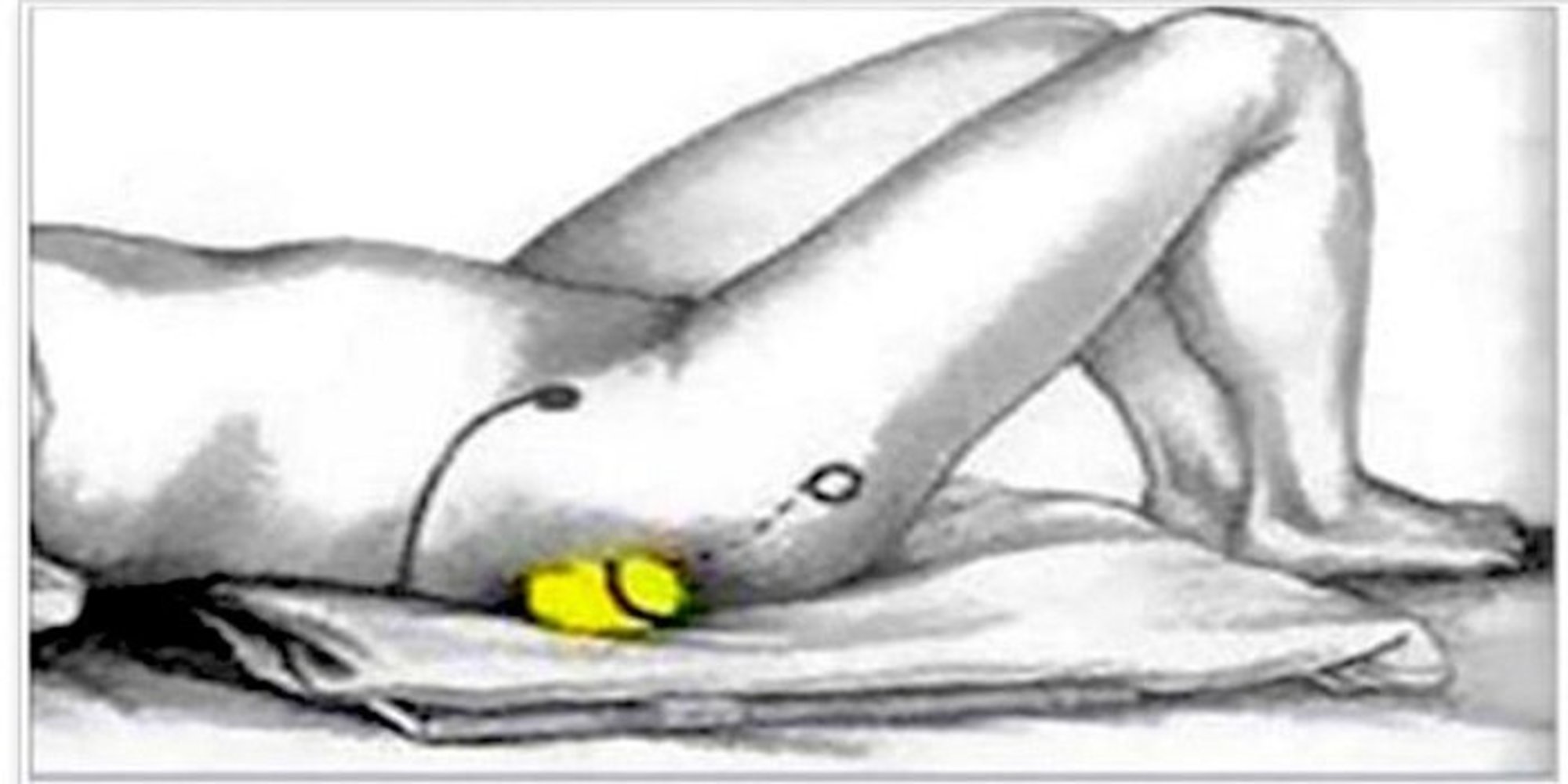
    Sit or lie on the floor, and place a tennis ball under the muscles where you feel the pain, and shift the weight onto the ball and note any areas of increased tenderness, as they are the trigger points.

    Press the painful spots for about 15 seconds each and then move to the next one. Roll the ball back and forth in gentle movements. If the pain is intense, add more balls to release direct pressure. If you feel sharp pain, stop the massage in order to prevent muscle or nerve damage.

    Additionally, the following tips will help you relieve sciatic pain:

    • Try heat and cold therapy as the first line of defense, by applying heating pads and ice packs on the painful area, to fight inflammation, and ease the sharp pain
    • There are some effective pain-management techniques you should try to lower the perception of sciatica pain, like deep breathing exercises, meditation, guided imagery, and cognitive behavioral therapy
    • Performlow-impact aerobic exercises and stretching exercises to stretch the hamstrings
    • If the pain is simply too intense, you can consult your doctor to prescribe some pain medications to soothe the symptoms

    Yet, you should always have in mind that your sciatica pain may be triggered by one of many underlying conditions, so if these tips do not work for you, and the pain aggravates and severely disrupts your daily life, visit a doctor to speak about some other treatment options, like chiropractic manipulation, epidural steroid injections, and more.

    Sources:
     

    The post How To Relieve Sciatic Nerve Pain And Back Pain With Just a Tennis Ball appeared first on Healthy Food House.

    This content was originally published here.

  • Interacting with houseplants does this for the mind and body | TreeHugger

    Interacting with houseplants does this for the mind and body | TreeHugger

    This might explain why houseplants are so popular again.

    It’s often been suggested that talking to one’s plants is good for the plants. But what if we have it all backwards; what if it is the humans who benefit from these little chit-chats? If you think about it, that the sound of our voice may help plants is pretty anthropocentric. They’ve been thriving forever without us, but we could not exist without them.

    We rely on plants for their gifts of oxygen and food, for starters. But exposure to them – from spending time in nature to having a few houseplants – also does incredible things for our health and well-being. This is especially well illustrated by a study that was published a few years ago in the Journal of Physiological Anthropology.

    The researchers set the stage for the paper by introducing this simple but profound truth:

    “The living space of modern people has moved from outdoors to indoors – more than 85% of a person’s daily life is spent indoors.”

    They explain that a life indoors is made increasingly possible thanks to advances in information technology, which allows us to “connect and remain connected to the computer environment,” as they put it. Or, as I put it, which allows us to work, socialize, learn, shop, and entertain ourselves … without ever having to step foot outside.

    “However, this diffusion of information technology causes a great deal of stress, such as technostress,” the authors explain, “which is a modern disease of adaptation caused by an inability to cope with the new computer technologies in a healthy manner.”

    Uhm, does that ring a bell for anyone?

    So, enter the plants. There has been plenty of research looking at the health benefits of nature and houseplants as well. Indoor plants have been a popular topic of study and have been found to enhance job satisfaction in the office, reduce psychological stress, improve moods, and enhance cognitive health. These effects can positively affect resistance to diseases and chronic stress, explain the authors, but few studies have examined the actual physiological mechanisms that are at play.

    Thus, the research team decided to look at the physiological benefits of indoor plants in modern people, focusing on the cardiovascular changes that happen when a person interacts with a plant. They measured autonomic nerve system activity, as well as quantifying the psychological changes during the contact with plants.

    Granted, the study was pretty small – and limited in demographics: 24 men all around the age of 25 years. But the results resonate nonetheless. You can read about the methods in the study itself, but the condensed version goes something like this: Half the men repotted a plant while the other half were assigned computer tasks; the next day, each group did the other activity. Data for heart rate variability, blood pressure, and pulse rate were collected before, during, and after.

    With the heart rate variability (HRV) they could measure activity of the parasympathetic nervous system (which increases in a relaxed state) as well as the activity of the sympathetic nervous system (which increases in a stressed state).

    The participants also filled out self-rating assessments about their feelings before, during and after the tasks.

    It may come as little surprise that the men felt “comfortable, soothed, and natural” after transplanting a plant; and they felt “uncomfortable, awakened, and artificial” after the computer task. And in fact, there were significant differences between the two after the tasks, despite the absence of significant differences in these feelings before the tasks, when they mostly felt neutral.

    The physical changes were also significant, with the authors concluding:

    “The results of HRV analysis indicate that indoor plants have positive physiological effects on the autonomic nervous system by suppressing sympathetic activity, which often increases when a subject is exposed to a stressor.”

    In contrast, the computer task increased sympathetic nervous system activity and increased diastolic blood pressure as well.

    In the end, the researchers say that active interaction with indoor plants can have positive effects on our stress response vis-a-vis cardiovascular activities. And that the physiological benefits may result from a number natural stimuli acting on the senses of vision, hearing, touch, and smell.

    “Our results suggest that active interaction with indoor plants can reduce physiological and psychological stress compared with mental work.” they conclude. “This is accomplished through suppression of sympathetic nervous system activity and diastolic blood pressure and promotion of comfortable, soothed, and natural feelings.”

    Given that we have mostly moved indoors, away from the nature that we have evolved with – and now remain inside and so closely connected to this relatively new concept of computer technology, is it any wonder that we are wired to respond to the living, green things around us?

    And on that note, I’m going to go pet my plants …

    This content was originally published here.

  • How to Read a Nutrition Label | Nerd Fitness

    How to Read a Nutrition Label | Nerd Fitness

    Reading food labels can be tricky. Today, more than ever before, the general public is health conscious and scrutinizing the food they purchase. Food manufacturers and marketers know this. So you come across a snack that says “light” or “multigrain,” and you assume the product in it is healthy. Why would they lie? There’s nothing worse than finding out your favorite protein bar is actually just a sugar filled candy bar with deceiving packaging. That’s why today we are dedicating an article to seeing through this deceptive marketing. We’ll do this by showing you how to read a nutrition information panel, as well as what packaging claims you can dismiss as bogus. We’ll also give you some tips on shifting your diet to a more healthy way of eating in general. If you are trying to watch what you eat to lose weight, make sure you grab our healthy eating guide: 10 Levels to Change Your Life. It’s a level up system, with each step shifting you towards improved nutrition strategies. We take it slow and work with your own pace, so the changes you make will be sustainable and permanent. You can download our 10-Level Nutrition Guide when you sign up in the box right here: Download our free weight loss guide THE NERD FITNESS DIET: 10 Levels to Change Your Life Follow our 10-level nutrition system at your own pace What you need to know about weight loss and healthy eating 3 Simple rules we follow every day to stay on target I identify as a: IGNORE THE FRONT OF THE PACKAGE Food manufacturers are not required to place any nutritional information on the front of the package. Because of this lack of regulation, what’s included on the front of the package is what the manufacturers want you to see. In other words, sales propaganda. Let’s take a look: “Real Fruit Bites” is the product and the company is Nothing But The Fruit. From the looks of this, I would assume these “bites” are mostly made of strawberry? Because what else would you put in them? The verdict: the number one ingredient in this is “apple puree concentrate.” I’ll devote an entire section to bogus health terms marketers use to fool us shortly. I bring up the front of the package now, to tell you it’s not where the real info is. If you want to know exactly what you are eating, you need to look at the Nutrition Label and Ingredients List. That’s where food marketers have to tell the truth (sort of). WHERE THE REAL HEALTH CLAIMS OF A FOOD LABEL CAN BE READ In the United States, the Food and Drug Administration (FDA) requires most packaged food to include a label. Many other countries around the world have a similar agency regulating food. This is key for us nerds because organizations like the FDA force companies to disclose exactly what’s in the food they’re selling. They do this with a Nutrition Label and an Ingredients List. A Nutrition Label identifies the nutrients found in a portion of food, like calories, protein, and vitamins. It’ll look like something like this: An Ingredients list tells you what they placed into the product to get those nutrients. It might look like this: Both are important to analyze. You want to know how many calories you’re getting out of your meal, which can be found in the Nutrition Label. You also want to know what foods they are using to make up those calories, which can be found in the Ingredients List. HOW DO I READ A NUTRITION LABEL Let’s look at another Nutrition Label: This is taken from a Spiced Pumpkin Pie Cliff Bar. Let’s analyze: Serving Size . This is somewhat self-explanatory: serving size is the amount of food, by volume or weight, that is considered one “serving.” New FDA regulations require this size should be typically what someone would eat in a single serving. Which matches what we see here, with “1 Bar.” However, double check this. Your serving might not match what the manufacturer has in mind. For example, a bag of Doritos has about 10 servings in it. Do you really only eat a tenth of bag of Doritos at a time? Look at the Nutrition Label. Calories . This is the energy you’ll get from food. [1] This will be one of the most critical pieces of information on the food package. Which is why it’s right under the serving size on the label. Going back to our Cliff Bar example, we can see that one bar is roughly 250 calories. I want to talk about that word “roughly.” The FDA allows a 20% leeway in either direction for food manufacturers. That means, legally, that Cliff Bar might have 200 calories…or 300 calories. %DV . Have you ever wondered what that “%DV” stands for? It means “Daily Value” and the percent will range from 0 to 100. %DV is an estimate of how much of a particular nutrient you are eating with one serving of food. For example, if you ate that Spice Pumpkin Pie protein bar, you would be getting around 8% of the potassium required for a healthy diet. However, we need to explain come caveats: it’s based on a 2,000 calorie a day diet, whereas the average person needs more than this ( calculate your calorie needs here ). Also, this is the FDA’s estimate of how many vitamins and minerals you need. Do you really trust Big Brother? Use %DV as a starting point only. Here’s some rough guidelines: – Less than 5% DV isn’t that much. – More than 20% DV is a lot. You’ll notice that some things, like Trans Fat, Protein, and Sugar don’t have %DV. The FDA doesn’t require this information, so most food sellers don’t include them. Don’t overlook the Nutrition Label. Yes, they are estimates. But an estimate of the number of calories in a meal is better than no estimate, especially if your goal is weight loss. A message I really strike home in our “ Why Can’t I Lose Weight? ” article is having a good estimate of calories in and calories out. While there is plenty of nuisance, weight loss really does come down to calories eaten and expended. That’s why reading the Nutrition Label can be so critical –  it helps you with the first part of this equation. If you have no idea how many calories you need to eat in a day to reach your goals, I have a couple of resources for you. The first is our article “ How Many Calories Should I Eat Every Day? ” It includes a calculator to give you an estimate of your individual calorie requirements, plus tips on what to do with this info. And the second is for people who are looking for more specific, guided accountability, our uber-popular 1-on-1 Coaching Program . We take all the guesswork out of a weight loss plan and help you start to make better food choices. We’ll tell you exactly what you need to do to get in shape, by changing your nutrition strategy, creating an exercise program, and offering personal accountability. Many Rebels have turned their lives around by becoming a client, and we’d be happy to talk with you to see if we could be a good fit for each other. Click on the big image below to learn more: WHAT NUTRIENTS DO I WANT MORE OF? WHAT NUTRIENTS DO I WANT LESS OF? Let’s chat quicky about some of the nutrients identified on the label. We’ll first talk about dietary fat : the good , the bad , and the ugly . The terms “saturated” or “unsaturated” refers to the bonding of hydrogen atoms to carbon atoms in a fat molecule. When every carbon molecule is bound to the maximum number of hydrogen atoms, the fat is “saturated.” If some carbon molecules are double-bonded to each other (and bonded to fewer hydrogen atoms), the fat is “unsaturated.” Let’s chat about why this matters. The good: unsaturated fat. This is the “healthy” type of fat. There are two types, monounsaturated and polyunsaturated (don’t worry too much about the difference, it has to do with the number of carbon double-bonds in the molecule). Unsaturated fat is typically liquid at room temperature, and you find it in plant-based products (like nuts, avocados, coconut, etc). When people talk about “healthy fats,” unsaturated is generally what they are referring to. What about saturated fat? There’s a lot of conflicting studies out there on saturated fat, and it’s been vilified by marketing companies for years. So what’s the truth?  Personally, I believe that saturated fat is an important nutrient that we need in our system. You can check out this article for an interesting debate on the subject. [2] The bad: trans fat. There has been a good deal of hype about trans fat in recent years.  So what’s the deal? Trans fat is technically an unsaturated fat, but the fat molecule has a different type of carbon double-bond that gets created when oil is “partially hydrogenated.” Hydrogenation is a process used in food production to increase shelf life, which is why it’s often found in processed food like frozen pizza and doughnuts.  Why does all this matter? The “trans” type double bond causes the fat to behave differently in the body, and NOT in a good way. Trans fat can contribute to atherosclerosis, which could lead to a heart attack. Keep your intake of trans fat as low as possible. [3] It should also be noted, that if food has less than 0.5g of trans fat per serving, the FDA allows food manufacturers to round down – meaning “0.” So even if the packaging says “Zero Trans Fat,” it might actually still have some. [4] We’ll end this article by talking about ways to avoid this concern, by sticking to “real food.” Cholesterol is the next big player on the list . Cholesterol is an important building block in cell membranes. We get some from food, and some is made in our liver. Cholesterol is mainly found in animal products, just like saturated fat. In my opinion, cholesterol is not the villain it’s made out to be ! Sodium , and often Potassium , are also listed in this part of the Nutrition Facts label. These are electrolytes . Should you avoid sodium, because of a possible increase in blood pressure? Eh, the findings on this are mixed. [5] A little bit of salt on your food (or in your food) should be fine. Carbohydrates include simple carbs (sugars, like glucose, fructose, dextrose) and complex carbs (fiber and polysaccharides). Dietary fiber is great stuff! There are two types: Soluble fiber is digestible and gets absorbed by your body. This type of fiber helps keep your blood sugar levels stable. Insoluble fiber is not digestible, so it stays in your GI tract and helps “keep things moving.” Trust me, this is a good thing. Prioritize fiber in the foods you eat. Sugar is a simple carbohydrate. It can be absorbed by your gut very quickly because it doesn’t need to be broken down by enzymes first. Sugar is not necessarily bad for you , but consuming large amounts of sugar can cause your blood sugar levels to become unstable. Other Carbohydrates generally refers to complex (large) carbohydrates in food, such as starch. These large molecules are broken down by enzymes into sugar, but the process takes a while. Complex carbohydrates keep your blood sugar levels more stable than do simple carbohydrates. Protein is one of the main building blocks for muscle and other body tissues. There is normally not a %DV for protein because the amount of protein that each person needs is quite variable. You can check out this article for an idea of how much protein you should be eating . At the bottom of the Nutrition Label, you’ll also see a breakdown of micronutrients. Let’s go over some of these key players: Calcium : needed to build bones. This is especially important for women, because bone mass decreases after menopause, so build your bones strong while you are young! Vitamin D : needed to aid the absorption of calcium. Some of this comes from food, and some is made by your body when you are exposed to sunlight. Iron : needed to make hemoglobin, the oxygen-carrying substance in blood cells. Women are more at-risk for being iron deficient, while men are more at-risk for being iron overloaded. You may notice that some labels list more micronutrients than others. If a micronutrient is missing from a label, that means there is not any of it in the food product. Let’s look at the Nutrition Facts for a can of soda. See any micronutrients on there? That’s why soda is referred to as “empty calories.” HOW DO I READ AN INGREDIENTS LIST? Let’s take another look at our Cliff Bar, but this time, looking at the Ingredients List: All the ingredients are listed in order of quantity by weight, so the first few ingredients make up most of the product. For example, the Spice Pumpkin Pie Cliff Bar is mostly brown rice syrup (sugar), oats, and cane syrup (more sugar), in that order. The 4th ingredient, “soy protein isolate” is where this protein bar starts to get some of its protein. I know. Perhaps “Carbohydrate Bar” would be more appropriate than “Protein Bar.” The first few ingredients will give you an idea of what you’re actually eating. So this Cliff Bar is sugar, oats, and protein from soy. Pay attention to the ingredients list. This tells you exactly what you’re eating. Because again, the front of the package can’t be trusted. BOGUS CLAIMS ON FOOD LABELS TO WATCH OUT FOR Marketers love the front of food packages. It’s where they get to use all their fun terms that sound healthy. Let’s go over some: “Light.” When you see “light” or “lite” on a package, it means it’s been processed to reduce calories or fat. However, when fat is reduced sugar is often increased to compensate. Check the ingredients list to find out for sure. “Made with whole grains.” What does “made” mean? It means it contains “some.” Check the ingredients list to see just how much. Is a whole grain in the top three? If not, it’s mostly not whole grains. “Natural.” This has to be good right? Natural, i.e nature, means good for you? Eh, it just means that at some point, the ingredients came from a natural source like apples. Going back to our example above, you could argue that the protein bar contained “natural” ingredients because brown rice syrup is derived from rice. However, a protein bar doesn’t resemble anything grown from a plant. And brown rice syrup really doesn’t have much in common with actual brown rice. For the most part, the more ingredients on a list, the less natural it is. “No added sugar.” This sounds good, until you realize that some foods like dried fruit are just naturally high in sugar. Double check the ingredients to find out. Want some other clever food labels to be on the lookout for? We have a whole article right here diving into the subject . FOOD WITHOUT LABELS Want to know how to avoid worrying about Nutrition Labels and Ingredients Lists? You’ll find a lot of the following there: Meat Eggs Fish Nuts Vegetables Fruits Do you know what most of this doesn’t have? Food labels. A banana won’t have manufacturer disclosed information, because no one manufactured it. It’s a banana. It’s what we here at Nerd Fitness call “real food.” We discuss this in great detail in our Healthy Eating Guide . Food that grew in the ground, on a tree, ran on the land, swam in the sea or flew through the air, would fall into this category.  Meat, fish, eggs, vegetables, fruits, nuts are all great examples of REAL food. Most of this food is found on the outer rim of the grocery store. And there aren’t too many food labels here, besides a barcode. If you want to start eating better, buy whole foods that don’t have food labels on them. They’ll generally have more nutrients and fewer calories, which is an ideal recipe for weight loss . Then you don’t have to worry about food manufacturers deceiving or trying to hide ingredients. The banana is a banana. However, while eating “real food” is a key component of a successful weight loss strategy, it can still be useful to have an idea on the amount of calories in foods such as bananas. Calories in and calories out is the central component of weight loss (thermodynamics for ya), so having a rough idea of calories you’re consuming is key. Even in “real food.” Maybe one day we’ll get robot vision to analyze the calories in everything we look at. For now, you can Google ‘[food] + calories” or check MyFitnessPal to educate yourself! Alright, I think that about does it for today’s article on reading a Nutrition Label. Did I miss anything? Do you have any tips or tricks on deciphering a Nutrition Label or Ingredients List? Do you have any other examples of foods that claim to be one thing, but whose ingredient list proves it’s another? Let me know in the comments! PS: If you’re reading a Nutrition Label to try and lose weight, you’re on the right track! As we state in our Rules of the Rebellion, “ You can’t outrun your fork! ” Keep at it and keep asking questions! PPS: If you want more 1-on-1 help to lose weight or shift your nutrition strategy, I’ll again remind you of our Online Coaching Program ! We work with busy people just like you to develop and execute plans to level up their lives! Click right here to learn if we are a good fit for each other . All photo sources can be read right here. [6] Footnotes    ( returns to text) For the real nerds, a calorie is the amount of energy needed to raise 1 gram of water by 1 degree Celsius, or 4.184 joules.  1000 calories equals a kilocalorie, or Calorie with a big C, which is the unit we are talking about with food. Check out Mark Sisson’s excellent article here . You can check out this article on a warning about the consumption of trans fat. NPR has a good write-up of the subject. You can check out this report from Science Daily. Light Reading , Health Food , Fine Print , Robo Detective , LEGO Collectible , Fish Soup , Lego Biohazard , Apples .

    This content was originally published here.

  • What Is a Float Tank? A Beginner’s Guide to Flotation Therapy | The Manual

    What Is a Float Tank? A Beginner’s Guide to Flotation Therapy | The Manual

    I can see why stepping naked into a five-foot-high windowless box filled knee-high with water might not be everyone’s cup of tea. Personally, the more offbeat an alternative health therapy is, the more eager I am to try it. I’ve meditated in the depths of a Himalayan salt cave. I’ve had brass bowls rubbed against the soles of my feet as a stream of sesame oil was poured into my third eye. I’ve lain supine on a table while a shaman danced around me sporadically beating a wooden drum.

    But even I hesitated when the attendant at the float tank spa gestured for me to enter the dark, windowless chamber. What got me over the threshold was remembering the claims I’d heard of what flotation therapy can do.

    Benefits of Flotation Therapy

    Flotation therapy was pioneered in the 1950s by neuroscientist and psychoanalyst John C. Lilly, who noted the effects of sensory deprivation on people suffering from anxiety disorders, addiction, and post-traumatic stress disorder (PTSD). In the decades since, studies have confirmed the beneficial brain activity that happens in a float tank results in hormone regulation, stress relief, pain relief, and improved sleep quality. Some of these benefits last for a few hours after a session, while others last for months.

    Further Reading

    How does all this happen through floating on your back in a windowless tank of water? Some of the benefits come from sensory deprivation. It’s a concept that might sound a little scary, but it’s actually proven to minimize stress. As addicted as we are in this modern era to stimulus, spending an hour without feeling, hearing, or seeing anything turns out to be an amazing reset for the body and brain.

    Other benefits have to do with the water itself. The water in most flotation tanks is saturated with Epsom salt, also known as magnesium sulfate. Magnesium is a bit of a wonder chemical, especially because most of us don’t get enough of it. Absorbing magnesium through the skin inhibits the release of cortisol (the stress hormone) and coaxes the muscles to relax, which in turn allows for detoxification, healing, and pain relief.

    Posted by Float On on Monday, December 31, 2018

    Finally, the floating position also offers the benefit of promoting blood flow to the brain, organ,  and limbs, as well as the release of lactic acid from the muscles. Both these effects minimize pain, promote recovery, and improve focus along with flexibility.

    What It’s Like Inside a Float Tank

    A flotation tank is about 8 feet long and only 5 feet tall, which means you can’t stand up in it. (However, I have been in a tank that was essentially a walled-off, plastic-lined room within a bigger room, but just as dark.)

    The thick silence has a curiously comforting effect. There’s nowhere to be but where you are.

    Once inside, you lie back, lift up your feet, and let your belly rise. Achieving a back float is sort of a surprise in this small amount of water. You might find yourself trying to keep yourself above the waterline, but it’s not necessary — the body’s natural buoyancy and the density of the Epsom salt in the water ensure that you’ll float without effort.

    The water is motionless and the walls are thick, so you hear nothing except perhaps the beat of your heart reverberating in your ears. (If water in your ears bothers you, spas usually supply ear plugs.) The thick silence has a curiously comforting effect. You aren’t cold or hot; you aren’t seeing or hearing or smelling anything. There’s nowhere to be but where you are.

    In the absence of stimulus and sensation, you might find your body doing curious things. I found myself twisting and turning gently, the movement originating in my shoulders and lower spine. I would a position for a while, then release. It was as though I were being adjusted by an invisible and exceedingly gentle chiropractor. With each hold and release, I felt myself relax more deeply. Some deeply personal revelations accompanied these motions, as well, arising equally gently.

    Theta brainwaves are the longest frequency waves (around 4-8 Hertz) and usually occur during REM sleep or moments of meditation and daydreaming.

    Eventually, my body returned to stillness and a tingly euphoria washed over me. As it began to fade, my brain slipped into theta state. This, for me, is the cool part. Theta brainwaves are the longest frequency waves and happen only during sleep or, if you’re lucky, in moments of profound meditation. While in theta state, the senses are able to focus on signals originating from within. It often brings active, highly lucid dreams, long-lost memories, creative visions, and intuitive epiphanies.

    It’s hard to describe what this state feels like — it’s like a place between sleep and wakefulness, where you can sort of feel things setting themselves right within your body and mind. Waking up out of it feels like being reborn.

    It’s no mystery why people come back for more. The attendant at the location I visited told me that he sees the same people in and out. Business people come in during their lunch breaks or after work. Athletes drop in on their recovery days. Artists visit during creative dry spells. People suffering from chronic fatigue, fibromyalgia, and other debilitating health conditions will come in multiple times per week.

    They all leave much like I did that afternoon: hair wet, back straight, shoulders open, with a walk that others might describe as — wait for it — floating.

    This content was originally published here.

  • Essential Oils for Cough: Top 7 Oils to Help You Find Relief – Dr. Axe

    Essential Oils for Cough: Top 7 Oils to Help You Find Relief – Dr. Axe

    Dealing with a cough? Try these top 7 essential oils for cough to find relief rather than over-the-counter cough suppressants.


    Along with the common cold, the flu and other respiratory conditions typically comes a cough that keeps you up at night and limits your ability to breathe with ease. Although so many people suffer from a cough every year, many aren’t aware of the natural remedies that are truly effective. There are several essential oils for cough that have antispasmodic, expectorant, antiviral and antibacterial properties. Like my recommended essential oils for colds, these oils serve as a safe and effective way to get rid of your cough and other symptoms of a respiratory condition for good.

    According to research published in the Canadian Medical Association Journal, over-the-counter (OTC) cough suppressants are of no benefit for children and shouldn’t be used by children who are under the age of 6 years old. On top of that, the benefits for adults are likely minimal. Many people turn to codeine to relieve their coughs, but did you know that codeine is a narcotic that can cause withdrawal symptoms like other opiates when it’s overused? Plus, studies show that in adults codeine and antihistamines have no effect on cough.

    So many people are desperate to find a more effective remedy for their coughs. Try these essential oils for coughs that work to address the cause of your cough while simultaneously loosening mucus, relaxing your muscles and reducing cough intensity.

    This content was originally published here.


  • Lettuce-Farming Robots Might Grow Your Next Salad

    Lettuce-Farming Robots Might Grow Your Next Salad

    Your next salad might include leafy greens grown by robots in California greenhouses. About 75 percent of the lettuce farmed in the U.S. comes from that state’s Central Coast and San Joaquin Valley. Cultivating it requires warm temperatures, not too much rain, and lots of time and labor. Startups such as Iron Ox, a maker of agricultural robots, and big players such as John Deere are investing in artificial intelligence to raise produce more efficiently.  At Iron Ox’s fully robotic grow house in San Carlos, Calif., an autonomous robot plants, cares for, and harvests crops.

    source and more

  • Washing Dishes Helps Decrease Your Stress Levels, According To Study

    Washing Dishes Helps Decrease Your Stress Levels, According To Study

    Before reading this article further, I have one question for you: Do you have loads of dirty plates and pans on the sink right now? Be honest. We won’t judge. If you answered yes, well, don’t worry because you’re not alone. I have some, too! In fact, washing dishes is totally my least favorite chore to do.

    That said, a recent study is telling us that washing dishes can actually decrease a person’s stress level. As long as they do the chore “mindfully,” that is!

    This is according to a group of reseachers from Florida State University who observed 51 students wash dishes.

    Before they began, half of the students were asked to read “a short mindfulness dishwashing passage” while the remaining ones read “a short descriptive dishwashing passage,” reported a SouthernLiving article.

    The mindful passage partly read:

    “While washing the dishes one should only be washing the dishes. This means that while washing the dishes one should be completely aware of the fact that one is washing the dishes. At first glance, that might seem a little silly. Why put so much stress on a simple thing? But that’s precisely the point. The fact that I am standing there and washing is a wondrous reality. I’m being completely myself, following my breath, conscious of my presence, and conscious of my thoughts and actions. There’s no way I can be tossed around mindlessly like a bottle slapped here and there on the waves.”

    Adam Hanley, author of the study and a doctoral candidate in FSU College of Education’s Counseling/School Psychology program, commented:

    “I was particularly interested in how the mundane activities in life could be used to promote a mindful state and, thus, increase overall sense of well-being.”

    So yes, the researchers are telling us that people who ‘mindfully’ washed their dishes (meaning those who focused on smelling the soap, feeling the water temperature, etc) increased their feelings of inspiration by 25% and decreased their nervousness levels by 27%.

    “It appears that an everyday activity approached with intentionality and awareness may enhance the state of mindfulness,” wrote the authors of the study.

    The post Washing Dishes Helps Decrease Your Stress Levels, According To Study appeared first on Elite Readers.

    This content was originally published here.

  • Dairy Queen Is Selling a Dreamsicle Dipped Cone

    Dairy Queen Is Selling a Dreamsicle Dipped Cone

    This is very important news.

    This content was originally published here.

  • Men’s Well being & Health Ideas, Advice

    Men’s Well being & Health Ideas, Advice

    The muse for wholesome existence. This Republican scheme would work finest for the healthiest. It could additionally work correctly for the poor as a result of the premium subsidy system would shield them from the even greater costs inside Obamacare. Bob Laszewski was named the Washington Publish’s Wonkblog Pundit of the 12 months” for 2013 for some of the correct and public accounts” detailing the first few months of the Obamacare rollout. Well being and Health – Well being and Health is a extremely attention-grabbing subject as you get to be further aware of your physique and the fitting strategies to check Yoga, Weight loss plan, Consuming routine, Sports, and many others. This might assist in creating a complete new you by being aware of what is going into your physique and the way harmful some substances could be to you.

    How i earn from amazon associates program shoutmeloud on Thu, 30 Nov 2017 23:57:00 GMT Learn how to build an affiliate website using wordpress on Tue, 27 Mar 2018 23:54:00 GMT 20 tips i used to make 90 336 sixty five with amazon up gas on Thu, 05 Apr 2018 21:42:00 GMT How you can build an amazon affiliate website make an internet site hub on Thu, 17 Mar 2016 07:59:00 GMT 8 finest amazon affiliate plugins for amazon how you can use wordpress on Thu, 07 Sep 2017 12:forty four:00 GMT How you can become a profitable amazon affiliate the work at home wife on Mon, 18 Nov 2013 14:25:00 GMT Easyazon amazon wordpress plugin specials.

    Our YMCAs supply a wide variety of group health lessons for almost each capacity and interest. Every month our Affiliation holds more than 300 group health lessons across YMCA branches throughout Central Ohio. You will find low-impact and beginner lessons, cardio health, …

    This content was originally published here.