Category: Business

  • Good Judges Matter

    Good Judges Matter

    When we turn on the radio, flip on our televisions, and go online, we are being bombarded with political discourse. Whether it is candidate advertising, news coverage, debates or social media discussion, the Election is everywhere we turn.

    The one thing we do not hear much about is judicial elections.

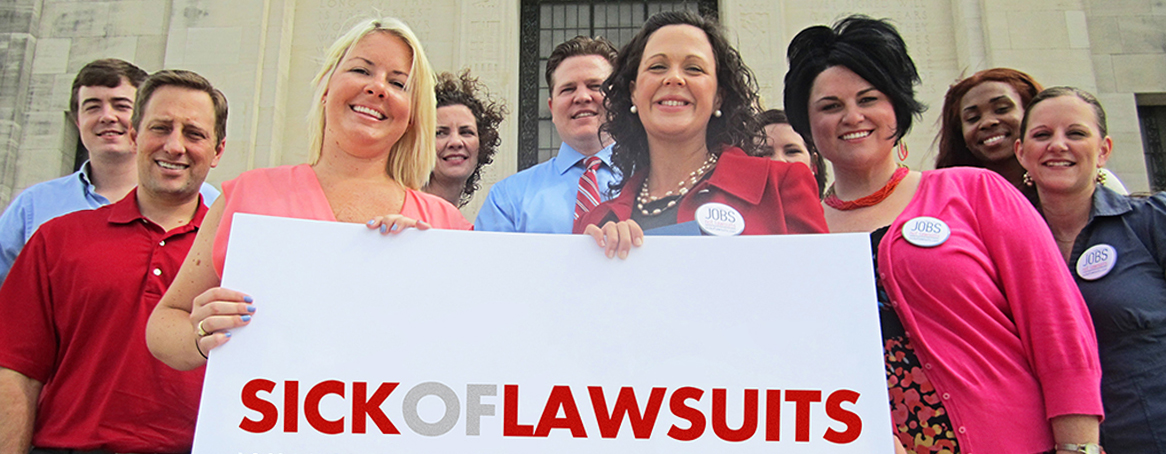
    Judges have more power than you might think and well beyond civil justice. Judges help determine the strength and growth of communities. Unfortunately, personal injury lawyers often team up with bad judges and compromise the fairness of our courts. There are judicial hellholes across the country that are plagued by bad judges who are under the influence of personal injury lawyers.

    This is why good judges matter. Judges have the power to sanction personal injury lawyers who game the system and file frivolous lawsuits that have no real connection to the state where they are filed. We know firsthand in my state – Illinois. Out-of-state person injury lawyers have flooded our state to take advantage of judges who favor them. Judges have the power to dismiss frivolous lawsuits and prevent personal injury lawyers from gaming the system, but too often bad judges turn a blind eye. We need judges whose actions can help spur job growth by maintaining fairness in their court rooms.

    Voters need to pay attention to judicial elections and pay special attention to who is funding the campaigns. In many cases, judges receive the vast majority of their campaign contributions from personal injury lawyers. These lawyers know they can cash in on frivolous lawsuits when they have the judges they want in the courtroom. In Illinois, personal injury lawyers have essentially turned the courts in several of our downstate counties into their own personal – and profitable – playgrounds.

    Stopping lawsuit abuse starts with us casting votes for good judges to serve in our courts. Make your vote count on November 8th.

    Travis Akin is the Executive Director of Illinois Lawsuit Abuse Watch.

    The post Good Judges Matter appeared first on Sick of Lawsuits.

    This content was originally published here.

  • Pacific Northwest timber industry: As prices slide, job fears grow

    Pacific Northwest timber industry: As prices slide, job fears grow

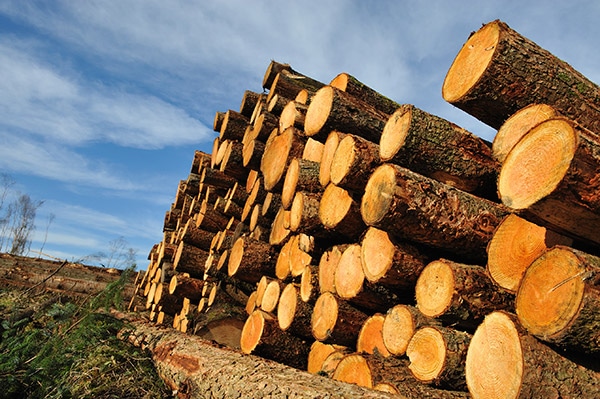
    Lumber prices have plummeted over the past 10 months, casting an uncertain pall on a sector that’s been a harbinger of economic downturn in the past. It’s worrying news for Cowlitz County, home to more forest product jobs than any other county in the state.

    After peaking at $582 per 1,000 board feet in May 2018, the price of Douglas fir is down to $390 this month, according to Nasdaq commodities data, and experts are unsure of what to expect next.

    “We’ll see some slowness this year, maybe continuing into 2020, but then longterm the potential is still there for growth,” forecasts Daniel Stuber, vice president of operations at Forest2Market, which reports on the industry. But that growth is far from certain.

    Prices reached record highs last year and the drop could be a rebound back to normal, Stuber said. But global tariffs are slowing lumber exports, and investments in the southern U.S. could make Pacific Northwest lumber less competitive. And there are troubling hints of slowing housing construction, with housing starts and building permits both lower this year than in 2018.

    If construction continues to stall, the 12,300 Cowlitz County residents whose jobs are tied to logging and wood products processing could be the first to feel an economic slowdown that has the potential to reach far beyond local sawmills.

    That’s what happened 12 years ago, when the price of wood was one of the first hints that a major recession was on the way, said Cindy Mitchell, public affairs director for the Washington Forest Protection Association.

    “Back in 2007, log prices dropped really quickly,” Mitchell said. The subprime loans that would be blamed for fueling the Great Recession were still readily available, and public data did not yet hint of the coming economic chill. But builders and lenders were growing wary about the future, and as they hesitated, log and lumber prices fell.

    Mitchell does not think the current slump marks a repeat of last decade’s economic collapse, but, like Stuber, she is keeping a close watch on housing starts.

    Applications for new home construction building permits were down 1.4 percent compared to a year ago, according to U.S. Census Bureau figures released Friday. Construction of new homes and apartments in January dropped by 7.8 percent compared to a year ago.

    “People who are building multi-family housing are on the forefront of what is happening with log and lumber prices,” Mitchell said. “And everything is connected.”

    Brian Hatfield, who previously represented Cowlitz County as a state senator and now serves as Forest Products Sector lead for Gov. Jay Inslee, said he remains optimistic. Prices are down compared to last year — but they still are higher than the average over the past few years. After all, lumber prices were at all-time highs last May.

    “We may just be seeing a correction from the mid-2018 historical spike in lumber prices,” Hatfield told The Daily News in an email.

    As the experts look at the future of lumber pricing, they seem to agree that Chinese tariffs and California wildfires have had little impact so far.

    The forests hardest hit by last year’s fires were largely U.S. government-owned and off-limits to logging because of environmental protections, according to Forest2Market. Though more than 11,000 homes were destroyed in the deadly Camp Fire conflagration, that’s a small blip nationally. If all the houses destroyed were replaced, they’d comprise less than 1 percent of the 1.5 million housing units U.S. builders are on track to complete this year.

    China instituted a 10 percent tariff on U.S. lumber last year, and raised that to as high as 25 percent at the start of 2019. But mills largely took the export tax in stride.

    Washington, which ranks No. 2 in the U.S. for lumber production, has not been hard hit by the tariffs, Mitchell said. “Our producers are primarily making lumber for housing in the United States,” she said.

    Less than 1 percent of U.S. lumber is exported to China, Stuber said. “It would be ignorant to think these tariffs are not having any effect,” he said. “But it’s not much.”

    And companies that do export lumber, including Weyerhaeuser Co., have already bounced back from China’s tariffs. In a call with investors in February, Weyco President and CEO Devin W. Stockfish said revenue from exports to China is steady over the past year. “Demand has been steady since the tariffs were imposed,” he said. More significant than China’s tariffs on U.S. lumber may be American tariffs on Canadian wood.

    In 2017, the Trump administration imposed tariffs that average 20 percent on Canadian wood imports. British Columbian producers decided to import less and start investing in U.S. forest products instead, Stuber said.

    “They are primarily looking in the U.S. South, where a lot of Canadians are investing in new saw mills and saw mill technology,” he said. “The South has low log costs compared to the Pacific Northwest, so they are not investing in your region.”

    Weyerhaeuser, which owns forestland both in Canada and across the U.S., has made similar calculations. CEO Stockfish told investors last month that the company expects to primarily expand wood processing in the South. “With the South, log costs are lower than they are in the West and in Canada,” he said.

    As those new high-tech southern saw mills start to come online, that could make it harder for Washington’s mills to compete, Stuber said.

    “Log costs are 50 percent to 70 percent of a mill’s costs, and the U.S. South has lower log costs than the Pacific Northwest,” he said. “If we go into an economic slowdown and lumber prices stay low, that’s a problem for your region. It could translate to fewer jobs out there.”

    But that’s far from certain, Stuber added — and if Northwest log prices drop, the trend could reverse.

    “We at Forest2Market are predicting that we’ll see 2019 down compared to last year,” he said. “But the long-term fundamentals are still there to see growth in the market over the next five years.”

    Source

    https://www.columbian.com/news/2019/mar/24/pacific-northwest-timber-industry-as-prices-slide-job-fears-grow/
  • Treasury Inversion and Political Fed Cycles

    Treasury Inversion and Political Fed Cycles

    With so much news hitting the wires regarding the Treasury Inversion level and the “potential pending recession”, we wanted to shed a little insight into this phenomenon and what we believe the most likely outcome to be going forward.  Our researchers, at Technical Traders Ltd., believe the Treasure inversion is a reactionary process to overly tight US Fed monetary policies, consumer demand factors and outside cycle forces.  There is very little correlation to inverted Treasury levels and causation factors other than the US Fed and global central banks.  We believe consumers and consumer sentiment also play a role in setting up the conditions that prompt yield inversion.  The one aspect we believe everyone fails to consider is the uncertainty that is associated with major US election cycles.

    The US Fed is obviously a driving force with regards to yields and consumer expectations.  In the past, the US Fed has rotated FFR levels up and down by enormous amounts (in some cases 200 to 500%+ over very short spans of time.  Consumers, you know those people, the ones that are the actual driving force of the local and state level economies, have been the the ones having to deal with wildly rotating FFR levels and the consequences of their debt rotating from 4~7% average interest rates to 8~25%+ average interest rates over the span of just a few years.

    Take a look at this chart that highlights the current and previous US Federal Reserve FFR rate changes.  It is quite easy to see that consumers and business, on the receiving end of these changes, often swing from one extreme to another as the US fed makes these dramatic moves.  And, yes, that last 2400% number is correct.  The FFR went from 0.06% to 2.4% over the past 3+ years – do the math yourself if you don’t believe us.

    Let’s talk about how the US economy operates as a host to the global economy for a second.  When the US economy is booming, it exports growth, opportunity, and activity to the rest of the world.  When the US economy is contracting, it exports contraction, diminishing opportunity and slower economic activity to the rest of the world.  This may be a bold statement to make, but it is true.  For the past 80+ years, the US economy has been the “mothership” of the global markets in terms of creating and exporting growth and opportunity for foreign nations.

    The US Fed, therefore, has an incredible responsibility to safely navigate the current and future global expectations with regards to FFR levels and yield levels as the global economy expands and contracts with political, trade and social issues.  It is a very difficult process to navigate for anyone.

    US Presidential Election cycles also play an important role in how these expansion and contraction cycles take place.  Anyone with any understanding of Music understands each note includes an “Attack” and “Decay” process.  The same thing takes place in economic cycles.  Within the Attack phase, the economy builds strength, capability, and output, just as the musical note does.  Within the Decay process, the economy begins to wain in strength, capability, and output, just as the musical note does.  The process within the global economy is very similar to an orchestra of musical instruments playing difference components of the music output.  Some play loudly and dramatically, others play softly and more demure.  The outcome is a finely balanced and enjoyable musical presentation.  The global economy is very similar to this and right now we are starting to see a slower, softer period of economic activity throughout the global economy.

    Currently, the US is starting a new Presidential Election cycle where dozens of Democrats are lining up against President Trump.  This is sure to be a battle that will rival “Rocky II” in terms of scale and scope.  It is also starting far earlier than most normal mid-term Presidential election cycles.  This is one of the biggest reasons we believe the Treasury yields may stay rather muted for the next 12+ months while the end of the “attack phase” plays out for the global economy.  Eventually, the “decay phase” will begin within the global economy and we’ll start the process of waiting for the US Fed and central banks to rally opportunity with lower rates and possibly QE ventures.

    We’ve highlighted the US Presidential Election “run-up” cycles (the hyperbole 16-month process that takes place before the actual elections) in BLUE on these charts.  It is fairly simple to see that the combination of the US Fed rate levels, US political controlling party policies and consumer sentiment related to these policies and economic factors have driven yields higher or lower throughout the past 50+ years.  In fact, the US and the Globe have recently transitioned from more of a regionally localized global economy to more of a centrally functioning global economy.  One thing has not changed, though, the US is still the largest of the global economic drivers and will continue to be for the foreseeable future.

    When we take into consideration how these yield contractions have resulted in asset price changes in the US stock market, we need to compare these moves in yield with the expectations of traders, investors, and capitalists throughout the world.  Remember, the US stock market is currently, and has been, a pool asset valuation protection for global investors throughout the planet.  Over the past 40+ years, the US economy has exported opportunity and capacity throughout the globe while global investors have continued pour capital into US stocks, Bonds and Debt because of the strength of the US Dollar.

    Our expectations are that the yield inversion, much like the inversion near 1980/1990 is the precipice of a renewed economic expansion as the planet develops new 21st-century trade, economic and political ties while shedding the 19th-century shackles that are currently binding it to obligation and debt originating from the 1960s through 1980s.  This transition period may be fraught with some dramatic price swings in assets, stocks and economic output levels.  Yet, we believe the outcome of this process will be a fantastic opportunity for skilled traders to find and execute tremendous upside pricing opportunities once it completes.

    We have been completing a series of market cycle research that focuses on the alignment and timing of core global cycles.  By our research, 2027 and 2048 are key years for the global markets.  We believe 2027 will likely be a breakout year where the global markets align for an incredible upside price increase and we believe 2048 could be the year that the global economies exhibit some type of “metamorphosis” in terms of capacity and function.

    In short, we believe these current inverted yields are nothing more than a “symptom” of the current political and US Fed FFR interest rate climate in combination with the current global economic output capacity and consumer sentiment.  To put it simply, after the US Fed raised rates by 2400%+ and the current trade and political issues are still unresolved – where do you expect yields to be moving?  Right, into further contraction while the US Fed tightens monetary policy and consumers react by tightening their spending.

    Once the trade issues are resolved and the US Fed adopts a bit of easing in terms of current rates, we may continue to see have another year of wild and choppy market condition much like 2015, and 2018, but that all depends on what type of resolution there is with the current trade issues.

    We’ll keep you informed of our research and longer-term date cycles as we continue to extract more concrete data from our research.  If you like our research and can clearly understand the value of having a team of dedicated market technicians and researchers working for you to help you find and execute better trades, then please visit www.TheTechnicalTraders.com to learn how we can help you.  This US presidential election cycle is going to have top billing for the next few months – get used to it and get used to the fact that the markets and yields will likely do what they always do within these cycles – muted price rotation where underlying fundamentals and consumer sentiment will likely drive future pricing.  Stay tuned and watch precious metals.

  • Uber “to announce” Careem acquisition for at least $3.1 Billion

    Uber “to announce” Careem acquisition for at least $3.1 Billion

    (Reuters) – Uber Technologies Inc will announce plans to acquire Dubai-based rival Careem Networks FZ as early as this week, Bloomberg reported on Sunday, citing people familiar with the matter.

    Careem as a brand will remain for a period of time but will eventually disappear as the operation will become entirely Uber, according to the source.

    According to Bloomberg, The U.S. ride-hailing giant will pay $1.4 billion in cash and $1.7 billion in convertible notes for Careem, the people said, asking not to identified because the talks are private. The notes will be convertible into Uber shares at a price equal to $55 per share, according to the term-sheet seen by Bloomberg.

    Uber’s acquisition of Careem would come ahead of its imminent initial public offering, which could be one of the New York Stock Exchange’s biggest-ever listings. Uber is expected to publicly file for an IPO in April, kicking off a listing that could value the company at as much as $120 billion, people familiar with the plans have said previously.

    Careem: The First Unicorn in the Middle East

    Careem, whose backers include Saudi Prince Alwaleed bin Talal’s investment firm and Japanese e-commerce giant Rakuten, reached a $1bn valuation in 2016. Set up in July 2012 in Dubai, the company now operates in more than 120 cities in 15 countries in the Middle East, Turkey and Pakistan serving 33 million customers.

    Careem declined comment while Uber did not immediately respond to a request from Reuters comment.

    Uber has been preparing for an initial public offering, and its bankers have indicated that it could be valued at as much as $120 billion.

  • Ditch the Electoral College, and Small States Will Suffer

    Ditch the Electoral College, and Small States Will Suffer

    “As Maine goes, so goes Vermont.”

    That’s what Franklin D. Roosevelt’s campaign manager famously joked in 1936 after Roosevelt, a Democrat, won re-election as president in a massive landslide.

    It was a catchy line, oft-repeated—but it was also a joke. It referenced Maine’s long-standing reputation at the time for accurately predicting presidential elections based on its own governor’s races, which had given rise to the widely used phrase “As Maine goes, so goes the nation.”

    Vermont may have voted the same way as Maine, but no one really thought Vermont would blindly follow Maine’s lead and trust it to do the right thing.

    The liberal Left continue to push their radical agenda against American values. The good news is there is a solution. Find out more >>

    Unfortunately, that’s exactly what many on the left are proposing should happen. An anti-Electoral College effort working its way through state legislatures would ensure that some states would never be allowed to think for themselves.

    The National Popular Vote Interstate Compact would require signatory states to award their presidential electors to the winner of the national popular vote—regardless of which candidate won within their own borders.

    Twelve states plus the District of Columbia (with a combined total of 181 electors) have already agreed to the National Popular Vote Interstate Compact. That number includes Colorado, which just joined the effort on March 15. Two additional states—New Mexico and Delaware—are gubernatorial signatures away from joining the effort.

    The compact would go into effect when 270 electors—enough to win the presidency—are committed to its terms.

    At its heart, the National Popular Vote proposal is as strange as expecting Vermont to concede its votes to Maine. The organization claims that voters across America should be able to dictate who Delaware electors cast their Electoral College votes for—even if Delaware voters vehemently oppose the candidate who won the popular vote.

    How odd. Would Delaware allow Texas voters to select its two senators? Would such an abdication of responsibility even be legal? Could California voters choose New Mexico’s governor? Would it be permissible for Florida voters to cast ballots for all statewide officers in Colorado? What if Delaware’s U.S. senators were somehow bound to vote on the border wall exactly as Texas’ senators do?

    These examples are ridiculous, but no more so than the National Popular Vote compact. Votes cast in California should have no bearing on how Delaware’s electors vote. Those individuals hold statewide office in Delaware. Their single constitutional duty—and their public trust—is to represent their own state in the presidential election.

    Worse yet, the compact could even force Delaware to award its electoral votes to a presidential candidate who doesn’t qualify for the ballot in Delaware. Each state, after all, has its own rules for ballot qualification.

    What if a candidate chose to ignore small states like Delaware and purposefully catered to other regions like the South or the West? Under the compact, Delaware would have to award its own electors to such a candidate if he or she wins the national popular vote, even after ignoring the interests of Delaware.

    Why should Texas and California voters get to boss Delaware around like that? No one would dream of allowing it in any other statewide election.

    The answer, of course, is that National Popular Vote supporters are desperate. They want to eliminate the Electoral College, but they know they cannot meet the supermajority requirements in the Article V constitutional amendment process.

    They hope to get their way—albeit, indirectly at first. In honest moments, they also concede their real goal: They believe that a formal amendment eliminating the Electoral College would be the logical consequence of the compact.

    “We’re just trying to get past the initial inertia,” John Koza, the founder of National Popular Vote, told a reporter in 2008.

    How far the country has fallen. In 1787, Delaware never would have considered such a meek submission to the preferences of large state voters.

    “I do not, gentlemen, trust you,” Delaware Delegate Gunning Bedford memorably blasted at the large-state delegates during the Constitutional Convention. “If you possess the power, the abuse of it could not be checked; and what then would prevent you from exercising it to our destruction?”

    He’d surely be puzzled to find that Delaware legislators today have turned that principle on its head: They now meekly follow and trust, hoping that “As California goes, so goes Delaware” will work out well.

    It won’t.

    source

  • Disney-Fox deal is complete; CEO Bob Iger’s big swing could change media industry

    Disney-Fox deal is complete; CEO Bob Iger’s big swing could change media industry

    Walt Disney Co. Chief Executive Bob Iger has scaled the mountain.

    Through a series of sure-footed moves, Iger has worked tirelessly to position Disney as the world’s preeminent entertainment company. Now he is closer to realizing his vision as the Burbank giant late Tuesday finalized its $71.3-billion purchase of much of Rupert Murdoch’s 21st Century Fox.

    The acquisition is the boldest — and riskiest — of Iger’s 14-year stewardship of Disney. It’s the culmination of an expansionist strategy that has guided Iger as he has transformed the storied company through a series of takeovers that have made Disney the home of “Star Wars,” “Black Panther” and “Incredibles 2.”

    With the landmark purchase of Fox assets, Disney, already valued at $168 billion, is poised to be an even bigger force in Hollywood. Disney is taking over Fox’s movie and TV production studios and the rights to such valuable properties as “Avatar,” “Ice Age,” “Modern Family” and “The Simpsons.” The owner of ESPN and ABC also scoops up the FX and National Geographic channels, a controlling stake in streaming service Hulu and Fox’s international television portfolio.



    This is an extraordinary and historic moment for us — one that will create significant long-term value for our company and our shareholders,” Iger said in a statement Tuesday.

    Analysts say the consolidation highlights massive shifts that are underway in media.

    “This is a game changer for the industry,” Jessica Reif Ehrlich, a media analyst at Bank of America’s Merrill Lynch, said in an interview. “When the Murdochs decided to sell Fox, the entire industry was turned upside down. The message was: ‘You either need to get bigger — or get out.’ ”

    Iger sought the Fox assets to fortify Disney against the onslaught from the north. Technology giants with mounds of cash — Netflix Inc., Google Inc., Apple Inc., and Amazon.com Inc. — have attracted millions of customers to their streaming services.

    source

  • Ford Explorer Owners Say Their SUVs Are Making Them Sick

    Ford Explorer Owners Say Their SUVs Are Making Them Sick

    Migraine headaches, fatigue, and dizziness were sidelining Bert Henriksen several times a week. Evenings were the worst, after his 30-mile commute home in his 2017 Ford Explorer.

    His behavior grew erratic. He’d get angry over minor things. “We were getting scared that he had some kind of a brain problem,” said his wife, Megan.

    An answer came last March in a phone call from his doctor: A blood test revealed that Henriksen had been exposed to toxic levels of carbon monoxide gas. But how? The result was consistent with someone who’d been in a house fire, his doctor said, but Henriksen hadn’t been through anything like that.

    He says his prime suspect was parked in his driveway.

    Henriksen is among more than 3,000 Ford Explorer owners who’ve complained to Ford or federal regulators that they suspect exhaust fumes have seeped into their sport-utility vehicles’ cabins. Many fear carbon monoxide gas may have made them ill, and dozens of drivers have complained to regulators that the company’s recommended fix wasn’t effective. Explorer owners have filed more than 50 legal claims nationwide against Ford. And some police departments in the U.S. said in 2017 that Explorers used as cruisers were exposing officers to carbon monoxide.

    Nauseated, Sick and Dizzy

    Explorer owners have complained to federal officials about various symptoms they attribute to exhaust fumes and carbon monoxide.
  • Federal government offering $1,000 to anyone adopting a wild horse

    Federal government offering $1,000 to anyone adopting a wild horse

    The Bureau of Land Management (BLM) said it will offer up to $1,000 to anyone who adopts a wild horse in an effort to “encourage more adopters to give a wild horse or burro a good home.”

    The agency said in a statement that it will be providing the funds under its Adoption Incentive Program for anyone who decides to take in an untrained wild horse or burro from the agency.

    The agency said the goal of the program is to reduce the department’s “recurring costs to care for unadopted and untrained wild horses and burros while helping to enable the BLM to confront a growing over-population of wild horses and burros on fragile public rangelands.”

    Under the new program, qualified adopters are eligible to receive $500 “within 60 days of adoption of an untrained wild horse and burro” and another $500 “within 60 days of titling the animal.”

    The agency added that the incentive is available for all untrained animals that are eligible for adoption, including animals at BLM facilities and off-site events.

    According to a statement from the agency, the department cares for approximately 50,000 unadopted and unsold animals every year.

    source

  • Mum Helps Daughter Make £120,000 A Year Selling Nudes Online

    Mum Helps Daughter Make £120,000 A Year Selling Nudes Online

    A young woman who makes £120,000 a year selling nude pictures online recruited her mum to take the photos for her.

    Beth Spiby, 22, used to work in the gift shop at M&S and would travel to Magaluf each summer to work abroad – until a colleague told her how much money she could make selling pictures online.

    The 22-year-old realized she needed someone to take the pictures of her though, and soon asked her accountant mum to do the job.

    Mum Jane, 53, now helps her daughter take daily explicit photos and videos, which often involve Beth posing nude and in her underwear.

    Beth, from Greater Manchester, now has more than 1,000 followers – each of whom pays £12 a month to get nude photos and videos, meaning she earns more than £10,000 a month.

    Beth had her first taste of fame when she appeared on a three-part documentary about KFC, called Billion Dollar Chicken Shop. After getting some fans, she started posting topless pictures online, but she still worked at M&S in the Trafford Centre.

    A colleague then told the 22-year-old about Only Fans – a website where anyone can sign up and create an account where fans subscribe to content for a fixed fee.

    After setting up an account towards the end of December 2017, Beth gained nearly 900 subscribers and £10,000 in the first three weeks and quit her job at M&S.

    The model now rents a four-bed house for £1,500 a month, which she describes as ‘ideal’ for a 22-year-old to live in and ‘show off’.

    Beth takes personal requests which subscribers can tip for, including personalized videos in which she’ll do ‘whatever the customers want’.

    She said:

    They can message me, and tip me extra if they think I deserve it, and buy personal videos. It’s totally naked. I use toys. I do solo strip teases here and there. Whatever the customers want.

    I do videos in the shower. People can request things. Some people like it if I moan their name for example.

    The 22-year-old also runs an advice website where she offers support to those in need and says she has saved two people from committing suicide.

    Beth says she has spent a lot of the money she has earned as she is constantly shopping, once buying the same pair of trainers in 12 different colors.

    source


  • Don’t Know How to Unclog a Sink? You Might Need ‘Adulting’ School

    Don’t Know How to Unclog a Sink? You Might Need ‘Adulting’ School

    PORTLAND, Maine – At what point does someone become an adult? Baby Boomers and Gen-Xers usually consider their entry point buying a home, or getting married and starting a family.

    For the Millennial generation, however, jumping that hurdle isn’t so easy. Part of that is because many haven’t learned the life-skills typically expected of an adult.

    Believe it or not, there’s now a class for that.

    “Happy Birthday! Grandma gives you $150. Congratulations! Where do you spend it, or do you?” Rachel Flehinger said enthusiastically to a group of Millennials working through Budgeting 101.

    Flehinger is the co-founder of  Adulting School. It’s judgment-free, practical and proving to be invaluable to a generation eager to learn.

    “Adulting” School: How-To 101

    Some of the classes are light-hearted. The how-to lessons include: unclogging a sink, folding fitted sheets, patching a wall. Others focus on more essential skills.

    “We are going to go through and talk about a basic way how to structure where you spend your money where you put it,” Flehinger explained to the students gathered to learn about budgeting.

    Launching into adulthood can be tricky, and Millennials, maybe more than any generation before them, have been especially vocal about feeling ill-equipped to hold the title of “adult.”

    A Generation Not Equipped to Be Adults

    “I think I started to feel like an adult when I got my first apartment but I’m not even 30 yet and I’m still of the opinion that being an adult has too many negative things so I just want to stay a kid forever,” Brigid Rankowski, an Adulting School student told CBN News.

    The term, “adulting” started out as a joke; Millennials using it to describe their efforts to engage in adult behavior.

    Then in 2016, the growth in online use led Merriam-Webster to add “adulting” to its “Words We’re Watching,” list.

    The Millennial generation comes by their bumpy transition into adulthood honestly.

    “We wanted our kids, or parents wanted our kids to have a college education, so they started activity after activity, after sport, after extra-curricular. And so they’re not sitting down together to have dinner, they’re going, ‘OK grab a sandwich, we have to get to soccer,’ ‘OK I have to get your sister over to lacrosse and then you gotta go to math club.’ Ya know, and then it’s like, we’re not lifting the hood of the car,” Flehinger explained.

    Emphasis on Academics Over Life Skills

    “There’s a lot of emphases placed in schools on getting us to graduate, getting good academic achievements and not so much on the life skills that we need once we leave the educational system, when we’re off on our own and how can we really be independent or interdependent in the world,” Rankowski added.

    “I don’t think it is that obvious what they need to do. There is so much information right now that has never been available before. It’s social media, it’s Instagram, it’s Snapchat. There is always something coming at people right now. And so that’s that sense of overwhelm that you get. So when you see that hash-tag “adulting,” it’s people struggling or celebrating, it’s not clear to them,” said Flehinger.

    She and her friend Rachel Weinstein started Adulting School simply because of the need for it.

    “It flushes out all of the noise and it’s like, ‘Here, just here, here’s the information and also here we care about you doing it.’ It’s not just, ‘Ew you’re a millennial, you don’t know?!’ It’s, ‘Well, nobody taught you, so here you go,’” Flehinger said.

    Originally she and Weinstein brought in instructors and hosted pop-up workshops here in Portland, Maine. The demand became so great that they’ve gone digital. Adulting School now offers classes online so that students across the country can participate.

    “The goal for Adulting School is really to help people, is to fill in that gap that is what was missed. So that people can really feel like they have a base under them to be successful. These are our future adults, these are our future politicians, these are our future so we want them to feel and be successful,” said Flehinger.

    A necessary gift to a generation navigating a rapidly changing world.
    source