Author: Truth & Hammer

  • Please eat the dandelions: 9 edible garden weeds | TreeHugger

    Please eat the dandelions: 9 edible garden weeds | TreeHugger

    Instead of trying to get rid of those lawn and garden weeds, harvest them for free homegrown meals.

    All too often, homeowners and gardeners wage war in their lawns and gardens against the plants that grow incredibly well there, but that aren’t intentionally planted. And many times, the justification for these battles all comes down to the words we use to describe them.

    When we buy and plant packets of common flower, vegetable, or herb seeds, we spend a lot of time, energy, and water in our efforts to get those seeds to germinate and grow, and take pride in our green thumb and homegrown food supply.

    But when a plant that we identify as being a weed is found growing in our lawn or garden, out comes the trowel and hoe (or for the ruthless and impatient gardeners, weedkillers such as RoundUp), and we may spend the entire growing season keeping these opportunistic and resilient plants at bay, in order to have neat and tidy garden beds and uniform lawns. And it’s too bad, really, as many of the common garden weeds are not only edible and nutritious, but can be a great homegrown (and free) addition to our meals.

    Part of the resistance to eating plants that we believe to be weeds, in my opinion, is that we are conditioned to only consider the items we find in the grocery store as food, and not things that the rest of the neighborhood sees as unwelcome invaders in lawns and gardens. And unless we’ve been exposed to eating plants that are seen as common garden weeds, and had them prepared for us, we’re probably not likely to try to eat them on our own. Once in a while, we might come across dandelion greens or purslane for sale in the produce section of the grocery store, or the farmers market, but for the most part, many common edible garden weeds aren’t available anywhere else except for our lawns or garden beds. And that’s a shame.

    Although the edible weeds that you can find in your yard might be different ones than the ones I find in my yard, due to weather, soil conditions, and geography, here are some of the most common garden weeds that can be used for both meals and medicine:

    1. Dandelion

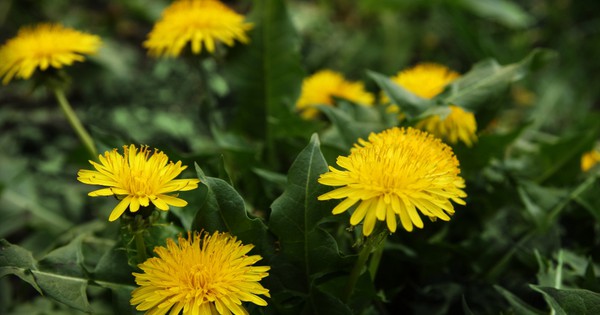
    The quintessential garden and lawn weed, dandelions have a bad reputation among those who want grass that looks as uniform as a golf course, but every part of this common edible weed is tasty both raw and cooked, from the roots to the blossoms.

    Purslane can often be found in moist garden beds, lawns, and shady areas, where it lies close to the ground and often goes unnoticed. This humble garden weed, however, is a nutritional powerhouse, and is outrageously rich in in omega-3 fatty acids and antioxidants. It can be a great addition to a salad or stir-fry, or used to thicken soups or stews. Purslane is a succulent, with a crispy texture, and the leaves and stems can be eaten raw or cooked to add a peppery flavor to any dish.

    3. Clover

    Other than the occasional four-leafed clover hunt, this common lawn weed goes mostly unnoticed, even though it is becoming popular as a lawn replacement altogether. Clover is an important food for honeybees and bumblebees, and clover leaves and flowers can be used to add variety to human meals as well. Small amounts of raw clover leaves can be chopped into salads, or can be sauteed and added to dishes for a green accent, and the flowers of both red and white clover can be eaten raw or cooked, or dried for tea.

    4. Lamb’s Quarters

    The young shoots and leaves of Lamb’s Quarters (also known as goosefoot) can be eaten raw in any vegetable dish, or sauteed or steamed and used anywhere spinach is called for. The seeds of the Lamb’s Quarters, which resemble quinoa, can also be harvested and eaten, although it takes a lot of patience to gather enough to make it worthwhile as a main dish.

    5. Plantain

    This common lawn weed (not to be confused with the tropical fruit also called plantain) is not only a great medicinal plant that can be used topically to soothe burns, stings, rashes, and wounds, but is also a great edible green for the table. The young leaves of plantain can be eaten raw, steamed, boiled, or sauteed, and while the older leaves can be a bit tough, they can also be cooked and eaten as well. The seeds of the plantain, which are produced on a distinctive flower spike, can be cooked like a grain or ground into a flour, and are related to the more well-known psyllium seeds, which are sold as a fiber supplement and natural laxative. Note that this is a medicinal plant, so be careful with it.

    This rather unassuming garden weed can be harvested and used for both food and medicine. Chickweed leaves, stems, and flowers can all be eaten either raw or cooked, where it adds a delicate spinach-like taste to any dish. The plant can also be used as a topical poultice for minor cuts, burns, or rashes, and can be made into a tea for use as a mild diuretic.

    Mallow, or malva, is also known as cheeseweed, due to the shape of its seed pods, and can be found in many lawns or garden beds across the US. The leaves and the seed pods (also called the ‘fruit’) are both edible, either raw or cooked, and like many greens, are often more tender and palatable when smaller and less mature. The older leaves can be used like any other cooked green after steaming, boiling, or sauteing them.

    8. Wild Amaranth

    The leaves of the wild amaranth, also known as pigweed, are another great addition to any dish that calls for leafy greens, and while the younger leaves are softer and tastier, the older leaves can also be cooked like spinach. The seeds of the wild amaranth can be gathered and cooked just like store-bought amaranth, either as a cooked whole grain or as a ground meal, and while it does take a bit of time to gather enough to add to a meal, they can be a a good source of free protein.

    9. Curly Dock

    Curly dock (also called yellow dock) leaves can be eaten raw when young, or cooked when older, and added to salads or soups. The stems of the dock plant can be peeled and eaten either cooked or raw, and the mature seeds can be boiled, or eaten raw, or roasted to make a coffee substitute. Dock leaves are rather tart, and because of their high oxalic acid content, it’s often recommended to only eat them in moderation, as well as to change the water several times during cooking.

    Remember to steer clear of eating plants foraged from near roads; they may be tainted with pollutants. Also do not eat plants that have been treated with garden chemicals.

    [Disclaimer: This is not meant as a field guide, so before you start eating the weeds out of your lawn or garden, be sure that you’ve positively identified them as an edible plant, and know how to prepare them. Unless you know for sure, steer clear of plants that grow outside your yard, in places where they may be sprayed or treated, or in places that neighborhood dogs and cats use to do their business.]

    This updated article was originally published in 2014.

    This content was originally published here.

  • Lightweight Rain Gear Poncho Emergency Survival Cover Shelter Norwegian Military Surplus

    Lightweight Rain Gear Poncho Emergency Survival Cover Shelter Norwegian Military Surplus

    Lightweight Rain Gear Poncho Emergency Survival Cover Shelter Norwegian Military Surplus

    • Size- 5′ width by 4′ length (can open to 8′ length to make an emergency shelter). Poncho in pouch approx. size is 5.5″ x 2.5″
    • Color- OD/Green
    • Brand New
    Click Here for more Information

  • MECO Hand Cranking Solar Powered Rechargeable Flashlight

    MECO Hand Cranking Solar Powered Rechargeable Flashlight

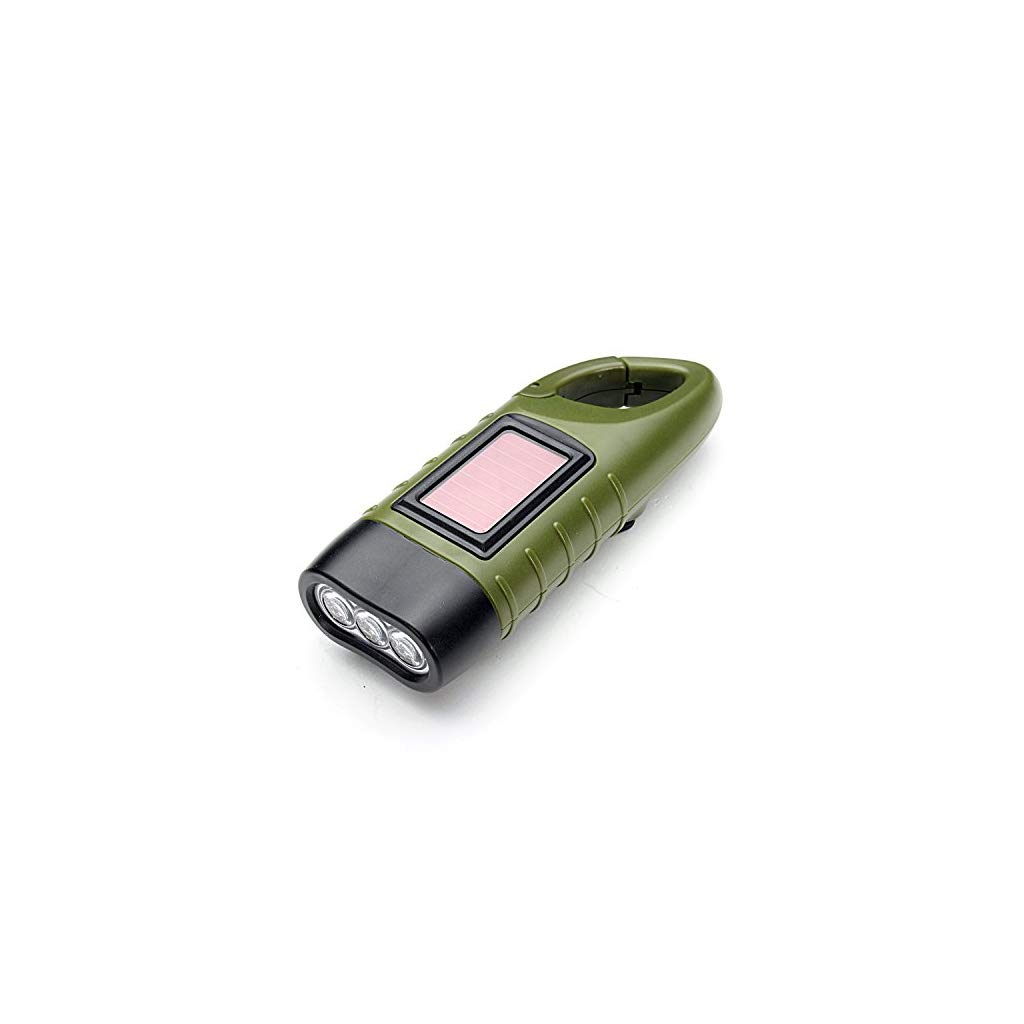
    Emergency LED Flashlight Carbiner Dynamo Quick Snap Clip Backpack Flashlight Torch Weather Ready for Camping Outdoor Climbing Hiking

    • Emergency flashlight With Built-In Rechargeable battery, store energy in for a long time, No external battery needed! excellent survival hiking gear!
    • High conversion efficiency, Cranking for 6 mins gives an hour light, Ready for the uncertain world
    • Classic Design, Durable, Army Green vs Dim Gray,Outdoor Survival Gear, The Shake Flashlight is Best Gift for Outdoor Activities
    • Mini Size: 124x45x32mm Weight: 86g/3oz With A Quick to Use Carabiner Clip, Clip it on your backpack and take it for camping hiking climing etc.
    • Quality Assurance: 40-day Money Back Guarantee&18 months hassle-free warranty with considerate customer service. 100% Happy Shopping in MECO; 100% POSITIVE AMAZON SELLER RATINGS; 100% SATISFACTION GUARANTEE
    Click Here for more Information


  • Snugpak Jungle Blanket

    Snugpak Jungle Blanket

    The Jungle Blanket is a warm, lightweight, less bulky alternative to a traditional blanket or poncho liner used by many people. Snugpak has engineered the Jungle Blanket using Travelsoft Insulation, designed for exceptional performance using ultra lightweight, high loft fibres that work superbly even after being compressed into a small, compact size for lightweight travelling. The Jungle Blanket also has an Antibacterial and anti-microbial treatment as well as is windproof and water resistant. The Jungle Blanket will become your best friend when the temperature drops!

    FEATURES:

    • Paratex Antibacterial Treated Fabric
    • Comes with compression stuff sack
    Click Here for more information

  • Map: The richest and poorest parts of America – Axios

    Map: The richest and poorest parts of America – Axios

    Economic opportunity is tied to location, more than ever before, according to a county-by-county report in 2017 from the nonprofit Economic Innovation Group.

    America’s labor force also has become increasingly dependent on large companies, thus narrowing geographic diversity and, arguably, keeping a lid on wage growth.

    Original story: The Great Recession’s uneven recovery (9/15/18)

    This content was originally published here.

  • Three Ways to Purify Your Thinking

    Three Ways to Purify Your Thinking

    Three Ways to Purify Your Thinking

    If we are in Christ, God is remaking our minds.

    Once, we were “darkened in [our] understanding” (Ephesians 4:18). We may have been smart, even brilliant, but we shut the doors and windows of our minds against the knowledge of God. We preferred illusions over truth (Romans 1:18). We crafted alternative realities where God was not glorious, Christ not worthy, sin not damnable, and holiness not desirable. Our minds, created to be like a garden of the Lord, became a field of thorns, a scorched land.

    But in Christ, God is reclaiming his garden. He’s opening the doors and windows and letting the light back in. He has told us that one of the great tasks of the Christian life is “to be renewed in the spirit of your minds” (Ephesians 4:23). Pluck weeds and plant trees. Gather rocks and plow fields. Prune vines and build walls. Purify your mind.

    Purify Your Mind

    The purifying of our minds happens, in part, as we learn to habitually set our minds in certain directions — as we turn our mind’s eye from the worthless to the beautiful, from the defiled to the pure, from the false to the true. Like all repentance, such turning is not a onetime work, but a daily one, an hourly one, even a moment-by-moment one. Nor is it easy: changing our habits of thought is like carving new ruts in old roads. It will not happen spontaneously.

    As we do set our minds in certain directions, and make holy thinking a habit, the effect will be like gradually opening the curtains: light and warmth from the God of glory will come in, making our thoughts bloom like flowers and rise like oaks of righteousness.

    God tells us, in the book of Phillipians, to consistently set our minds in three directions: on glory above, on beauty below, and on people around.

    1. Set your mind on glory above.

    Their end is destruction, their god is their belly, and they glory in their shame, with minds set on earthly things. But our citizenship is in heaven, and from it we await a Savior, the Lord Jesus Christ. (Philippians 3:19–20)

    Paul reminds the Philippians of their heavenly citizenship directly after he warns them not to be like “enemies of the cross of Christ,” people who have “minds set on earthly things” (Philippians 3:18–19). By earthly things, Paul does not mean the gifts in God’s good creation, but rather sinful pleasures (see Colossians 3:5). Those who set their minds on earthly things have scrubbed heaven from the horizon of their minds, preferring to fill their heads with dark pleasures.

    The antidote is to look up: lift your eyes to glory above, and walk often in the fields of heaven. But Paul will not let us speak vaguely of “glory above.” A mind set on high is not filled with a spiritual haze, but with a Person: Jesus Christ. “Our citizenship is in heaven, and from it we await a Savior.” “Set your mind on glory above,” then, mainly means, “Set your mind on Christ and all that is yours in him.”

    Think much of the Lord Jesus. Consider how he left his Father’s side and took the form of a servant. Ponder how he relinquished his rights in order to die for desperate sinners. Remember how he is now clothed in a glorified body, bearing the scars of our redemption and crowned with the highest name. Meditate on how he will one day “transform our lowly body to be like his glorious body,” and make everything broken about us whole (Philippians 2:6–11; 3:21). Only then will we know something of what it means to “have this mind among yourselves, which is yours in Christ Jesus” (Philippians 2:5).

    Search for this Jesus as you read your Bible day by day. Cast your mind in the mold of his goodness. Carry his promises with you in all the chambers of your head. Return often throughout the day to think of glory above.

    2. Set your mind on beauty below.

    Whatever is true, whatever is honorable, whatever is just, whatever is pure, whatever is lovely, whatever is commendable, if there is any excellence, if there is anything worthy of praise, think about these things. (Philippians 4:8)

    A mind set on heaven does not cease to think of earth. No: heaven sends us hunting through creation for all the marks of our Father’s handiwork. Thinking on beauty below is a matter of Christian obedience.

    Too often, however, I substitute “whatever is lovely” for “whatever gives immediate gratification.” Many of us are content to set our minds on pleasures that sprint through our souls without leaving a trace. We need heaven to recalibrate our earthly tastes, so we move past snap delights to “approve what is excellent” — truly, enduringly excellent (Philippians 1:10).

    Those with minds set on glory above will not ultimately be satisfied with trivialities below. We will search to find a deeper echo of the tune, something that sends us past the crust of life to the core. We will look for something to awaken us to the wonder of being image-bearers of the high God, in a broken but beautiful world, with the gospel on our lips and glory in our hearts (Philippians 1:27). We want something that will absorb us, that will take us outside ourselves and send us into Reality, with all its hard edges and bracing air, all its grand and intricate glory, all its raw and cultivated splendor.

    We might, as our Savior was prone to do, regularly get out beneath a big sky and look at the birds of the air, the flowers of the field, the movement of clouds, and the habits of sheep. We might lose ourselves in some story that rekindles in us the glory of everyday life. We might find some hobby that rivets us and, for a few moments at least, makes us forget about ourselves as we run, hike, play, fix, write, craft, cook, and then kneel down to give thanks to the Giver of it all.

    3. Set your mind on people around.

    Let each of you look not only to his own interests, but also to the interests of others. (Philippians 2:4)

    As we go on the hunt for beauty here below, we would be blind if we passed over those walking wonders all around us — those children of Adam, destined for immortality in either heaven or hell, whose interests Paul tells us to look to (Philippians 2:4).

    This command to “look . . . to the interests of others” means more than “consider meeting others’ needs if they’re in your path and you have time.” This looking is, rather, proactive looking, attentive looking, the kind that would not happen apart from serious, creative thought. Look to means “Think, dream, plan, and study how to do the most good to those around you — and then get to it.”

    We know this because Paul gives Jesus as our model of looking to the interests of others (Philippians 2:5–11). The cross was not a good work Jesus stumbled across, but one dreamt up in the merciful imagination of the triune God, and executed at extreme cost to himself. We are looking to the interests of others only if we reflect something of Jesus’s initiating, creative, and costly love, and are “genuinely concerned for [the] welfare” of those around us (Philippians 2:20).

    The most well-balanced people in this world are those whose heads are so full of God and others that they have little time to circle around their own misfortunes. For many of us, then, perhaps the healthiest thing we could do with our minds is to absorb ourselves in the hopes, struggles, successes, and heartbreaks of another.

    Think About These Things

    The call to purify our minds is one we only begin in this life. Even the saintliest among us must stand guard over their mental garden, continually shooing away the crows of corrupt thoughts. Our thinking will bloom as it ought to only when we sink our minds into the soil of Mount Zion.

    But much of our peace in this life, and much of the fruit we bear for God’s glory, comes as we heed the call to “think about these things” — to set our minds on glory above, on beauty below, and on people around. These are the windows that bring light and warmth to our minds, until the day Light himself will purify our minds completely.

    This content was originally published here.

  • Industry wants NASA to move ahead quickly on Gateway module

    Industry wants NASA to move ahead quickly on Gateway module

    Phase 1 Gateway Lockheed Martin

    WASHINGTON — In order to meet the goal of landing humans on the moon in 2024, NASA needs to get one element of its proposed lunar Gateway on contract in the near future so it will be ready in time.

    NASA’s latest plans for getting humans back to the surface of the moon involve the development of a scaled-down or “minimal” Gateway in a near-rectilinear halo orbit around the moon. That initial outpost, which can be scaled up later for future missions, would consist of a Power and Propulsion Element (PPE) and a “mini-hab” or “utilization” module that would have docking ports and serve as a habitat for visiting crews.

    NASA issued a solicitation for the PPE last year and is currently evaluating several proposals from industry, likely based on current commercial satellite buses that will be equipped with high-power electric propulsion systems. NASA could issue awards for the PPE as soon as this month, although agency officials have said recently that the PPE awards would come this summer.

    Less clear is the plan for the utilization module. Several companies are currently working on prototypes of habitation modules as part of NASA’s Next Space Technologies for Exploration Partnerships, or NextSTEP, program. Such concepts will be the likely basis for the module, with modifications to incorporate docking ports.

    To meet NASA’s schedules, the module will likely be based on existing designs, such as International Space Station modules. “If you leverage an existing capability, and the one I throw out there is a station element,” said Peter McGrath, director of global sales and marketing for space exploration at Boeing, “you can easily build something.”

    McGrath and other panelists during a session at the Humans to Mars Summit here May 15 said they believed a utilization module based on existing designs could meet NASA’s schedule. Mike Fuller, a business development manager for NASA programs at Northrop Grumman, said the company is looking at designs based on ISS modules, with a diameter of 4.5 meters, and Cygnus cargo spacecraft modules with a diameter of 3 meters.

    “If you really want to go minimalist, a three-meter pressure vessel would be relatively easy for us to produce on the current production line,” he said.

    To have the module in place in lunar orbit prior to the lunar landing, though, NASA needs to get a design under contract within the next year, they said. “If you want to get the habitat on schedule, you’ve got to move,” McGrath said, emphasizing the need to base the module on existing designs. “If you add a big development curve on it, or wait a year and a half to procure it, you’re going to have a hard time, I think, getting to ’24.”

    He noted that a typical development timeline for an item like the utilization module is three to four years. “So if you’re talking about ’24 and you want to get this up in ’23, that puts you in about a yearlong window of opportunity,” he said. Using heritage designs and hardware would make that schedule less aggressive.

    “I think we’d all say that, technically, we can do it,” said Neeraj Gupta, director of advanced development at Sierra Nevada Corporation. “Contracting mechanisms, and the speed of getting all these things awarded and solidified, that’s the thing I think that’s the tallest pole.”

    Industry officials didn’t have a strong preference for how NASA should procure the module. NASA is using less conventional contracting mechanisms for some parts of its exploration architecture, particularly those elements like the PPE that leverage commercial capabilities.

    Whatever the approach, companies want NASA to press ahead with its procurement of the module as soon as possible. “The sooner we can get on contract, the better,” Gupta said.

    “Yesterday would have been good,” Fuller said.

    SpaceNews.com

    This content was originally published here.
  • 400-Year-Old Rings Transform Into Spheres Used For Astronomy

    400-Year-Old Rings Transform Into Spheres Used For Astronomy

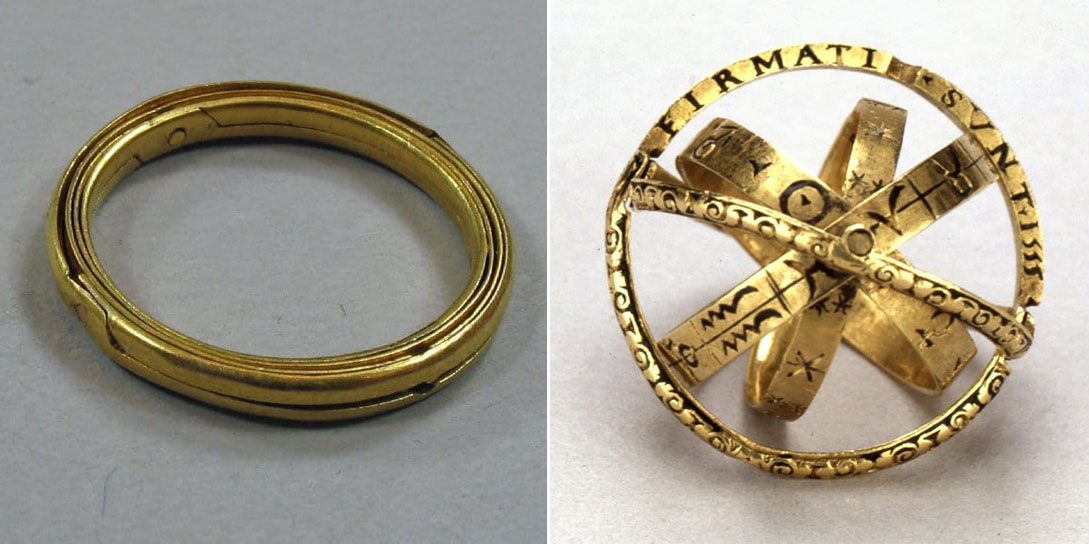
    These armillary sphere rings allow you to wear the entire universe on your finger. Harem rings, also known as ‘puzzle rings’, became a trend in the jewelry industry in 2012. These modern rings consist of multiple interconnected bands that can be separated and formed together as one. It is still unclear where the puzzle ring originated. Some theories claim that it originated in Greece while others argue that the ancient Chinese created it. Both theories may hold true. Because sometime around 190 BC, both countries are developing armillary spheres that represent objects in the sky.

    Armillary spheres consist of spherical framework of rings that represent lines of celestial longitude and latitude. These spherical rings revolve on an axis around a celestial body that serves as a model for either the Sun or Earth. In 17th century, the armillary sphere became a basic tool for astronomers to map constellations and study celestial bodies. To make its application more convenient, these tools were sized down into rings in which astronomers can wear.

    British Museum

    British Museum

    Some of the surviving armillary sphere rings from 400 years ago are exhibited at the British Museum. The collection includes well-preserved and elaborate rings with number of bands ranging from two to eight. All pieces are made of soft high alloy gold, making them retain their luster and permanence for centuries. Some of the pieces of the collection feature plain bands while others have inscriptions and symbols on them.

    British Museum exhibits a collection of ancient armillary sphere rings

    These ancient armillary sphere rings are so well-crafted that you’d wish to bring them home with you. Of course, these historic discoveries are not for sale. But the good news is, a jewelry company offers contemporary armillary sphere rings for sale. Black Adept, a Brooklyn-based jewelry shop is offering 3-band and 4-band armillary sphere rings. Both variants are available in yellow gold, white gold, and platinum materials.

    This content was originally published here.

  • How to Naturally Stimulate Vagus Nerve to Stop Migraines, Inflammation and Depression!

    How to Naturally Stimulate Vagus Nerve to Stop Migraines, Inflammation and Depression!

    You may have already heard of the vagus nerve in one of your school biology lessons.

    It’s the longest nerve in your body and is found right behind where you feel for your pulse.

    One of 12 cranial nerves, this super nerve starts in the brainstem and runs all the way to your abdomen, cutting through your heart, esophagus and your lungs.

    Known as “cranial nerve X”, the nerve is part of your involuntary nervous system, the system that directs your unconscious body activity, such as keeping your heart rate stable and ensuring you digest food properly. It tells the body to heal itself, essentially.

    The nerve moves around your body (like a vagabone, hence the name) sending out tiny fibres to your organs, such as your heart, lungs, liver, pancreas, and intestines. The vagus nerve is essentially controlling your parasympathetic nervous system, responsible for stimulating your “rest and digest” activities.

    But the most interesting thing about the vagus nerve is the new research that has revealed its link with treating chronic inflammation, which can lead to high blood pressure, digestive issues, and migraines. Known as the missing link, the nerve may be able to treat these issues without medication! Here’s how:

    Vagal Tone

    Vagal tone is the control the vagus nerve has over your heart rate. Recent studies have revealed that vagal tone is important in order to activate the parasympathetic nervous system. By tracking your heart rate in addition to your breathing rate your vagal tone can be measured in a person.

    When you breathe in your heart usually speeds up slightly, and when you breathe out your heart rate slows down a little. To determine your vagal tone, you need to establish the difference between your inhalation heart rate and your exhalation heart rate. The bigger the difference, the higher your vagal tone will be.

    High or low?

    Having a higher vagal tone is a good thing. It means you are more likely to be able to relax your body after suffering from stress more quickly, and your internal systems probably function better, such as:

    Scientists have discovered that the vagus nerve is monitoring and responding to your body. It initiates responses to any inflammation, all of which affects your mood and your ability to cope with your body’s reactions.

    Low vagal tone

    If you have a low vagal tone you are more susceptible to heart problems, strokes, diabetes, depression, and inflammatory conditions such as rheumatoid arthritis, inflammatory bowel disease, lupus, and endometriosis.

    However, a number of researchers have discovered that by stimulating the nerve using electrical current you can increase your vagal tone, and improve your resilience to these problems.

    However, there are ways you can improve your vagal tone yourself:

    1. Hum. It may sound bizarre, but humming stimulates the nerve because it is connected to your vocal chords. Try it!

    2. Speak. Speak more and you will raise your vagal tone through your vocal chords.

    3. Coldwater. While there is more research to be done on this technique, there has been evidence to suggest that by splashing cold water on your face you stimulate the vagus nerve.

    4. Breathe Deeply. Take long, deep breaths and use your diaphragm to stimulate your vagus nerve.

    5. Yoga. The relaxed, concentrated breathing practices of yoga can increase to your vagal tone levels.

    6. Meditate. A study in 2013 reported that meditation and thinking positive thoughts can have a positive effect on your vagus nerve.

    7. Improve gut health. One of the many positives of having a healthy gut is that it increases your vagal tone levels. It works by creating a loop of health from your gut, through the nerve and back. Try probiotics as a healthy bacteria supplement.

    Adjust your daily routine to improve your vagal tone and stimulate your vagus nerve, it’s so simple but so effective. It’s time to take control of your nerves!


    Copyright © 2014-2019 Life Advancer. All rights reserved. For permission to reprint, contact us.


    This content was originally published here.

  • U.S. school fails student for refusing to recite Islamic prayer

    U.S. school fails student for refusing to recite Islamic prayer

    The declarations could have been made by an imam in a mosque sermon.

    “Most Muslims’ faith is stronger than the average Christian.”

    “Islam at heart is a peaceful religion.”

    Jihad is a “personal struggle in devotion to Islam, especially involving spiritual discipline.”

    “To Muslims, Allah is the same God that is worshiped in Christianity and Judaism.”

    “Men are the managers of the affairs of women” and “Righteous women are therefore obedient.”

    The problem is that those statements were part of the instruction in a public school in Maryland, and one of the students in the classroom now is asking the U.S. Supreme Court to condemn such religious lessons funded by taxpayers.

    The Thomas More Law Center has submitted a petition asking the high court to take up the case of student Caleigh Wood.

    “As a Christian and 11th-grader at La Plata High School in Maryland, Caleigh Wood was taught that ‘Most Muslims’ faith is stronger than the average Christian.’ She was also required to profess in writing, the Islamic conversion creed, ‘There is no god but Allah, and Muhammad is the messenger of Allah.’ Ms. Wood believed that it is a sin to profess by word or in writing, that there is any other god except the Christian God. She stood firm in her Christian beliefs and was punished for it. The school refused her request to opt-out or give her an alternative assignment. She refused to complete her anti-Christian assignment and consequently received a failing grade,” the legal team explained Wednesday.

    Lower courts have given a free pass to the school district to teach Islam, and so TMLC filed the request with the Supreme Court to decide “whether any legal basis exists to allow public schools to discriminate against Christianity while at the same time promote Islam.”

    “Under the guise of teaching history or social studies, public schools across America are promoting the religion of Islam in ways that would never be tolerated for Christianity or any other religion,” said Richard Thompson, TMLC’s president.

    “I’m not aware of any school which has forced a Muslim student to write the Lord’s Prayer or John 3:16: ‘For God so loved the world, that he gave his only begotten Son, that whosoever believeth in him should not perish, but have everlasting life,’” he said.

    “Many public schools have become a hot bed of Islamic propaganda. Teaching Islam in schools has gone far beyond a basic history lesson. Prompted by zealous Islamic activism and emboldened by confusing court decisions, schools are now bending over backwards to promote Islam while at the same time denigrate Christianity. We are asking the Supreme Court to provide the necessary legal guidance to resolve the insidious discrimination against Christians in our public schools,” he said.

    Unresolved include whether or not schools can make preferential statements about one religion over another, and whether students may be required to assert religious beliefs with which they disagree.

    And how do those concepts align with “Congress shall make no law respecting an establishment of religion, or prohibiting the free exercise thereof”?

    The Charles County public schools and officials are defendants.

    The filing explains the lower courts, despite the First Amendment’s requirements, “upheld the ability for [the school] to denigrate Petitioner Caleigh Wood’s faith and require her to write out statements and prayers contradictory to her own religious beliefs.”

    The lessons “taught Islamic principles as if they were true facts, while Christian principles were treated as mere beliefs,” the filing states.

    For example, students were told the “Quran is the word of Allah” but Christians believe the Gospels were revealed to the New Testament writers.

    Wood refused to write that the Muslim god is the only god, and was failed for her faith.

    The lower courts discounted Wood’s religious convictions and gave the school the go-ahead.

    But instances of mandatory faith training, such as orders to recount a Muslim prayer in contradiction to the student’s own beliefs, conflicts with Supreme Court precedent, the filing said.

    WND has reported in just the past few weeks on a legal team that dispatched cease-and-desist letters to several Washington state school districts that here promoting Islam through a Ramadan policy of giving Muslim students special privileges.

    One district ordered employees to greet Muslim students in Arabic.

    But in recent months the resistance to Islam indoctrination has been growing.

    One group that has fought it, the Freedom of Conscience Defense Fund, regularly has opposed Islamic teachings in public schools.

    ‘The true faith, Islam’

    Among the cases that have developed:

    In May 2017, in Groesbeck, Texas, a couple moved their sixth-grade daughter to a new school after they discovered her history homework assignment on Islam.

    In late March 2017, as WND reported, a middle school in Chatham, New Jersey, was using a cartoon video to teach the Five Pillars of Islam to seventh-grade students, prompting two parents to obtain legal services to fight the school district, which has ignored their concerns.

    Teaching the five pillars of Islam also created an uproar in Summerville, South Carolina, and in Loganville, Georgia, last year.

    WND also reported in March 2017 a high school in Frisco, Texas, set up an Islamic prayer room specifically for Muslim students to pray on campus during school hours. The same type of prayer rooms have been set up in high schools in St. Cloud, Minnesota, and other school districts.

    In 2015, parents in Tennessee asked the governor, legislature and state education department to investigate pro-Islam bias in textbooks and other materials.

    WND reported in 2012 ACT for America conducted an analysis of 38 textbooks used in the sixth through 12th grades in public schools and found that since the 1990s, discussions of Islam are taking up more and more pages, while the space devoted to Judaism and Christianity has simultaneously decreased.

    In 2009, Gilbert T. Sewall, director of the American Textbook Council, a group that reviews history books, told Fox News the texts were “whitewashing” Islamic extremism and key subjects such as jihad, Islamic law and the status of women.

    Also in 2009, WND reported the middle school textbook “History Alive! The Medieval World and Beyond,” published by Teachers’ Curriculum Institute, said an Islamic “jihad” is an effort by Muslims to convince “others to take up worthy causes, such as funding medical research.”

    In 2006, WND reported a school in Oregon taught Islam by having students study and learn Muslim prayers and dress as Muslims.

    WND reported in 2003 a prominent Muslim leader who eventually was convicted on terror-related charges helped write the “Religious Expression in Public Schools” guidelines issued by President Bill Clinton.

    In 2001, shortly after the 9/11 attacks, seventh graders in Byron, California, were taught a three-week course on Islam that required them to learn 25 Islamic terms, 20 proverbs, Islam’s Five Pillars of Faith, 10 key Islamic prophets and disciples, recite from the Quran, wear a robe during class, adopt a Muslim name and stage their own “holy war” in a dice game.

    Parents went to court to uphold their right to reject the class for their children, but a federal judge ruled against them, and in 2006, the U.S. Supreme Court refused to consider their appeal.

    The post U.S. school fails student for refusing to recite Islamic prayer appeared first on WND.

    This content was originally published here.