
Author: Truth & Hammer

  • Dandelions Are Not Weeds! Top 10 Health Benefits of Dandelion

    Dandelions Are Not Weeds! Top 10 Health Benefits of Dandelion

    People spray their lawns to get rid of it, while others use it to heal their body of numerous ailments. What could it be? Well, dandelions of course!

    Whether your eat or juice the greens, indulge in the honey-flavoured flowers or steep some dandelion root tea, this herb is pure magic!

    The health benefits of dandelion include bone and skin health, help with liver and urinary disorders, acne, jaundice, diabetes, cancer and anemia.

    The only problem is, is that most people are killing the very plant that could be helping them. Dandelions are not a pesky weed, and should be utilized to their full advantage!

    Dandelions Are Not Weeds

    Only in the twentieth century did humans decide that the dandelion was a weed. Before the invention of perfectly manicured lawns, dandelions were more less praised as a natural medicine, food source and out-right magic. Back in the day, grass was dug out to make room for the dandelions – just imagine!

    According to the Maine Organic Farmers and Gardeners Association, “The use of dandelions in the healing arts goes so far back that tracing its history is like trying to catch a dandelion seed as it floats over the grass. For millennia, dandelion tonics have been used to help the body’s filter, the liver, remove toxins from the bloodstream. In olden times, dandelions were prescribed for every ailment from warts to the plague. To this day, herbalists hail the dandelion as the perfect plant medicine: It is a gentle diuretic that provides nutrients and helps the digestive system function at peak efficiency.”

    Dandelions are also good for your lawn. Their roots break through hard-packed soil to help aerate the earth and help reduce erosion. Their deep taproots pull up calcium and other nutrients from the depths of the soil, making them available to other plants. These nutrients actually help fertilize the soil, improving the quality of grass and other surrounding plants.

    The less we focus on dandelion as being a “weed”, the more we can appreciate what this plant truly is – a natural medicine that can actually help treat many ailments we see today.

    Top 10 Health Benefits of Dandelion

    Dandelions are a green and growing first aid kit! Their ability to heal and nourish the body from the inside out make them one plant you definitely do not want to get rid of this summer. There’s a reason dried dandelion root is so expensive.

    Here are 10 of the most important health benefits of dandelion:

    Stronger Bones

    Dandelions are calcium-rich, which is the main element required for the growth of strong, healthy bones. They are also high in antioxidants like Luteolin and Vitamin C, which protect from loss of bone density and bone weakening (1).

    Liver Health

    One of the greatest benefits of dandelion is it’s effect on our liver. Dandelion improves liver function by removing toxins, encouraging bile flow, and re-establishing hydration and electrolyte balance (2).

    Dandelion helps stimulate the pancreas to produce insulin, and helps regulate blood sugar levels. It is also a natural diuretic, and thus encourages urination. What does this have to do with diabetes? It helps remove excess sugar and salt from the body, and reduces sugar build-up in the kidneys (thus helping reduce the risk of renal problems in diabetics) (3).

    Urinary Health

    As mentioned above, dandelions are a great natural diuretic, and so they help eliminate toxic build-up in the kidneys and urinary tract. The anti-microbial properties of dandelion also prevent bacterial growth in the urinary system, which is great for individuals suffering from recurring urinary tract infections (UTIs) (4).

    Better Skin

    Dandelion is an excellent detoxifier and antioxidant, making it one of the best herbal remedies for treating acne and other skin problems like psoriasis and eczema. It helps purify the blood, and improves liver function, both of which result in beautiful, glowing skin. The major chlorophyll content in dandelion greens is also a win-win for skin health.

    Another important use for dandelion is its powerful effects against cancer. Many studies have found that dandelion root extract is effective against the treatment of leukaemia and breast cancer. It acts by inducing apoptosis in leukaemia cells, while leaving healthy cells alone. It also has a positive impact against cancer cells that are resistant to chemotherapy.

    Thanks to the liver-healing abilities of dandelion, it also helps with jaundice, a disorder of the liver, where it overproduces bile and messes with the body’s metabolism. Dandelion helps regulate bile production, and also promotes urination, helping to get rid of excess bile (5).

    Gall Bladder Disorders

    Dandelion leaf is great for stimulating a sluggish gallbladder (the organ that stores and excretes bile as the body needs it). Gallstones can even be flushed out by using a combination of dandelion and milk thistle.

    Digestive Issues

    Dandelion contains mucilage and inulin (6), which soothe the digestive tract and make food processing easier. It is also a great source of dietary fibre, which is crucial for proper intestinal health and improving gut flora. If you suffer from constipation or diarrhea, eat some dandelion greens!

    Circulatory Health

    The high levels of iron, B-vitamins and protein in dandelion make it a perfect food to eat if you suffer from anemia or other blood-related disorders. Dandelion is also a natural diuretic, so it helps lower blood pressure by getting rid of excess salt in the body. The fibre in dandelion is also helpful in reducing cholesterol, which we all know is an integral part of maintaining a healthy circulatory system.

    How to Use Dandelion

    Dandelion can be utilized in all its forms. Whether you want to use the flower and leafy greens in your salad, or steep a body-warming tea with the root, you can receive so many benefits from the plant!

    Here are some options for including dandelion in your day-to-day life:
    – Harvest dandelion, clean the roots, dry them in a dehydrator and then make a tea out of them. Alternatively, you can steep dandelion root tea from a bag, but this is much more expensive.
    – Harvest dandelion greens and stick them in a juicer for a major liver-cleansing “juice shot”.
    – Add some dandelion flowers to your salad or to garnish another meal.
    – Make a dandelion green salad mixed with other tender leafy greens to offset the bitters with more bland flavours and textures.

    There are so many ways you can enjoy the benefits of dandelions. What are some ways you’ve utilized dandelion in your life? Let me know in the comments below!

    This content was originally published here.
  • More than 70 million people now fleeing conflict and oppression worldwide

    More than 70 million people now fleeing conflict and oppression worldwide

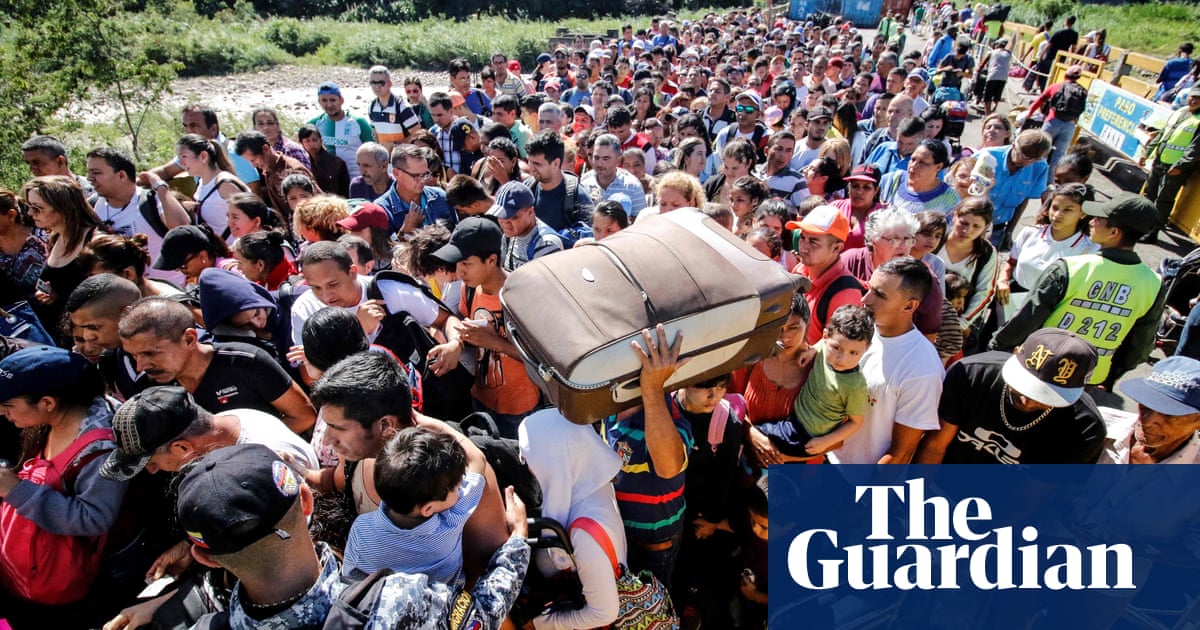
    The number of people forced to flee their homes across the world has exceeded 70 million for the first time since records began, the UN’s refugee agency has warned.

    About 70.8 million – one in every 108 people worldwide – were displaced in 2018. This includes people who were forced to flee their homes last year, as well as people who have been unable to return home for years.

    The figure is a conservative estimate, according to the study’s authors, because the impact of the crisis in Venezuela is still not known.

    “Year on year the international community is proving unable to make peace. You’ve got a number of regional conflicts, some of which have drawn in international actors. If you look around the world it’s very hard to see resolution to conflicts,” said Matthew Saltmarsh, of the UN refugee agency, UNHCR.

    The figure of 70.8 million displaced people includes 25.9 million refugees, 41.3 million people displaced within their own borders and 3.5 million asylum seekers.

    Globally, children make up about half of the refugee population.

    An estimated 13.6 million people were newly displaced in 2018, according to the report. Last year was marked by sharp increases in people fleeing the economic and humanitarian crisis in Venezuela.

    More than 4 million Venezuelans have now fled their country, according to the UN, with many travelling towards Latin America and the Caribbean. This marks a huge rise on 2015, when the number stood at about 695,000. It is the biggest exodus in the region’s recent history, and has left asylum procedures completely overwhelmed.

    Last year also saw increases in the number of people displaced in Ethiopia, where inter-communal violence in the south and west forced up to a million people to flee their homes.

    The new figures follow a decade in which the number of people forcibly displaced has soared rapidly, from 43.3 million in 2009. According to the report, five countries account for more than two-thirds of all refugees (excluding those defined as long-term Palestinian refugees): Syria (6.7 million), Afghanistan (2.7 million), South Sudan (2.3 million), Myanmar (1.1 million) and Somalia (0.9 million).

    On Tuesday, the International Rescue Committee warned that despite the record numbers of displaced people, the number of resettlement slots offered worldwide has halved between 2017 and 2018.

    Pinterest

    “There are very few countries that have increased the number of resettlement slots,” said Nazanin Ash, vice president of global policy and advocacy for IRC. “Most countries have decreased or at least not met their [targets]. It’s having a devastating impact. Nothing has changed about these [displaced] populations – their need for safety has only grown, their vulnerability has only grown.”

    This week, the UK announced it would welcome up to 6,000 refugees in 2020 and 2021. “You could argue that the number could be higher,” said Saltmarsh, but he added that the UK’s resettlement programme was well run.

    For the fourth consecutive year, Turkey hosted the largest number of refugees worldwide, with 3.7 million people. The main countries of asylum for refugees were Pakistan (1.4 million), Uganda (1.2 million), Sudan (1.1 million) and Germany (1.1 million).

    Lebanon continued to host the largest number of refugees relative to its national population: one in six people in the country is a refugee.

    Ruth Tanner, Oxfam GB’s head of humanitarian campaigns, said that wealthier countries should be doing more. “One way the government can do this is by making fairer rules on family reunion so that refugees can live with their loved ones in the UK. Children should be with their parents and the government can help make that happen today,” she said.

    This content was originally published here.

  • How to Pray the Sacred Heart of Jesus Novena, St. Padre Pio’s Miraculous Daily Prayer

    How to Pray the Sacred Heart of Jesus Novena, St. Padre Pio’s Miraculous Daily Prayer

    The feast of the Sacred Heart of Jesus is quickly approaching! Do you know how to pray the novena?

    If not, here’s how:

    St. Padre Pio prayed the Efficacious Novena to the Sacred Heart of Jesus every day for the intentions of those who requested his prayers. St. Margaret Mary Alacoque, the saint most well-known for spreading devotion to the Sacred Heart of Jesus, wrote this prayer.

    The faithful pray this novena nine days before the feast of the Sacred Heart. This year, the Church prays the novena every day from June 19-27. This year’s feast of the Sacred Heart is on Sat., June 28, 2019.

    However, the novena may be prayed at any time throughout the year.

    Efficacious Novena to the Sacred Heart of Jesus

    I. O my Jesus, you have said: “Truly I say to you, ask and you will receive, seek and you will find, knock and it will be opened to you.” Behold I knock, I seek and ask for the grace of… (name your request)

    Our Father…
    Hail Mary…
    Glory Be to the Father…

    Sacred Heart of Jesus, I place all my trust in you!

    II. O my Jesus, you have said: “Truly I say to you, if you ask anything of the Father in my name, he will give it to you.” Behold, in your name, I ask the Father for the grace of… (name your request)

    Our Father…
    Hail Mary…
    Glory Be To the Father…

    Sacred Heart of Jesus, I place all my trust in you!

    III. O my Jesus, you have said: “Truly I say to you, heaven and earth will pass away but my words will not pass away.” Encouraged by your infallible words I now ask for the grace of… (name your request)

    Our Father…
    Hail Mary…
    Glory Be to the Father…

    Sacred Heart of Jesus, I place all my trust in you!

    O Sacred Heart of Jesus,
    for whom it is impossible not to have compassion on the afflicted,
    have pity on us miserable sinners and grant us the grace which we ask of you,
    through the Sorrowful and Immaculate Heart of Mary,
    your tender Mother and ours.

    St. Joseph, foster father of Jesus, pray for us!

    This content was originally published here.

  • How to Move from Self-Awareness to Self-Improvement

    How to Move from Self-Awareness to Self-Improvement

    Jonathan Knowles/Getty Images

    We know that leaders need self-awareness to be effective. That is, an understanding of their strengths, weaknesses, feelings, thoughts, and values — as well as how they affect the people around them. But that’s only half of the story. Self-awareness is useless without an equally important skill: self-management.

    A client of mine, we’ll call him Rick, serves as a case in point. He has been given repeated feedback that he speaks too often and for too long in meetings. He has told me that he wants to improve this behavior and learn how to be a more productive participant in order to help his team make better decisions. After a recent meeting with 15 people where he spoke for 30% of the time, I asked him to evaluate his participation. He replied, “I know I talked too much but I had a lot of points to make.” He then continued to tell me more about his ideas. Rick is very self-aware, but he isn’t as effective as he could be because he doesn’t self-manage.

    Self-management is a conscious choice to resist a preference or habit, and instead, demonstrate a more productive behavior. It’s a four-step process:

    For Rick, self-management would look like this:

    What makes self-management so hard goes back to the definition. The most productive behaviors are often not aligned with our habits and our preferences. (If they were, we would not need to manage ourselves.)

    Behaving in ways that aren’t aligned with your preferences can make you feel uncomfortable (“I always respond first in a Q&A. I worry others won’t get it right”), unskillful (“I don’t know how to give negative feedback”), and even unpleasant (“I like being direct and get impatient when I have to choose my words carefully”).

    Operating in ways that contradict our habits can evoke similar negative reactions. With a habit, our brain creates a shortcut and moves from stimulus to response without thinking, saving both time and effort. But non-habitual behaviors require us to think about a situation, consider choices, make a choice, and then demonstrate the behavior that aligns with that choice. This takes work. The auto-pilot efficiency of habits is what make them so hard to change. It’s easier and more pleasant to default to an old habit than it is to invest the energy in creating a new one.

    Despite these barriers, self-management is a learnable skill. This is how you can start:

    It’s natural to behave in ways that feel good and familiar — to not self-manage — and yet, if we did this all the time, we’d never get better at anything. To become as effective as possible, leaders need to move beyond self-awareness to self-management. Start by recognizing your current actions, considering alternative options, and then putting in the hard work required to resist what may be most familiar or comfortable. Instead, commit to effectively executing what is most productive.

    This content was originally published here.

  • First wife feeds her husband’s second wife on their wedding day

    First wife feeds her husband’s second wife on their wedding day

    By Maria Immaculate Owechi

    Polygamy which is the act of marrying more than one wife has existed since the African traditional society. When Christianity and civil marriage were introduced, it was condemned and considered abominable, however, it is still embraced in a traditional and Islamic marriage setting.

    Despite being allowed, not many women welcome co-wives. That is why it was suprising when a first wife from Nigeria posted a picture of her self-feeding her husband’s second wife on Twitter during their wedding reception. Her twitter handle became viral in a matter of seconds.

    According to reports by Face2Face Africa, the first wife organized a huge wedding celebration for her husband and would be co-wife.

    Yakaka Mandara, a Nigerian woman who came across the picture tweeted in support of the first wife’s action, ” If only women would understand and embrace their co-wives, it’s much easier than jealousy that eats them up.”

    This caused mixed reactions from social media users beyond the borders of her country with some appreciating her efforts in embracing and welcoming the second wife.  One user twitted,” May Allah bless this woman, I hope to be this obedient to Allah one day.”

    Another added, “This is such a beautiful thing.”

    Other people assumed that is was because the man was wealthy that they did not mind embracing each other, “When there is money, polygamy is sweeter.”

    Others especially the women were critical of the first wife’s actions and even questioned if she was genuine with some hinting on the possibility of poisoning the second wife through the cake.

    One user said, “I can’t do that… I know it’s his right to have another wife so I won’t stop him but I can never go this extra just to get the applause of people.”

    Another putting herself in the first wife’s shoes said she would but for different reasons; “One, I am probably poisoning her and the second one, I’ll marry a man who makes me his ONLY wife.”

    The other replied to her tweet as the second wife and saying she would tell the first wife, “I’m not tryna die on my wedding night….thank you. I can feed myself.”

    One lady turned everything the other way around by suggesting, “Wait for my husbands to care of one another like this.”

    This content was originally published here.

  • KNOWLES: One Of America’s First Slave Owners Was Black. Do His Descendants Get Reparations?

    KNOWLES: One Of America’s First Slave Owners Was Black. Do His Descendants Get Reparations?

    House Democrats want taxpayers to fund reparations for the great-great-great-great grandchildren of black slaves. Democratic presidential candidate Cory Booker appeared as a witness during the first panel of a Juneteenth hearing on the proposal. “This is a very important hearing,” he declared. “It is historic. It is urgent.” At least seven other 2020 candidates have joined Booker in endorsing reparations for slavery, including Kamala Harris, Bernie Sanders, Julian Castro, Elizabeth Warren, Kirsten Gillibrand, and Beto O’Rourke.

    No country in history has ever paid reparations to the descendants of African slaves for their ancestors’ servitude. Less than 4% of Africans sold in the Atlantic slave trade ended up in the present-day United States. The plurality of captured Africans, a full 40%, wound up in Brazil. Yet neither Brazil nor any other country has ever attempted such an historic restitution.

    Democrats pressing for reparations have yet to answer the central question: how would it work? History raises more questions than answers. On March 8 of either 1654 or 1655, the African indentured servant John Casor became the first person arbitrarily declared a slave for life in America. Casor claimed to have already served his indenture of “seaven or Eight years” [sic]. Nevertheless, a Virginia court ruled in favor of Casor’s master: a black Angolan named Anthony Johnson.

    In a little-known historical irony, the first formally recognized American slave owner was black. How will the existence of black slave owners affect present-day African-Americans’ eligibility for reparations? Can Casor’s descendants sue Johnson’s descendants for restitution? What if someone somehow descended from both men? How about mixed race Americans more broadly? If one descends from both slaves and slave owners, will they pay or collect in a reparations regime? Perhaps the government will purchase 330 million DNA tests to match against a master database of history’s heroes and villains.

    One way or another, the federal government will have to determine the relative historical culpability of its own slavers’ descendants. But who will make the Indian nations pay? Native Americans of the Five Civilized Tribes — the Cherokee, Choctaw, Creek, Chickasaw, and Seminole — owned black slaves at roughly the same rate as neighboring whites, and they held their slaves in bondage longer.

    While the Emancipation Proclamation freed slaves in rebel states as early as 1863, and the Thirteenth Amendment freed all American slaves in 1865, federal law didn’t apply to Indian nations. They held onto slavery until the U.S. government forced them to free their black slaves in the Treaties of 1866. Will the federal government force the Cherokee Nation to pay reparations to the descendants of its own black slaves?

    Beyond slavery, the advocates of reparations point to the historical struggles of black Americans after abolition as a justification for the redistributive program: Jim Crow, segregation, red-lining, lynchings. But while black Americans suffered oppression in a particularly widespread and sustained way, other demographic groups have also endured hardship. The largest mass lynching in American history claimed the lives of 11 Sicilian Americans in New Orleans. Mayor Joseph Shakespeare described Sicilians as “the most idle, vicious, and worthless people among us” and urged his constituents to “teach these people a lesson they will not forget.” Are the descendants of Sicilian immigrants entitled to any reparations for their ancestors’ suffering?

    When determining the right price for reparations payouts, will the government take into account the various federal policies already enacted to combat the legacy of slavery, including half a century of affirmative action regulations and welfare programs? That would be a raw deal. As sociologists have observed for decades, welfare programs often wind up hurting the people they intend to help. Perhaps this new welfare program will include a provision of extra restitution for the victims of past welfare programs.

    For the Left, victimhood has long carried social currency. Now it might carry hard currency as well, if anyone can manage to define it.

    This content was originally published here.
  • Kamala Harris says Israel meets human rights standards ‘overall’ (days after its forces wound 92 Palestinian civilians at protest)

    Kamala Harris says Israel meets human rights standards ‘overall’ (days after its forces wound 92 Palestinian civilians at protest)

    In an interview with the New York Times, Democratic presidential hopeful Kamala Harris said she believes Israel meets international human rights standards “overall.” The declaration comes less than a week after Israel wounded ninety-two Palestinian civilians during a weekly protest at the Gaza border, including twenty-eight children and four medics.

    Harris made the comments about Israel during a New York Times feature, in which the paper asked a number of the candidates twenty-one questions. One of those questions was, “Do you think Israel meets international standards of human rights?”

    Harris: I think that Israel as a country is dedicated to being a democracy, and is one of our closest friends in that region and that we should understand the shared values and priorities that we have as a democracy, and conduct foreign policy in a way that is consistent with understanding the alignment between the American people and the people of Israel.

    New York Times: Does Israel meet human rights standards to your personal satisfaction?

    Harris: Well, talk in more detail, what specifically are your referring to?

    New York Times: As a country overall in terms of how they–

    Harris: Overall, yes.

    Among Democratic presidential hopefuls, Harris has charted one of the least-critical stances toward Israel, rarely criticizing the country and hewing close to the AIPAC line.

    On June 14, Israeli forces wounded 92 Palestinian civilians, including twenty-eight children and four paramedics during a protest at the Gaza border. Palestinians have been protesting every Friday for the last sixty-one weeks, demanding displaced refugees be allowed to return their homeland. According to the Palestinian Centre for Human Rights, 207 Palestinian civilians have been killed and 12,707 have been wounded since the protests began last March. The deaths include 44 children, 4 paramedics, and 9 disabled people. On one day in May 2018, when the US opened its new embassy in Jerusalem, Israel killed over 60 protesters.

    This content was originally published here.

  • Senate votes to block arms sales to Saudi Arabia despite Trump veto threat

    Senate votes to block arms sales to Saudi Arabia despite Trump veto threat

    The Senate voted Thursday to block the Trump administration from selling weapons to Saudi Arabia, launching a new challenge to President Trump’s steadfast alliance with the country amid rising tensions in the Middle East.

    The resolution passed, 53-45, which is not a veto-proof majority. The legislation would require 67 votes in the Senate to override the veto.

    Mr. Trump has promised to veto the legislation. The White House said stopping the sales “would send a message that the United States is abandoning its partners and allies at the very moment when threats to them are increasing.”

    The Senate will hold two more votes Thursday on measures to stop the arms sales and these also are expected to pass. While the resolutions are also likely to be approved by the House, supporters of the measures there are well short of having enough support to overcome Mr. Trump’s threatened veto.

    The votes came against the backdrop of heightened U.S. tensions with Iran, spurred by the Islamic Republic’s downing of a U.S. drone. Mr. Trump declared Thursday that “Iran made a very big mistake,” and congressional leaders received a closed-door briefing on the situation at the Capitol.

    Secretary of State Mike Pompeo cited threats from Iran when declaring an emergency to approve the weapons sales in May. The Saudis have recently faced a number of attacks from Iran-backed Houthi rebels in Yemen.

    “To reject these sales at this time and under these circumstances is to reward recent Iranian aggression and to encourage further Iranian escalation,” said Sen. Jim Risch of Idaho, the Republican chairman of the Senate Foreign Relations Committee. Risch added that blocking the sale would also “encourage miscalculation on the part of Iranians which will be disastrous.”

    The $8 billion arms sale included precision guided munitions, other bombs and ammunition and aircraft maintenance support.

    Opposition in Congress to closer U.S. Saudi ties escalated after the killing last year of U.S.-based columnist Jamal Khashoggi by agents of the kingdom. But a small group of lawmakers has been voicing concern about the Saudi-led coalition’s war in Yemen for years.

    Sen. Bob Menendez of New Jersey, the top Democrat on the Senate Foreign Relations Committee, said the war in Yemen was one reason for his opposition to the arms sales.

    “These are bombs that we know have killed thousands of civilians in Yemen, patients in hospitals, children on school buses,” Menendez said.

    The conflict in Yemen has killed thousands of civilians and left millions more are on the brink of starvation. Menendez called the humanitarian situation “an incomprehensible moral tragedy.”

    Sen. Lindsey Graham, Republican from South Carolina, delivered an impassioned speech from the Senate floor criticizing Saudi Arabia’s behavior as personally “disrespectful.”

    “My relationship with Saudi Arabia is forever changed,” he said, accusing Riyadh of taking their relationship with the U.S. “for granted” and caring more about “maintaining power at all costs,” than the alliance.

    “You’ve lost me, and that’s too bad,” he said.

    This content was originally published here.

  • New Poll Shows Mexicans Increasingly Want To Keep Illegal Immigrants Out Of Mexico

    New Poll Shows Mexicans Increasingly Want To Keep Illegal Immigrants Out Of Mexico

    A new poll by the Mexican newspaper El Universal shows that since October 2018, more Mexicans support stricter immigration enforcement to keep illegal immigrants from entering Mexico. Last October, the percentage of Mexicans who agreed that tougher immigration was necessary was 49%; that percentage has risen to 61%.

    As Newsbusters reports, “The poll also found that 54% of Mexicans are opposed to their government offering work visas to the asylum-seeking wave of Central Americans flooding into their country. The same poll also found that 47% of Mexicans believe President Trump will deliver on his threats to impose tariffs on Mexican imports, while 21% do not.”

    Newsbusters also translated the segment of the June 12, 2019 late night edition of Noticiero Univision, in which anchor Arantxa Loizaga and correspondent Alejandro Madrigal discussed Mexicans’ tougher stance on immigration, with Madrigal expounding, “In Mexico, the presence of the immigrants is now starting to become irritating. Six out of every 10 Mexicans agree that the Government should prevent them from crossing, and only one in ten people think they should be allowed to travel freely through the country. This according to a survey in the Mexican newspaper El Universal.”

    Madrigal added, “According to the survey, 44 percent of Mexicans believe that the government of President Andres Manuel López Obrador should immediately expel immigrants from the country, and 57 percent do not believe the Government should allow them into the national territory.”

    The New York Times reported on June 3, “In recent weeks, the Mexican authorities have been breaking up migrant caravans and setting up round-the-clock roadblocks along common routes north … But their recent enforcement efforts aside, Mexican officials admit that their southern border is highly porous, with thousands of migrants slipping across every month through hundreds of known illegal crossings.”

    In April, USA Today reported, “Mexican authorities said a group of about 350 migrants broke the locks on a border gate Friday and forced their way into southern Mexico to join a larger group of migrants trying to make their way toward the United States. The National Immigration Institute did not identify the nationalities of the migrants, but they are usually from Central America. A similar confrontation occurred on the same border bridge between Mexico and Guatemala last year.”

    Transcript of the Univision segment below from Newsbusters:

    ARANTXA LOIZAGA, ANCHOR, UNIVISION: In Mexico, the policy of President Trump to indiscriminately expel undocumented immigrants in the United States has generated a lot of criticism. But now, according to a survey from the newspaper El Universal, 44 percent of those who participated in this poll believe that President López Obrador ought to expel from Mexico all the migrants who are there irregularly. Alejandro Madrigal takes up the issue.

    ALEJANDRO MADRIGAL, CORRESPONDENT, UNIVISION: In Mexico, the presence of the immigrants is now starting to become irritating. Six out of every 10 Mexicans agree that the Government should prevent them from crossing, and only one in ten people think they should be allowed to travel freely through the country. This according to a survey in the Mexican newspaper El Universal.

    FIRST UNIDENTIFIED MAN ON THE STREET: Stop them and return them in a dignified way, not… not with violence.

    SECOND UNIDENTIFIED MAN ON THE STREET: I would simply not let them go through because, as I mentioned, we already have enough problems of our own.

    MADRIGAL: According to the survey, 44 percent of Mexicans believe that the government of President Andres Manuel López Obrador should immediately expel immigrants from the country, and 57 percent do not believe the Government should allow them into the national territory. In the Government of Mexico there are also beginning to appear differences with the measures being taken to stop immigrants on the southern border. Among them, the President of the Chamber of Deputies, Porfirio Muñoz Ledo.

    PORFIRIO MUÑOZ LEDO, PRESIDENT, MEXICAN CHAMBER OF DEPUTIES: Yesterday the National Guard agents left to put our wall. Because that’s what it is, the National Guard that was created to fight criminals, not to fight immigrants.

    MADRIGAL: The survey also asks Mexicans about the permits that the Mexican Government grants to immigrants so that they can work in this country. 57 percent are opposed. The topic of the tariffs was also included. To avoid them, the Mexican Government will strengthen the northern border.

    ALEJANDRO ENCINAS, UNDERSECRETARY OF GOVERNMENT: No, I hope and calculate that in the coming months we will top more than 50 thousand people.

    MADRIGAL: Although 47 percent of Mexicans believe that President Trump will deliver on his threat to impose tariffs on Mexican imports. President López Obrador has insisted that he will not enter into conflict with the government of the United States. But 90 percent of Mexicans are asking him to answer each and every aggressions made by Donald Trump, according to the survey. In Mexico City, Alejandro Madrigal, Univision.

    This content was originally published here.

  • InfoWars Host Calls For Obama To Be Lynched: ‘Find The Tallest Tree And A Rope’

    InfoWars Host Calls For Obama To Be Lynched: ‘Find The Tallest Tree And A Rope’


    InfoWars “War Room” host Owen Shroyer has called for the lynching of “treasonous” former President Barack Obama, telling viewers to “find the tallest tree and a rope.”

    Shroyer made the controversial remark while discussing an article by far-right news site Breitbart titled, “Emails Show Obama’s State Department’s Role in Anti-Trump Coup Cabal.”

    The host launched into a tirade against the former president during a livestream on Tuesday, accusing Obama of trying to bring down Trump and being a traitor to the nation, before suggesting that he should be killed.

    “Folks, Obama was emailing Hillary Clinton on her illegal server under a secret name, that came out in emails,” Shroyer said, according to Newsweek. “And he claimed he didn’t know she had it. Barack Obama is a treasonous…he belongs in jail. He belongs in Guantanamo Bay. I mean look, I’m not saying this should happen but Barack Obama, you know, find the tallest tree and a rope.”

    Newsweek notes:

    Shroyer, who hosts an InfoWars show called “War Room,” InfoWars founder and owner Alex Jones and InfoWars itself are banned from YouTube—but at the time of reporting versions of the video uploaded by other users are available to watch on the platform.

    YouTube’s violent or graphic content policies prohibit videos that incite others to commit violent acts against individuals or a defined group of people. YouTube did not respond to a request for comment from Newsweek at the time of reporting.

    When journalist Judd Legum tweeted about Shroyer’s lynching remark, the InfoWars host responded by saying, “Do you support free speech?”

    Do you support free speech? https://t.co/0WaeOzyvLA

    — J Owen Shroyer (@allidoisowen) June 20, 2019

    This content was originally published here.