
The fascination with tentacles isn’t exclusive to Japan. Recently, Daniel Struzyna put up tentacle tights he made with his own hands on his ETSY shop and now, he can’t keep up with the demand. Whether people want to become Ursula from The Little Mermaid at a cosplay convention or simply stand out from the crowd, Daniel has already sold out all of the octopi-inspired clothing he created.
Author: Truth & Hammer
-
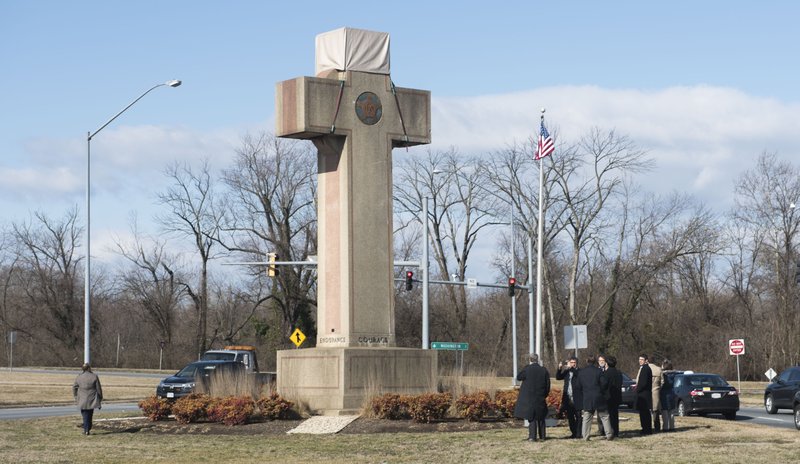
Supreme Court upholds cross on public land in Maryland
A 40-foot-tall, World War I memorial cross can continue to stand on public land in Maryland, the Supreme Court ruled Thursday in an important decision about the use of religious symbols in American life.
The justices said preserving a long-standing religious monument is very different from allowing the building of a new one. And the court concluded that the nearly 100-year-old memorial’s presence on a grassy highway median doesn’t violate the Constitution’s prohibition on the government favoring one religion over others. Seven of the court’s nine justices sided with the cross’ backers, a lineup that crossed ideological lines.
he cross in Bladensburg, a suburb of the nation’s capital, had argued that a ruling against them could doom hundreds of war memorials that use crosses to commemorate soldiers who died.
But the case was also seen as an indication of how far the court’s conservative majority would be willing to go in approving of religious symbols in public life. In the end, a majority of the justices signed on to a relatively narrow ruling, declining to go as far as they had been urged to by some of the cross’ defenders.
Justice Samuel Alito wrote in a majority opinion for himself and four colleagues that “when time’s passage imbues a religiously expressive monument, symbol or practice with this kind of familiarly and historical significance, removing It may no longer appear neutral.”
“A government that roams the land, tearing down monuments with religious symbolism and scrubbing away any reference to the divine will strike many as aggressively hostile to religion,” Alito wrote
Alito also wrote that the Maryland cross’ connection to World War I was important in upholding it because crosses, which marked the graves of American soldiers, became a symbol closely linked to the war.
Two of the court’s liberal justices, Stephen Breyer and Elena Kagan, both of whom are Jewish, joined their conservative colleagues in ruling for the memorial, which on its base lists the names of 49 area residents who died in World War I.
Justice Ruth Bader Ginsburg and Justice Sonia Sotomayor dissented, with Ginsburg writing that “the principal symbol of Christianity around the world should not loom over public thoroughfares, suggesting official recognition of that religion’s paramountcy.” Ginsburg read a summary of her dissent in court, a way of expressing deep disagreement. Ginsburg is the only other justice on the court who is Jewish. The others are Christian.
In all, seven justices wrote to explain their views in opinions that totaled some 80 pages, an indication of the depth of feeling the case provoked but also differences in the justices’ positions.
The case began as a lawsuit by three people who live near the cross and the District of Columbia-based American Humanist Association, which includes atheists and agnostics. They argued that the memorial should be moved to private property or modified into a nonreligious monument such as a slab or obelisk.
Monica Miller, the lawyer who argued on behalf of the American Humanist Association at the Supreme Court, said after the decision was announced that while the organization was disappointed, the ruling is “very limited” and “could have been a lot worse.”
-
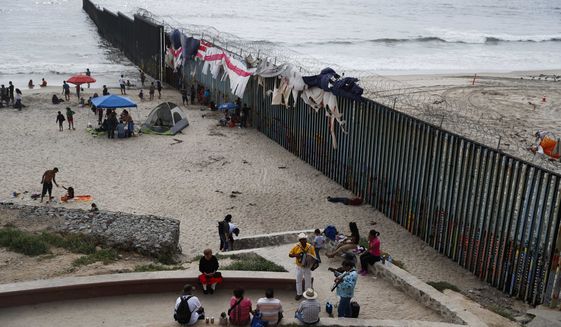
Illegal immigrant ‘got aways’ at five-year high as border agents pulled from patrol duties
“This high level of ‘got aways’ is a direct result of agents being reassigned away from the frontline to provide humanitarian support to the unprecedented numbers of individuals and families in custody,” Chief Carla Provost told the House Homeland Security Committee. The panel was meeting to hear how President Trump’s orders to send National Guard and active-duty troops to the border is playing out. Chief Provost said they’ve been a major boost, suggesting the got-away numbers might have been worse without the troops there to fill gaps left when her agents get pulled away to do babysitting duties for the families and unaccompanied children. “That support as my agents are being pulled away to deal with the humanitarian crisis is key to us having situational awareness on the border,” she said. The troops, whom the president first deployed in the run-up to last year’s elections, are performing support tasks, monitoring cameras and scopes and providing air support for border authorities, though they are not supposed to engage in actual policing. In one example last month, National Guard troops in Texas spotted a group of migrants rafting across the Rio Grande and reported it to Border Patrol agents.
Agents, with the help of local police, corralled the group, whose members had paid up to $10,000 to be smuggled into the U.S.But Mr. Trump’s affinity for using the troops has angered Democrats and some Republicans in Congress, who say they’re being distracted from their national security missions when they’re being used on the border. House Homeland Security Chairman Bennie G. Thompson was particularly irked by the decision to use troops to paint a 1-mile section of border wall. He wanted to know why that wasn’t contracted out. The officials who testified couldn’t detail the exact decision-making, but said the paint is special and is supposed to help prevent climbing the wall. “This is a test of 1 mile, to see how effective that anti-climb paint can be,” said Deputy Assistant Defense Secretary Robert Salesses. Officials say the Border Patrol is dealing with two different, and in many ways competing, threats. One is the massive surge of migrant children and families. They arrive hoping to be caught, looking to take advantage of lax U.S. policies. The numbers are so overwhelming that agents struggle to process and transport them. The other threat is single adult migrants and drug smuggling. Chief Provost said as much as 60% of agents’ time in some regions is taken up by transporting, feeding or doing hospital watch for the families and children. She said that pulls them off their other line-watch duties.
-

Grandmother, 75, Holds Car Theft Suspect At Gunpoint Until Deputies Arrive
A 75-year-old grandmother in Alabama helped capture a suspect wanted for car theft, holding him at gunpoint Monday until deputies arrived. “I walked out and said, ‘can I help you?’ And he said, ‘yes ma’am, I’d like to use your phone,’” Marcia Black, a grandmother of four, told WAAY. Investigators said the suspect, Cameron Powers, had been on the run for some four hours after crashing a stolen car during a high-speed chase with deputies near Black’s home in Limestone County. I was just calm as could be. I knew what I was doing. I was in control,” she said. Black said she talked to Powers from her front porch, all the while keeping him at bay with her hunting rifle. “I wanted to keep him at a distance,” she said. “I didn’t intend to kill him. I just wanted him to think that I would shoot him.” When Powers inched closer to her home, Black reacted because two of her grandchildren were inside watching after calling 911. “He wouldn’t get down, so I shot in the air, and he realized I meant business, so he got down on his knees,” Black said. It wasn’t long after when deputies arrived. “He feared the deputy more than he feared my rifle,” Marcia Black said. “And he jumped up and ran zig-zag right across the field.” But Powers didn’t make it very far before he was apprehended and handcuffed. “It’s just amazing to me that I got to witness my grandmother in action,” said Black’s 15-year-old granddaughter, Allie Ruth Black. Powers was booked into the Limestone County jail on $6,000 bond. “It’s just another day,” Marcia Black said. “If something happens, you take care of it and that’s it.”
-

Texas gained almost nine Hispanic residents for every additional white resident last year
The gap between Texas’ Hispanic and white populations continued to narrow last year when the state gained almost nine Hispanic residents for every additional white resident.
With Hispanics expected to become the largest population group in Texas as soon as 2022, new population estimates released Thursday by the U.S. Census Bureau showed the Hispanic population climbed to nearly 11.4 million — an annual gain of 214,736 through July 2018 and an increase of 1.9 million since 2010.
The white population, meanwhile, grew by just 24,075 last year. Texas still has a bigger white population — up to 11.9 million last year — but it has only grown by roughly 484,000 since 2010. The white population’s growth has been so sluggish this decade that it barely surpassed total growth among Asian Texans, who make up a tiny share of the total population, in the same time period.
The estimates come as lawmakers begin to sharpen their focus on the 2021 redistricting cycle, when they’ll have to redraw the state’s congressional and legislative maps to account for population growth. And they highlight the extent to which the demographics of the state continue to shift against the Republican Party.
During the last go-around, which is still being litigated in federal court, Hispanics accounted for about 65% of the state’s growth. With about two years of growth left to go, their share of Texas’ population increase since 2010 reached 54% last July.
The Hispanic community is growing in numbers across the state. But 47% of Texas Hispanics now live in the state’s five biggest counties — Harris, Bexar, Dallas, Tarrant and Travis. Home to Houston, Harris County leads that list with more than 2 million Hispanic residents. But Hispanic growth since 2010 continues to be most significant in Tarrant County.
With a growth rate of 26%, the Hispanic population in Tarrant County reached 609,236 last year — up from 482,977 in 2010.
But while Hispanics’ numbers are growing the most, the state’s Asian community is growing the fastest.
-
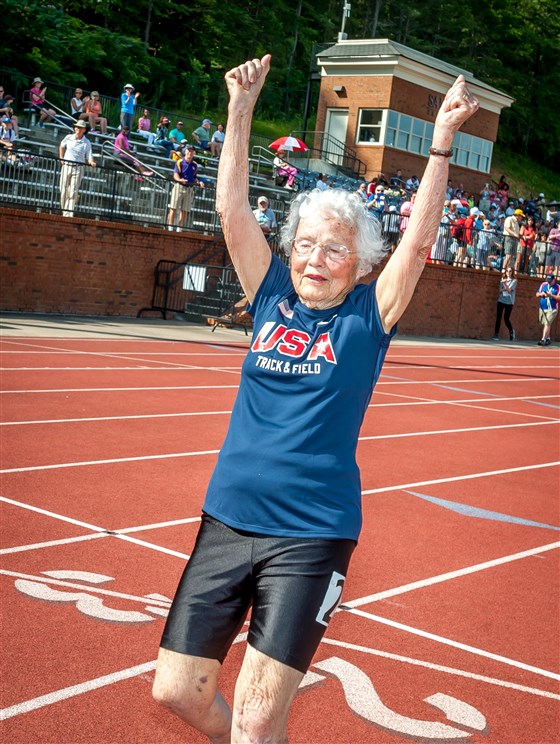
Julia ‘Hurricane’ Hawkins, 103, breaks records at the National Senior Games
When Julia “Hurricane” Hawkins turned 100 years old she stopped biking and started running. She knew she’d be a good runner because she had a lot of practice sprinting to pick up phone calls to her landline. Now at 103, she knows her suspicions were right: She won gold in the 50- and 100-meter races at the National Senior Games this week and set their record for the oldest woman to compete — and win! “I always came running in to answer the phone so I thought maybe I could run,” she told TODAY. “I’m so glad it’s over. I love running but, boy, it hangs over your head.” Throughout her life, Hawkins was an avid bike rider and gardener. She has dozens of bonsai trees on her acre of land in Baton Rouge, Louisiana. “I would ride my bike every day and as I got older someone would go with me,” she explained. “I decided to quit after I had one fall and dislocated my elbow.” When biking became too challenging, she wanted to replace it with another activity and picked up running. Soon after, she started running at 100, she broke several world records. “I don’t train like most runners. I just keep active and do lots of things,” she said. While she doesn’t run regularly, she bends and stretches every day and walks around her property to tend to her plants. She has lived in the same house since she and her husband, Murray, built it after World War II, when he became a physics professor at nearby Louisiana State University.
-
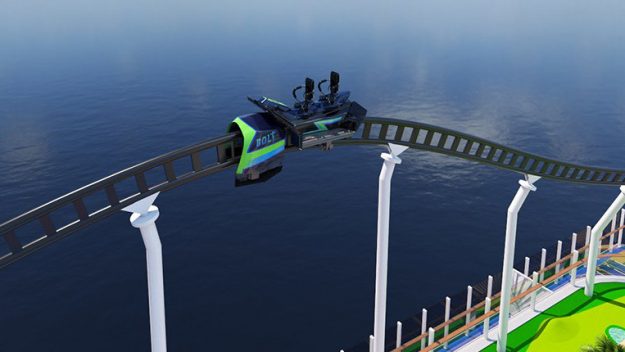
World’s first roller coaster at sea
A new cruise ship for Carnival cruise line will feature the world’s first roller coaster at sea. The BOLT: Ultimate Sea Coaster will debut in 2020 when the Mardi Gras hits the high seas for the first time, the company announced. The roller coaster contains 800 feet of track reaching speeds of nearly 40 mph. It will give riders 360-degree views of the water 187 feet above the ocean Riders can control how fast they go. The cruise line indicated that it will be an additional fee for guests to take a ride on the new coaster. Among the other features on the ship will be the Big Chicken restaurant created by Carnival Chief Fun Officer and NBA Hall of Famer Shaquille O’Neal. “Big Chicken is a labor of love featuring all of my favorite fried chicken recipes developed in tandem with my mom,” said O’Neal. “Carnival is a great partner, and I am very excited to bring the largest Big Chicken at sea aboard the spectacular new Mardi Gras.” The Carnival Mardi Gras will set sail for a series of voyages from New York then it’s off to Port Canaveral for cruises to the Caribbean beginning in Oct. 2020.
-

Heat causes aluminum to ‘leach foil’ to food leading to Alzheimer’s and cancer
While steel and iron often come to mind, it’s actually Aluminum that is the most used and distributed metal on the planet.
When you think about it, it’s everywhere! You can find it in such everyday household products like cookware, foil, baking soda, cake-mixes, non-dairy creamers, aspirin, flour, deodorant and even water.
Also, common food additives such as E173, E520, E521, E523, E541, E545, E554, E555, E556 and E559 contain aluminum. But did you know that aluminum causes alzheimer’s , dementia, and other serious health problems?
With so much Aluminum in our society, one would think it was established and proven to be harmless, it’s not. Unlike iron and other metals and minerals, the body does not need or want Aluminum.
Thus, it is a foreign object to our body and we have no mechanism to process it or use it. So, what happens to the Aluminum we intake? It, like many other toxic chemicals from plastics and pesticides, gets stored by the body and (sine we can’t process it) builds and accumulates over time.
The kidneys, brain, lungs, liver and thyroid are all susceptible to damage from Aluminum buildup.
Below are the Most Important Reasons to Eliminate Aluminum From Your Life:
#1. Aluminum Damages the Central Nervous System
Damage from Aluminum buildup can be seen in both children and adults. In children, it has been linked to Autism.
Baby’s are often exposed to high levels of Aluminum (when compared to their body size) from drinking water (tap water most often). Children have also presented with bone and kidney diseases.
In adults, the neurological affects are signs of pre-mature aging, especially cognitively. The neurological disorders from Aluminum resemble Alzheimer’s.
#2. Brain Damage
Researchers are pointing to high levels of oxidative stress in brain tissue when patients present with high levels of Aluminum. Since your brain is one of the main places our body stores Aluminum, it tends to be most affected.
The results can be MS, Chronic fatigue, epilepsy, ADD and other cognitive disorders. Aluminum causes alzheimer’s and dementia.
#3. Aluminum Robs the Body of Essential Minerals
Though Aluminum is not needed by the body, magnesium, calcium and iron are. Unfortunately, Aluminum robs the body of these much-needed substances. “Trace aluminum levels cross the blood-brain barrier and progressively accumulate in large pyramidal neurons of the hippocampus, cortex, and other brain regions vulnerable in Alzheimer’s disease.
More aluminum enters the brain than leaves, resulting in a net increase in intraneuronal aluminum with advancing age. Aluminum is responsible for two main types of toxic damage in cells.
As a pro-oxidant, aluminum causes oxidative damage both on its own and in synergy with iron. Aluminum also competes with, and substitutes for, essential metals-primarily Mg2+, iron and Ca2+ ions-in or on proteins and their co-factors.”
#4. Aluminum Can Weaken Bones and Tissues
It is also believed to contribute to osteoporosis.
#5. Aluminum Can Cause Premature Aging
Due to the oxidative stress on cellular DNA.
How to Reduce Aluminum Intake
Since it is the most widely distributed metal on the planet, avoiding it completely will be difficult. You can greatly reduce your intake by purchasing products free of Aluminum. Especially products such as cookware, personal hygiene and processed foods.
To help your body reduce Aluminum already consumed, try adding Spirulina to your daily life. By eating spirulina you will boost your red blood cells and their capacity to transport oxygen.
More oxygen means a more efficient body to detox! I personally take about 10 gr per day that I add to my food. I mix the Spirulina powder into smoothies, juices, sauces, dips and pretty much anything else.
Spirulina, in addition to helping detox the body of heavy metals, is a great energy booster and loaded with proteins, Amino acids, Vitamins, Minerals and Chlorophyll for helping balance pH levels in the body.
This content was originally published here.
-

4 principles behind designing a backyard food forest
It’s not like other forms of gardening. Here’s why.
Remember that awesome video showing the first three years of a backyard food forest? Even with the slideshow explaining how Dan from Plant Abundance turned a litter-strewn yard into an urban oasis, I have to admit that a Lazivore like me was still intimidated.
That’s why I was delighted to see that Dan just posted a new video explaining the simple principles behind his method of gardening. Here’s a summary:
2. Layering is central to everything: The most basic premise behind any food forest is the idea that we can maximize our yield if we learn to use all layers of the garden—using the vertical space above and below ground to cram in a much larger harvest than if we only rely on what grows at ground level. By using root crops, ground cover crops, herbaceous plants, shrubs, small trees, canopy trees and vines, Dan is able to more efficiently take advantage of all the space available to him.
3. Symbiosis doesn’t necessarily mean self-sustaining: Dan points out that he’s growing in a small urban yard, and manages the land accordingly. While a multi-acre food forest might be—by both necessity and design—largely hands off, Dan has to regularly prune back his trees and perform other management in order to maintain an optimal yield. He could let it go and it would probably still thrive, but his yield wouldn’t be quite so large nor so diverse.
4. Understanding sunlight is crucial: The downside of layering your plants is that you now have to manage which plants shade what. (This is one of the main concerns folks have about vertical farms too.) So first understanding how sun falls on your property, and then designing your garden with spacing in mind, is critical to success. As Dan showed in his first three years video, though, it’s OK for some plants to eventually get shaded out. You just need to plan for that—perhaps planting more annuals in the early years, until your shrubs, small trees and canopies really start to mature.
Obviously, there’s more to all this than these four simple principles—and as someone who has dabbled and failed at much of what’s here, I am still in awe of what Dan has achieved. but this seems like a useful primer for anyone interested in giving this a go. Check out Plant Abundance for more great videos.
This updated article was originally published in 2017.
This content was originally published here.
-
How to take over your town: the inside story of a local revolution
A quiet revolution has begun in the Devon town of Buckfastleigh. Its compact high street, functional-looking industrial estate and population of 3,300 suggest a place modestly getting on with business. But, while it may go unnoticed by those whooshing past on the A38, or tourists at nearby Buckfast Abbey, there is something happening in Buckfastleigh.
That something is a radical reinvention of the way that power works at a local level, based on a kind of politics that has nothing to do with the traditional party system. And it is authored not in a Whitehall ministry, but in towns, villages and neighbourhoods – where it is having a real impact on some of the services people most care about.
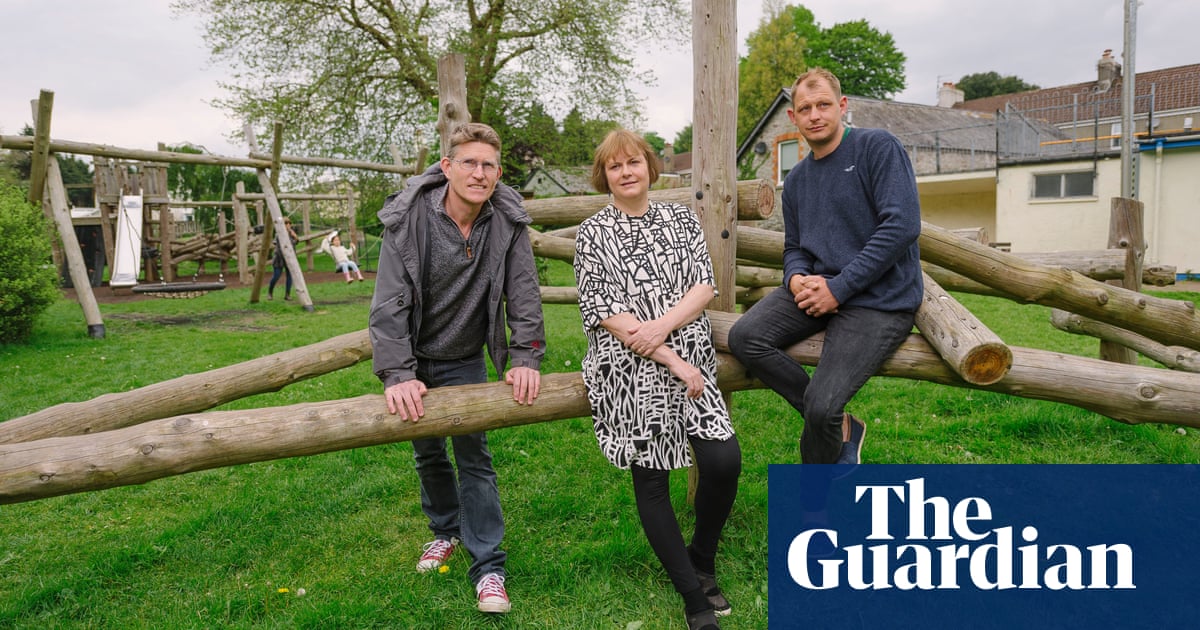
Pam Barrett is a 50-year-old civil servant who has lived in the town for 12 years and talks with a mixture of breathless passion and fearsome expertise. Her political biography begins with the local outdoor pool and park, for which she managed to bring in about £300,000 of outside funding – including big donations from Sport England. Saving the pool from closure – and upgrading it and the park – may sound like the most local of issues, but it broadens into a story centred on one key subject: 10 years of cuts, and what austerity has done to a town with high levels of what politicians call social exclusion.
“It felt to me as if we had a properly depressed town,” she says. “The carpet factory here had closed, and loads of people had lost their jobs. All our services were cut. Our buses have been hacked right back and the fares are through the roof. And when the district council said it was going to close the pool, the town council’s view was just: ‘Oh gosh – there goes another thing.’
“I was furious that we were left here with nothing. It takes an anger to do what we have done.”
By 2015, Barrett had joined a loosely affiliated group of local people trying to parry the worst of the cuts – but, she says, they repeatedly hit a wall of obstruction and resistance, not least at Buckfastleigh’s town council. “It was almost as if [they were saying]: ‘This is none of your business,’” she says. There were 12 seats on the council, but there had not been an election for at least 20 years. In that year’s local elections, they challenged the incumbents with the Buckfastleigh Independent Group (BIG).
Promising to make the council more open and inclusive, and to concentrate on solving the town’s problems, nine BIG candidates were elected, meaning they gained control of the council. They increased the local council tax precept (the small share of council tax that goes to town and parish councils), so people in the highest council-tax band paid nearly £2 a week. And they built up an impressive list of achievements: a new Citizens Advice bureau on Friday mornings, floodlights for the football pitch, a new “town ranger” (“Kind of an outdoor caretaker,” says Barrett) and a school-holiday activity service for local young people called Hello Summer – all things woven into people’s everyday lives.
To make all this possible, they made huge changes to the way the town council operates. For a start, its activities are chronicled on Facebook. People who are not elected councillors are free to join in with the monthly agenda at council meetings. “For the first time, we are able to say: ‘We have this amount of money and this is where it goes,’” says the councillor Andy Stokes, who is also Buckfastleigh’s mayor.
Barrett also has plans to widen the bounds of what the council can do. Similar new political groupings have materialised in a handful of nearby towns and villages. This, she says, will lead to sharing resources, so that vitally important but expensive services – health and safety provisions or child protection – can be shared. She thinks that would open the way to a model of running everything from youth services to buses.
Buckfastleigh is not alone. This kind of local uprising has started to occur all over the country. At the May local elections in England, one of the most noticeable changes was the huge increase in the number of independent councillors elected to local authorities, whose numbers increased nearly threefold. Tangled up in that is the proliferation of organised groups, such as BIG, that reject traditional party labels and seek control of the lowest tier of government – town and parish councils – where creative possibilities have tended to be lost in a sea of protocol and tradition.
Councils at this very local level may be associated with parks, allotments, bus shelters and litter bins. But, thanks to the Localism Act 2011, they can – in theory, at least – do whatever they like, within the limits of the law.
Many of the people inspired by this growing mood of local assertiveness are looking to one town that stands as the crucible of this new movement: Frome, in Somerset (my adopted home town), where a group called Independents for Frome took power in 2011, kicking out the Tories and Liberal Democrats to take all 17 seats on the town council. The group has since introduced a new town hall, a publicly funded food bank, electric charge points for cars and a vehicle-sharing scheme. The group’s modus operandi was turned into a manual for radically changing communities, written by the council’s one-time leader Peter Macfadyen, and titled Flatpack Democracy. Some 4,500 copies have been distributed; a sequel will be published this year.
Macfadyen reckons there are between 15 and 20 town and parish councils being run along the lines of the Frome model, “with a non-confrontational way of working and a participatory approach to democracy”. They include a large number in the south-west, places in Yorkshire and County Durham, and even New Zealand. Another 20 similar groupings, he says, have taken seats, but are yet to assume local power.
Why does he think the idea is spreading so fast? “Every other system of so-called democracy is now totally dysfunctional and non-representative,” he says. “And with Brexit, and what’s happening in central government, that is bound to have an impact downwards; people thinking: ‘My voice is not being heard in any way.’”
We’re passionate about our environment and we know what the issues are, and how to sort the problems out
Down the road from Buckfastleigh is Dartmouth, a picturesque place on the Dart estuary, which attracts thousands of tourists. But beyond the half-timbered buildings clustered around the harbour is a community laid low by cuts, whose problems are worsened by the fact that Dartmouth is too big to be a village, but not sizeable enough to merit many of its own public services.
In May’s town council elections, 11 of its 16 seats were won by the new Dartmouth Initiative Group (DIG). Its most vocal representative is Dawn Shepherd, who moved there from Wolverhampton 15 years ago. Her journey to public office began when she started the local food bank. “There’s a lot of poverty here,” she says. “And, on top of that, where we are is like an island. We have no jobcentre, so it is £6 each time on the bus. Having to go somewhere else for everything adds to the poverty.”
The new political grouping was mentored by Pam Barrett from Buckfastleigh. “We didn’t understand how the process worked. The only access we had was going to the council meetings and having 15 minutes to put questions to the mayor,” says Shepherd. “Pam told us that we could make a difference; nothing was set in stone. We could run the council.”
While the makeup of the old town council was disproportionately male, 10 of DIG’s candidates were women. This diversity extends to the group’s mixture of party politics. As with all the independents I meet, they insist that orthodox party divides have no relevance to politics at the most local level. “If you look at our 16 candidates, we have got leftwing people and we have got a supporter of the Brexit party,” says another DIG councillor, Ged Yardy. “We have not been elected on the basis of our previous politics. Party politics is not in the room.”
It would be easy to think of the new wave of independently run town and parish councils as something of a non-urban trend – but there is at least one shining exception. Queen’s Park in west London sits on the outer edge of the City of Westminster, and has a population of about 13,000. Almost a decade ago, a group of residents began to work towards making their area the first part of London to have a parish council in 80 years.
Two years later, their idea won a local referendum – and, in 2014, the first elections for its 12 seats were held. Although insiders are quick to point out that starting a council from scratch has hardly been a breeze, the informal grouping of people (none of whom has a party label) now in charge of an annual budget of about £150,000 have an array of achievements to their name. They include funding a youth centre blighted by cuts, bringing a disused park back into use, starting new annual festivals and creating a befriending project to support isolated and lonely older people.
Ray Lancashire, 54, has been a Queen’s Park councillor for just over a year. Since the age of 10, he has lived on the Mozart estate, where any ideas of the city of Westminster being synonymous with wealth and privilege give way to a much more complex reality. His path to holding public office was defined by his work on air pollution, which local surveys have found to be well above legal limits.
Westminster council, he says, tends to understand pollution in terms of “main roads and trunk roads”, rather than “areas that don’t have high traffic, but are still really affected”. (The council says that it focuses air quality monitoring on “roads that we know are pollution hotspots, as this has the biggest knock-on effect”.) Queen’s Park’s grassroots councillors are now doing in-depth pollution studies, blazing a trail for temporary car-free “play streets” and pushing the authorities to take drastic action. “We are at ground level,” he says. “We’re passionate about our environment and we know what the issues are, and how to sort the problems out. And we’re enthusiastic. That’s why our council is important.”
Perhaps the most unlikely example of the new local democracy is in Alderley Edge in Cheshire. The de facto capital of the north-west’s footballer belt – at various times, the home of Posh and Becks, Cristiano Ronaldo and Peter Crouch – is a remarkably affluent place: on the day I visit, the Barnardo’s charity shop is selling a pair of Christian Louboutin shoes for £150, while Marie Curie has an Alexander McQueen dress for £200. Local people regularly complain about super-rich football stars parking on double yellow lines because they think that the fines are chump change. But recently, even here there were rising complaints about the state of the public realm.
These complaints led to the rise of Alderley Edge First, whose tagline is “people before party”. On a hot Tuesday afternoon, I meet three of their prime movers in the local Caffè Nero: Mike Dudley-Jones, Geoff Hall and Rachael Grantham, whose family has run a grocery business here going back five generations. “When you came to Alderley Edge not so long ago,” says Dudley-Jones, “it was shaky at the edges: weeds in the pavement; the whole thing just looked run down. A one-horse town. And there was no one saying: ‘It doesn’t need to be like this.’”
Alderley is traditionally, solidly Tory – its MP is the Tory leadership hopeful Esther McVey. Until 2015, the Conservatives held all nine seats on its parish council, most of which had long been uncontested. But that May, a near miracle happened. Alderley Edge First won every single one. Since then, its councillors have radically upgraded the local park, completed work on the village’s trouble-plagued new health centre, saved allotments the old parish council wanted to turn into a car park, kept the local library open for an extra afternoon every week and made good on their pledge to spruce up the place – self-watering flower installations pepper the main street.
When I mention party politics, all three members bristle. “It’s so irrelevant at this level,” says Grantham. “For me, it’s a realisation that normal people want to make a difference in their areas. There is a real feeling of people saying: ‘We can make a real difference in our patch.’ That is snowballing.”
Four years ago, as well as aiming at control of the parish council, Alderley Edge First also put up a candidate for Cheshire East council, the big local authority until recently run by the Tories, and dogged by allegations of misconduct, some of which are being investigated by the police. Against formidable odds, Craig Browne – who also sits on the parish council – beat the Tories; after being re-elected a month ago, he became Cheshire East’s deputy leader. Something very striking, he says, now lurks among the champagne, expensive shoes and international hotshots: a revived sense of community spirit. “It was always there, but it was latent,” he says. “What we have done is encourage it. If people see councillors who are prepared to get their hands dirty, they think: ‘If they’re doing it, I’ll do it as well.’ That has been the biggest change.”
This content was originally published here.