Chuck Hughey braves security lines at Pittsburgh International Airport at least once a week. Not to catch a flight, but to get an ice cream cone or cruise a few of the concourses. Is he nuts? Not at all, he will tell you, just a doting grandfather. He and 3-year-old Cleo spend quality time there, riding the trams between terminals and gliding along the moving walkways. “It’s so convenient, so sa
The New Moon on Tuesday, July 2, 2019, at 10° Cancer is a total solar eclipse. The forecast for this Total solar eclipse is interestingly optimistic. You will be enjoying a good time with your family and friends due to the positive influences of Uranus and a star in the Gemini constellation. This Solar Eclipse would also put a stop to every conflict between you and people around you and conflict resolution would be through peaceful methods. There is a prediction of good luck and good omens; so everything you do this solar eclipse with true hard work and commitment would yield positive results. Meaning A solar eclipse is just like any other New Moon where the Moon comes between the Earth and the Sun. But a solar eclipse is a more powerful version of that for it also darkens the Sun. This New Moon symbolizes the end of one Moon cycle and the initiation of another one. While a New Moon influence lasts for 4 weeks, a Solar Eclipse influence would last for 6 months. The most important aspect about this eclipse is that the Sun would conjunct the Moon. This would lead to an open-minded approach to things, where things would always be on the table and you would need to get rid of all those bad habits that have been dragging you down. So, this is the perfect time for you to bring out the new list for the next period of time, where your goals would be different. This solar eclipse closely follows the July 16 Lunar Eclipse. This results until December 26, 2019- the completion of a phase. Solar Eclipse Astrology There are several aspects to this fortunate Solar Eclipse. One of them being the solar eclipse itself sextiling Uranus, but the influence isn’t that great, due to its area of influence of over 4 degrees. Although there is a fixer star conjunction, it would be pretty weak, considering the power a fixed star usually has in conjunction. But just like a bunch of sticks makes a strong bundle, all these influences combined to have a positive influence on the solar eclipse. The Star of Solar Eclipse The Star of Solar Eclipse is located in the Southern Foot of Pollux in Gemini constellation. At 9 degrees in Cancer sign is this star Alhena present. This means that despite the location of the solar eclipse in the constellation of Cancer, the main effects come from the constellation of Gemini. Due to the precession of the equinoxes, the Sun signs are completely out of alignment to what actually affects the stars. Alhena helps in developing creative intellect, but also leads to accidents to the feet. According to many eminent astrologers, it also brings forth a spiritual connection and an interest in the sciences. There might also be a sense of repute in the spoken and written word. The conjunct between the Sun and the Moon would bestow an incredible amount of riches and honor in the fixed star Alhena. Aspects Solar eclipse sextiles Uranus which brings forth several new developments and you will be trying out something new which you didn’t have the courage to do before. You would also be self-aware, courtesy of the several interactions you would be having with people around you. This would also ensure that your creative intellect is stimulated, which would result in your kinky side emerging out. You should also increase the amount of socializing you do, because this would make you interact with people who are unorthodox and think completely out of the box. You might also find it difficult to maintain a set routine, but it is these differences and distractions that would help you grow as an individual. The sextile of Neptune by the solar eclipse is probably going to have the most impact on this eclipse. While this sextile guarantees rewards and riches, it also signifies hard work and optimism. While you will be able to understand your limitations, your optimism would make up for it. Well, now you know what you have to do this solar eclipse. Don’t you? FOLLOW US ON INSTAGRAM HERE Via Conscious Reminder re-posted here with permission. Image Credit: Shutterstock (licensed by IBMN)/By muratart
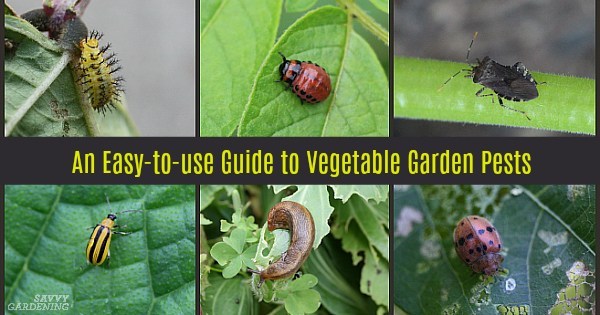
Every vegetable gardener faces pest issues from time to time, and learning how to manage the little leaf-munching menaces without using synthetic chemical pesticides is an essential step in growing a healthy, productive garden. To help gardeners with this task, we’ve put together this easy-to-use guide to vegetable garden pests.
To make our guide to vegetable garden pests both user-friendly and straightforward, we’ve included essential details about 15 of the most common – and destructive – veggie garden pests and lots of info on how to protect your garden from the damage they cause. Use the photos and descriptions to help you identify the culprit, then implement the useful prevention techniques. If these preventative tips don’t solve your problem, move on to employing the listed physical control methods. As a last resort, we’ve also included our favorite organic product controls for each garden pest. Apply them with caution and only after carefully reading the label. Use this guide to vegetable garden pests to grow a high-yielding, gorgeous, organic vegetable garden.
Our guide to vegetable garden pests: 15 of the worst offenders
Aphids (many species)
Aphids can be found gathered in small groups on many vegetable plants, including cabbage and lettuce.
Identification: Aphids are tiny, pear-shaped insects. They can be green, yellow, brown, red, gray, or black. There are both winged and non-winged aphids, depending on their species and life-stage.
OUR LATEST VIDEOS
Plants affected: Aphids feed on many species of potential host vegetable plants, including tomatoes, lettuce, kale, and cabbage. Their prolific nature makes them sure-finds on every guide to vegetable garden pests.
Description of damage: Aphids suck plant juices, causing distorted, deformed growth. They typically feed in large groups on new plant growth or leaf undersides.
Preventative measures: Promote beneficial predatory insects by including a lot of flowering plants with small flowers in the garden. Learn more about using beneficial insects as pest control here.
Physical controls: You can remove aphids from plants by spraying them off with a sharp stream of water from the hose. Hand-squishing aphids is easy, or cover plants with floating row cover to protect them from insects.
Identification: Adult asparagus beetles are 1/4″ long. They’re black with creamy yellow spots and a red mark right behind their head. The larvae are army-green, grub-like creatures with a black head.
Plants affected:Asparagus beetles only feed on asparagus plants.
Description of damage: Both larvae and adults chew asparagus spears and ferns. Severe infestations can cause complete browning of the foliage and a reduction in the vigor of the next year’s crop.
Preventative measures: Adult asparagus beetles overwinter in garden debris, so cut down ferns and clean up fallen leaves in the asparagus patch in the autumn.
Physical controls: Protect emerging spears with floating row cover and keep it in place throughout the harvesting season. Look for small, dark eggs on spears and hand squish them. Knock the larvae off the plants daily with a soft broom – once on the ground, spiders and other beneficial insects will find and consume them.
Organic product controls:Neem– or spinosad-based products are effective controls recommended here in our guide to vegetable garden pests.
In the following video, our horticulturist shows you what asparagus beetles look like in all stages of their lifecycle. Plus, she offers tips on how to get rid of asparagus beetles organically.
Cabbage worms (Artogeia rapae)
Imported cabbage worm caterpillars are very destructive pests of the vegetable garden.
Identification: Imported cabbage worm caterpillars are 1″ long and light green with a faint yellow stripe down the back. Adults are white to yellowish-white butterflies with up to four black spots on the wings.
Plants affected: All members of the cabbage family, including cabbage, broccoli, kale, cauliflower, radish, turnip, kohlrabi, and Brussels sprouts can fall victim to cabbage worms.
Description of damage: Cabbage worm caterpillars chew holes in leaves and flower clusters. They can cause complete defoliation if infestation is severe.
Preventative measures: Hang birdhouses in garden as birds enjoy eating cabbage worms.
Physical controls: Cover susceptible plants with floating row cover from the time of planting until harvest as host plants do not need to be pollinated to be productive. Hand-picking the caterpillars is also effective.
Carrot rust fly maggots leave distinctive tunneling behind as they feed.
Identification: Adult carrot rust flies are very small, shiny black flies with an orange head and legs. The larvae are tiny, beige-colored maggots. Though this pest is not found in every guide to vegetable garden pests, it’s becoming more problematic for many gardeners and deserves to be featured.
Plants affected: Adult flies lay eggs near many vegetable crops, including carrots, celeriac, parsley, celery, parsnips, and others.
Description of damage:Carrot rust fly larvae feed on crop roots, leaving tunnels and scarring behind. As the season progresses, the damage grows more prominent. Roots riddled with tunnels and scars are the result.
Preventative measures: Adult carrot rust flies are poor fliers so rotate crops every season. Try to pick a site downwind from last year’s crop location. Also, wait to plant carrots until late May or early June as that’s off the mating cycle of this pest.
Physical controls: Keep carrots and other susceptible crops covered with floating row cover from the time of planting until harvesting day. Female flies find their host plants through smell, so inter-planting carrots and other crops with onions, garlic, and chives may help limit carrot rust fly egg laying.
Organic product controls: Beneficial nematodes released into the soil near the carrot crop help control the larvae. Species of nematodes in the genus Steinernema are most effective. Apply in the spring according to the package instructions.
Colorado potato beetle (Lepinotarsa decemlineata)
Colorado potato beetle larvae feed on the leaves of potatoes, tomatoes, and other garden crops.
Identification: Adult Colorado potato beetles are 1/3″ long, rounded, with black and tan striped wing covers. The larvae are 1/2″ chubby, reddish-purple with rows of black dots on the side.
Plants affected: All members of the tomato family are potential hosts, including potatoes, eggplants, peppers, tomatillos, and tomatoes.
Description of damage: Both adult and larvae Colorado potato beetles skeletonize foliage all the way down to the leaf veins. They’re often found toward the top of the plant.
Preventative measures: Adult beetles overwinter in garden debris, so clean up the garden and rotate crops every year.
Physical controls: Cover plants with floating row cover and leave in place until harvest. You can also hand-pick both the adults and the larvae.
Striped cucumber beetles have black stripes while the spotted species have black dots instead.
Identification: Adult cucumber beetles measure 1/4″ long at maturity. They are bright yellow with spots or stripes, depending on the species. Their larvae live underground and are seldom seen.
Plants affected: All members of the cucumber family are hosts, including melons, cucumbers, pumpkins, gourds, and squash. Cucumber beetles are also sometimes found on corn, beets, beans, and other vegetables.
Description of damage: Adult beetles make small, ragged holes in the leaves and flowers, and transmit bacterial wilt.
Preventative measures: Only plant bacterial wilt-resistant cultivars, or plant cucumber beetle-resistant varieties such as ‘Saladin’, ‘Little Leaf 19’, and ‘Gemini’ cucumbers, muskmelons, butternut-type squashes, and squashes in the species group Cucurbita moschata as they are less favored by the beetles.
Physical controls: As with many other insects listed in this guide to vegetable garden pests, cucumber beetles can be kept off of plants by covering them with floating row cover, but in this case, you’ll need to remove the cover when the plants come into flower to allow for pollination. Mulch susceptible crops with loose materials like straw or hay to prevent egg laying.
Organic product controls: Spinosad-based organic pesticides are effective against the beetles, but planting resistant varieties will always be your best line of defense.
Cutworms (many species)
Cutworms chomp off plant stems at ground-level.
Identification: Adult cutworms are brown or gray night-flying moths. Their larval caterpillars are up to 2″ long and curl into a tight C-shape when disturbed. The caterpillars are found in the top few inches of soil, and they can be green, yellow, brown, or gray, depending on the species.
Plants affected: Any young seedling is susceptible, but favorites include tomatoes, broccoli, kale, cabbage, and others.
Description of damage: Cutworms sever seedlings at ground level or girdle them by chewing the outer stem tissue. The presence of wilted or severed seedlings is a clear sign of cutworms.
Preventative measures: Crop rotation is important as is protecting the stems of young seedlings at their base with a collar made from a toilet paper tube or aluminum foil nestled 1/2″ into the ground.Tilling the garden in autumn to expose pupae to predation and cold temperatures is also helpful.
Physical controls: Bait cutworms with cornmeal or wheat bran paced in sunken bowls near susceptible plants; the caterpillars are attracted to the granules, but cannot digest them and die.
Flea beetles may be tiny, but they can cause big trouble for eggplants, radish, and other vegetable crops.
Identification: Extremely small, black or brown beetles, flea beetles are 1/10″ long. They move very quickly and hop like a flea.
Plants affected: Many different plants are hosts to flea beetles, but favorites include radish, potatoes, tomatoes, brassicas, corn, and eggplants.
Description of damage: Flea beetles make small, round holes in plant foliage. Their larvae live underground and can consume plant roots, too.
Preventative measures: Practice crop rotation.
Physical controls: Place yellow sticky cards above plant tops to lure and trap adult flea beetles. Do not use floating row cover as it can trap newly emerged flea beetles underneath it.
Leafminers leave behind marred foliage. These have attacked beet foliage.
Identification: Adult leafminers are nondescript flies that do not feed on plants. Their tiny, brown or green larvae feed inside plant tissues.
Plants affected: Different species of leafminers feed on different plants, but for this guide to vegetable garden pests, common host plants include spinach, chard, beets, nasturtiums, and blueberries.
Description of damage: Leafminer larvae tunnel between layers of leaf tissue, creating tell-tale squiggly tunnels and lines on leaves.
Preventative measures: Cut off leaves where tunnels are present throughout the growing season and toss them in the garbage to prevent another generation. Damage is seldom severe enough to cause harm to the plant.
Physical controls: Place floating row cover over susceptible vegetable crops to prevent adults from accessing the plants. Include lots of flowering herbs in the garden to attract beneficial insects to help control the leafminers (more on this later).
Organic product controls: Leafminers are difficult to control with products because the larvae are between leaf tissue layers. Neem– and spinosad-based products have some effect.
Mexican bean beetles (Epilachna varivestis)
When it comes to vegetable garden pests, one of the most common is the Mexican bean beetle. Here is a larva.
Identification: Adult Mexican bean beetles are copper-colored, ladybug-like beetles with 16 black spots (see lower right image in this post’s featured photo). Their larvae are light yellow with soft, bristly spines.
Plants affected: All beans, including green, snap, pole, runner, lima, and soy, can host these beetles and their larvae.
Description of damage: Adults and larvae consume leaf tissue down to the veins. Occasionally, they also feed on flowers and bean. The larvae are often found on leaf undersides.
Preventative measures: Plant lots of flowering herbs as they attract a beneficial, predatory wasp that feeds on the beetle larvae.
Physical controls: Cover bean plants with floating row cover from the time of germination until flowering.
Organic product controls:Hot pepper wax and spinosad are both useful for the control of Mexican bean beetles.
Slugs and snails (many species)
Slugs are among the most despised vegetable garden pests.
Identification: Slugs and snails are not insects, but land-dwelling mollusks. Snails have a shell, slugs do not. They can be gray, black, orange, brown, tan, or mottled, and often leave a slime trail behind.
Plants affected: No guide to vegetable garden pests is complete without slugs and snails because almost any young seedling is a favorite of these pests. Slugs and snails feed on numerous species of plants and vegetables.
Description of damage: Snails and slugs leave irregular holes in leaf margins or centers. They feed at night or on rainy days, so often the culprit isn’t present during the day.
Preventative measures: Water in the morning only as slugs and snail prefer feeding on wet foliage. Encourage birds, snakes, frogs, and toads in the garden because all of these critters eat slugs and snails. Copper strips placed around plants prevent feeding due to a chemical reaction with the slime produced by slugs and snails.
Physical controls: Handpick slugs and drop them into a jar of soapy water. Beer traps also work, but the beer should be emptied and refilled daily.
Organic product controls: Use only slug baits with the active ingredient of iron phosphate; do not use baits made from metaldehyde or methocarb as both are poisonous to pets and other wildlife.
Squash bugs (Anasa tristis)
These mating squash bugs will soon lay bronze-colored eggs that will hatch into more leaf-sucking squash bugs.
Identification: No guide to vegetable garden pests is complete without a mention of what’s probably the toughest veggie pest to control: squash bugs. Adult squash bugs are 5/8″, dark brown with flattened, oval-shaped bodies. The nymphs are gray and without wings. They often feed in groups. Squash bug eggs are bronze and laid in groups.
Plants affected: All members of the cucumber family fall victim to squash bugs, including cucumbers, zucchini, squash, melons, and pumpkins.
Description of damage: Adults and nymphs suck plant juices with their needle-like mouthpart. Damaged leaves are mottled with yellow and they eventually turn yellow and die. Plants may turn crispy with a severe infestation.
Preventative measures: Plant resistant varieties, rotate crops, and use trellises to keep the growing vines off the ground.
Physical controls: Use floating row covers from the time of planting until flowering begins. Remove egg clusters on a daily basis with a piece of tape; be sure to check leaf undersides as that’s where most egg-laying occurs.
Organic product controls: Products don’t work well on adults, but nymphs can be targeted with insecticidal soap or neem.
Squash vine borers (Melittia satyriniformis)
Squash vine borer adults are seldom seen, but this female is ready to lay eggs on the plants.
Identification: Adult squash vine borers are red and black moths that look like large wasps. Their larvae are chubby, white caterpillars found inside the base of squash vines.
Plants affected: All members of the cucumber family are susceptible, including both summer and winter squash, pumpkins, melons, and gourds. Cucumbers are not often affected.
Description of damage: The presence of borers is often noted as a rapid wilting of the plant. Look for hole in the stem tissue near ground level for confirmation.
Preventative measures: Wrap a strip of aluminum foil around the base of the plant soon after the first true leaves appear to protect the base of the plant from egg-laying females (more on this technique here).
Physical controls: Cover plants with floating row cover soon after planting and leave in place until flowering begins. If borer hole is found before plant dies, slice open the stem, dig out the borer, and cover the cut with a mound of soil.
Organic product controls: Inject Bacillus thuringiensis (Bt) into the borer hole with a needle-less syringe. You can also spray insecticidal soap on base of stem weekly to smother any eggs.
These tobacco hornworms, and their close cousins the tomato hornworms, are destructive pests in the veggie patch.
Identification: Adult hornworms are large, nocturnal moths with brown/gray wings. Hornworm caterpillars are green with white stripes or Vs on the side of their body and a soft horn or spike protruding from their posterior.
Plants affected: Members of the tomato family, including tomatoes, potatoes, peppers, eggplants, and tobacco, are host plants.
Description of damage: Tobacco and tomato hornworms leave dark pellets of excrement behind. Damage is eaten leaves, often toward the top of the plants. The caterpillars feed at night and shelter in the foliage during the day.
Preventative measures: Plant lots of flowering herbs with tiny flowers near susceptible plants as these flowers attract tiny parasitic cotesia wasps that use hornworms as hosts for their young, eventually bringing death to the hornworm (more on using beneficial insects to control pests in a bit). This is a great way to prevent all of the pests discussed in this guide to vegetable garden pests.
Physical controls: Inspect plants for hornworms on a regular basis and handpick, but do not destroy any hornworms that have the white, rice-like cocoons of parasitic wasps hanging from their backs.
Organic product controls: Spray products are seldom necessary as handpicking is more successful. If necessary, Bacillus thuringiensis (Bt) and spinosad are effective.
Whiteflies (Trialeurodes vaporariorum and others)
Whiteflies are annoying vegetable garden pests that suck plant juices and cause distorted growth.
Identification: Whiteflies are tiny, white, moth-like flies. Infested plants are often coated in sticky honeydew, the excrement of the flies. Whiteflies are often present in large numbers on leaf undersides.
Plants affected: Common whitefly hosts in the vegetable garden include sweet potatoes, tomatoes, peppers, citrus, and others.
Description of damage: Both whitefly adults and nymphs suck plant juices, causing weak plants, yellow leaves, wilt, and in severe cases, leaf drop.
Preventative measures: Carefully inspect all new plants for whiteflies before purchasing from a nursery. This is a helpful idea for preventing all of the insects featured in this guide to vegetable garden pests.
Physical controls: Hang yellow sticky cards just above plant tops to capture the adult flies and prevent a new generation.
No guide to vegetable garden pests would be complete without mention of how interplanting your veggie patch with flowering herbs and annuals can help limit pest numbers by attracting the many species of beneficial insects that prey upon garden pests. For more info on how to use these good bugs to battle the pests in your garden, check out Attracting Beneficial Bugs to Your Garden: A Natural Approach to Pest Control by Savvy Gardening contributor Jessica Walliser.
And, if you have pests plaguing your flower and shrub beds too, we recommend a handy little field guide called Good Bug, Bad Bug to help identify and manage pests in other parts of the garden.
SEOUL — Kim Sang-won liked President Obama a good amount, but there was one problem: He didn’t do enough for Koreans.
The Seoul native said President Trump, unlike past American presidents, is showing up and putting elbow grease into the effort to strike peace in a conflict now 7 decades old.
“He’s going to be very creative,” Mr. Kim, 49, said as he strolled through the busy Myeongdong neighborhood Saturday, about 24 hours before Mr. Trump proved his point by becoming the first sitting president to step into North Korea while visiting the Demilitarized Zone.
The DMZ is a reminder that the three-year military conflict between the North, backed by China and the Soviet Union, and the South, backed by the U.S., ended with an armistice in 1953 instead of a peace treaty and thus is still formally ongoing.
After three previous administrations spent time trying to manage North Korea’s nuclear ambitions, Mr. Trump took office with a concerted push for direct dialogue with North Korean leader Kim Jong-un.
The move earned Mr. Trump kudos on the streets of Seoul over the weekend even if the locals — most of whom spoke to The Washington Times through an interpreter — say his manner can be off-putting at times.
“Not bad,” 15-year-old Lee Sang-min said when asked to appraise Mr. Trump. “I think he’s very brave and he has a lot of confidence when he speaks.”
Kwak Moon-hee, 69, said she thinks Mr. Trump should win reelection.
“Some people say that Trump is too stubborn and too strong, but I personally think he’s trustworthy and I like him,” she said, explaining that past American leaders were too pessimistic or passive on Korean issues.
“Trump is actually the first one among U.S. presidents who is very actively involved in Korean Peninsula issues, and, from a Korean citizen’s perspective, I think it’s something we should be very thankful about,” she said.
Mr. Trump’s arrival in Seoul late Saturday drew hundreds of flag-waving supporters greeting the president and another contingent protesting his arrival.
“In good terms, he looks very confident. In bad terms, he looks very aggressive,” Lee Yeon-jung, 27, said at one of the many Starbucks that dot this city of nearly 10 million people.
South Korean President Moon Jae-in said he hopes the president’s visit will accelerate peace between the two Koreas, which remain divided decades after the end of the Cold War that created the division.
More than 8 in 10 South Koreans last year said they support a peace agreement to replace the 1953 armistice, according to Real Meter, a polling firm.
Unification of north and south is a thornier issue. Many South Koreans say it is a worthy goal, though perhaps one that future generations should pursue given the burdens of assimilating one of the world’s richest and most technologically advanced countries and one of its poorest.
“It would mean opening up their country to a dysfunctional, totalitarian state and having to absorb people from North Korea into a South Korea where good jobs are hard to find,” said Scott Seaman, a director for Asia at the Eurasia Group.
“For most young South Koreans, North Korea is not a factor in their lives, even though it presents a security threat,” he said. “Older people might have memories of the war, relatives in the North and nostalgia for one Korea. In contrast, young people are busy building their lives, trying to build their careers and start families. North Korea is like the moon to them.”
Shin Beomchul, an analyst on inter-Korean relations at the Asan Institute — a nonpartisan think tank in Seoul — said younger people are aware of the “German case,” in which the 1990s unification of democratic West Germany and communist East Germany created years of economic drag.
Mr. Kim, the South Korean businessman who spoke to The Times, would know. He has been living in Germany for nine years as a senior researcher for the Korea Institute of Science and Technology in Europe, though he was back in Seoul for a two-month business stay.
“They’re still suffering from reunification,” he said of his adopted home.
Ms. Kwak said a railroad into North Korea, or the reopening of the Kaesong Industrial Complex — a north-south economic collaboration on the border — would be a better way to proceed.
“I think the best option is to respect each other’s difference and cooperate in the economic sector,” Ms. Kwak said.
That may be the best option for North Korea’s leader, too, for the sake of his own political power.
“Unification means either he conquers South Korea or he collapses,” Mr. Shin said. “So they are not coming to the table for unification because South Korea has more population. If we have a general election, South Korea wins over North Korea.”
Many South Koreans say that is the way it should be.
“I want unification, but in a way that South Korea is in the lead,” Ms. Lee said.
Mr. Moon, has made Korean peace his signature issue since assuming the presidency in 2017.
There were signs of progress last year when North Korea participated in the Winter Olympics in the southern city of Pyeongchang and Mr. Moon and Mr. Kim held a series of symbolic summits, including a pair at the Joint Security Area of the DMZ.
Mr. Kim’s sister, Kim Yo-jong, has also helped soften Mr. Kim’s image in the South. She is considered attractive and has made her mark with high-profile appearances at the Olympics and at the Singapore and Hanoi summits between Mr. Kim and Mr. Trump.
More recently, she visited Mr. Moon at the Demilitarized Zone to pay respects to the South’s former first lady Lee Hee-ho, who died in early June.
Ms. Lee, at the Starbucks, said Ms. Kim’s influence slightly altered her view of the northern autocrat, though Mr. Kim doesn’t appear to be threatening on TV either.
“My image has softened, but it’s not that I totally trust him,” Ms. Lee said. “It gives me the impression we can actually talk to him.”
Others say there is no reason to trust either side.
Jung Bo-kyung, 67, said the U.S. uses its role in the Korean War as an excuse to wield influence on the peninsula while playing Asian allies off each other.
Mr. Kim, he said, needs his missiles to survive. He thinks the strongman will demand economic relief from other nations only to restart threats when the money stops flowing.
“We cannot trust Kim Jong-un,” Mr. Jung said. “He is like a gangster.”
South Korea’s leader, though, is hoping Mr. Trump’s historic moment at the DMZ doesn’t go to waste.
“President Trump,” Mr. Moon said, “is the maker of peace on the Korean Peninsula.”
Witnesses and medical organizations in Khartoum could not corroborate those assertions.
A former camel trader and militia commander, General Hamdan has emerged as the most powerful figure in Sudan, even if he is formally outranked by an older man, Lt. Gen. Abdel Fattah al-Burhan. His troops patrol the streets of Khartoum, and he has held rallies in recent weeks to position himself as a potential national leader.
The authoritarian leaders of Saudi Arabia and the United Arab Emirates, who are hostile to democracy movements in the Middle East, openly support General Hamdan. They pledged $3 billion in aid for Sudan in April in an effort to prop up the country’s ailing economy.
The State Department, which has sided with the protesters, has been unusually critical of Saudi Arabia’s role in Sudan’s crisis. But the main diplomatic effort is being led by mediators from the African Union and Ethiopia who have worked, so far fruitlessly, to bring the protesters and generals together.
Trust between the two sides is low. On Saturday, General Hamdan’s troops raided the main office of the Sudanese Professionals Association, which is leading the protest movement, and prevented the group from holding a news conference.
Such measures appeared to have had limited impact on Sunday, when people flooded into the streets. Some demonstrators managed to broadcast live video of the protests, using roaming services or other methods to circumvent the month-old internet blackout that the generals say is necessary for national security.
(CNN) — Health officials are asking Americans to take precautions over reports that “crypto,” a fecal parasite that can be transmitted via swimming pools, is on the rise.
The parasite’s full name is cryptosporidium. It causes cryptosporidiosis, which can leave healthy adults suffering from “profuse, watery diarrhea” for as long as three weeks. The effects can be worse for children, pregnant women and those with compromised immune systems.
“The number of treated recreational water-associated outbreaks caused by cryptosporidium drives the summer seasonal peak in both waterborne cryptosporidiosis outbreaks and cryptosporidiosis outbreaks overall,” according to a statement from the US Centers for Disease Control and Prevention.
Though it’s almost never fatal, one death has been reported since 2009, according to the CDC. Another 287 people were hospitalized between 2009 and 2017, the CDC says.
Between 2009 and 2017, there were 444 cryptosporidiosis outbreaks reported in 40 states and Puerto Rico.
The outbreaks resulted in 7,465 people falling ill.
Recreational water — mostly swimming pools, but also kiddie pools and water playgrounds — were responsible for 156, more than a third of the cases.
Untreated water (such as lakes) and drinking water caused 22 more cases.
Eighty-six cases involved contact with animals, mostly cattle.
Another 57 cases were associated with child care settings.
Twenty-two cases were foodborne, most involving unpasteurized milk or apple cider.
Most cases were reported in the months of July and August, and 2016 was a peak year for outbreaks with more than 80.
The number of cases increased by an average of 12.8% annually between 2009 and 2017.
The CDC adds two caveats to the figures, which it suspects underestimate the number of actual cases and outbreaks: The spike in cases may be the result of new testing technology, and the requirements and ability to detect, investigate and report cases vary across jurisdictions.
It’s also worth noting the one death from cryptosporidiosis came in the sole instance in which the parasite was transmitted in a hospital setting.
In pools, cryptosporidium can enter the body when a swimmer swallows contaminated water.
The parasite is a problem in pools is because an infected swimmer can excrete the parasite at several orders of magnitude higher than the amount necessary to cause infection. Cryptosporidium has a high tolerance to chlorine and can survive in a properly chlorinated pool for up to seven days, the CDC says.
There are preventative measures that can help stem the number of outbreaks, and the CDC is working to educate the public on them.
Youngsters sick with diarrhea should not be placed in child care, according to the CDC, and following a cryptosporidiosis outbreak, child care workers should clean surfaces with hydrogen peroxide, as chlorine bleach is an ineffective means of killing the parasite.
People who come in contact with livestock should wash their hands thoroughly and remove any shoes or clothing to avoid contaminating other environments, like their homes.
As for pools, anyone suffering diarrhea should avoid swimming until at least two weeks after their diarrhea subsides, the CDC says.
That last one is most important, as 24% of American say they’d jump in a swimming pool within an hour of having diarrhea, according to a survey released last month by the Water Quality & Health Council.
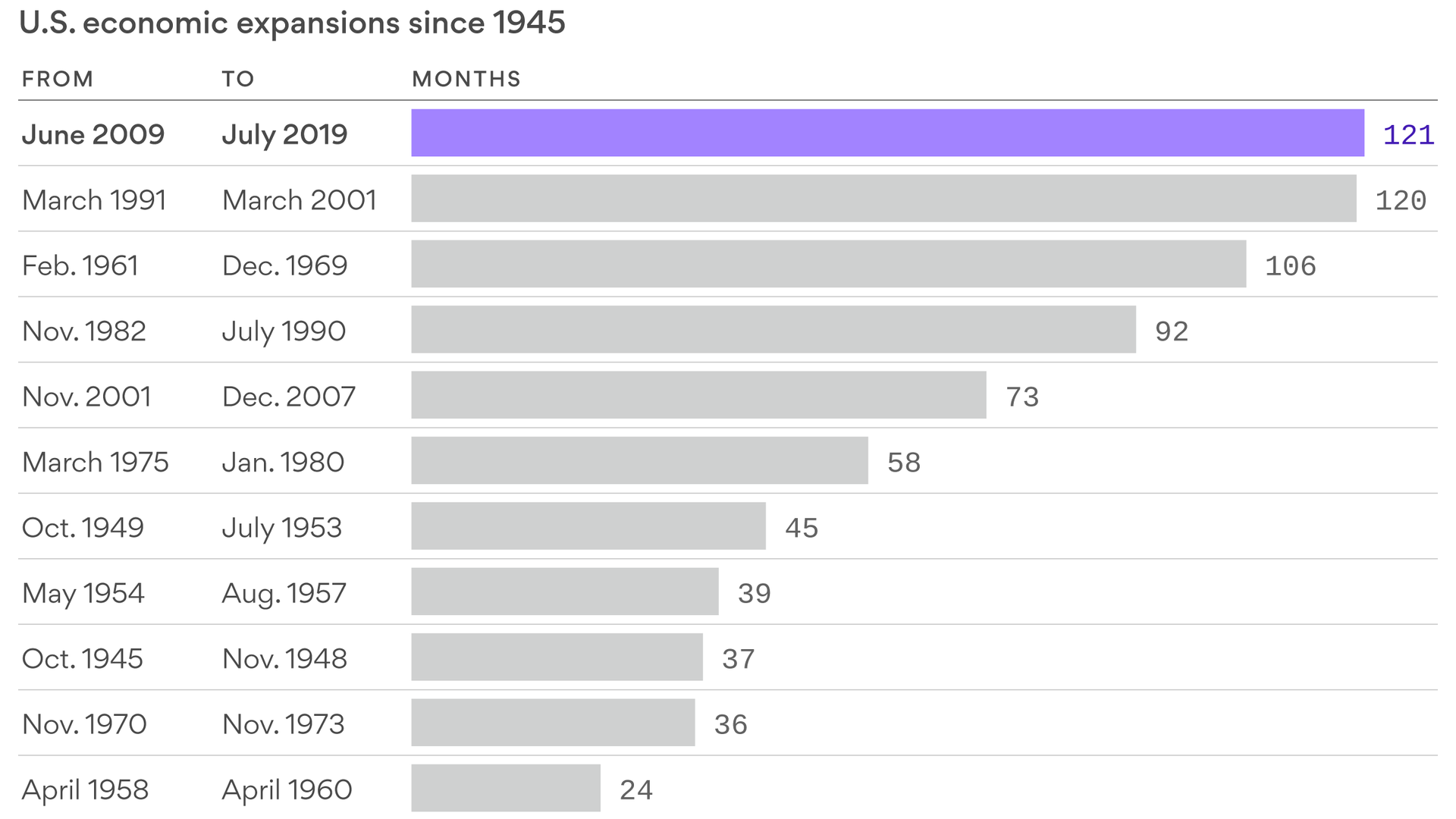
This month marks the longest period of time the U.S. economy has gone without a recession, just edging past the economic cycle that ended when the dot com bubble burst.
Why it matters: This milestone comes at one of the more pessimistic moments in the last decade as economists are warning that a significant slowdown in growth, and maybe a recession,is coming thanks to the impact of trade tensions and slumping growth in other economies across the globe.
Behind the numbers: The pace of growth has been significantly slower than its predecessors, making the length of the cycle the defining factor of this period.
“Signs of over-exuberance” have ended the past 3 economic cycles, Michael Pearce, an economist at Capital Economics, tells Axios. “The interesting thing about this expansion is that it’s been very slow and we’ve really not seen a big buildup of excesses.”
Inflation has also been notably muted in the face of a near 50-year low unemployment rate and strong job creation. And low interest rates that’s helped prop up the economy in the past decade may be even lower in coming months.
The bottom line: Economic cycles don’t die of old age (cliché, but true). Still, as people worry that a recession is around the corner simply because there hasn’t been a recession in a while, that could weigh on consumer and business confidence — and the fear of a recession could become a self-fulfilling prophecy.
The United Nations fears that the possibility of an asteroid smashing into a densely populated area isn’t being taken seriously enough, so it designated June 30 as International Asteroid Day to raise awareness about the potentially catastrophic occurrence.
The date was chosen because the largest asteroid impact in recorded history took place over Tunguska, Russia on that day in 1908 when an enormous asteroid exploded and destroyed hundreds of acres of forest.
To mark the event, here are four asteroids that could wallop into Earth.
1979 XB
With its 900-meter diameter, if this enormous rock hits our planet the impact would be devastating. It’s currently hurtling through the solar system at nearly 70,000kph and is getting almost 30km closer to Earth every second.
The European Space Agency (ESA) has put it in second place on its ‘Risk List’ for Near-Earth Asteroids. The orbit of this minor planet is unreliable but it’s predicted to have a chance of hitting Earth midway through this century.
Experts warn that 1979 XB could suddenly come a lot closer to Earth, given only a tiny variation in its orbit. Its next predicted approach of Earth is set to come in 2024.
Roughly the size of four football fields, Apophis is in very close orbit to Earth. It’s currently more than 200 million kilometers away but gets half a kilometer closer every second.
It regularly passes Earth on its orbit but the latest radar and optical data suggests we’re in for a close shave when it blazes past our planet at a distance of just 30,000km in 2029. This is less than a tenth of the distance to the Moon.
It will next fly by Earth in mid-October this year when it will pass us at a safe distance of around 30 million kilometers. If Apophis did blast into Earth the impact is calculated to be similar to about 15,000 nuclear weapons detonating at once.
2010 RF12
This asteroid holds the dubious honor of topping both the Sentry List (Earth Impact Monitoring system) and the ESA impact risk list. It’s currently around 215 million kilometers from Earth and is traveling at a speed of 117,935kph.
The danger from this asteroid isn’t forecast to come until the end of the century when it’s calculated to come as much as 40 times closer than the Moon. Luckily it weighs, a relatively small, 500 tons and is about seven meters in diameter. The impact is forecast to be slightly less than the meteor that hit the Russian city of Chelyabinsk in 2013, which damaged thousands of buildings and injured hundreds of people.
2010 RF12 is set to pass Earth on August 13, 2022 when astronomers around the world will train their telescopes on the object to learn as much as possible about it and its trajectory.
2000 SG344
2000 SG344 is part of a group called the Aten Asteroids, which have orbits aligned very closely with Earth’s. It is predicted to have a chance of impact in the next three or four decades. With just a 50-meter diameter, it’s relatively small but is still twice as big as the Chelyabinsk meteor which caused so much damage six years ago.
It’s currently traveling through space at more than 112,000kph and is getting 1.3km closer to Earth every second. Interestingly, it travels around the Sun in almost the exact same time as Earth, 353 days versus Earth’s 365 days. This gives astronomers regular chances to observe the asteroid and assess the risk it poses.
Undetected asteroids
Of course, a big part of the danger with hazardous space objects is that we are not good at detecting them and some of the most dangerous ones have caught us by surprise. When the Chelyabinsk meteor entered Earth’s atmosphere undetected, its explosion released up to 30 times more energy than the atomic bombs the US dropped on Japan in 1945.
As recently as last December, another asteroid broke apart over the Bering Sea that was 10 times more powerful than the bombs dropped on Hiroshima and Nagasaki. Neither Near Earth Objects (NEOs) were tracked in advance. It’s hoped that International Asteroid Day will prompt authorities around the world to improve how they detect the potentially cataclysmic space rocks.
Socialist Rep. Alexandria Ocasio-Cortez (D-NY) was widely mocked over the weekend after she took a shot at the job credentials of President Donald Trump’s daughter, Ivanka Trump.
Ocasio-Cortez, a former bartender and waitress, was not happy that Ivanka Trump accompanied the president on his trip to the G-20 summit and was included photographs alongside other world leaders.
“It may be shocking to some, but being someone’s daughter actually isn’t a career qualification,” Ocasio-Cortez tweeted. “It hurts our diplomatic standing when the President phones it in & the world moves on. The US needs our President working the G20. Bringing a qualified diplomat couldn’t hurt either.”
It may be shocking to some, but being someone’s daughter actually isn’t a career qualification.
It hurts our diplomatic standing when the President phones it in & the world moves on.
The US needs our President working the G20. Bringing a qualified diplomat couldn’t hurt either. https://t.co/KCZMXJ8FD9
— Alexandria Ocasio-Cortez (@AOC)
Fox News reported that prior to joining the administration, Ivanka Trump was an executive vice president with the Trump Organization and served as CEO of her own clothing and accessories empire.
During the G-20 Summit, Ivanka Trump “represented the U.S. in meetings with leaders from China, Japan, Russia, India and Australia,” and also “led the U.S. delegation in a special discussion on women’s economic empowerment,” Fox News added.
Before leaving for the trip, Ivanka Trump noted that the United States was the only country that was bringing a completely female team to negotiate at the G-20.
“The United States is the only country in the G20 with an entirely female negotiating team representing President Trump and advancing his priorities,” Ivanka Trump tweeted. “Looking forward to heading to Japan tomorrow! #G20Japan #WGDP”
The United States is the only country in the G20 with an entirely female negotiating team representing President Trump and advancing his priorities.
Looking forward to heading to Japan tomorrow! #G20Japan#WGDP
— Ivanka Trump (@IvankaTrump)
Ocasio-Cortez was subsequently mocked for attacking Ivanka Trump’s job credentials as many people pointed out that her most recent job was being a bartender.
Piers Morgan tweeted: “Could be worse… Ivanka could have been a bar-tender 18 months ago.”
Paris Dennard tweeted: “Remind us how being a bartender qualified you to be a member of Congress creating laws, voting on bills that impact Americans & the world. Let’s not go there & start comparing your resume to @IvankaTrump’s experience & resume. She also takes no salary. Way to support women…”
Remind us how being a bartender qualified you to be a member of Congress creating laws, voting on bills that impact Americans & the world.
Let’s not go there & start comparing your resume to @IvankaTrump’s experience & resume.
John Thomas tweeted: “I didn’t realize being a bar tender was a qualification to be a member of Congress?”
I didn’t realize being a bar tender was a qualification to be a member of Congress? https://t.co/cWC9zrgXdb
— John Thomas (@TheThomasGuide)
Joel Pollak tweeted: “It’s OK, you see, for women to undermine other women *if they are Republicans*.”
It’s OK, you see, for women to undermine other women *if they are Republicans*. https://t.co/0LKokEd0nG
— Joel B. Pollak (@joelpollak)
Carol Roth tweeted: “Well, if anyone would know about getting a job with lack of qualifications…”
Well, if anyone would know about getting a job with lack of qualifications… https://t.co/VV9ZiPfP09
— Carol Roth (@caroljsroth)
Jason Rantz tweeted: “Modern day feminism: tearing down an accomplished woman because she doesn’t hold your ideological views. But, ya know, she’s not a bartender so what the hell does Ivanka know anyway?”
Modern day feminism: tearing down an accomplished woman because she doesn’t hold your ideological views.
But, ya know, she’s not a bartender so what the hell does Ivanka know anyway? https://t.co/H4WPqlyiCR
— (((Jason Rantz))) on KTTH Radio (@jasonrantz)
Jessie Jane Duff tweeted: “This is rich. A woman who was a bartender degrades a woman who had a thriving career prior to joining Office of Economic Initiatives. Ivanka’s initiatives created millions of opportunities for workers by legislative & Admin action. How many jobs did AOC initiate? Zero. #Amazon”
This is rich.
A woman who was a bartender degrades a woman who had a thriving career prior to joining Office of Economic Initiatives.
Ivanka’s initiatives created millions of opportunities for workers by legislative & Admin action.
Cleaning, depersonalizing and a home before listing it for sale are some important tasks sellers should consider. This is because a clean and depersonalized space helps potential buyers envision themselves living in the home. But, staging your refrigerator? During showings, potential buyers will likely take time to look around the entire home to inspect its condition in full — this may include looking inside cabinets, under rugs and, yes, even inside the refrigerator. If you’re getting ready to sell your home, consider these staging tips for your fridge.
Clean the Refrigerator’s Interior and Exterior
You likely won’t want potential buyers to open up the refrigerator to be greeted by dried-on, sticky messes or foul odors. Kitchens are a big selling point for homebuyers, says The Balance, so it’s important to make sure it’s clean — and that includes the fridge. Take all of the items out of the refrigerator, as well as any removable drawers or shelves, and give everything a thorough wipe down. Be sure to scrub away stuck-on spills and clean up food particles that may have gotten into any nooks and crannies. If you need to eliminate unpleasant odors, spreading some baking soda or coffee grounds on a tray and placing it inside the fridge for a few days may help, says MarthaStewart.com.
Additionally, don’t forget about the exterior of your refrigerator. If you have stainless steel appliances, make the outside shine with a stainless steel cleaner (that won’t leave streaks behind), and take time to scrub away sticky fingerprints, recommends MarthaStewart.com.
To prevent messes from building back up in the refrigerator, clean up spills right away, before they have time to dry. MarthaStewart.com also says that wiping off the rims and lids of jars or containers before popping them in the fridge can help.
Declutter and Reorganize Your Food
After you’ve cleaned the refrigerator, it’s time to put the food back inside. While you’re doing this, look for any spoiled or expired food items and throw them in the trash. You should also consider moving nonperishable cans or bottles, such as soda or bottled water, to the pantry to free up room for items that really need refrigeration, recommends Good Housekeeping. To keep things looking tidy and organized, put leftovers in stackable, square containers (round containers typically take up more space), and use bins to organize similar items.
Depersonalize Your Refrigerator’s Exterior
When it comes to the exterior of your fridge, less is better, says Realtor.com. It’d be a good idea to store any personal items, papers and photos that were hanging on your fridge in a box. It can help buyers to better envision themselves living in the home and making their own memories.
A staged refrigerator may not be someone’s deciding factor when it comes to buying your home, but it can help you to leave a better impression on potential buyers. Remember these tips as you begin to clean so your fridge is ready for all the showings ahead.


 OUR LATEST VIDEOS