Are you an insect magnet? If you aren’t, you probably know one. Insect magnets attract annoying insects the second they walk outdoors — or so it seems.
If this describes you, take comfort in knowing that one of the ways you can fight back against mosquitoes, gnats, flies, no-see-ums and other pesky bugs doesn’t have to involve covering yourself with a sticky spray or engaging in chemical warfare. To help you enjoy going outdoors, try strategically placing insect-repelling plants in your garden or on your patio.
Essential oils in these plants act as nature’s bug repellent. Insects tend to avoid them. You can even use some of these plants to make your own natural bug repellent.
But know that simply including insect-repelling plants in your landscape will not in itself ensure your garden is insect free.
“There’s not enough research in this area to support that,” says Dr. Bodie Pennisi, an associate professor and extension landscape specialist at the University of Georgia’s Griffin campus. “The concentration of oils is not there to offer that kind of protection.”
There may be fewer insects, but no one’s done the research into how many plants, planted how close together, would be effective in repelling insects to any great extent, says Pennisi. One of the best things people can do to hold down mosquito populations, she advises, is to eliminate any standing water, which is where mosquitoes breed.
For those who would like to give the natural route a try, we’ve described some easy-to-find herbs readily available at most nurseries that are said to repel mosquitoes and other annoying insects. The smell of fragrant herbs is the result of the distribution of tiny globules that contain oils. High temperatures, for example, can cause the globules to become volatile, evaporating the essential oils and turning them into vapors, Pennisi says. The many globules on the underside of rosemary leaves (seen at right) are one of the best examples of this.
We’ve included our take on ornamental flowers that can help keep plant-attacking insects at bay. Keeping your growing areas as insect free as possible will help your vegetable garden stay productive and your ornamental beds attractive. In addition, we’ve included a carnivorous plant that eats insects which you can also include in your eco-friendly insect barrier.
First, the herbs

You can keep basil in pots to repel insects or make it into a repellent spray. (Photo:arifm/Flickr)
Repels house flies and mosquitoes. Plant basil in containers by your house doors and in outdoor areas where you like to relax or entertain. Basil is delicious in salads, in many pork and chicken recipes and with a variety of soups. Basil also improves the flavors of certain vegetables, include tomatoes, peppers, and asparagus. You also can use fresh basil to make an insect repellent spray. A simple recipe calls for pouring 4 ounces of boiling water into a container holding 4 to 6 ounces of clean, fresh basil leaves (stems can be attached), letting the leaves steep for several hours, removing the leaves and squeezing all of the leaves’ moisture into the mixture. Then thoroughly mix 4 ounces of (cheap!) vodka with the basil-water mixture. Store in the refrigerator and apply as a spray when going outdoors. Be sure to keep the spray away from your eyes, nose, and mouth.

Mihaliova/Shutterstock)
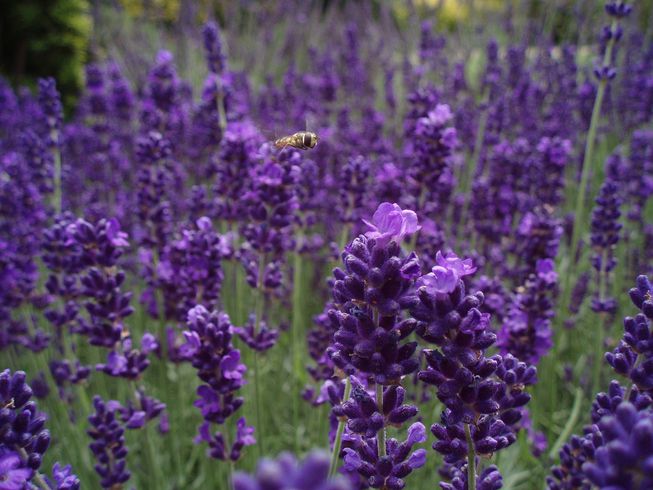
Repels moths, fleas, flies, and mosquitoes. Lavender has been used for centuries to add a pleasantly sweet fragrance to homes and clothes drawers. Although people love the smell of lavender, mosquitoes, flies and other unwanted insects hate it. Place tied bouquets in your home to help keep flies outdoors. Plant it in sunny areas of the garden or near entryways to your house to help keep those areas pest free. You can also use oil extracted from the flowers as a mosquito repellent you can apply to exposed skin when going into the garden or patio. The Everything Lavender website has a guide for extracting the oil and making a lavender-infused body oil. Added benefits are that lavender oil nourishes the skin and has a calming effect that induces sleep.

Lemongrass contains citronella, a natural oil often found in insect-repelling candles. (Photo: Zulashai/Shutterstock)
Repels mosquitoes. You’ve no doubt seen citronella candles in stores during the summer and read how citronella will keep mosquitoes away. Citronella is a natural oil found in lemongrass, an ornamental that can grow up to 4 feet tall and 3 feet wide in one season. (It’s worth noting that lemongrass isn’t just the name of one plant; it’s the umbrella name for plants in the Cymbopogon family, which also includes citronella grass.) This grass with wonderful culinary uses is hardy only in South Florida (Zone 10), so almost everyone else will have to grow it as an annual. It does well in a pot or in the ground in a sunny, well-drained location. Use its fragrant, narrow leaves in chicken and pork dishes and to flavor soups and salad dressing. Many Asian recipes call for lemongrass.

Bruise the leaves on this hardy plant to repel mosquitoes. (Photo: Andrea_44/Flickr)
Lemon thyme …Repels mosquitoes. This hardy herb can adapt to dry or rocky, shallow soil and will thrive in your herb garden, a rock garden or a front border as long as these are in sunny locations. The plant itself will not repel pesky mosquitoes. To release its chemicals, you must first bruise the leaves. To do this, simply cut off a few stems and rub them between your hands. Before you do that, though, it’s advisable to make sure the plant’s natural properties will not adversely affect you. Determine your tolerance by rubbing crushed leaves on a small area on your forearm for several days.

Mint spreads aggressively so it’s best grown in pots unless you want it to take over your yard. (Photo: Edsel Little/Flickr)
Repels mosquitoes. Mint is best grown in pots rather than the ground because it spreads aggressively. Once established in the garden, it can be difficult to remove. Cuttings of mint in mulch can help broccoli, cabbage, and turnips. The leaves are commonly used to flavor minty iced tea. The aromatic properties found in the leaves are also present in the stems and flowers. With a little work, the plant’s aromatic oils can be extracted and combined with apple cider vinegar and cheap vodka (or witch hazel) to make a mosquito repellent. Containers of mint strategically placed in the garden or on the patio will help keep nearby plants insect free.

Home cooks love rosemary as much as insects hate it. (Photo: Alice Henneman/Flickr)
Repels mosquitoes and a variety of insects harmful to vegetable plants. Rosemary is available in various forms. Plants can be grown in containers on a patio and shaped into ornamental pyramids, grown in herb gardens or planted in landscaped beds, where some varieties can grow quite large. Rosemary’s oils are as delicious to home cooks who use herbs as they are unpleasant to many insects. The plant itself and its cuttings are effective repellents. You can make a simple repellent spray by boiling 1 quart of dried rosemary in a quart of water for 20 to 30 minutes and then straining the liquid into a container at least a half-gallon in size that contains a quart of cool water. Put a cap on the combined liquid and store it in the refrigerator. Add the repellent to small squirt bottles as needed when going outdoors. Discard the remaining repellent in the refrigerator when it no longer has a strong telltale smell of rosemary.
Next up: Ornamental flowers
source




 The Camp Counselor Survival Kit is full of important things that they need as well as fun things they can use! Includes a full size can of Febreze (sometimes those cabins get a little smelly), a pair of earplugs (how would they sleep otherwise?), Sunscreen Lip Balm, the Survival Tool (wallet sized tool with box opener, screwdriver, wrench and ruler all in one), a roll of Duct Tape (handy in all situations), the Snap Flyer (flies like a Frisbee but folds down into its own pouch for storage), a deck of Playing Cards, a Bouncy Ball and a variety of salty and sweet snacks! All of our packs come with an inspirational card in addition to your personal message on a keepsake bookmark (be sure to check the ‘This is a Gift’ box.)
 BE PREPARED AT ALL TIMES | With 400 Cal Energy Bars and 8.45oz Water Packs, protect yourself from the dangers of the world by having this emergency pack with you in the car.