Author: Truth & Hammer

  • Federal government offering $1,000 to anyone adopting a wild horse

    Federal government offering $1,000 to anyone adopting a wild horse

    The Bureau of Land Management (BLM) said it will offer up to $1,000 to anyone who adopts a wild horse in an effort to “encourage more adopters to give a wild horse or burro a good home.”

    The agency said in a statement that it will be providing the funds under its Adoption Incentive Program for anyone who decides to take in an untrained wild horse or burro from the agency.

    The agency said the goal of the program is to reduce the department’s “recurring costs to care for unadopted and untrained wild horses and burros while helping to enable the BLM to confront a growing over-population of wild horses and burros on fragile public rangelands.”

    Under the new program, qualified adopters are eligible to receive $500 “within 60 days of adoption of an untrained wild horse and burro” and another $500 “within 60 days of titling the animal.”

    The agency added that the incentive is available for all untrained animals that are eligible for adoption, including animals at BLM facilities and off-site events.

    According to a statement from the agency, the department cares for approximately 50,000 unadopted and unsold animals every year.

    source

  • More households subscribe to streaming than traditional TV, according to new report

    More households subscribe to streaming than traditional TV, according to new report

    For the first time, a higher percentage of households in the U.S. subscribe to a digital streaming service than to traditional pay television, according to the results of a new survey released Monday by Deloitte.

    Deloitte’s 13th annual digital media trends survey found that 69% of respondents have at least one streaming video subscription, compared with 65% who have a traditional pay-TV subscription. The finding underscores the continued popularity of services such as Netflix, Hulu, and Amazon Prime, as more consumers become disenchanted with the high costs associated with cable and satellite packages.

    The survey found that the average consumer subscribes to three streaming services and that binge-watching continues to be a popular activity, with 91% of U.S. millennials saying they have watched three or more episodes of a show in a single sitting.

    But many consumers experience frustration with streaming services’ content, with 47% saying they need multiple subscriptions to watch everything they want and 57% saying shows that they enjoy have disappeared from streaming services.

    “This is happening more frequently as more studios and TV networks are pulling content from the major streaming services to launch their own direct-to-consumer offerings,” the report said.

    In response, streaming services have been ramping up production of their own original content.

    Another source of frustration is the difficulty many streaming subscribers have in finding the shows or movies they want. The survey found that 43% of consumers give up on the search for content if they can’t find it within a few minutes.

    “Overall, consumers say they are getting much of what they want but are frustrated by the complexity and effort to get it,” the report said.

    Despite the rising popularity of streaming, the survey also showed that many households continue to value both streaming and pay TV, with 43% of U.S. consumers having subscriptions to both.

    “Streaming versus pay TV is not an either/or proposition,” the report said.

    Last year’s Deloitte survey found that streaming video adoption passed the halfway mark in 2017 with 55% of U.S. households subscribing to paid services.

    source

  • Paris tops list of world’s most expensive cities

    Paris tops list of world’s most expensive cities

    Paris and Hong Kong for the first time joined Singapore as the world’s most expensive cities to live in, a study revealed on Tuesday, with the French capital jumping six places in just two years.

    It was the first time in more than 30 years that three cities shared the top spot, a sign that pricey global cities are growing more alike, said the report’s author, Roxana Slavcheva.

    “Converging costs in traditionally more expensive cities … is a testament to globalization and the similarity of tastes and shopping patterns,” she said in a statement.

    “Even in locations where shopping for groceries may be relatively cheaper, utilities or transportation prices drive up the overall cost of living,” she said.

    Rising costs in cities are often driven by a vibrant job market attracting skilled workers with high wages, said Anthony Breach, an analyst with the British think tank Centre for Cities – which was not involved in the study.

    Urban planners need to plan ahead and build more housing to keep prices affordable and overall costs down, Breach told the Thomson Reuters Foundation.

    Aimed at the business community, the EIU survey is designed to help companies calculate cost-of-living allowances and build compensation packages for expatriates and travelers.

    Researchers compared the cost of more than 150 items such as cars, food, rent, transport and clothing in 133 cities, tracking whether prices have gone up or down by comparing them with the cost of living in New York, which is used as a benchmark.

    A woman’s haircut was about US$15 (€13) in Bangalore, India, compared to $210 (€185) in New York, for example, while a bottle of beer was about half a dollar in Lagos, Nigeria, and more than $3 (€2.6) in Zurich.

    Paris – where the high cost of living has been one of the factors behind weeks of violent protests by Yellow Vest demonstrators – has ranked among the top 10 most expensive cities since 2003, with only transport and alcohol offering value for money compared to other European cities.

    British cities recovered a few positions a year after reaching the cheapest level in more than two decades due to Brexit uncertainty, with London ranking 22nd and Manchester 51st, up eight and five spots respectively.

    Political turmoil in Venezuela plummeted Caracas to the bottom of the ranking, followed by Damascus, Syria, with Karachi, Pakistan, Buenos Aires, Argentina, and New Delhi, India also featuring among the 10 cheapest cities.

    But a city’s drop in the index does not necessarily mean life automatically gets cheaper for people living there, as prices adjust to inflation often quicker than wages, said Gunes Cansiz of think tank the World Resources Institute (WRI).

    “The cost of living in Istanbul, for example, might seem to have decreased, but since household expenses have increased, this has no positive reflection on the daily life of Istanbulites,” said Cansiz, director at WRI’s Turkey Sustainable Cities programme.

    source

  • 15 Foods Anti-Aging Experts Eat Every Day

    15 Foods Anti-Aging Experts Eat Every Day

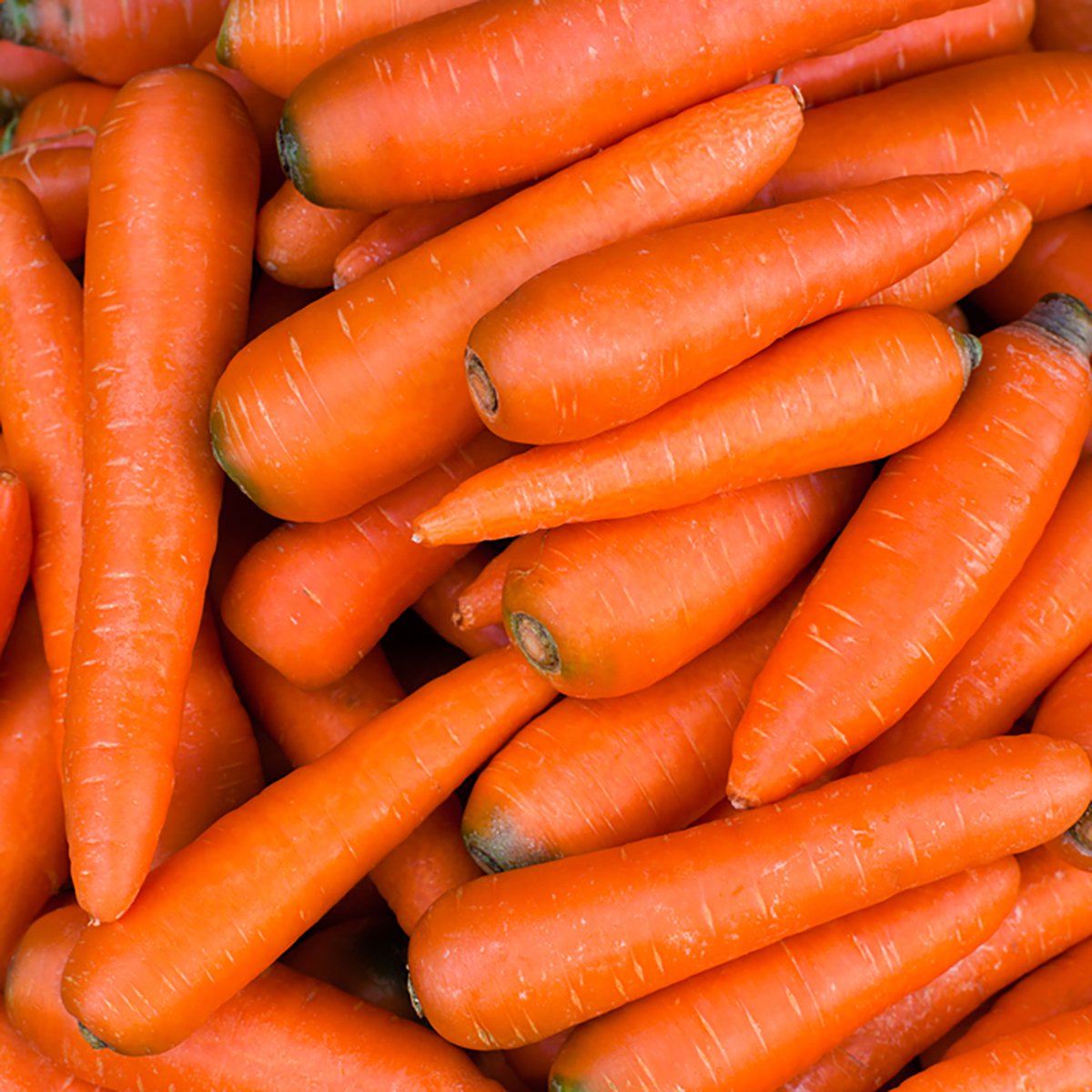
    Carrots

    These veggies supply a hearty helping of beta carotene, and that’s valuable. “Beta carotene is a precursor to vitamin A, a critical nutrient for skin health that also slows skin aging,” says Cynthia Bailey, MD, a dermatologist in Sebastopol, CA. “As an antioxidant, it helps fend off aging for your entire body, too. You get an added bonus because beta carotene warms your complexion, and a beta-carotene-rich glow has been scientifically proven to be more attractive than a suntan.” Carotenoids, such as beta carotene, are best absorbed when paired with healthy-fat foods. So enjoy carrots with eggs in a salad, puree them into a creamy soup, or dip them into guacamole.

    Edamame

    This hearty protein is full of good-for-you nutrients, including linoleic acid. “This is an essential fatty acid your body can’t make, so you must consume it in your diet,” says Joan Salge Blake, EdD, RDN, a clinical associate professor of nutrition at Boston University. “It’s also the most abundant fatty acid in your skin. In a study of about 4,000 women, people with a diet higher in linoleic acid were associated with a lower likelihood of skin atrophy, better known as the thinning of your skin and which also magnifies wrinkles on your face. The older women in the study who had lower dietary intakes of both linoleic acid and vitamin C also had drier skin.” Edamame is delicious slightly salted and served as a snackmixed into a stir-fry or even blended into a breakfast smoothie.

    Tea

    “I always sip a warming cup of tea first thing in the morning, and its anti-aging benefits are just an added bonus,” says Toby Amidor, author of The Healthy Meal Prep Cookbook“As you age, bone-mineral density tends to decrease, which can lead to fractures. A study published in the American Journal of Clinical Nutritionfound that elderly women who sipped on tea had a lower risk of bone fractures and had stronger bone-mineral density compared to women who did not include tea in their diet. Researchers in the study credited flavonoids in tea, which may help minimize the risk of osteoporosis, or brittle bones, as you age.” Drink tea straight up, or make a green tea latte.

    Grapes

    “I always make room for grapes in my daily diet.” says Amidor, a nutrition partner with Grapes from California. “The antioxidants and other polyphenols found in heart-healthy grapes may also play a role in healthy aging. Preliminary studies suggest that grape polyphenols may contribute to brain health, colon health, eye health and more. And they appear to help maintain cell health, which of course is critical to our overall health. Polyphenols are found in every part of the grape—the skin, flesh and seeds—and in grapes of all colors, including red, green and black.” Snack on frozen grapes, add them to a salad, or whip up a grape crostini.

    Avocado

    Avocados are full of monounsaturated fatty acids, and that’s a good thing. “Avocados contain anti-inflammatory fats that help to moisturize our skin, delay wrinkles and protect us from harmful toxins from the sun,” says Melissa Mitri, MS, RD, a dietitian in Milford, CT. “They’re delicious in smoothies, with eggs, in salads or made into guacamole.” Ani Petrosyan-Baran, LAc, an acupuncturist in Jersey City, NJ, enjoys eggs on whole-grain toast. “Or you can even have a quarter of an avocado, plain, to reap the benefits,” she says. Try it with a sprinkle of everything bagel seasoning!

    Greek yogurt

    “This type of yogurt is higher in protein than other yogurt, and as we age we need more protein-packed foods,” says Christine Rosenbloom, PhD, RD, a dietitian in Atlanta and author of Food & Fitness After 50. “Dairy like yogurt contains the amino acid leucine, a trigger for muscle building and repairs. And yogurt has calcium. I check the label for yogurt that contains vitamin D,” she adds. Your body needs vitamin D to optimally absorb calcium. Enjoy Greek yogurt in a parfait, in a smoothie or in a dip.

    Walnuts

    “These are a portable snack packed with anti-aging nutrients,” says Ginger Hultin, RD, a dietitian in Seattle and a spokesperson for the Academy of Nutrition and Dietetics. “These include healthy unsaturated fats such as alpha-linolenic acid, which is good for the heart, brain and skin. Walnuts are also a source of biotin for optimal skin, nail and hair health.” Walnuts are a great snack on their own, and they also make a delicious topping for salads.

    Chia seeds

    “Ah, where do I start with chia seeds?” says Arlene Dijamco, MD, an integrative physician in Roswell, GA. “They are packed with plant-based omega-3s, antioxidants and minerals important for clear thinking, memory, mood, heart rhythms and skin texture. The gel-like consistency of hydrated chia seeds provides soluble fiber that not only helps keep your digestive tract moving but also helps keep cholesterol levels balanced and helps you feel satiated—decreasing your likelihood of overeating. Plus, chia is so versatile. You can use chia seeds in drinks, pudding, oatmeal, veggie patties, salad, granola and as an egg replacement in baking.”

    Berries

    “I eat berries—strawberries, blueberries, blackberries, raspberries or cranberries—every single day,” says Sharon Palmer, RDN, a dietitian in Los Angeles and author of Plant-Powered for Life“In the summer, I eat fresh berries. Then I switch to dried and frozen when they are out of season. The research on brain health benefits as they relate to cognition during aging is quite promising. Berries are packed with powerful antioxidant and anti-inflammatory compounds.” Berries provide vitamin C, a nutrient that helps you absorb plant-based iron from foods such as spinach, tomatoes and beans when the foods are eaten in the same meal. Add raspberries to a spinach salad, or enjoy a berry nice cream.

    Eggs

    “Protein-providing foods such as eggs help support muscle and metabolism,” says Jessica Crandall Snyder, RDN, CDE, a dietitian in Denver, CO. “This is especially important as you age, as most people lose 0.8 percent of their lean body mass every year after the age of 40. If you want to prevent muscle breakdown, eating protein-rich foods is critical. Also to properly support the recommended resistance training, you need protein to develop and maintain your lean muscle.” Enjoy eggs in an omelet, deviled or in faux fried rice.

    Fatty fish

    “Salmon, mackerel, tuna and sardines are fatty fish that contain high levels of omega-3 fatty acids, which are known to reduce inflammation in the body and skin,” says Tsippora Shainhouse, MD, a dermatologist in Los Angeles. “Two to three servings a week can also help reduce LDL cholesterol and triglyceride levels. Adding these fish to the diet helps balance the omega-3 to omega-6 ratio, the latter of which can actually trigger inflammation. Fish oil supplements can substitute for eating these healthful, fatty fish, but they don’t provide the low-calorie protein benefit of eating the fish itself.” Grill or broil salmon for dinner, or whip up a tuna salad.

    Fatty fish

    “Salmon, mackerel, tuna and sardines are fatty fish that contain high levels of omega-3 fatty acids, which are known to reduce inflammation in the body and skin,” says Tsippora Shainhouse, MD, a dermatologist in Los Angeles. “Two to three servings a week can also help reduce LDL cholesterol and triglyceride levels. Adding these fish to the diet helps balance the omega-3 to omega-6 ratio, the latter of which can actually trigger inflammation. Fish oil supplements can substitute for eating these healthful, fatty fish, but they don’t provide the low-calorie protein benefit of eating the fish itself.” Grill or broil salmon for dinner, or whip up a tuna salad.

    Almonds

    “I eat nuts daily—all types but especially almonds,” says Bonnie Taub-Dix, RDN, author of Read It Before You Eat It“They help me feel full and they are heart healthy, as studies have shown that almonds might lower cholesterol levels. They also help keep blood sugar levels from spiking (because of the healthy fat within), they have a satisfying crunch and most of all they are decadently delicious. Although many of us have been fat phobic for years, it’s important to have healthy fats in our diet to help promote healthy skin as we age along with a sense of well-being.” Enjoy almonds as a snack, use them as an ingredient in energy bites or add as a topping to oatmeal.

    Almonds

    “I eat nuts daily—all types but especially almonds,” says Bonnie Taub-Dix, RDN, author of Read It Before You Eat It“They help me feel full and they are heart healthy, as studies have shown that almonds might lower cholesterol levels. They also help keep blood sugar levels from spiking (because of the healthy fat within), they have a satisfying crunch and most of all they are decadently delicious. Although many of us have been fat phobic for years, it’s important to have healthy fats in our diet to help promote healthy skin as we age along with a sense of well-being.” Enjoy almonds as a snack, use them as an ingredient in energy bites or add as a topping to oatmeal.

    Bread

    “I know many people cut bread out of their diets as they age, but the carbs in bread help power me through my high level of physical activity, says Rosenbloom. “Bread also provides dietary fiber, B vitamins and iron. I like getting vitamins and minerals from foods instead of supplements. I enjoy both whole grains and enriched grains for variety.”

    What’s the difference between whole grain and enriched, refined products? Whole grains contain the entire grain kernel—including the bran and germ—which provides dietary fiber and many important vitamins and minerals. Refined grains have been milled to remove the bran and germ—but most refined grains are enriched to add back nutrients such as iron, folic acid, riboflavin, thiamin and niacin after processing. Iron is a nutrient that’s under-consumed by women ages 19 to 50 in the United States, and eating both whole-grain and enriched-grain bread can help increase intake of this nutrient, which was labeled a nutrient of concern in the 2015-2020 Dietary Guidelines. These guidelines recommend that at least half of all grains consumed should be whole grains

    source

  • How to Create a Dog-Friendly Garden

    How to Create a Dog-Friendly Garden

    Envelop spaces

    Playful geometry breaks this backyard into dining and seating circles. The circularlanding pads filled with decomposed granite are great for lounging and dining in the backyard, edged by easy-care plants all soft and sturdy enough to withstand dogs—who can run around in the unplanted, unpaved space. Fat, dwarf Atlantic white cedars (Chamaecyparis thyoides ‘Heather Bun’) enclose the 10-foot-wide dining area, while ornamental grasses, shrubs, and perennials define the 12-foot-wide seating space. A flowering cherry (Prunus serrulata ‘Kwanzan’) shades both circles.

    Pick power materials

    Plants with soft, sturdy foliage, such as ornamental grasses, can stand up to dogs without injuring them. Along the side of this house, large clumps of maiden grass (Miscanthus sinensis ‘Adagio’) are the perfect height to provide greenery without blocking the view from the windows. Pink-hued plumes emerge later in summer. The grass holds its shape all winter and needs just one shearing in early spring.

    Use paw-friendly paving materials, such as splinter-free bark mulch and flagstone. Here, a 4-inch-thick layer of bark mulch along with hard-packed decomposed granite keep the unplanted expanses weed-free. With that kind of open space to play, the homeowner’s three dogs haven’t done any harm to the garden’s plantings.

    Replace the lawn

    In this front yard, the homeowner installed a meadow of sturdy, no-mow fountain grass (Pennisetum alopecuroides ‘Hameln’) instead of turf, for lower water usage and maintenance. Purple smoke tree (Cotinus ‘Grace’) and river birch (Betula nigra) flank the entry. Evergreen manzanita (Arctostaphylos x densiflora ‘Austin Griffiths’) and dwarf Atlantic white cedar (Chamaecyparis thyoides ‘Iceberg’) fill in near the house.

    Think like a canine

    If you were a dog, what would you want? Each breed has a different personality. The better you can accommodate its particular traits, the happier your dog. And the happier your dog, the better your chance of maintaining a garden you’ll both enjoy. This dog-friendly yard includes a running track, border control, comfy mulch, sensible plants, and a piece of driftwood to serve as a marking post.

    Like humans, dogs enjoy basking in the sun. So by all means, give them a deck or a patch of lawn for sunbathing. But remember that dogs can overheat easily, so it’s even more important to provide them with cooling retreats. Here, 4 retrievers (liko, Lexi, Andy, and Morgan) enjoy resting under an arbor in Oceanside, CA.

    Set up paths to run and patrol

    Dogs need exercise; paths give them a designated space to do it as well as a venue to perform their perceived job―to patrol your property line. Readers suggested sacrificing a few feet along the fence for a perimeter path to simultaneously satisfy both needs. If your dogs have already created their own paths through the garden, don’t try to redirect them. Instead, turn their well-worn routes into proper pathways. A 3-foot-wide clearance is enough for most dogs. Plant a screen to hide this dog run if you like; pets seem to like having their own “secret garden.”

    Give them shelter

    Dogs will happily share arbors, pergolas, and other shade structures with their owners. But most dogs seem to appreciate having a shelter of their own, such as a doghouse. Here Ozzie the Airedale has a cottage-style house, complete with window box, in Denver.

    Keep them safe

    If you have a Houdini and need to keep your escape artist from tunneling under the fence, you may need to install an underground barrier made of rebar, chicken wire, or poured concrete. Here, a fence underlined with boards keeps 4 Welsh springer spaniels from tunneling into the front yard in Battle Ground WA.

    source

  • Tiffany Wins Best Solo Breakout + BTS’s Fans ARMY Wins Best Fan Army At iHeart Radio Music Awards

    Tiffany Wins Best Solo Breakout + BTS’s Fans ARMY Wins Best Fan Army At iHeart Radio Music Awards

    On March 14 (local time), the 2019 iHeart Radio Music Awards was held in Los Angeles.

    Tiffany won the Best Solo Breakout award, and Tiffany was shocked when she was presented the award. She said, “This is a moment. Thank you to all my fans, and all the fans of K-pop. You guys came together so beautifully and thank you for creating these opportunities and the change. You are the change.”

    ARMY [BTS’s official fan club name] was awarded the Best Fan Army award. The award is given to the most dedicated fanbase and ARMY was up against other strong fandoms like Ariana Grande’s Arianators, Justin Bieber’s Beliebers, and Taylor Swift’s Swifties. The members had a special message for fans congratulating them, as RM said, “We’re so proud of you guys and we couldn’t do what we do without your constant love and support.”

    This is the second consecutive year ARMY has won the award, as they took home the title at last year’s iHeart Radio Music Awards, during which BTS also won Best Boy Band. BTS is currently preparing to return in April with their new album “Map of the Soul: Persona.
  • Mum Helps Daughter Make £120,000 A Year Selling Nudes Online

    Mum Helps Daughter Make £120,000 A Year Selling Nudes Online

    A young woman who makes £120,000 a year selling nude pictures online recruited her mum to take the photos for her.

    Beth Spiby, 22, used to work in the gift shop at M&S and would travel to Magaluf each summer to work abroad – until a colleague told her how much money she could make selling pictures online.

    The 22-year-old realized she needed someone to take the pictures of her though, and soon asked her accountant mum to do the job.

    Mum Jane, 53, now helps her daughter take daily explicit photos and videos, which often involve Beth posing nude and in her underwear.

    Beth, from Greater Manchester, now has more than 1,000 followers – each of whom pays £12 a month to get nude photos and videos, meaning she earns more than £10,000 a month.

    Beth had her first taste of fame when she appeared on a three-part documentary about KFC, called Billion Dollar Chicken Shop. After getting some fans, she started posting topless pictures online, but she still worked at M&S in the Trafford Centre.

    A colleague then told the 22-year-old about Only Fans – a website where anyone can sign up and create an account where fans subscribe to content for a fixed fee.

    After setting up an account towards the end of December 2017, Beth gained nearly 900 subscribers and £10,000 in the first three weeks and quit her job at M&S.

    The model now rents a four-bed house for £1,500 a month, which she describes as ‘ideal’ for a 22-year-old to live in and ‘show off’.

    Beth takes personal requests which subscribers can tip for, including personalized videos in which she’ll do ‘whatever the customers want’.

    She said:

    They can message me, and tip me extra if they think I deserve it, and buy personal videos. It’s totally naked. I use toys. I do solo strip teases here and there. Whatever the customers want.

    I do videos in the shower. People can request things. Some people like it if I moan their name for example.

    The 22-year-old also runs an advice website where she offers support to those in need and says she has saved two people from committing suicide.

    Beth says she has spent a lot of the money she has earned as she is constantly shopping, once buying the same pair of trainers in 12 different colors.

    source


  • Growing number of states support new law to have the president chosen by popular vote

    Growing number of states support new law to have the president chosen by popular vote

    Colorado has joined 11 other states and the District of Columbia in pushing legislation that will require their electoral votes to be assigned to whichever presidential candidate wins the nationwide popular vote.

    On Friday, Colorado Gov. Jared Polis (D) signed the popular vote bill into law. However, the law will only take effect if enough states adopt it. Collectively, states representing at least 270 Electoral College votes — the amount required to win the presidency — need to sign on to the legislation; the states that have adopted the bill so far represent 181.

    In addition to D.C., this includes California, Connecticut, Hawaii, Illinois, Massachusetts, Maryland, New Jersey, New York, Rhode Island, Vermont, and Washington. If New Mexico were to join — the state Senate approved the legislation on March 14 — it would bring the total electoral votes represented to 186. Delaware also appears poised to adopt it.

    Given Republican-led states have yet to adopt the legislation (some have shown support in the past, such as Oklahoma), its success is far from guaranteed.

    The push for the popular vote legislation, however, is significant in the lead-up to the 2020 presidential election. During the 2016 election, for instance, Hillary Clinton received more votes (2.9 million representing a 2.1 percent margin) than any other losing presidential candidate in U.S. history.

    Even President Donald Trump has made statements in favor of the popular vote. In 2012, prior to becoming president and when he thought Barack Obama might lose the popular vote but still win reelection, Trump called the Electoral College a “disaster for democracy.”

    And even after he won the presidency in 2016 he touted the popular vote, saying “I would rather see it where you went with simple votes … There’s a reason for doing this because it brings all the states into play.”

    According to the Constitution, states can choose how they allocate their Electoral College votes during national elections. The majority award their electoral votes to the presidential candidate that wins the most votes in their states, in what’s known as “winner-takes-all.” Just two states — Maine and Nebraska — split their votes.

    One challenge though is that because electoral votes reflect a state’s representation within the House and Senate, some have larger Electoral Colleges than others. This leads presidential candidates to focus on the few key battleground states where voters are narrowly split between Republican and Democrat. In turn, most other states are ignored.

    While winning the popular vote isn’t required to win the presidency, many view it as a means to bolstering their public platform. But it is precise because just a handful of states determine the winner that some experts have called for change.

    Not counting the popular vote would mean “the great majority of American voters exercise no real political voice in the outcome of presidential elections,” Stanford sociology professor Doug McAdam previously argued.

    And the issue is only going to be exacerbated going forward; half the U.S. population lives in just nine states.

    “This is a new American demographic, which shows that the electoral system of the 18th century doesn’t work anymore,” Reed Hundt, chairman, and co-founder of Making Every Vote Count told the Washington Post. “No one at the time the Constitution was written thought that 80 percent of the population would be irrelevant.”

    In 2017, the New York Times editorial board made the case for the president to be chosen according to the popular vote.

    Focusing on battleground states “may be smart campaigning, but it’s terrible for the rest of the country, which is rendered effectively invisible, distorting our politics, our policy debates and even the distribution of federal funds,” the editorial argued.

    “Candidates focus their platforms on the concerns of battleground states, and presidents who want to stay in office make sure to lavish attention, and money, on the same places,” the Times continued. “The emphasis on a small number of states also increases the risk to our national security, by creating an easy target for hackers who want to influence the outcome of an election. Perhaps most important, voters outside of swing states know their votes are devalued, if not worthless, and they behave accordingly.”

    source

  • Everyone In England Will Be Automatic Organ Donors From Next Year

    Everyone In England Will Be Automatic Organ Donors From Next Year

    Adults in England will be considered potential organ donors from 2020 unless they opt-out or are excluded.

    The Organ Donation (Deemed Consent) Bill received Royal Assent yesterday (March 15), which is known as Max and Keira’s Law, after nine-year-old Keira Bell donated her heart to 10-year-old Max Johnson.

    Keira saved four lives in total, including Max’s, who suffered from dilated cardiomyopathy, a disease which affects the heart muscle.

    The new system will come into force spring 2020, replacing the current opt-in voluntary system.

    According to government statistics, there are more than 6,000 people in the UK currently waiting for an organ. Three people die every day while on the waiting list.

    Currently, only 38 percent of people in England have opted in.

    In a press release, Prime Minister Theresa May said she hopes the new law will save hundreds of lives:

    I’m delighted Max and Keira’s law has passed today. It marks a momentous step for thousands of people in need of a life-saving transplant, and could save as many as 700 lives a year.

    With significantly more people willing to consider organ donation than are actually registered as donors, this vital step will presume consent unless people choose to opt out of being a donor.

    It’s important that everyone takes the time to discuss their choices on donation with their families and register their wishes, whatever their preference may be.

    The government will also launch a public awareness campaign to ensure people understand what choices they have, and how the new system works.

    While anyone can choose to opt-out, if you are under 18 years old, lack the mental capacity to understand the changes for a significant period before your death, and have not lived in England for at least 12 months before your death, you will be excluded from the plan.

    The government will look into whether certain organs should be excluded from the opt-out system.

    Wales introduced an opt-out system in 2015, while Scotland is currently considering reform.

    The news has been welcomed by many and is being regarded as a monumental change going forward.

    Max himself told NHS Organ Donation he’s delighted by the news:

    Thank you to everyone who has supported this law change. Even if it saves just one life, it will be worth it. I know what it is like to wait for an organ, so I hope the change in law will mean people won’t have to wait as long in the future.

    I feel happy because I think the law change will make a difference.

    My father had a life-saving liver transplant two years ago which helped me realize the importance of organ donation. It really is a wonderful gift!

    source

  • Dairy Queen giving away free ice cream cones for the first day of spring

    Dairy Queen giving away free ice cream cones for the first day of spring

    Dairy Queen is giving away free ice cream cones for their fourth-annual “Free Cone Day” on March 20 to celebrate the first day of spring.