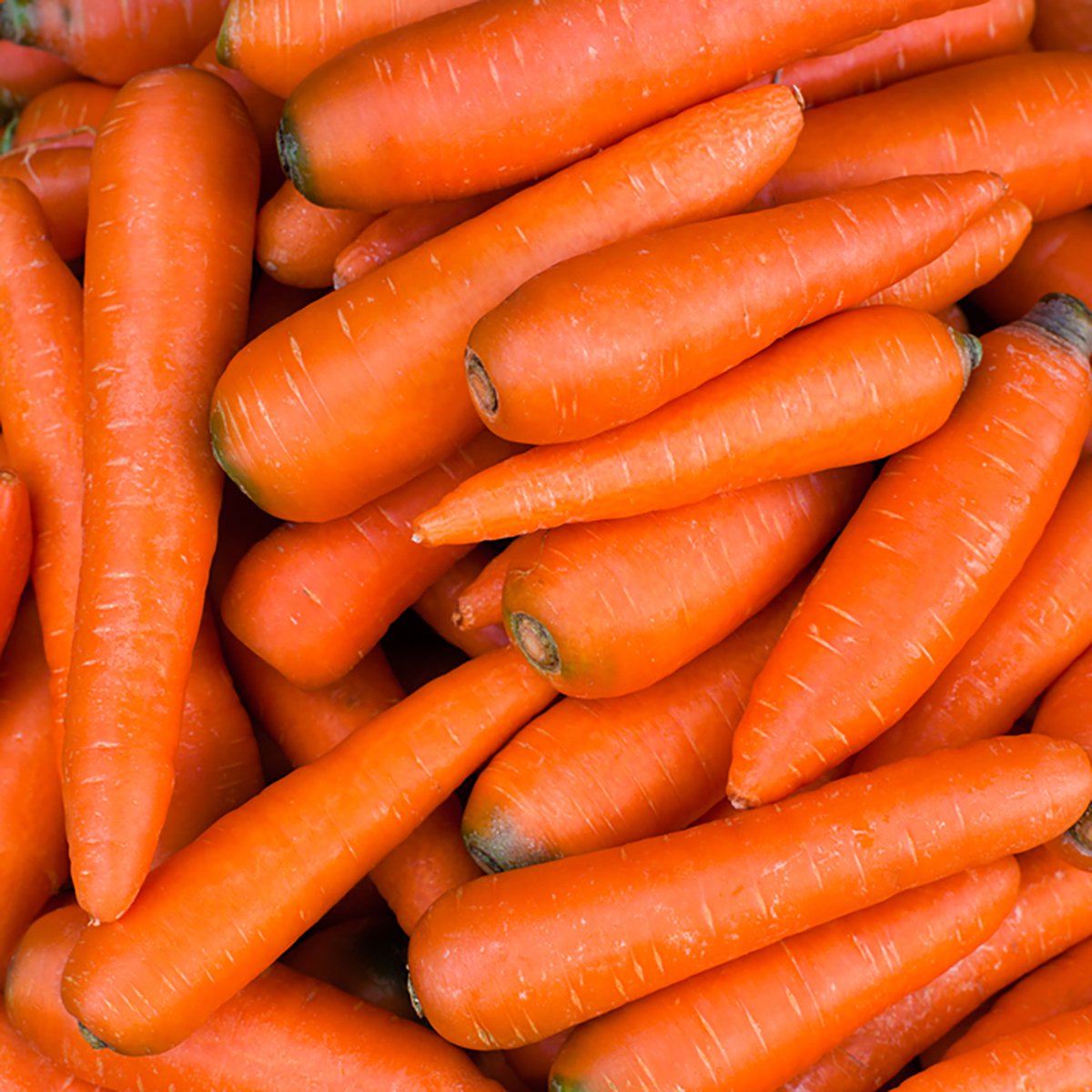
Carrots
These veggies supply a hearty helping of beta carotene, and that’s valuable. “Beta carotene is a precursor to vitamin A, a critical nutrient for skin health that also slows skin aging,” says Cynthia Bailey, MD, a dermatologist in Sebastopol, CA. “As an antioxidant, it helps fend off aging for your entire body, too. You get an added bonus because beta carotene warms your complexion, and a beta-carotene-rich glow has been scientifically proven to be more attractive than a suntan.” Carotenoids, such as beta carotene, are best absorbed when paired with healthy-fat foods. So enjoy carrots with eggs in a salad, puree them into a creamy soup, or dip them into guacamole.
Edamame
This hearty protein is full of good-for-you nutrients, including linoleic acid. “This is an essential fatty acid your body can’t make, so you must consume it in your diet,” says Joan Salge Blake, EdD, RDN, a clinical associate professor of nutrition at Boston University. “It’s also the most abundant fatty acid in your skin. In a study of about 4,000 women, people with a diet higher in linoleic acid were associated with a lower likelihood of skin atrophy, better known as the thinning of your skin and which also magnifies wrinkles on your face. The older women in the study who had lower dietary intakes of both linoleic acid and vitamin C also had drier skin.” Edamame is delicious slightly salted and served as a snack, mixed into a stir-fry or even blended into a breakfast smoothie.
Tea
“I always sip a warming cup of tea first thing in the morning, and its anti-aging benefits are just an added bonus,” says Toby Amidor, author of The Healthy Meal Prep Cookbook. “As you age, bone-mineral density tends to decrease, which can lead to fractures. A study published in the American Journal of Clinical Nutritionfound that elderly women who sipped on tea had a lower risk of bone fractures and had stronger bone-mineral density compared to women who did not include tea in their diet. Researchers in the study credited flavonoids in tea, which may help minimize the risk of osteoporosis, or brittle bones, as you age.” Drink tea straight up, or make a green tea latte.
Grapes
“I always make room for grapes in my daily diet.” says Amidor, a nutrition partner with Grapes from California. “The antioxidants and other polyphenols found in heart-healthy grapes may also play a role in healthy aging. Preliminary studies suggest that grape polyphenols may contribute to brain health, colon health, eye health and more. And they appear to help maintain cell health, which of course is critical to our overall health. Polyphenols are found in every part of the grape—the skin, flesh and seeds—and in grapes of all colors, including red, green and black.” Snack on frozen grapes, add them to a salad, or whip up a grape crostini.
Avocado
Avocados are full of monounsaturated fatty acids, and that’s a good thing. “Avocados contain anti-inflammatory fats that help to moisturize our skin, delay wrinkles and protect us from harmful toxins from the sun,” says Melissa Mitri, MS, RD, a dietitian in Milford, CT. “They’re delicious in smoothies, with eggs, in salads or made into guacamole.” Ani Petrosyan-Baran, LAc, an acupuncturist in Jersey City, NJ, enjoys eggs on whole-grain toast. “Or you can even have a quarter of an avocado, plain, to reap the benefits,” she says. Try it with a sprinkle of everything bagel seasoning!
Greek yogurt
“This type of yogurt is higher in protein than other yogurt, and as we age we need more protein-packed foods,” says Christine Rosenbloom, PhD, RD, a dietitian in Atlanta and author of Food & Fitness After 50. “Dairy like yogurt contains the amino acid leucine, a trigger for muscle building and repairs. And yogurt has calcium. I check the label for yogurt that contains vitamin D,” she adds. Your body needs vitamin D to optimally absorb calcium. Enjoy Greek yogurt in a parfait, in a smoothie or in a dip.
Walnuts
“These are a portable snack packed with anti-aging nutrients,” says Ginger Hultin, RD, a dietitian in Seattle and a spokesperson for the Academy of Nutrition and Dietetics. “These include healthy unsaturated fats such as alpha-linolenic acid, which is good for the heart, brain and skin. Walnuts are also a source of biotin for optimal skin, nail and hair health.” Walnuts are a great snack on their own, and they also make a delicious topping for salads.
Chia seeds
“Ah, where do I start with chia seeds?” says Arlene Dijamco, MD, an integrative physician in Roswell, GA. “They are packed with plant-based omega-3s, antioxidants and minerals important for clear thinking, memory, mood, heart rhythms and skin texture. The gel-like consistency of hydrated chia seeds provides soluble fiber that not only helps keep your digestive tract moving but also helps keep cholesterol levels balanced and helps you feel satiated—decreasing your likelihood of overeating. Plus, chia is so versatile. You can use chia seeds in drinks, pudding, oatmeal, veggie patties, salad, granola and as an egg replacement in baking.”
Berries
“I eat berries—strawberries, blueberries, blackberries, raspberries or cranberries—every single day,” says Sharon Palmer, RDN, a dietitian in Los Angeles and author of Plant-Powered for Life. “In the summer, I eat fresh berries. Then I switch to dried and frozen when they are out of season. The research on brain health benefits as they relate to cognition during aging is quite promising. Berries are packed with powerful antioxidant and anti-inflammatory compounds.” Berries provide vitamin C, a nutrient that helps you absorb plant-based iron from foods such as spinach, tomatoes and beans when the foods are eaten in the same meal. Add raspberries to a spinach salad, or enjoy a berry nice cream.
Eggs
“Protein-providing foods such as eggs help support muscle and metabolism,” says Jessica Crandall Snyder, RDN, CDE, a dietitian in Denver, CO. “This is especially important as you age, as most people lose 0.8 percent of their lean body mass every year after the age of 40. If you want to prevent muscle breakdown, eating protein-rich foods is critical. Also to properly support the recommended resistance training, you need protein to develop and maintain your lean muscle.” Enjoy eggs in an omelet, deviled or in faux fried rice.
Fatty fish
“Salmon, mackerel, tuna and sardines are fatty fish that contain high levels of omega-3 fatty acids, which are known to reduce inflammation in the body and skin,” says Tsippora Shainhouse, MD, a dermatologist in Los Angeles. “Two to three servings a week can also help reduce LDL cholesterol and triglyceride levels. Adding these fish to the diet helps balance the omega-3 to omega-6 ratio, the latter of which can actually trigger inflammation. Fish oil supplements can substitute for eating these healthful, fatty fish, but they don’t provide the low-calorie protein benefit of eating the fish itself.” Grill or broil salmon for dinner, or whip up a tuna salad.
Fatty fish
“Salmon, mackerel, tuna and sardines are fatty fish that contain high levels of omega-3 fatty acids, which are known to reduce inflammation in the body and skin,” says Tsippora Shainhouse, MD, a dermatologist in Los Angeles. “Two to three servings a week can also help reduce LDL cholesterol and triglyceride levels. Adding these fish to the diet helps balance the omega-3 to omega-6 ratio, the latter of which can actually trigger inflammation. Fish oil supplements can substitute for eating these healthful, fatty fish, but they don’t provide the low-calorie protein benefit of eating the fish itself.” Grill or broil salmon for dinner, or whip up a tuna salad.
Almonds
“I eat nuts daily—all types but especially almonds,” says Bonnie Taub-Dix, RDN, author of Read It Before You Eat It. “They help me feel full and they are heart healthy, as studies have shown that almonds might lower cholesterol levels. They also help keep blood sugar levels from spiking (because of the healthy fat within), they have a satisfying crunch and most of all they are decadently delicious. Although many of us have been fat phobic for years, it’s important to have healthy fats in our diet to help promote healthy skin as we age along with a sense of well-being.” Enjoy almonds as a snack, use them as an ingredient in energy bites or add as a topping to oatmeal.
Almonds
“I eat nuts daily—all types but especially almonds,” says Bonnie Taub-Dix, RDN, author of Read It Before You Eat It. “They help me feel full and they are heart healthy, as studies have shown that almonds might lower cholesterol levels. They also help keep blood sugar levels from spiking (because of the healthy fat within), they have a satisfying crunch and most of all they are decadently delicious. Although many of us have been fat phobic for years, it’s important to have healthy fats in our diet to help promote healthy skin as we age along with a sense of well-being.” Enjoy almonds as a snack, use them as an ingredient in energy bites or add as a topping to oatmeal.
Bread
“I know many people cut bread out of their diets as they age, but the carbs in bread help power me through my high level of physical activity, says Rosenbloom. “Bread also provides dietary fiber, B vitamins and iron. I like getting vitamins and minerals from foods instead of supplements. I enjoy both whole grains and enriched grains for variety.”
What’s the difference between whole grain and enriched, refined products? Whole grains contain the entire grain kernel—including the bran and germ—which provides dietary fiber and many important vitamins and minerals. Refined grains have been milled to remove the bran and germ—but most refined grains are enriched to add back nutrients such as iron, folic acid, riboflavin, thiamin and niacin after processing. Iron is a nutrient that’s under-consumed by women ages 19 to 50 in the United States, and eating both whole-grain and enriched-grain bread can help increase intake of this nutrient, which was labeled a nutrient of concern in the 2015-2020 Dietary Guidelines. These guidelines recommend that at least half of all grains consumed should be whole grains