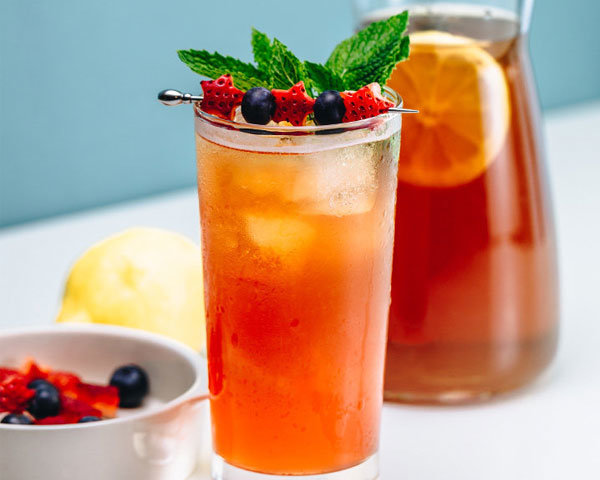
It was around 9 p.m. at a corner bar off a main drag in Greenpoint, Brooklyn. Two good friends and I raised froth-filled cocktail glasses, the loudest among us punctuating our cheers with a bellowing, “Yaas!” It was an entirely unexceptional scene that could have taken place in any one of New York’s thousands of bars. But there was one crucial difference. We were imbibing at Getaway, a two-week-old bar where no alcohol is served. Our highball and coup cups were filled not with the usual whiskey or mezcal, but a hodgepodge of gussied-up mocktail ingredients like coconut milk and elderflower syrup. Call us squares, suckers, or both, but we left the bar laughing, arms around each other. In that grand, drunk tradition, I told one friend how much I love her. We did not need alcohol to get to that happy place, but I’m sure our sugar high helped. Getaway is just one of the latest sober bars to open in New York. One pop up, Listen Bar, with faux beer and kombucha on tap, is currently crowdfunding for a permanent space. Ambrosia Elixirs, which promises “the taste of sacred intention” in every zero-proof sip, has been in Bushwick for three years, but will expand to spaces in Williamsburg and Manhattan this spring.
Across the pond in London, even famously beer-happy Brits can turn to he dramatically named Redemption Bar for beetroot martinis and “Pious Pina Coladas.” The bar’s founders, entrepreneurs Catherine Salway and Andrew Waters, were reportedly inspired to open Redemption after wondering, “Why should socializing always be at the expense of your health?” A few weeks before the opening of Getaway, Amanda Mull wrote in The Atlanticthat there is quite a bit of anecdotal evidence to suggest that “millennials are sick of drinking.” While statistics still show that more than 60 percent of 22 to 37 year olds drink alcohol every month, they might be drinking less. “What some have been quick to characterize as an interest in being sober might actually be more like a search for moderation in a culture that has long treated alcohol like a dichotomy: Either you drink when the opportunity presents itself, or you don’t drink at all,” Mull wrote. In this way, a kind of sober tourism has emerged. Think of friends who have gone alc-free for the 31 days of “Dry January” as a testament to willpower or made a point to buy less beer as a way to feel healthy. Regardless of how truly popular these subtle movements truly are, booze-less buzz has garnered enough interest for the wellness industry to take note.