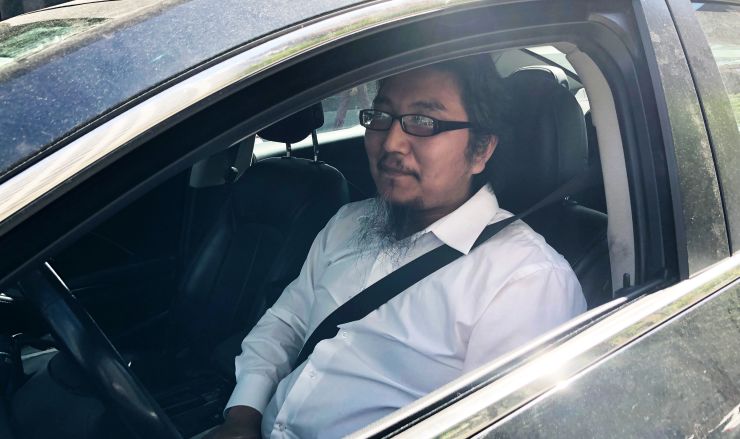
AT 3 A.M., SONAM LAMA’S ALARM goes off. In his house in Queens, New York, while his wife and baby son sleep, he pulls on his clothes and makes coffee. Then he turns on his Uber app and waits. On this morning, a warm but windy Tuesday in May, an hour passes without a passenger request. “You’re just thinking, ‘When is the ride going to come? When is the ride going to come?’” the 35-year-old Lama said. A little after 5 a.m., one does. In a collared, white button-down shirt and khakis, he’s dressed more formally than usual. Later in the day, he’s taking a test for a job with the New York Police Department. He doesn’t want to drive for Uber anymore. “I’m not making a living,” Lama said. “Almost all drivers are looking for work elsewhere.” The company labels its 3.9 million drivers as independent contractors instead of employees, a distinction that means it isn’t required to provide a minimum wage or paid time off, compensation for overtime or health insurance. And drivers are almost entirely on their own when it comes to the constant expenses of their cars, including insurance, repairs and gas.
Uber says it offers people a way to work on their own schedule. And while it insists its drivers are not employees, it says it’s committed to providing a support system to them. The company points out that it recently introduced a rewards program, which gets drivers cash back on gas and discounts on car maintenance. Drivers can also sign up for an injury protection plan, in which they’d receive a monthly check should they become injured while working. Perks include tuition assistance at Arizona State University. CNBC spoke with the company’s drivers about how their financial lives are faring.