As full sun-loving bedding plants that produce flowers in abundance, Lantanas
Lantanas The Verbena Relatives
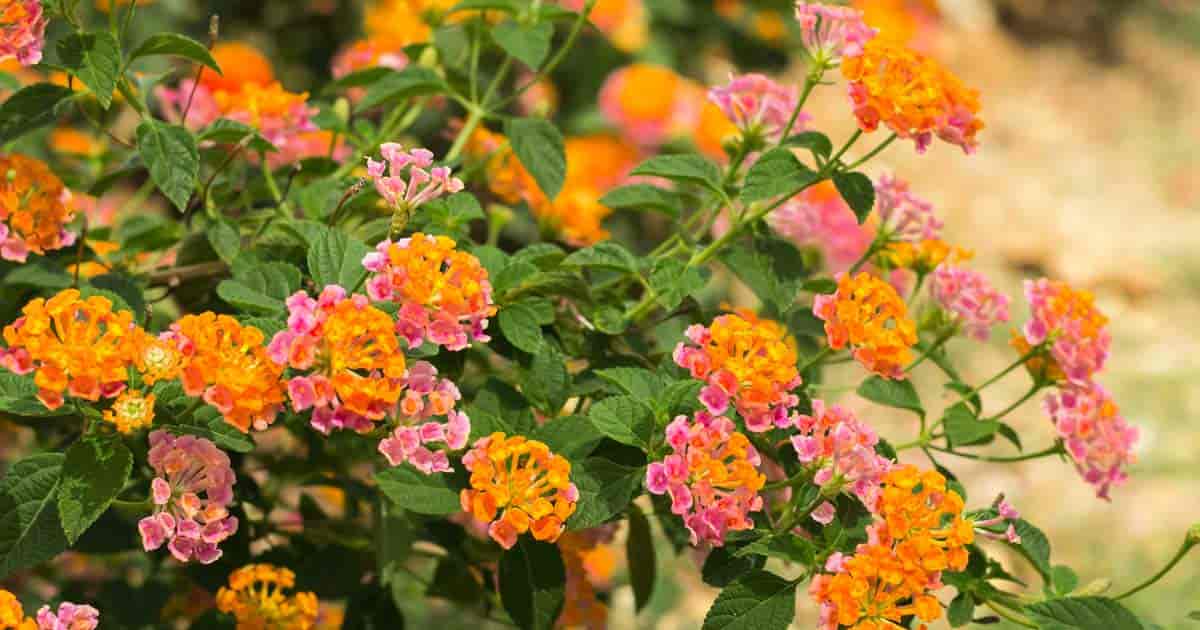
Lantana plants are members of the verbena plant family. The popular annual Verbena does not grow as tall as Lantana bushes and trees. However, their free blooming habits and small tubular clusters of flowers look very similar. Lantana flowers come in red, orange, pink, lavender and yellow. One variety has yellow blossoms that turn to orange as they age. This bicolor effect is striking Lantana foliage is rough to the touch, but as a whole produces a bank of pleasing deep green. Many new lantana flower colors and combinations have been developed over the years. Start your lantana collection by ordering new varieties in the spring. Not only does lantana produce flowers all summer long but they solve a common problem in the landscape – the space between a sidewalk and foundation, facing south. It is not only hot but often dry and they are drought tolerant. After a few weeks in late spring and early summer, when the young lantanas are getting established, they thrive in this difficult situation. Lantanas withstand the first light frosts of fall. If you want to carry over old plants to the next season, dig them. Prune the roots and tops back severely and pot in a moist mixture of equal parts sand, peat moss, and garden loam. Lantanas can be wintered in a cool, sunny window by keeping the soil on the dry side (but never completely dry).
Take Lantana Cuttings in August
During the outdoor season, lantanas may grow into small shrubs as tall as four feet and sometimes more. When this is the case, taking cuttings will be easier. It is not easy to “downsize” and pot oversized plants. To root the cuttings, first fill a pot or other container with moist, clean, gritty sand or perlite. Two parts sand (or perlite) and one peat moss make a good starter soil mix. NOTE: Less danger of fungus troubles if sand or perlite is used. Seed or root starter kits 
Lantana Flowers Attract Butterflies and Hummingbirds
Butterflies and hummingbirds show their approval of lantana flowers at certain seasons by coming regularly during the early morning and late afternoon for nectar from the flowers. For a thrill, note the hours they come and sit quietly near the lantanas.