Category: Survival Prepper

  • The Useful Knots Book: How to Tie the 25+ Most Practical Knots (Escape, Evasion, and Survival)

    The Useful Knots Book: How to Tie the 25+ Most Practical Knots (Escape, Evasion, and Survival)

    Click Here To Order

    Discover How to Tie the Only Knots You’ll Ever Need!

    Knowing how to tie knots is an important and useful skill, but some people get overwhelmed.

    There are many knots, far too many for the average person to remember them all.

    Fortunately, being able to tie just a handful of knots is enough to see you through.

    The Useful Knots Book is a no-nonsense knot guide on how to tie the 25+ most practical rope knots.

    It comes with easy to follow instructions and pictures for tying each of the knots. It also has tips on when to best use each knot.


  • Edible Wild Plants: A North American Field Guide to Over 200 Natural Foods

    Edible Wild Plants: A North American Field Guide to Over 200 Natural Foods

    Click Here to Order

    Planning an outdoor adventure? Make sure to consult this information-packed and photo-filled North American field guide—arranged by season and region—before you go!

    Already a huge success in previous editions, this must-have field guide now features a fresh new cover, as well as nearly 400 color photos and detailed information on more than 200 species of edible plants all across North America.

    With all the plants conveniently organized by season, enthusiasts will find it very simple to locate and identify their desired ingredients. Each entry includes images, plus facts on the plant’s habitat, physical properties, harvesting, preparation, and poisonous look-alikes. The introduction contains tempting recipes and there’s a quick-reference seasonal key for each plant.

  • The Bushcraft Field Guide to Trapping, Gathering, and Cooking in the Wild

    The Bushcraft Field Guide to Trapping, Gathering, and Cooking in the Wild

    Click Here to Order

    Renowned outdoors expert and New York Times bestselling author Dave Canterbury provides you with all you need to know about packing, trapping, and preparing food for your treks and wilderness travels. Whether you’re headed out for a day hike or a weeklong expedition, you’ll find everything you need to survive–and eat well–out in the wild.

    Canterbury makes certain you’re set by not only teaching you how to hunt and gather, but also giving you recipes to make while on the trail. Complete with illustrations to accompany his instructions and a full-color photo guide of plants to forage and those to avoid, this is the go-to reference to keep in your pack.

    The Bushcraft Field Guide to Trapping, Gathering, and Cooking in the Wild helps you achieve the full outdoor experience. With it, you’ll be prepared to set off on your trip and enjoy living off the land.


  • Gluten Free Ultimate Emergency Preparedness Food & Water Package

    Gluten Free Ultimate Emergency Preparedness Food & Water Package

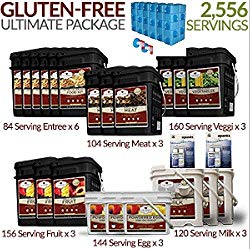
    NEW!! “Gluten Free” 2556 Serving Ultimate Emergency Preparedness Food & Water Package. 6 Month Supply for 1 Person, Factory Sealed and Currently Dated for Freshness! Contains: (32) Blue or Tan 3.5 Gallon WaterBricks (112 Gallons of Clean Water), (2) Waterbrick Spigots, (2) Aquamira 60 Gallon Water Treatment Solution, Gluten-Free Savings Bundle Includes: (6) buckets (84 servings) of gluten-free breakfast and entrees, (3) buckets (120 servings) of long-term whey milk, (3) buckets (156 servings) of fruit, (3) buckets (160 servings) of vegetables, (3) buckets (104 servings) of meat, (3) buckets (144 servings) of powdered eggs. You save more versus buying each bucket individually…Are You Prepared?

    Click Here for More Information

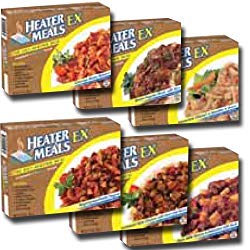
  • Heater Ex Meals Hot Meals 12 Assorted / Heater in the Box12 meals total. These 9 ounce meals come in a box that serves as the oven to cook the meal in. The box contains the heating element to have a hot meal in 5 minutes. Up to 5 year shelf life. Each Case Includes two: Chicken Pasta Italiana Green Pepper Steak with Rice Homestyle Chicken Noodles in Gravy Vegetarian Pasta Fagioli Southwest Style Chicken with Rice and Beans Zesty BBQ Sauce Potatoes with Beef

    Heater Ex Meals Hot Meals 12 Assorted / Heater in the Box12 meals total. These 9 ounce meals come in a box that serves as the oven to cook the meal in. The box contains the heating element to have a hot meal in 5 minutes. Up to 5 year shelf life. Each Case Includes two: Chicken Pasta Italiana Green Pepper Steak with Rice Homestyle Chicken Noodles in Gravy Vegetarian Pasta Fagioli Southwest Style Chicken with Rice and Beans Zesty BBQ Sauce Potatoes with Beef

    12 meals total. These 9 ounce meals come in a box that serves as the oven to cook the meal in. The box contains the heating element to have a hot meal in 5 minutes. Up to 5 year shelf life. Each Case Includes two: Chicken Pasta Italiana Green Pepper Steak with Rice Homestyle Chicken Noodles in Gravy Vegetarian Pasta Fagioli Southwest Style Chicken with Rice and Beans Zesty BBQ Sauce Potatoes with Beef

    • 12 meals total
    • 9 Ounce meals for camping or emergency situations
    • Hot meals in 5 minutes
    • Up to 5 year shelf life
    Click Here for more Information

  • MRE STAR Preparedness Packages – 60 or 20 Cases

    MRE STAR Preparedness Packages – 60 or 20 Cases

    FREE Shipping, MRE (Meals Ready to Eat), means that all the contents are fully cooked and can be eaten hot or cold. Each MRE has an average of 1,100-1,300 calories, which replicates the calorie count of a complete meal. There is no need to add water to an MRE. Simply open the pouch and enjoy! MREs are perfect for any outdoor use and/or emergency situation. Their aluminum thermo stabilized pouches provide a long shelf stable without refrigeration. Many private entities, law enforcement, hospitals, fire departments, FEMA, Red Cross and government agencies storage depend on MREs as a part of their emergency plan for food supplies. Our PREPAREDNESS PACKAGES can be bought either 20 or 60 cases of MRE STAR MRE’s. MRE’s Come with 12 Complete Meals per Case delivered to your door. Complete Meals Include: 8oz entree, 2oz dried fruit mix, 2oz nut and raisin mix, 2oz sugar cookies, 24g fruit flavored drink mix, Accessory Pack (utensil, coffee, sugar, creamer, salt, pepper, napkin, wet napkin, IRH – flameless entree meal heater. Entree Varieties Include:Beef Stew, Chicken Noodle Stew, Chicken with Rice and Vegetables, BBQ Chicken with Black Beans and Potatoes, Cheese Tortellini, Pasta with Marinara Sauce, Pinto Beans and Ham, Lentil Stew with Ham, Vegetarian Chili, 6 Entree Varieties in each Case (2 of each), 12 Complete Meals in each Case. SHELF LIFE – Our meals meet the military specifications of the MRE industry; however, shelf life depends on storage conditions, average life is approx 5-10 years….Are You Prepared?

    Click Here for more information

  • GXV Patagonia Expedition Vehicle | Cool Material

    GXV Patagonia Expedition Vehicle | Cool Material

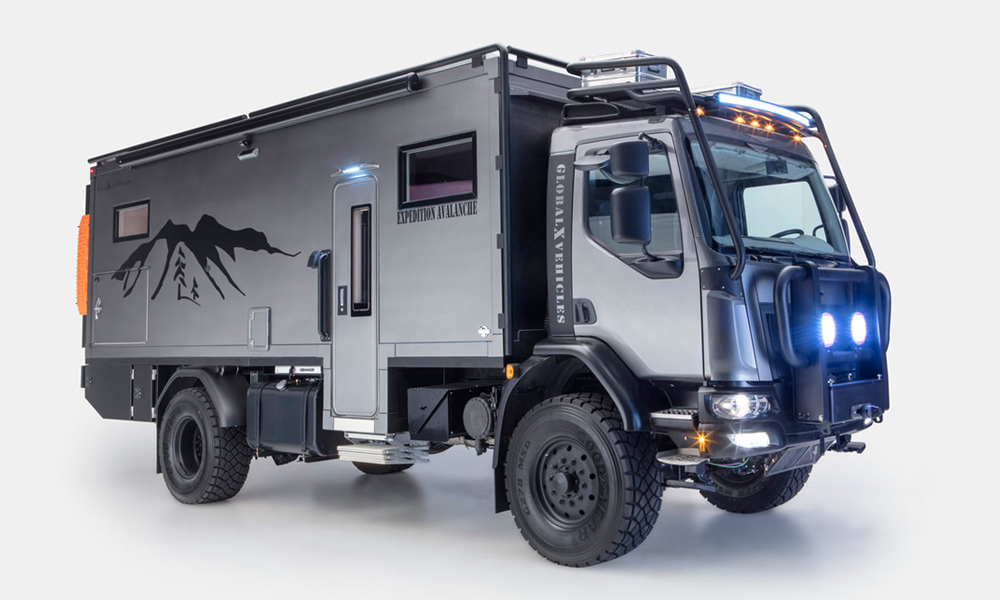
    You can keep your freakin’ Winnebago because you’ll struggle to get over that mall curb trying to escape the teeming hordes of post-apocalyptic mad cow disease-ridden zombies. That’s where the Global Expedition Vehicles Patagonia conquers all thanks to its rugged and battle-ready specifications that are more related to big off-roaders than they are to family campers, though the interior appointments may have you thinking otherwise. Using already toughened vehicles like the medium-duty Mercedes-Benz Unimog or Kenworth as the base truck, the Patagonia adds daily livable features like a kitchen, full bathroom, bed, dining table, diesel generator, and even solar power so off-the-grid survival doesn’t seem like survival at all. For a little more coin, you can add heated floors, a sofa, king-size bed, winch, roof box, extra charging batteries, and even an induction stove and a motorcycle lift, just to name a few. The options seem endless, as does the Patagonia’s capabilities for when the shit goes down.

    This content was originally published here.

  • How much rooftop solar does it take to cover your daily EV recharging? | One Step Off The Grid

    How much rooftop solar does it take to cover your daily EV recharging? | One Step Off The Grid

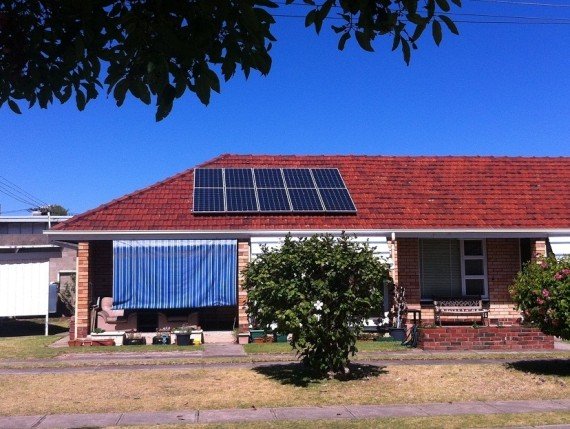
    So you’ve got rooftop solar, and you’ve got an electric vehicle. But can you power both your house and your car with the one PV system?

    The answer, of course, is complicated. It depends on the size of your rooftop solar system, the time of day you want to charge your car, the battery size of your EV, and how much you drive around every day.

    The short answer, however, from solar brokerage company Shine Hub, is that it is possible to get extra panels and batteries to cover most if not all ordinary commutes – as long as you “top up” each time. It will be hard to  charge a car battery from near empty to full with only rooftop solar.

    “Instead of aiming to recharge a completely flat battery, households should endeavour to be able to recharge the car from a typical day of driving around your community,” says Shine Hub CEO Alex Georgiou.

    “This is much more achievable and won’t break the bank.”

    But it will still mean adding extra panels, and possibly a battery storage system, depending on when you are most likely to need to charge your car.

    Shine Hub put together the below table working on a few assumptions, including that a typical home uses around 20kWh of electricity a day – which could be covered by a 5kW (16 panels) solar system; and that a typical driver has a commute of between 10km/day to 60km/day.

    Table: How many panels you would need to cover your daily EV driving with solar?

    By Shine Hub’s calculations, a commute of 40 km/day would use only around 15 per cent of the battery of a Nissan Leaf, or around 8 per cent of a Tesla battery.

    In terms of kWh of electricity, you would need an extra solar supply of 6kWh/day for the Nissan Leaf, or 8kWh/day for the Tesla, to recharge your EV from solar for that 40 km/day.

    Which means that, for most people, the average solar system of around 5kW would be plenty to provide the day-to-day top ups, during the day.

    By adding a battery storage system you can use some of that electricity at night. A system ranging from 5kWh to 15 kWh would to store between 25 per cent to 75 per cent, respectively, Georgiou says.

    As for how much extra solar would be needed for a full EV charge? To work this out, you need to factor in the car’s battery size.

    The examples Shine Hub uses are a Nissan Leaf, fitted with a 40kWh battery pack and with a range of around 270km.

    At the other end of the scale is a top-range Tesla, with a 100kWh battery pack and a range of around 540km.

    Take the Nissan Leaf example to start. Georgiou says to full charge the car’s battery during the day using solar power, households would need to add an additional 10kW (32 panels) to their rooftop system.

    That will produce an additional 40kWh/day which is the same amount of power required for a full car charge, he says.

    If you wanted to fully charge your EV overnight, when you got home from work, you would need to install 40kWh of battery storage as well.

    As for the Tesla, you would need to an additional 25kW solar system (80 panels), and 100kWh of battery storage if you want to charge it at night.

    As Georgiou notes, this could be pretty difficult, considering it is rare that network operators will allow any home to install more than 15kW of solar panels.

    “Renewable energy is never a ‘one size fits all’ approach,” he said.

    “We’re moving towards a future where EV charging stations will be common fixtures in our communities – they will be found at our workplaces, our shopping centres, along our highways and of course within our homes, potentially as part of community virtual power plants.

    “So, if you’re considering solar with an EV future in mind – make sure you consider the bigger picture, and plan for the future.”

    This content was originally published here.

  • Companies planning to go off the grid – Moneyweb

    Companies planning to go off the grid – Moneyweb

    Forward-thinking businesses in SA are now starting to confront life without Eskom by putting plans in place to generate their own energy.

    Anglo Platinum and Sibanye-Stillwater are two high profile companies at an advanced stage of planning for solar plants to generate their own electricity. The City of Joburg wants to cement a deal with Harith-owned Kelvin Power Station to purchase power as a way to prevent load shedding, which has done incalculable harm to businesses in the city.

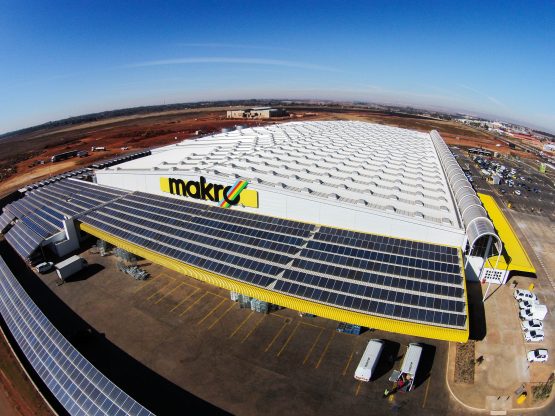
    Other companies are further advanced in their plans to reduce their dependence on Eskom power. In 2016 Makro erected solar panels on the roof of its Makro Carnival store on the East Rand to generate 60-80% of its energy needs during the day, equivalent to 30% of the store’s annual energy needs. Many smaller businesses have invested hundreds of thousands of rands in generators to serve as back-up power sources in the event of outages.

    ‘No plan’ from government

    In his state of the city address last month, Joburg mayor Herman Mashaba said load shedding would be a reality in the coming years, and the national government had not come up with a plan to solve it. Though Eskom has attempted to block the city from sourcing electricity directly from Kelvin Power Station, Mashaba said he was looking at legal options as well as a direct approach to Kelvin over the prospect of securing a supply contract.

    Kelvin has a 600 megawatt (MW) capacity, but is currently producing just 200MW, and even that will be shut down within the next two to three years. One of the options being explored is the installation of gas turbines from about 2023 onwards to ramp up output to the original design capacity of 600MW, pending the availability of a reliable gas supply. This is still just a fraction of Joburg’s total electricity consumption, but sufficient to prevent most of the outages experienced by businesses over the last six months.

    The City of Joburg’s 2018 financial results show a 6% drop in electricity sales. Though some of this was due to outages, there is also evidence of businesses switching to alternative energy sources, according to Ratings Afrika’s latest Municipal Financial Sustainability Index (MFSI) for 2018.

    Des Muller, MD of energy advisory group NuEnergy Developments, says there is a direct correlation between SA’s declining economic growth and the commencement of electricity blackouts starting in 2007.

    “Stable and sufficient electricity supply is a precondition for any growing economy, and there is plenty evidence from around the world that those countries that can guarantee reliable power at a good price are those countries that grow the fastest,” he says. He warns that South Africa’s electricity challenges will remain in the foreseeable future and companies need to be prepared, but urges taking sound independent advice before plunging into self-generation solutions.

    Aluminium businesses have already left SA

    In 2012 Eskom paid energy-guzzling aluminium smelters to shut down furnaces so it could redirect power for use elsewhere in the economy. This has driven energy-intensive businesses to other countries in the Far East where power supply is stable and affordable.

    As part of its medium- to long-term energy management strategy, Sibanye-Stillwater is pursuing the first 50MW phase of its solar photovoltaic (PV) project to be built on a site strategically placed between the Driefontein and Kloof mining complexes on the West Rand. “The project, originally envisioned in 2014, represents a partial solution to securing an alternative electricity supply, representing approximately 3% of our total electrical energy requirements in SA, and enables the power generated to be fed directly into the mine’s electrical reticulation while reducing our overall electricity expenditure and carbon footprint,” says the group’s head of investor relations, James Wellsted.

    “We cannot disclose costs of the plant or the cost of the electricity through the PPA [power purchase agreement], however, we can state that solar PV power offers a cost-effective alternative to Eskom already.”

    Sibanye-Stillwater ran a competitive tender process to appoint a developer to build, own and operate the project, and sell power back to the mining group through a PPA. This approach has a minimal upfront capital requirement for Sibanye-Stillwater and allows capital to be prioritised for core mining projects. The tender was successfully concluded in 2017, suggesting a significant forecasted return to Sibanye-Stillwater over the course of the agreement. Although several regulatory delays (including policy uncertainty and contracting issues relating to Eskom) were experienced in 2018, resolutions are expected to be reached in 2019. A decision to proceed with the PPA will then be made.

    AngloPlat still to make final decision

    Though Anglo Platinum has yet to make a final investment decision, it is exploring a 167 gigawatt hour (GWh) per annum solar PV plant at Mogalakwena, representing roughly 21% of its annual 777 GWh consumption.

    Anglo Platinum says it wants to optimise the value of its overall portfolio, including improved energy management and planning for future energy sustainability in response to rising cost pressures in the mining sector. Efficiency measures have been implemented since 2013; however, this is not enough to counter the projected cost increases and the requirement for sustainable energy.

    In 2017 the mining group started formalising its alternative energy strategy by transitioning to sustainable energy sources that reduce carbon emissions and provide predictable cost and energy efficiency.

    Anglo Platinum is considering one of two options for the project development: the IPP option, or to self-build, own and operate.

    These projects require a generation licence from the National Energy Regulator of South Africa (Nersa) and exemption from the minister of energy.

    The mining group says it is currently negotiating land sites, host-community participation and Mining Charter 2018 compliance.

    Based on current progress, the solar generation plant should be operational by mid-2021.

    This content was originally published here.

  • BioLite Basecamp Wood Burning Stove System

    BioLite Basecamp Wood Burning Stove System

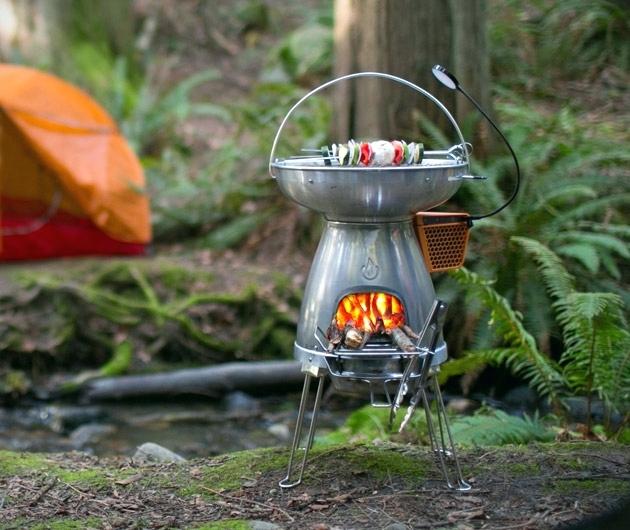
    • excess heat is converted into electricity and stores it in the integrated 2200mAh Lithium ion battery. Stored energy can be used later, even without a fire. Battery recharges automatically every time you build a fire. Powerbank provides 5 watt (5 volt) USB output to charge your devices including cell phones and smartphones. Smart LED Dashboard monitors your power generation and battery level.
    • Large Group Cooking: 138 square inch grill surface fits 8 burgers using energy efficient outdoor and off-grid cooking. Uses solid biomass (twigs, firewood, wood chunks, etc.)
    • Flexible arm light with USB pass-through. Light your meal and keep a device charging at the same time.
    • Grill-to-Boil Lever: Transform flame from dissipated heat for grilling to direct heat for pot boiling, at the flip of a switch.
    • Set includes: BioLite BaseCamp, Fire starters, Fuel Rack, Ash Tray, Gooseneck USB light, and Instructions, all weighing under 18 pounds.
    Click here for more information