Category: US News

  • Here Are The Details On California’s Sex Education

    Here Are The Details On California’s Sex Education

    • The California Board of Education, Planned Parenthood, and the ACLU created and implemented a progressive sex education and gender theory agenda.
    • Students are shown sexually explicit content from kindergarten through 12th grade. 
    • Topics include fisting, blood play, masturbation, oral sex, and more.  

    The California Board of Education implemented progressive sex and gender education curriculum in public schools across the state, regardless, in some cases, of parental knowledge or consent.

    Both of these pieces of education legislation mandate that school districts require sex ed and encourage students to question their parents on sexual topics – topics explored in the kindergarten through 12th grade sex education curricula implemented in California schools.

    Lawmakers Create The California Healthy Youth Act, A Bill Mandating K-12 Sex Ed

    AB-329, otherwise known as the California Healthy Youth Act, was created in 2016 and has several aimed purposes.

    The bill aims to teach K-12 students how to ward off HIV and other STDs, to teach “healthy attitudes” towards sexual orientation, gender, and relationships, and to “promote understanding of sexuality as a normal part of human development.”

    The bill also promises to “provide educators with clear tools and guidance to accomplish that end.”

    AB-329 allows for parents to opt their children out of sexual education. However, the bill prohibits parents from opting their children out of materials that discuss gender, gender identity, gender expression and sexual orientation.

    The law also prohibits abstinence-only education and prohibits any discussion of religious doctrine, according to an ACLU handout.

    The handout adds that beginning in seventh grade, children must be taught “all FDA-approved methods preventing pregnancy and transmission of HIV and other sexually transmitted infections (including condoms, contraceptives, and antiretroviral treatment) and abstinence.”

    Educators Must “Affirmatively Recognize Different Sexual Orientations And Be Inclusive”

  • ‘The Real College Scandal’ — Tucker Exposes The ‘Quid Pro Quo’ Between Ivy League Schools And Prominent Democrats

    ‘The Real College Scandal’ — Tucker Exposes The ‘Quid Pro Quo’ Between Ivy League Schools And Prominent Democrats

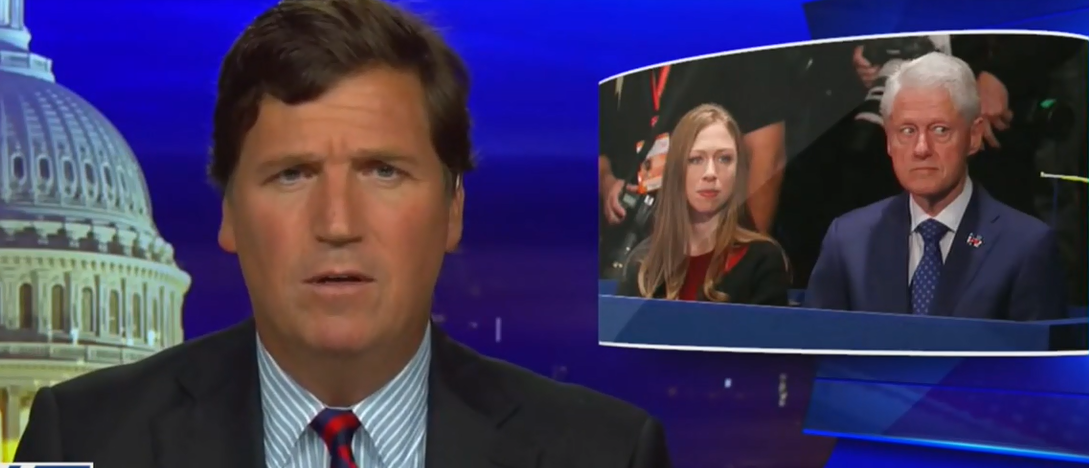
    Tucker Carlson described the fact that politicians — particularly Democrats — manage to get their children into elite Ivy League schools at an astonishingly disproportionate rate compared to the general public as “the real college scandal.”

    The Fox News host included several examples during a segment on Monday night’s edition of “Tucker Carlson Tonight,” including the Cuomo, Gore, Clinton, and Obama families, and juxtaposed the legality of that with Hollywood figures and others currently in legal trouble for trying to bribe their kids’ way into some of the same schools.

    WATCH:

    Carlson began the segment by focusing on CNN anchor Chris Cuomo, who went to Yale despite the fact that “there are nights when Cuomo emits entire paragraphs that mean nothing at all.”

    “Is Chris Cuomo a secret genius?” Carlson asked rhetorically. “Does he have some amazing talent that’s invisible on television? Maybe he speaks flawless Urdu? Or has a deep grounding in particle physics? Perhaps he can calculate pi to the final digit? Actually, no. Chris Cuomo can’t do any of that.”

    source

  • Jeffrey Epstein Documents Could Expose Powerful Politicians, Businessmen

    Jeffrey Epstein Documents Could Expose Powerful Politicians, Businessmen

    Topline: A federal appeals court Wednesday ordered that 167 documents in a lawsuit that alleges famously well-connected financier Jeffrey Epstein participated in a sex-trafficking ring should be unsealed—and that many of his powerful friends could be named.

    • In its 27-page decision, the court cited the public’s right to access the case information outweighed the privacy of certain individuals, “including numerous prominent American politicians, powerful business executives, foreign presidents, a well‐known Prime Minister, and other world leaders.”
    • Virginia Guiffre (now Roberts) filed the lawsuit against Ghislane Maxwell, alleging that she had used her as part of a sex trafficking network of underage girls to Epstein and a number of his famous friends, including his lawyer Alan Dershowitz and Prince Andrew. Both men denied the accusations.
    • Dershowitz has supported unsealing the documents, according to the Daily Beast.
    • The documents will not be immediately available, as anonymous individuals involved in the case have two weeks to file appeals.
    • The court advised the documents be read carefully. “We therefore urge the media to exercise restraint in covering potentially defamatory allegations, and we caution the public to read such accounts with discernment,” wrote the court in its decision.

    Key background: Epstein had previously been charged in 2007 in a 53-page indictment. As the Miami Herald revealed in its investigative series “Perversion of Justice,” Epstein managed to escape all federal charges through a plea deal that gave him and all of his coconspirators immunity, with all documents being sealed. Epstein ended up pleading guilty to one state prostitution charge in Florida. He then registered as a sex offender and paid unspecified restitution to three dozen victims identified by the FBI. The contentious plea deal was orchestrated by U.S. attorney Alexander Acosta, now President Trump’s secretary of labor. The Miami Herald’s reporting prompted calls for Acosta to resign, but he has remained in his Cabinet post.

    In February, a U.S. district judge determined federal prosecutors, including Acosta, broke the law by failing to notify victims before Epstein pleaded guilty to the Florida prostution charge. That decision could potentially nullify Epstein’s plea deal, opening him up to new federal charges. But prosecutors are challenging this ruling.

  • 1 in 4 Americans have no plans to retire

    1 in 4 Americans have no plans to retire

    According to the poll from The Associated Press-NORC Center for Public Affairs Research, 23% of workers, including nearly 2 in 10 of those over 50, don’t expect to stop working. Roughly another quarter of Americans say they will continue working beyond their 65th birthday. According to government data, about 1 in 5 people 65 and older was working or actively looking for a job in June. For many, money has a lot to do with the decision to keep working. “The average retirement age that we see in the data has gone up a little bit, but it hasn’t gone up that much,” says Anqi Chen, assistant director of savings research at the Center for Retirement Research at Boston College. “So people have to live in retirement much longer, and they may not have enough assets to support themselves in retirement.” When asked how financially comfortable they feel about retirement, 14% of Americans under the age of 50 and 29% over 50 say they feel extremely or very prepared, according to the poll. About another 4 in 10 older adults say they do feel somewhat prepared, while just about one-third feel unprepared. By comparison, 56% of younger adults say they don’t feel prepared for retirement.
     Among those who are fully retired, 38% said they felt very or extremely prepared when they retired, while 25% said they felt not very or not at all prepared. “One of the things about thinking about never retiring is that you didn’t save a whole lot of money,” says Ronni Bennett, 78, who was pushed out of her job as a New York City-based website editor at 63.She searched for work in the immediate aftermath of her layoff, a process she describes as akin to “banging my head against a wall.” Finding Manhattan too expensive without a steady stream of income, she eventually moved to Portland, Maine. A few years later, she moved again, this time to Lake Oswego, Oregon.“Sometimes I fantasize that if I win the lottery, I’d go back to New York,” says Bennett, who has a blog called Time Goes By that chronicles her experiences aging, relocating and, during the past two years, living with a pancreatic cancer diagnosis.

    Meanwhile, Americans have mixed assessments of how the aging workforce affects workers: 39% think people staying in the workforce longer is mostly a good thing for American workers, while 29% think it’s more a bad thing and 30% say it makes no difference. A somewhat higher share, 45%, thinks it has a positive effect on the U.S. economy. Working Americans who are 50 and older think the trend is more positive than negative for their own careers – 42% to 15%. Those younger than 50 are about as likely to say it’s good for their careers as to say it’s bad. Just 6% of fully retired AP-NORC poll respondents said they left the labor market before turning 50. But remaining in the workforce may be unrealistic for people dealing with unexpected illness or injuries. For them, high medical bills and a lack of savings loom large over day-to-day expenditures. “People like me, who are average, everyday working people, can have something catastrophic happen, and we lose everything because of medical bills,” says Larry Zarzecki, a former Maryland police officer who stopped working in his 40s after developing a resting tremor in his right hand and a series of cognitive and physical symptoms he at times found difficult to articulate. At 47, he was diagnosed with Parkinson’s disease. Now 57 and living in Baltimore, Zarzecki says he has learned “to take from Peter and give to Paul, per se, to help make ends meet.” Zarzecki has since helped found Movement Disorder Education and Exercise, a nonprofit organization that offers support and treatment programs to those with similar diseases and certain traumatic brain injuries. He has also helped lobby state and national lawmakers to address rising prescription drug prices. He receives a pension and health insurance through the state, but he spends more than $3,000 each year out of pocket on medications.

    “I can’t afford, nor will my insurance cover, the most modern medication there is for Parkinson’s,” he says. “Eat, heat or treat. These are decisions that people in my position have to make. When it’s cold out, or if it’s real hot out, do you eat, heat (your home) or treat (your ailment)?”

    source

  • ‘Someone needs to tell her that the voices in her head are not real’ – Sen. Kennedy on AOC’s border comments

    ‘Someone needs to tell her that the voices in her head are not real’ – Sen. Kennedy on AOC’s border comments


    Republican Sen. John Kennedy of Louisiana ridiculed Rep. Alexandria Ocasio-Cortez (D-N.Y.) and defended the conditions at the border detention facilities in an interview Tuesday.

    Kennedy was asked to reply to claims from Ocasio-Cortez that the detention centers were being run like a “concentration camp.”

    “Let me be frank. Congresswoman Ocasio-Cortez,” explained Kennedy, “someone needs to tell her that the voices in her head are not real.”

    Ocasio-Cortez claimed that migrant detainees were being made to drink out of toilets, but border officials denied the claim, saying that drinking water sings were built into the urine stalls, and that this was a standard detention policy.

    “She says that the men and women of our Border Patrol and our authorities are intentionally running concentration camps on the southern border,” Kennedy continued. “She needs to go to the Holocaust Museum and see what a concentration camp is.”

    He went on to say that Ocasio-Cortez bears some of the blame for the crisis.

    “The problem we’re having at the border, a problem that Congresswoman Ocasio-Cortez has helped create, is that we have 5,000 people a day, not a week, not a month, a day coming into this country. We don’t have a place to put them,” he explained.

    “The Department of Homeland Security is out of money and the congresswoman knows that. She says the conditions are inhumane. But yet, when we send a bill over to her to vote to improve those conditions, she voted no,” Kennedy continued.

    “Her hypocrisy is breathtaking,” he added.

    “This is the bottom line,” Kennedy concluded. “Congresswoman Ocasio-Cortez believes that illegal immigration is a moral good. And she believes that the border is just a nuisance and it should be open, and I don’t think that’s what America believes.”

    Kennedy’s argument against Ocasio-Cortez is backed by Rep. Dan Crenshaw (D-Texas), who pointed out that Democrats were given a chance to vote for funding to alleviate the border crisis, and didn’t.

    Here’s Crenshaw on Ocasio-Cortez:

    Crenshaw: Ocasio-Cortez is ‘getting bolder with her lies’

    This content was originally published here.

  • Russian Sub That Caught Fire Possibly Sent to Cut Internet Cables

    Russian Sub That Caught Fire Possibly Sent to Cut Internet Cables

    On Monday, a Russian submarine caught fire during a mission, killing 14 sailors on board.

    But the public didn’t find out about the incident until the next day, when Russia finally released a statement about the accident — though two days after the event, the nation still wouldn’t say exactly what kind of sub caught fire or whether it was nuclear-powered.

    A possible reason for Russia’s caginess? Multiple sources are now claiming the sub was an AS-12 “Losharik,” a nuclear-powered submarine some speculate was designed to cut the undersea cables that deliver internet to the world.

    Russian media outlets RBC and Novaya Gazeta have both cited anonymous sources who claim the submarine was a Losharik, and while the sub has been in operation since 2003, Russia has never come out and declared its official purpose.

    That hasn’t stopped the U.S. and other Western officials from conjecturing about it, though.

    For years, they’ve warned that Russia has been surveying undersea cables, and experts have called out the Losharik by name as possibly playing a role in future missions to disrupt those cables.

    Of course, there’s another possible reason for Russia’s lack of openness about Monday’s incident: if the Russian sub was a Losharik, that means a nuclear-powered craft just caught fire.

    On Tuesday, Norwegian authorities reported that they hadn’t detected any abnormal radiation in the area of the fire. But the fact that Russia itself hasn’t released a similar statement is cause for serious concern, according to Russian news site The Bell.

    “Nearly a day without information about the accident in a nuclear facility and the need to look out for Norwegian statements about the level of radiation should have given a shudder to those who remember the Chernobyl nuclear power station,” the site wrote about the fire, according to Reuters.

    READ MORE: Russia accused of cover-up over lethal submarine fire[Reuters]

  • Donald Trump’s visit to Kim Jong-un impresses South Korea residents – Washington Times

    Donald Trump’s visit to Kim Jong-un impresses South Korea residents – Washington Times

    SEOUL — Kim Sang-won liked President Obama a good amount, but there was one problem: He didn’t do enough for Koreans.

    The Seoul native said President Trump, unlike past American presidents, is showing up and putting elbow grease into the effort to strike peace in a conflict now 7 decades old.

    “He’s going to be very creative,” Mr. Kim, 49, said as he strolled through the busy Myeongdong neighborhood Saturday, about 24 hours before Mr. Trump proved his point by becoming the first sitting president to step into North Korea while visiting the Demilitarized Zone.

    The DMZ is a reminder that the three-year military conflict between the North, backed by China and the Soviet Union, and the South, backed by the U.S., ended with an armistice in 1953 instead of a peace treaty and thus is still formally ongoing.

    After three previous administrations spent time trying to manage North Korea’s nuclear ambitions, Mr. Trump took office with a concerted push for direct dialogue with North Korean leader Kim Jong-un.

    The move earned Mr. Trump kudos on the streets of Seoul over the weekend even if the locals — most of whom spoke to The Washington Times through an interpreter — say his manner can be off-putting at times.

    “Not bad,” 15-year-old Lee Sang-min said when asked to appraise Mr. Trump. “I think he’s very brave and he has a lot of confidence when he speaks.”

    Kwak Moon-hee, 69, said she thinks Mr. Trump should win reelection.

    “Some people say that Trump is too stubborn and too strong, but I personally think he’s trustworthy and I like him,” she said, explaining that past American leaders were too pessimistic or passive on Korean issues.

    Trump is actually the first one among U.S. presidents who is very actively involved in Korean Peninsula issues, and, from a Korean citizen’s perspective, I think it’s something we should be very thankful about,” she said.

    Mr. Trump’s arrival in Seoul late Saturday drew hundreds of flag-waving supporters greeting the president and another contingent protesting his arrival.

    “In good terms, he looks very confident. In bad terms, he looks very aggressive,” Lee Yeon-jung, 27, said at one of the many Starbucks that dot this city of nearly 10 million people.

    South Korean President Moon Jae-in said he hopes the president’s visit will accelerate peace between the two Koreas, which remain divided decades after the end of the Cold War that created the division.

    More than 8 in 10 South Koreans last year said they support a peace agreement to replace the 1953 armistice, according to Real Meter, a polling firm.

    Unification of north and south is a thornier issue. Many South Koreans say it is a worthy goal, though perhaps one that future generations should pursue given the burdens of assimilating one of the world’s richest and most technologically advanced countries and one of its poorest.

    “It would mean opening up their country to a dysfunctional, totalitarian state and having to absorb people from North Korea into a South Korea where good jobs are hard to find,” said Scott Seaman, a director for Asia at the Eurasia Group.

    “For most young South Koreans, North Korea is not a factor in their lives, even though it presents a security threat,” he said. “Older people might have memories of the war, relatives in the North and nostalgia for one Korea. In contrast, young people are busy building their lives, trying to build their careers and start families. North Korea is like the moon to them.”

    Shin Beomchul, an analyst on inter-Korean relations at the Asan Institute — a nonpartisan think tank in Seoul — said younger people are aware of the “German case,” in which the 1990s unification of democratic West Germany and communist East Germany created years of economic drag.

    Mr. Kim, the South Korean businessman who spoke to The Times, would know. He has been living in Germany for nine years as a senior researcher for the Korea Institute of Science and Technology in Europe, though he was back in Seoul for a two-month business stay.

    “They’re still suffering from reunification,” he said of his adopted home.

    Ms. Kwak said a railroad into North Korea, or the reopening of the Kaesong Industrial Complex — a north-south economic collaboration on the border — would be a better way to proceed.

    “I think the best option is to respect each other’s difference and cooperate in the economic sector,” Ms. Kwak said.

    That may be the best option for North Korea’s leader, too, for the sake of his own political power.

    “Unification means either he conquers South Korea or he collapses,” Mr. Shin said. “So they are not coming to the table for unification because South Korea has more population. If we have a general election, South Korea wins over North Korea.”

    Many South Koreans say that is the way it should be.

    “I want unification, but in a way that South Korea is in the lead,” Ms. Lee said.

    Mr. Moon, has made Korean peace his signature issue since assuming the presidency in 2017.

    There were signs of progress last year when North Korea participated in the Winter Olympics in the southern city of Pyeongchang and Mr. Moon and Mr. Kim held a series of symbolic summits, including a pair at the Joint Security Area of the DMZ.

    Mr. Kim’s sister, Kim Yo-jong, has also helped soften Mr. Kim’s image in the South. She is considered attractive and has made her mark with high-profile appearances at the Olympics and at the Singapore and Hanoi summits between Mr. Kim and Mr. Trump.

    More recently, she visited Mr. Moon at the Demilitarized Zone to pay respects to the South’s former first lady Lee Hee-ho, who died in early June.

    Ms. Lee, at the Starbucks, said Ms. Kim’s influence slightly altered her view of the northern autocrat, though Mr. Kim doesn’t appear to be threatening on TV either.

    “My image has softened, but it’s not that I totally trust him,” Ms. Lee said. “It gives me the impression we can actually talk to him.”

    Others say there is no reason to trust either side.

    Jung Bo-kyung, 67, said the U.S. uses its role in the Korean War as an excuse to wield influence on the peninsula while playing Asian allies off each other.

    Mr. Kim, he said, needs his missiles to survive. He thinks the strongman will demand economic relief from other nations only to restart threats when the money stops flowing.

    “We cannot trust Kim Jong-un,” Mr. Jung said. “He is like a gangster.”

    South Korea’s leader, though, is hoping Mr. Trump’s historic moment at the DMZ doesn’t go to waste.

    “President Trump,” Mr. Moon said, “is the maker of peace on the Korean Peninsula.”

    Copyright © 2019 The Washington Times, LLC. Click here for reprint permission.

    The Washington Times Comment Policy

    The Washington Times welcomes your comments on Spot.im, our third-party provider. Please read our

    This content was originally published here.

  • Black vultures are roosting in Kentucky and eating animals alive

    Black vultures are roosting in Kentucky and eating animals alive

    They’ll devour slimy newborn calves, full-grown ewes and lambs alive by pecking them to death.

    First the eyes, then the tongue, then every last shred of flesh.

    And there isn’t much defense against black vultures and turkey vultures, both of which are federally protected and cannot be killed without a permit.

    The Migratory Bird Treaty Act of 1918 covers all migratory birds, their nests and their eggs, which means that the birds can’t be harmed without federal permission. Their nests can only be disrupted, as a deterrent, if there are no eggs or young in them.

    But as the vultures, which are native to Kentucky, have multiplied in numbers nationally over the last two decades, they have become more of a problem for farmers. Each year, Kentucky farmers lose around $300,000 to $500,000 worth of livestock to these native vultures, according to Joe Cain, commodity division director for the Kentucky Farm Bureau.

    It’s not just farm animals. Small pets may be at risk too.

    source

  • xUS attorney general declares emergency for public safety in rural Alaska, freeing up $10.5 million to support police

    xUS attorney general declares emergency for public safety in rural Alaska, freeing up $10.5 million to support police

    U.S. Attorney General William P. Barr declared an emergency for public safety in rural Alaska on Friday and announced that the Department of Justice will provide more than $10 million in emergency funds as part of a sweeping plan to support law enforcement in Alaska Native villages.

    The department’s Emergency Federal Law Enforcement Assistance Program will immediately provide $6 million to the state to hire, equip and train rural police, and for mobile holding cells. Another $4.5 million will support 20 officer positions and be provided to Alaska Native organizations by the end of July.

    The announcement comes a month after Barr visited Alaska during a multiday trip to hear concerns from Alaska Natives and rural residents about a lack of police in rural communities and high rates of sexual assault and family violence.

    During a trip to a Western Alaska village in late May, Barr called the situation an “emergency” and vowed to do everything he could to help.

    “In May, when I visited Alaska, I witnessed firsthand the complex, unique, and dire law enforcement challenges the state of Alaska and its remote Alaska Native communities are facing,” Barr said in a statement from the Department of Justice. “With this emergency declaration, I am directing resources where they are needed most and needed immediately, to support the local law enforcement response in Alaska Native communities, whose people are dealing with extremely high rates of violence.”

  • Church of England appoints its first black female bishop | World news | The Guardian

    Church of England appoints its first black female bishop | World news | The Guardian

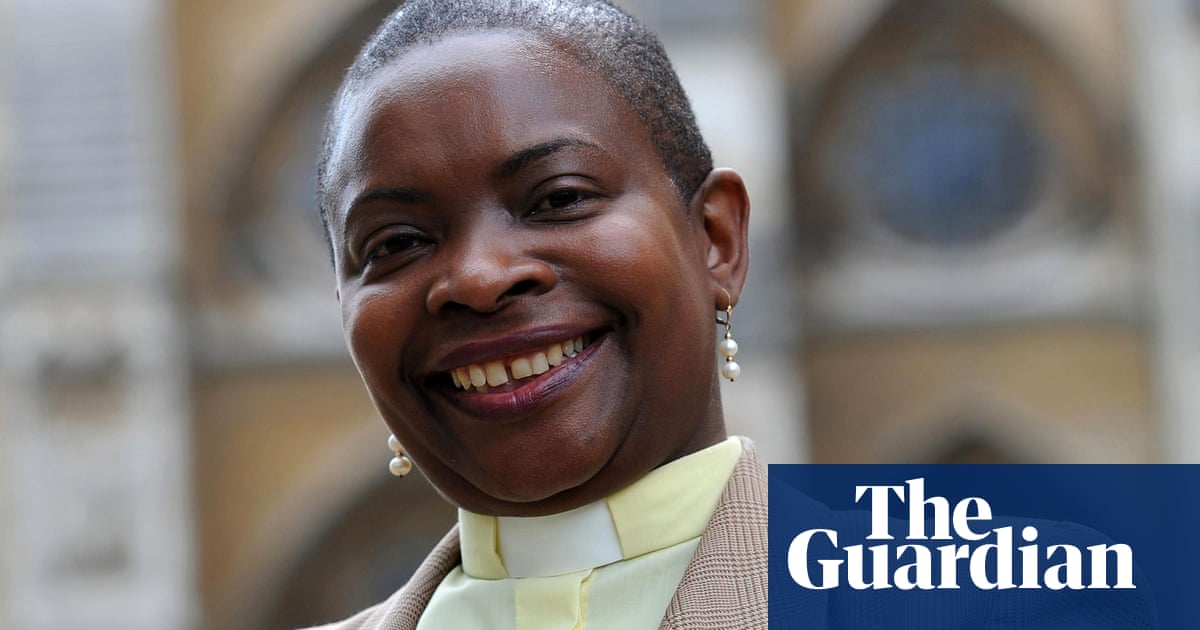
    The Church of England has appointed its first black female bishop.

    Rose Hudson-Wilkin, the chaplain to the Speaker of the House of Commons, was announced by Downing Street as the new bishop of Dover.

    Hudson-Wilkin, who was born in Jamaica, was introduced on Thursday by Justin Welby, the archbishop of Canterbury, at St George’s C of E school in Broadstairs, Kent.

    In an answer to a pupil’s question, she said she saw herself as “pretty ordinary – not necessarily ‘the black priest’ – but a priest with the good fortune to be black”.

    Responding to her appointment, Hudson-Wilkin said: “I am looking forward to journeying with the people of Kent, celebrating the good work that is already happening there and working together with its religious and secular leaders to ensure that the good news of hope, love and justice remains at the heart of our changed lives together.”

    Welby said: “Rose Hudson-Wilkin has, over the past nine years, been one of the most influential and effective ministers in the public square through her long service as chaplain to the Speaker of the House of Commons. I have constantly been told that she has been an effective pastor in one crisis or another, especially in the past few years.

    “Before that, she was a parish minister of great impact. She has been described as prophet, pastor and evangelist. She has challenged the Church of England over its engagement with UK minority ethnic groups, and has spoken forcefully and effectively at many evangelistic meetings.”

    John Bercow, the Commons Speaker, said: “Rose is one of the warmest, kindest and most loving people I have ever met, so she will be sorely missed by members across the house, the staff and, especially, by me.

    “She has an unfailing sense of duty and an ability – more than she would herself ever know – to bring comfort in times of tragedy. Furthermore, her steely resolve when confronted with loss and evil, following the death of our dear colleague Jo Cox, and in the wake of the Westminster Bridge attack, was plain for all to see. Both in the celebration of happiness and in condolence and prayer, she has the most reassuring, fortifying presence anyone could want.”

    Hudson-Wilkin will succeed the Rt Rev Trevor Willmott, who retired from the role in May. She will be consecrated in November.

    This content was originally published here.