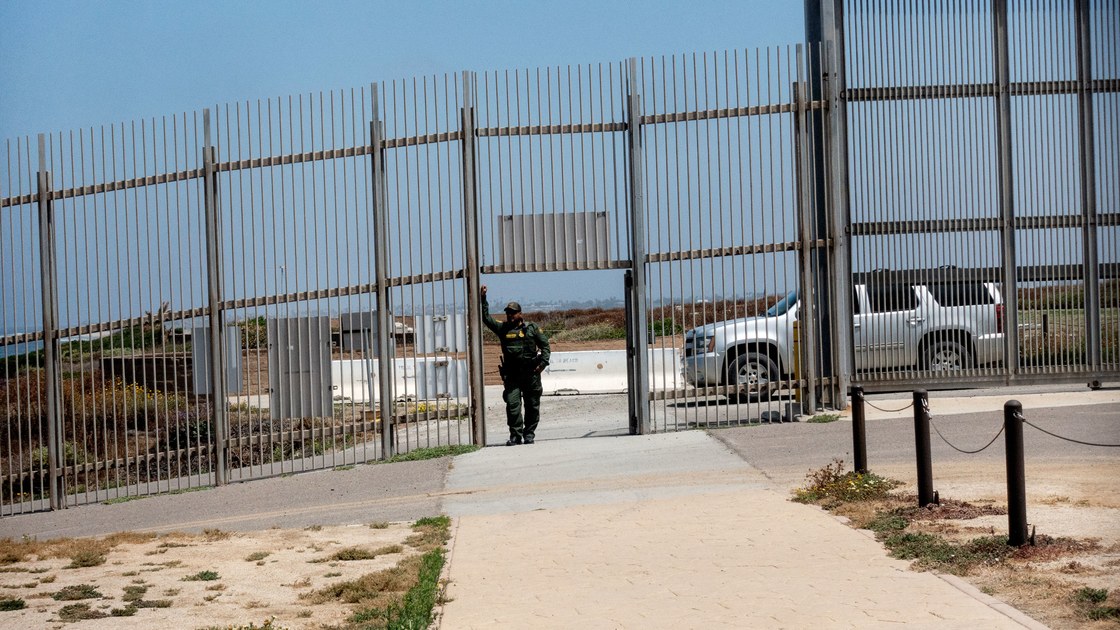
No we are talking! A real raid to learn something. If the immigrants can storm our boarders and not get shot so anyone can storm Area 51 and come out with all kinds of benefits.
If even a small fraction of those UFO lovers show up to try and break ‘them aliens’ free from the secret desert facility, the ‘Area 51 raid’ joke risks spilling into one of the largest civil disobedience events ever in the US.
“We can move faster than their bullets,” the creators of the intentionally farcical event claim. But with over a million alien fans now registered as ‘going’ – and nearly the same number in reserve, just ‘interested’ in the raid – the US Air Force could find itself facing off against an unprecedented number of unarmed individuals.
We would discourage anyone from trying to come into the area,” an Air Force spokeswoman previously said, expressing hope that UFO enthusiasts understand that an attempted breach of a military installation is no laughing matter. Despite the very real threat that the authorities would have no choice but to use force in case of a real mass invasion, the special meme forces – either desperate to get to the bottom of US government secrets or just bored – are keeping the #Area51memes hashtag alive.
June 20, 2019 (LifeSiteNews) – A panel of the 9th U.S. Circuit Court of Appeals today allowed the Trump administration to deny federal funding to entities that commit abortions on site, a temporary but significant victory for the pro-life movement. The court will continue to consider lawsuits against the rule while it is in effect.
In February, the Trump administration rolled out rules requiring facilities that receive family planning grant money Title X services to be physically separate from those that commit or refer for abortions. Under the previous rules, Title X services and abortions could “co-locate” in the same center, as long as the abortions were privately funded. The facilities receiving federal money must also be financially separate from abortion centers.
This new regulation, called the Protect Life Rule, is expected to reduce Planned Parenthood’s federal subsidies by $60 million.
According to the Department of Health and Human Services, the Rule also ends “referral for abortion as a method of family planning,” eliminates a “requirement that Title X providers offer abortion counseling and referral,” and requires “more complete reporting by grantees about subrecipients and more clarity about informal partnerships with referral agencies.”
“This ruling is a victory for President Trump and the majority of Americans who do not want to fund the abortion industry with their tax dollars,” said Marjorie Dannenfelser, President of the Susan B. Anthony List. “The Protect Life Rule simply draws a bright line between abortion and family planning, stopping abortion businesses like Planned Parenthood from treating Title X as their private slush fund without reducing funding by a dime. Similar regulations were upheld by the Supreme Court nearly three decades ago. We are encouraged by this news and confident the Trump administration will prevail.”
According to Politico, “Some states challenging the rule, including Oregon and Washington, have said they will withdraw from the Title X program if the new rules are allowed to take effect, potentially forfeiting millions of dollars.”
Yesterday, the Democrat-controlled U.S. House of Representatives passed a spending package that would block the Protect Life Rule from going into effect. That bill presumably won’t make it past the U.S. Senate or President Trump.
Planned Parenthood President Leana Wen called today’s news “devastating” and the pro-life policy “unethical, illegal, and harmful to public health.”
British oil giant BP has sold the first ever batch of crude oil supplied from the United States to Ukrainian state company Ukrtatnafta, Reuters reported.
The move is seen as another blow to Moscow amid heavy political pressure from Washington and an oil contamination crisis which has affected Russian exports.
“The oil was sold by BP (BP.L) to Ukrtatnafta, sources said, adding Ukrtatnafta will receive a further similar amount of U.S. crude around July 24, and more purchases were likely in August,” Reuters wrote.
Ukraine this month received its first ever barrels from the United States, according to Refinitiv Eikon flows data, as the tanker Wisdom Venture unloaded 80,000 tons of Bakken crude in Odesa on July 6 for the Kremenchuk oil refinery, the port said.
“The Ukrainian oil industry is set to rise from the ashes with its new president Zelensky, so it’s an obvious new market for the United States, though the price matters,” a trader in a European oil major told Reuters.
Ukraine’s oil sector, formerly mostly operated by Russian companies, has struggled since geopolitical tensions between the countries escalated in 2014. Since then most of the country’s refineries have remained closed and the only oil supplied to Odesa is Azeri Light, sourced by Azerbaijan’s SOCAR. Since January 2019 it has supplied 320,000 tons, Refinitiv Eikon flows data shows.
U.S. oil has yet to become a common feedstock for European buyers, who complain about volumes and varying quality, but recent market changes have shown American barrels can be a reliable alternative, traders said.
The contamination crisis that erupted at the end of April over dirty Russian oil delivered through the Druzhba pipeline caused buyers to look for alternatives, sources told Reuters.
Nearly three dozen religious institutions of higher learning have asked the federal government to waive laws that protect LGBT students, according to government documents obtained by The Column. The schools are asking the U.S. Department of Education to waive portions of Title IX that might apply to students and staff who are transgender or who are in same-sex relationships. Twenty-seven schools have been granted a waiver from Title IX by the department in the last year, many with the help of conservative religious organizations. Another nine have applications pending.
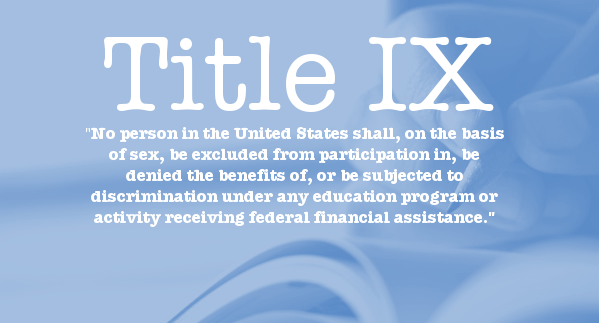
When Title IX was passed in 1972 to combat discrimination based on sex, Congress added a small but powerful provision that states that an educational institution that is “controlled by a religious organization” does not have to comply if Title IX “would not be consistent with the religious tenets of such organization.”
These “right-to-discriminate” waivers were relatively rare until the last year. A handful were requested in the 1980s and 1990s, many by religious schools who wanted to ensure they could prevent women from being hired in leadership roles without running afoul of discrimination laws.
That changed in 2014 when the Obama administration issued guidance that the Title IX discrimination prohibition “extends to claims of discrimination based on gender identity or failure to conform to stereotypical notions of masculinity or femininity,” meaning that entities receiving federal funding could not discriminate against transgender and gender nonconforming people.
In response to that guidance, and several lawsuits, conservative Christian leaders have begun positioning the schools to expel transgender students.
Add to the mix the Supreme Court decision that effectively legalized same-sex marriage in 2015. Leadership at Christian schools have begun to worry that they will be forced to house legally married same-sex couples, and have been positioning themselves to withstand discrimination challenges.
The Department of Education has granted a waiver to 27 religious colleges and universities in 17 states over the last 18 months. The total enrollment of these schools tops 80,000 students, and nearly $130 million in federal research grants and student aid flowed to these institutions of higher learning in 2014. Those waivers are coming in at a rapid clip, and another 9 are pending as of August 2015. Though they span the United States, almost all are in the South or West.
Click on the interactive map for in-depth information for each college and university.
Thus far 36 schools have asked for the waiver. According to documents obtained in response to a Freedom of Information Act request filed by The Column in July, these schools have asked the federal government for these waivers not only to deny enrollment to or expel transgender students, but the broad-based waiver requests have also targeted gay, lesbian, and bisexual students and staff. In some cases schools have even asked for, and been granted, a waiver to allow them to expel women who have been pregnant outside of marriage.
Banning transgender students
News that schools were requesting such waivers first surfaced in July 2014, when Inside Higher Ed reported that three Christian colleges — George Fox University in Oregon, Spring Arbor University in Michigan, and Simpson University in California — had requested and received a waiver from the federal government’s Title IX.
In the case of George Fox University, a transgender student had been denied housing at the Quaker school, and subsequently filed a complaint with the Department of Education’s Office of Civil Rights. That complaint was dismissed as George Fox had already been granted a waiver to Title IX, and could discriminate against transgender and gender nonconforming students. But, the case generated headlines and petitions, and the university made some small concessions including allowing transgender students who had undergone gender affirmation surgery to live in gender segregated housing. The university has since softened its stance to provide “housing units with private restrooms and living spaces will be provided for students identifying as transgender where possible.”
In 2013, Biola University in La Mirada, Calif., began crafting language barring transgender students at the same time a fellow Christian college, California Baptist University, was facing a lawsuit after expelling a transgender student. Biola’s new ban on transgender students read, in part, “In employment and in student life, we regard sex at birth as the identification of the given biological sex of each member of our constituency. We will not accept as valid alterations of one’s sex at birth based on experiential variation or medical intervention.” The school reached that theological conclusion because “Jesus Christ himself affirmed this in his teaching correcting abuses of divorce stating at the beginning the Creator ‘made them male and female.’”
Biola then filed its request for a waiver on Nov. 14, 2014. “Our request for exemption is limited to the recent interpretation that ‘sex’ under Title IX also includes gender identity to the extent that such matters conflict with Biola’s religious tenets,” Biola wrote to the U.S. Department of Education. Biola’s waiver was not approved by the department, however. The school did not prove that it was controlled by a religious entity. Biola has the option of providing more information to DOE.
But Biola didn’t craft the discriminatory language it used for the anti-transgender portions of its handbook nor for the application for the waiver. Those were crafted by the Christian Legal Society as a “sample policy” and used by Biola verbatim.
Though Biola’s waiver still pending, dozens of other schools have had waivers approved. Anderson University based in South Carolina sent a letter to the U.S. Department of Education on January 7, 2015 asking the department to waive “provisions of Title IX to the extent application of those provisions would not be consistent with the Convention’s religious tenets regarding marriage, sex outside of marriage, sexual orientation, gender identity, pregnancy, and abortion.”
The department granted that request in full. “The University is exempt from these provisions to the extent that they prohibit discrimination on the basis of marital status, sex outside of marriage, sexual orientation, gender identity, pregnancy, or abortion and compliance would conflict with the controlling organization’s religious tenets,” the response, dated Feb. 11, 2015, stated.
Anderson University used language in its waiver that is similar to 15 other schools affiliated with the Southern Baptist Convention. Those schools used nearly identical language that says they are seeking exemption from Title IX “to the extent application of those provisions would not be consistent with the Convention’s religious tenets regarding marriage, sex outside of marriage, sexual orientation, gender identity, pregnancy, and abortion.”
Click to view the full list of schools applying for Title IX waivers.
Several Catholic schools are among those that have been granted waivers. Belmont Abbey College wrote in its request: “Our request for exemption is limited to the recent interpretation that “sex” under Title IX also includes gender identity.” Belmont was approved a waiver along with fellow Catholic colleges Franciscan University of Steubenville and St. Gregory’s University.
Bethel College, part of the Christian Missionary Church denomination, even appears to want to be able to tamper with maternity leave.
The Indiana-based school requested an exemption from Title IX if it “would require the College to allow males and females to reside in the same housing, to visit within the housing of the opposite sex without restrictions, to allow an unmarried male and female to live together, or to allow a person with gender identity issues to be treated as a member of the sex which they have assigned to themselves…” or “would require that the College not discriminate in discipline, admissions, hiring, and employment decisions, in matters such as employment leaves for pregnancy, childbirth, and elective termination of pregnancy, or on the basis of pre-marital sex, unmarried pregnancy, extramarital sex, or homosexual activity.”
Training schools to discriminate
The rapid increase in schools that have applied for Title IX exemptions comes at the same time conservative Christian groups are hosting trainings and providing documents that schools can use to prove their “sincerely held religious beliefs” about LGBT people.
On Sept. 3, 2015, the Christian Legal Society hosted a webinar with the Council for Christian Colleges and Universities, the Association of Christian Schools International, and the Association for Biblical Higher Education.
Jim Davids, a law professor at Pat Robertson’s Regent University, listed the perceived threats against Christian schools including “two former students dismissed for lesbianism” who sued a Christian school and “a young man who thought he was a woman sued California Baptist University, when the school dismissed him for lying on his admission application that he was female.”
“Within the last couple of years two students claiming to be a different gender than their anatomy have filed complaints against CCCU schools,” Davids added.
Shapri LoMaglio, Vice President for Government and External Relations at the CCCU, called the Supreme Court decision legalizing same-sex marriage “a sea change” for housing issues at Christian colleges, and noted the Department of Education’s extension of sex discrimination to include gender identity. She told attendees that the best offense is a good defense, and one defense is to gain exemption from Title IX.
“There is an ability for Christian colleges and universities to apply for an exemption from the Department of Education to this specific requirement of Title IX and the institution can do that by writing a letter to the Department of Education detailing the specific provision in Title IX they would like exemption from and their theological beliefs that create conflict with their ability to execute that specific provision.”
She added, “What’s most important to know is that there is an exemption and it is highly advisable to apply for one.”
Davids and LoMaglio, as well as Christian Legal Society’s Kim Colby and John Cooley of the CooleySublettPLC law firm, also provided guidance to college and universities on how to legally discriminate against LGBT students, faculty, and staff.
In addition to the webinar, the CLS has developed sample language for schools to include in their official policies; if a school hasn’t yet developed a student handbook policy about its “sincerely held religious beliefs” about transgender students, they can copy CLS’. Many schools have done just that.
In addition to CLS, the CCCU has been hosting trainings and conferences since late 2014 that delve into the issue of Title IX exemptions.
Entire denominations are issuing resolutions in order to keep LGBT students out of their affiliated colleges and universities. For example, Baptist General Convention of Texas adopted a resolution in February on the “transgender agenda.” That resolution was aimed directly at garnering schools a Title IX exemption.
“Some of our institutions may desire to seek a religious exemption to the Title IX requirement, and they asked that the convention speak specifically to the issue,” Ferrell Foster, director of ethics and justice for the Texas Baptist Christian Life Commission, said in statement at the time “The resolution approved by the Executive Board represents both the truth of the biblical testimony regarding gender and the love of Christ for all people.”
In fact, “the request to consider the resolution came from several Texas Baptist university presidents” who said they needed to apply for a Title IX exemption in order to deny accommodations for transgender students, the Convention website stated. That resolution stated “great concern with the emergence of the transgender agenda and the notion that one’s gender is determined psychologically, not biologically” and “some people today are expressing a desire to identify themselves with the gender, which differs from their biological gender… Some of these persons are seeking to function in the broader society as if they are members of the gender that differs from their biological gender.“
Responding to the Exemptions
“The trend of religiously affiliated, but publicly financed, colleges receiving exemptions from the U.S. Department of Education in order to discriminate against LGBTQ students and employees is disturbing,” attorney Paul Southwick told The Column. “While we are seeing increased protections for transgender, intersex and LGB students through Title IX, we are also seeing the protections of Title IX gutted at the very institutions where students need those protections the most.”
Southwick has represented students who have filed action against Christian schools after having been expelled for being LGBT.
For students that do find themselves being disciplined or expelled from a college or university simply because of their LGBT identity, there are actions those students can take.
“First, if there is still time, students should file an internal appeal of any decision to expel, suspend or discipline them,” he said. Most institutions have an appeal process, but Southwick notes that some students may want to hire a lawyer for assistance with appeals.
“Additionally, students should file a Title IX complaint with the U.S. Department of Education’s Office of Civil Rights. Southwick said. “This is important and should always be done. Even if their college has a religious exemption from Title IX, the exemption may not apply or it may not stick after being challenged.”
He also suggests that students file a complaint with accreditation institutions, and to check state and local nondiscrimination laws.
Shane Windmeyer, Executive Director of Campus Pride, an organization that works with students and schools to create more LGBT-inclusive campuses, said that “anti-LGBTQ religion-based bigotry and intolerance is not a Christian teaching or belief.”
“Discrimination is never okay,” Windmeyer told The Column. “For these schools to espouse that their religion sanctions discrimination against any young person is careless and life-threatening. This list needs to be made public every time a school files for a Title IX exemption. It is shameful and wrong.”
He said exposing schools that apply for the Title IX exemptions is important for families and prospective students. “Families deserve to know that this list of schools are not loving, safe spaces for any young person to live, learn and grow — and taxpayers should definitely not have to pay for a private college to openly discriminate against anyone.”
Windmeyer was referring to the nearly $130 million in annual taxpayer funds flowing to these schools through grants and student aid, something Southwick says that money should come with strings attached.
“If a college receives public funding, it should have to follow public laws,” he said. “The government would be perfectly within its rights to make taxpayer funded aid to these colleges contingent on compliance with generally applicable nondiscrimination laws.”
He added, “If a college wished to continue discriminating against LGBTQ students and employees, it could do so on its own dime.”
Correction: A previous version of this referred to Anderson University in Indiana as having applied for a Title IX waiver. Another Anderson University, one in South Carolina, applied for a waiver to Title IX. We regret the error.
Here’s the entire data set obtained from the U.S. Department of Education:
Early next week, according to a D.H.S. official, the Trump Administration is expected to announce a major immigration deal, known as a safe-third-country agreement, with Guatemala. For weeks, there have been reports that negotiations were under way between the two countries, but, until now, none of the details were official. According to a draft of the agreement, which The New Yorker has obtained, asylum seekers from any country who either show up at U.S. ports of entry or are apprehended while crossing between ports of entry could be sent to seek asylum in Guatemala instead. During the past year, tens of thousands of migrants, the vast majority of them from Central America, have arrived at the U.S. border seeking asylum each month. By law, the U.S. must give them a chance to bring their claims before authorities, even though there’s currently a backlog in the immigration courts of roughly a million cases. The Trump Administration has tried a number of measures to prevent asylum seekers from entering the country—from “metering” at ports of entry to forcing people to wait in Mexico—but, in every case, international obligations held that the U.S. would eventually have to hear their asylum claims. Under this new arrangement, most of these migrants will no longer have a chance to make an asylum claim in the U.S. at all. “We’re talking about something much bigger than what the term ‘safe third country’ implies,” someone with knowledge of the deal told me. “We’re talking about a kind of transfer agreement where the U.S. can send any asylum seekers, not just Central Americans, to Guatemala.”
From the start of the Trump Presidency, Administration officials have been fixated on a safe-third-country policy with Mexico—a similar accord already exists with Canada—since it would allow the U.S. government to shift the burden of handling asylum claims farther south. The principle was that migrants wouldn’t have to apply for asylum in the U.S. because they could do so elsewhere along the way. But immigrants-rights advocates and policy experts pointed out that Mexico’s legal system could not credibly take on that responsibility. “If you’re going to pursue a safe-third-country agreement, you have to be able to say ‘safe’ with a straight face,” Doris Meissner, a former commissioner of the Immigration and Naturalization Service, told me. Until very recently, the prospect of such an agreement—not just with Mexico but with any other country in Central America—seemed far-fetched. Yet last month, under the threat of steep tariffs on Mexican goods, Trump strong-armed the Mexican government into considering it. Even so, according to a former Mexican official, the government of Andrés Manuel López Obrador is stalling. “They are trying to fight this,” the former official said. What’s so striking about the agreement with Guatemala, however, is that it goes even further than the terms the U.S. sought in its dealings with Mexico. “This is a whole new level,” the person with knowledge of the agreement told me. “In my read, it looks like even those who have never set foot in Guatemala can potentially be sent there.”
At this point, there are still more questions than answers about what the agreement with Guatemala will mean in practice. A lot will still have to happen before it goes into force, and the terms aren’t final. The draft of the agreement doesn’t provide much clarity on how it will be implemented—another person with knowledge of the agreement said, “this reads like it was drafted by someone’s intern”—but it does offer an exemption for Guatemalan migrants, which might be why the government of Jimmy Morales, a U.S. ally, seems willing to sign on. Guatemala is currently in the midst of Presidential elections; next month, the country will hold a runoff between two candidates, and the current front-runner has been opposed to this type of deal. The Morales government, however, still has six months left in office. A U.N.-backed anti-corruption body called the CICIG, which, for years, was funded by the U.S. and admired throughout the region, is being dismantled by Morales, whose own family has fallen under investigation for graft and financial improprieties. Signing an immigration deal “would get the Guatemalan government in the U.S.’s good graces,” Stephen McFarland, a former U.S. Ambassador to Guatemala, told me. “The question is, what would they intend to use that status for?” Earlier this week, after Morales announced that he would be meeting with Trump in Washington on Monday, three former foreign ministers of Guatemala petitioned the country’s Constitutional Court to block him from signing the agreement. Doing so, they said, “would allow the current president of the republic to leave the future of our country mortgaged, without any responsibility.”
The biggest, and most unsettling, question raised by the agreement is how Guatemala could possibly cope with such enormous demands. More people are leaving Guatemala now than any other country in the northern triangle of Central America. Rampant poverty, entrenched political corruption, urban crime, and the effects of climate change have made large swaths of the country virtually uninhabitable. “This is already a country in which the political and economic system can’t provide jobs for all its people,” McFarland said. “There are all these people, their own citizens, that the government and the political and economic system are not taking care of. To get thousands of citizens from other countries to come in there, and to take care of them for an indefinite period of time, would be very difficult.” Although the U.S. would provide additional aid to help the Guatemalan government address the influx of asylum seekers, it isn’t clear whether the country has the administrative capacity to take on the job. According to the person familiar with the safe-third-country agreement, “U.N.H.C.R. [the U.N.’s refugee agency] has not been involved” in the current negotiations. And, for Central Americans transferred to Guatemala under the terms of the deal, there’s an added security risk: many of the gangs Salvadorans and Hondurans are fleeing also operate in Guatemala.
In recent months, the squalid conditions at borderland detention centers have provoked broad political outcry in the U.S. At the same time, a worsening asylum crisis has been playing out south of the U.S. border, beyond the immediate notice of concerned Americans. There, the Trump Administration is quietly delivering on its promise to redraw American asylum practice. Since January, under a policy called the Migration Protection Protocols (M.P.P.), the U.S. government has sent more than fifteen thousand asylum seekers to Mexico, where they now must wait indefinitely as their cases inch through the backlogged American immigration courts. Cities in northern Mexico, such as Tijuana and Juarez, are filling up with desperate migrants who are exposed to violent crime, extortions, and kidnappings, all of which are on the rise.This week, as part of the M.P.P., the U.S. began sending migrants to Tamaulipas, one of Mexico’s most violent states and a stronghold for drug cartels that, for years, have brutalized migrants for money and for sport.
Safe-third-country agreements are notoriously difficult to enforce. The logistics are complex, and the outcomes tend not to change the harried calculations of asylum seekers as they flee their homes. These agreements, according to a recent study by the Migration Policy Institute, are “unlikely to hold the key to solving the crisis unfolding at the U.S. southern border.” The Trump Administration has already cut aid to Central America, and the U.S. asylum system remains in dire need of improvement. But there’s also little question that the agreement with Guatemala will reduce the number of people who reach, and remain in, the U.S. If the President has made the asylum crisis worse, he’ll also be able to say he’s improving it—just as he can claim credit for the decline in the number of apprehensions at the U.S. border last month. That was the result of increased enforcement efforts by the Mexican government acting under U.S. pressure.
There’s also no reason to expect that the Trump Administration will abandon its efforts to force the Mexicans into a safe-third-country agreement, as well. “The Mexican government thought that the possibility of a safe-third-country agreement with Guatemala had fallen apart because of the elections there,” the former Mexican official told me. “The recent news caught top Mexican officials by surprise.” In the next month, the two countries will continue immigration talks, and, again, Mexico will face mounting pressure to accede to American demands. “The U.S. has used the agreement with Guatemala to convince the Mexicans to sign their own safe-third-country agreement,” the former official said. “Its argument is that the number of migrants Mexico will receive will be lower now.”
Oh yeah, these are really the people we want here in our country. Does anyone want to deal with the fact that the families were united till they invaded the US? Does anyone want to attempt to answer why it matters more that they put their own families in jeopardy when coming to the US? What does that say about the parents of these families?
Hundreds of protesters gathered in Aurora on Friday evening to march to the ICE detention facility where illegal and undocumented immigrants are being housed. They also removed the U.S. flag, replaced it with a Mexican flag, and spray painted graffiti on a Blue Lives Matter flag before it was seen flying upside down on the flag pole. This comes before planned ICE raids in Denver and 10 other cities nationwide. The protesters say they are demonstrating against the treatment of the people living inside. The Blue Lives Matter flag was vandalized with “Abolish ICE” in spray paint.
The original flags outside the ICE facility, including the U.S. flag and Colorado flag were placed on the flag poles after the crowd dispersed. The Mexican flag and spray painted Blue Lives Matter flag were removed. ICE had originally planned to arrest and deport families in 10 cities in late June, according to a senior immigration official. In addition to Denver, the raids were expected in Atlanta, Baltimore, Chicago, Houston, Los Angeles, Miami, New Orleans, New York and San Francisco. Operations are now expected to begin in all of those cities on Sunday except for New Orleans, which is currently being impacted by tropical storm Barry.
Nancy Pelosi, AOC, and Hillary Clinton were three of the biggest names to send tweets advising illegal aliens how to avoid being captured by ICE.
Because this is how things work in 2019.
Because this is what the Democrat Party has become.
take our poll – story continues below
Which Democrat Presidential Hopeful Has The Wildest Campaign Promise So Far?
Which Democrat Presidential Hopeful Has The Wildest Campaign Promise So Far?
This field is for validation purposes and should be left unchanged.
Completing this poll grants you access to Flag And Cross updates free of charge. You may opt out at anytime. You also agree to this site’s Privacy Policy and Terms of Use.
The @nytimes reported overnight that ICE is planning to conduct massive raids this weekend to deport families and “collateral” immigrants who may be nearby.
Starting Sunday, Immigration and Customs Enforcement (ICE) is expected to resume its previously announced plan to apprehend thousands of illegal immigrants across the country.
The reinvigorated effort comes just weeks after President Trump tweeted that ICE was preparing to kick off days of raids in at least 10 major cities. The operation was halted, however, the day before it was set to start, to give Congress time to arrive at a legislative solution on immigration. Trump said his administration would relaunch the raids after a two-week window – after the Independence Day observance – and that time now seems to have arrived.
Lori Lightfoot is the far-left Democrat mayor of Chicago that replaced far-left Mayor Rahm Emanuel.
Lightfoot wants illegal aliens to know that they are welcome in the Windy City, because who needs laws?
Chicago Democratic Mayor Lori Lightfoot is refusing to cooperate with Immigration and Customs Enforcement (ICE) as it seeks to deport illegal immigrants in cities across America.
ICE has promised to begin the task of large-scale deportation this weekend but Lightfoot tweeted Friday that “Chicago has taken concrete steps to support our immigrant communities.”
Lori’s tweets:
THREAD 1/ We are all aware of the threat from President Trump regarding raids by ICE, and in response, Chicago has taken concrete steps to support our immigrant communities.
THREAD 1/ We are all aware of the threat from President Trump regarding raids by ICE, and in response, Chicago has taken concrete steps to support our immigrant communities.
— Mayor Lori Lightfoot (@chicagosmayor) June 21, 2019
2/ I have directed – and Superintendent Johnson has confirmed – that CPD has terminated ICE’s access to CPD’s databases related to federal immigration enforcement activities.
2/ I have directed – and Superintendent Johnson has confirmed – that CPD has terminated ICE’s access to CPD’s databases related to federal immigration enforcement activities.
— Mayor Lori Lightfoot (@chicagosmayor) June 21, 2019
3/ I have also personally spoken with ICE leadership in Chicago and voiced my strong objection to any such raids. Further, I reiterated that CPD will not cooperate with or facilitate any ICE enforcement actions.
3/ I have also personally spoken with ICE leadership in Chicago and voiced my strong objection to any such raids. Further, I reiterated that CPD will not cooperate with or facilitate any ICE enforcement actions.
— Mayor Lori Lightfoot (@chicagosmayor) June 21, 2019
4/ Chicago will always be a welcoming city and a champion for the rights of our immigrant and refugee communities, and I encourage any resident in need of legal aid to contact the National Immigrant Justice Center (@NIJC). More info here:
4/ Chicago will always be a welcoming city and a champion for the rights of our immigrant and refugee communities, and I encourage any resident in need of legal aid to contact the National Immigrant Justice Center (@NIJC). More info here: https://t.co/NTMAmhmBbn
— Mayor Lori Lightfoot (@chicagosmayor) June 21, 2019
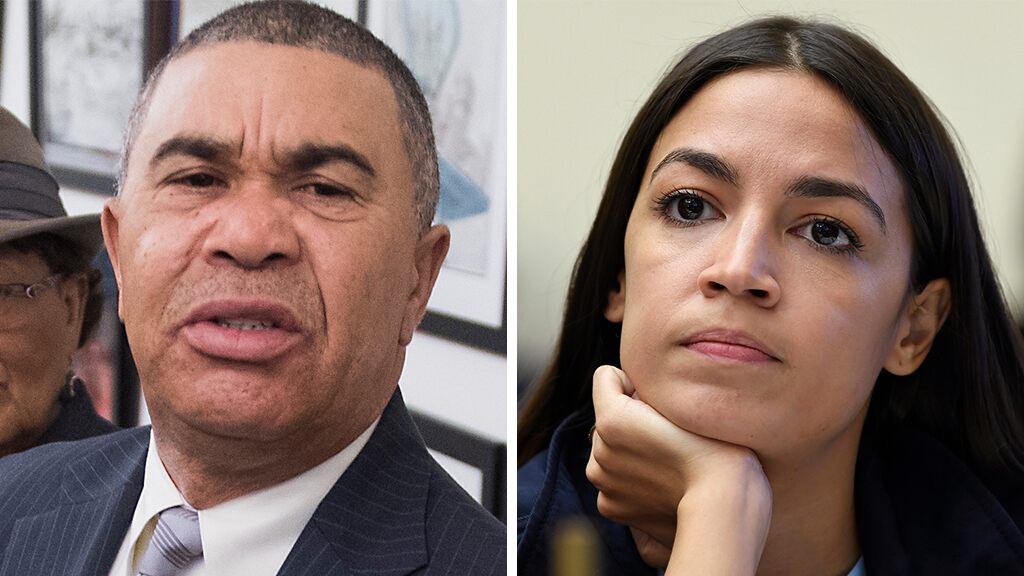
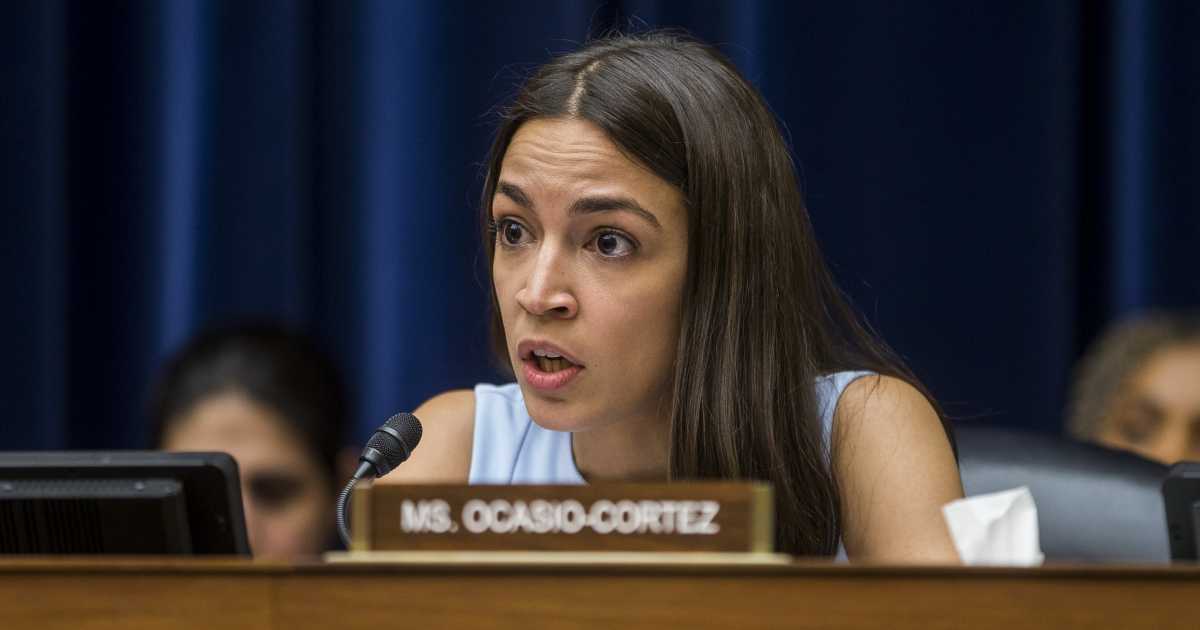
Capri Cafaro and Terry Holt weigh in on Rep. Alexandria Ocasio-Cortez’s recent comments insinuating that Speaker Nancy Pelosi doesn’t respect her as a ‘woman of color.’
Speaking to Fox News on Thursday nice, Clay hammered Ocasio-Cortez’s suggestion.
“It was such a weak argument to say she was being picked on and that four women of color were being picked on by the Speaker,” he said.
“It tells you the level of ignorance to American history on their part as to what we are as the Democratic Caucus.
“It is so inappropriate. So uncalled for. It does not do anything to help with unity. It was unfair to Speaker Pelosi.”
Clay continued his broadside, saying the comment exposed how much Ocasio-Cortez and Reps. Ilhan Omar, D-Minn., Rashida Tlaib, D-Mich., and Ayanna Pressley, D-Mass., have to learn when it comes to being “effective legislators”.
“It’s going to take a process of maturing for those freshman members. They will have to learn to be effective legislators,” he said.
“It shows their lack of sensitivity to racism. To fall back on that (trope) is a weak argument. It has no place in a civil discussion.”
The lawmaker closed his remarks by suggesting the four freshmen could hurt Democratic chances in upcoming elections.
“It shows they have no sensibility to different members from our caucus. Some come from red districts and those are the ones who gave us the majority. We need them all,” he said.
His comments followed a feud between Pelosi and freshman congresswomen, like Ocasio-Cortez, that involved racially-charged criticism.
Ocasio-Cortez’s chief of staff, Saikat Chakrabarti, previously compared moderate Democrats to racists — prompting Pelosi, at the request of some of her members, warn House Democrats not to attack each other on Twitter.
“You got a complaint? You come and talk to me about it. But do not tweet about our members and expect us to think that that is just ok,” she reportedly said. On the same day of that caucus meeting, Ocasio-Cortez called out Pelosi for what she sees as the speaker continually targeting her and other freshmen lawmakers of color.
“Their ignorance is beyond belief,” Clay also said while in the Speaker’s Lobby, according to The Hill.
Clay wasn’t the only one to attack Ocasio-Cortez on Thursday. “The View” hosts Joy Behar and Whoopi Goldberg criticized her’s and others’ decision to attack Democrats like Pelosi. “I think this is more BS,” Goldberg said of Ocasio-Cortez’s comments on race.
Pelosi, meanwhile, refused to provide further comment on the feud while discussing it during her weekly press briefing.
“I’ve said what I’m going to say…What I said in the caucus yesterday had an overwhelming response from my members,” she said.
“Because they know what the facts are and what we are responding to. We respect the value of every member of our caucus. The diversity of it all is a wonderful thing. Diversity is our strength. Unity is our power.”
Socialist Rep. Alexandria Ocasio-Cortez (D-NY) attacked House Speaker Nancy Pelosi during multiple recent interviews, going as far as to say that she believes that Pelosi is targeting her because Pelosi is racist.
“I think sometimes people think that we have a relationship,” Ocasio-Cortez told The New Yorker Radio Hour. “Not particularly.”
“The last time I kind of spoke to her one on one was when she asked me to join the Select Committee on Climate Change,” Ocasio-Cortez continued. “I was assigned to some of the busiest committees and four subcommittees. So my hands are full. And sometimes I wonder if they’re trying to keep me busy.”
Ocasio-Cortez suggested to The Washington Post on Wednesday that Pelosi was a racist: “When these comments first started, I kind of thought that she was keeping the progressive flank at more of an arm’s distance in order to protect more moderate members, which I understood. But the persistent singling out . . . it got to a point where it was just outright disrespectful . . . the explicit singling out of newly elected women of color.”
Pelosi has repeatedly mocked Ocasio-Cortez and the other three far-left freshmen House Democrats, recently telling The New York Times: “All these people have their public whatever and their Twitter world. But they didn’t have any following. They’re four people and that’s how many votes they got.”
Pelosi echoed a similar statement in April, saying: “While there are people who have a large number of Twitter followers, what’s important is that we have large numbers of votes on the floor of the House.”
Pelosi also mocked Ocasio-Cortez in an interview with CBS’ “60 Minutes” in April, while dismissing the far-left wing of the party.
“So you are contending with a group in Congress: Over here on the left flank are these self-described socialists, on the right, these moderates,” host Lesley Stahl said. “And you yourself said that you’re the only one who can unify everybody. And the question is, can you?”
“By and large, whatever orientation they came to Congress with, they know that we have to hold the center,” Pelosi responded. “That we have to go down the mainstream.”
“You have these wings — AOC, and her group on one side —” Lesley responded.
“That’s like five people,” Pelosi fired back.
Can the Speaker of the House unify the Democratic party while getting pushback from the left and self-described democratic socialists like Alexandria Ocasio-Cortez? https://t.co/f4VUYTYIdwpic.twitter.com/a9wOobPj5g
— 60 Minutes (@60Minutes)
Pelosi told an audience in April that a “glass of water” with a “D” next to it “would win” in Ocasio-Cortez’s district.
House Speaker Nancy Pelosi takes another shot at socialist Rep. Alexandria Ocasio-Cortez (D-NY), says a “glass of water” with a “D” next to it “would win” in Ocasio-Cortez’s district. pic.twitter.com/sPbhEUTeir
For the first time in our nation’s history, there is now a federal department spending an average of more than $100 billion per month. No, it is not the Department of Defense, which is charged with the core federal responsibility of defending us from foreign enemies. It is the Department of Health and Human Services, which, if Democratic Sen. Bernie Sanders of Vermont has his way, will run the “Medicare for All” program. As it now stands, HHS runs Medicare for many and Medicaid for more. “In 2019, the program will cover an estimated 61 million persons (52 million aged and 9 million disabled),” the Congressional Research Service said of Medicare in a report published in May. “Medicaid is a means-tested entitlement program that finances the delivery of primary and acute medical services as well as long-term services and supports (LTSS) to an estimated 75 million people at a cost to states and the federal government of $616 billion in FY2018,” CRS said in a report published in June. “CBO also estimates that federal Medicare spending (after deduction of beneficiary premiums and other offsetting receipts) will be about $637 billion in 2019, accounting for about 14% of total federal spending and 3% of GDP,” said CRS. “Mandatory spending typically accounts for the majority of the HHS budget,” CRS explained in a report published in March. “Two programs — Medicare and Medicaid — are expected to account for 86% of all estimated HHS spending in FY2019,” it said.
In the first eight months of this fiscal year, which began in October, HHS spent $834,346,000,000, according to the Monthly Treasury Statement for May. That is up from $731,724,000,000 in the first eight months of last fiscal year. Through all of fiscal 2018, HHS spent approximately $1,120,500,000,000 — or $93,375,000,000 per month. Through this full fiscal year, according to the estimate published in the Monthly Treasury Statement, HHS will spend approximately $1,230,273,000,000 — or $102,522,750,000 per month. In May alone, according to the Monthly Treasury Statement, HHS spent $146,552,000,000. That equaled about $4.9 billion per day, or $196.98 million per hour, or $3.28 million per minute. In the same month, the Department of Defense and military programs were spending $61,801,000,000 — or about 42.17 percent of what HHS was spending that month. In the first eight months of the fiscal year, the DOD and military programs spent $439,289,000,00 — or about 52.65 percent of the $834,346,000,000 billion that HHS spent. The Monthly Treasury Statement estimates that the DOD and military programs will spend a total of approximately $652,234,000,000 this fiscal year — or about 53 percent of the $1,230,273,000,000 it estimates HHS will spend.
Most other departments of the federal government spend just a small fraction of what HHS spends. The Department of Homeland Security, which is charged with securing our borders and enforcing our immigration laws, will spend an estimated $62,267,000,000 — or just 5.06 percent of the $1.23 trillion HHS will spend. The Department of Justice, which is charged with enforcing federal laws, will spend an estimated $41,366,000,000 — or just 3.36 percent of what HHS will spend. The Department of State, which manages U.S. relations with foreign nations, will spend an estimated $29,690,000,000 — or just 2.41 percent of what HHS will spend. The legislative branch, which makes the laws, will spend an estimated $5,826,000,000 — or just 0.47 percent of what HHS will spend.Only one other federal agency or department rivals HHS for spending money. It is the Social Security Administration.
It is the federal government’s other trillion-dollar baby. In fiscal 2019, according to the estimate published in the Monthly Treasury Statement, it will spend $1,104,449,000,000. In the first eight months of this fiscal year, it spent $730,000,000,000 — or an average of $91,250,000,000 per month. In fiscal 2018, according to the Monthly Treasury Statement for September 2018, the Social Security Administration spent $1,039,902,000,000 while HHS was spending $1,120,500,000,000. Those two elements of the federal government spent a combined $2,160,402,000,000 in a year when total federal spending was $4,107,741,000,000. HHS and the Social Security Administration accounted for 52.59 percent of all federal spending. To be sure, HHS spent money on many other things in fiscal 2018 besides Medicare and Medicaid — including, for example, $33.2 billion on the National Institutes of Health and $7.97 billion on the Centers for Disease Control and Prevention. But its main charges, as the Congressional Research Service noted, are Medicaid and Medicare.
Medicaid, Medicare and Social Security have one thing in common besides being the primary factors that have driven federal spending above $4 trillion per year: They make people dependent on government.