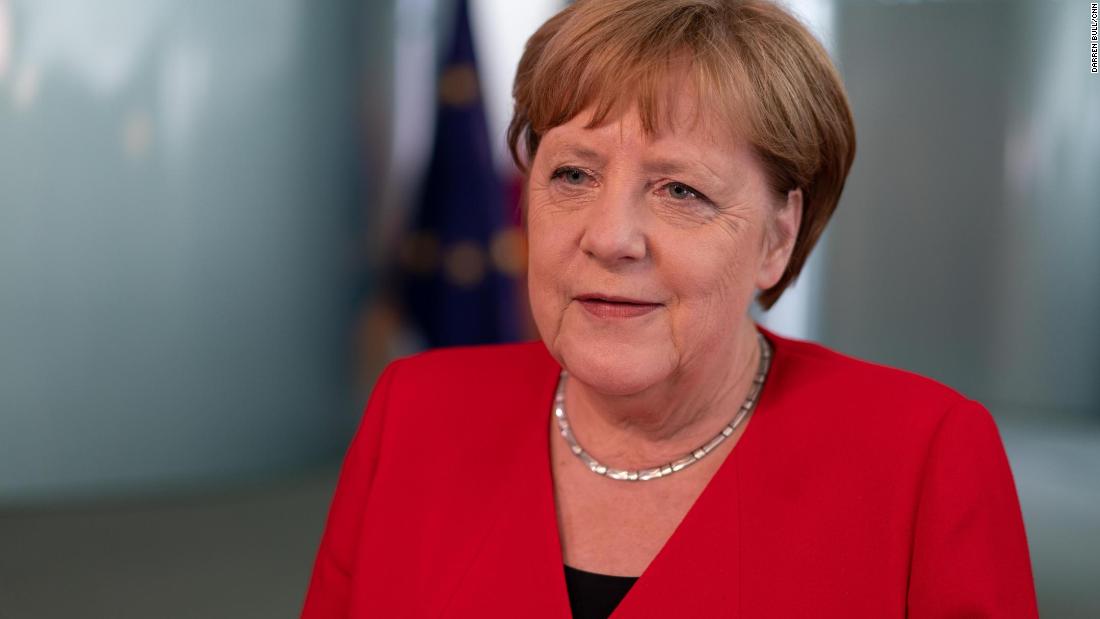
“There is to this day not a single Synagogue not a single daycare center for Jewish children, not a single school for Jewish children that does not need to be guarded by German policemen,” she added.
“There is to this day not a single Synagogue not a single daycare center for Jewish children, not a single school for Jewish children that does not need to be guarded by German policemen”
Merkel, who has been Chancellor for more than 13 years and outlasted many global leaders, has shouldered much of the blame for Europe’s populist wave, with some pinning the spike in support for the far-right, anti-Islam Alternative for Germany (AfD) on her handling of the European refugee crisis.
The Chancellor again defended her decision to allow nearly 1 million refugees into Germany, saying that the best way to manage immigration in the wake of humanitarian crises, like those in Syria and Iraq, was not to “shut ourselves off from each other,” but to be more“vigilant” in making sure that refugees fleeing these countries are “sufficiently cared for.”
That the forecasted far-right surge in last week’s European elections didn’t happen was largely attributed to increased support for pro-European Union green and liberal parties and an increased turnout across the bloc.
In Germany, the green party finished second to Merkel’s Christian Democratic Union.
JUST WATCHED
Angela Merkel reacts to European election results
Angela Merkel reacts to European election results00:56
The Chancellor said that she was “pleased that more people went to the elections than in the last European elections,” but conceded that the Greens’ performance “has to do with issues that people are interested in the most these days, for example climate change, and that is also for my party, of course, a challenge now.”
Merkel has been criticized for her reliance on burning coal and bowing to pressure from German industry — catering to their needs rather than the needs of the environment. This might seem strange, given that Merkel has previously been dubbed the “climate Chancellor” due to her public support for green and clean energy initiatives. Indeed, she was one of the most vocal critics of US President Donald Trump’s decision to pull out of the Paris climate accord.
Of her relationship with Trump, Merkel responded to a question about the public perception of her being a punching bag for the US President, by acknowledging that they have “had contentious debates” but that they’ve managed to find“common ground” where it was needed.
German Chancellor Angela Merkel deliberates with US President Donald Trump on the sidelines of the G7 summit on June 9, 2018 in Charlevoix, Canada.
She said that all German Chancellors had an “obligation” to forge a relationship with the US President.
“One of the most important decisions that (the) United States took after the second world war, to give Germany and Europe a chance to actually develop themselves, well … That was achieved by the Marshall Plan. America has always defended us,” Merkel said.
It’s widely assumed that Merkel had a better relationship with Trump’s predecessor, Barack Obama. But Merkel revealed to CNN that her relationship with the former President “did not start very smoothly” and that “it was not that easy in the beginning.”
She recalled the speech he almost gave at the Brandenburg Gate, saying, “I had been criticized a lot when he wanted to speak in Berlin in front of the Brandenburg Gate, but I said he’s not the President yet. And only presidents can speak there.” Obama ended up speaking instead at the Victory Column.
Speaking of another ex-US leader, Merkel responded to the viral image of President George W. Bush giving her what appeared to be an uninvited neck rub at a 2006 meeting in Russia. The Chancellor brushed off the much-commented-on interaction as a “kind gesture at the time, a friendship” from the then-President.
JUST WATCHED
Who is Angela Merkel?
Who is Angela Merkel?02:15
Merkel is nearly halfway through her fourth and final term as Chancellor. Reflecting on nearly 15 years as leader of one of the world’s most powerful nations, the most powerful politician in Europe and, arguably, the most powerful woman in the world, she spoke of the responsibility she felt to women and girls that looked up to her.
Asked if she sees herself as a feminist, the Chancellor said that, having been asked this question before, the Dutch Queen Maxima helped her find her own definition of feminism.
She said the Queen explained to her that feminism meant “women having the same rights everywhere and this is parity… from politics to the media, to the business community, that must be our objective, we are not there yet.”
“For many girls, apparently, I have become indeed a role model, during my time of chancellorship,” she added. “We need more women in these relevant positions and that means men have to change their way of life.”
“For many girls, apparently, I have become indeed a role model, during my time of chancellorship … we need more women in these relevant positions and that means men have to change their way of life.”
With Merkel’s final term as Chancellor ending in 2021, backers of her brand of politics fear it’s on the way out as populism from both the left and right erodes the political center.
Merkel strongly rejected ceding any ground to populist forces, instead saying there was a need to show “why we are for democracy, why we try to bring about solutions, why we always have to put ourselves into the other person’s shoes, why we stand-up against intolerance, why we show no tolerance towards violations of human rights.”
In the immediate aftermath of the European elections, in which the center-right European People’s Party had its dominance eroded, exactly how popular Merkel’s signature pragmatism is remains far from clear. Especially as her Christian Democratic centrism is currently at the heart of the EPP’s vision for Europe’s future.
As Merkel prepares to leave office, she might find that those who replace her sweep away her legacy not only in Germany, but across the continent she has for so long dominated.
This story has been updated to clarify where Barack Obama gave his 2008 speech in Berlin.
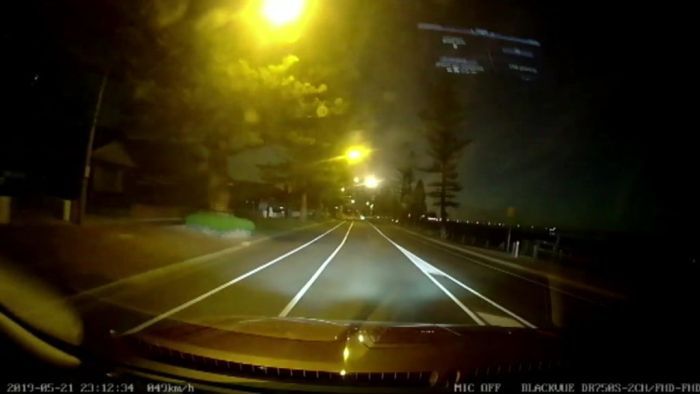
A meteor that soared across the Australian sky on Tuesday night was the size of a “small car” when it hit the Earth’s atmosphere, according to an expert from NASA.
Astronomer David Finlay, who administrates the Australia Meteor Report Facebook page, said data estimates had shown the meteor landed in the ocean, about 400 kilometressouth of Adelaide.
He estimated it would have weighed between 20 to 40 tonnes and would have been about the size of a four-wheel drive.
He said it was also travelling at about 40,000 kilometres per hour and had an explosive yield of about 1.6 kilotons.
“When you think of theHiroshima nuclear bomb, that was 15 kilotons, so the South Australian fireball was 10 per cent the explosive yield of Hiroshima,” he told the ABC.
“Imagine a Toyota Pradothat’s just all rock entering the atmosphere, that’s essentially what’s happened here.
“In the four years that I’ve been running the Australian Meteor Report site, this is the biggest event we’ve seen.”
A spokesperson from Geoscience Australia said data had shown the estimated landing site was close to the border of South Australia and Victoria.
“The meteor on Tuesday night was observed travelling through the atmosphere quite close to the SA/Victoria border by our infrasound array near Hobart, as well as at a second infrasound array in New Caledonia,” a Geoscience Australia spokesperson said.
“The meteor location is about400km south of Adelaide [offshore].”
Mr Finlay said while the meteor would have broken up into fragments, he believed it would have been dangerous if its fragments had landed in a populated area.
“We’re estimating that around 3 to 4 tonnes would have survived atmospheric entry,” he said.
“If this was over Adelaide, you would be looking at fatalities … I’m not trying to be alarmist here, that’s just the reality of it.
“If it was over a populated area we would essentially be looking for holes in roofs and cars.”
Meteor recorded by NASA experts
Despite the claims of its estimated size, Dr Steve Chesley from NASA’s jet propulsion laboratory, based in California, said this particular meteor was pretty small by NASA’s standards.
He said he believed it would have been the size of a small car and objects of this size would hit the atmosphere about three to six times a year around the world.
“When these things hit the atmosphere going so fast, the pressure from these hypersonic entries basically causes them to shatter and fragment,” Dr Chesley told ABC Radio Adelaide.
“There are likely [to be] some small pieces — maybe the size of a fist or perhaps larger — you wouldn’t want it to land on your head.”
Dr Chesley said while the meteor would have created a spectacular light show, it was actually travelling on the slower end of the scale.
“This object almost certainly, tens of millions of years ago, started out in the main asteroid belt out beyond Mars, between Mars and Jupiter,” he said.
“The slowest velocity you can get is about 11 kilometres per second and we have cases of upwards of 35 [kps]and higher.
“This one was [travelling] at about 11.5 kps, which suggests it was probably on an orbit very similar to that of the Earth.”
A jogger who spent 17 days lost and injured in a dense jungle on the Hawaiian island of Maui — where she survived by eating wild fruits and even a few moths she was able to catch — has been rescued.
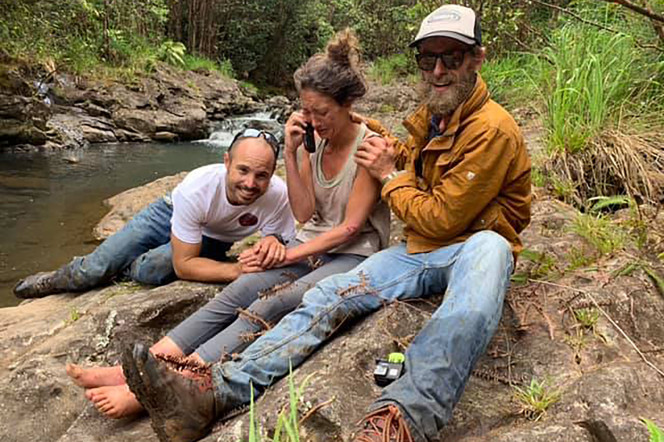
Amanda Eller, 35, a yoga instructor and physical therapist, was spotted Friday by a helicopter crew that had been searching for her for days.
“There were times of total fear and loss and wanting to give up, and it did come down to life and death, and I had to choose,” Eller told ABC from her hospital bed. “I chose life.”
After last being seen on May 8, Eller’s white Toyota RAV4 had been found at a trailhead with the key hidden under the driver’s side front tire and her phone and wallet left inside.
Her mother Julia Eller said that after her daughter had jogged three or four miles on the trail, she laid down on a log to rest, and when she got up, was completely disoriented.
She had intended to go on a three-mile run but somehow got turned around.
Eller told her father she was able to walk for the first five to eight days but at some point, she fell into a ravine, which was about seven miles from where she left her car.
Besides breaking her leg, she had bruised both ankles and suffered severe sunburn.
“Just like we’ve been saying — you get turned around in these woods,” Javier Cantellops said.
“You get lost, you’re gone,” he said.
“It was straight out of a movie.”
Barefoot and suffering a broken leg, Eller was spotted after she heard the chopper and frantically waved to the crew.
“We’ve been flying almost two hours, which is our fuel limit. We were on our way back, flying over the streams, and there she was, waving her arms at us from down below,” Chris Berquist, who led the air search, told reporters.
“There was no mistake it was her. Even from 200 feet, we knew.”
Cantellops, a former Airborne Ranger who was also in the aircraft, recalled the emotional moment the crew spotted Eller down below.
“We all look to our right … and out of the woodwork, man, you see Amanda Eller, my friend, coming out, waving her hands,” he said.
“It was unbelievable, dude. And, of course, we all lose it.”
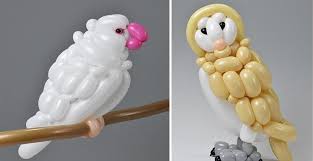
They say practice makes perfect so Masayoshi Matsumoto, an artist who has been perfecting his craft for 10 years, should be pretty good, right? No. He’s amazing. The guy creates balloon sculptures so intricate, every single one of his pieces seem to breathe with life.
What makes Matsumoto stand out from the crowd is how insanely familiar he is with the material. “My creations are one hundred percent balloon-only,” the 29-year-old told Bored Panda. “I don’t use any adhesive, marker pens, or anything else.”
Once you know that, the limbs, spikes, and other little details elevate his pieces to another level. Majestic mammals, graceful birds, and pesky insects with their incredibly textural exoskeletons are only part of the artist’s body of work. Fauna aside, Matsumoto also portrays plants and fungi, including cacti and morel mushrooms.
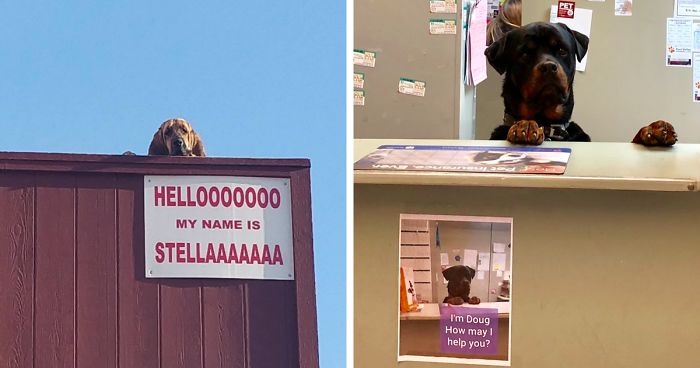
What dogs and humans have in common? They both are smart and full of energy. With just a little bit of training, our four-legged companions can easily learn all sorts of useful tasks that humans do. So why not employ them? As it turns out, some people already did. We here at Bored Panda have compiled a list of dogs who are working in a daily job just like us. Don’t believe us? Scroll below to see for yourself!
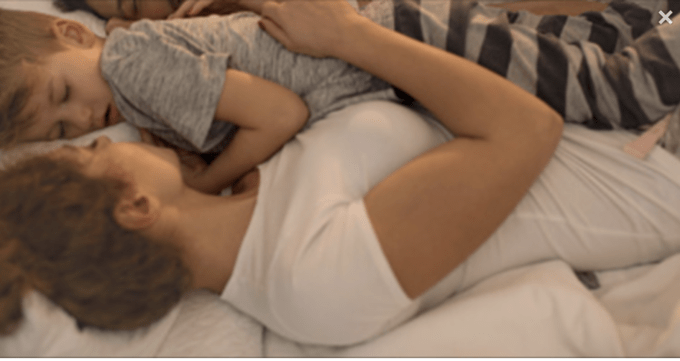
I have a new favorite phrase from our kids: “Mommy, will you lay with me?” Why is this my favorite? Let me tell you.
Do you hear this every night, as I do? Our children want me to lie down with them every night. This question is always on their minds because they love to spend time with you. I know that our goal is to teach them to sleep through the night, so they are well-rested, but these few minutes BEFORE your child falls asleep, and even before you say “Good Night” make all of the difference.
UPDATE: THIS POST WAS ORIGINALLY WRITTEN YEARS AGO, BUT IT’S ALWAYS A GREAT REMINDER TO MYSELF (and hopefully others), SO I WANTED TO RESHARE IT TODAY.
Ps- Yes, “Lie down” is the correct term, but our son has always said: “lay with me”… so that is how I quoted him. 🙂 Thanks!
Several years ago, a friend of the family’s son passed away, after several hours of sleep, while he was asleep in his room. A week later, another seven-year-old boy passed away, only one town away, unexpectedly, while he was outside playing. One year later, another child passed away at only 36 months of age, in the middle of the night after he was put to sleep in his own bed.
This is hard for me to think about, talk about, write about, or share today. At the time of their passing, our children were very close in age to several children that had passed away. (We have four kids: born in ’06, ’08, ’10 and ’12)
Do you know what one of our kids asks me every single night as I am tucking him into bed… “Mommy, will you lay with me?” I am sad now thinking that most nights my answer is this:
“Just for a second, sweetie.
I have to make sure that your sister and brothers are all tucked in.
I have to clean up the kitchen.
I have to work on my notes for work.
Daddy and I are going to eat dinner since we didn’t get to eat as early as you tonight, so stay in bed….”
whatever the reason, they all say the same thing to him: “Just for a second. Other things are coming first.”
I know, I know… as parents, we don’t want to start any sort of sleep problems, and many of us do not have a family bed or bed sharing (we don’t), but this is different. This happens as you are putting them to bed. When our son is going to sleep in his own room, while we are tucking him in, we just talk.
I know that we can’t lie there all night. Our son would expect this, as would all of our kids. “You give an inch, they take a mile”. We think we will lie down for 5 minutes; they want 20. We give 20; they want 40. (To be honest… our youngest child be happiest if I stayed 12 hours in her bed every night!)
There is a catch.
This is when the good stuff comes out.
This is when I hear all of those details that teenagers and almost-teens don’t tell their moms anymore.
“So & So told me that I was cute today. How disgusting. Right, Mom?”
“Today we had a math test, and I got them all right… I was really distracted though and thought I might miss one because out in the hallway, the kids were setting up for the play. Did I tell you about the play?”
“I miss our dog. Do all dogs die of cancer? When do you think we can get another one?”
“Do you remember when I had that toddler bed, and I slept with that blue stuffed animal? Do you think I’ll give it to my kids one day?”
“Mom, you know how you told me that during wrestling practice I should try to help both brothers uplifted? Cheer them on and run with them? Today I did. I ran right beside them, just like you and Dad told me. I think it made them feel better. Beau said that his stomach hurt from running and I told him that if he wanted to slow down, I would slow down with him, even though running that slow is REALLY boring, Mom!”
These are the things that happen when we put aside everything else. These are things that happen when we forget about whatever else we have to do or want to do.
My grandma used to tell me to enjoy our kids when we had them. She would say that she didn’t know why people would have kids if they didn’t get to spend time with them. She said that she loved raising her kids and that she knew I would be the same way.
My parents and my husband’s parents remind us that one day, they won’t want to spend so much time with us. It breaks my heart to think of this, but you know what? …
That day IS NOT TODAY.
Today, I will lie down with him when he asks me to, and with all four of our children. I will sing Toora Loora Loora and Que Sera Sera (their favorite songs).
And do you know what?
If this new bedtime routine adds ten minutes onto the end of our night, when our patience is low and our exhaustion is high, that is ten more minutes that I was lucky enough to have spent with our children…. listening, encouraging, telling them the unspoken words that say: TODAY, RIGHT NOW, YOU ARE THE MOST IMPORTANT THING TO ME.
As I look in at my child sleeping, I think about how time goes by so quickly and how I am so glad to have these little moments now. In ten years, those unspoken words will come back to me when he is grown, getting ready to head off to start his own life and I ask him to stop what he is doing and sit with ME for a moment… and he does.
We only have a few years to really be present in their lives. Let’s spend these years wisely.
ps- I want to invite you to sign up for my FREE e-mail series called One on One time. It is completely free & I will send you this calendar to get you started. 🙂
If you are having trouble keeping your CHILD IN BED or helping them to SLEEP THROUGH THE NIGHT, these posts will be helpful:
A FEW MORE PARENTING POSTS YOU MIGHT LIKE:
Success! Now check your email to confirm your subscription.
There was an error submitting your subscription. Please try again.
Amazon.com Inc. is developing a voice-activated wearable device that can recognize human emotions. The wrist-worn gadget is described as a health and wellness product in internal documents reviewed by Bloomberg. It’s a collaboration between Lab126, the hardware development group behind Amazon’s Fire phone and Echo smart speaker, and the Alexa voice software team. Designed to work with a smartphone app, the device has microphones paired with software that can discern the wearer’s emotional state from the sound of his or her voice, according to the documents and a person familiar with the program. Eventually the technology could be able to advise the wearer how to interact more effectively with others, the documents show. It’s unclear how far along the project is, or if it will ever become a commercial device. Amazon gives teams wide latitude to experiment with products, some of which will never come to market. Work on the project, code-named Dylan, was ongoing recently, according to the documents and the person, who requested anonymity to discuss an internal matter. A beta testing program is underway, this person said, though it’s unclear whether the trial includes prototype hardware, the emotion-detecting software or both. Amazon declined to comment. The notion of building machines that can understand human emotions has long been a staple of science fiction, from stories by Isaac Asimov to Star Trek’s android Data. Amid advances in machine learning and voice and image recognition, the concept has recently marched toward reality. Companies including Microsoft Corp., Alphabet Inc.’s Google and IBM Corp., among a host of other firms, are developing technologies designed to derive emotional states from images, audio data and other inputs. Amazon has discussed publicly its desire to build a more lifelike voice assistant. The technology could help the company gain insights for potential health products or be used to better target advertising or product recommendations. The concept is likely to add fuel to the debate about the amount and type of personal data scooped up by technology giants, which already collect reams of information about their customers. Earlier this year, Bloomberg reported that Amazon has a team listening to and annotating audio clips captured by the company’s Echo line of voice-activated speakers.
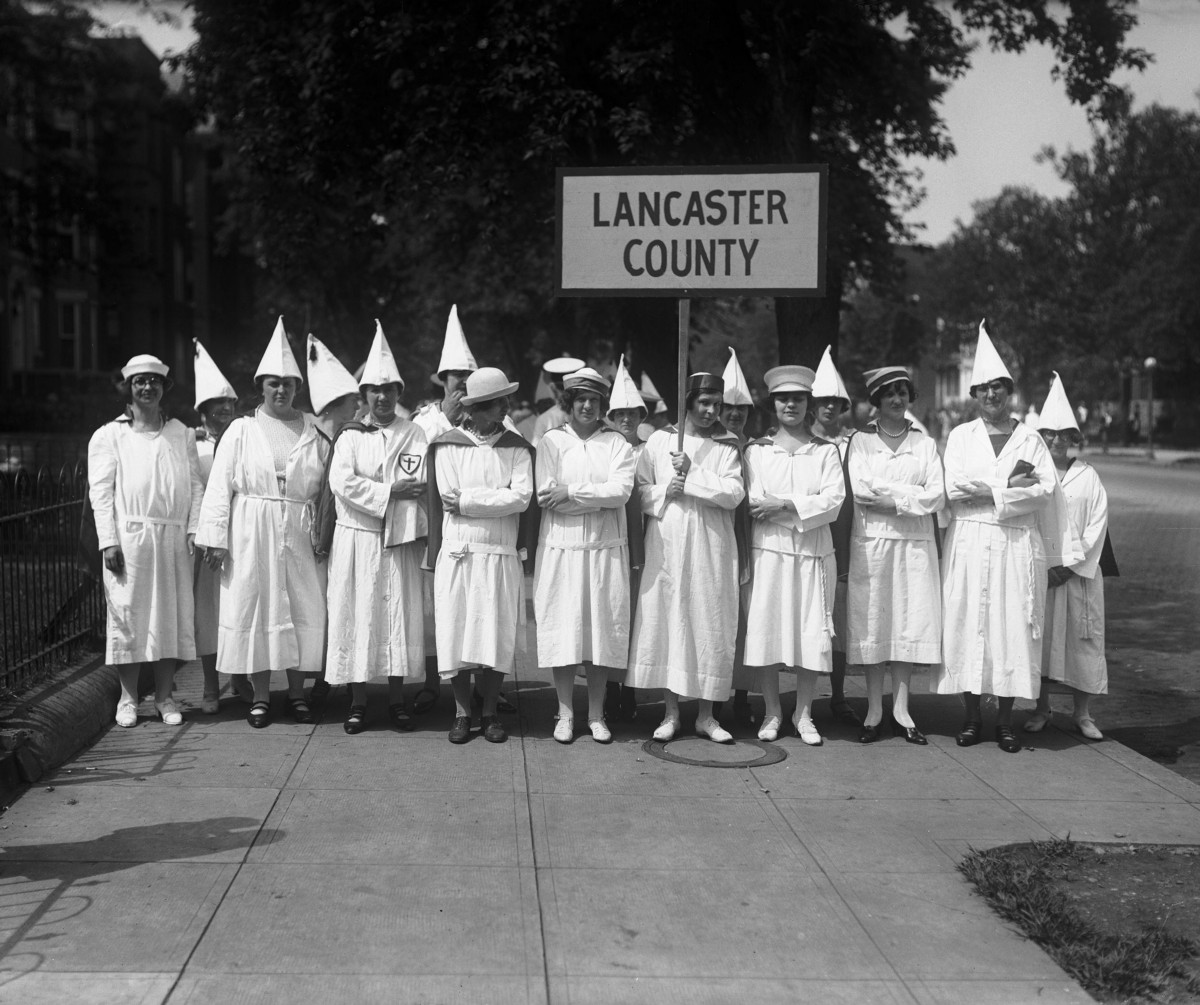
Not long after American women won the right to vote, a woman in Greene County, Indiana received an invitation to hear a lecture. All “the better known and educated women” had been asked to come, so naturally, she accepted. The topics ranged from the Bible and the importance of education, to upholding “the American way.” The lecturer, also a woman, then asked the group if they would like to join a secret society dedicated to protecting those things.
“Why not,” the woman would later recall thinking. “It seemed a fun thing to do with our friends.” They were then given white robes and pointed white hoods that obscured their faces. One night they met and marched silently down the road, an enormous cross engulfed in flames looming in the darkness behind them.
Women have long been overlooked and under credited, and their contribution to horror is no exception. The 1920s marked the heyday of the Women of the Klu Klux Klan — the autonomous arm of the notorious white supremacist group — springing, in a strange twist, out of a climate of hopefulness after suffrage when women felt emboldened to take part in civic life. Headquartered in Little Rock, Arkansas, with delegates in every state, the organization’s numbers reached half a million during this decade.
While the Greene County woman may have been naive, her fellow WKKK members were savvier. “Women were major actors in the klan, responsible for some of its most vicious, destructive results,” writes Kathleen Blee in Women of the Klan . According to Blee, the organization was chillingly effective — perhaps even more so than their male counterparts — in large part because they were better at public relations. (One of the women involved in the founding of the WKKK had originally been enlisted by the KKK to help clean up its image).
If the WKKK was more successful in advancing their xenophobic agenda, it was because they were better than the men’s group at hiding their white supremacist mission behind a facade of social welfare. “Are you interested in the Welfare of our Nation? As an Enfranchised woman are you interested in better government? Should we not interest ourselves in better education for our children?” their pamphlets read. They organized parades and food drives, with the benefits often funneled directly to Klan families. Drawing from the church-supper tradition, their gatherings could, on first glance, be mistaken for sorority events. One Indiana woman Blee interviewed described them as “a way to get together and enjoy.” But simultaneously they lobbied for national quotas for immigration, racial segregation, and anti-miscegenation laws — and proselytized the “eternal supremacy” of the white race as an opposition to the “rising tide of color.”
The WKKK served to normalize the extremist actions of the men’s KKK, but also advanced a version of the white Protestant agenda that was all their own. As increasing numbers of immigrants crossed the United States borders simultaneous with women’s suffrage, the WKKK’s nativism mingled with a strange breed of feminism. Their pamphlets announced “new days of freedom” for women. The male KKK wasn’t on board. They fiercely opposed changes in gender roles and used the symbol of the white damsel in distress to galvanize racist fury. Black men were a threat to their pure, Protestant women, and the KKK would protect them. This trope was most starkly captured by the scene of D.W. Griffith’s 1915 pro-KKK film, Birth of a Nation , where a white woman heroically leaps off a cliff to avoid being tainted by a black man (played by a white actor in blackface). In 1871, the KKK’s first Grand Wizard told a crowd, “Ladies were ravished by some of these negroes, who were tried and put in the penitentiary, but were turned out in a few days afterward.” Now the WKKK wanted to “stand alongside our men and help with protecting” instead of being “patted on the head and told not to worry.”
The WKKK recruited gentile, female, native-born citizens older than 18, so long as they were not Catholic, socialists, or communist. They needed to be a resident in a Klan jurisdiction for six months and endorsed by at least two Klanswomen. Blee explains that contrary to the stereotype of right wing extremists, members of the WKKK were not socially marginal, from the “downwardly mobile sectors of society who focus their resentments against society on racial, ethnic, and religious minorities.” In fact, many came from stable, middle-class communities.
Like their male counterparts, the WKKK made a fetish of cultish flamboyance and ritual: they referred to themselves as an “invisible empire,” and had a language all their own. The world outside Klan activities was the “alien world.” Days of the week were not Monday, Tuesday, and Wednesday, etc., but “desperate, dreadful, desolate, doleful, dismal, deadly, and dark.” There were similarly melodramatic codes for months of the year, and they reorganized historical time to relate the American Revolution and the Klan’s birth.
As the 1920s came to a close, the racism and violence of both the KKK and WKKK became harder to conceal. As one WKKK leader admitted in The New York Times , “the actual working out of the ideals has not been so good.” By the end of the decade, the organization had dispersed, though no doubt, the women continued to channel their xenophobic ideologies into other forms of civic engagement such as PTAs, school boards, and local and national politics. As Blee noted, “the political lesson of Klan history for those working toward a more just and egalitarian society, is the ease with which racism and intolerance appealed to ordinary people in ordinary places.” This article is part of ourWhite Terror U.S.A. collection, covering the shameful history of white supremacy in America. History shapes the world around us — from national elections to cultural debates to marches in cities across the country. At Timeline , we spread knowledge of the past to help shape a better future. If you want to do the same, please share this and other Timeline stories and join us onFacebookandTwitter.
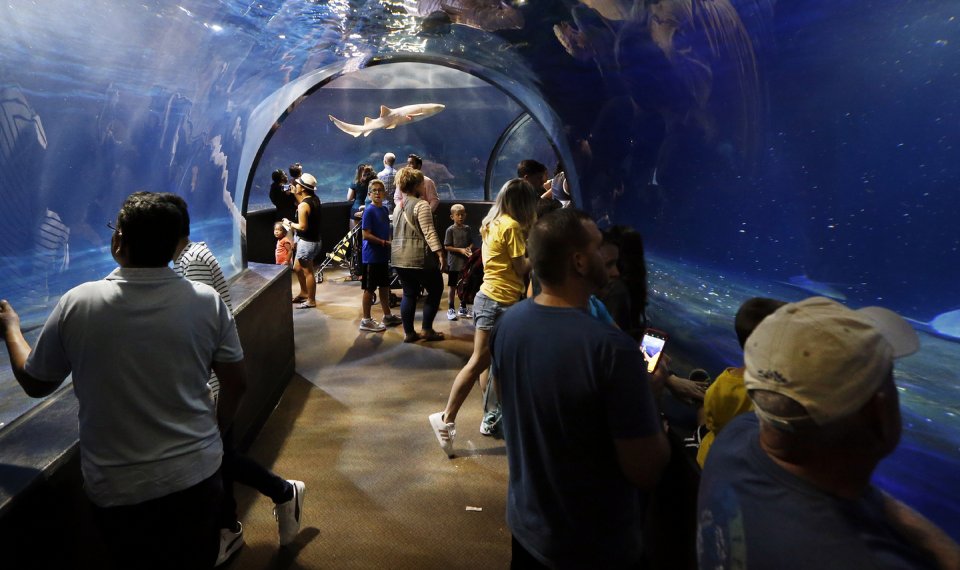
Tuesday morning in Tulsa began with a confirmed tornado and a blaring warning from the National Weather Service: “Take shelter now!” One offer of shelter came from an unexpected and oddly entertaining source: the Oklahoma Aquarium, which says it has a secure storm shelter under its shark tank. The shark tunnel and dome — home to an exhibit of bull and nurse sharks — is constructed from concrete “over a foot thick” and “designed to handle extreme force due to the weight of the water in the exhibit,” according to a social media post from the aquarium’s verified account. More importantly, though, the Oklahoma Aquarium wants you to know that its storm shelter has “the best view in Oklahoma.” Tuesday morning’s powerful twister was located before 7 a.m. over the Tulsa International Airport; the aquarium is 19 miles south of the airport. The storm was moving northeast at around 50 mph, according to the National Weather Service. Storms continued in northeast Oklahoma on Tuesday. Several flash flood, thunderstorm and tornado warnings had already been issued before noon. Streets in Tulsa have been barricaded by Tulsa officials since 4 a.m. because of flooding. “Do NOT drive around the barricades. Doing so puts not only your life at risk, but also rescue crews,” the National Weather Service cautioned. The Oklahoma Aquarium had a different message: “Stop by today during normal business hours,” it wrote, for “storm-free fun.” Because yes, just in case you were wondering, it will be open.

Economic opportunity is tied to location, more than ever before, according to a county-by-county report in 2017 from the nonprofit Economic Innovation Group.