Category: Conversation Starters

  • Three Ways to Purify Your Thinking

    Three Ways to Purify Your Thinking

    Three Ways to Purify Your Thinking

    If we are in Christ, God is remaking our minds.

    Once, we were “darkened in [our] understanding” (Ephesians 4:18). We may have been smart, even brilliant, but we shut the doors and windows of our minds against the knowledge of God. We preferred illusions over truth (Romans 1:18). We crafted alternative realities where God was not glorious, Christ not worthy, sin not damnable, and holiness not desirable. Our minds, created to be like a garden of the Lord, became a field of thorns, a scorched land.

    But in Christ, God is reclaiming his garden. He’s opening the doors and windows and letting the light back in. He has told us that one of the great tasks of the Christian life is “to be renewed in the spirit of your minds” (Ephesians 4:23). Pluck weeds and plant trees. Gather rocks and plow fields. Prune vines and build walls. Purify your mind.

    Purify Your Mind

    The purifying of our minds happens, in part, as we learn to habitually set our minds in certain directions — as we turn our mind’s eye from the worthless to the beautiful, from the defiled to the pure, from the false to the true. Like all repentance, such turning is not a onetime work, but a daily one, an hourly one, even a moment-by-moment one. Nor is it easy: changing our habits of thought is like carving new ruts in old roads. It will not happen spontaneously.

    As we do set our minds in certain directions, and make holy thinking a habit, the effect will be like gradually opening the curtains: light and warmth from the God of glory will come in, making our thoughts bloom like flowers and rise like oaks of righteousness.

    God tells us, in the book of Phillipians, to consistently set our minds in three directions: on glory above, on beauty below, and on people around.

    1. Set your mind on glory above.

    Their end is destruction, their god is their belly, and they glory in their shame, with minds set on earthly things. But our citizenship is in heaven, and from it we await a Savior, the Lord Jesus Christ. (Philippians 3:19–20)

    Paul reminds the Philippians of their heavenly citizenship directly after he warns them not to be like “enemies of the cross of Christ,” people who have “minds set on earthly things” (Philippians 3:18–19). By earthly things, Paul does not mean the gifts in God’s good creation, but rather sinful pleasures (see Colossians 3:5). Those who set their minds on earthly things have scrubbed heaven from the horizon of their minds, preferring to fill their heads with dark pleasures.

    The antidote is to look up: lift your eyes to glory above, and walk often in the fields of heaven. But Paul will not let us speak vaguely of “glory above.” A mind set on high is not filled with a spiritual haze, but with a Person: Jesus Christ. “Our citizenship is in heaven, and from it we await a Savior.” “Set your mind on glory above,” then, mainly means, “Set your mind on Christ and all that is yours in him.”

    Think much of the Lord Jesus. Consider how he left his Father’s side and took the form of a servant. Ponder how he relinquished his rights in order to die for desperate sinners. Remember how he is now clothed in a glorified body, bearing the scars of our redemption and crowned with the highest name. Meditate on how he will one day “transform our lowly body to be like his glorious body,” and make everything broken about us whole (Philippians 2:6–11; 3:21). Only then will we know something of what it means to “have this mind among yourselves, which is yours in Christ Jesus” (Philippians 2:5).

    Search for this Jesus as you read your Bible day by day. Cast your mind in the mold of his goodness. Carry his promises with you in all the chambers of your head. Return often throughout the day to think of glory above.

    2. Set your mind on beauty below.

    Whatever is true, whatever is honorable, whatever is just, whatever is pure, whatever is lovely, whatever is commendable, if there is any excellence, if there is anything worthy of praise, think about these things. (Philippians 4:8)

    A mind set on heaven does not cease to think of earth. No: heaven sends us hunting through creation for all the marks of our Father’s handiwork. Thinking on beauty below is a matter of Christian obedience.

    Too often, however, I substitute “whatever is lovely” for “whatever gives immediate gratification.” Many of us are content to set our minds on pleasures that sprint through our souls without leaving a trace. We need heaven to recalibrate our earthly tastes, so we move past snap delights to “approve what is excellent” — truly, enduringly excellent (Philippians 1:10).

    Those with minds set on glory above will not ultimately be satisfied with trivialities below. We will search to find a deeper echo of the tune, something that sends us past the crust of life to the core. We will look for something to awaken us to the wonder of being image-bearers of the high God, in a broken but beautiful world, with the gospel on our lips and glory in our hearts (Philippians 1:27). We want something that will absorb us, that will take us outside ourselves and send us into Reality, with all its hard edges and bracing air, all its grand and intricate glory, all its raw and cultivated splendor.

    We might, as our Savior was prone to do, regularly get out beneath a big sky and look at the birds of the air, the flowers of the field, the movement of clouds, and the habits of sheep. We might lose ourselves in some story that rekindles in us the glory of everyday life. We might find some hobby that rivets us and, for a few moments at least, makes us forget about ourselves as we run, hike, play, fix, write, craft, cook, and then kneel down to give thanks to the Giver of it all.

    3. Set your mind on people around.

    Let each of you look not only to his own interests, but also to the interests of others. (Philippians 2:4)

    As we go on the hunt for beauty here below, we would be blind if we passed over those walking wonders all around us — those children of Adam, destined for immortality in either heaven or hell, whose interests Paul tells us to look to (Philippians 2:4).

    This command to “look . . . to the interests of others” means more than “consider meeting others’ needs if they’re in your path and you have time.” This looking is, rather, proactive looking, attentive looking, the kind that would not happen apart from serious, creative thought. Look to means “Think, dream, plan, and study how to do the most good to those around you — and then get to it.”

    We know this because Paul gives Jesus as our model of looking to the interests of others (Philippians 2:5–11). The cross was not a good work Jesus stumbled across, but one dreamt up in the merciful imagination of the triune God, and executed at extreme cost to himself. We are looking to the interests of others only if we reflect something of Jesus’s initiating, creative, and costly love, and are “genuinely concerned for [the] welfare” of those around us (Philippians 2:20).

    The most well-balanced people in this world are those whose heads are so full of God and others that they have little time to circle around their own misfortunes. For many of us, then, perhaps the healthiest thing we could do with our minds is to absorb ourselves in the hopes, struggles, successes, and heartbreaks of another.

    Think About These Things

    The call to purify our minds is one we only begin in this life. Even the saintliest among us must stand guard over their mental garden, continually shooing away the crows of corrupt thoughts. Our thinking will bloom as it ought to only when we sink our minds into the soil of Mount Zion.

    But much of our peace in this life, and much of the fruit we bear for God’s glory, comes as we heed the call to “think about these things” — to set our minds on glory above, on beauty below, and on people around. These are the windows that bring light and warmth to our minds, until the day Light himself will purify our minds completely.

    This content was originally published here.

  • 50 Struggles That 90’s Kids Remember Too Well

    50 Struggles That 90’s Kids Remember Too Well

    Every generation looks back at its youthful period with nostalgia; everything was better when we were kids and nobody can convince me otherwise! However, there’s something about my generation, the early millennials, that does make us special. We grew up in a time of unprecedented technological change; for example, we were born with the cassette, the CD came and went (don’t even get me started on the Minidisc), then it was Mp3, iTunes, and finally Spotify. All in the space of a few years!

    The technology that kids now take for granted was refined over the years through our experiences. We eventually got the internet but we needed to wait for it to connect. We had phones, but they were connected to our houses until Nokia came along with SMS and snake. Oh, and we had something similar to Netflix too, but you had to go to rent a tape or DVD at the videostore. Looking back, these things might seem incredibly basic and inconvenient now, but we loved them! And I’ll take my Nirvana/Soundgarden/Faith No More mixtape over your Jonas Brothers Spotify playlist any day of the week…

    We here at Bored Panda have created a list of all those ‘struggles’ that we had with technology back in the day, and they are sure to bring back some good memories. Do you recognize a few of these? Scroll down to check them out for yourself, and share your own stories in the comments!

    source

  • ‘I Just Felt the Holy Spirit Speak to Me’: Man Stops Dramatic Suicide in Progress, Leads Jumper to Christ

    ‘I Just Felt the Holy Spirit Speak to Me’: Man Stops Dramatic Suicide in Progress, Leads Jumper to Christ

    On April 25, 31-year-old Collin Dozier was driving home around midnight when he noticed a car pulled on the side of the road on the Lesner bridge.

    He said he felt compelled by God to investigate after not seeing the driver of the car.

    “I figured he wasn’t even near his car that much,” Dozier told CBN News. “So, I just felt the Holy Spirit speak to me and tell me to go up there.”

    The man, 27-year-old Jacob Palmer, had gotten out of his car to jump from the bridge.

    “At that point I was like, ‘Hey man, don’t do it. Jesus loves you. He’s got a plan for your life,’” Dozier explained.

    Dozier, a devout Christian, said that while Jacob didn’t respond, that didn’t stop him from talking and at times sharing his own personal testimony.

    “No matter what I said he wouldn’t listen,” said Dozier.  “So, that’s when I did the only thing I knew to do in a situation like that and that’s to pray. So, I reached out my hand and I was like, ‘Lord Jesus please speak to this man. I pray right now you open up his eyes and show him your love.’”

    He continued, “I was like, ‘Man I’ve gone through a lot of hard times in my life and there’s only one thing that’s really going to help me get through those hard times and that’s turning to the Lord.”

    Dozier said things escalated when the police arrived.

    source

  • ‘I Committed Murder’: Violent Gang Member-Turned-Pastor Reveals the Moment That Changed Everything

    ‘I Committed Murder’: Violent Gang Member-Turned-Pastor Reveals the Moment That Changed Everything

    Casey Diaz was once a gang member and murderer who took pleasure in the violence and chaos that was inherent to his lifestyle — until an encounter with the Bible’s message of hope changed his life in the most profound ways imaginable.

    Diaz, who tells his life-affirming story his new book, “The Shot Caller: A Latino Gangbanger’s Miraculous Escape from a Life of Violence to a New Life in Christ,” recently appeared on PureFlix.com’s “Pure Talk” to reveal the ins and outs of his unlikely transformation.

    The former gang leader said life started to get complex after he and his family immigrated to America from El Salvador when he was just 2 years old. By the time he was 8, familial chaos raged, with drugs and alcohol entering the home and his mother facing abuse from his dad.

    source

  • When does a teacher over step they job as a teacher and not a parent?

    When does a teacher over step they job as a teacher and not a parent?

    When is enough, enough!  Let the children be!  No one should have to choose what sex they are at any age.  At any rate the schools need to know their limits.

    A couple in Woodburn, Oregon is suing their school district after they discovered their eight-year-old son was asked repeatedly by his teacher if he was transgender.  The parents, who are keeping their identity private, are suing the district for nearly $1 million because they say their son’s second grade teacher held him back from recess on multiple occasions to personally ask him if he believed he was really a girl. They said the teacher also gave their son reading materials, videos, and other resources explaining what it means to be transgender.  The parents say they had no idea this was happening and believe what the teacher did was inappropriate.  “He feels different now, he feels confused. To hear your son say that…on a couch talking to a therapist, holding back tears – it’s very heartbreaking,” the mother said, according to Fox 12.

    The parents say their child had a stomach problem, which made him uncomfortable with using the restroom. They suspect his hesitation about going to the bathroom made his teacher believe he could have gender dysphoria.  They say their child suffered significant emotional confusion by being singled out by his teacher.  He is on anxiety medication and regularly sees a therapist.  “He can be whatever he wants, I don’t care what he is. I just want him to be my happy son and I feel like she messed that up. It frustrates me that my son can be influenced that drastically, and nothing be done about it. They just wanted to sweep it under the rug,” said the father.  They said the school acknowledged the teacher’s actions, but the teacher still works at the school.

    source

  • Stunning video captures whale bursting through sea

    Stunning video captures whale bursting through sea

    This fisherman has a whale of a tale.

    Stunning images captured the moment a humpback whale shot up through the waves — much to the shock of a nearby fishing boat in Monterey Bay, Calif.

    Photographer Douglas Croft snapped the magnificent display in a sequence that shows the whale breach the calm seas April 27 near the unsuspecting fisherman’s boat.

    “It was quite exciting!” Croft, 60, told the Caters News Agency. “Salmon season coincides with the time when humpbacks are returning to Monterey Bay to feed for the summer, and there were hundreds of boats on the bay fishing.”

    The series of photos were shot from a porthole below deck on another boat — which gave the impression of looking up at the staggering creature spin through the air.

    “Since the boat is closer, it should look bigger, but the whale is huge!” Croft said.

    Whale-watcher Kate Cummings, who was working with Croft, said a little intuition helped the pair catch the incredible spectacle.

    “The whale had already breached multiple times much further away from the fisherman,” Cummings told the news agency.

    “But sometimes when whales breach multiple times, they’re also heading a specific direction when they’re underwater building momentum for the next breach.

    “I figured the next breach would be around the fisherman because the whale was heading that way — and sure enough!”

    This content was originally published here.

     

  • Lady’s Slipper, Moccasin Flower: Appalachia’s Vanishing Flower

    Lady’s Slipper, Moccasin Flower: Appalachia’s Vanishing Flower

    Photo: Lady Slippers growing in the wild in Dawson County, Georgia. Courtesy of James Henderson
    Photo: Lady Slippers growing in the wild in Dawson County, Georgia. Courtesy of James Henderson

    Sometime long before the arrival of European colonists, a young Native American maiden whose tribe was dying of an unknown disease went out in search of medicine to save her people.  The winter’s snow was deep and the woman’s bare feet swelled and became frostbit as she frantically searched the wilderness for the herbs that would bring healing.

    Sadly, the woman who had hoped to deliver her tribe from certain doom succumbed to her injuries and died all alone in the wilderness.

    Though she was not successful in completing her mission, the woman’s courage and bravery was honored by a beautiful and new plant springing up from the place she had died: The Lady Slipper flower, also known in older days as “Moccasin Flower”.  A rare and beautiful plant whose flower was in the shape of a young woman’s shoe.

    This is story is an ancient Native American legend and it is believed that the plant only grew in the exact location where the young woman’s feet had trod while she searched for good medicine.

    The medicinal plant which serves as the official wildflower of New Hampshire is native to places generally east of the Mississippi River; however, it is more common in the northern United States and southern Canada than elsewhere.

    In the early years of Appalachian settlement, Lady Slippers — and Pink Lady Slippers in particular — could historically be spotted in North Carolina, Tennessee, Virginia and Kentucky, though a combination of water changes, wetland draining, habitat destruction and over picking have left the plant severely depleted in many parts of Appalachia.  The State of Tennessee has even gone so far as to declare the plant to be an endangered species, while it is listed as vulnerable in New York and considered “unusual” in Georgia.

    In 1918, the American Forestry Magazine featured the plant, calling it “a truly wonderful story in botany,” adding that the flowers are “delightfully fragrant and it is a pleasure to meet with the plant in the deep woods… it is a pleasure that remains with one for a lifetime.”

    Even in 1918, the magazine article went on to decry the plant’s widespread vanishing, stating, “This is due to thoughtless and uninstructed picnickers and joy-riders, who leave their machines to ramble far and wide through the woods where formerly the moccasin flowers grew in numbers.  Many of these people cannot forbear picking every pretty flower they can reach, and our beautiful pink lady-slipper, for very obvious reasons, is one that is most often destroyed.

    Another thing that has led to the plant to reaching a place where it is endangered in some states is the fact that Lady Slippers are difficult to transplant or to grow in a non-natural location; perhaps this is connected to the native legend of the plants only growing in the location of the woman’s many steps!

    According to the USDA, “The plant grows 6 to 15 inches tall and flowers generally between May and July… The root of lady’s slipper was used as a remedy for nervousness, tooth pain, and muscle spasms. In the 1800s and 1900s it, and other orchids, were widely used as a substitute for the European plant valerian for sedative properties.”

    Pink lady’s slipper takes many years to go from seed to mature plants; the plants may live up to 50 years, taking up to 16 years to flower for the first time.

    Pink lady’s slipper lives in a variety of habitats, growing in mixed hardwood coniferous forests of pine and hemlock on rocky/mossy slopes, and in semi-open or in deep humus and acidic but well-drained soil under birch and other deciduous trees of eastern United States forests.

    If you ever have the privilege of “meeting one in the wilderness” savor the moment, but do not attempt to transplant it and certainly don’t pick it, after all, it takes up to sixteen years for the plant to flower for the first time.

    Like the people who named it, the Moccasin Flower is steeped in legend, beauty and serves as a fascination to the rest of us; but sadly it enjoys but a fraction of its once splendid glory.

    Like articles like this? Then you would love Appalachian Magazine’s Mountain Voice: A Collection of Memories, Histories, and Tall Tales of Appalachia!  Click here to check out the book on Amazon!

    This content was originally published here.

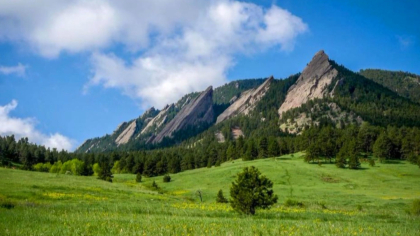
  • Flatirons Fall: Climber Shares Terrifying Video Of Own 60-Foot Plunge In Boulder

    Flatirons Fall: Climber Shares Terrifying Video Of Own 60-Foot Plunge In Boulder

    A man who fell while climbing the Flatirons in Boulder is hoping video of the incident will serve as a warning to others. On April 16, Kyle Walker was climbing the second Flatiron in Boulder.

    “Once I got on it, I realized the holds weren’t as prominent as I thought and I was a lot more tired,” he told CBS4’s Dominic Garcia.

    Kyle says there was lichen all over the rocks making them slick and that his feet gave out. He wasn’t using any climbing ropes and didn’t have proper climbing shoes when he fell 60 feet.

    see more

  • Mother-Daughter Tattoos | POPSUGAR Love & Sex

    Mother-Daughter Tattoos | POPSUGAR Love & Sex

    Your mom is one of your very best friends — sure, you got in little squabbles over SOs and eye makeup when you were 13, but years later, you couldn’t be closer. You’re so thankful for the lady who brought you into this world, and nothing compares to the bond you have with her. To seal your appreciation for each other, you’ve decided to get matching ink. Congrats! Here are 100 ideas to fuel your mother-daughter tattoo inspiration . . . because there’s no one you love more.

    — Additional reporting by Ashley Paige

    This content was originally published here.

  • Why the average American hasn’t made a new friend in 5 years

    Why the average American hasn’t made a new friend in 5 years

    Forty-five percent of adults say they find it difficult to make new friends, according to new research.  A new study into the social dynamics of 2,000 Americans revealed that the average American hasn’t made a new friend in five years.  In fact, it seems for many that popularity hits its peak at age 23, and for 36 percent, it peaks even before age 21.  The study, conducted by OnePoll in conjunction with Evite, uncovered that one of the reasons 42 percent of adults struggle to make friends is due to introversion or shyness.  And the challenge is not just in breaking out of their shell but also breaking into new social situations and circles.  The majority of respondents cite friendship-making barriers that include aversion to the bar scene where most people choose to socialize, or the feeling that everyone’s friendship groups have already formed.  Other notable reasons Americans can’t seem to make new friends as an adult include commitments to family (29 percent), not having any hobbies that allow them to meet new people (28 percent) and moving to a new city (21 percent).

    Though adults find the struggle to be very real when it comes to making new friends, they are open to suggestions for expanding their social circle. In fact, 45 percent of those studied reveal they would go out of their way to make new friends if they knew how or had more opportunities.  For the 45 percent who are looking to make new friends, the best and most underrated way to do that these days is still in-person. You can host a party, or something more low-key like book club or happy hour, and tell each of your guests to bring a friend,” said Piera Pizzo, Evite’s in-house party specialist.  “You’ll be surprised at how naturally social circles can come together, and at the lasting connections you can make when bonding face-to-face.”  And how many friends do adults actually have? Turns out, 16. The average American has three friends for life, five people they really like and would hang out with one-on-one, and eight people they like but don’t spend time with one-on-one or seek out.

    Most people have remained close with friends they met when they were younger. Nearly half of those surveyed have stayed friends with peers from high school, and a further 31 percent with peers from college.  Kicking it even more old-school, three in 10 Americans say they have made lasting connections with people they met in their childhood neighborhood.  However, 82 percent of those studied feel like lasting friendships are hard to find. The number one cause of lost friendships is moving away, with 63 percent revealing this to be a reason they’ve fallen out of touch with a former friend.  With no shortage of challenges to staying in touch with friends, how can Americans ensure that growing up doesn’t mean growing apart?  Pizzo suggests: “We know better than anyone else that nothing happens unless you get it on the calendar. Whether it’s a casual bi-weekly dinner with local friends, or an annual trip for long-distance ones, take the initiative to make and set time for the people you value in your life. That time is even proven to make you happier and healthier, so there’s no reason to wait.”

    source