Author: Truth & Hammer

  • Little Girl’s Brain Tumor Mysteriously Disappears, Parents Say God Healed Her

    Little Girl’s Brain Tumor Mysteriously Disappears, Parents Say God Healed Her

    A family from Texas are thanking God after their little girl’s rare and inoperable brain tumor mysteriously disappeared. Doctors are actually unable to explain how and they credit it all to the healing power of Jesus Christ.

    Roxli Doss was diagnosed with diffuse intrinsic pontine glioma (DIPG) last year in June. This was after the 11 year old girl started suffering from headaches, nausea, and double vision. DIPG is a highly-aggressive and difficult-to-treat tumor located at the base of the brain.

    Little Girl’s Brain Tumor Mysteriously Disappears, Parents Say ‘God Healed’ Her

    Little Girl’s Brain Tumor Mysteriously Disappears, Parents Say ‘God Healed’ Her

    The little girl’s condition was life-threatening to say the least. “It was the worst news we could have had…At Dell Children’s, Texas Children’s, at Dana-Farber, at John Hopkins, and MD Anderson, all agreed it was DIPG.” Roxli’s dad, Scott Doss, explained.

    “It is a devastating disease. You have decreased ability to swallow, sometimes vision loss, decreased ability to talk, eventually difficulty with breathing. We don’t have a cure. This is considered a terminal diagnosis.” Dr. Virginia Harrod, one of Roxli’s doctors at Dell Children’s Medical Center, said.

    Read also: ‘Jesus Saved Our Son’s Life’- Boy Thrown From Mall Of America Balcony Out Of Critical Condition

    Even so, Roxli underwent 11 weeks of radiation therapy to fight the tumor, while her family established a to help cover the costs of the medical bills.

    In a bid to fight the tumor, Roxli underwent radiation therapy for eleven weeks. Her family also sent up a GoFundMe Page to aid with hospital expenses.

    Beside all that, the family turned to God, knowing He was the only one who could truly change anything around. Losing their little girl to cancer was a very real scare at this point, it only made sense to hand her over to the Giver Of Life.

    “The doctors guide us, but really the true guidance that we’re looking for is from God because that’s who we need our help from right now, and we’re really just praying for a miracle.” Scott said.

    What happened next has left doctors speechless!

    An MRI scan in September showed that the brain tumor had mysteriously disappeared. Roxli was cancer-free!

    “When I first saw Roxli’s MRI scan, it was actually unbelievable. The tumor is undetectable on the MRI scan, which is really unusual.” Dr. Harrod confirmed.

    Roxli’s parents are convinced that it was God’s doing that healed their child and saved her from imminent death.

    “A Miracle!! We all walked out in shock even though we had been begging, praying, asking and believing. Thank you Jesus just wasn’t enough to say.” The family wrote on CaringBridge.org.

    “God is using precious Roxli as a vessel for His mighty power! REVIVAL is springing up in hearts everywhere!” Gena Doss, Roxli’s mom,  wrote on social media.

    The post Little Girl’s Brain Tumor Mysteriously Disappears, Parents Say God Healed Her appeared first on FaithPanda.

    This content was originally published here.

  • Aspartame Is Linked To Leukemia And Lymphoma

    Aspartame Is Linked To Leukemia And Lymphoma

    It’s time to play Kick the Can—of soda, that is.

    In a 22-year landmark study published in The American Journal of Clinical Nutrition involving over 125,000 people, significant links were found between daily intake of aspartame and the development of leukemia and lymphoma. (1) These findings are consistent with previous studies in animal models:

    “A recent megaexperiment in 1800 rats tested at aspartame doses much lower than the currently acceptable daily intake (ADI) for humans reported a dose-dependent increase in lymphomas, leukemias, and transitional renal cell tumors.” (2, 3)

    Broken down, here are the primary results of this mega-study.

    This research begs the question: what will we find about the effects of aspartame on human health twenty years from now, when the generation that grew up with it is at middle age?

    Sign up for the DailyHealthPost newsletter.
    All the doable stuff to live better naturally, sent to your inbox daily.
    🍎

    Enter your email below to sign up.

    We hate SPAM and will NEVER violate your privacy.

    If this isn’t enough to get you to kick the can to the curb for good (and then recycle it!), other studies show a direct connection between the methanol in aspartame and neurological disease.

    Is anyone surprised?

    Thirty years ago, a toxicologist from the Food and Drug Administration (FDA) testified before the U.S. Congress on the subject of the safety of aspartame in the food supply:

    “…the cancer-causing potential of aspartame is a matter that had been established way beyond any reasonable doubt… Given the cancer-causing potential of aspartame, how would the FDA justify its position that it views a certain amount of aspartame as constituting an allowable daily intake or safe level of it? Is that position in effect not equivalent to setting a tolerance for this food additive and thus a violation of that law? And if the FDA itself elects to violate the law, who is left to protect the health of the public?” Congressional Record SID835:131 (8/1/85)

    Yet aspartame is not only legal, it’s consumed at thousands of tons per year.

    Aspartame poisoning, while not on most doctors’ diagnosis chart, is disturbingly real. It can manifest in symptoms similar to multiple sclerosis, digestive problems, severe muscle pain, headaches, dizziness, and blurred vision. These symptoms will subside if the artificial sweetener is discontinued. The research here discussed shows that sustained exposure has a cumulative effect and there is a point at which it becomes life-threatening.

    Oh, and by the way: regular soda is just as bad as diet.

    High-fructose corn syrup (the primary sweetener in most non-diet sodas) causes cancer, heart disease, obesity, and dementia, too.

    If you need a sweet drink, try fruit-infused water and mixing honey or maple syrup with water or club soda (real club soda that contains only water and bicarbonate of soda). If it’s the push of caffeine you want, drink coffee, black tea, matcha, or yerba maté. But by all means, kick the killer soda habit.

    Sign up for the DailyHealthPost newsletter.
    All the doable stuff to live better naturally, sent to your inbox daily.
    🍎

    Enter your email below to sign up.

    We hate SPAM and will NEVER violate your privacy.

    This content was originally published here.

  • Government Meddling Makes Amazing Cancer Treatment Harder To Get

    Government Meddling Makes Amazing Cancer Treatment Harder To Get

    Chimeric Antigen Receptor (CAR) T-cell therapy might be the cancer cure patients have been waiting for—if only the government would get out of the way. CAR-T therapy is a novel treatment that trains the body’s immune system to attack and kill cancer cells. It could be a game-changer for cancer patients, especially those who have run out of time and options: The National Cancer Institute says it might be effective at treating some late-stage cancers.

    That is, of course, unless the government decides to interfere. In February, the Center for Medicare and Medicaid Services (CMS) issued a National Coverage Determination (NCD) for CAR-T defining under what circumstances CAR-T treatment is available to Medicare patients. It limits CAR-T treatment to hospitals alone, forcing otherwise viable treatment centers out of the marketplace. This singular provision in CMS’s otherwise sensible proposition threatens to undermine the entire proposal.

    On May 17, the federal government is expected to make the final decision on whether to restrict access to this treatment, a decision that has faced significant condemnation from Republican and Democratic members of Congress alike. At the start of May, a bipartisan group of 47 legislators urged administrators to refrain from imposing unnecessary restrictions on this miraculous cancer treatment. But, in a vain attempt to control the cost of the therapy, the regulations may move forward regardless.

    CMS’s decision inadvertently eliminates competition and gives hospitals every incentive to keep their prices sky-high. CAR-T already costs an estimated $395,000 to $439,000 per treatment. With a dearth of providers caused by arbitrary government restrictions on who can offer this life-saving treatment, hospitals have the upper hand over patients, who might otherwise seek cheaper treatment at a different facility.

    The hospital mandate perverts CMS’s commendable objective to cover cancer patients. While likely unintentional, it nevertheless awards hospitals both profits and exclusive treatment rights. This will no doubt exacerbate costs.

    Unfortunately, CAR-T is also hitting the market at a time health care is becoming less affordable for ordinary Americans. A major new survey released on May 2 by the Los Angeles Times and the Kaiser Family Foundation showed that the cost of health care continues to rise dramatically. Over the last 12 years, annual health insurance deductibles have nearly quadrupled.

    Fewer families than ever have the extra funds to cover the cost. Four in 10 Americans say they don’t have enough money saved to meet their deductible. This is especially true for people with serious medical conditions, like heart disease, diabetes, and, yes, cancer. These Americans are most likely to have trouble paying astronomical medical bills. They report skimping on medication or forgoing other necessities—like food and clothing—to afford health care.

    This is despite government interventions, like the Affordable Care Act, that promised to make health care cheaper. The government hasn’t delivered on its promises. It’s only succeeded in making things worse. Americans need free-market solutions to spiraling health care costs. Boosting competition among hospitals will improve health systems, making treatments more accessible, while prices will fall.

    Policymakers must eliminate the moral hazard and perverse incentives that the hospital mandate creates. This reorients the incentive structure by allowing drug manufacturers to produce the supply to meet the demand, instead of attempting to manipulate the system.

    With treatment as new as CAR-T, there are undoubtedly ways to improve and streamline procedures in order to reduce costs. The way to do that is to allow a variety of different treatment centers into the marketplace to compete against each other for patients. Reducing the government red tape is a necessary first step.

    Attempts to regulate health services and control the costs of treatment always backfire, inflating the cost of health care and making the problem worse. The solution is to remove arbitrary restrictions and let the free market take its course on CAR-T therapy.

    For millions of Americans suffering from cancer, CAR-T is the answer to their prayers. Let’s not place arbitrary and counterproductive restrictions on where they can seek this miracle treatment. CMS ought to rethink its decision to restrict CAR-T treatment to hospitals only. After all, if it tries to control the price of CAR-T treatments through government regulation, it will, invariably, fail.

    This content was originally published here.

  • Rhododendron Care | Planting and Maintenance Tips

    Rhododendron Care | Planting and Maintenance Tips


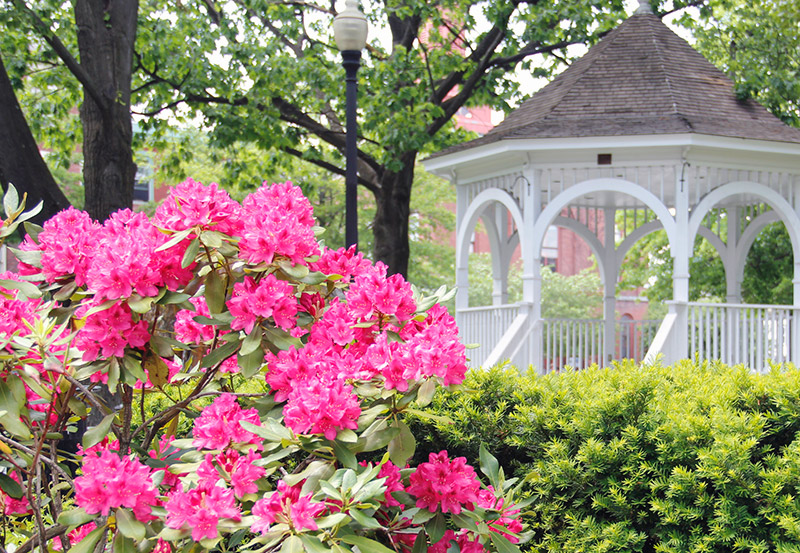
    The stunning and stately rhododendron plant — native to Asia — is a popular and much-loved landscaping element in New England. Large blossoms in hues of pink, purple, red, and white bloom each spring, attracting pollinating insects. A member of the Azalea family, this ornamental shrub requires very little care and maintenance once it is established, making rhododendron care a snap. It isn’t prone to insect infestation and requires little, if any, pruning. In the Northeast, early spring or early fall planting is the best time to put a rhododendron in to the ground.

    rhododendron care

    Rhododendron Care | Planting and Maintenance Tips

    Brenda Darroch

    Rhododendron Planting Tips | Rhododendron Care

    1. Choose an area for planting that receives ample amounts of both sunlight and shade — filtered sunlight is ideal. Before attempting to plant, test your soil’s pH. Rhododendrons prefer acidic soil with a pH of about 5.5. PH test kits are simple to use and available to purchase at garden centers. If the soil is not acidic enough, it can be amended with organic matter, such as peat moss. Rhododendrons typically do well in sandy soil.
    2. Dig a hole 2-3 times the width of the root ball and deep enough so that the top of the root ball is covered by a few inches of soil, but not deep enough to cover the stem of the plant. Place the plant in the hole and water well before covering the root ball.
    3. Mulch lightly around the top of the root ball to help retain moisture.

    Rhododendron Maintenance | Rhododendron Care

    1. A thorough daily watering is preferred throughout the season of the first planting. After the first year, a new plant should be fine on its own as long as the soil is kept moist.
    2. In winter, smaller rhododendron shrubs will need protection from heavy snowfall. Before the first snowfall, wrap the branches lightly in burlap and secure with twine. An A-frame style covering or a box style shelter is the best way to shield small, newly planted Rhododendron plants during the harsh winter months. Remove the coverings after the danger of a late term snow storm in the spring.

    For additional information on rhododendron care, visit the American Rhododendron Society.

    Do you know any other rhododendron care tips? Let us know in the comments!

    This post was first published in 2013 and has been updated.

    SEE MORE:
    When to Prune Shrubs | Gardening Advice
    Witch Hazel Guide | Winter-Flowering Shrubs
    The Beautiful Winterberry Bush

    The post Rhododendron Care | Planting and Maintenance Tips appeared first on New England Today.

    This content was originally published here.

  • The 7 Best Climbing Roses for Your Garden

    The 7 Best Climbing Roses for Your Garden

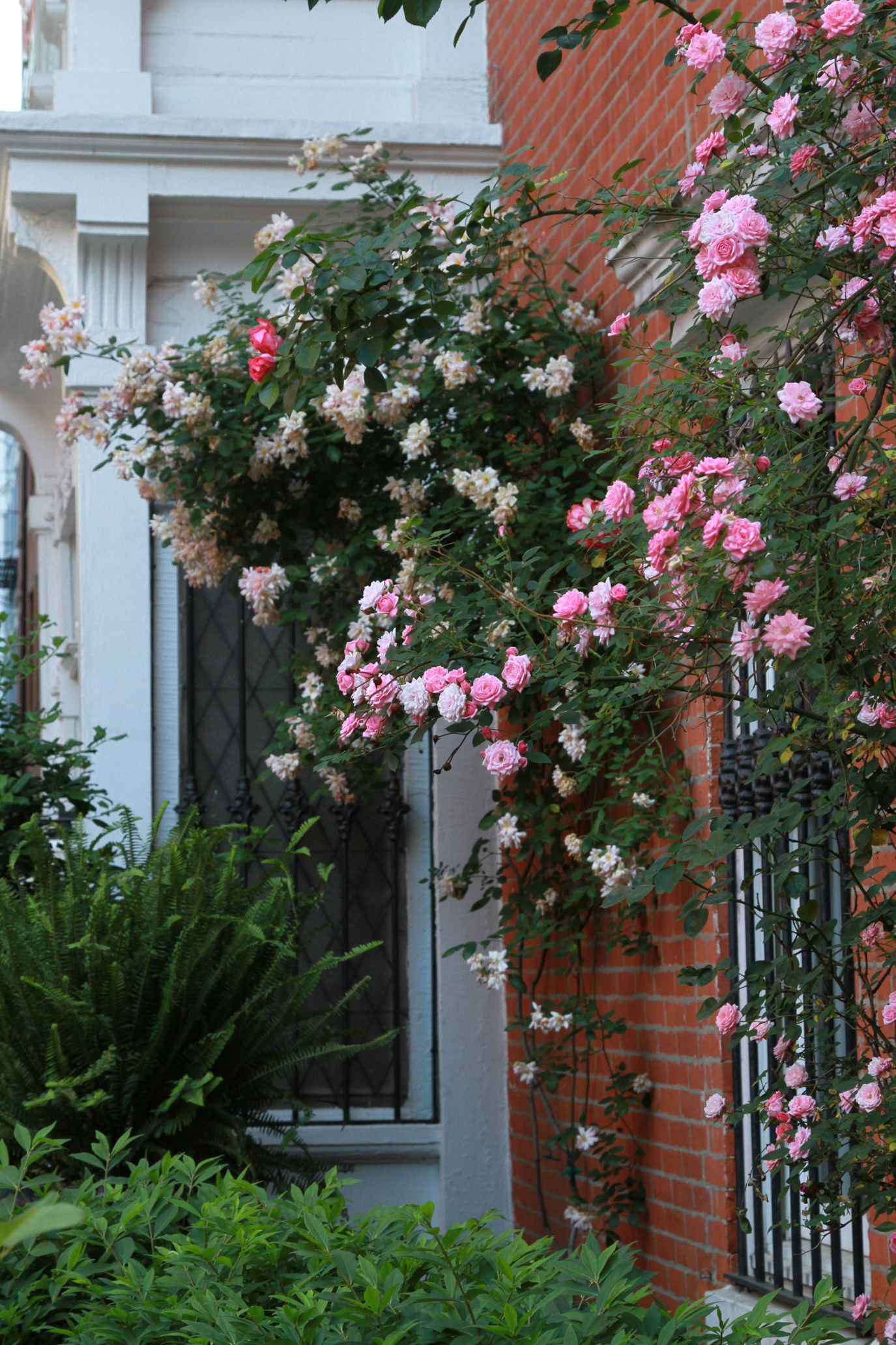
    The best climbing roses have a wild side. Consider the one in my backyard. It covers a large crab apple tree that I disdain but for one attribute: it is the best “trellis” around.

    I am probably committing some horrible gardening offense by letting the rose take over. But the wildness of climbing roses and ramblers is what makes them magic. Here are seven of our favorite varieties to consider:

    1. Eden

    If you want a vigorous, scented pink climber, consider Eden; in a one-gallon pot, it is $45 from Heirloom Roses. Photograph by YourPinnie.de via Flickr.

    Above: If you want a vigorous, scented pink climber, consider Eden; in a one-gallon pot, it is $45 from Heirloom Roses. Photograph by YourPinnie.de via Flickr.

    2. New Dawn

    Above: The prolific pink grower in my garden is the New Dawn Climbing Rose. A fragrant climbing classic that is the forerunner of the modern climbing rose; $28 at White Flower Farm. Photograph by Justine Hand.

    3. Renae

    Above: For a similar variety without the wicked thorns, consider the Renae – Climbing Roses; $25.45 per pot at Rose Sales Online.

    4. Mme. Alfred Carriere

    Above: A tough climbing rose that can survive many climates (even the San Francisco fog), the Mme. Alfred Carriere Climbing Rose has very fragrant white informal-shaped blooms. Available for $27.50 from David Austin Roses.  Photograph by Janet Hall.

    5. Zephirine Drouhin

    Above: The nearly thornless Zéphirine Drouhin Climbing Rose is Michelle’s favorite and offers fragrant old-fashioned blooms in a bright cerise pink; $45 for a one-gallon pot at Heirloom Roses.  Photograph by Erin Boyle.

    6. Kew Rambler

    Above: The fragrant Kew Rambler offers single apple blossom-like blooms; €20.95 at David Austin. Photograph by Janet Hall.

    7. Ballerina

    I love the delicate small foliage and blossoms of the Ballerina Climbing Rose. Good for hedging, it is available for $45 at Heirloom Roses. Photograph by Janet Hall.

    Above: I love the delicate small foliage and blossoms of the Ballerina Climbing Rose. Good for hedging, it is available for $45 at Heirloom Roses. Photograph by Janet Hall.

    For more of our favorite garden roses, see:

    This content was originally published here.

  • Google Fed a Language Algorithm Math Equations. It Learned How to Solve New Ones. – ExtremeTech

    Google Fed a Language Algorithm Math Equations. It Learned How to Solve New Ones. – ExtremeTech

    Many people think of computers as “math experts” compared with us humans. While we can’t solve equations as quickly as a machine, we shouldn’t put too much faith in their accuracy because computers can’t know, understand, or calculate every possibility in an infinite series of numbers no matter how much time they have available. This limitation of computational hardware leads to strange quirks in how computers perform math, but Google’s new method of training AI to both understand and solve complex math problems may result in a sharp increase in future computational accuracy.

    First, let’s take a look at what Google did because it’s an impressive approach in and of itself.  For training data, DeepMind received a series of equations along with their solutions—like a math textbook, only without any explanation of how those solutions can be reached. Google then created a modular system to procedurally generate new equations to solve, with a controllable level of difficulty, and instructed the AI to provide answers in any form. Without any structure, DeepMind had to intuit how to solve new equations solely based on seeing a limited number of completed examples.

    Challenging existing deep learning algorithms with modular math presents a very difficult challenge to an AI and existing neural network models performed at relatively similar levels of accuracy. The best-performing model, known as Transformer, managed to provide correct solutions to 50 percent of the time and it was designed for the purpose of natural language understanding—not math. When only judging Transformer on its ability to answer questions that utilized numbers seen in the training data, its accuracy shot up to 76 percent.

    While the best results represent a failing grade and a solid C, they’re nevertheless extremely impressive. Aside from this method offering a simple and effective means of gauging a model’s aptitude at certain types of tasks, it could lead to a solution to the biggest flaw in computer math proficiency.

    To understand that problem, let’s take a quick look at how computers make mathematical errors by design. Consider the following example. Despite two very large numbers, you can probably solve the following equation in a near instant:

    999999999999999 – 999999999999998

    While you should have no trouble determining that the second number is just a single digit smaller than the first, and therefore the answer is 1, a calculator (like Google’s) will present an obviously incorrect result.

    The reason for this flaw lies at the core of computational architecture.  While we understand math through the base-10/decimal numeral system, computers see things differently through base-2/binary.  You can see the difference when you take a look at the real number line as you know it.

    Image credit: Wikipedia

    If you count whole numbers in a sequence you’ll find yourself speaking the real number line aloud. We can create all the numbers we need from the digits that range from 0 to 9. Computers, on the other hand, only have 0 and 1 to determine numbers and that can result in some unusual errors like the one pictured above. All the data in our computers exist as a series of ones and zeros and that doesn’t exempt numbers. Here’s a look at how the real number line gets translated to binary for computers.

    Image credit: ResearchGate

    To put it lightly, things become a bit more complicated.

    Imagine making a copy of the Oxford English Dictionary when you can only represent its contents using two letters in the alphabet. Computers can accomplish this because alphabets only contain a finite number of symbols and they only require order and representation. The real number line, on the other hand, is an infinite series.  No human or computer can record and display the entirety of an infinite series or that series would become finite. If you understand that impossibility, it’s not hard to imagine why a computer can only manage to calculate a fraction of that number. After all, it has to understand all those numbers in its own binary system. Where we see 9, computers see 1001. Take a look at how computers see the number 85:

    Image credit: Brett Barry

    Computers use sums of multiples of two to successfully represent a significant segment of the real number line—just not all of it. The decimal numeral system works in the same way—just with 10s instead of 2s—but it takes significantly fewer base 10 digits to represent any given number when compared to the same value in binary. All number systems, by nature, can represent smaller numbers more precisely than larger ones, but because binary offers fewer unique digits to represent each number it runs out of space faster (when compared to the decimal numeral system/base 10).

    This prevents computers from representing every possible number on the number line—something you’ve experienced in base 10 if you’ve ever encountered the fraction of one-third. You know that the sum of 1/3 + 1/3 + 1/3 equals 1, but if you represent 1/3 as a decimal it becomes 0.3333333 and continues on infinitely. Unlike the fractional representation of 1/3, the decimal version appears to add up to 0.9999999 (etc.) and never reach 1 because the decimal numeral system cannot represent the fraction of 1/3 with the necessary precision.

    The same thing happens with computers and so they employ strategic rounding to get to the closest number they can represent. This results in reduced precision but allows for a greater range of calculations. As a result, specific equations can exploit the weaknesses in the binary numeral system and cause rounding errors that make the computer yield an incorrect result.

    By the way, you’ve just read a major oversimplification of how computer rounding errors work. Check out the video above if you want a more precise explanation of how all the math shakes out.

    Just as fractional notation (e.g. 1/3) can help us overcome the limitations of base 10, engineers have provided special logic to help machines overcome the more problematic limitations of base 2. However, the processing limitations of CPUs, the larger number of representative digits required, and the high number of decimals with infinite representations in binary combine to present a problem without a perfect solution.

    Computers aren’t alone in experiencing these rounding errors.  You can see the core of this dilemma represented literally everywhere you look when you consider how your proximity to other things determines the level of detail you can perceive about them. To the human eye, precision of detail diminishes with distance. That distance, however, can allow us to see a fuller picture by sacrificing precision.  The same reality presents itself in different ways across all known number systems.

    By creating an artificial intelligence training method that determines an algorithm’s ability to approach computation using its own abstracted methodology, Google created a framework for achieving a much higher level of computational accuracy in the future. With the Transformer language model landing first prize for accuracy out of the gate, even though it only managed to get half the questions right it provides a clue that suggests the direction of the model that could someday achieve perfect accuracy throughout the spectrum of math that today’s computers solve with imperfections. Given Transformer’s much higher score for solving equations through interpolation (76 percent), increased accuracy may arrive through a combination of algorithmic changes and a more significant set of training data.

    In any case, we won’t have a perfect machine calculator that can understand all math by next week. Right now, that remains barely more than a pipe dream. After all, the modular set of equations already limit themselves to school-level difficulty and no model can achieve anywhere near perfect accuracy. With the code that generates these equations publicly available, we may have a way to get there someday.

    Top image credit: Getty Images

    This content was originally published here.

  • Sleeping giant: Scientists warn Russian volcano could cause destruction on scale of Pompeii  — RT Russia News

    Sleeping giant: Scientists warn Russian volcano could cause destruction on scale of Pompeii — RT Russia News

    Deemed inactive for decades, the Bolshaya Udina volcano has come back to life, according to recent research, prompting concern about a potentially cataclysmic natural disaster.

    When a volcano is silent for a long time, its first explosion can be catastrophic,” said Ivan Kulakov, the head of the seismic tomography lab at the Russian Institute of Petroleum Geology and Geophysics, in an article for the Russian Academy of Sciences’ Siberian branch. “A large amount of ash is thrown into the air, it is carried far away, and not only the surrounding settlements, but also large territories all over the planet, can suffer.”

    Recall Pompeii,” the researcher added ominously: the ancient Roman settlement was wiped off the map by the eruption of Mount Vesuvius, which laid dormant for thousands of years prior. The city was buried in over 10 feet of ash and most of its inhabitants are thought to have been killed in the disaster.

    Kulakov headed up a study in 2017 to measure what he called “seismic unrest” around Bolshaya Udina; his team’s findings led to a reclassification of the volcano from ‘extinct’ to ‘active’ the same year.

    While the researchers warned of the volcano’s huge destructive potential, it may be too early to begin preparing for the apocalypse. It is impossible to predict whether an eruption would occur, Kulakov said, but added “undoubtedly, now we need to closely monitor Udina.”

    Bolshaya Udina makes up half of the Udina volcanic massif, which also includes Malaya Udina (‘big’ and ‘small’ Udina, respectively). It stands at just over 9,500 feet on Russia’s Kamchatka Peninsula.

    If you like this story, share it with a friend!

    This content was originally published here.

  • The Spice Girls’ Australian tour may finally be happening | PerthNow

    The Spice Girls’ Australian tour may finally be happening | PerthNow

    There are rumours swirling this morning that one of the biggest music groups on the planet could be heading to Australia.

    The Spice Girls are currently in the midst of their reunion tour in the UK – but Aussie fans may finally get the chance to see the girls live.

    “There are a couple of key Australian media people who are being flown to England to interview the Spice Girls,” reporter Peter Ford told The Morning Show.

    “They have not been told on what premise they’re going to interview the Spice Girls.

    “They’ve said, you’ll be told later what this is about.”

    And with no new music to promote, speculation is now at fever pitch that the Spice Girls are finally about to confirm dates for an Australian tour.

    The Spice Girls were supposed to host a Sydney concert over a decade ago in 2008 – but it never happened.

    “Sadly the tour needs to come to an end by the end of February due to family and personal commitments for Emma, Geri, Mel B, Melanie C and Victoria,” the band said in a statement at the time.

    “It was announced in June that, as well as the Europe and the US, the girls planned to visit Australia, China, South Africa and Argentina.

    “Due to the phenomenal demand for tickets in the UK and the US along with the touring logistics for such a massive production it was not possible to fit everything in.

    “As the girls return to normal family life and the kids go back to school they are reviewing all the options, who knows what the future might bring!”

    So perhaps it’s finally time Aussie fans of the Spice Girls get what they want – what they really, really want.

    This content was originally published here.

  • Everything You Need to Know About Light Bulbs

    Everything You Need to Know About Light Bulbs

    light bulbs

    Learn everything you need to know about light bulbs so you can pick the best one for your home. Image: united photo studio/Shutterstock

    We hope you like the products we recommend. Just so you are aware, Freshome may collect a share of sales from the links on this page.
    For over a century, Americans have used electricity to light their homes. And that’s meant a recurring purchase: light bulbs. But if you’re still using incandescent bulbs in your home, it’s time for an upgrade.

    Today there are new, more energy efficient options. And even if you don’t care about your energy consumption, you’ll want to know this: these new light bulbs can save you money in two ways. First, their minimized electricity usage means you get lower utility bills. Secondly, they last longer so you’re not shelling out for new bulbs nearly as frequently.

    Think a few bulbs here and there aren’t that big of a deal? Think again. ENERGY STAR reports that the average American household has 70 (count ’em, 70!) light bulbs. And all that lighting can use more energy than your refrigerator, dishwasher and washing machine put together.

    So what are you waiting for? Use this guide to light bulbs to figure out which energy- and money-saving option is best for your home.

    light bulbs - incandescent

    Incandescents are over. Image: Ezume Images/Shutterstock

    Incandescent light bulbs

    Let’s start with the most basic light bulb: incandescents. These have been super handy in the last dozen or so decades. But they’ve served their purpose and it’s time to put them to bed.

    Why? ENERGY STAR estimates that the new ENERGY STAR-rated bulbs use a whopping 70 to 90 percent less energy than incandescents. But wait, there’s more! They also last at least 15 times longer. This all averages out to about $55 in savings per bulb.

    Still not convinced to move away from incandescents? We get it. Incandescent alternatives used to be known for their harsh, cold light. And here at Freshome, we know that lighting is important. But even our team is moving to other types of bulbs. No, we’re not just sacrificing form for function. Turns out, you aren’t the only one who hated that cool, bright light — and manufacturers listened. Today, there are tons of incandescent alternatives in warm white and soft white. They’re even dimmable!

    So get on board. There’s no time like the present, especially considering the sale of residential-use incandescent bulbs will be pretty much completely banned by 2020.

    Fear not! You’ve got a couple of other fantastic options.

    light bulbs - led

    LEDs can brighten indoors and out for a fraction of the cost of lighting with incanescents. Image: alexandre zveiger/Shutterstock

    LED light bulbs

    Light emitting diode, or LED, bulbs are the front-runner incandescent replacement. They started pretty pricey (we’re talking three figures), but you can now grab an LED bulb that gives off the same amount of light as a 60-watt incandescent bulb for just a couple of bucks. And you’ll get a lot of bang for that buck, considering LED bulbs generally last between 20,000 and 50,000 hours. That means they’ll last decades in the average household.

    Another perk of LEDs: they don’t emit heat. So you can safely touch them without hurting yourself and your AC won’t have to work overtime to keep your house cool. That might not seem like much but, again, we’re talking 70 bulbs a house on average. That radiant heat adds up.

    If you want an LED that’s truly going to maximize your savings, look for ENERGY STAR-rated LED light bulbs. The package will be marked with their blue square logo.

    light bulbs - cfl

    CFL bulbs are affordable while still delivering energy efficiency. Image: amasterphotographer/Shutterstock

    CFL light bulbs

    LEDs certainly have their perks, but they do come with a price. If you’re looking for a more incandescent-comparable price, compact fluorescent lights, or CFLs, could be for you. Back in the days of expensive LEDs, these were the go-to for people looking to choose more energy efficient lighting. But they’re also to blame for some of the association of non-incandescent bulbs and harsh, white light. Because, yes, they are fluorescents. And some people didn’t like the idea of having their sterile office lighting follow them home.

    Fortunately — like their energy-efficient ally, the LED — CFLs have changed. You can now find them in warm white and soft white. CFLs usually last around 10,000 hours (still pretty impressive) and have a signature spiral shape.

    light bulbs - colors

    Colored LEDs can help you set different moods in different spaces. Image: alexandre zveiger/Shutterstock

    The future is now

    Why stop there? With its long history of innovation, now that the light bulb has solved its energy use problem, it’s onto bigger and better things. Today, you can get voice-activated bulbs that your digital assistant (e.g., Alexa, Google Home) can turn on and off for you. No more getting out of bed to turn off the light at night. If that’s not luxury, we don’t know what is.

    There’s more, too. You can get LEDs that change colors with a few presses of a button. Mood lighting, anyone?

    When it comes to choosing the perfect light bulb for your home and your wallet, you’ve got options. Steer clear of those pesky incandescents, look for an ENERGY STAR logo and you’ll pull in some savings while doing your part for the environment.

    Now that you know which light bulbs to use, you can start working on the more fun part: choosing fixtures and placements for them. You could even DIY if you’re feeling crafty. After all, you’ll have all those pocketed energy savings to spend on supplies. Let there be (energy efficient) light!

    The post Everything You Need to Know About Light Bulbs appeared first on Freshome.com.

    This content was originally published here.

  • Fire Starter Necklaces Flint Striker with Ferro Rod Toggle, Tied with Classic Fibre Knots

    Fire Starter Necklaces Flint Striker with Ferro Rod Toggle, Tied with Classic Fibre Knots

    Click Here to Order

    • Nothing says home better than a crackling fire. However, are you tired of the mess of fire starter kindling? Or you finally arrive at your campsite and now have to spend time searching for fire starter to start the fire…Now you don’t have to worry! Our fire starter necklace create a fire bring you into burning flame
    • Our fire starter necklace offers an easy yet safe way to start any fire. They can be used as fire starters for fireplaces, campfires, wood stoves, pellet fuel stoves, and barbeques. The fire starter necklace will provide you with a fire every time you need it
    • Great for camping – can be used in the rain or snow and will light even after being submerged in water. Lightweight and easy to wear while being completely safe. After the rod and scraper are used, they all shell can be reused like before, for lanyards, necklaces
    • The necklace is a one size fits all and fully adjustable with sliding barrel knots. Whether you will give this to your boy scout, or use it yourself, it will fit around your neck comfortably
    • Every necklace is handmade. Our fire starter necklace are 100% natural with no chemicals or additives making it a user and environmentally friendly product. The fire starter necklace will provide you with a fire everywhere you go and every time you need it