Author: Truth & Hammer

  • Massachusetts police ask residents to refrain from crime until after the heat wave passes

    Massachusetts police ask residents to refrain from crime until after the heat wave passes

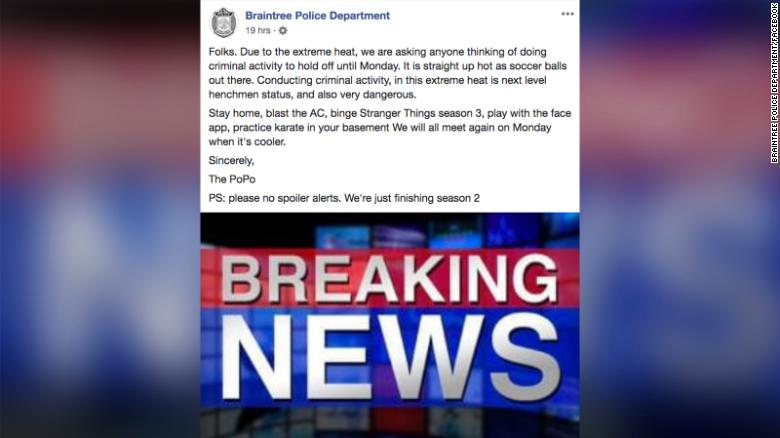
    It’s dangerously hot across much of the country this weekend — so hot, in fact, that police in Braintree, Massachusetts, are imploring would-be criminals to hold off on illegal activity until Monday. The Braintree Police Department asked the community to put a pin in crime until the heat wave passes in a Facebook post Friday. It is straight up hot as soccer balls out there,” the department wrote in the post, which has racked up more than 106,000 shares since Friday.

    Heat wave holds more than 150 million Americans in stifling grip this weekend

    Heat wave holds more than 150 million Americans in stifling grip this weekend Yes, a police department really used the phrase “hot as soccer balls.” The department confirmed to CNN Saturday that the post is, indeed, legit. The heat is criminal enough. The National Weather Service issued an excessive heat warning for parts of the eastern United States, including Braintree in eastern Massachusetts.
    While temperatures in the area could reach 102 degrees, it’ll likely feel even worse: The heat index, or the more accurate temperature your body feels when air temperature and humidity are both factored in, could be as high as 115 degrees, the weather service said.
    That’s simply too hot for lawbreaking, Braintree police said.
    Committing a crime in this sort of weather is “next level henchmen status,” the department said, not to mention dangerous to the offender’s health.
    In the post, the department suggested everyone wait out the heat wave indoors and suspend the illegal stuff until things cool down.
    “Stay home, blast the AC, binge Stranger Things season 3, play with the face app, practice karate in your basement,” police said. “We will all meet again on Monday when it’s cooler.”
    The message is signed, “The PoPo.”
    In a postscript, the police pleaded with people not to spoil the plot of the Netflix series’ new episodes. According to the post, Braintree police are just finishing up the second season of “Stranger Things.”

    Seriously, though: Heat waves are dangerous

    Heat waves are no joke. This weekend’s extreme temperatures are set to impact more than 150 million people.
    The National Weather Service has urged residents in affected areas from the Great Plains to the East Coast to take the heat seriously and avoid outdoor activities during mid-afternoon and early evening hours, the most dangerous parts of the day, according to the agency.
  • Thousands of bones discovered in Vatican crypt in search for missing teenager

    Thousands of bones discovered in Vatican crypt in search for missing teenager

    Thousands of bones have been unearthed in two ossuaries discovered in the Vatican City, as part of an ongoing search for clues into the disappearance of a 15-year-old girl more than three decades ago.

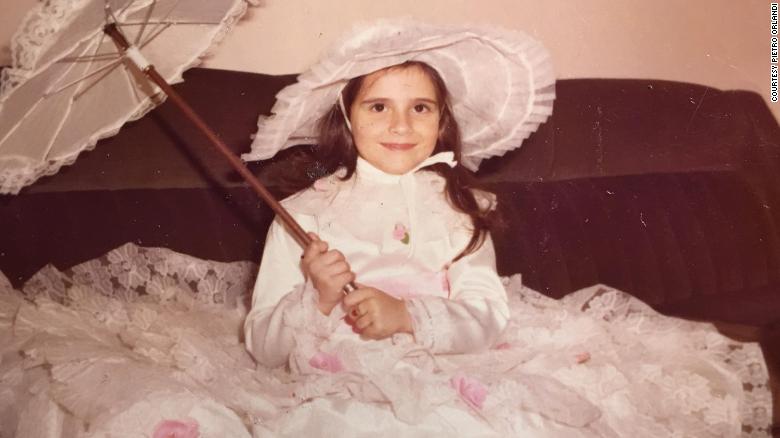
    Emanuela Orlandi, who was the daughter of a prominent Vatican employee and lived within the walls of the holy city, disappeared in the summer of 1983 while on her way home from a music lesson in central Rome.

    Emanuela Orlandi

    The mystery surrounding Orlandi’s disappearance gripped Italians for more than three decades, and inspired conspiracy theories involving everyone from mobsters to international terrorists, and the highest echelons of the Vatican.
    Interest in the case was renewed in summer last year, when the Orlandi family received an anonymous tip, hinting that Emanuela’s remains may be located in the tombs of Princess Sophie von Hohenlohe and Princess Charlotte Federica of Mecklenburg at the Teutonic Cemetery.

    Thousands of bones were found in two ossauries discovered at the Teutonic Cemetery in Vatican City.

    The family had received an image of a sculpture and an instruction to “look where the angel is pointing.” This led them to the Teutonic Cemetery, which is located adjacent to the grand Saint Peter’s Basilica and is typically reserved for the burials of German-speaking Catholics.
    After the Vatican agreed for forensic investigators to open the tombs on July 11, no human remains nor traces of coffins were found. The Vatican indicated that the remains of the princesses may have been removed during renovation work on the cemetery and surrounding buildings in the 1960s and 70s.
    Nevertheless, two ossuaries — chambers in which bones of the dead are stored — were uncovered during their investigations beneath the floor of an area inside the Teutonic College.
    Investigators subsequently discovered “thousands of bones” in the chambers, which are believed to correspond to “dozens of people,” according to Giorgio Portera, a geneticist appointed by the Orlandi family.

    Pope John Paul II with Emanuela Oralndi (pink jumper, center), and (from right) her brother Pietro, father Ercole, and mother Maria.

    DNA analysis will now take place on each set of remains, but Vatican spokesman Alessandro Gisotti said the precise data will have to await “morphological evaluations next Saturday.”
    “It must be considered that many of the bones being dated are shattered and therefore this increases the number present, many of which are small,” Gisotti told CNN. “This means that there may be more fragments of the same bone structure.”
    While the origins of the bones remain unknown, Emanuela’s brother, Pietro Orlandi, 60, said the investigation into the ossuaries had been “a great satisfaction.”
    “In the ossuaries, there shouldn’t be any recent bones, so if there are, even if it’s not Emanuela Orlandi, it will be a problem for the Vatican,” he told CNN. “There are hundreds, thousands of bones and now the Vatican is classifying them by age and will investigate the more recent ones.

    Pietro Orlandi says that the investigation into the ossuaries has been a "great satisfaction."

    “To think if she was buried in the ossuary all these years, just 200 meters from our house, it would be devastating.”
    He added that it is important for an independent expert to investigate the bones to ensure the objectivity of the results.
    “The Vatican doesn’t want this out and doesn’t want to be seen in this way, but finally I feel like they have taken a step back and we have moved a step forward,” he said.
    The Vatican responded in a statement, according to Reuters, saying that it is “once again showing its openness towards the Orlandi family” in agreeing for investigations to take place in the Teutonic Cemetery, even when only based on an “anonymous report.”
  • Toys ‘R’ Us is coming back to the United States

    Toys ‘R’ Us is coming back to the United States

    Toys “R” Us’ long-awaited comeback is finally official.

    Its owner, Tru Kids Brands, announced Thursday that Toys “R” Us is being reborn in the United States with two new stores. The return comes more than a year after the chain collapsed, resulting in the closure of all 700 of its American stores.
    The new stores will be smaller than their predecessors. Tru Kids described them as a “highly engaging retail experience designed for kids, families and to better fit within today’s retail environment.”
    The new Toys “R” Us stores will be open before the holiday shopping season later this year at The Galleria in Houston and in Westfield Garden State Plaza in Paramus, New Jersey. They will sell toys, but fewer of them.
    Unlike the rows of shelves that cluttered old Toys “R” Us stores, the new locations will have interactive and playground-like environments for toy brands.
    They’re being developed with b8ta, a company that designs interactive and technology-focused retail locations. The stores will let brands “design custom experiences and branded shops to help them create memorable experiences for parents and children,” Tru Kids said.
    The company, which bought the brand last October, said it plans to open more Toys “R” Us stores in “prime, high-traffic retail markets” next year. “We have significant interest about how to bring the brand back to the US,” Richard Barry, the CEO of the new company, previously told CNN Business. Toys “R” Us still has 900 stores open in Europe, Asia and India. It plans to open another 70 stores overseas — mostly in Asia — by the end of the year.
  • Natalie Portman set to play female Thor in Marvel’s Thor: Love and Thunder

    Natalie Portman set to play female Thor in Marvel’s Thor: Love and Thunder

     cleanString caption
    CHELSEA LAUREN/VARIETY/SHUTTERSTOCK

    Step aside, Chris Hemsworth. There’s a new Thor in town. Natalie Portman is returning to Marvel for the Phase 4 Thor movie, titled Thor: Love and Thunder. And this time, she’s picking up Mjölnir herself. During Marvel’s massive Hall H Comic-Con 2019 panel on Saturday, the actress joined Hemsworth, Taika Waititi, and Tessa Thompson on stage to make the announcement that had the crowd going absolutely wild as she actually held up a prop Mjölnir. “I’ve always had a little hammer envy,” she says. Talk about being worthy!

    Portman’s Jane Foster was last seen in the Marvel Cinematic Universe in a non-speaking cameo in Avengers: EndgameHer super new role in the fourth Thorfilm is based on Jason Aaron’s comic book run that saw Jane Foster ultimately become the Mighty Lady Thor when Thor Odinson finds himself unworthy of picking up Mjölnir for the first time in the rebooted Thor #1. Jane steps in to become the hero, and even faces off against Thor himself. But Marvel kept her identity under wraps for eight issues until it was finally revealed to be Jane, a move that had fans praising Aaron’s run. During the panel, Marvel also confirmed what we already knew, that Thor: Ragnarok helmer Waititi will return to direct as well as write this latest installment.

    Thor: Love and Thunder is set to hit theaters Nov. 5, 2021.

  • She lived for 99 years with organs in all the wrong places and never knew it

    She lived for 99 years with organs in all the wrong places and never knew it

    On an early spring day in 2018, the faint smell of formaldehyde floating in the air, 26-year-old medical student Warren Nielsen and four of his classmates prepped a cadaver in the chilly dissection lab at Oregon Health and Science University in Portland.

    Similar groups of five gathered around bodies on the other 15 tables in the anatomy class, all eager to explore the mysteries of the human body they had seen only in textbooks.
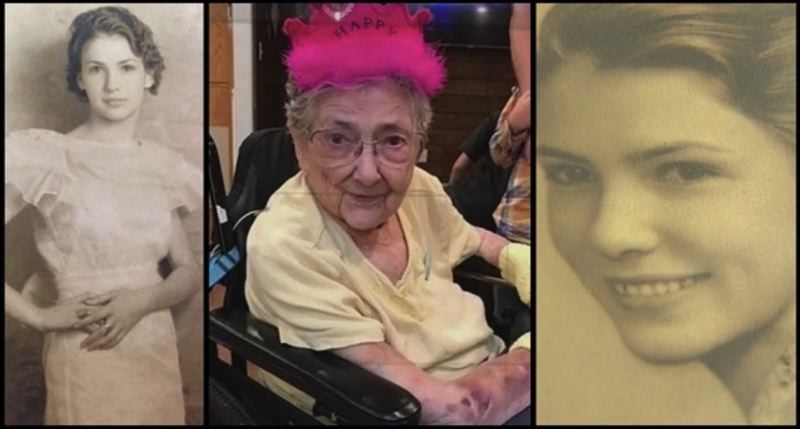
    The cadaver assigned to Nielsen’s team was a 99-year-old woman who had died of natural causes. Her name was Rose Marie Bentley, but the students didn’t know that then. To honor and respect the privacy of those who offer their bodies to science, no further details are given medical students about the person who had once inhabited the body lying on the silvery slab before them.
    Rose Marie Bentley, not long before she died and donated her body to science.

    But as the students and their professors were soon to find out, Bentley was special, so special she deserved her own unique spot in medical literature and history books.
    The reason? A condition called situs inversus with levocardia, in which most vital organs are reversed — almost like a mirror inside the body. That, along with a host of other weird but wonderful abnormalities, made Bentley a sort of medical unicorn.
    “I think the odds of finding another person like her may be as remote as one in 50 million,” said assistant professor Cameron Walker, who teaches the Foundations of Clinical Anatomy class at Oregon Health and Science University. “I don’t think any of us will ever forget it, honestly.”

    ‘This is totally backwards’

    On this March day, the assignment was to open the body’s chest cavity to examine the heart. It wasn’t long before Nielsen’s group began to question their fledgling medical knowledge.
    “Her heart was missing a large vein that’s normally on the right side,” Nielsen said.
    Bewildered, he and his team called the professors over and asked: “Where’s the inferior vena cava? Are we missing it? Are we crazy?”
    “And they kind of rolled their eyes,” Nielsen said, “Like, ‘how can these students miss this big vessel?’ And they come over and that’s when the hubbub starts. They’re like ‘Oh, my God, this is totally backwards!’ “
    A typical body has a large vein called the vena cava that follows the right side of the vertebral column, curving under the liver and emptying deoxygenated blood into the heart.

    Bentley’s vein was on the left, and instead of terminating directly into the heart, which is typical, “her vein continued through her diaphragm, along the thoracic vertebrae, up and around and over the aortic arch and then emptied into the right side of her heart,” Walker said.
    “Normally speaking, none of us have a vessel that does that directly,” he added.
    That wasn’t the only irregularity Walker and his students found in Bentley’s body.
    Numerous veins that typically drain the liver and other parts of the chest cavity were either missing or sprouting from an unusual spot. Her right lung had only two lobes, instead of the standard three, while the right atrium of her heart was twice normal size.
    “And instead of having a stomach on the left, which is normal, her stomach was on the right,” Walker said. “Her liver, which normally occurs predominantly on the right, was predominantly on the left. Her spleen was on the right side instead of its normal occurrence on the left. And then the rest of her digestive tract, the ascending colon, was inverted as well.”

    The mutations in situs inversus with levocardia occur early, Walker explained, possibly between 30 and 45 days into the pregnancy. No one knows why.
    The condition occurs in only 1 out of 22,000 babies and is invariably associated with severe congenital heart disease. Because of the heart defects, only 5% to 13% live past the age of 5; case reports mention one 13-year-old boy and a 73-year-old who at the time was the second-longest survivor.
    But Bentley was an anomaly, one of the few born with the condition that didn’t have heart defects, Walker said.
    “That is almost certainly the factor that contributed most to her long life,” he said.
    And that, along with all her other exceedingly rare anatomical abnormalities, is what makes Bentley 1 in 50 million, Walker estimated.

    ‘Mom would have been so tickled’

    Rose Marie Phelps was born in 1918 in Waldport, a small town on the Oregon coast. The youngest child of four, “she was babied,” said daughter Patti Helmig, who at 78 is the oldest of her five children. “She would admit she was spoiled.”
    A hairdresser by trade, Bentley was always fascinated by science, Helmig remembered, and she believes her mother would have made a fine nurse if she had been given the opportunity to train.
    “She volunteered during World War II for one of the nurse’s aid corps,” Helmig said. “And she was thrilled when someone reached out to her about doing a study on smallpox survivors, which she had as a child.”
    Rose Marie Bentley with a big catch.

    Despite chronic heartburn (which would have been explained by her unusual gastric anatomy), Bentley never showed any negative effects from her flip-flopped innards, said 76-year-old Ginger Robbins, the third of Bentley’s children.
    “We had no reason to believe there was anything like that wrong,” Robbins said. “She was always very healthy. She was always doing something, taking us to Campfire Girls, fishing, swimming. She was an excellent swimmer.”
    The only clue anything might be unusual came when Bentley’s appendix was removed, said 66-year-old Louise Allee, the fourth-born child and youngest of the daughters.
    “The surgeon made a note that her appendix wasn’t in the right spot when they took it out,” Allee said, “but never said anything to us. Nobody said a thing when they took her gallbladder out and did a hysterectomy, either.”
    Get CNN Health’s weekly newsletter

    Sign up here to get The Results Are In with Dr. Sanjay Gupta every Tuesday from the CNN Health team.

    The decision to become a body donor began with Jim Bentley, Rose Marie’s husband, but she too “thought it was the greatest thing,” Allee remembers.
    “There was a poem that my dad found, and it was all about donating your parts,” she said. “You know, ‘give my eyes to a man who has never seen the sunrise’ and the like. He kept showing us the poem. It was really important to them.”
    The poem, written by Robert Test, opens with the line: “Give my sight to the man who has never seen a sunrise, a baby’s face, or love in the eyes of a woman,” and ends with “If, by chance, you wish to remember me, do it with a kind deed or word to someone who needs you. If you do all I have asked, I will live forever.”
    The couple’s beliefs about donation made an impact. All three daughters plan to donate their bodies for research.
    Rose Marie Bentley, a one in 50 million gal.

    Jim Bentley kept his promise and donated his body when he died of pneumonia more than a dozen years before his wife’s death. His daughters know that he would have loved to have known about his wife’s peculiar insides so he could have teased her about it.
    “He also would have been tickled they could teach medical students something so different and really make some great use of her body,” Allee said.
    And what would Bentley have said about being a one in 50 million kind of gal?
    “She would’ve just thought it was funny,” Robbins said.
    Allee agreed: “She would have had a big smile on her face.”
  • Large group of migrants storm border, assault CBP agents leaving several reportedly injured

    Large group of migrants storm border, assault CBP agents leaving several reportedly injured

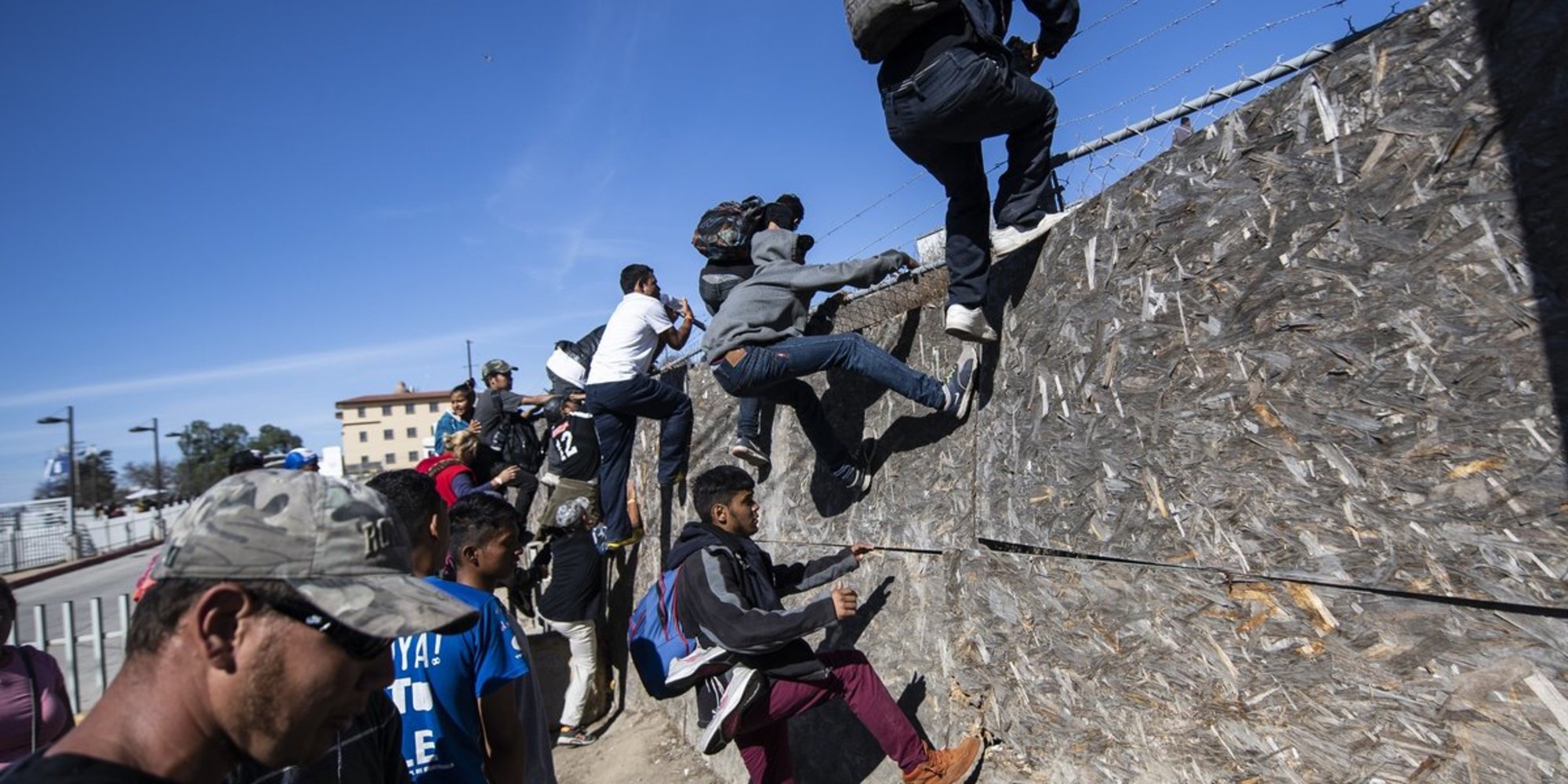
    One of the busiest ports of entry on the southern United States border had to be temporarily closed on Friday after a large group of immigrants stormed the border and confronted Border Patrol agents. Nearly 50 migrants attempted to illegally enter the U.S. Friday morning by storming the border in “waves,” Customs and Border Protection said in a statement. As a result, the The Pharr International Bridge was temporarily closed.

    “At about 4 a.m. [Friday], a group of 47 undocumented individuals attempted to illegally enter the United States in three waves via the Pharr International Bridge. Ignoring commands to stop, the group suddenly rushed the temporary barricades, bent metal poles and disabled the concertina wire affixed to the barrier,” CBP said. The migrants ignored commands to “stop,” bypassed blockade structures, and confronted immigration agents. Several male migrants reportedly assaulted officers, and even attempted to grab their “protective devices,” according to KGBT-TV.

    view

  • Why Criticism Is Good for Creativity

    Why Criticism Is Good for Creativity

    retales botijero/Getty Images

    One of the most popular mantras for innovation is “avoid criticism.” The underlying assumption is that criticism kills the flow of creativity and the enthusiasm of a team. Aversion to criticism has significantly spread in the last 20 years, especially through the advocates of design thinking. (In 1999, in the ABC Nightline video “The Deep Dive,” which ignited the design thinking movement, criticism was stigmatized as negative.) In IDEO’s online teaching platform, the first rule of brainstorming is “defer judgment.” To make this rule even more practical and straightforward, others have reworded it to say: “When a person proposes an idea, don’t say, ‘Yes, but…’ to point out flaws in the idea; instead, say, ‘Yes, and…’” — which is intended to get people to add to the original idea.

    We challenge this approach. It encourages design by committee and infuses a superficial sense of collaboration that leads to compromises and weakens ideas. Our view, the product of years of studies of and participation in innovation projects, is that effective teams do not defer critical reflection; they create through criticism.

    We therefore propose a different approach: the rule of “Yes, but, and.” To explain how this rule works, let’s first discuss why criticism alone (“Yes, but…”) and ideation alone (“Yes, and…”) do not work.

    The rule of “Yes, but.” The problem with this rule is that ideas, even if truly exceptional, often have major flaws. This is especially true for the most innovative ones because they dive into unexplored spaces. If someone uses the existence of a flaw to kill the idea, a great innovation may be missed.

    The rule of “Yes, and.” The notion of building on an idea, rather than criticizing it, in order to maintain a creative flow might sound like a good thing. Yet without critical feedback, you would hardly understand why your original idea did not work. You would perceive the new proposal as an unrelated diversion or, most likely, a different conflicting perspective. And the team would miss the opportunity to dive deeply into the original idea. It’s moving forward without progress.

    The rule of “Yes, but, and.” We suggest combining the best features of criticism with the best of ideation. When you propose Idea A, a colleague first addresses what he perceives to be a flaw in it, provides constructive feedback (this is the “but”), and then suggests a possible way to overcome or avoid the flaw, yielding Idea B (this is the “and”). Then you do the same: You acknowledge Idea B, provide a constructive critique, and develop a new, even more improved result. Others can jump in with their critiques and proposals during the process. This kind of constructive interaction encourages a deep cycle of critical dialogues that can lead to a coherent, breakthrough idea.

    Note that the “but” anticipating the “and” is essential. In order to build on your idea, your colleague does not just add a new improved proposal. First, she provides a critique, which enables you to receive precious and specific information, see weaknesses in your half-backed idea you couldn’t spot yourself, and therefore learn. You and the entire team will then be ready to dive deeper into the next iteration. It is the combination of “but” and “and” that creates real progress, enabling the team to see both positive and negative components and allowing each iteration to go even deeper into the analysis.

    To create breakthroughs, it is necessary to leverage the contrasts that come from critique instead of escaping them. In her research on the power of dissent, Charlan Nemeth shows that debate and criticism do not inhibit ideas; rather, they stimulate them. Progress requires clashing and fusing — not compromising or postponing — different perspectives.

    Francesca Gino rightfully maintains that criticism works only when it leads to enhancing and improving an idea. A key element in this process is respectful listening and acknowledgment of the talent and abilities of colleagues. When the “but” becomes an attack on the other idea (or even worse, on the other person), then the result is detrimental. Adding “and” to the “but” fosters constructive and positive criticism, turning it from an idea-killing phrase into a way of expanding the flow of creativity rather than stopping it.

    Critique, Creativity, Curiosity

    The rule of “Yes, but, and” must be performed with care and a significant dose of discipline. Here are a few simple guidelines.

    First, when you critique another’s ideas, you need to tap into your creative mind as deeply as possible.

    Second, when you listen to someone’s critique of your idea, you should try to learn from it. A practical way is to listen carefully to the critique, be curious, and wonder, “Why is my colleague suggesting this contrasting view that is not in line with what I see? Perhaps there is an even more powerful idea hidden behind our two perspectives.” The critique becomes a positive force, focusing the team on overcoming its weaknesses and enhancing the original idea.

    The secret of criticism in innovation lies in the joint behavior of the participants. Those offering criticism must frame their points as positive, helpful suggestions. Those who are being criticized must use critiques to learn and improve their ideas. When conducted with curiosity and respect, criticism becomes the most advanced form of creativity. It can be fascinating, passionate, fun, and always inspiring. Let us combine “Yes, and” with “Yes, but” to create the constructive and positive “Yes, but, and.”

    This content was originally published here.

  • Bridging the Gap Between Younger and Older Preppers: Overcoming Misconceptions & Getting Started On The Path to Preparedness | Backdoor Survival

    Bridging the Gap Between Younger and Older Preppers: Overcoming Misconceptions & Getting Started On The Path to Preparedness | Backdoor Survival

    Maybe it is just me but it seems like there are not that many preppers out there that are in their 30s or younger. I have wanted to take some time to address this and encourage younger people to start prepping. This post may ruffle a few feathers but it is based on what I have observed in numerous prepping groups, on social media and when out in public.

    Sometimes becoming a better person means realizing our mistakes and errors in judgement and making an effort to not repeat them. We are living in divided society and it is heartbreaking how the generations do not get along or respect each other

    A lot of this post is about getting into a healthier mindset and doing what is good for you while overcoming some ridiculous and contemptuous stereotypes and ideas.

    There is also some advice on how to actually get started prepping if you are younger even if you are on a strict budget. At the end of this post I have included a few links to Facebook preparedness groups that are great places for younger and older preppers to learn from and meet others.

    Fact: You don’t have to spend a fortune to be a prepared person.

    I know money is tight for a lot of people, especially those that are younger and trying to get a good start in life. A starter job doesn’t always offer much in the way of extra money. If you look at shows on TV or any preparedness site or Facebook group, it might seem like everyone has a lot of expensive gear and gadgets that you cannot afford and you might never even use them so investing what little extra money you have may not seem like a good move.

    The truth is that you really don’t need a lot of expensive gadgets to be more prepared. Preparedness starts with an extra $5 or $10 spent on food, a pack of lighters, or a $20 water filter or even learning a new skill. You do not need a big budget to be a prepared person and get through an emergency.

    You don’t have to be preparing for a “The End Of The World As We Know It” situation. 

    There are people that fret and prep over big disasters that may happen but are not near as likely as common events like hurricanes, winter storms, a flood, earthquake, or a supply disruption due to an oil refinery accident. Heck, you may be glad you have some extra supplies too if you experience a reduction in work hours, lose your job, or experience a brief illness.

    Getting over the stigma of the Doomsday Prepper

    I really think that a lot of younger people are afraid of being known as wackos or extremists if they are preppers. Guess what? You don’t have to tell anyone about your preps! So this leaves getting over some ridiculous stereotypes in your own head and realizing you are not crazy for wanting a few weeks of security in case of a disaster. Even the US government advises people to have at least 72 hours worth of emergency supplies on hand. 

    This brings me to another question that I have asked myself many times.

    Why does the idea of prepping and stockpiling some supplies seem so extreme to some and cause them to make such gross assumptions about a person’s political beliefs and character? Why do these people get so offended that they resort to name calling or other verbal attacks? Why do people stop talking to others?

    I can honestly say that preppers come from across the political spectrum but for some reason certain folks love to assume differently. 

    Those that take offense at preparedness baffled me for a while Why on earth would they be that offended and judgmental over things that honestly our grandparents and before did all the time before modern conveniences made it possible to live the way we do now.

    I think it boils down to this: Prepping upsets the world view that everything will be okay or that you need to worry about other things. It also goes against the belief that the social safety net and disaster response efforts of the United States government will be able to take care of people if something awful happens. Being prepared and living a lifestyle of preparedness is saying to these people that you do not have complete trust and faith in the system and some cannot accept that someone may feel that way and it is their right to have that opinion if they want too.

    No matter how much you trust the government to respond well in a disaster, it is worth considering and planning for them not being able to help you. There are times when despite the best efforts of emergency responders and FEMA response teams, help is days away. There is no guarantee that you will be able to get the help you need as soon as you would like. 

    The Truth: I struggle to like the term prepper and I despise it when people add words like doomsday to it.

    Prepping is something that everyone used to do. Back in the day it was called “putting back” or “putting back for winter”. Even further back you absolutely had to put back whatever you could to get through the colder months of the year or you risked going without or having to be hungry part of the time. People could not just get something from somewhere else if there was a bad crop year or similar. Our grandparents used to grow gardens, can, and know how to do basic repairs when needed around the home.

    Avoid assigning gender to tasks and looking down on tasks as something that uneducated or lower social classes do. You may be doing this and not even realize it.

    Housework is not what oppresses women. There is a difference is between being forced or expected to do them all the time and doing them because you either like them or realize that someone has to do it. 

    Sewing and mending were not just for women, there were plenty of men that sewed clothes, tailored, and quilted. What do you think they did on those long evenings in the winter when there was not a lot of farm work or they were stuck inside? It wasn’t like men had a lot of inside hobbies they could do, especially if they were just the average person.

    On the other side of this is of course the men that see traditional roles as the way to go and never give women a chance to do some of the more labor-intensive or dangerous tasks. 

    We need to value the strengths that others have and build on that.

    Ask yourself if you see some tasks as beneath you? What do you think about those that have to do the rough, tough, and dirty jobs? Being prepared means doing a lot of things on your own or at least knowing how.

    I went to a work college and I can tell you right now that the kids that had never had to clean their house or anything like that were not always that thrilled about getting put on the cleaning crews for the buildings. It was good for them though because it made them appreciate that someone has to do that work and that you don’t always get to start out at the middle or top.

    As a society we need to stop looking down on people because they have a job that is considered low class by some. Farming is a big example of a profession that for years, kids were told to not to do. Nope they were told to get an office job, something cushy, that farming was low class work. The result is a nation where the average farmer is over 60 years old and the younger generation has no interest or the ability to farm even though without farmers, there is no readily available and steady supply of food.

    My point is that we all need to stop assigning these roles immediately to tasks and allow people to do things that are in line with their personal ability level. Liberal, conservative, and everyone in between is probably guilty of assigning gender roles to work even if they think they are being super open minded.

    Don’t be afraid to be a leader instead of a follower

    If you break the barrier down and start prepping as a younger person than your friends may realize that it is a good idea. They might think “Hey Jane has started prepping, and she seems like she is still fun to be around. No tin foil hat or anything!.

    There is a chance that some people will make assumptions, stop talking to you, or act downright rude during social interactions.

    I am not going to lie and tell you that everyone is going to be able to handle you being a prepper if you choose to tell them. I write about it so I really cannot hide the fact that I am a prepared person that is 36 years old. My personal experience is that I have people that have decided to snub me and not treat me with a basic level of respect that I have known for 15 years.

    Yep. We are in living in a culture of contempt where if your opinion or lifestyle is not 100% in line with someone else’s belief system, that is enough for them to make a lot of assumptions and break ties. I also talk to very few people I went to college with. Occasionally one will pop up to comment if something really upsets their worldview, but that is rare because I watch what I say on social media and I don’t feed the trolls and others that are waiting to be offended and activity looking for a way to be.

    If you try to approach things from the viewpoint of respecting others differences and their right to have an opinion different from yours and they do not return the favor or attack you worse, you may be better off without that kind of relationship. This can be tough and I think people should try to have a common ground and agree to disagree but you can only try to keep bridges up for so long without the other side making an effort.

    Supplies To Get Started

    Once you have your mindset right and have decided to start prepping, here is a list that I think will help you get started and that will be easy to fit into your budget

    As you can afford it, put back enough food to last you 2 weeks. Try to get a 72 hour supply to start and then add the rest as you can. If you have a budget that allows and want something already put together, I recommend checking out Valley Food Storage or Mountain House 72 hour food kits.

    Good Budget Foods to Stockpile

    These foods are shelf stable and will help you get started on your food supply even if you are on a tight budget. Some are more shelf stable than others. For example peanut butter is great for your food stash but I would not trust it to store past a year. Buy a few things as you can and you will be amazed how fast you build a good food supply for an unexpected emergency.

    Small bottles of water eventually leak during storage. The bottles are made to breakdown over time. The larger dispenser water bottles are made to be reused. You can also by special containers to store water in. A $20 Sawyer Mini water filter with a squeeze bag is a must.

    If you have a family or a spouse or partner, then you might consider a Hydro Blue Gravity Fed Water filter that can handle a larger volume on demand. These will cost you under $50 in most cases.

    Medical Kit

    You need a basic medical kit that will allow you to treat cuts, stings, abrasions, and other typical injuries. It doesn’t have to be a large kit to get the job done. I like the small blue First Aid kits but I always add in Benadryl Liqui-gels, Some Vetrap for sprains and wrapping, and some blood stop band aids and powder. Those are the things I find missing in a lot of kits except for really fancy or large ones that are not always the best fit for everyone or their lifestyle.

    Rain Gear and Quality Clothing Suitable to Your Climate

    You want to be able to stay dry and comfortable during an emergency. You can get hypothermia even in warmer climates and when the temperature is in the 60s.

    Non cotton clothing is a good idea because you can wash and dry it easily and some of the better garments are treated so they don’t get smelly fast.

    Some reading this may not remember a time when the internet was not available, fast,or inexpensive. Plenty rely on it for all their entertainment needs. You should have some supplies put back to entertain yourself during an emergency. A few books or an ereader filled with books and a small battery bank or solar charger to keep it topped off can go a long way towards entertainment when the power is out or if you have to evacuate to an emergency shelter.

    A Kindle allows for a lot of reading on a single charge, especially if the Wifi function is turned off. Make sure to keep your ereader topped off though. I learned the hard way that they are not really off sometimes and the battery will drain while it is not being used. It takes a long time but you don’t want to come back to find a totally drained device.

    Learn to not be too dependent on socialization. While human interaction is important, you need to learn to be by yourself or with just your family or spouse during an emergency.

    Some younger people are very social either online or in the physical part of their life. You need to learn to not be too distraught if you do not have that in your life for a while. It might not sound like a big deal to stay at home for a week straight but I assure you that to plenty of people it is and some do not realize how much it affects them until they have to do it. Being so attached to “getting out of the house” or going to town can lead to decisions that have dire consequences.

    Ever see a news story about fatalities and injuries during a snow storm or blizzard and wonder why on earth they were out? Well not everyone that gets stuck on the road is someone out doing something like commuting to or from a job or other required activity. Being too stir crazy or unable to stay away from the action is something you need to overcome so you can stay safe and be happier when things happen that necessity staying in place.

    Learn how to do things on your own instead of calling someone else to do it.

    You will save a lot of money by doing some things yourself. There are very basic things that people pay good money to have done that they could do themselves and come out ahead. We are all lucky to have so many free learning resources out there such as Youtube, inexpensive community college classes, and a lot of books.

    Give people a chance before you make judgements…..I mean this for young and old preppers too.

    I have talked to some folks and I have to say that we need to build stronger bridges to link the generations. I hear older people make the assumption that younger people don’t want to work or they don’t know how to do anything, or they cannot handle anything that makes them the slightest bit uncomfortable.

    The younger folks assume that older people are looking down on them or have antiquated ideas or they are the problem because they lived it up over the years and now young people have to pay the costs by living in a world of chaos

    Let’s stop the blame game and stop feeding a culture of contempt and hate.

    How about we all pledge to give people the benefit of the doubt during good times? 

    I know that you have to be careful with who you let into your life. I am not going to tell you that you should give everyone a lot of trust right away but I do think giving people a chance to show who they are is a positive thing.

    If I didn’t write prepping articles, share pictures, ect, most people would never guess in a million years that I am a 36-year-old that has been with my husband for 15 years, helped build a house, started a vineyard, raised and butchered goats, sheep, pigs, and cattle, canned a lot of food, ect. Instead they might just see some tattooed young person with a nose ring and probably make some quick assumptions about my morals and political stance on a variety of issues.

    A few months back I was on a wine shop and for the second time the same lady customer made sure to give me a dirty look, slam her wine glass down, and act shocked that someone like me was in that shop. She never would guess that we had the largest vineyard in the county because she could not see past the exterior and my assumed age. It was annoying but it didn’t make me hate her or anything like that. There is a good chance that if we were introduced, we would probably get along.

    For all you young folks, even if it takes a bit of proving yourself, try to be more patient and understanding of those older than you. Realize that when you speak or ask to learn something from them that they are probably not used to that. In fact they may be used to younger people being fairly rude and disrespectful towards them.

    A lot of young people are not clamoring to learn a lot skills because it hasn’t really occurred to them that they need to so it can seem even a little suspicious if you ask. Older folks may think that it will turn into a disaster because you will get offended by something because they see it happening so often around them.

    Prepping Groups I Recommend For Younger Preppers

    I participate in a variety of Facebook groups. Here are a few places that I know are extremely welcoming to everyone.

    Prep Club was started by my good buddy Daisy Luther over at The Organic Prepper. She kindly allowed me to be an Admin too! Prep Club is a place where everyone can talk about preparedness and survival without any political agenda. One of the biggest rules of Prep Club is that no politics are allowed. A lot of prepper writers are members of Prep Club and it is a great place to learn without fear of trolling or personal attacks.

    PrepperNet is a just what it sounds like, a network of preppers from across the country that regularly get together both online and in person. You can participate on whatever level you like. I regularly post in the Facebook group and everyone I have talked to has been very kind and fun to talk to!

    People have to learn to give each other a chance and realize that trust and respect is something that largely has to be earned, like it or not.  

    Samantha Biggers can be reached at [email protected].

    This content was originally published here.
  • A Bank With $49 Trillion In Derivatives Exposure Is Melting Down Before Our Eyes

    A Bank With $49 Trillion In Derivatives Exposure Is Melting Down Before Our Eyes

    Authored by Michael Snyder via The Economic Collapse blog,

    Could it be possible that we are on the verge of the next “Lehman Brothers moment”? 

    Deutsche Bank is the most important bank in all of Europe, it has 49 trillion dollars in exposure to derivatives, and most of the largest “too big to fail banks” in the United States have very deep financial connections to the bank.  In other words, the global financial system simply cannot afford for Deutsche Bank to fail, and right now it is literally melting down right in front of our eyes.  For years I have been warning that this day would come, and even though it has been hit by scandal after scandal, somehow Deutsche Bank was able to survive until now.  But after what we have witnessed in recent days, many now believe that the end is near for Deutsche Bank.  On July 7th, they really shook up investors all over the globe when they laid off 18,000 employees and announced that they would be completely exiting their global equities trading business

    It takes a lot to rattle Wall Street.

    But Deutsche Bank managed to. The beleaguered German giant announced on July 7 that it is laying off 18,000 employees—roughly one-fifth of its global workforce—and pursuing a vast restructuring plan that most notably includes shutting down its global equities trading business.

    Though Deutsche’s Bloody Sunday seemed to come out of the blue, it’s actually the culmination of a years-long—some would say decades-long—descent into unprofitability and scandal for the bank, which in the early 1990s set out to make itself into a universal banking powerhouse to rival the behemoths of Wall Street.

    These moves may delay Deutsche Bank’s inexorable march into oblivion, but not by much.

    And as Deutsche Bank collapses, it could take a whole lot of others down with it at the same time.  According to Wall Street On Parade, the bank had 49 trillion dollars in exposure to derivatives as of the end of last year…

    During 2018, the serially troubled Deutsche Bank – which still has a vast derivatives footprint in the U.S. as counterparty to some of the largest banks on Wall Street – trimmed its exposure to derivatives from a notional €48.266 trillion to a notional €43.459 trillion (49 trillion U.S. dollars) according to its 2018 annual report. A derivatives book of $49 trillion notional puts Deutsche Bank in the same league as the bank holding companies of U.S. juggernauts JPMorgan Chase, Citigroup and Goldman Sachs, which logged in at $48 trillion, $47 trillion and $42 trillion, respectively, at the end of December 2018 according to the Office of the Comptroller of the Currency (OCC). (See Table 2 in the Appendix at this link.)

    Yes, the actual credit risk to Deutsche Bank is much, much lower than the notional value of its derivatives contracts, but we are still talking about an obscene amount of exposure.

    And this is especially true when we consider the state of Deutsche Bank’s balance sheet.  According to Nasdaq.com, as of the end of last year the bank had total assets of 1.541 trillion dollars and total liabilities of 1.469 trillion dollars.

    In other words, there wasn’t much equity there at the end of December, and things have deteriorated rapidly since that time.  In fact, it is being reported that a billion dollars a day is being pulled out of the bank at this point.

    I know that most Americans don’t really care if Deutsche Bank lives or dies, but as the New York Post has pointed out, the failure of Deutsche Bank could quickly become a major crisis for the entire global financial system…

    But the important fact to remember is that Deutsche Bank traded these derivatives with other financial firms. So, is this going to be another Lehman Brothers situation whereby one bank’s problems becomes other banks’ problems?

    Pay close attention to this.

    If the situation gets out of hand, the Federal Reserve and other central banks will have no choice but to cut interest rates even if it’s not the best thing for the world economies.

    In particular, some of the largest “too big to fail banks” in the United States are “heavily interconnected financially” to Deutsche Bank.  The following comes from Wall Street On Parade

    We know that Deutsche Bank’s derivative tentacles extend into most of the major Wall Street banks. According to a 2016 reportfrom the International Monetary Fund (IMF), Deutsche Bank is heavily interconnected financially to JPMorgan Chase, Citigroup, Goldman Sachs, Morgan Stanley and Bank of America as well as other mega banks in Europe. The IMF concluded that Deutsche Bank posed a greater threat to global financial stability than any other bank as a result of these interconnections – and that was when its market capitalization was tens of billions of dollars larger than it is today.

    Until these mega banks are broken up, until the Fed is replaced by a competent and serious regulator of  bank holding companies, and until derivatives are restricted to those that trade on a transparent exchange, the next epic financial crash is just one counterparty blowup away.

    As long as I have been doing this, I have been warning my readers to watch the global derivatives market.  It played a starring role during the last financial crisis, and it will play a starring role in the next one too.

    The fundamental structural problems that were exposed during 2008 and 2009 were never fixed.  In fact, many would argue that the global financial system is even more vulnerable today than it was back during that time.

    And now it appears that the next “Lehman Brothers moment” may be playing out right in front of our eyes.

    Now more than ever, keep a close eye on Deutsche Bank, because it appears that they could be the first really big domino to fall.

    This content was originally published here.

  • Millions face hardship as Zimbabwe comes close to ‘meltdown’

    Millions face hardship as Zimbabwe comes close to ‘meltdown’

    Millions of people in Zimbabwe face hardship, hunger and chaos as the economy comes close to “meltdown” and drought worsens.

    More than 18 months after the military coup that removed Robert Mugabe from power, the new government is struggling to overcome the legacy of the dictator’s 30 years of repressive rule and the consequences of its own failure to undertake meaningful political reform.

    Official figures published on Monday showed annual inflation had almost doubled to 175% in June, adding to the pressure on a population already struggling with shortages of basic foodstuffs, fuel and medicine.

    The rising prices reminded many of the economic collapse caused by Mugabe’s policies a decade ago, when hyperinflation emptied shelves of basic foodstuffs and led the southern African country to abandon its currency.

    Cleopas Murambwi, 34, a day labourer from the capital, Harare, said the economic crisis had turned him into a “pauper”.

    “Just a year ago my salary could sustain my family. Now we just live each day as it comes … It’s like we are sliding back to 2008. The signs are clear and it’s not looking good,” said Murambwi.

    Elizabeth Makazhu, who sells vegetables from a stall and earns less than $8 a day, said she was often unable to afford enough to eat.

    “Living in the city is now expensive. I hope I can get something to take home to my children. I don’t want them to suffer,” Makazhu said.

    A severe drought has caused further hardship and rolling power cuts as water levels in dams have dropped.

    The energy minister, Fortune Chasi, said on Monday that the electricity situation was a very, very big problem”.

    The government has repeatedly increased the price of fuel as it tries to end subsidies and is expected to increase electricity prices in coming weeks.

    Cecilia Alexander, chair of the Apex Council, a grouping of government workers’ unions, said the government’s austerity plans had reduced even those with jobs to poverty.

    “As workers, we refuse to be sacrificed. We … will bring the entire civil service out to protest,” Alexander said.

    Protests and a strike in January led to an army crackdown which left more than a dozen people dead and hundreds injured. Authorities were forced to resort to mass trials of detained suspects.

    Analysts say the government is making strenuous efforts to stabilise the economy, running a budget surplus for the first time in years and refraining from printing money, a key cause of the hyperinflation of 2008.

    Last month, the central bank raised interest rates to 50% to protect the local currency and has made transactions using the US dollar illegal.

    But many doubt that Zimbabwe’s new rulers can deliver economic change without wide-ranging political reform. Despite the ousting of Mugabe, the ruling Zanu-PF party remains in control and the army has deep financial interests.

    “The trouble with Zimbabwe is a predatory elite that prioritises personal accumulation over public interest and service. Comprised of top ruling party officials, their relatives and friends … It is accountable to no one, relying on coercion to protect its interests,” wrote Siphosami Malunga, director of the Open Society Initiative for Southern Africa, last month. “This economic crisis is politically manufactured.”

    Emmerson Mnangagwa, a former vice-president and right-hand man of Mugabe, led Zanu-PF to victory in elections last year. The opposition Movement for Democratic Change contested the result.

    Mnangagwa has been either unable or unwilling to push through measures that might have convinced investors and multilateral institutions to provide the funds to resuscitate the economy.

    About 7 million people are threatened with hunger.

    “We are hard pressed. When there is no money, it becomes difficult to teach and this affects the learners. We are incapacitated. How can someone work without food on the table?” said Prayer Maravamwidze, a 30-year-old teacher from Chipinge.

    Some have resorted to selling livestock and land, spending savings, withdrawing children from school and begging, according to a recent report compiled jointly by the Zimbabwe government, UN agencies and aid organisations. Many work two jobs to make ends meet.

    Loice Muranganwa, 36, a mother of two from Budiriro, a poor neighbourhood on the outskirts of Harare, earns $57 a month as a nurse.

    “I now survive by selling Tupperware. It’s better than waiting for that meagre salary. The government say there is no money,” Muranganwa said.

    This content was originally published here.