Author: Truth & Hammer

  • Posting a negative review online can get you sued

    Posting a negative review online can get you sued

    Posting reviews has become second nature for many consumers nowadays – 82 percent of adults say they read online reviews at least some of the time, according to a Pew Research Center Study – so when they have a bad experience with a business, up goes a review, to share it with others.  But for one man in Florida, what he thought was a simple review turned into a year-long battle in court. “I never thought I’d be sued over anything that I write. There’s no reason to say anything but the truth,” said Tom Lloyd, of DeLand, Florida. But Lloyd said telling the truth got him in trouble.  His ordeal began when his 10-year-old poodle Rembrandt suddenly fell ill last year.  Lloyd rushed him to nearby DeLand Animal Hospital, where he says he was told the dog needed immediate surgery for what was probably a ruptured spleen.

    “I said, ‘You’re going to do this right now?’ And he said, ‘Yeah,’” Lloyd recalled.

    thomas-lloyd-with-rembrandt.jpg
    Thomas Lloyd with Rembrandt. FAMILY PHOTO

    But six hours later, he says, the clinic told him to come pick Rembrandt up: that they’d been unable to find a surgeon. He took the dog to a second clinic but says he was told it was too late – Rembrandt would need to be euthanized. “It isn’t like there’s a closure,” Lloyd said. “He deserved a chance and they didn’t give him a chance. If he would have died on the operating table, I would have understood.” Afterwards, he posted a review on Yelp, writing “The staff had wasted six hours of Rembrandt’s life and destroyed whatever chance he may have had to live. Our Rembrandt deserved a better last day.” Weeks later, DeLand Animal Hospital and veterinarian Thomas MacPhail sued Lloyd for defamation, alleging his statements were “false” and “published maliciously and recklessly.” Lloyd said, “I’m finding out that isn’t always cheap to give an honest review, because if the other person has money, they can drive you in the ground.”

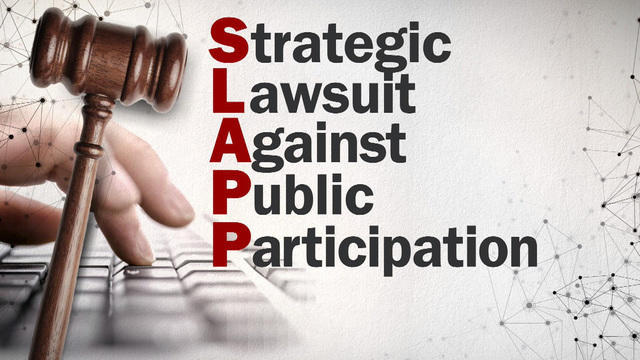
    When “CBS This Morning” spoke with him in May, Lloyd owed $26,000 in legal bills, more than his $20,000 yearly Social Security income. And he’s not the only person who’s been sued. Last year, a New York woman was sued by her doctor for $1 million for posting negative online reviews. A man in Kansas was sued over a three-star Trip Advisor review of a theme park, and a South Carolina woman was sued by a restaurant she claimed refused to honor a coupon. “We’re seeing a rise in individuals being sued for speaking out online,” said Evan Mascagni, who works for the Public Participation Project. He says many lawsuits are designed simply to intimidate. They’re called “SLAPP” lawsuits (for Strategic Lawsuit Against Public Participation). “A SLAPP filer doesn’t go to court to seek justice; they are just trying to silence or harass or intimidate a critic of theirs,” Mascagni said. Some states have laws against SLAPP lawsuits, but there is no federal anti-SLAPP statute.

    Earlier this year, the Federal Trade Commission began cracking down on businesses that put gag clauses in their consumer contracts in violation of the Consumer Review Fairness Act. “CBS This Morning” consumer investigative correspondent Anna Werner asked Carl Settlemyer, of the FTC’s Division of Advertising Practices, “Why is it important enough that the government feels like, ‘Hey we have to step in sometimes’?” “The online review medium has really exploded over the past decade or so, and people’s reliance on the ability to learn from online reviews has really grown in proportion to that,” Settlemyer said. “People have stories to tell, and they’re not able to get them out because they feel like they’re going to be threatened.” Thomas Lloyd stuck to his guns, and countersued: Earlier this year, two former veterinarians from DeLand gave sworn affidavits saying even though they lacked experience doing the emergency surgery Lloyd’s dog needed, veterinarian MacPhail had declined to do the surgery and instead left for vacation. After the animal hospital’s attorneys learned of our interview with Lloyd, the case was quickly settled. Lloyd told Werner, “They shouldn’t be able to try to financially break somebody just because they don’t like what you say.” DeLand Animal Hospital, which is now under new ownership, did not respond to CBS News’ request for comment.  Neither did veterinarian Thomas MacPhail, who DeLand told us last week is no longer working at the animal hospital.

    VIEW

  • Millions should stop taking aspirin for heart health

    Millions should stop taking aspirin for heart health

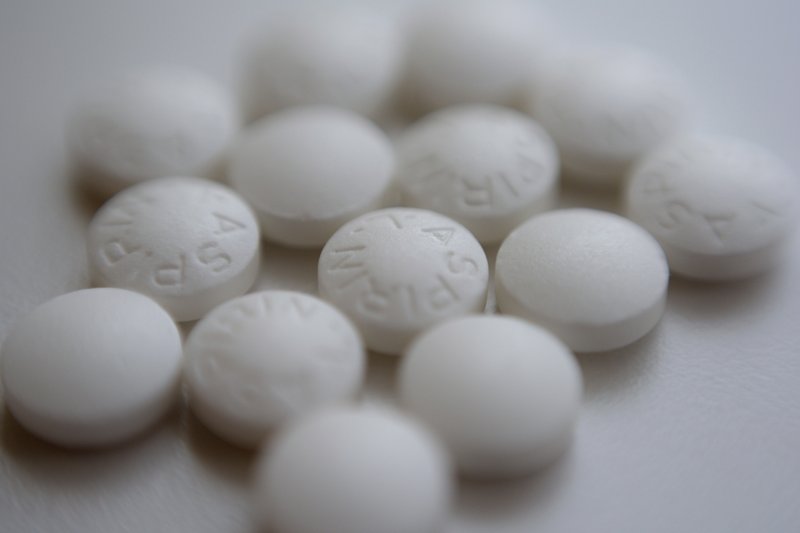
    Millions of people who take aspirin to prevent a heart attack may need to rethink the pill-popping, Harvard researchers reported Monday. A daily low-dose aspirin is recommended for people who have already had a heart attack or stroke and for those diagnosed with heart disease. But for the otherwise healthy, that advice has been overturned. Guidelines released this year ruled out routine aspirin use for many older adults who don’t already have heart disease — and said it’s only for certain younger people under doctor’s orders. How many people need to get that message? Some 29 million people 40 and older were taking an aspirin a day despite having no known heart disease in 2017, the latest data available, according to a new study from Harvard and Beth Israel Deaconess Medical Center. About 6.6 million of them were doing so on their own — a doctor never recommended it. And nearly half of people over 70 who don’t have heart disease — estimated at about 10 million — were taking daily aspirin for prevention, the researchers reported in Annals of Internal Medicine.

    “Many patients are confused about this,” said Dr. Colin O’Brien, a senior internal medicine resident at Beth Israel who led the study. After all, for years doctors urged people to leverage aspirin’s blood-thinning properties to lower the chances of a first heart attack or stroke. Then last year, three surprising new studies challenged that dogma. Those studies were some of the largest and longest to test aspirin in people at low and moderate risk of a heart attack, and found only marginal benefit if any, especially for older adults. Yet the aspirin users experienced markedly more digestive-tract bleeding, along with some other side effects. In March, those findings prompted a change in guidelines from the American Heart Association and American College of Cardiology:

    —People over 70 who don’t have heart disease — or are younger but at increased risk of bleeding — should avoid daily aspirin for prevention.

    —Only certain 40- to 70-year-olds who don’t already have heart disease are at high enough risk to warrant 75 to 100 milligrams of aspirin daily, and that’s for a doctor to decide.

    Nothing has changed for heart attack survivors: Aspirin still is recommended for them. But there’s no way to know how many otherwise healthy people got the word about the changed recommendations.“We hope that more primary care doctors will talk to their patients about aspirin use, and more patients will raise this with their doctors,” O’Brien said.

    ___

    The Associated Press Health and Science Department receives support from the Howard Hughes Medical Institute’s Department of Science Education. The AP is solely responsible for all content.

  • Who Is Boris Johnson?

    Who Is Boris Johnson?

    Britain has a new Prime Minister. Britain’s Conservative Party has chosen Boris Johnson.  He’s a fan of America and has defended President Trump at times. He’s also vowed to make Brexit happen in three months, but his first challenge will be the escalating naval crisis with Iran.  Boris Johnson arrives at number 10 Downing Street at a challenging time for any prime minister, with fears that war could break out with Iran.   Iran’s Revolutionary Guards seized a British-flagged oil tanker in the Strait of Hormuz last Friday in revenge for the British seizure of an Iranian tanker off Gibraltar earlier this month.  But Johnson has already signaled he’s no hawk on Iran. During last week’s TV debates, Johnson said he would not support US military action against Iran.

    And in 2018, when he was foreign minister, Johnson traveled to Washington to try to persuade President Trump to stay in the Iran nuclear deal, saying the British government remained committed to the deal.  As for his pledge to leave the European Union by October 31 no matter what, Johnson inherits the same divided Conservative Party and Parliament that helped stymie and finally bring down Prime Minister Theresa May.  Johnson may also be handed a ‘no-confidence vote’ and early election within weeks. But he does have a friend across the Atlantic.

    President Trump said, “I like him. I like Boris Johnson. I spoke to him yesterday. I think he’s going to do a great job. I think we’re going to have a great relationship.” And that irks some in the British establishment. A BBC interviewer tried to get Johnson to say something bad about Trump. When he wouldn’t, it prompted this exchange: Andrew Neil with the BBC said, “I mean people worry, will you be as craven if you were Prime Minister?” Johnson asked, “I’ve been, towards the United States of America, craven?”  “Towards anybody who’s powerful in the world?” Neil said. “Don’t be ridiculous. If I may say so. When it comes to sticking up for UK interests whether it’s over climate change, over disputes with Iran, over the Iran nuclear deal we have been very, very forthright with the United States of America, and I will continue to be forthright,” Johnson added.

    In 2015, Johnson accused Trump of having “stupefying ignorance” and said Trump was “unfit to hold the office of president of the United States.” Johnson, a former mayor of London who is known for his occasionally wacky ways, has adopted a populist style that has served him well.  But now as prime minister, he must navigate through an international crisis, as possible war clouds loom.

    view

  • Miss World America Strips Conservative Beauty Queen Kathy Zhu of Crown – Discrimination?

    Miss World America Strips Conservative Beauty Queen Kathy Zhu of Crown – Discrimination?

    Zhu said that MWA disapproved over her tweet about refusing to wear an Islamic headscarf after a Muslim woman tried to ‘forcibly’ put a hijab on her head during World Hijab Day at her college campus in 2018.

    Townhall.com reports Zhu argued that the Islamic headscarf is used to oppress women in certain Muslim countries, saying, “There is a ‘try a hijab on’ booth at my college campus. So you’re telling me that it’s now just a fashion accessory and not a religious thing? Or are you just trying to get women used to being oppressed under Islam?”

    MWA also took issue when Zhu tweeted, “Did you know the majority of black deaths are caused by other blacks? Fix problems within your own community before blaming others,” according to Detroit Free Press.

    Zhu defends the two now-deleted tweets that she attributes to the stripping of her title.

    “I am so glad the story got brought into the public eye and the media because this is so much bigger than pageantry. This is about an organization discriminating against people with different opinions. Calling people racist when they’re not. Little attacks like that really diminishes the value and truth of the word racism,” Zhu said.

    “There shouldn’t just be diversity of skin color, there should diversity of thought and of mindset, political affiliation and I’m so glad to be the voice of this right now.”

    Kathy Zhu@PoliticalKathy

    Thank you 🙏🏼

    Embedded video

    “I hope that other pageant organizations can really learn from this story and situation. Do not discriminate others based on opinions. I will still stand firm, stand my ground and I’m going to still continue to fight for what I believe in,” she added.

    view

  • ‘Let There Be Light’: How God Kept Appearing Over and Over During America’s Missions to the Moon

    ‘Let There Be Light’: How God Kept Appearing Over and Over During America’s Missions to the Moon

    On July 20, 1969, man first touched the surface of another world when Neil Armstrong and Buzz Aldrin walked on the moon. Though conquering space certainly marked a triumph for science and mankind, God kept coming up in conversations on these missions to the moon. Historian William Federer, the author of the daily online history lesson AmericanMinute.com, points to the Apollo 11 moonwalkers.

    “Before they got out of the lunar module, they had a moment of silence and Buzz Aldrin celebrates communion,” Federer said of that day. “He pours the grape juice in one-sixth gravity and it does a slow little circle. He reads John 15: ‘I am the vine, you are the branches.’  And he takes bread that was partly consumed at the communion service before he launched…he saved a piece of the bread. And he celebrated communion. So the first items that were consumed on the moon was communion.”

    Atheist Peeved Over Public Reading of Genesis in Space

    The world didn’t hear it because a famous atheist had given NASA grief over Apollo 8 astronauts publicly reading from the Bible.

    “He asks for radio silence because Madalyn Murray O’Hair had threatened to sue because the Apollo 8 had mentioned God,” Federer said of Aldrin and his quiet communion. “They read from the Book of Genesis.”

    Lunar Module Pilot William Anders began their Christmas Eve, 1968 broadcast saying, “The crew of Apollo 8 has a message that we would like to send to you: ‘In the beginning, God created the heaven and the earth. And the earth was without form and void and darkness was upon the face of the deep. And the Spirit of God moved upon the face of the waters. And God said, ‘Let there be light.’ And there was light.’”

    As Apollo 11 headed back to earth, Aldrin said to a listening world, “This has been far more than three men on a mission to the moon. Personally, and reflecting on the events of the past several days, a verse from Psalms comes to mind: ‘When I consider the heavens, the work of Thy fingers and the moon and the stars which Thou hast ordained, what is man that Thou art mindful of him?’”

    Houston, They Had a Problem

    Nine months later, when an accident occurred on board Apollo 13 that might have doomed its three astronauts to die in space, much of the planet turned to God. Federer said of that week, “President Nixon calls the nation to pray. And they have a prayer on the Chicago Board of Trade, in the Vatican, and the Wailing Wall…all around the world.”

    Their prayers were answered and after many trials, the crew of Apollo 13 was saved. President Richard Nixon met with the astronauts in Honolulu, Hawaii, and said of them, “The exploration of space has been a hazardous adventure. The voyage of Apollo 13 dramatized its risks. The men of Apollo 13 by their poise and skill under the most intense kind of pressure, epitomized the character that accepts danger and surmounts it.”

    It was a rare moment when a united mankind thanked God.

    “President Nixon has a national day of thanksgiving to celebrate this,” Federer explained. “And the cover of Time Magazine is the astronauts praying, and this was put on all kinds of memorabilia that the whole nation prayed.” One of the last Apollo flights featured Mission Control’s Charles Duke getting to walk on the moon. He spoke of it later. “Charles Duke is a great Christian,” Federer noted. “He’s an astronaut and he says, ‘I used to think that…’ – paraphrasing here – ‘…going to the moon would be my greatest achievement. But my walk with Jesus is more memorable because it’s an everyday affair’.”   “Just a fascinating faith that Charles Duke had,” he continued. “Plus all the astronauts: Jim Irwin – Apollo 15 – became an evangelical minister.  And Apollo 14 left a microfilm copy of the King James Bible on the moon.”

    It’s interesting to note how many of those men who flew far into the heavens couldn’t get the God of heaven out of their thoughts.

    view

  • Why Jeff Bezos spends billions on space technology

    Why Jeff Bezos spends billions on space technology

    Amazon boss Jeff Bezos is the richest person in the world with a current net worth of $125 billion, according to the Bloomberg Billionaire Index. And he’s investing much of his Amazon fortune in the development of space technologies through his aerospace company Blue Origin.

    Why? “Because I think it’s important,” Bezos tells Norah O’Donnell of “CBS Evening News” in an interview which aired Tuesday. “I think it is important for this planet. I think it’s important for the dynamism of future generations. It is something I care deeply about. And it is something I have been thinking about all my life.”

    Bezos — who says “you don’t choose your passions, your passions choose you” — became fascinated with space when he was a child watching astronauts Buzz Aldrin and Neil Armstrong land on the moon, he tells O’Donnell.

    Further, developing space technologies is critical for human beings to have a long future, Bezos says.

    “We humans have to go to space if we are going to continue to have a thriving civilization,” Bezos says. “We have become big as a population, as a species, and this planet is relatively small. We see it in things like climate change and pollution and heavy industry. We are in the process of destroying this planet. And we have sent robotic probes to every planet in the solar system — this is the good one. So, we have to preserve this planet.”

    To do that will require being able to live and work in space, says Bezos.

    “We send things up into space, but they are all made on Earth. Eventually it will be much cheaper and simpler to make really complicated things, like microprocessors and everything, in space and then send those highly complex manufactured objects back down to earth, so that we don’t have the big factories and pollution generating industries that make those things now on Earth,” Bezos says. “And Earth can be zoned residential.”

    It will be “multiple generations” and “hundreds of years” before this is a reality, Bezos said on CBS, but with Blue Origin he is working to develop the technology that will make it possible.

    People will be able to live in space (in self-sufficient space structures) if they so choose, Bezos says.

    “People are going to want to live on Earth, and they are going to want to live off Earth. There are going to be very nice places to live off earth as well. People will make that choice,” Bezos says.

    Astronaut John Glenn, the first American to orbit the Earth, wrote Bezos a letter in 2016 saying the work Bezos was doing would eventually make space travel as common as air travel.

    “He wrote me the most beautiful letter just a few days before he passed away and I have it framed in my office and it is very meaningful to me,” Bezos says. Glenn said in that letter he saw a future when we will board spacecraft like jetliners, and “when that happens, it will largely be because of your epic achievements.”

    “I think that is entirely believable,” Bezos says. “If you went back in time a hundred years and told people today that you would be able to buy a ticket and fly across the world on a jetliner, they would have thought you were crazy. But that’s the kind of change that can happen in just 100 years or less.”

    The first step in that journey is space tourism, Bezos says. Blue Origin is already testing its vehicle, the New Shepherd, for taking humans into space for short tourism trips.

    “Everybody who goes to space says they come back a little changed and they realize how beautiful this planet is and how small and fragile it is,” Bezos says. “Something that we can’t see when we are down here, but from up there it becomes obvious.”

    See also:

    This content was originally published here.

  • Man Attacked by Black Bear Kills It With an Axe

    Man Attacked by Black Bear Kills It With an Axe

    If it wasn’t for his dad’s hatchet, Alex Woods might not be alive. 

    On June 26, Woods, a forest pathologist who works for the provincial government of British Columbia, was attacked by an adult black bear while walking alone in the bush not farfrom the small Gitxsan village of Gitanyow. He survived the encounter, and the bear didn’t. Yesterday afternoon, he told me the story over a few much-needed beers on the patio of his home near Smithers.

    A lean 54-year-old with a close-cropped silver beard, Woods has been working in the backcountry for decades. He’s a whitewater paddler, hunter, and outdoorsman. Thoughtful and soft-spoken, he was still rattled as he ran through the details.  

    “I was going out to check for the presence of Armillaria root disease in an undeveloped piece of forest,” he says. “I’m a bit technologically challenged, but I had a GPS and the coordinates I needed to get to, so I was just taking a bearing and walking to that. As I was going in I saw freshly broken fireweed, so I knew there was probably an animal around, but there areanimals everywhere up here. And when I’m by myself I always make a point of yelling, so I was going ‘Yo, bear, yo bear.’”

    About 700 feet into the forest, Woods came to a deep gully where a section of hemlock and balsam sloped down to a small creek.

    “I could hear the creek at the bottom,” he says, “so I yelleven louder, because that’s a place where you could potentially surprise a bear. It was really steep, like 45 degrees, with mature timber that was freshly burnt from last year, so it was relatively open and the visibility was good. I was about three quarters of the way down the slope, and I’d noticed some morels that were coming up, so I picked a couple, but then made sure I was back on my bearing and kept yelling. And then I look up, and there’s this bear running at me—full speed, no sounds, just running at me as fast as it can go from 100 feet away, straight up the slope.


    bear
    The forest at the top of the slope where Woods was attacked (Alex Woods)


    “There was a charred tree about a foot in diameter right there, and a windfall tree across it, almost forming an ‘L’. So I steppedbehind that and reached for the bear spray that was in my vest, and I couldn’t get the frickin’ lid off it.

    “And then the bear’s head came right in,” he says, gesturing to his midriff, “and I hauled off and kicked it as hard I could, and that connected with its jaw and knocked it back. I’m not a big guy, but because I was on such a steep slope, I was just big enough to get it. The bear fell back a bit, but then it came running around the tree and I kicked it hard again in the head, yelling as loud as I could the whole time. It took off and ran up another burned tree about eight feet away, still staring at me.”

    For a split second, Woods may have thought the encounter was de-escalating. But it wasn’t. Fortunately, he had a hatchet with him, inherited from his father, the same one he always carries with him in the bush. Like his bear spray, he’d had it stashed in his cruiser vest, a multipocketed work vest that many foresters wear to carry tools on the job.

    “I’ve always felt if anything really hit the fan,” he says, “I’d want to have a hatchet or an axe.”

    “So then the bear dropped down from the tree,” he continues. “And as it was doing that, I’d reached into the back of my vest. The zipper’s broken, so I was able to get at my hatchet fast. But the bear was right back on me by then, so I just sank the hatchet into its head. I was lucky enough that it happened where those trees were, and on a such steep slope. I wouldn’t have been able to kick it otherwise, or get it on the head. Those trees slowed it down, and fortunately I didn’t struggle getting the hatchet out like I struggled with the bear spray. But also, if it wasn’t for those two charred trees, I’d probably be dead.”

    After Woods struck the bear, it slumped away and rolled down the hill.

    “It was lying on its back,” he says, “and it looked like it was still breathing, but I kept watching because I didn’t want to turn my back to climb the hill. And I didn’t want to leave the fort, such as it was, of those two logs, so I waited maybe three minutes, trying to see if it was going to get up or if it was dead. Then I decided to get the heck out of Dodge.”


    bear
    The wounded bear on its back at the bottom of the slope (Alex Woods)


    Woods backpedaled up the hill and then made a beeline to his truck, looking behind him the whole way, hoping the bear wouldn’t get up and come after him once more.

    Back in Smithers, he told the B.C. Conservation Officer Service about the attack. Yesterday officers located the site and found the bear still alive, but mortally wounded, with its skull opened by the hatchet blow. The officers were armed and killed the bear.

    “Afterward they called and told me it was a sow with cubs,” he says, “and that’s really f’d up. That’s not good at all. I’m still processing that. But before it happened, I did everything you’re supposed to do, and exactly what’s worked for me for 35 years. I yelled, I made lots of noise. A mother bear, if it was a normal situation, would have heard that, even though it was near a creek. The experts I’ve talked to today told me it was totally predatory behavior. There was no warning. They said that bear wanted you—and they’re right, it wanted me.”

    Woods isn’t sure why it happened, though he notes river levels in the area are extremely low for this time of year, and he suspects the bear’s behavior may be a reflection of a drought-affected ecosystem. However, he says the bear looked “vital” and not weakened or starving. Today, conservation officers confirmed the bear was in good health and weighed somewhere between 150 and 200 pounds.

    As for what we can all learn from his ordeal, Woods is adamant about having bear spray at the ready and being well practiced in its use—if he’d been quicker at getting the safety cap off, the bear might still be alive, too.

    “It has to be totally accessible,” he says. “Because it all happens so fast. The whole process, between seeing the bear charging up the hill until I sunk the hatchet in its head, was maybe 15 seconds, including me kicking it twice in the head. It was so fast, there just wasn’t any time to mess around with the clip.”


    bear
    Woods’s hatchet (Malcolm Johnson)


    Woods will be back in the bush again soon, but the battle with the bear is making him think harder about being out alone.

    “It’s going to make hunting a little more challenging,” he says. “I’ve been successful moose hunting by myself, but I’m thinking that’s going to be pretty hard to do. I think this is going to be with me for the long haul.”

    This content was originally published here.

  • Homemade Garlic-Mint Garden Insect Spray (that really works!!) | An Oregon Cottage

    Homemade Garlic-Mint Garden Insect Spray (that really works!!) | An Oregon Cottage

    Easy to make and use, homemade garlic-mint garden insect spray was tested on badly attacked basil plants & a flowering vine and worked with only 2 applications! This bug spray has continued to work in my garden as well as many reader’s gardens, too.

    Welcome to one of AOC’s popular gardening DIYs: how to make a natural garlic-mint insect spray easily from pantry ingredients- that actually works! Be sure to check out these other resources for more information on this spray:

    Okay guys, I’m excited to finally share with you the results of the get-rid-of-nasty-garden-bug experiment I’ve been conducting on my poor, bug-eaten basil plants and trumpet vine that I’ve shared a bit about before. I know I’ve teased you with my testing for long enough – we all deal with bugs, so I know you’ll be as happy to see the results as I was!

    The background to this experiment is a tale known to many organic gardeners (and maybe even would-be gardeners who gave up when faced with seemingly destroyed plants?): years of either ignoring it (and losing plants or living with damaged plants) or trying many different remedies from diatomaceous earth (works on many things though tedious to apply, sometimes hard to find, needs a lot of reapplication, may kill good bugs) to soap and water (this never really did much in my garden).

    And for some reason, while I don’t have much of a problem beyond cucumber beetles in our large, main garden (and most years I don’t lose plants to them), our herb garden hosts something(s) that have eaten the basil every year since we added it to our backyard. I created this spray last year (adapted from a Keeper of the Home article) to use on them, but didn’t really keep track of it, although I do remember that it worked.

    So this year when our basil was hit particularly hard as well as some marigolds I planted among the herbs and the trumpet vine growing up the gazebo across the path, I mixed up a new batch, wrote it down and documented in pictures so if it really did work, I could share it with you.

    And you’re not going to believe how well it worked – in fact, as I was putting this together I was thinking I was going to have to add disclaimers on the photos like “I promise these really are the same plants” or something, so you’ll believe me!

    The Natural DIY Garden Insect Spray Experiment

    So I’m pinky-swearing or whatever you need from me: the three photos in the collage above really, honestly are the same plant from beginning to four weeks later. I know, can you believe it?

    And also honestly: even after 20 years of growing things, seeing stunted, bug-eaten plants like my poor basil makes me want to throw in the towel sometimes. It’s just…ugh. These were three basil plants that I grew from seed, nurturing them along and to see them look like this in just a few weeks after planting out? It’s hard.

    And so I sprayed my homemade garlic-mint spray all over that poor plant, but I didn’t really think it was much for this world. It had only one growing tip left, but seriously, look at it (above left) – who would give that guy a chance?

    Well, I started seeing results within days – new growth! After a week I still was a bit skeptical – was that old bug-bitten leaves or new? But by week 2, I knew we had a winner and I snapped a picture before applying one more light spraying and then waiting another 2 weeks.

    Look at this beautiful, healthy basil plant! There’s a bug-bite here and there, but I can live with that (and we organic gardeners do, often, a-hem), but most of the new growth is blemish-free and I’ve started harvesting and making our not-so-secret-ingredient frugal pesto to freeze.

    Now, I had to share this with you as well, even though the photos were not taken in great light. This plant on the left was the worst of the three basils – stunted beyond anything I had seen with every growing tip eaten off and the remaining leaves were hard and leathery.

    It was so bad I did dig it up and was just about to drop it in the compost (which I probably would’ve done if I hadn’t been planning on sharing this with you all), but at the last minute I planted it in an empty spot out in the main garden, spraying it with the garlic-mint spray. And while it took longer to rebound (duh, I would, too!), I took the photo on the right just a few days ago, hardly believing what I was seeing.

    Is this stuff a miracle worker, or what? I should probably mention, too, that when I applied it the first time, we got a ton of rain the following week and I was sure it wasn’t going to work.  Garden M-I-R-A-C-L-E.

    Subscribe & Make This Year’s Garden A Success!

    Plan, dream, record and collect information for your best garden yet with AOC’s 10-page Garden Success Plan Notebook – a simple system to help keep you organized. You’ll also receive the popular weekly Newsletter full of useful information and behind-the-scenes happenings and occasional offers. Never any spam – read our Privacy Policy here.

    Welcome – so glad you’ve joined the AOC community! Your first step is to check your email to confirm your subscription.

    There was an error submitting your subscription. Please try again.

    And, you can probably see where this is going (should I have saved all the afters for the end? I was just too excited to share with you!) but here we have a reminder of the trumpet vine damage. This insect (I still don’t know what – I’ve never seen anything so it must be nocturnal) ate leaves like other bugs, but seemed to zero in on the new growing tips, which is a sure way to kill a plant.

    And now the vine is growing like trumpet vines are supposed to (that would be out-of-control, for those not familiar with trumpet vines, ha!), full of lovely leaves and new growing tips. I think this thing has grown 3 feet in just a couple weeks, that’s how much the insects had stunted it.

    Homemade Garlic-Mint Garden Insect Spray

    So, are you dying to know what is in the spray and how to make it? It’s super easy and uses easy-to-find (or grow) ingredients – I created it up by combining a couple of sources, none of which had a clear ‘recipe’ (I credited one source above) so I’m writing it out for you so you can make it whenever you need it.

    I’m so happy to gift this to your garden, because I think you’re going to love it as much as I do. Oh, and the mint? It makes this smell good – no yucky concoction here for you to suffer through.

    Click the green arrow for the full printable DIY Garden Insect Spray recipe!
    This content was originally published here.

  • You pay your taxes and all kids should have free lunches!  What is the problem?

    You pay your taxes and all kids should have free lunches! What is the problem?

    Why do we give some kids free lunches and not others?  Just give everyone a free lunch and if they need more they need to do chores at school.  In Japan all the school kids help with the lunch program.  Why do we cater to our kids and then complain that they are useless when we think they should be doing something to earn an income.  Look around at others countries and see what they are doing.  Why do we get stuck into our grid and squawk when are kids are so demanding because they are not allowed to participate in the skills of life.  Really, by the time they pay for all the paper pushing and phone calls, this school could afford to have free lunches for everyone.

    A Pennsylvania school district is warning that children could end up in foster care if their parents do not pay overdue school lunch bills. The letters sent recently to about 1,000 parents in Wyoming Valley West School District have led to complaints from parents and a stern rebuke from Luzerne County child welfare authorities. The district says that it is trying to collect more than $20,000, and that other methods to get parents to pay have not been successful. Four parents owe at least $450 apiece. The letter claims the unpaid bills could lead to dependency hearings and removal of their children for not providing them with food. “You can be sent to dependency court for neglecting your child’s right to food. The result may be your child being taken from your home and placed in foster care,” the letter read.

    After complaints, district officials announced they plan to send out a less threatening letter next week. Luzerne County’s manager and child welfare agency director have written the superintendent, insisting the district stop making what they call false claims. Their letter calls the district’s actions troubling and a misrepresentation of how the Children and Youth Services Department and its foster care program operate. Wyoming Valley West’s lawyer, Charles Coslett, said he did not consider the letters to be threatening.

    “Hopefully, that gets their attention and it certainly did, didn’t it? I mean, if you think about it, you’re here this morning because some parents cried foul because he or she doesn’t want to pay a debt attributed to feeding their kids. How shameful,” Coslett told WYOU-TV.

    The district’s federal programs director, Joseph Muth, told WNEP-TV the district had considered serving peanut butter and jelly sandwiches to students with delinquent accounts, but received legal advice warning against it.

    School district officials say they plan to pursue other legal avenues to get the lunch money, such as filing a district court complaint or placing liens on properties.

    For the coming year, the district will qualify for funding to provide free lunches to all students.

    The district underwrote free lunches for four elementary and middle schools during the 2018-19 year, and WNEP-TV said school officials suspect some parents did not pay their lunch bills as a form of protest.

    view

  • Iran stokes Gulf tensions by seizing two British-linked oil tankers

    Iran stokes Gulf tensions by seizing two British-linked oil tankers

    Iran seized two oil tankers – one registered in the UK, the other in Liberia – in the strait of Hormuz on Friday, marking a dramatic escalation in the worsening standoff in the Gulf. Iran’s Revolutionary Guards claimed to have taken the British-flagged Stena Impero into port with its 23-strong crew, and Iranian officials claimed it had infringed maritime regulations. On Saturday, the semi-official Iranian news agency, Fars, said the ship had been taken to Bandar Abbas port and that the crew remained on the vessel. Meanwhile, Iran’s state-run news agency, IRNA, reported that the tanker was seized due to a collision with an Iranian fishing boat. It said the fishing boat informed Iran’s Ports and Maritime Organisation, which notified the Revolutionary Guards.

    The Stena Impero’s owners however, said the ship had been “approached by unidentified small crafts and a helicopter during transit of the strait of Hormuz while the vessel was in international waters”. A second tanker, the Mesdar, which is Liberian-flagged but British operated, also made a sudden diversion from its course towards the Saudi port of Ras Tanura on Friday, and tracking data showed it moving northwards towards the Iranian coast before apparently turning off its tracking signal. Less than two hours later, the Mesdar’s tracking signal was turned back on. Fars, the semi-official Iranian news agency, reported that it was briefly detained in the strait of Hormuz and given a notice to comply with environmental regulations before being allowed to continue on its way.

    The Mesdar’s Glasgow-based operator, Norbulk Shipping UK, confirmed that the vessel had been boarded by armed guards but had then been allowed to continue its voyage. “All crew are safe and well,” it said. Stena Bulk and Northern Marine Management confirmed in a statement on Friday that the ship remained uncontactable. Stena Impero was in “full compliance with all navigation and international regulations” when it was intercepted, the company said. Stena Bulk chief executive Erik Hanell said: “There are 23 seafarers onboard of Indian, Russian, Latvian and Filipino nationality. There have been no reported injuries and the safety and welfare of our crew remains our primary focus.” Jeremy Hunt, the UK foreign secretary, told Sky News: “We are absolutely clear that, if this situation is not resolved quickly, there will be serious consequences.”

    But he added: “We are not looking at military options, we are looking at a diplomatic way to resolve the situation but we are very clear that it must be resolved.” He said that Stena Impero had been surrounded by four Iranian vessels with a helicopter hovering overhead, while 10 Iranian speedboats had converged on the Mesdar. “These seizures are unacceptable. It is essential that freedom of navigation is maintained and that all ships can move safely and freely in the region,” Hunt said. Late on Friday night, the British government advised UK ships to stay out of the area “for an interim period”. “We remain deeply concerned about Iran’s unacceptable actions which represent a clear challenge to international freedom of navigation,” a government statement said following a meeting of ministers to discuss the incident in the strait of Hormuz. As the foreign secretary has said, our response will be considered and robust and there will be serious consequences if the situation is not resolved. “We remain in close contact with our international partners and there will be further meetings over the weekend.”

    Donald Trump, the US president, said on Friday night that the US would talk to Britain about the incidents. The Revolutionary Guards said they had seized the Stena Impero, citing international maritime law for their actions. Iran Front Page quoted an unnamed military source as saying the tanker had been “crossing a route other than the shipping lane in the strait of Hormuz, had switched off its transponders and did not pay any attention to Iran’s warnings when it was seized by the [Revolutionary Guards] forces”. The seizure of the tankers came hours after authorities in Gibraltar announced that they were extending their custody of the Iranian tanker, seized by Royal Marines on 4 July, on suspicion of shipping oil to Syria, in violation of an EU embargo. Tehran has denounced the detention of the Grace 1 as piracy carried out on orders from Washington.

    Iranian politicians have been calling for reprisals and the country’s forces, led by the Revolutionary Guards, are being increasingly aggressive in disrupting shipping lanes in the Gulf. The Stena Impero, a 30,000-tonne British-flagged and Swedish-owned ship, was heading for Saudi Arabia when it abruptly left international sea lanes, and tracking data showed it heading north towards the Iranian island of Qeshm, where the Iran’s Revolutionary Guards have a substantial base.

    Iran’s Revolutionary Guards previously attempted to capture a British tanker six days after the Grace 1 was seized. On 10 July, a British warship, the HMS Montrose, intervened to drive off three Iranian military vessels that were attempting to divert a UK tanker, the British Heritage, towards Iranian territory.

    The incidents come amid a battle of nerves along the oil export routes of the Gulf, which has involved close encounters between Iranian, UK and US military forces. Earlier on Friday, Tehran denied Trump’s claim that US forces had downed a Iranian drone over the Gulf. Iran’s top military spokesman said all drones had returned safely to base, but Trump was adamant. “No doubt about it … we shot it down,” the US president said. Trump said on Thursday that the USS Boxer took defensive action after the unmanned vehicle came within 1,000 metres of the warship and ignored multiple calls to stand down. The prospect of negotiations that might defuse the standoff appeared more distant than ever on Friday as a senior US official dismissed a nuclear offer proposed the previous day by Iran’s foreign minister, Javad Zarif, during a visit to New York. The official suggested the offer was not serious and called for “an actual decision-maker” to enter talks to “end Iran’s malign nuclear ambitions”.

    Trump has vacillated on what he wants Iran to do in return for a lifting of the oil and banking embargo that the US has imposed since walking out of an international nuclear deal with Tehran (the Joint Comprehensive Plan of Action, or JCPOA) in May last year. The sharp response to Zarif’s offer suggests that administration hardliners, led by the national security adviser, John Bolton, are currently running Iran policy.

    view