Author: Truth & Hammer

  • The U.S. Now Has More Millionaires Than Sweden Has People

    The U.S. Now Has More Millionaires Than Sweden Has People

    The number of wealthy households in the U.S. reached a new high last year, roughly equivalent to the entire population of Sweden or Portugal. More than 10.2 million households had a net worth of $1 million to $5 million, not including the value of their primary residence, according to a survey by the Spectrem Group. That’s up 2.5 percent from 2017.

    Ultra-high net worth households — those with assets between $5 million and $25 million — increased 3.7 percent to about 1.4 million in number, while those in excess of $25 million grew by about 0.6 percent to 173,000, according to the survey. The number of Americans in the wealthiest category has more than doubled since the Great Recession.

    Spectrem’s results were based on interviews with more than 2,300 mass affluent households, 4,450 millionaire households, and 1,850 ultra-high-net-worth investors. The survey has a 4 percent margin of error.

    Read more

  • QUANTUM TIME Scientists have built world’s first ‘time machine’ in experiment which defies the laws of physics

    QUANTUM TIME Scientists have built world’s first ‘time machine’ in experiment which defies the laws of physics

    The “balls” scattered and, according to the laws of physics, should have appeared to split in a haphazard way.

    But researchers managed to make them reform in their original order — looking as if they were turning back time.

    Lead researcher Dr. Gordey Lesovik, of Moscow’s Laboratory of the Physics of Quantum Information at the Moscow Institute of Physics and Technology, said: “We have artificially created a state that evolves in a direction opposite to that of the thermodynamic arrow of time.”

    His team used a rudimentary quantum computer, which carries information on subatomic particles. He hopes their findings, in journal Scientific Reports, will help improve processing power.

    Not quite Dr. Who, but even Time Lords had to start somewhere . . .

    So how does it work? Well, the time machine is actually a rudimentary quantum computer made up of electron qubits.


    A qubit is a basic unit of quantum information – a unit that represents one, zero, and both one and zero at the same time. Researchers ran an “evolution program”, which caused the qubits to enter a complicated changing pattern of ones and zeroes.

    And during this process, the order was lost – like hitting balls at the start of a game of pool.

    A separate program then modified the state of this quantum computer so that it evolved backward, returning from chaos to order.

    This allowed the qubits to return to their original starting point.

    Scientists were able to perform this so-called “time reversal” successfully 85 percent of the time with two qubits, and had a 50 percent success rate with three qubits.

    The idea was to test out a theory about whether time can reverse itself – at least for a single particle for a fraction of a second.

    When scientists observe an electron, they can’t figure out its exact position but can determine where it’s roughly located.

    But over time, it becomes more difficult to tell where that electron is because the region of space containing it “spreads out”. Or rather, it becomes more “chaotic”.

    This increases the uncertainty of the electron’s position – a core principle of Schrodinger’s equation.

    The team was able to then calculate the probability of a “smeared out” electron spontaneously “localizing” back to its recent past – traveling through time, in effect.

    And it turns out that if you observe 10billion freshly localized electrons every second for 13.7billion years, you’d only see this happen once.

    And even then, the electron would only travel no more than a ten-billionth of a second into the past.

    That’s not ideal, because not being able to predict time-reversal makes the system useless to scientists.

    That’s why it’s so important that scientists were able to successfully “reverse time on demand” with a quantum computer.

    Read More

  • No U.S. city cracks the top 30 on this well-regarded list of the world’s best places to live

    No U.S. city cracks the top 30 on this well-regarded list of the world’s best places to live

    Maybe we do need to make America great — to live in — again.

    Global consulting firm Mercer has released its quality-of-living rankings, and, for a 10th year in a row, Vienna took the No. 1 spot. It was followed by Zurich, with Auckland, Munich, and Vancouver tying for third place.

    The company ranks hundreds of global cities based on a number of factors, including recreation, housing, economy, public services and transport, political and social environment, education, medical and health considerations, and the natural environment.

    European cities continue to have the highest quality of living in the world, with Vienna (1), Zurich (2) and Munich (3) not only ranking first, second and third in Europe but also globally,” the report revealed, adding that “as many as 13 of the world’s top 20 spots were taken by European cities.”
  • House Dems overwhelmingly reject motion to condemn illegal immigrant voting | Fox News

    House Dems overwhelmingly reject motion to condemn illegal immigrant voting | Fox News

    House Democrats set vote for overturning national emergency declaration; reaction and analysis from ‘The Next Revolution’ panel.

    Nearly every House Democrat on Friday opposed a measure condemning voting in U.S. elections by illegal immigrants, as part of a sweeping election reform bill.

    The GOP-backed measure would have added language to the “H.R. 1” election proposal stating that “allowing illegal immigrants the right to vote devalues the franchise and diminishes the voting power of United States citizens.”

    Federal law already prohibits non-citizens from voting in elections for federal office. But the GOP motion referenced how San Francisco is allowing non-citizens, including illegal immigrants, to register to vote in school board elections.

    The motion was voted down 228-197. All but six Democrats in the House voted against it. Just one Republican opposed it.

    Lauren Fine, a spokeswoman for House GOP Whip Steve Scalise, pointed out that an identical resolution was adopted by the House last September. But on Friday, 41 Democrats flipped to oppose the latest measure.

    “These 41 Democrats must now answer to voters why they were against illegal immigrants voting in elections six months ago, but are suddenly in favor of it now,” Fine said.

    The House on Friday later approved the Democrat-backed election bill. It would institute public financing of congressional campaigns, require presidential candidates to disclose tax returns and make Election Day a federal holiday. But the measure is dead on arrival in the Senate, where Majority Leader Mitch McConnell, R-Ky., has blasted the bill.

    The “H.R. 1” measure has been criticized by civil libertarians and Republicans over First Amendment concerns.

    The American Civil Liberties Union, in a recent letter to Congress, encouraged lawmakers to vote against the proposal because of “provisions that unconstitutionally impinge on the free speech rights of American citizens and public interest organizations.”

    “They will have the effect of harming our public discourse by silencing necessary voices that would otherwise speak out about the public issues of the day,” the ACLU wrote.

    One concern of civil libertarians is the bill’s inclusion of the DISCLOSE ACT, which would require all organizations that spend money on elections to disclose donors.

    The ACLU said it supports making organizations report spending for public communications like TV ads that expressly call for the election or defeat of a candidate for office. But it worries the DISCLOSE ACT goes beyond that.

    “These standards are unclear and entirely subjective, which will lead to confusion and, ultimately, less speech,” the ACLU said.

    Fox News’ Chad Pergram contributed to this report.

  • Research team ‘wakes up’ mammoth cell nuclei

    Research team ‘wakes up’ mammoth cell nuclei

    New findings indicate that the resurrection of mammoths is not a fantasy, a research team including members from Kindai University is saying after cell nuclei extracted from the 28,000-year-old remains of a woolly mammoth were discovered to retain some function.

    When placed in the ova of mice, the nuclei developed to a state just before cellular division, according to a paper published Monday in the British journal Scientific Reports.

    The team includes researchers from Japanese and Russian universities. It has been working for about 20 years on a project to use cloning to resurrect mammoths, an animal that has long been extinct.

    The cell nuclei used in the team’s recent findings were extracted from musculature and other tissue from Yuka, an about 3.5-meter-long female woolly mammoth excavated nearly intact in 2010 from permafrost in Siberia. When inserted into mouse ova, five out of 43 nuclei were observed to develop to a point just before the nuclei would split in two as a result of cell division.

    Cell nuclei contain DNA, the so-called blueprint for life, and mouse ova have been confirmed in experiments to have a reparative function for DNA. It is said to be possible that the mammoth’s DNA, damaged as a result of being frozen for a long time, was repaired and its biological functions invigorated.

    However, the predivision development stopped before completion in all the ova.

    “Yuka’s cell nuclei were more damaged than we thought, and it would be difficult to resurrect a mammoth as things stand,” said team member Kei Miyamoto, a lecturer in developmental biology at Kindai University. “There’s a chance if we can obtain better-preserved nuclei.”

    Teruhiko Wakayama, a professor in reproductive biology at the University of Yamanashi’s Advanced Biotechnology Center, said: “This can be praised as the first step in research toward the dream of resurrecting extinct ancient animals. I hope they can determine to what extent the DNA was repaired and how much activity there was.”Speech

    source

  • Pest control experts warn of ‘plague of rats’ resistant to poison

    Pest control experts warn of ‘plague of rats’ resistant to poison

    Pest control experts warned of a ‘plague’ of super rats immune from poison invading homes – and a distraught mum says attempts to kill the rodents have been fruitless.

    Edinburgh is said to be the worst place in Scotland for rodents, with the blame being placed on ‘lazy’ neighbors who do not dispose of waste properly in shared areas.

    Pest control firm Wee Critters Pest Control estimated that there was a 20 percent increase in call-outs year on year, while owner Sylvia Hill said ‘amateur’ poisons bought by concerned residents would barely make a difference to the problem.

    Mum-of-three Laura McQueenie, 27, has said problems with rats at the council flat in Niddrie, Edinburgh, where she lives with her sons and young niece, have been persistent.

    She said the living conditions were “disgraceful” and “horrific”, and blamed bins, describing them as a health hazard.

    After the birth of her youngest son, seven months ago, the social work student began to realize the scale of the problem.

    Laura said: “Two rats have died in my kitchen sink and there are many more we have seen.

    “Every evening I hoover and sanitize all surfaces before bed.”

    The young mum lives with her eight-year-old son, a two-year-old boy, and seven-month-old baby, as well as her 15-month old niece.

    Laura said problems with rats were affecting the health of her youngest child – and said poison poured into the rodents’ holes did nothing to solve the problem.

    She added: “It is not an environment to be bringing up children and we shouldn’t have to live like this.”

    source

  • TV stars and coaches charged in college bribery scheme

    TV stars and coaches charged in college bribery scheme

    BOSTON (AP) — Fifty people, including Hollywood stars Felicity Huffman and Lori Loughlin, were charged Tuesday in a scheme in which wealthy parents allegedly bribed college coaches and other insiders to get their children into some of the nation’s most elite schools.

    Federal authorities called it the biggest college admissions scam ever prosecuted by the U.S. Justice Department, with the parents accused of paying an estimated $25 million in bribes.

    “These parents are a catalog of wealth and privilege,” U.S. Attorney Andrew Lelling said in announcing the results of an investigation code-named Operation Varsity Blues.

    The scandal is certain to inflame longstanding complaints that children of the wealthy and well-connected have the inside track in college admissions — sometimes through big, timely donations from their parents — and that privilege begets privilege.

    At least nine athletic coaches and 33 parents, many of them prominent in law, finance or business, were among those charged. Dozens, including Huffman, were arrested by midday.

    The coaches worked at such schools as Yale, Stanford, Georgetown, Wake Forest, the University of Texas, the University of Southern California and the University of California, Los Angeles. A former Yale soccer coach pleaded guilty and helped build the case against others.

    Prosecutors said parents paid an admissions consultant from 2011 through last month to bribe coaches and administrators to falsely make their children look like star athletes to boost their chances of getting into college. The consultant also hired ringers to take college entrance exams for students, and paid off insiders at testing centers to alter students’ scores.

    Parents spent anywhere from $200,000 to $6.5 million to guarantee their children’s admission, officials said.

    “For every student admitted through fraud, an honest and genuinely talented student was rejected,” Lelling said.

    Several defendants, including Huffman, were charged with conspiracy to commit fraud, punishable by up to 20 years in prison.

    Lelling said the investigation is continuing and authorities believe other parents were involved. The schools themselves are not targets of the investigation, he said.

    No students were charged. Authorities said in many cases the teenagers were not aware of what was going on.

    The investigation began when authorities received a tip about the admissions scheme from someone they were interviewing in a separate case, Lelling said. He did not elaborate.

    Authorities said coaches in such sports as soccer, sailing, tennis, water polo and volleyball accepted bribes to put students on lists of recruited athletes, regardless of their ability or experience. That, in turn, improved their chances of admission.

    Prosecutors said parents were also instructed to claim their children had learning disabilities so that they could take the ACT or SAT by themselves, with extended time. That made it easier to pull off the tampering, prosecutors said.

    Among the parents charged were Gordon Caplan of Greenwich, Connecticut, a co-chairman of an international law firm based in New York; Jane Buckingham, CEO of a boutique marketing company in Los Angeles; Gregory Abbott of New York, founder and chairman of a packaging company; and Manuel Henriquez, CEO of a finance company based in Palo Alto, California.

    Caplan was accused of paying $75,000 to get a test supervisor to correct the answers on her daughter’s ACT exam after she took it. In a conversation last June with a cooperating witness, he was told his daughter needed “to be stupid” when a psychologist evaluated her for learning disabilities in order to get more time for the exam, according to court papers.

    “It’s the home run of home runs,” the witness said.

    “And it works?” Caplan asked.

    “Every time,” the witness responded, prompting laughter from both.

    At one point, Caplan asked if schools were “concerned with this.”

    “Schools don’t know. Schools don’t know,” the witness said.

    The bribes allegedly were dispensed through an admissions consulting company in Newport Beach, California. Authorities said parents paid William Singer, the founder of the Edge College & Career Network, the bribe money to get their children into college.

    Prosecutors said Singer was scheduled to plead guilty in Boston Tuesday to charges including racketeering conspiracy. John Vandemoer, the former head sailing coach at Stanford, was also expected to plead guilty.

    Colleges moved quickly to discipline the coaches accused. Stanford fired Vandemoer, UCLA suspended its soccer coach, and Wake Forest did the same with its volleyball coach.

    Several schools, including USC and Yale, said they were victims themselves of the scam. USC also said it is reviewing its admissions process to prevent further such abuses.

    In one case, a former USC women’s soccer coach and the consultant allegedly worked together in 2017 to help a client’s child get into Yale in exchange for $1.2 million from the family. A false athletic profile created for the student said she played competitive soccer and had been on China’s junior national development team.

    The profile was sent to the coach of the Yale women’s soccer team and the student was accepted. Prosecutors said the Yale coach, Rudolph Meredith, received $400,000 from the consulting company after the student was accepted, even though he knew the student did not play competitive soccer.

    Loughlin, who was charged along with her husband, fashion designer Mossimo Giannulli, appeared in the ABC sitcom “Full House,” while Huffman starred in ABC’s “Desperate Housewives.”

    Messages seeking comment from Huffman’s representative were not immediately returned. A spokeswoman for Loughlin had no comment.

    Loughlin and her husband allegedly gave $500,000 to have their two daughters labeled as recruits to the USC crew team, even though neither participated in the sport. Their 19-year-old daughter Olivia Jade Giannulli, who has a popular YouTube channel, attends USC.

    Court documents said Huffman paid $15,000 that she disguised as a charitable donation so that her daughter could take part in the college entrance-exam cheating scam.

    Court papers said a cooperating witness met with Huffman and her husband, actor William H. Macy, at their Los Angeles home and explained to them that he “controlled” a testing center and could have somebody secretly change her daughter’s answers. The person told investigators the couple agreed to the plan.

    Macy was not charged; authorities did not say why.

    Macy told Parade magazine in January that the college application process for their daughter was a source of stress. The couple’s daughter, Sofia, is an aspiring actress who attends Los Angeles High School of the Arts.

    “She’s going to go to college. I’m the outlier in this thing. We’re right now in the thick of college application time, which is so stressful,” Macy said.

    source

  • Are wireless earbuds dangerous? Experts warn that Apple’s AirPods could send an electromagnetic field through your brain – as 250 scientists sign petition to regulate trendy tech

    Are wireless earbuds dangerous? Experts warn that Apple’s AirPods could send an electromagnetic field through your brain – as 250 scientists sign petition to regulate trendy tech

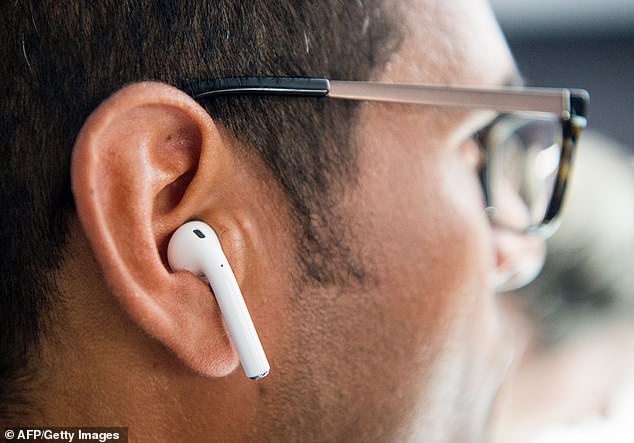
    Tiny wireless Bluetooth headphones fit into the ear canal
    250 scientists from over 40 countries have signed a petition to the WHO and UN to warn against radio wave radiation from wireless technologies
    The close proximity of AirPods to the brain and inner ear may raise cancer risks
    Little research exists on Bluetooth and its health effects but it also uses radio waves radiation
    Plus, AirPods talk to one another using a magnetic field that passes through the brain
    An expert says there is little research on this but ‘can’t imagine it’s all that great for you’

    Scientists are growing increasingly concerned over the potential health risks of wireless technologies which, they say, national and international regulations ‘fail’ to limit.

    And new technologies are arriving every day – and customers can’t buy them fast enough.

    Apple’s wireless AirPods, for example, ‘communicate with one another using a magnetic induction field, a variable magnetic field [one] sends through your brain to communicate with the other,’ explains Dr. Joel Moskowitz.

    Dr. Moskowitz, a University of California, Berkeley community health professor who focuses on cell phone exposures, says there isn’t even research on what this could do to the brain yet, let alone regulations to limit the potential effects.

    ‘But I couldn’t imagine it’s all that great for you,’ he says.

    Wireless technologies are simply outpacing both research and regulation – and it could have disastrous effects on our health.

    A petition warning that microwave radiation from many popular wireless technologies may pose health risks has gathered 250 signatures.

    While the scientific jury is still out on the whether or not particular devices cause cancer, animal studies on the kind of radiofrequency radiation that they emit – which is used in Bluetooth, cellular and wifi transmissions – has suggested a link to cancer.

    And, in some cases, the levels of radiation found to be carcinogenic were significantly lower than the maximum allowed by federal and international guidelines.

    Last year, Apple sold 28 million pairs of its tiny, white wireless earbuds. The year before, they sold 16 million pairs. With a new design reportedly on the way, the technology company is set to profit even more on sound.

    Together, Apple and Beats wireless headphones account for 40 percent of the product market.

    But the devices could be pumping more than beats into wearers’ heads.

    AirPods – like most small wireless bud-style headphones – wirelessly connect with a phone via Bluetooth, the popular short distance radio communication technology.

    Essentially, anything that communicates wirelessly using electromagnetic energy waves of varying types.

    Bluetooth operates on one form involving low-power radio waves.

    The most obvious and well-established risk of radio waves is that, at high levels, they can generate heat and cause burns. Scientists are still working out the effects of long-term exposure to lower-power radiowaves.

    When they have exposed animals to this form of radiation, reproductive, neurological and genetic damage has become more common in those animals that would be expected in a normal sample of the same animals.

    These forms of energy are powerful enough to shake up atoms that compose cells but not powerful enough to fundamentally change their structures.

    This means that radio waves are less dangerous than higher energy radiation like X-rays or UV, but more extremely low-frequency radiation.

    Last year, further evidence that cellular transmissions may indeed cause certain kinds of cancer was published by the National Institutes of Health (NIH).

    Now, scientists calling for more oversight and warnings for all manner of radio wave-based technologies are particularly concerned over the intensity and proximity of Bluetooth radiation to the human ear canal and brain.

    The International Agency for Research on Cancer has declared electromagnetic field radiation a possible carcinogen.

    WiFi, too, has been shown to pose cancer risks.

    The World Health Organization (WHO) has developed guidelines for the level of electromagnetic frequency (EMF) that various devices are allowed to expose users to.

    But, the authors of the petition to the UN and WHO argue, research has revealed evidence that EMF may be carcinogenic at even lower levels.

    And brain cancers are among the forms that research links to EMF radiation.

    Their petition is written with regard to broad human exposures to EMF radiation.

    ‘These include – but are not limited to … devices such as cellular and cordless phones and their base stations, Wi-Fi, broadcast antennas, smart meters, and baby monitors as well as electric devices and infrastructures used in the delivery of electricity that generates an extremely-low-frequency electromagnetic field (ELF EMF),’ the authors write.

    The petitioners stop short of naming Bluetooth or any particular products, the technology does use radiofrequency radiation, and AirPods in particular also uses an electromagnetic field.

    Very little research has been conducted on Bluetooth itself, but the proximity of AirPods to the brain makes them particularly concerning.

    ‘Since Bluetooth tends to be low-intensity it could open the blood-brain barrier, which evolved to keep large molecules out of the brain,’ explains Dr. Moskowitz.

    The concern here is ‘probably more neurological disorders and diseases as opposed to cancer,’ he adds.

    Related research on cancer and EMF has also revealed that cell phone radiation – which is not unlike that which comes from Bluetooth may cause non-cancerous tumors to form along the nerve that connects the brain and the ear.

    Plus, the magnetic field the two AirPods use to talk to each other must pass through the brain.

    ‘From a precautionary standpoint, I would argue you shouldn’t experiment with your brain like this by keeping these kinds of wireless headphones on your head or in your ears,’ says Dr. Moskowitz.

    ‘You’re conducting a health experiment on yourself, and current regulations are completely oblivious to these kinds of exposures.’

    A great deal more research needs to be done to clarify the exact risks associated with each kind of EMF, but the petitioning scientists believe that our current use of these technologies throws caution dangerously to the wind and they want to hold regulators accountable.

    ‘The various agencies setting safety standards have failed to impose sufficient guidelines to protect the general public, particularly children who are more vulnerable to the effects of EMF,’ they wrote.

    ‘By not taking action, the WHO is failing to fulfill its role as the preeminent international public health agency.’

    source

  • Hipsters mostly look alike. There’s math to prove it

    Hipsters mostly look alike. There’s math to prove it

    You can spot a nonconformist a mile away. Because they all look alike. Just ask mathematician Jonathan Touboul, an associate professor at Brandeis University.

    Like the rest of us, Touboul has noticed that people who strive to look different usually end up looking the same. He’s even given it a name: “the hipster effect.” But Touboul has gone one step further, by coming up with a mathematical explanation for why it happens.
    ouboul’s dense, bewildering paper on the hipster effect has made him a celebrity in the abstruse world of higher math. And the premise of his work was ironically confirmed when it was written upon MIT Technology Review, a website run by the Massachusetts Institute of Technology.

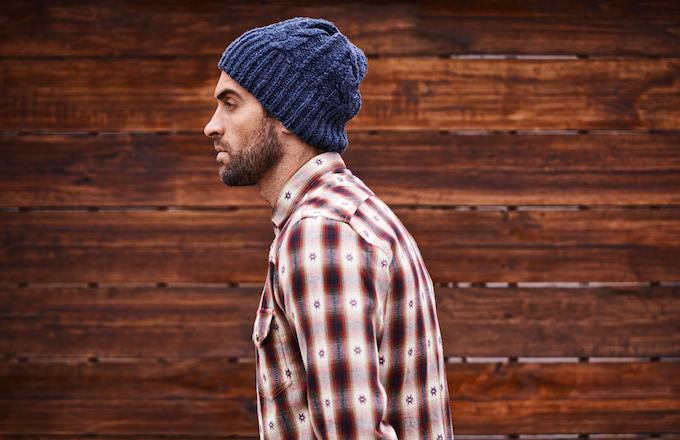
    A reader of the review article threatened to sue, claiming that his photo had been used without permission to illustrate the story. Only it wasn’t the reader’s photo, but a generic image of a plaid-shirted, bearded hipster purchased from a stock-photo agency.
    Touboul specializes in using mathematics to understand the functioning of neurons, the cells that form the connections in our brains, and which can also be simulated by computers. He works with researchers studying Parkinson’s disease, hoping to find ways to relieve symptoms by synchronizing the functions of a patient’s neurons.

    “I was looking for a way to explain it that people would relate to,” Touboul said, “so I came up with this idea of hipsters.”

    He began working on the hipster effect as a side project in 2014, publishing his work on ArXiv, a website where scientists post papers that aren’t yet ready for traditional peer-reviewed journals. MIT Technology Review discovered Touboul’s work only recently, after he posted a major update, featuring more than 20 pages of math.
    Touboul created a neural network where some of the neurons would behave like conformists, usually — but not always — doing what the majority does.

    Others would act like hipsters, usually — but not always — making fashion choices that were the opposite of what the conformists would do.

    The neurons are designed to behave with certain randomness because Touboul has found that this makes it more likely they’ll synchronize. He also added a time delay, so that it would take a while for the conformists and hipsters to recognize changes in fashions. This corresponds to real life — even the most fashion-forward hipster may not hear about some new trend for weeks or months.

    When he ran the model, Touboul found that, after a while, he achieved the synchronization he was looking for. The conformist neurons would automatically approve of whatever fashions were favored by the majority. But in their effort to go their own way, the hipsters would also end up synchronizing around a variety of clothing or hairstyles that these neurons perceived as “different.” Over time, the hipster neurons would realize that their fashion choices were actually quite predictable. When this happened, they would abandon their now-unfashionable look and synchronize around something different.

    For instance, Touboul wrote in his paper, “if a majority of individuals shave their beard, then most hipsters will want to grow a beard, and if this trend propagates to a majority of the population, it will lead to new, synchronized, switch to shaving” on the part of hipsters because beards have become the norm. In this way, wrote Touboul, they “actually create the trends they will soon try to escape.”
    Like most of us, Lichfield doesn’t fully understand the math, but he buys Touboul’s hypothesis. “Intuitively what he’s saying makes sense,” he said. And if intuition wasn’t enough, there was that bizarre e-mail from the reader convinced that he saw himself in the photo of a stranger.

    “Hipsters look so much alike,” Lichfield tweeted, “that they can’t even tell themselves apart from each other.”

    source

  • Desperate Venezuelans swarm sewage drains in search of water

    Desperate Venezuelans swarm sewage drains in search of water

    CARACAS (Reuters) – As Venezuela’s five-day power blackout left homes without water, Lilibeth Tejedor found herself looking for it on Monday in the last place she would have imagined – a drain pipe feeding into a river carrying sewage through the capital, Caracas.

    Tejedor, 28, joined dozens of people who had flocked to the Guaire river, which snakes along the bottom of a sharp ravine alongside Caracas’ main highway, to fill up a four-gallon (15 liter) plastic container.

    Unlike the fetid liquid flowing through the Guaire river, the water emerging from the pipe was at least clear. Those who gathered to collect it said the water had been released by local authorities from reservoirs.

    They added, however, that it was being carried through unsanitary pipes and should only be used to flush toilets or scrub floors.

    “I’ve never even seen this before. It’s horrible, horrible,” said Tejedor, preparing to carry the container on a small hand cart back to her home in the neighborhood of San Agustin.

    Tejedor, who works at a computer technology store, has a two-year-old daughter and takes care of two nieces.

    “The ones that are most affected are the children, because how do you tell a child that there’s no water?” she said.

    The lack of water has become one of the most excruciating side effects of the nationwide blackout that the government of President Nicolas Maduro has blamed on U.S.-backed sabotage but his critics call the product of corruption and incompetence.

    The blackout has worsened the situation of a country already facing a hyperinflationary economic collapse that has spurred a mass migration and turned once-basic items like corn flour and toilet paper into unaffordable luxuries for most people.

    After five days without electricity to pump water, Venezuelans from working-class neighborhoods to upscale apartment towers are complaining of increasingly infrequent showers, unwashed dishes, and stinking toilets.

    Caracas needs 20,000 liters of water per second from nearby watersheds to maintain service, said Jose de Viana, an engineer who ran Caracas’ municipal water authority in the 1990s.

    Last week that had fallen to around 13,000 and since Thursday’s blackout it has halted completely, he said.

    ‘KILLING US’

    Many worry about the spread of disease. The lack of water compounds the inability to buy soap due to soaring prices or chronic shortages.

    Opposition leader Juan Guaido, who in January invoked the constitution to assume the interim presidency after declaring Maduro’s re-election a fraud, led the country’s legislature on Monday in declaring a “state of alarm” overpower problems.

    Maduro is facing an unprecedented political crisis and the United States, which backs Guaido, has levied crippling oil industry sanctions meant to starve the government of its sources of foreign revenue.

    Up the road from where Tejedor stood, hundreds of angry residents blocked the highway on Monday to demand that local authorities deliver a 20,000-liter cistern to supply water to the neighborhood of La Charneca.

    “They’re killing us with hunger and thirst,” said Gladys Martinez, 52, a homemaker, who joined the demonstration that blocked two lanes of the highway, snarling traffic and drawing dozens of police and National Guard troops to the scene.

    Along the riverbed, teenagers and children accompanied their parents to help carry water. As two children began stomping in the sewage, a woman warned them: “That water’s dirty! Don’t start playing around because remember there’s no medicine.”

    Water trucks, a common sight in Caracas, are increasingly struggling to fill up because state-run reservoirs are running low.

    On the northern edge of Caracas, where the city meets the El Avila national park, hundreds of people lined up to collect water from mountain streams.

    Lack of water, along with the power outage, has become a major concern for hospitals – which have for years suffered from lack of equipment and supplies.

    Jose Velez, 58, a security guard who also arrived at the Guaire to collect water, said the blackout had made life unbearable and wished the country’s politicians would agree on how to resolve the situation.

    “I’m not interested in these politicians, they never agree on anything,” said Velez. “I want my life to go back to normal.”

    source