Author: Truth & Hammer

  • Plastic, Metal, Glass… Does it really matter what my water bottle is made of?

    Plastic, Metal, Glass… Does it really matter what my water bottle is made of?

    The other day, my tennis friends and I were taking a water break between games. It was interesting. Looking around the group, three of us had water bottles and one was drinking from a paper cup our club provided. I had a glass bottle, Robin had a plastic bottle, and Tracy had a metal bottle. Hallee was drinking from the paper cup. One of us noticed the different containers, sparking a conversation about which one is the healthiest.
    I was in the bottled water business several years ago. I discovered what qualities make water healthy, as well as which type of container is preferable. That was back in 2009. (For our purposes here, we’ll be strictly talking about water bottles, water quality will be another post!) The bottle I packaged my water in was a biodegradable plastic, that is BPA-free. I thought the biodegradable aspect was so cool, as I’m an avid environmentalist. And the plastic was assured to be BPA-free. That should be ok, right? Not exactly. What I’ve discovered since that time is that plastic manufacturers have responded to the public concerns over the toxic, hormone-disrupting BPA by creating a different plastic called BPS. But, guess what? It’s got the same properties of leaching toxins and disrupting our delicate balance of hormones (in both men and women, by the way). Additionally, plastics have been linked to premature sexual development in girls, as well as causing insulin resistance and weight gain in all of us.
    I love this excerpt from one of my favorite groups I follow, Mind Movies: “Being holistic is not just about eating organic food and practicing yoga. It’s a lifestyle where you actively look to remove anything that’s toxic from your life.” Of course, we gather all sorts of toxins daily, whether it’s environmental, nutritional, emotional, mental, or spiritual. The point is, it’s a proven fact that our overuse of plastics is detrimental to our health and our environment. I hate to use any plastic containers anymore. I don’t know about you, but it’s just not worth it to me to expose myself to fat-causing and ill health-promoting toxins!
    I used to reuse my plastic water bottles for a while, but that’s just not a good idea either. Bacteria can collect on a reused plastic bottle, and isn’t able to be washed off. So, plastic water bottles = toxins in our bodies, hormone disrupters, and potential bacterial exposure, if reused. And if you leave your plastic bottle in a hot car, that makes the chemical leaching issue even more severe.
    What about metal water bottles? Aluminum can also leach BPA. Stainless steel is probably a better choice, if it’s not made in China.
    The general consensus of the experts I follow point to glass as the safest choice for you and your family’s water bottles. It doesn’t leach any chemicals and it can be effectively washed with hot water and soap.
    I usually buy Voss bottled water and clean it and refill it with my home ionized and filtered water. I also recently discovered, from a friend of a friend, a new ergonomic glass bottle at www.lovemycool.com.
    The things that are important: we all need to drink at least ½ of our body weight in ounces of water each day, and we need to choose the healthiest and least toxic container for that water – glass. Cheers to a healthy, hydrated, less toxic body!!

    This content was originally published here.

  • Good Judges Matter

    Good Judges Matter

    When we turn on the radio, flip on our televisions, and go online, we are being bombarded with political discourse. Whether it is candidate advertising, news coverage, debates or social media discussion, the Election is everywhere we turn.

    The one thing we do not hear much about is judicial elections.

    Judges have more power than you might think and well beyond civil justice. Judges help determine the strength and growth of communities. Unfortunately, personal injury lawyers often team up with bad judges and compromise the fairness of our courts. There are judicial hellholes across the country that are plagued by bad judges who are under the influence of personal injury lawyers.

    This is why good judges matter. Judges have the power to sanction personal injury lawyers who game the system and file frivolous lawsuits that have no real connection to the state where they are filed. We know firsthand in my state – Illinois. Out-of-state person injury lawyers have flooded our state to take advantage of judges who favor them. Judges have the power to dismiss frivolous lawsuits and prevent personal injury lawyers from gaming the system, but too often bad judges turn a blind eye. We need judges whose actions can help spur job growth by maintaining fairness in their court rooms.

    Voters need to pay attention to judicial elections and pay special attention to who is funding the campaigns. In many cases, judges receive the vast majority of their campaign contributions from personal injury lawyers. These lawyers know they can cash in on frivolous lawsuits when they have the judges they want in the courtroom. In Illinois, personal injury lawyers have essentially turned the courts in several of our downstate counties into their own personal – and profitable – playgrounds.

    Stopping lawsuit abuse starts with us casting votes for good judges to serve in our courts. Make your vote count on November 8th.

    Travis Akin is the Executive Director of Illinois Lawsuit Abuse Watch.

    The post Good Judges Matter appeared first on Sick of Lawsuits.

    This content was originally published here.

  • Hailey Bieber Frustrated By Justin’s ‘Possessive’ Fans

    Hailey Bieber Frustrated By Justin’s ‘Possessive’ Fans

    Hailey Bieber isn’t too keen on Justin Bieber‘s “possessive” fans.

    The model recently opened up to Cosmopolitan about some of the challenges of being married to the “Sorry” singer, naming his fans has a top contender. It’s not all Justin’s fans that Hailey takes issue with, however. She said it’s mainly the fans that “think they know” Justin that leave her “frustrated.”

    “The problem is kids become possessive over people and feel like if they thing they’re hurt, they feel hurt for them and they’re hurt too, or whatever it is. They just think they know these people who are famous because their life is so exposed. And that’s what gets me, I think, the most frustrated,” she explained. “I’m like, ‘You actually don’t know me. You don’t know him. You don’t know these people for real.’”

    Hailey continued, “What’s really weird to me is they create scenarios in their head of what they think is happening, or what they think should happen, and I’m just like, ‘This is just so dumb. It’s so dumb.’”

    Dealing with fans is somewhat new to Hailey, however. After she and Justin got engaged in July, Hailey and Justin faced many negative comments from the singer’s fans. She’s learning how to cope, however.

    “I’ve found that I got to a place where I don’t read the comments. People can just be mean, and I feel like if you don’t want it to get to you, then don’t read it and allow it to affect your soul. You still care to a certain extent. You really have to train your brain to be like, ‘OK, why do I even care?’” She said. “I don’t know these people, they don’t know me, they’re not a part of my life or relationship.”

    Justin has been focusing inward as well. Sources recently told ET Online that the pop star is struggling with depression. He’s “taking everything day by day,” according to the source.

    “He’s very focused on being happy and healthy and that always comes with recognizing when he needs help or not. Justin and Hailey have been enjoying traveling and relaxing and not doing too many things that are stressful for Justin. He’s in a good place right now and that’s most important.”

    The 19 Quickest Celebrity Engagements

    Source

    http://popcrush.com/hailey-bieber-frustrated-justin-bieber-fans/

  • Sleep helps to repair damaged DNA in neurons, scientists find | Science | The Guardian

    Sleep helps to repair damaged DNA in neurons, scientists find | Science | The Guardian

    Ernest Hemingway prized sleep for good reason. Not one to dwell on rest and recuperation, the novelist saw snoozing as a form of damage limitation. “I love sleep,” he once said. “My life has the tendency to fall apart when I’m awake.”

    The author’s observation might be truer than he imagined. In a new study, scientists found that broken DNA builds up in brain cells in the daytime, and that repair work only reverses the damage during sleep.

    “I think this is one of the key reasons we need to sleep,” said Lior Appelbaum from Bar-Ilan University in Israel. “An offline period gives us time to clean everything up for the next day, to give us a fresh start before we are busy with wakefulness again.”

    For an act so universal, sleep has enormous benefits. Found in organisms from flies and worms to jellyfish and humans, it restores the body and helps learning and memory. But despite intensive research, the purpose of sleep is still mysterious.

    Appelbaum and his student, David Zada, reasoned that if sleep had evolved in all organisms with a nervous system, from the simplest to the most complex, then it might be working at the level of individual neurons.

    To find out, they genetically engineered small, transparent zebrafish so that the chromosomes in their neurons carried colourful chemical tags. The researchers then used a powerful, specialised microscope to watch how the chromosomes moved in the neurons, and how often DNA was broken, when the fish were awake and asleep.

    When the fish were awake, the chromosomes did not move much and broken strands of DNA built up in the neurons, as part of the normal wear and tear of life. If the fish were sleep-deprived, by tapping on their tank for example, some of the neurons accumulated so much genetic damage they were in danger of dying off.

    But, when the fish fell asleep, the picture changed. The scientists noticed that the chromosomes changed shape far more often in sleeping fish, and that DNA damage in their neurons plummeted. The same happened when the researchers added a sleep-inducing drug to the fish tank water, causing the fish to fall asleep in the daytime.

    Appelbaum said that chromosomes are constantly changing shape to allow the cells’ natural repair mechanisms to mend DNA damage at different points. When awake, the repair work cannot keep up with the rate at which damage builds up, but in the calm hours of sleep, the repair mechanisms have a chance to get on top of the job.

    “It’s surprising, because the brain goes into a rest state, but the chromosomes move about twice as much during sleep,” said Appelbaum. “There is repair going on in the day, but sleep allows you to catch up,” he said. The process is akin to local councils patching up potholes at night when the traffic has eased.

    “I propose that, when we are very tired, neurons accumulate so much damage that they signal the whole brain that we have to go to sleep to fix the damage and avoid going into an unsafe zone,” he added. The study is published in Nature Communications.

    Having spotted the effect in zebrafish, the researchers now want to study mice to see if chromosome movement and DNA repair matches brain activity linked to different phases of sleep in mammals.

    The work follows a January study by Siu-Wai Choi at Hong Kong University who used blood samples to show that sleep deprivation led to more DNA damage in doctors. She said Appelbaum’s work revealed how DNA breakages accumulate in waking hours and decrease during sleep, only to build up again the next day.

    “It is clear from this study that chromosome dynamics during sleep has an essential role to play in repairing damaged DNA,” she said. “Though these results were obtained in an animal model, together with other studies conducted in humans, it does give us food for thought with regard to our lifestyle choices, shift working patterns and long-term health.”

    Source

    https://www.theguardian.com/science/2019/mar/05/sleep-helps-to-repair-damaged-dna-in-neurons-scientists-find

  • Pacific Northwest timber industry: As prices slide, job fears grow

    Pacific Northwest timber industry: As prices slide, job fears grow

    Lumber prices have plummeted over the past 10 months, casting an uncertain pall on a sector that’s been a harbinger of economic downturn in the past. It’s worrying news for Cowlitz County, home to more forest product jobs than any other county in the state.

    After peaking at $582 per 1,000 board feet in May 2018, the price of Douglas fir is down to $390 this month, according to Nasdaq commodities data, and experts are unsure of what to expect next.

    “We’ll see some slowness this year, maybe continuing into 2020, but then longterm the potential is still there for growth,” forecasts Daniel Stuber, vice president of operations at Forest2Market, which reports on the industry. But that growth is far from certain.

    Prices reached record highs last year and the drop could be a rebound back to normal, Stuber said. But global tariffs are slowing lumber exports, and investments in the southern U.S. could make Pacific Northwest lumber less competitive. And there are troubling hints of slowing housing construction, with housing starts and building permits both lower this year than in 2018.

    If construction continues to stall, the 12,300 Cowlitz County residents whose jobs are tied to logging and wood products processing could be the first to feel an economic slowdown that has the potential to reach far beyond local sawmills.

    That’s what happened 12 years ago, when the price of wood was one of the first hints that a major recession was on the way, said Cindy Mitchell, public affairs director for the Washington Forest Protection Association.

    “Back in 2007, log prices dropped really quickly,” Mitchell said. The subprime loans that would be blamed for fueling the Great Recession were still readily available, and public data did not yet hint of the coming economic chill. But builders and lenders were growing wary about the future, and as they hesitated, log and lumber prices fell.

    Mitchell does not think the current slump marks a repeat of last decade’s economic collapse, but, like Stuber, she is keeping a close watch on housing starts.

    Applications for new home construction building permits were down 1.4 percent compared to a year ago, according to U.S. Census Bureau figures released Friday. Construction of new homes and apartments in January dropped by 7.8 percent compared to a year ago.

    “People who are building multi-family housing are on the forefront of what is happening with log and lumber prices,” Mitchell said. “And everything is connected.”

    Brian Hatfield, who previously represented Cowlitz County as a state senator and now serves as Forest Products Sector lead for Gov. Jay Inslee, said he remains optimistic. Prices are down compared to last year — but they still are higher than the average over the past few years. After all, lumber prices were at all-time highs last May.

    “We may just be seeing a correction from the mid-2018 historical spike in lumber prices,” Hatfield told The Daily News in an email.

    As the experts look at the future of lumber pricing, they seem to agree that Chinese tariffs and California wildfires have had little impact so far.

    The forests hardest hit by last year’s fires were largely U.S. government-owned and off-limits to logging because of environmental protections, according to Forest2Market. Though more than 11,000 homes were destroyed in the deadly Camp Fire conflagration, that’s a small blip nationally. If all the houses destroyed were replaced, they’d comprise less than 1 percent of the 1.5 million housing units U.S. builders are on track to complete this year.

    China instituted a 10 percent tariff on U.S. lumber last year, and raised that to as high as 25 percent at the start of 2019. But mills largely took the export tax in stride.

    Washington, which ranks No. 2 in the U.S. for lumber production, has not been hard hit by the tariffs, Mitchell said. “Our producers are primarily making lumber for housing in the United States,” she said.

    Less than 1 percent of U.S. lumber is exported to China, Stuber said. “It would be ignorant to think these tariffs are not having any effect,” he said. “But it’s not much.”

    And companies that do export lumber, including Weyerhaeuser Co., have already bounced back from China’s tariffs. In a call with investors in February, Weyco President and CEO Devin W. Stockfish said revenue from exports to China is steady over the past year. “Demand has been steady since the tariffs were imposed,” he said. More significant than China’s tariffs on U.S. lumber may be American tariffs on Canadian wood.

    In 2017, the Trump administration imposed tariffs that average 20 percent on Canadian wood imports. British Columbian producers decided to import less and start investing in U.S. forest products instead, Stuber said.

    “They are primarily looking in the U.S. South, where a lot of Canadians are investing in new saw mills and saw mill technology,” he said. “The South has low log costs compared to the Pacific Northwest, so they are not investing in your region.”

    Weyerhaeuser, which owns forestland both in Canada and across the U.S., has made similar calculations. CEO Stockfish told investors last month that the company expects to primarily expand wood processing in the South. “With the South, log costs are lower than they are in the West and in Canada,” he said.

    As those new high-tech southern saw mills start to come online, that could make it harder for Washington’s mills to compete, Stuber said.

    “Log costs are 50 percent to 70 percent of a mill’s costs, and the U.S. South has lower log costs than the Pacific Northwest,” he said. “If we go into an economic slowdown and lumber prices stay low, that’s a problem for your region. It could translate to fewer jobs out there.”

    But that’s far from certain, Stuber added — and if Northwest log prices drop, the trend could reverse.

    “We at Forest2Market are predicting that we’ll see 2019 down compared to last year,” he said. “But the long-term fundamentals are still there to see growth in the market over the next five years.”

    Source

    https://www.columbian.com/news/2019/mar/24/pacific-northwest-timber-industry-as-prices-slide-job-fears-grow/

  • Public debt in Africa rises to $707b in 2017

    Public debt in Africa rises to $707b in 2017

    … Ghana’s public debt rose to 145% in the same year

    Not long ago the ‘Africa Rising’ narrative was in vogue. The continent was touted as the next big thing with prospects of high economic growth, leading to job creation and prosperity. Flames of hope were stirred for the continent imbued with some of the most precious sought after natural resources, like gold, diamond, cocoa, coffee, copper, cobalt, uranium, oil and gas.

    But that hope soon dipped, turning into despair, as the indicators for the predicted economic boom slumped, Africa became desperate and gasping for breath, countries on the continent, in spite of the abundant resources, including human, turned to what most of its leaders thought was the only way out – seek loans! With rising debt, the continent is now being suffocated and some countries are in distress with others facing the risks of debt distress.

    Africa’s stock of public external debt averaged about $309 billion over 2000–2006 and then rose further to $707 billion in 2017, with a 15.5 per cent increase from 2016 alone.

    The Economic Report on Africa, notes that in 2017 debts rose to the highest levels in Eritrea (131 per cent of GDP), Cabo Verde (126 per cent), Sudan (126 per cent), Gambia (123 per cent), Congo (119 per cent), Egypt (103 per cent) and Mozambique (102 per cent). At the same time, ratios of public debt to GDP have been rising steadily, giving rise to worries about sovereign defaults and fiscal vulnerabilities, it says.

    The Report by the Economic Commission for Africa, released March 23, 2019 at the ongoing 52nd Session of the Conference of African Ministers of Finance, Planning and Economic Development, in Marrakech, Kingdom of Morocco paints a distressing picture of the debt situation in Africa.

    According to the Report, public debt rose in Africa in 2017, reaching 59.1 per cent of GDP. The high and rising debt created debt vulnerabilities for many African countries.

    “About 40 per cent of low-income countries now face debt servicing challenges, and an increasing number of countries are at high risk of debt distress or in debt distress. Five countries are in debt distress today (Chad, Mozambique, South Sudan, Sudan and Zimbabwe) compared with none in 2014,” it said.

    And for Ghana, the public debt rise was close to 145 per cent between 2010 and 2017 (from $9 billion to $22 billion), the Report said.

    The Report shows that with 16 African countries in debt distress or high risk of debt distress, low government revenue is the most common factor, pointing out that to ensure debt sustainability, countries need to increase the mobilization of tax and non-tax revenue and deepen the domestic capital market with increased reliance on local currency—denominated loans.

    The Report indicates that with the slowdown in economic growth and low commodity prices, Africa’s fiscal deficit also peaked at 11.3 per cent of GDP in 2015 before declining to 5.0 per cent in 2018.

    “As one of the instruments used by many African countries to partly finance their fiscal deficit, total public debt (general government gross debt) also increased, from 40 per cent of GDP in 2012 to 59 per cent in 2017. However, Africa’s average debt to GDP ratio conceals widely different experiences, in part reflecting different resource endowments. The median public debt increased most noticeably among oil-exporting countries. Public and publicly guaranteed debt soared from an average of just over 20 per cent of GDP in 2011–2013 to 57 per cent in 2017. A similar level of public indebtedness was recorded in non-resource-rich economies with a history of government borrowing,” it said.

    It indicates that Cabo Verde’s high public debt reflects the government’s fiscal policy focus since 2005 on expanding the tax base and increasing public investment.

    “These policies reduced the fiscal deficit (from 5.6 per cent in 2015 to 4 per cent in 2017), but domestic resource mobilization fell short of spending targets. Government borrowing increased, aimed at addressing the public expenditure challenges, declining productivity and restructuring of public enterprises, as well as the negative effects of external shocks (including weak economic growth in Europe, which reduced tourism),” the Report said..

    In West Africa, the Report finds that Benin’s public debt exceeded 50 per cent of GDP, while Ghana’s borrowing rose even higher, from 39.2 per cent of GDP in 2004–2008 to 71.8 per cent in 2017.

    According to the Report, most of the rise reflects increased external borrowing by middle-income countries, with five of the six largest economies on the continent accounting for more than half of public external borrowing in 2017. South Africa borrowed $176 billion externally, followed by Egypt at $82 billion, Morocco at $49 billion, Nigeria at $40 billion and Angola at $37 billion.

    The total debt stock was lower in some of the frontier markets than in middle-income countries, but the increase over the past few years was nonetheless considerable. For instance, Ethiopia’s external debt stock rose more than 250 per cent, from $7.3 billion in 2010 to $26.5 billion in 2017. Kenya’s pace of external debt accumulation was similar, with external debt stocks rising from $8.8 billion in 2010 to $26.4 billion in 2017 (nearly a 200 per cent rise).

    “Ghana’s public debt rise was close to 145 per cent between 2010 and 2017 (from $9 billion to $22 billion),” it said.

    Authors of the Report note that the increase in external debt accumulation raises concerns about debt sustainability in many African countries, especially as external debt stocks have risen much faster than economic growth owing to rising interest rates in international capital markets.

    While it is expected that the debt levels would drop or even level, there is need for African countries to put in place among others, policies to address the need for resource mobilization and responsible governance that enables transparency and accountability, doing business as usual would not address the issues that has brought the continent to this route.

    By Emmanuel K. Dogbevi, in Marrakech, Morocco
    Copyright ©2019 by Creative Imaginations Publicity
    All rights reserved. This article or any portion thereof may not be reproduced or used in any manner whatsoever without the express written permission of the publisher except for the use of brief quotations in reviews.

  • Treasury Inversion and Political Fed Cycles

    Treasury Inversion and Political Fed Cycles

    With so much news hitting the wires regarding the Treasury Inversion level and the “potential pending recession”, we wanted to shed a little insight into this phenomenon and what we believe the most likely outcome to be going forward.  Our researchers, at Technical Traders Ltd., believe the Treasure inversion is a reactionary process to overly tight US Fed monetary policies, consumer demand factors and outside cycle forces.  There is very little correlation to inverted Treasury levels and causation factors other than the US Fed and global central banks.  We believe consumers and consumer sentiment also play a role in setting up the conditions that prompt yield inversion.  The one aspect we believe everyone fails to consider is the uncertainty that is associated with major US election cycles.

    The US Fed is obviously a driving force with regards to yields and consumer expectations.  In the past, the US Fed has rotated FFR levels up and down by enormous amounts (in some cases 200 to 500%+ over very short spans of time.  Consumers, you know those people, the ones that are the actual driving force of the local and state level economies, have been the the ones having to deal with wildly rotating FFR levels and the consequences of their debt rotating from 4~7% average interest rates to 8~25%+ average interest rates over the span of just a few years.

    Take a look at this chart that highlights the current and previous US Federal Reserve FFR rate changes.  It is quite easy to see that consumers and business, on the receiving end of these changes, often swing from one extreme to another as the US fed makes these dramatic moves.  And, yes, that last 2400% number is correct.  The FFR went from 0.06% to 2.4% over the past 3+ years – do the math yourself if you don’t believe us.

    Let’s talk about how the US economy operates as a host to the global economy for a second.  When the US economy is booming, it exports growth, opportunity, and activity to the rest of the world.  When the US economy is contracting, it exports contraction, diminishing opportunity and slower economic activity to the rest of the world.  This may be a bold statement to make, but it is true.  For the past 80+ years, the US economy has been the “mothership” of the global markets in terms of creating and exporting growth and opportunity for foreign nations.

    The US Fed, therefore, has an incredible responsibility to safely navigate the current and future global expectations with regards to FFR levels and yield levels as the global economy expands and contracts with political, trade and social issues.  It is a very difficult process to navigate for anyone.

    US Presidential Election cycles also play an important role in how these expansion and contraction cycles take place.  Anyone with any understanding of Music understands each note includes an “Attack” and “Decay” process.  The same thing takes place in economic cycles.  Within the Attack phase, the economy builds strength, capability, and output, just as the musical note does.  Within the Decay process, the economy begins to wain in strength, capability, and output, just as the musical note does.  The process within the global economy is very similar to an orchestra of musical instruments playing difference components of the music output.  Some play loudly and dramatically, others play softly and more demure.  The outcome is a finely balanced and enjoyable musical presentation.  The global economy is very similar to this and right now we are starting to see a slower, softer period of economic activity throughout the global economy.

    Currently, the US is starting a new Presidential Election cycle where dozens of Democrats are lining up against President Trump.  This is sure to be a battle that will rival “Rocky II” in terms of scale and scope.  It is also starting far earlier than most normal mid-term Presidential election cycles.  This is one of the biggest reasons we believe the Treasury yields may stay rather muted for the next 12+ months while the end of the “attack phase” plays out for the global economy.  Eventually, the “decay phase” will begin within the global economy and we’ll start the process of waiting for the US Fed and central banks to rally opportunity with lower rates and possibly QE ventures.

    We’ve highlighted the US Presidential Election “run-up” cycles (the hyperbole 16-month process that takes place before the actual elections) in BLUE on these charts.  It is fairly simple to see that the combination of the US Fed rate levels, US political controlling party policies and consumer sentiment related to these policies and economic factors have driven yields higher or lower throughout the past 50+ years.  In fact, the US and the Globe have recently transitioned from more of a regionally localized global economy to more of a centrally functioning global economy.  One thing has not changed, though, the US is still the largest of the global economic drivers and will continue to be for the foreseeable future.

    When we take into consideration how these yield contractions have resulted in asset price changes in the US stock market, we need to compare these moves in yield with the expectations of traders, investors, and capitalists throughout the world.  Remember, the US stock market is currently, and has been, a pool asset valuation protection for global investors throughout the planet.  Over the past 40+ years, the US economy has exported opportunity and capacity throughout the globe while global investors have continued pour capital into US stocks, Bonds and Debt because of the strength of the US Dollar.

    Our expectations are that the yield inversion, much like the inversion near 1980/1990 is the precipice of a renewed economic expansion as the planet develops new 21st-century trade, economic and political ties while shedding the 19th-century shackles that are currently binding it to obligation and debt originating from the 1960s through 1980s.  This transition period may be fraught with some dramatic price swings in assets, stocks and economic output levels.  Yet, we believe the outcome of this process will be a fantastic opportunity for skilled traders to find and execute tremendous upside pricing opportunities once it completes.

    We have been completing a series of market cycle research that focuses on the alignment and timing of core global cycles.  By our research, 2027 and 2048 are key years for the global markets.  We believe 2027 will likely be a breakout year where the global markets align for an incredible upside price increase and we believe 2048 could be the year that the global economies exhibit some type of “metamorphosis” in terms of capacity and function.

    In short, we believe these current inverted yields are nothing more than a “symptom” of the current political and US Fed FFR interest rate climate in combination with the current global economic output capacity and consumer sentiment.  To put it simply, after the US Fed raised rates by 2400%+ and the current trade and political issues are still unresolved – where do you expect yields to be moving?  Right, into further contraction while the US Fed tightens monetary policy and consumers react by tightening their spending.

    Once the trade issues are resolved and the US Fed adopts a bit of easing in terms of current rates, we may continue to see have another year of wild and choppy market condition much like 2015, and 2018, but that all depends on what type of resolution there is with the current trade issues.

    We’ll keep you informed of our research and longer-term date cycles as we continue to extract more concrete data from our research.  If you like our research and can clearly understand the value of having a team of dedicated market technicians and researchers working for you to help you find and execute better trades, then please visit www.TheTechnicalTraders.com to learn how we can help you.  This US presidential election cycle is going to have top billing for the next few months – get used to it and get used to the fact that the markets and yields will likely do what they always do within these cycles – muted price rotation where underlying fundamentals and consumer sentiment will likely drive future pricing.  Stay tuned and watch precious metals.

  • Mitch McConnell Just Blocked Senate Vote To Release Full Mueller Report, Doesn’t Want Americans To Know The Truth

    Mitch McConnell Just Blocked Senate Vote To Release Full Mueller Report, Doesn’t Want Americans To Know The Truth

    Since the very beginning of the 2-year long Mueller probe, the American public has been impatiently waiting for its release. And while Mueller has officially completed his investigation, we are still left disappointed and with a multitude of unanswered questions.

    After the conclusion of Mueller’s investigation, the Special Counsel sent the report to Attorney General Bill Barr, who released a measly 4-page “summary” of the finding over the weekend — a summary that most are calling extremely influenced by partisan sentiment, considering the ties that the Barr family has and continues to have to POTUS.

    Since then, Americans have been rallying with hashtags and petitions, urging for the report to be released in its entirety to not only members of Congress but to the general public, as well. Trump and his family, as well as members of his administration, have made cryptic remarks about the report’s release, but no one has yet to produce anything. If Senate Majority Leader Mitch McConnell has anything to do with it, the contents of that report are never going to see the light of day.

    As of this afternoon, McConnell has blocked a non-binding resolution to make the full report of the investigation conducted by Special Counsel Mueller public. Of course, the resolution was passed unanimously and without question in the House. But once it made its way to McConnell’s side of the fence, it was quickly shot down — with the Senator citing national security as his reasoning behind the decision and asserted that Attorney General Barr should be given adequate time to decide what parts, if any, of the report, should be made public.

    Senate Minority Leader Chuck Schumer, who was responsible for putting forth the resolution for transparency, pointed out that the resolution did not even specify a time frame, and thus would not be limiting Barr’s ability to consider it extensively.

    Honestly, this comes as no surprise. Trump has been running his mouth all over social media and to reporters about his supposed “exoneration” but lo and behold, his cronies are blocking the release of the report at every given turn. Someone should tell him, you only have things to hide when you’re guilty.

    Featured image via DC Tribune gallery 

  • Matter waves and quantum splinters

    Matter waves and quantum splinters

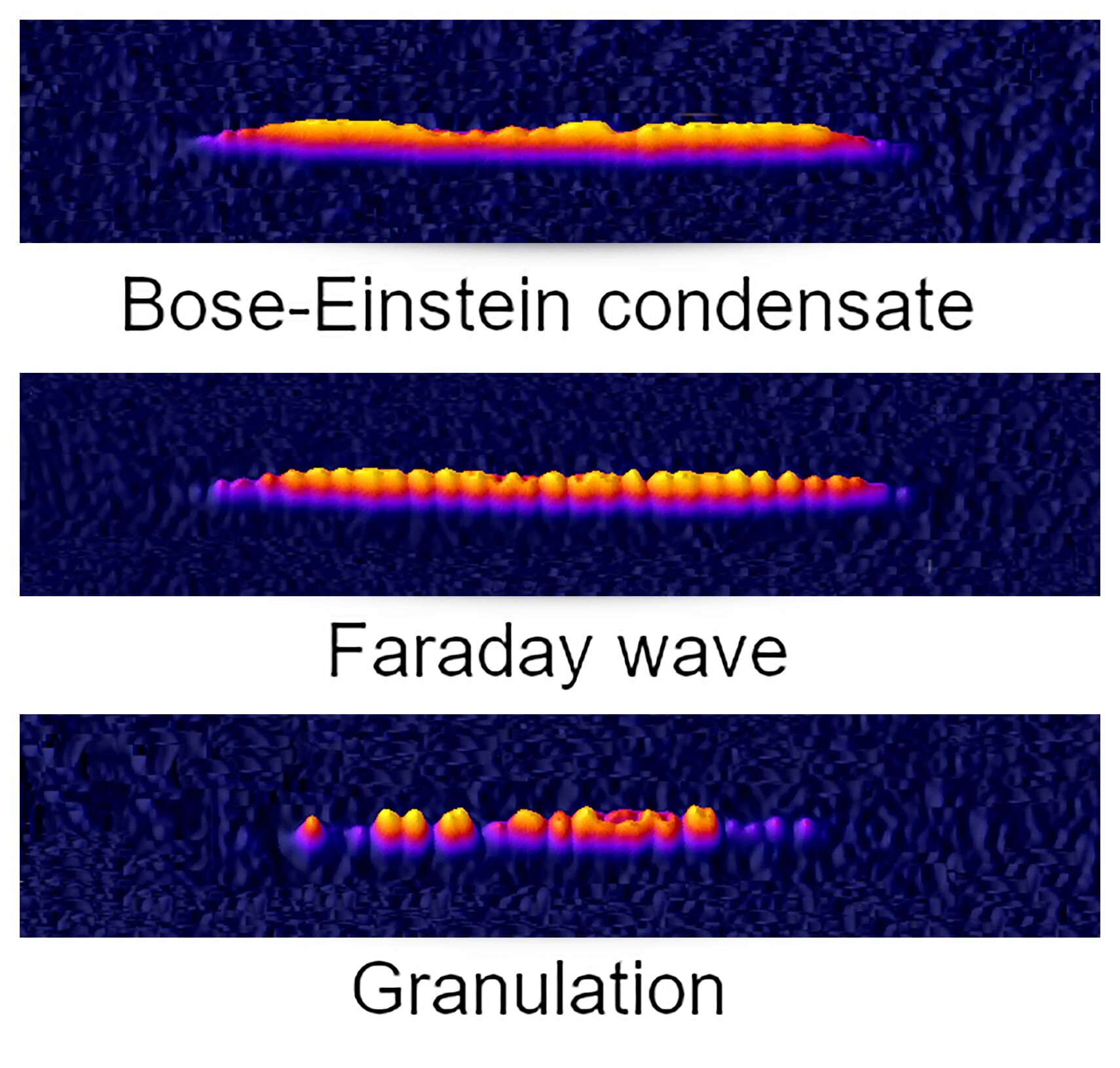
    Physicists in the United States, Austria and Brazil have shown that shaking ultracold Bose-Einstein condensates (BECs) can cause them to either divide into uniform segments or shatter into unpredictable splinters, depending on the frequency of the shaking.

    “It’s remarkable that the same can give rise to such different phenomena,” said Rice University physicist Randy Hulet, co-author of a study about the work published online today in the journal Physical Review X. Hulet’s lab conducted the study’s experiments using lithium BECs, tiny clouds of ultracold atoms that march in lockstep as if they are a single entity, or matter wave. “The relationship between these states can teach us a great deal about complex quantum many-body phenomena.”

    The research was conducted in collaboration with physicists at Austria’s Vienna University of Technology (TU Wien) and Brazil’s University of São Paulo at São Carlos.

    The experiments harken to Michael Faraday’s 1831 discovery that patterns of ripples were created on the surface of a fluid in a bucket that was shaken vertically at certain critical frequencies. The patterns, known as Faraday waves, are similar to resonant modes created on drumheads and vibrating plates.

    To investigate Faraday waves, the team confined BECs to a linear one-dimensional waveguide, resulting in a cigar-shaped BEC. The researchers then shook the BECs using a weak, slowly oscillating magnetic field to modulate the strength of interactions between atoms in the 1D waveguide. The Faraday pattern emerged when the frequency of modulation was tuned near a collective mode resonance.

    But the team also noticed something unexpected: When the modulation was strong and the frequency was far below a Faraday resonance, the BEC broke into “grains” of varying size. Rice research scientist Jason Nguyen, lead co-author of the study, found the grain sizes were broadly distributed and persisted for times even longer than the modulation time.

    “Granulation is usually a random process that is observed in solids such as breaking glass, or the pulverizing of a stone into grains of different sizes,” said study co-author Axel Lode, who holds joint appointments at both TU Wien and the Wolfgang Pauli Institute at the University of Vienna.

    Images of the quantum state of the BEC were identical in each Faraday wave experiment. But in the granulation experiments the pictures looked completely different each time, even though the experiments were performed under identical conditions.

    Lode said the variation in the granulation experiments arose from —complicated relationships between quantum particles that are difficult to describe mathematically.

    “A theoretical description of the observations proved challenging because standard approaches were unable to reproduce the observations, particularly the broad distribution of grain sizes,” Lode said. His team helped interpret the using a sophisticated theoretical method, and its implementation in software, which accounted for quantum fluctuations and correlations that typical theories do not address.

    Hulet, Rice’s Fayez Sarofim Professor of Physics and Astronomy, and a member of the Rice Center for Quantum Materials (RCQM), said the results have important implications for investigations of turbulence in fluids, an unsolved problem in physics.

    More information: J. H. V. Nguyen et al, Parametric Excitation of a Bose-Einstein Condensate: From Faraday Waves to Granulation, Physical Review X (2019). DOI: 10.1103/PhysRevx.9.011052

    Source

    https://phys.org/news/2019-03-quantum-splinters.html

  • The Genetics of Acne

    The Genetics of Acne

    Acne is a complex skin disease that develops due to several factors, including inflammation, abnormal skin cell growth, an overproduction of skin oil, and an overgrowth of bacteria inside clogged pores, all of which lead to the development of an acne lesion.

    Each of the factors that lead to acne is controlled by one or more genes. A gene is a DNA molecule inside the nucleus of our body’s cells that contains the information the body uses to make proteins that have specific functions in the body. Humans have between 20,000 and 25,000 genes in each cell.

    Often, multiple genes can work together to provide information as a team. When it comes to acne, to date researchers have not been able to identify a single gene that is at fault. Instead, it is likely that several genes are at play in the numerous processes that lead to acne, and researchers are currently tracking down clues.1,2

    Genetic Predisposition

    In order to understand the research investigating which genes may lead to an increased susceptibility of acne, it’s important to grasp the concept of genetic predisposition. Genetic predisposition is an increased probability of developing a disease due to the genes you inherited from a parent. A genetic predisposition for acne means that a person has a genetic make-up that may increase the chance of that person developing acne during their life.

    However, if a person has a genetic predisposition for acne it does not mean that they will definitely develop acne. This is because the manifestation of genes is often controlled through lifestyle choices, like diet, exercise, or smoking. For example, if two people have the same genetic predisposition for acne but widely different lifestyles, one may develop more severe acne than the other, or one may develop acne and the other may not.2

    The Science: A Look at the Studies Identifying Genes That May Increase the Genetic Predisposition for Acne

    Scientists use five approaches to identify genes that may increase the likelihood of developing acne. All of these approaches work by comparing the genetics of groups of people with acne to the genetics of groups of people without acne. These five approaches include:

    In these studies, scientists are looking at mutations in genes. A mutation is any change in a gene. When it comes to acne, the researchers are looking for mutations in the DNA of genes between those with and without acne. As acne is a complex disease involving numerous factors, a mutation in a single gene is thought to only have a small effect on the likelihood that a person will develop acne. However, mutations in several genes may significantly increase the genetic predisposition to acne.2 

    Family heritability studies 

    This is an early type of study, beginning at the start of the 20th century, that first gave us a glimpse at the fact that acne is a genetic disease. These studies looked at multiple generations of a family to see if acne is passed down from generation to generation, andwere performed by asking multiple generations of a family to fill out a questionnaire with questions regarding their acne symptoms. Then, if multiple people within a family had similar acne symptoms, the researchers would conclude that the disease could be inherited from parents. It turns out there was a strong correlation.

    Interestingly, the researchers concluded that people with acne tended to physically resemble ancestors that also had acne compared to their ancestors without acne. In fact, one researcher claimed that he was able to predict whether a child would develop acne based on how similar a child resembled another relative with acne. Although this claim is likely overstated, these early studies were important in identifying that genetics may impact acne.3

    Twin studies 

    In 1984, scientists began using twin studies to research genetics and acne. Twin studies using identical twins are especially useful at identifying the impact of genes and lifestyle on acne because identical twins are genetically identical. This means that an identical twin has the same genes and gene mutations as their twin. Therefore, if both twins have acne it is likely due to a genetic predisposition found in both twins, but if only one twin has acne, then it is likely due to a lifestyle difference between the twins.

    Researchers have performed two twin studies to research genetics and acne and have concluded that acne is “uniformly influenced by genetic factors.”In other words, acne is genetic.

    Large population studies 

    Researchers have performed several studies examining the differences between large groups of people with and without acne. Specifically, acne affects 80 to 90% of the population in Western countries, while acne tends to be much lower or even nonexistent in isolated hunter/gatherer populations. 

    This research has found that acne is a disease that begins between ages 10-12, and gradually increases until ages 16-18. In most cases, it resolves itself usually by the early 20s. However, acne persists into the adult years in some individuals, and these individuals often have a strong family history of acne, and therefore likely a genetic predisposition for the disease.3

    Genetic studies

    Genetic studies are performed by looking at individual genes to identify and characterize which mutations lead to an increase of a disease.

    Researchers have been able to identify 10 genes that may increase a person’s genetic predisposition to acne (Table 1).

    Most of these genes produce proteins that are involved with the immune system’s response to acne and hormone production. As inflammation and hormones are two of the main drivers of acne development, scientists were not surprised that genes for the immune system and hormones were the ones linked to a genetic predisposition for acne. However, since acne is a complex disease it is likely that there are more genes involved with acne that scientists have yet to identify.3,5,6

    Researching genetic syndromes associated with acne

    There are several diseases that are associated with an increased risk of developing acne. Researchers believe that it is likely that the genetic mutation(s) that cause these diseases also lead to the development of acne. These disorders include:

    For example, polycystic ovary syndrome (PCOS) leads to increased male hormone levels in females and this also causes an increase in the number of acne lesions. Therefore, scientists are beginning to study these diseases to identify genes that may also trigger the development of acne.7

    Source

    https://www.acne.org/the-genetics-of-acne.html