Author: Truth & Hammer

  • Captured for first time in space breakthrough

    Captured for first time in space breakthrough

    Imagine something that is a cosmic trapdoor from which neither light nor matter can escape!

    Astronomers have captured the first image of a black hole, heralding a revolution in our understanding of the universe’s most enigmatic objects.  The picture shows a halo of dust and gas, tracing the outline of a colossal black hole, at the heart of the Messier 87 galaxy, 55m light years from Earth.  The black hole itself – a cosmic trapdoor from which neither light nor matter can escape – is unseeable. But the latest observations take astronomers right to its threshold for the first time, illuminating the event horizon beyond which all known physical laws collapse.  The breakthrough image was captured by the Event Horizon telescope (EHT), a network of eight radio telescopes spanning locations from Antarctica to Spain and Chile, in an effort involving more than 200 scientists.

    Sheperd Doeleman, EHT director and Harvard University senior research fellow said: “Black holes are the most mysterious objects in the universe. We have seen what we thought was unseeable. We have taken a picture of a black hole.”  France Córdova, director of the US National Science Foundation and an astrophysicist, said that the image, which she had only seen as it was unveiled at the press briefing she was chairing, had brought tears to her eyes. “We have been studying black holes for so long that sometimes it’s easy to forget that none of us has seen one,” she said. “This will leave an imprint on people’s memories.”  The image gives the first direct glimpse of a black hole’s accretion disc, a fuzzy doughnut-shaped ring of gas and dust that steadily “feeds” the monster within.

    The EHT picks up radiation emitted by particles within the disc that are heated to billions of degrees as they swirl around the black hole at close to the speed of light, before vanishing down the plughole.  The halo’s crescent-like appearance in the image is because the particles in the side of the disc rotating towards Earth are flung towards us faster and so appear brighter. The dark shadow within marks the edge of the event horizon, the point of no return, beyond which no light or matter can travel fast enough to escape the inexorable gravitational pull of the black hole.  Black holes were first predicted by Einstein’s theory of relativity – although Einstein himself was sceptical that they actually existed. Since then, astronomers have accumulated overwhelming evidence that these cosmic sinkholes are out there, including recent detection of gravitational waves that ripple across the cosmos when pairs of them collide.

    read more


  • Gardening Highlights From Tennessee – FineGardening

    Gardening Highlights From Tennessee – FineGardening

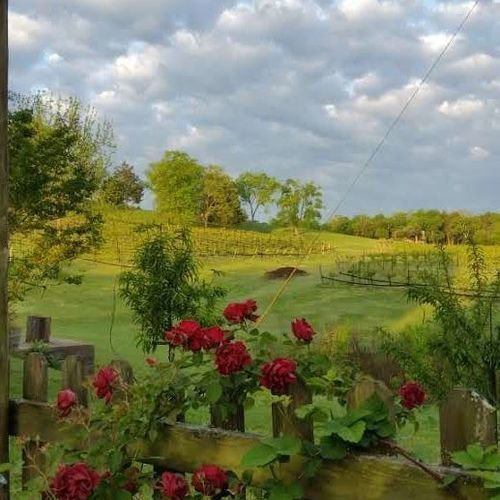
    Today we’re heading to Arrington, Tennessee, to visit Laurel Nash Prothro’s garden. Greetings! I just wanted to send a few highlights from my gardening year 2018, and I am excited to send you progress pics on an interesting landscape undertaking—think wine villa but in Tennessee! I’m a jewelry designer and silversmith working also as a garden and container designer. I’m also on the board of the Williamson County, Tennessee, Master Gardeners. Happy gardening 2019! Check out that view! Who knew Tennessee was so ridiculously beautiful? It looks like a scene out of a classic landscape painting. Grapes! Destined, I take it, to become wine. Wine grapes are being grown in more and more different places in the United States. They’re not just for California anymore. When the surrounding landscape is this beautiful, make it part of the garden! This red rose on a fence is just an accent to the dramatic clouds and beautiful scenery beyond. A beautiful container, with perennials such as the hosta in the back, creeping jenny ( Lysimachia nummularia ‘Aurea’ Zones 3–9 ) trailing over the edges, and a bright annual impatiens ( Impatiens hybrid) to add flower power. Perennials can stay in containers from year to year, or be planted out elsewhere in the garden in the fall. Hard at work, with plants heading off to their new homes. A rustic, informal garden space, with bright flowers from a daylily ( Hemerocallis hybrid) and coneflower ( Echinacea hybrid). A gardenia ( Gardenia sp., Zones 8–11) in full bloom, surely making the entire space smell like heaven. Elephant ears ( Colocasia gigantea,  Zones 8–10 or as an annual) are usually grown for their absurdly huge leaves, which bring a tropical look to the garden. If they’re happy, they’ll also produce these unusually shaped white flowers for added interest. Have a garden you’d like to share? Have photos to share? We’d love to see your garden, a particular collection of plants you love, or a wonderful garden you had the chance to visit! To submit, send 5-10 photos to  GPOD@finegardening.com  along with some information about the plants in the pictures and where you took the photos. We’d love to hear where you are located, how long you’ve been gardening, successes you are proud of, failures you learned from, hopes for the future, favorite plants, or funny stories from your garden. If you want to send photos in separate emails to the  GPOD email box  that is just fine. Have a mobile phone? Tag your photos on  Facebook,   Instagram  or  Twitter  with #FineGardening! You don’t have to be a professional garden photographer – check out our  garden photography tips ! Do you receive the GPOD by email yet?  Sign up here. Get our latest tips, how-to articles, and instructional videos sent to your inbox.

    This content was originally published here.

  • Hollywood legend Audrey Hepburn was a WWII resistance spy

    Hollywood legend Audrey Hepburn was a WWII resistance spy

    She was one of Hollywood’s most celebrated actresses. But Audrey Hepburn had a role that few knew about: spy.  And unlike the characters that she portrayed on screen, playing this part could literally mean life or death.  The maddeningly private actress, who died in 1993, had dropped hints about her work with the Dutch Resistance during World War II, and now a new book puts the whole story together, providing an in-depth look at her life during the conflict.  Robert Matzen, author of “Dutch Girl: Audrey Hepburn and World War II” (GoodKnight Books), combed secret files, talked to Hepburn’s family and tracked down diaries to uncover new information.



    The biggest surprise to many will be Hepburn’s work with the Dutch Resistance against Nazi occupation. She certainly seemed an unlikely hero.  For starters, she was just 10 years old when World War II broke out. For another, her parents were infamously pro-fascist — though the realities of Nazi occupation would ultimately change her mother’s mind.  Hepburn was born in Belgium in 1929 to an upper-class family. Her father worked in finance, and her mother, Baroness Ella van Heemstra, was a Dutch noblewoman.  In 1935, her father walked out on the family and moved to London. The abandonment stung Hepburn.  ‘My parents divorced when I was 10, and my father disappeared and all that. But we didn’t have any money at all.’

    “I think it is hard sometimes for children who are dumped,” Hepburn would later say. “I don’t care who they are. It tortures a child beyond measure. They don’t know what the problem was. Children need two parents for their [emotional] equilibrium in life.” Hepburn spent a few years at a posh private school near Dover, England, but with war brewing, her mother thought it best for her and her daughter to relocate to Holland. Hepburn left England for the Netherlands in December 1939 at age 10.  Despite Ella’s noble title, the family was not wealthy. The family’s grand ancestral home, where Hepburn’s grandfather lived, was rented.  “My mother didn’t have a dime,” Hepburn once said. “My parents divorced when I was 10, and my father disappeared and all that. But we didn’t have any money at all.”

    Hepburn’s mother took a job selling furniture, and she and her daughter settled into a modest apartment in Arnhem, a city in eastern Holland.  Van Heemstra had been a supporter of the Nazis. She once wrote in a National Socialist newsletter, “Well may Adolf Hitler be proud of the rebirth of this great country and of the rejuvenation of the German spirit.”  She and her husband had even met privately with the Fuehrer in Munich in 1935.  Germany invaded the Netherlands in May 1940. Troops surged over the border, quickly occupying towns and villages.  Almost overnight, public signs were switched to German and swastika flags began flying.

    read more


  • ‘Measles parties’ to give their kids the virus so they become immune

    ‘Measles parties’ to give their kids the virus so they become immune

    Why is the old way becoming the only way?  You would think by now maybe there is a better way to cure some of these viruses.  Filling us with  hordes of vaccines is proving not to work.

    The movement against the MMR vaccine, which protects against measles, mumps and rubella, is largely thought to stem from the work of Andrew Wakefield.  The now discredited UK doctor penned a damning research paper claiming a link between the MMR vaccine, autism and bowel disease.  The study was retracted in 2010 but the paper has had a lasting influence with the “anti-vaxxer” movement particularly taking off in America.  And the movement has sparked concern amid the current measles outbreak in New York – the largest the city has seen since 1991.  It is believed misguided parents are hosting “measles parties”, encouraging their young, un-vaccinated children to spread measles with the idea that once a child has contracted it, they will be immune.  The “parties” are similar to “pox-parties” where kids were encouraged to contract chickenpox from each other . These were popular before the introduction of the varicella vaccine in 1955.  It is now widely recognised by health officials that vaccinating a child is far safer than deliberately infecting them.

    MEASLES OUTBREAK

    The measles virus is highly contagious and in some cases can lead to death.  The city’s health commissioner said she was “particularly concerned” about these parties and urged parents to get the MMR vaccine for their children.  She said: “I understand that parents may be afraid of getting their children vaccinated.  “I know that getting vaccinated is far safer than getting measles.”  According to the NHS, the MMR vaccine is “a safe and effective combined vaccine that protects against 3 separate illnesses – measles, mumps and rubella (German measles) – in a single injection.  “The full course of MMR vaccination requires 2 doses.  “Measles, mumps and rubella are highly infectious conditions that can have serious, potentially fatal complications, including meningitis, swelling of the brain (encephalitis) and deafness.”

    source

  • Deputies surround burglar in Oregon home, find out suspect is Roomba trapped in bathroom

    Deputies surround burglar in Oregon home, find out suspect is Roomba trapped in bathroom

    WASHINGTON COUNTY, Ore. (KATU) – Deputies responding to a 911 call for a “burglary in progress” at an Oregon woman’s home ended up catching the culprit – a robotic vacuum that was trapped in her bathroom.  The initial call came in from someone reporting that a stranger was in her bathroom, and that the person had the bathroom door locked, the sheriff’s office said Tuesday in a post online.  She said she could see shadows moving under the door.  Within minutes several deputies surround the home, calling for a K9 team as backup. They say they could hear a rustling noise coming from the bathroom.  After calling to the “suspect” several times over a loudspeaker, deputies went into the home with their guns drawn. After opening the bathroom door, deputies say they found an automated robot vacuum crashing around on the floor.

    “As we entered the home we could hear rustling in the bathroom. We made several announcements and the ‘rustling’ became more frequent. We breached the bathroom door and encountered a very thorough vacuuming job being done by a Roomba Robotic Vacuum cleaner,” the Washington County Sheriff’s Deputy Rogers wrote in his report of the incident.

    source

  • State Dept. warns Americans of kidnapping risk in 35 nations, including parts of Africa and Mexico

    State Dept. warns Americans of kidnapping risk in 35 nations, including parts of Africa and Mexico

    Washington (CNN)The US State Department has updated its travel advisories for 35 countries with a new indicator to highlight the risk of kidnapping and hostage taking.

    The announcement comes days after American tourist Kimberly Sue Endicott and her tour guide were rescued by security forces after being abducted in Uganda’s Queen Elizabeth National Park.
    High-threat countries including Uganda will now be labeled with a “K” in order to “communicate more clearly to US citizens the risks of kidnapping and hostage taking by criminal and terrorist actors around the world,” the department said Tuesday.
    Travel advisories the following countries have been updated to include the “K” indicator: Afghanistan, Algeria, Angola, Bangladesh, Burkina Faso, Cameroon, Central African Republic, Colombia, Democratic Republic of the Congo, Ethiopia, Haiti, Iran, Iraq, Kenya, Lebanon, Libya, Malaysia, Mali, Mexico, Niger, Nigeria, Pakistan, Papua New Guinea, Philippines, Russian Federation, Somalia, South Sudan, Sudan, Syria, Trinidad and Tobago, Turkey, Uganda, Ukraine (in Russian-controlled eastern Ukraine), Venezuela, and Yemen.
    Endicott and her guide were abducted at gunpoint while on a game drive last week, according to the Ugandan Tourism Board and Ugandan police.
    Four other people were taken at the same time, but they were freed while Endicott and her driver were taken from the park, officials said.
    The State Department said it was aware of the rescue.
    “We are aware of reports that a US citizen hostage was recovered on April 7 by Ugandan security officials,” a State Department spokesperson told CNN. “Privacy considerations prevent us from commenting further at this time.”

    source

  • 103,492 immigrants in March keep Marching In

    103,492 immigrants in March keep Marching In

    Maybe it is time to try China’s program.  You enter the country illegally you go to “re-education camp”.  Let them become educated in the American way.  If that is what they want they should not have a problem with it.

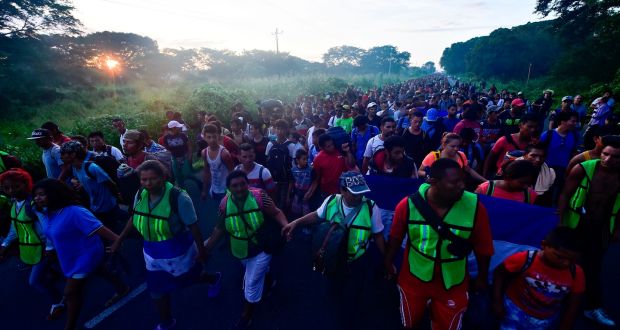
    As the Trump administration has leveled more threats to close the southern border to immigrants, the number of illegal immigrants stopped at the border hit 103,492, the highest in five years, according to just-released U.S. Customs and Border Protection numbers.  The agency seized around 92,607 immigrants at the southern border last month, including 53,000 family units and 8,900 unaccompanied immigrant children.  On individuals, it was an increase of 25,723, or 38% over February. And it was a one-year boost of 55,217, or 148% over March last year, according to a quick analysis by Princeton Policy Advisors.  An earlier version of this story focused on the 92,607, but Border Patrol and the administration said the fuller accounting was 103,492.

    That is the highest number on the Border Patrol chart of apprehensions and inadmisibles. The chart dates to October 2014.  “More than 103,000 migrants were apprehended or deemed inadmissible at the southern border in March,” said an official. “We continue to face an unprecedented and unsustainable surge of migrants flooding to our border,” said the administration in the updated accounting of the numbers.  One said, “#USBP agents apprehended 92,607 individuals along the Southwest border in March—averaging nearly 3,000 apprehensions a day. 76 percent of those apprehended were from 3 countries: El Salvador, Guatemala and Honduras.”  The second said, “#USBP has experienced a rapid increase in family units and unaccompanied children, who make up 62 percent of Southwest border apprehensions. Family unit apprehensions have increased nearly 375 percent compared to the same time period last FY.”

    source

  • Mapping Armaggedon: Earth’s looming tsunamis and mega-quakes

    Mapping Armaggedon: Earth’s looming tsunamis and mega-quakes

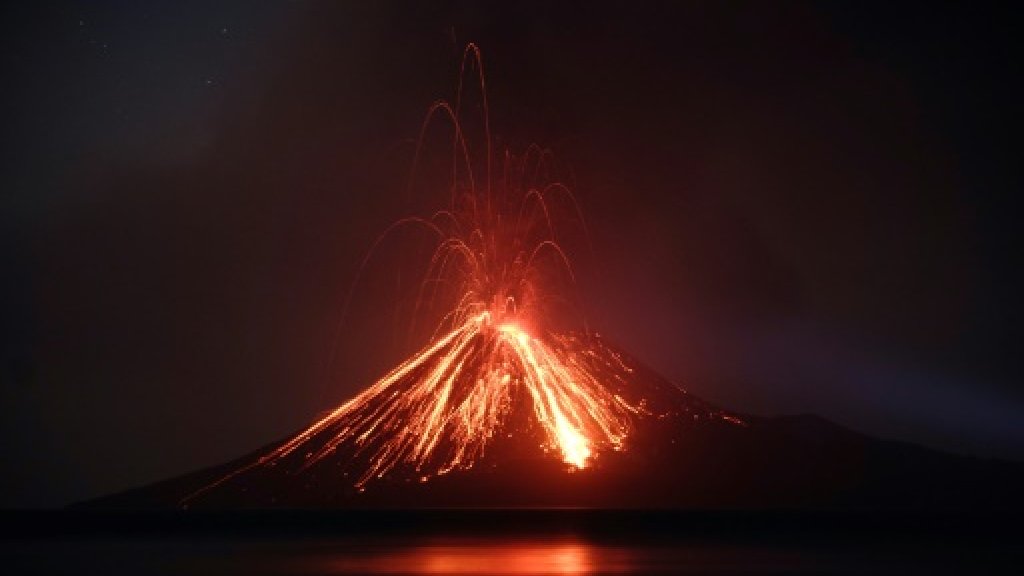
    As villagers along the Sunda Strait were finishing their meals on the evening of 22 December last year, they had no idea of the cataclysmic event that awaited them.  After bubbling on and off for months, the active volcano of Anak Krakatoa erupted, triggering a 0.3-kilometre-cubed sized chunk of rock to plunge into the unusually deep waters off the coast of Indonesia’s west Java and South Sumatra regions.  The resulting tsunami, which hit the coast just minutes after the landslide, killed 437 people and injured 30,000 more.  The killer wave was the most recent of a geological phenomenon that has led to around a quarter of a million deaths in the last two decades alone.  And it won’t be the last.

    According to David Tappin, a marine geologist at the British Geological Society who has spent years examining the causes of tsunamis, there are at least 40 active volcanoes next to oceans around the world that “could be potential Anak Krakatoas”.  “One of the aspects of events such as Anak Krakatoa is that we are now aware of a hazard hovering in the background and there are millions of people who live adjacent to volcanoes,” he told AFP on the sidelines of the European Geosciences Union in Vienna this week.  “But I don’t think anyone has actually looked at the particular hazard those people have except from eruptions. Suddenly, we are aware of this (threat of tsunamis) and hopefully we will do something about it.”

    – ‘Volcanoes still little understood’ –

    Tappin and his team have for the first time modelled in minute detail what happens when a volcanic landslide triggers a tsunami.  When the rock slipped from Anak Krakatoa, it fell into a submarine trough of unusual depth, around 220 metres (720 feet). This triggered multiple, large waves that hit coastlines quickly, with the second or third waves the highest.  Tappin said that there was currently no system to warn civilians of events like the Anak Krakatoa landslide.  “Warning systems in all the world’s oceans are predicated on large earthquakes,” he said. “Volcanoes are still little understood. Anak Krakatoa is really important because suddenly we have an event we can study.”

    – Magnitude-10 quakes –

    The website of the United State Geological Survey states confidently that mega-quakes, those of magnitude 10 or more “cannot happen”. Indeed, the strongest quake on record measured 9.6 on the richter scale and there have only been five quakes stronger than 9 in the last 100 years.  It was long assumed that the tectonic make-up of Earth made magnitude 10 earthquakes planetarily impossible: the plates upon which lands and ocean lie aren’t big enough to provoke such a mega-quake.  But a new analysis based on cutting-edge data suggests otherwise.  Alvaro Gonzalez, a researcher of the Center for Mathematical Research in Barcelona, Spain, found that so-called subduction zones — parts of the Earth where one tectonic plate gets pushed deeper towards the mantle by another — could trigger a 10.4 magnitude quake.  And they happen on average every 2,000 years.  “Such events would produce especially large tsunamis and long lasting shaking which would effect distant locations,” Gonzalez said.

    – ‘Global events’ –

    There is another way to cause a mega-quake on Earth, of course.  Sixty-six million years ago, a space rock up to 80 kilometres (50 miles) across slammed into what is modern-day Mexico, triggering tsunamis, planetary shaking and volcanic eruptions that killed off the dinosaurs and rendered three quarters of all species on Earth extinct.  Gonzalez said that several more recent — albeit much smaller — asteroid impacts had provoked “impact shaking events”.  By analysing existing asteroid telemetry data, he calculated that shaking events larger than 10.5 magnitude from an impact happen once every 10 million years on average.  “There are only very few people who have tried to simulate something like that,” he told AFP.

    “For really, really large earthquakes — 10.5 or larger — those are global events. The (Mexico) impact simulations show that there were several metres of amplitude of ground motion worldwide and especially near the impact and on the antipodes” — the corresponding point on the other side of the globe.  Both Tappin and Gonzalez said existing tsunami warning systems didn’t offer sufficient protection for waves triggered by potential eruptions and mega-quakes.  Referring to the Anak Krakatoa event, Tappin said “it demonstrates yet again the lack of preparedness of countries threatened by tsunamis and highlights the urgent need for better mitigation and warning.”

    sorce

  • No Facebook for China

    No Facebook for China

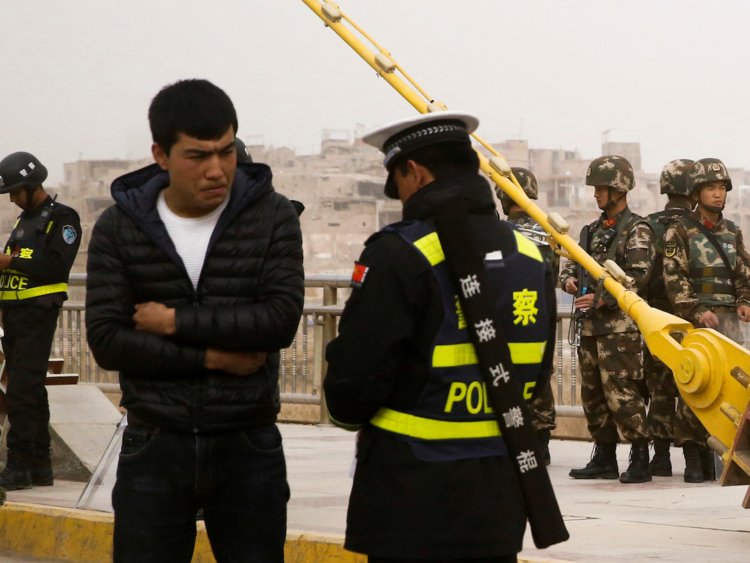
    COPS are sending people to “concentration camps” if they’re found with Facebook on their phones during random stop and searches in China, it is claimed.  Western social media is banned in China’s Xinjiang region where police are accused of seizing residents’ phones and installing spyware.  Pictures uploaded to Twitter show buildings in China that are allegedly being used as ‘re-education’ camps . Offenders are said to be sent to “re-education” camps to clamp down on social media use.  Mandatory spyware is downloaded onto citizen’s phones to restrict what citizens can access.

    And he said living in China is “like Nazi Germany” and likened the Chinese Communist Party to ISIS.  He said: “If you [have] got Twitter or Facebook in your phone, you will be sentenced to 15 years in concentration camps.”  Kasim told The Sun Online: “China doesn’t want you to know what’s happening outside of China, so they’ve built a firewall.  “Police check your phone looking for Facebook, Twitter, Instagram – any app not made in China.  “If they catch you with any of these apps, or in contact with someone abroad – even someone from China who has now left the country – they accuse you of hating communism, of hating China.

    “Almost every police [officer] has handheld equipment they connect to your phone with a USB where they can scan everything on your phone, all your photos, everyone you’ve ever spoken to.  “They transfer everything to their own system, iPhones only take about three minutes to scan – other phones can take hours.”  Images shared by another activist claim to show cops on a tube train approaching passengers to check their phones.  Sun Online has been unable to verify the authenticity of the pictures.

    COPS CHECKING PHONES

    But reports of Chinese police manually checking phones are not uncommon and have been confirmed by rights groups.  Maya Wang, China senior researcher from Human Rights Watch, told Sun Online: “Police [in Xinjiang] are checking people’s phones.  “There have been several testimonies from people who have been detained in these political re-education facilities for using Whatsapp.”  Kasim also shared pictures of what he says are two of these facilities, calling them “concentration camps” and saying he risked his life to photograph them.  He claimed one camp is a now-abandoned hospital that can allegedly hold up to 7,000 people.  Another image shows a white building with high walls and an impenetrable-looking fence.  Political re-education facilities are legal in the region and implemented by the Chinese government as “counter-terrorism measures”.

    Read More


  • Benjamin Netanyahu Is Re-Elected

    Benjamin Netanyahu Is Re-Elected

    Jerusalem (AFP) – Despite corruption allegations and stiff opposition from a new centre party, Israeli premier Benjamin Netanyahu has managed to boost his party’s share of the vote and looks set to keep power.

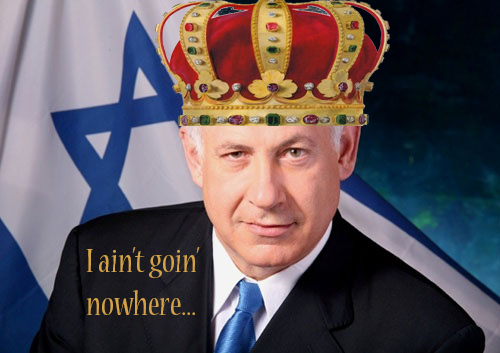
    While his right-wing Likud party and a centrist coalition appear set to have around the same number of parliamentary seats after Tuesday’s general elections, the man called ‘King Bibi’ by admirers has a clear path to forming a coalition.

    The 69-year-old is now likely to form another right-wing government and become the longest-serving Israeli prime minister later this year.

    The elections appear to prove Netanyahu’s enduring domestic appeal despite the graft accusations, and a fifth term in office would have knock-on implications for the peace process with Palestinians and for his potential indictment.

    Speaking after preliminary results were announced early Wednesday, Netanyahu hailed a “magnificent victory.”

    “It will be a right-wing government, but I will be prime minister for all,” he said.

    In Israel’s proportional political system, no party has ever won an outright majority. Instead the largest parties fight to form a coalition of at least 61 members of the 120-seat parliament.

    With ex-military chief Benny Gantz’s centrist Blue and White coalition leading in the polls, Netanyahu pulled out all the stops to shore up right-wing support.

    On March 11 he said Israel was “the national state, not of all its citizens, but only of the Jewish people,” sparking fierce criticism.

    Nearly 20 percent of Israeli citizens are Arabs.

    Then, two days before the election, in a seeming bid to steal votes from other right-wing parties, Netanyahu controversially pledged to annex settlements in the occupied West Bank.

    Critics say any such move would be a final nail in the coffin of the two-state solution, which envisions an independent Palestinian state alongside Israel.

    – Alliance-building –

    In the final days of the campaign Netanyahu was everywhere, giving interviews to all major Israeli media and constantly posting on social media.

    In the end his Likud party far out-performed expectations and is projected to have won around 35 seats, like Gantz.

    Ofer Zalzberg from the International Crisis Group think-tank said Netanyahu understood the right-wing had an inbuilt advantage in Israel and so could stick with his base.

    The right-wing bloc is predicted to have around 65 seats, compared with 55 for the centre and left, similar to the make up of the outgoing parliament.

    Even before the election, all the smaller right-wing parties had pledged to back Netanyahu for prime minister, meaning his victory was always likely, Zalzberg said.

    “He demonstrated again his mastery of alliance-building among the different political tribes of Israel — he is unmatched in this.”

    Dore Gold, a former advisor to Netanyahu, said the secret of his success is that he “understands the DNA of the Israeli voter.”

    With US President Donald Trump’s administration providing unprecedented support, as well as diplomatic breakthroughs in Africa and improving relations with Gulf Arab states, Gold said Netanyahu had improved Israel’s standing in the world without having to give away much in exchange.

    Traditional proposals had predicated improved relations between Israel and Arab states and others on achieving peace with the Palestinians, but Netanyahu has not made that a priority.

    “The people of Israel saw this, that he was not a throwback to the past but had an orientation for the future. That set the stage for an extraordinary election victory,” Gold said.

    – Corruption battle –

    Two major issues face Netanyahu in the coming months.

    The first is the allegations of corruption including receiving thousands of dollars in undeclared gifts, as well as offering legal reforms in exchange for favourable media coverage.

    In February Israel’s attorney general recommended he be indicted on charges of bribery, fraud and breach of trust.

    Netanyahu has consistently rejected the allegations, labelling them a left-wing witch hunt.

    Analysts said the victory could strengthen his hand against the charges, with talk even of introducing a law that sitting leaders cannot be indicted until after their term ends.

    “He is still in survival mode and is likely to try to pass the immunity legislation or find a way to end the indictments against him for once and all,” Hugh Lovatt, Israel analyst at the European Council on Foreign Relations think-tank, said.

    “After the election he can play the democracy card.”

    Israeli policy in the occupied Palestinian territories will also remain a prominent issue.

    Trump is expected to finally present a long-delayed peace proposal in the coming months.

    Details of the plan remain closely guarded.

    Israel occupies the West Bank and east Jerusalem, while more than 600,000 Israeli settlers live there in communities considered illegal under international law.

    Netanyahu has long been sceptical of a two-state solution, saying Israel needs to control Palestinian territory for security reasons.

    “In this election he came out clearly and embraced his ideological opposition to Palestinian freedom,” Palestinian political analyst Diana Buttu said.

    source