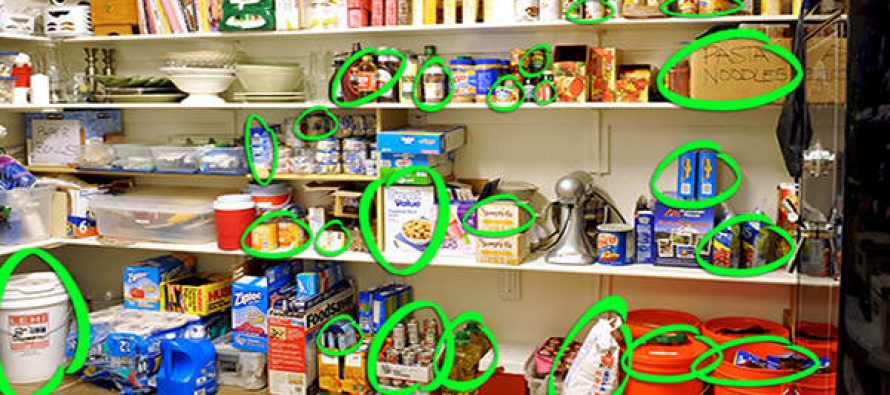
There are many schools of thought on what should be stock piled in the event of a disaster or prolonged period of social disruption or societal collapse. It is hard to say with complete authority what “The best” foods are. This will depend on a number of factors, such as storage space, number of people to be fed, availability of water for preparation, availability of a means to cook foods or heat water, and the list goes on. There are however some standards that can guide pretty much anyone in the right direction. Just be certain that whatever you store, it provides enough calories, a dietary proper balance, vitamins, minerals, and fats. Remember, a crisis has a way of creating situations that will increase your caloric requirements, and that will tax your immune system and electrolyte balance.
When I am going through a grocery store gathering survival food, I get some strange looks from people close enough to hear me muttering under my breath as I discount items. Phrases like “not enough calories”, “needs more fat”, not enough carbs”, and the like roll off my tongue frequently. The truth of the matter is that what we consider to be a healthy diet in normal times is probably inadequate in a high stress, very active, crisis situation. There is a reason we like carbs, and fats, and sugars, and that reason is our body needs these things. The human palate developed in times when being physically active and dealing with life threatening events was the norm, and when a steady supply of food was not a guarantee. Hence the urge to get all we can when we can, which leads to rampant obesity in modern sedentary times but is adaptive to survival in harder times.
So, here is my list of indispensable foods to store in quantity for hard times. I have tried to take into account caloric as well as nutritional content, ease of storage, shelf life, and the intangible of enjoyable to eat. Let’s face it, it doesn’t have to taste good to keep you alive, but it does to keep you happy! Never underestimate the power of a good tasty meal to make things seem better, and never underestimate the power of a positive outlook to help survive in hard conditions!
1. Bulk Dry Goods
Bulk dry goods are a great way to put in a large supply of staples. They should be stored in oxygen purged, food grade buckets with a Mylar bucket liner and O2 absorber for best storage life.
Be aware that some of these, like whole grains, require some processing in order to make the best use of them. So, if you are going to stock things that require processing, be certain to have the tools and equipment required to do the work!
Oatmeal is great stuff! Filling and nutritious, and economical! It is also pretty darn tasty, and if you have some add ons it is easy to dress up for variety.
I like to purchase it in sealed 5 gallon buckets, which yield about 222 servings per bucket. Even with 6 of us in the house each bucket provides a month’s worth of breakfasts. These buckets can be found on EBay, or you can repackage yourself.
 Rice. This is an old standby. It can form the base of many tasty and nutritious meals. Be aware that although it requires no processing, it does require quite a bit of water to cook. It is most economical to buy rice in 40 lb bags and repackage it into buckets yourself, a 5 gallon bucket will hold a 40lb bag. For a bit more you can find rice sold pre-sealed in buckets from a number of sources.
 Beans. Another good staple, and when combined with your rice, some seasoning, and canned meats it makes a great meal! And don’t forget about a big pot of chili when you have meat from wild game or a butchered animal.
Beans can be bought in pre-sealed 5 gallon buckets as well, but it is more economical to buy in large bags and repackage it in buckets yourself. Get a variety of beans, Red, Black, pinto, kidney, according to your taste.
Pastas. Good source of carbs, and a firm foundation for a variety of meals. Even more so than with rice though, be aware of the water required to cook pastas.
They can be stored in buckets, or sealed in vacuum seal food saver bags with an O2 absorber.

Grains. Grains are good for making flour or meal. Wheat and corn are the most common. Bear in mind that you will need a grain mill to process these, and I recommend a good hand mill in case power is an issue. By storing whole grains instead of flour or meal you drastically increase storage life. Again you can buy these in ore-sealed buckets, or repackage bulk purchases yourself to save money. If you want to increase the shelf life even more, you can turn them into flour and then into Hardtacks.
Related: Turning Flour into Hardtack Biscuits With Over 100 Year Shelf Life
 Dried fruits. These are a great addition to your oatmeal or other dishes or just for snacking on.
They can be purchased by the bucket, or in number 10 cans form a variety of online sources. At Costco they have the #10 cans of fruit like pears or apple slices and each of these has 25 servings. 5 of these will cost about $25 and give your family their daily dose of fruit.
Sugar. An infinite variety of uses, a good source of carbs and very cheap. Stock lots stored in 5 gallon buckets.
No matter if white, brown or powdered, sugar it won’t spoil (sugar inhibits microbial growth) as long as it’s stored in an airtight recipient, away from humidity and sunlight.
 Honey. Honey is a great natural sweetener. If you store local honey it is also good to help combat allergies and boost the immune system. It also has first aid uses, it is a natural antibiotic salve.
Honey is one food that never spoils! Although the look of your product will change somewhat over time, it will never actually spoil. It will begin to look yellow and cloudy instead of golden and clear and will get thicker and grainy over time, eventually looking white and hard. But, it is still good. In this form, the honey may have started the process of crystallizing.
To decrystallize honey, place the sealed jar in a warm, non-boiling pot of water and heat the honey. The crystals will dissolve as the honey heats. Do not add water to the honey. This will raise the moisture content and the honey will ferment.
You can also find it in 5 gallon buckets on Amazon for $189, but my guess is that you’ll never need