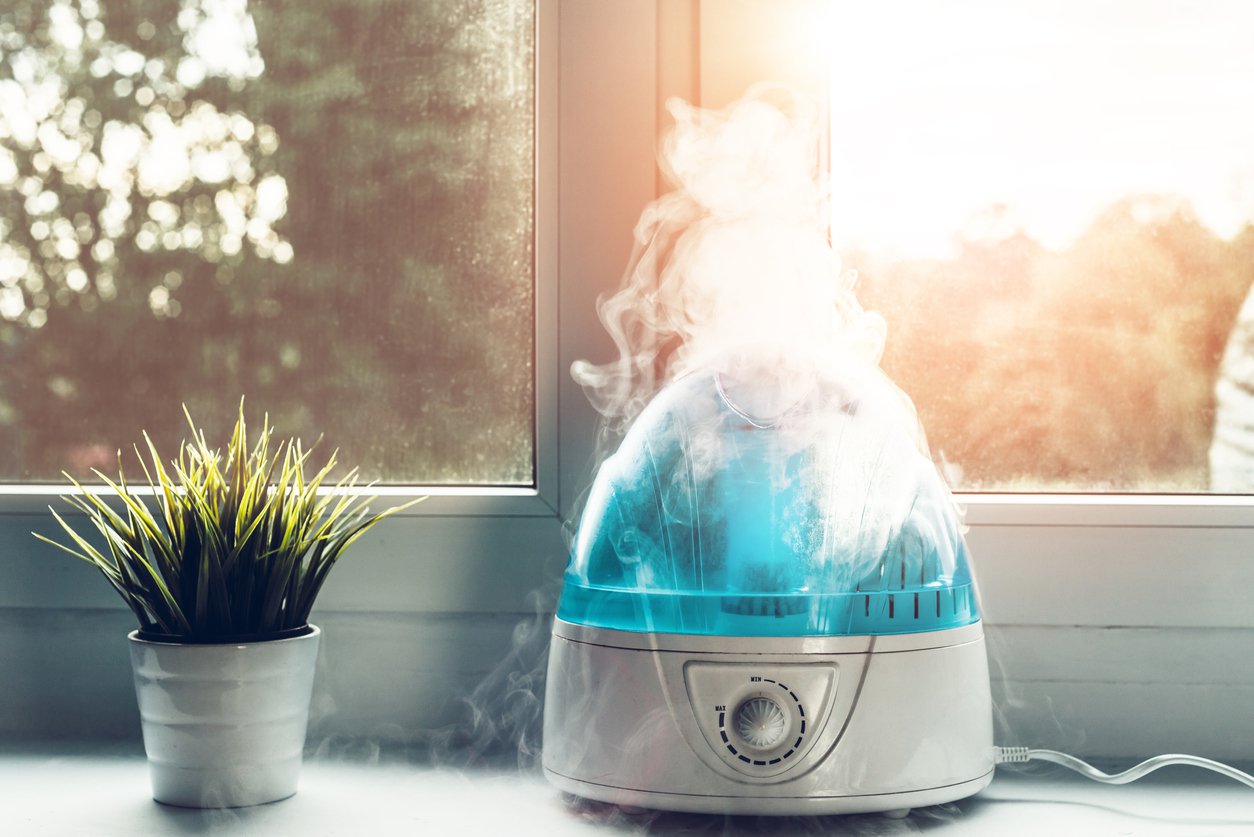
During cold winter months (or in the heat of the summer when your AC is on), you may notice that the air in your home is dry. Just like very humid air could be bad news for your health, dry air may cause nose and eye irritation in otherwise healthy people. One solution is to use a humidifier if the air in your home is too dry. Below, you will learn how humidifiers work, the benefits of using one in your home, and how to choose the right one and use it correctly.
Humidity levels and health benefit
Very dry and very humid air can affect your health and the condition of your home. When air is too humid, it can encourage mold and mildew growth and contribute to health issues, as well as cause potential damage to your home. If you have asthma or another respiratory illness, dry air may make it worse.
The Cleveland Clinic reports that dry air may cause problems including:
Keeping the air in your home from becoming too dry may help with many of these health issues. Depending on where you live, controlling indoor humidity is not always easy. This is where a humidifier may offer benefits. It is best to keep your home’s humidity within an optimal range–not too high and not too low. The Environmental Protection Agency (EPA) recommends that you keep the air in your home between 30 and 50 percent humidity.
Benefits of using a humidifier during sleep
Humidifiers may be beneficial for adults and children during sleep. Sleep itself aids in repair, rejuvenation and maintenance of our immune system. Adding a humidifier to your bedroom can bolster the effects sleeping naturally provides. Here are some of the benefits you can get from sleeping with a humidifier in your room.
Humidifier benefits for snoring and sleep apnea
Humidifiers may help alleviate dry airways that cause snoring. Snoring results from a constricted airway, resulting in a dry mouth and relaxed throat. This dryness causes the respiratory airways to overcompensate by producing more mucus and therefore more constriction and likelihood of uttering an audible vibration such as snoring. Relieving the causes of snoring, such as dry airways, may help those sleep sounder as well (Stuck et al., 2015).
Habitual snoring could very well indicate an underlying problem such as sleep apnea. Typically this breathing condition would be treated with the use of a CPAP machine in the most severe of cases. Those with snoring issues or sleep apnea could benefit from adding a humidifier to the CPAP treatment. The American Sleep Apnea Association suggests adding a heated humidification (HH) with CPAP to mitigate some problematic features of the CPAP. However, research has shown that HH may not influence CPAP users to continue to use CPAP nor improve sleep itself, but it does improve naso-pharngeal symptoms. (Yu et al., 2012). Since the nasopharynx is part of the nasal cavity of our respiratory system, symptoms such as swelling of the lymph nodes or any other obstruction in this area may cause snoring. We can deduce that those who snore from a naso-pharngeal symptom, may find a heated humidifier useful.
Too much humidity can disturb sleep
Studies by NASA indicate that the ideal humidity level for the optimal sleep condition is between 50-60% (Flynn-Evans, Caddick & Gregory, 2016). Though there are benefits to using a humidifier during sleep excessive use may actually disrupt sleep patterns. For example, high humidity alters the perception of the room temperature of an enclosed room; the higher the humidity, the hotter the room feels to us. Conversely, if both humidity and heat are elevated, the sweat response will become disrupted, preventing the natural cooling relief of evaporation when we sweat. This can decrease REM and cause you to stay awake. (Okamoto-Mizuno & Mizuno, 2012)
Humidifier benefits for babies and children
For babies and young children, dry air could cause health issues. Using a humidifier may help keep the air within acceptable moisture levels. The main benefits of using a humidifier for babies and kids include:
Of course, your child does not need to be sick or have dry skin to possibly benefit from the use of a humidifier. Moist air in the right amounts may be beneficial for health and could potentially help keep them from getting sick.
Other humidifier benefits in your home beyond health
A humidifier may provide benefits to your home, as well.
Possible benefits of a humidifier in the spring and summer
Depending on where you live, the weather may have an impact on when the air in your home feels dry. For example, if you live somewhere with high levels of outdoor humidity, you probably run your air conditioner a lot in the summer. Air conditioning may dry out your home’s air. Using a humidifier may help counteract this. If you live somewhere with dry air, a humidifier might be good to use year-round.
Since pollen and mold counts tend to be higher in the spring and summer, using a humidifier in your home may also help keep your sinuses from becoming inflamed.
Which humidifiers to choose?
There are five main categories of humidifiers. Each works in a different way but the end goal for all of them—adequate moisture conditions in your home—is the same. The type you should choose depends on your needs. Let us take a look.
Pros and cons of using cool mist or warm mist humidifiers
Humidifiers release either warm or cool air to help add humidity to a room. Either type could be beneficial, though they each have pros and cons. Which you choose could depend on whether you have children or pets, how big your space is, and your personal preferences.
Some of the benefits and drawbacks of cool mist humidifiers include:
The benefits and disadvantages of warm mist humidifiers are:
Tips for using a humidifier in your home
Any time you use a humidifier, you should take care to use it properly. Not only will this extend the life of your humidifier, it can ensure that you and your home receive benefits and are not adversely affected.

It is clear that dry air can affect your health. Adding a bit of moisture to the air with a humidifier can be an easy solution to this problem. Take care not to use one excessively so that moisture levels are too high, which can encourage mold and dust mite problems. Using an air purifier at the same time can also help improve indoor air quality.
This content was originally published here.