Four extra large (5’ x 7’) double-sided color survival blankets rolled into individual nylon stuff sacks. You can stash single blankets anywhere, or carry enough for your whole group in the included zipper pack with carabiner. No other space blanket comes close to our ultra compact, durable storage – the perfect balance of durability & light weight at only 9.5 oz (only 2 oz per blanket).
PERFECT FOR HIKING, RUNNING, PREPPERS, & CAR FIRST AID KITS – NASA-designed mylar is waterproof and reflects up to 90% of body heat to prevent hypothermia for cold, wet, or hot weather survival and countless other uses year-round. Designed for outdoor adventures to pack away ultralight & compact, our thermal blankets are a must-have for camping, trail running, marathons, 48hr/72hr/30 day go bags, tactical gear preppers, and travel first aid kits.
EXTRA LARGE FOR FULL BODY PROTECTION – Our massive 7×5 foot emergency blankets are 23% larger than standard foil blankets for full body protection. With a little bit of tape and paracord, these XL mylar heat sheets can be converted into an emergency shelter, emergency sleeping bag, emergency bivy, or other survival gear. One of the best gadgets for men for fathers day gifts.
HIGHEST QUALITY MATERIALS FOR SURVIVAL SITUATIONS – Other emergency survival blankets are made flimsy and cheap in ziploc bags for one time use. We’ve tested and designed every detail with the highest quality materials available to create the best emergency blankets you can carry anywhere so you have them when it matters most. Stash these tactical emergency blankets everywhere – in your car, roadside emergency kit, survival kit, first aid kit, bug out bag, zombie survival kit, camping gear, an
100% SATISFACTION GUARANTEED – You won’t find tougher mylar emergency blankets anywhere. Guaranteed. 50% PROFITS TO CHARITY – When you buy from 50/50 Goods, half the profits are donated to conservation efforts around the world.
Dohiker Military Folding Shovel,Shovel Survival Spade Entrenching Tool with Carrying Pouch Metal Handle for Camping, Hiking, Trekking, Gardening,Fishing,Backpacking
4.5cm magnesium rod,easy to make fire and snow excavators, scoops, saws, axes, picks, mulberry, bottle opener, rescue whistle, magnesia rod, fire ice cream, fish knife, hammer, nail pullover , Ruler, wrench, hammer and so on.
Dohiker military folding snow shovel is high alloy steel material. Surface oxidation rust prevention; shovel board 0.18 cm / 0.07 inch, sufficient strength to withstand harsh conditions. Deep cereal non slip handle, make sure the user is comfortable and safe.
Multi-function military survival shovel are 3 types of assembly methods, size can be adjusted 63/47/34 cm; Compact · Rod can be adjusted angle of 45/90/180 °, Portability is convenient for design based on ergonomics , Foldable, removable, with storage bag, easy to install.
Dohiker military folding snow shovel an emergency tool for survival kit suitable for typhoons / heavy rain countermeasures, outdoor activities, winter snow plows, camping, gardening, mountaineering, exercise, gardening etc.
Superior products are top class worth after service. Customer satisfaction is what Dohiker is always pursuing. We will offer you 2 month money back grant and 1 year warranty. If you have any questions, please do not hesitate to contact us.
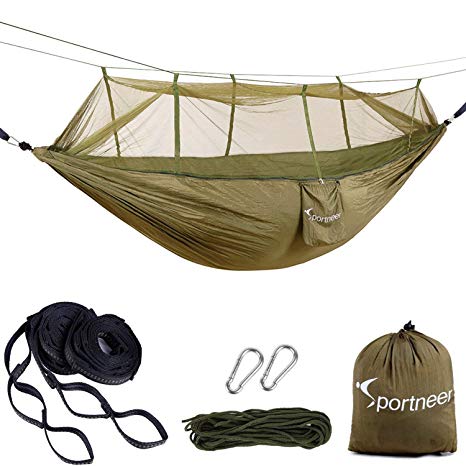
This is one of those hammocks you can actually sleep in outside. Mosquito Nets And Hammocks Combined protect you from all those creepy crawlers which means a more safer and comfortable trip. The compact & lightweight portable parachute hammock comes in an elegant pouch with all its installation tools. Ideal for solo adventures, camping, hiking, backpacking, travel, emergency.
All THE INSTALLATION TOOLS INCLUDED: Our Mosquito Nylon Hammock comes with 2 easy-setup hammock straps(32 adjustment loops +20ft long combined)+2 carabiners (Single: 2 Solid steel D-shape / Double:2*12KN ultralight & heavy duty carabiners)+2 net ropes at valued more than $22 on Amazon. NO need to buy any other tree straps or carabiners. Save your TIME and MONEY. Perfect gifts for him/her.
FOR SAFE & SOUND SLEEPS: Love into the wild adventures, camping and backpacking, but hate mosquito bites and pesky bugs? If so, then this hammock with bug net is the answer. Use it as a sleeping bed and protect yourself from insect bites. Best gift idea for camping lovers. Flip it over and use it as a relaxing hammock in seconds!
QUALITY MEETS ENDURANCE: Made of high quality 210T parachute nylon materials (the same kind skydivers and eno hammocks use!) )and special designed durable bug net fabric(2 times density than similar products on the market). This lightweight portable hammock is designed to accommodate even your most demanding camping needs.
GET THIS MOSQUITO HAMMOCK RISK FREE: 100% Lifetime Guarantee. Sunyear take pride in top quality products & great customer service. So if you’re not 100% satisfied, don’t hesitate to let us know. We’ll make sure you get a FULL REFUND!
How to choose the best survival knife – 5 things to remember
Salty’s Note: The following is written as a guest post by Billy of Perkin Knives. Beans, Bullets, Bandages and You doesn’t do affiliate links or advertising, but we do from time to time include guest posts from authors in the prepping and outdoors world that do. Knives are something I personally don’t know much about, so I welcomed an expert who does to write this.
As the term suggests, survival knives are what come to our rescue when all heck breaks loose on our camping or hunting adventures. Survival knives are one of the essentials that need to be carried by all adventure seekers whether you’re going on a small hiking trip, weekend camping or hunting.
The real question of which survival knife or pocket knife should you carry with you at all times is answered below with the top 5 things that you should keep in mind when choosing a survival knife.
Size
Size is one of the most important factors to consider when choosing a survival knife for yourself. A big knife may not always be the right knife, especially not in situations that require you to think on your feet and act quickly and effectively. An average sized knife, of about 10 inches, seems to be good enough to do most of the tasks that require the use of a survival knife.
Fixed vs. Folding Knife
A folding knife may seem more convenient to carry around but it’s not always the best choice of knife for survival situations. A fixed blade will always be more durable than a folding knife because it’s stronger and more sturdy. A folding knife will always fall short in performing tasks like pounding, chopping, thrusting, cutting etc.
Full Tang
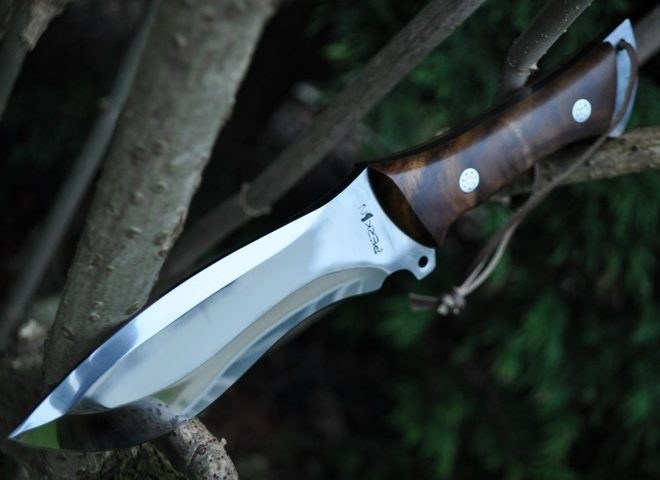
If you really want a survival knife to work in your favor and work well, then it’s important that you purchase a full tang knife. Along with being a fixed knife, your choice of survival knife should also be a full tang knife which means a knife is made of one constant piece of metal without any breaks in between. A full tang knife will be stronger and more robust than a partial tang knife. It provides a much stronger and comfortable grip which is very important when using a survival knife.
A partial tang knife can loosen its blades after tasks such as batoning, prying, chopping etc. Once the blade is loose from the handle in a partial tang knife, it will be very difficult for you to use it and perform any tasks. The same is not true in the case of a full tang knife. Even if the handle comes off in a full tang knife, you can still wrap it up with some cloth for grip and continue to use it.
There’s really no justification or reason why you should buy a partial tang blade when you’re investing in a survival knife. You want your survival knife to work effectively and perform well, this is only possible in a full tang knife because a full tang knife is one continuous piece of metal.
Sharply Pointed
While this may seem like an obvious thing to keep in mind, when you go out to purchase survival knives, you may come across several knives that have angled, rounded, hooked or straight cut tips instead of sharp pointed tips. A survival knife should definitely have a sharply pointed tip because that makes it a better self defense tool and also makes it easier to stab or thrust through thick layered clothing, meat etc.
When it comes to hunting, you need a sharply pointed knife which you can either attach to a pole to create a long spear-like weapon or use as it is. A sharp pointed knife is more supportive and effective in tasks like drilling, notching, removing splinters, intricate prying, picking and more such tasks.
Solid Pommel
Pommel is the bottom part of the handle of the knife, also known as the butt. A good survival knife should have a solid pommel so that you can do some light duty pounding and hammering if the need arises. A rounded or hooked pommel will not let you hammer or pound on the knife so make sure that you pay attention to the pommel of the knife and look for one that’s solid.
Conclusion
It’s important to look for a knife that has all these characteristics so that you can make the most of your knife at the time of need. You don’t want to be carrying multiple tools or knives for different purposes, a survival knife should always be a multi-purpose knife which can be of use and help out in different kinds of survival situations.
With the advent of nuclear technologies – the threat to everyone is unfortunately very real. If you are truly going to prepare for the nuclear threat, you must understand all the possible outcomes to be best prepared.
When you hear the words nuclear disaster, most people start thinking about a nuclear strike from a foreign country.
However, the threat of a nuclear disaster is much more than just nuclear weapons and war. In fact, you could have a serious nuclear threat right in your backyard.
If that’s the case, you need to know how to react and what you need on hand to stay alive through the radiation and fallout.
Top 3 Known Threats Of Nuclear Disaster
1) Nuclear Power Plants
There are nearly a hundred active nuclear power plants in our nation. These power plants supply millions of Americans with power each day and they are simply benign in the landscape and in how they affect our daily lives.
However, the greatest nuclear disasters of the 21st century did not happen on the battlefield.
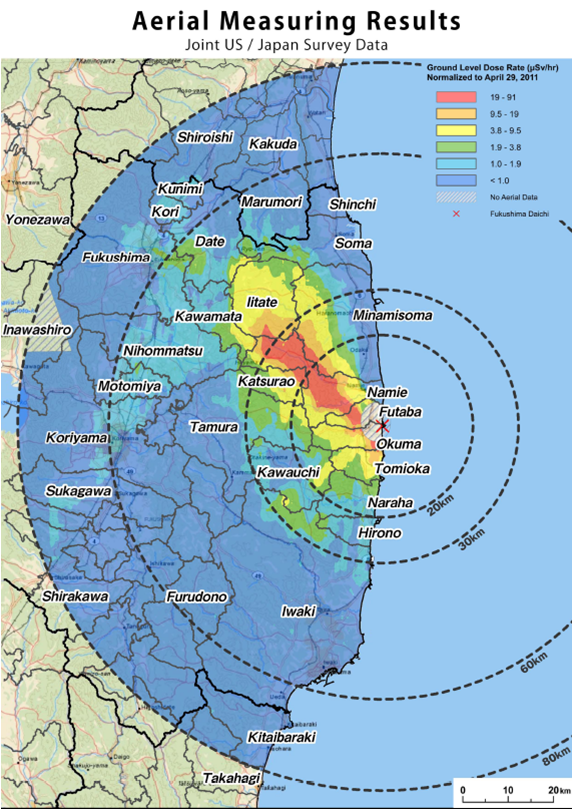
Rather, they happened at a nuclear powerplant in Japan (Fukushima in 2011), and of course Chernobyl in 1986. Both are catastrophic nuclear accidents that have left irreparable damage to their surrounding areas.
Experts estimate it will take 20,000 years before the 19-mile radius around Chernobyl is safe for habitation by humans.
2) Terrorists
While the threat of terrorists is very real, their current capacity seems to be limited to things like guns and trucks. Do you think it will be that way forever? Sad to say, but the day may come when we see an American city attacked by a dirty bomb.
The dirty bomb is an explosive device that contains radioactive material and is used to spread that radiation over a small area. It pales in comparison to the destruction and affect of a nuclear bomb but in a small crowded area the dirty bomb can do plenty of damage.
The time may come when terrorists figure out how to incorporate nuclear capabilities into their arsenal, so take note.
3) War
Of course, we are still facing the threat of nuclear war. Even after all these years and the understanding that an all-out nuclear war could mean the end of humanity. Its hard not to envision a future war where both sides are pushed to the brink and start lobbing nukes at one another.
Whether we are facing the growing contingent of radical dictatorial leaders or some other nation state, nuclear war is far from a thing of the past.
How Far Reaching Is Nuclear Fallout?
We all need to get real when it comes to the conversation of radioactive fallout. While it can be very dangerous, fallout itself requires the right conditions. Of the various nuclear threats we face only one version is going to produce a large cloud of nuclear fallout.
According to Dave Jones, a long-time military man and expert in the field, a surface detonated nuclear bomb is the only tool that is going to send that plume of radiated material high enough into the sky that it will rain down for miles.
Dave also mentions that the most likely form of detonation in a large city, in America, would be in a delivery truck at ground level. So, there is validity in being prepared for fallout depending on how far from a city you might be.
One of the best ways for a civilian to understand the affect or radioactive fallout on their town is to use NUKEMAP. This is a free service that allows you to simulate a detonation of powerful nuclear weapons across a map of your area.
Aside from offering up information on immediate damage it also shows the full scope and direction of radioactive fallout. You can detonate powerful weapons in the most populated city or army base in your area and see if the fallout reaches your home. You may be out of range of this threat altogether.
What Happens If You Are Exposed To Nuclear Fallout?
As bad as nuclear fallout sounds, you may be surprised at the simple methods that can be used to mitigate the risk and exposure.
If you find yourself exposed to nuclear fallout (ash, rain, radiation, etc.) – it can be managed by simply removing your clothes and leaving them outside or in a rubber made container and promptly taking a soapy shower. Doing this with a protective respirator on will assure the fallout doesn’t get inside the body.
Once you have been washed off you are free of the debris that has been touched by the radiation. Thus, the radioactive fallout is gone. Only when you are trapped outside in the fallout does it really become an issue.
Symptoms Of Radiation Sickness
If you or someone you love has been affected by nuclear fallout you should know how to identify the symptoms. You are going to be feeling a lot of things in a nuclear disaster. Feeling sick from stress, emotional drain and downright terror could all make you feel like sick.
This is a list of symptoms attributed to radiation sickness.
Extreme fatigue
Ringing in your ears
Frequent colds or increased infections
Unexplained bleeding or small red spots on your skin
Fever or burns
Headache or confusion
Nausea, vomiting, or bloody diarrhea
Setting Up A Radiation Shelter In Your Home
While you might think that the only way to survive the effects of nuclear fallout is buried deep in an emergency shelter, you are wrong. In fact, every American is completely capable of setting up their own in-home fallout shelter and waiting out the radiation.
Just to be clear I am talking about surviving nuclear fallout, not a nuclear blast. If you find yourself in the blast area, unfortunately, there is nothing you can do to survive.
Beyond the blast radius, radiation from a blast will not last forever. Contrary to popular belief. In fact, levels can seriously decrease in a matter of hours. Check out FEMA’s guidelines on the 7:10 rule.
The 7:10 Rule of Thumb states that for every 7-fold increase in time after detonation, there is a 10-fold decrease in the exposure rate. In other words, when the amount of time is multiplied by 7, the exposure rate is divided by 10. For example, let’s say that 2 hours after detonation the exposure rate is 400 R/hr. After 14 hours, the exposure rate will be 1/10 as much, or 40 R/hr.
As you can see radiation will decrease over time, but you need to be insulated from it during the decrease period. The best way to do this is to think about insulation. Things like mattresses, cushions, and thick blankets can provide you with this insulation. Even plastic sheeting taped along doors, windows, and any other opening to the outside will provide substantial protection.
You will want to find a location near the core of your home, away from windows and air flow from the outside world. Here you can create an insulated shelter in a closet or hallway that will put the maximum distance between yourself and the fallout outside.
Into this shelter, you should bring things like food, water, entertainment, and an emergency radio. As you can see, you might be holed up in there for a while to avoid as much radiation as possible!
So be prepared for that. Listen to the radio so you can stay on top of radiation levels and how your area is being affected. These broadcasts will also tell you when it’s safe to go outside again.
Addressing Demands That Follow A Nuclear Disaster
A nuclear disaster is a very scary thought! Depending on the size and scope of nuclear disaster we could see a variety of failures in public service. These will have the biggest impacts on life after the disaster. If we see critical infrastructure like water treatment, power and waste management services disrupted you will quickly feel the effects.
Contrary to popular belief, a nuclear blast (assuming it is a single event) is much more manageable afterward than other types of events. In situations like Chernobyl and Fukushima – radioactive waste is dumped for days at a time, or longer, in massive quantities.
Bombs and power plant disasters are two very different things. If you are in an area facing a meltdown of a power plant, you must leave immediately. The condition of the land and water will be so bad, it is irrelevant.
However, if you find yourself managing fallout from a nuclear blast you should consider these 4 things to be best prepared.
Food and Water
You can count on your sealed food and water in a nuclear disaster (like these). They will be fine to eat and drink. Don’t grab food from your garden or water from your rain barrels. These will have nuclear particles on them for some time.
Backup Power
The effect on your local power grid is going to be substantial. Multiple city blocks will be obliterated. Don’t look for power to be back on for some time. The same can be said for WIFI signals. Be sure that you have other options like solar or a generator.
Security
Unfortunately, in times of severe distress people may act in their own self interest and try to take things. Even a nuclear bomb won’t keep the bad people away. You need to have a means to secure that food, water and backup power.
I will let you decide how you plan to do that, but my first option is a 12-gauge shotgun deterrent.
First Aid
Emergency services are going to be busy, to say the least. The more self sufficient you can be when treating illness and injury the better off you will be. This doesn’t mean avoiding the proper care if you need it but just be prepared to be turned away and have another option. Consider reading this if you have a medical condition.
5 Nuclear Specific Preps
There are certain preps that really lend themselves to prepping for a nuclear disaster. Take a minute to explore these 5 below. You might find that you are more prepared for a situation like this than you thought.
1) Potassium Iodide Tablets (PI Tabs)
These tablets find a home in the nuclear disaster kits of most preppers. These small pills are used to saturate your thyroid which will keep your body from allowing radiation to spread throughout it. These tabs are cheap and are easy to get your hands on. They are not top-secret stuff anymore – be sure you have enough for your family and maybe some extra to spare. The benefits of these tablets are immeasurable immediately after a nuclear disaster.
2) Radiation Counters
A much larger investment than the PI Tabs a radiation counter or radiation measurement device is going to tell you exactly how much radiation is in the air. There will be no guessing here. While these are expensive preps, I think if you are near a nuclear power plant it might be worth having. You never know when you might need it.
3) Baking Soda
Baking soda or soap and water are the key to radiological decontamination. You know, its not like you need a secret serum to decontaminate yourself. You will need something to scrub your hair and body with. Baking soda is a pretty common prep and you are likely storing it already.
4) Respirator Masks
While fallout on the body can be washed away, fallout in the body is going to do serious damage. If you inhale micro fallout particles it’s going to affect your lungs first and your whole body over time. A quality respirator is a very important prep to have on hand in case of a nuclear disaster. Check out these respirators to add to your stash.
5) Eye Protection
Eyes are another area that can be affected by fallout. Maybe you rub your eyes with a sleeve and not understand what you are doing. This is very dangerous and will spread that material throughout your body, as well. Be sure to have something to cover your sensitive parts immediately after a nuclear event.
Make Sure You Are Ready NOW!
The threat of a nuclear disaster is more complex than most people think. Every radiological disaster is different. The most important takeaway is to understand what items you need to add to your inventory to assure you can respond to such a disaster.
The one thing that all nuclear disasters have in common is that they inflict serious damage either from blast radius, radiation or both. No matter what the situation, you must act in a nuclear disaster.
Having the knowledge and the right preps will help but in most instances of fallout and radiation you are going to fall back on two major skills. The first being patience. You can safely wait out radioactive fallout. That is the best move if you are on the outskirts of the disaster.
The other skill is going to be your evacuation or bugout skills. If you are too close to an area and the radiation is hazardous, well, you have no choice but to leave.
For those in the blast radius of a modern-day nuclear weapon, well, there aren’t really any preps that will help you. The best thing you can do is be prepared for the worst and hope and pray for the best!
Prepper or not, your loved ones should be well-versed in essential survival skills that can come in handy when SHTF. You can never tell when a disaster will happen, and you might not always be there to protect your family when one does occur. It is good to allow your family members a certain level of independence. This way, in case anything happens, you can trust that they will be able to survive anything. Empower your family members by sharing with them these crucial survival skills. (h/t to EverydayCarryGear.com)
Basic first aid
Basic first aid is something everyone should learn from a young age. Illnesses and injuries can happen any time, so knowing how to perform DIY first aid can be incredibly useful if you ever find yourself in an unpredictable situation. Some common injuries you and your loved ones should know how to treat include minor cuts and wounds, burns, athletic injuries, fractures, and dislocations. You can further supplement your first-aid knowledge by learning about natural remedies that make use of herbs you can find in the wild. (Related: Medical preparedness: How to treat minor injuries in the field.)
Shelter building
If you find yourself lost in the wilderness, you might think that your first priority should be to find a clean source of drinking water. While that is an important skill to have, exposure to the elements can actually kill you faster than dehydration, especially in severe weather conditions. You might be able to find natural shelters in the form of caves, hollow stumps, and logs, but if none of these are nearby, you will need to learn how to build your own survival shelter using only the materials that are immediately available to you. Your makeshift shelter should be well-insulated to keep you warm and dry, while protecting you from the elements.
Physical fitness
Most people might not consider physical fitness a survival skill, but staying in great shape can definitely improve your chances of survival. When suddenly faced with an immediate threat, such as a fire or a looming flood, you will need to run for your life. You won’t be able to do that if you need to stop every few seconds to catch your breath. Plus, having great agility and stamina means you will be able to maneuver over harsh terrain with more ease than most regular people. Even if you never find yourself in a survival situation, keeping physically fit can keep you healthy in your everyday life.
Water acquisition and purification
Finding water and making sure it’s clean enough to drink are two different yet equally important concepts that your family members should know in order to keep hydrated. You should at least either boil, filter, or chemically treat your water with chlorine first before drinking it. Carrying around a portable water filtration system could save your life someday. You can also pack a few purification tablets when bugging out. When all else fails, you can always boil your water, which can kill off virtually all the dangerous pathogens in it.
Building a fire
In order to boil your water, you must first learn how to start a fire. Fire-making is one of the most basic bushcraft skills any prepper should know. A fire can provide warmth, a way to cook your food, and a means of protection against wild animals. Starting a fire can be easy with the right tools and a little practice. If you have had little previous experience with starting fires, you can start off by carrying a lighter or a matchbox with you wherever you go. Of course, you should also bring some tinder, so that you have something to burn.
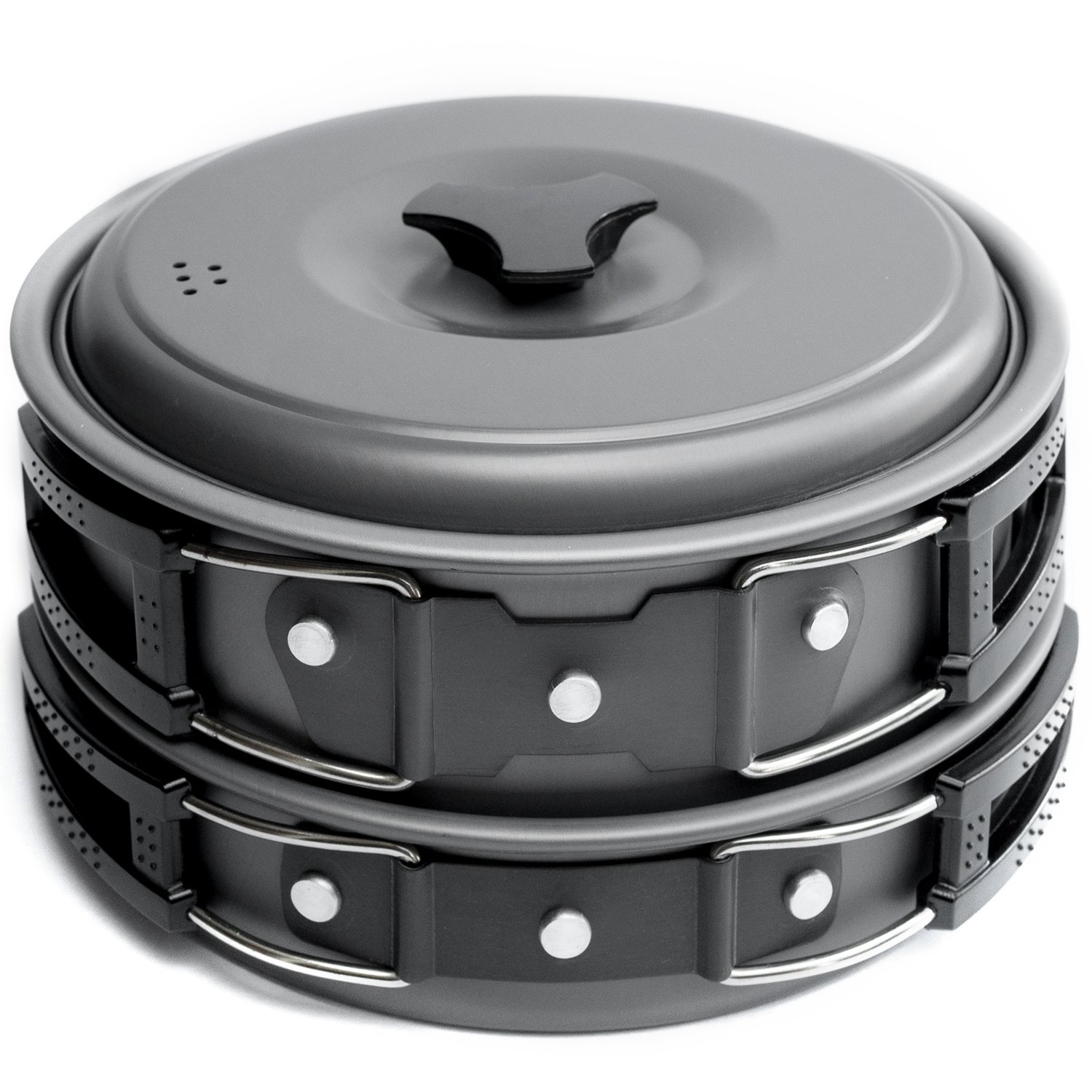
BUILT TO LAST! BEWARE OF CHEAP KNOCK OFFS! Highest Quality FDA APPROVED Non-Toxic Anodized Aluminum Camping Cookset conducts heat quickly and is survival gear that is built to last and is perfect size for 2-3 youth scouts or adult hikers. EASY CLEANING & STORAGE: Entire 10 piece mess kit collapse into small bundle for easy control and storage
BEST MONEY EVER SPENT: The MalloMe 10 Piece Camping Campfire Cookware Mess Kit includes Anodized Aluminum Nonstick Pot (2Liter Capacity) + Pot Cover + Nonstick Pan + 2 BPA Free Bowls + Folding Stainless Steel Spork + BPA Free Soup Spoon + Wooden Spoon Spatula + Cleaning Sponge + Nylon Travel Bag Drawstring Pouch + Perfect Marshmallow Roasting and Smores Making Guide with 10 Recipes Ebook!
WORRY FREE WILDERNESS: Finally enjoy the great outdoors without second guessing if you packed everything to cook and serve your next meal with the lightweight, compact, and mobile design of the MalloMe Camp Kitchen Set
PERFECT GIFT for FAMILY and FRIENDS: #1 Outdoor Cooking Backpacking Gear & Camping Backpack and Hiking Picnic Set for anyone looking for a high quality, great value product for the camping world or bug out bag to enjoy at the cookout with the people you love
No matter what we’re doing in the outdoors, showing up prepared makes us feel more confident, less afraid of the unknowns, and—perhaps obvious but it’s worth stating—better able to take care of ourselves and others.
One aspect of prevention is dealing with bugs, especially ticks. Ticks aren’t something we love spending a good deal of time thinking about, but a lack of preparation when it comes to them can lead to anxiety when going outdoors. Plus, if you’re not prepared, it can also lead to being exposed to serious diseases, like Lyme, should you encounter a tick bite.
There are a few basic practices and pieces of gear to know about when it comes to preventing tick bites, so we did some research and compiled it all here to get you started. Because your adventures might take you to unpredictable places, but preventing tick bites (or knowing how to respond accordingly) is something you can have some control over.
Do all ticks carry Lyme?
First and foremost, not all ticks carry Lyme disease. The Blacklegged Tick, also known as the Deer Tick, is known to carry Lyme-causing bacteria. That said, it’s important to know that not all Blacklegged Ticks carry Lyme, so just because you are bitten by a tick, or bitten by a Blacklegged Tick, does not automatically mean you were exposed to Lyme Disease.
However, because preventing tick bites is the best way to avoid contracting Lyme or other tick-born diseases, below are some basics for how to be prepared this season.
Preventing Tick Bites: Basic Tips
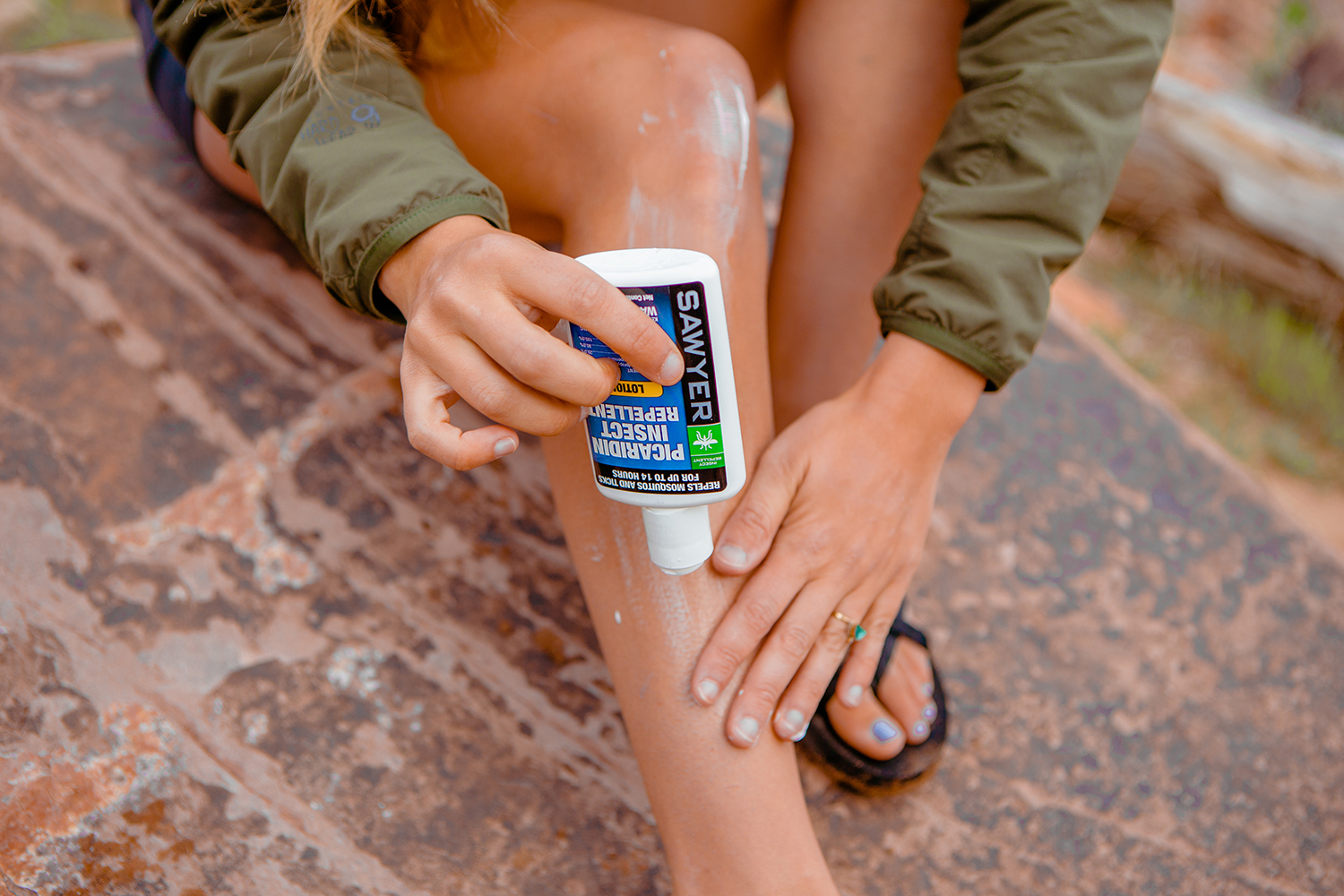
Wear repellent: If you’re going outdoors, you will want to consider wearing a spray repellent that addresses ticks and other insects. While DEET has been a popular go-to active ingredient for decades, it can be rough on your skin, clothes, and gear. Fortunately, there are alternatives that work just as well if not better, like picaridin (pick-air-eh-den), an ingredient derived from peppers. Our team has tested Sawyer’s Picaridin Insect Repellent in a variety of climates and feel safe wearing it while on the trails.
Treat your gear: In addition to treating your skin, you can treat your gear and clothing to make it less hospitable to ticks. The active ingredient in this type of spray is permethrin (per-meth-ren) and once applied, it can be effective for 6 weeks or 6 washings. Sawyer’s Permethrin Spray is easy to use, odorless, and safe for dogs—which makes it a go-to in our book.
Consider your attire: Ticks can show up as translucent in earlier stages of development, but are generally dark brown, red, or black in color. Wearing light-colored clothing could help you to identify them easier. There is also research available showing that ticks seem to be attracted to darker-colored clothing. Whatever colors you choose to wear, it’s good to consider tucking in your clothes when in a tick-prone area (shirt into pants, pants into socks—there’s no shame in preventing tick bites!).
Stay on trail: Not only is staying on established trails good for the environment, but defined trails generally have less overgrowth, meaning that you’ll be exposed to less ticks.
Do a full body tick check: It’s recommended to check for ticks at least once daily—more if you’re going outside multiple times per day. Ticks don’t fly or jump, but they do like the naturally warmer areas of your body like your armpits, belly button, behind your ears, in your hairline, in the crooks of your knees and elbows, and between your legs. They can be as small as a poppyseed, so a buddy and a magnifying glass might both be helpful for your scans!
If you take your pets outdoors with you, make sure to check your pets for ticks, too. People can often get tick bites because they forget to check their furry friends!
Shower sooner: Research has shown that taking a shower within 2 hours of coming home drastically helps reduce your chance of tick bites. Taking this approach will also make sure ticks don’t linger in your home, vehicle, or anywhere else you’ve been eating your post-hike meal.
Heat treat your clothing: Research has also shown that ticks will not survive in the dry air of a clothing dryer, so when you get home from a tick-thick environment, pop your clothing into a dryer for at least 10 minutes (possibly longer if they started out wet).
Tick Bite Prevention Pack List
Just as you would pack a First Aid Kit, water, and your favorite snacks in your day pack, bringing the proper tick bite prevention gear will help you to focus more on enjoying your time outside. After doing some research, here’s what we recommend bringing with you:
Preventing Tick Bites for Travelers
Some ticks thrive in certain environments better than others. Before you travel to a new region, especially one you are less familiar with, consider checking out what ticks might be prevalent there so you know what to look for.
It can be easy to overlook ticks in (literally) your own backyard. If you live in a tick-prone region or have a decent amount of vegetation in and around your property, you might want to consider creating a tick-safe zone, which is a strategic natural barrier that you can create in your yard.
Remember that a tick bite does not equate to contracting a tick-born disease. In fact, the sooner you find and extract the tick, the better chance you have of preventing diseases like Lyme. That said, following a tick bite, you should remain cognizant of possible symptoms and call a doctor if you have unusual symptoms—especially rash, a bull’s eye marking around the bite area, or fever.
Lyme Resources
For those wanting to learn more about the research, support, and communities for those with Lyme Disease, consider starting with (and supporting) the following:
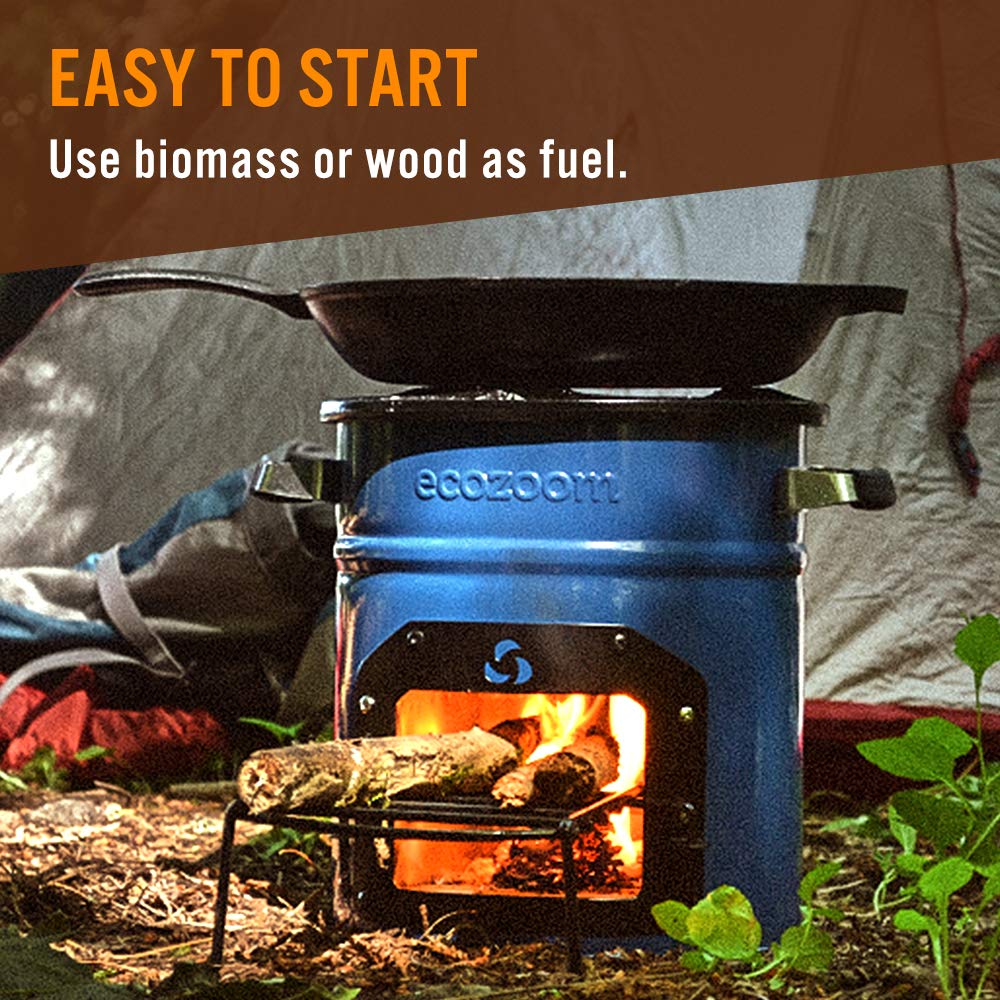
Portable Wood Burning Camp Stove for Backpacking, Hiking, RV and Survival, no Gas or Electricity needed!
ULTIMATE CAMPING WOOD STOVE: Extremely durable, long-lasting and energy efficient. The Dura uses wood or solid biomass as fuel. Great for outdoor camping, hiking and even emergency preparedness.
ENERGY EFFICIENT COOKING: The fully insulated vertical combustion chamber forces gases to mix with the flames, leading to decreased harmful emissions while boasting tremendous fuel efficiency. This means you can use less fuel to increase cooking times and you won’t get smoke in your face!
QUALITY MATERIALS AND DURABLE DESIGN: Extremely powerful and well-built design means the stove stays in place exactly where you want it. You can have peace of mind knowing you don’t have to worry about tipping, falling or unexpected accidents. All of the stove’s exterior and interior parts are super-easy to clean and maintain.
ECO-FRIENDLY STOVE: The Dura doesn’t require a lot of wood or dry biomass to cook an entire meal, which makes it a very eco-friendly outdoor cooking option!
EMERGENCY PREPAREDNESS: Excellent emergency preparedness tool, if and when disaster strikes. No gas, propane or electricity needed. Just a handful of sticks to have a fully cooked meal during an emergency situation.
are made flimsy and cheap in ziploc bags for one time use. We’ve tested and designed every detail with the highest quality materials available to create the best emergency blankets you can carry anywhere so you have them when it matters most. Stash these tactical emergency blankets everywhere – in your car, roadside emergency kit, survival kit, first aid kit, bug out bag, zombie survival kit, camping gear, an


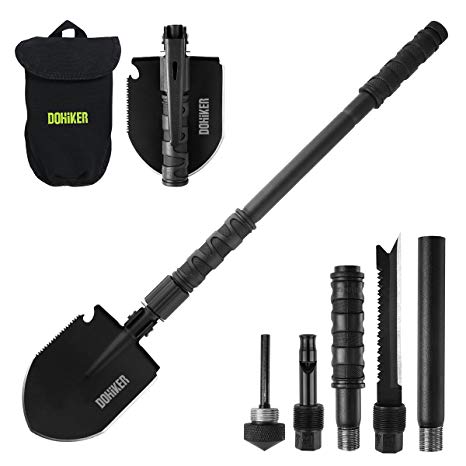
 is high alloy steel material. Surface oxidation rust prevention; shovel board 0.18 cm / 0.07 inch, sufficient strength to withstand harsh conditions. Deep cereal non slip handle, make sure the user is comfortable and safe.
 an emergency tool for survival kit suitable for typhoons / heavy rain countermeasures, outdoor activities, winter snow plows, camping, gardening, mountaineering, exercise, gardening etc.




 will always fall short in performing tasks like pounding, chopping, thrusting, cutting etc.
 can loosen its blades after tasks such as batoning, prying, chopping etc. Once the blade is loose from the handle in a partial tang knife, it will be very difficult for you to use it and perform any tasks. The same is not true in the case of a full tang knife. Even if the handle comes off in a full tang knife, you can still wrap it up with some cloth for grip and continue to use it.