Geology Professor Emeritus Scott Burns of Portland State University has warned of alarming seismic activity near the Yellowstone volcano site. Burns said that an intense wave of small tremors has occurred around the site, which is usually a sign of magma movement beneath the surface.
“If you get swarms under a working volcano, the working hypothesis is that magma is moving up underneath there,” Burns said.
Burns says that there have been 80 some earthquakes in the region during the month of June. Earthquakes are common in the area, due to all of the magma that moves beneath the surface, but Burns finds the frequency of these quakes especially alarming because of how close together they are. He believes that this could be a sign that magma is attempting to escape from the surface, which would have disastrous results for the entire country, especially for those living within the blast radius of the volcano.
Yellowstone Geyser. Photo Credit: Pixabay
Meanwhile, Yellowstone’s Steamboat Geyser has also shown signs of increased activity this month as well. The Geyser broke a record for its most active cycle this month, erupting twice in three days, first on June 12, then again on June 15.
However, experts say that there is nothing for us to worry about because the geyser’s activity is unrelated to the volcano.
As volcanologist Janine Krippner explained in a series of tweets this week, the magma provides the heat for geysers, but geyser activity is not a sign of an impending eruption.
“Yellowstone has an incredible geyser system that is unrelated to magmatic activity – other than the magmatic system basically providing heat,” Krippner says.
— Dr Janine Krippner (@janinekrippner) June 27, 2019
However, other experts are skeptical about the possibility of an impending disaster at Yellowstone.
Jamie Farrell of the University of Utah in Salt Lake City told Express that earthquakes are merely a natural feature of the environment.
“Earthquake swarms are fairly common in Yellowstone. There is no indication that this swarm is related to magma moving through the shallow crust,” Farrell said.
Still, if an eruption were ever to occur at Yellowstone, experts predict that it would be an event that would change civilization. It is estimated that roughly 87,000 people would be killed instantly in the blast, and more than half of the United States would become uninhabitable. Some researchers believe that the large cloud of ash sent up into the atmosphere would cause a “nuclear winter” by blocking out the sunlight.
Photo credit: The Weather Network
Similar concerns were voiced in 2014, after the region was rocked by the worst earthquake seen in years.
According to Yellowstone observatory, seismic activity is fairly common in this area, but the earthquakes usually aren’t as powerful as the one seen in 2014. The observatory reported that 1 to 20 earthquakes occur every day, however, they are very weak, often measuring much less than magnitude 3. The earthquake in 2014 was measured a 4.8 and was the most powerful quake to hit the park since 1980.
There have been six earthquakes with a magnitude of at least 6 or higher in historical times, including a 7.2‑magnitude quake at Hebgen Lake which occurred in 1959.
In January of 2010, over 250 earthquakes were detected over a two day period.
It came from outer space: Weird radio signal came from distant galaxy
Doyle Rice USA TODAY
Published 5:04 PM EDT Jun 27, 2019
It came from outer space.
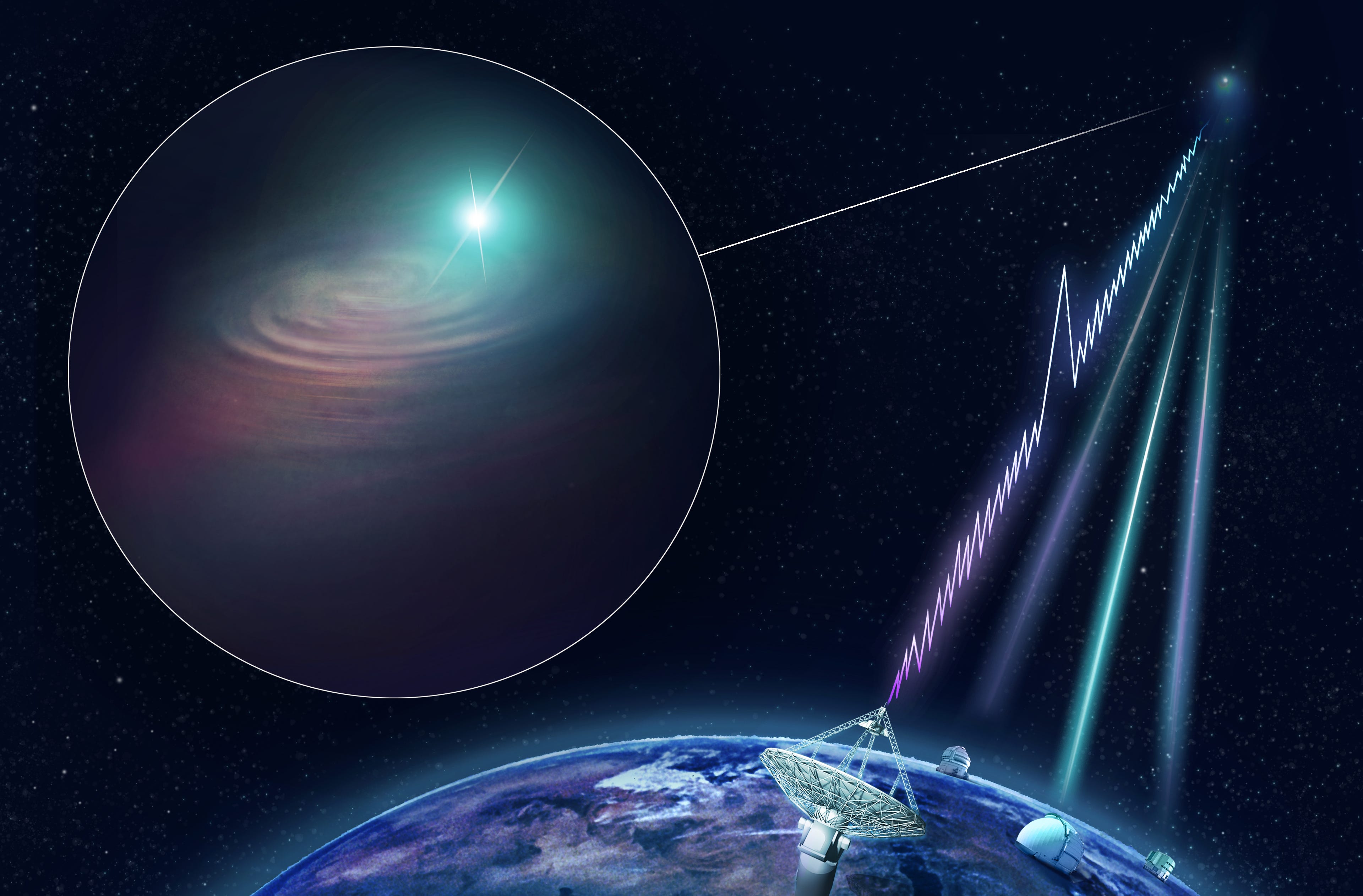
For the first time, the origin of a single radio pulse has been pinpointed to a distant galaxy several billion light years away, a new study said.
The cause of the bursts remains unknown but the ability to determine their exact location is a big leap towards solving this mystery, the study said.
The “fast radio burst” – a very short-lived pulse of radio waves that comes from across the universe – has been identified as originating from a Milky-Way-sized galaxy some 3.6 billion light-years away.
“This is the big breakthrough that the field has been waiting for since astronomers discovered fast radio bursts in 2007,” said study lead author Keith Bannister of Australia’s Commonwealth Scientific and Industrial Research Organisation.
“If we were to stand on the moon and look down at the Earth with this precision, we would be able to tell not only which city the burst came from, but which postcode and even which city block,” he said.
Fast radio bursts last less than a millisecond, making it difficult to accurately determine where they have come from.
A view from the Australian radio telescope that discovered the new fast radio burst. The Southern Cross is at the left and the moon is at the right.
CSIRO/Alex Cherney
Since 2007, just 85 cosmic radio wave bursts have been detected, according to the Independent. Most are “one-offs” but a small amount are “repeaters” which recur in the same place. In this case, the fast radio burst, known officially as FRB 180924, was a single burst, unlike others that can flash multiple times over an extended period.
Upon reaching Earth, these pulses are mere electromagnetic whispers that require sensitive radio telescopes to detect. The discovery was made with a new radio telescope in Western Australia and later confirmed using other telescopes in Chile and Hawaii.
“These bursts are altered by the matter they encounter in space,” said Jean-Pierre Macquart, study co-author from Curtin University in Australia. “Now we can pinpoint where they come from, we can use them to measure the amount of matter in intergalactic space,” he said.
As for what the bursts are, ideas range from a rotating neutron star to, yes, a high-powered signal from an advanced civilization.
“We cannot rule out completely the extraterrestrial hypothesis for the fast radio bursts in general,” Vishal Gajjar, a postdoctoral fellow at the University of California-Berkeley, said last year.
Thursday’s study was published in the peer-reviewed journal Science, a publication of the American Association for the Advancement of Science.
Finding the best vacuum cleaner isn’t easy. You need a device that ensures dust and dirt have no place to hide, one that’ll fit with your home and your needs and that’s also within your budget. We’re here to help.
UPDATE:It’s not long now until Amazon Prime Day, which isn’t a day at all but will bring 48-hours of deals to us all on July, 15 and 16. What this means is that if you’ve got your eyes on a new vacuum cleaner, it might be best to do your research and then find a discounted cleaner as soon as the deal day arrives.
If you’re interested in the latest innovations in robot vacuum tech, we highly recommend reading our interview with iRobot CEO Colin Angle about the future of robo-cleaning.
We’ve been on a hunt to find the best of the best vacuum cleaners available right now. The cleaners we’ve found will leave your carpets looking clean, your floors looking dazzling and will hopefully take some of the stress out of the chore of cleaning your home. What’s more, you might not have to spend as much as you think.
We’ve put in a considerable amount of dust-busting hours to rate and review the vacuum cleaners listed below, so you know which is the best model to buy in 2019.
The good news is that the best vacuum cleaners at the top of the tree are getting smarter, they’re lighter, and they’re also simpler to use with each passing year. What that means is that the best of the best cleaners of 2019 that we’ve collected together below really do impress. We can tell you first-hand that these vacuums suck – and we mean that in the best possible way.
You might notice that a lot of the leading vacuum cleaners in our list feature a cordless design, waving goodbye to the massive cord that was always a tripping hazard anyway. After the success of the Cyclone V10 (included below), Dyson has even stopped making corded vacuums altogether.
As well as new, cordless models, some of the top vacuum cleaners now have brains of their own: choose a robot vacuum cleaner and you don’t have to lift a finger to take care of the vacuuming. You don’t even have to be at home to set them off.
So whether you’re after a super lightweight, cordless vacuum or an advanced robotic cleaner here are the best vacuum cleaners TechRadar has used to date.
Dyson Cyclone V10 Absolute
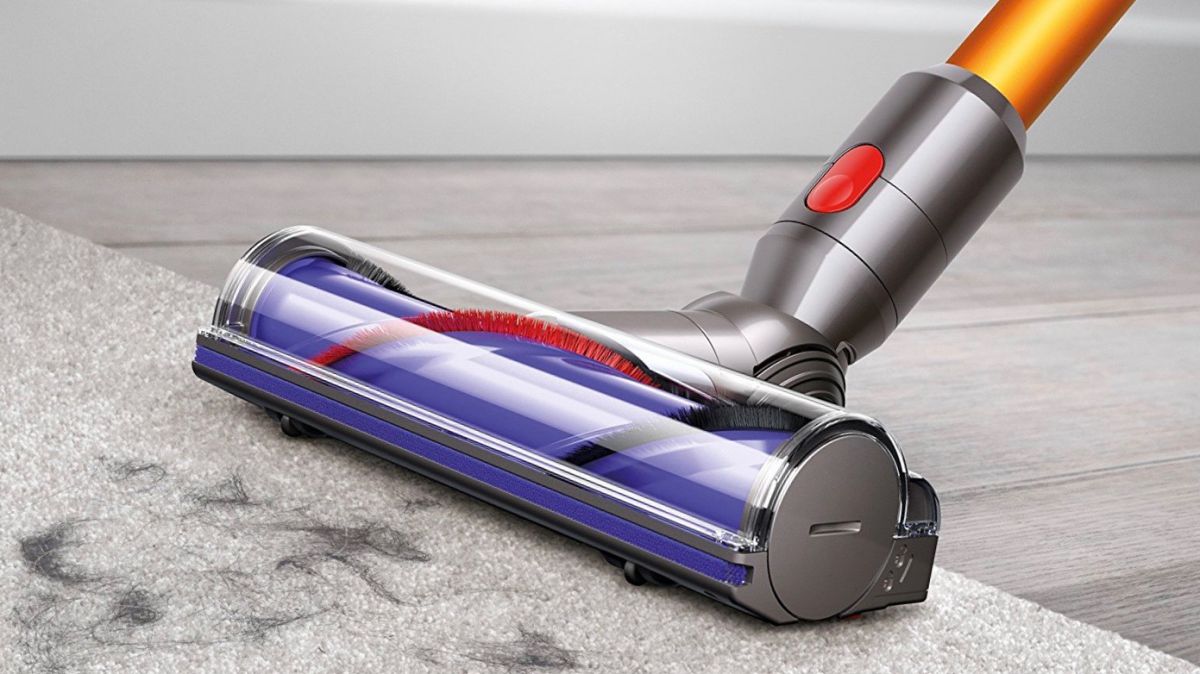
Dyson’s newest cordless vacuum cleaner is so good, the company is no longer making vacuums with cords. That’s how confident Dyson is that the Cyclone V10 (and all the vacs that follow) will meet all your cleaning needs.
Simply put, the Cyclone V10 is the best vacuum Dyson has ever made. The redefined cyclone technology produces more suction power than ever – reportedly 20% more than the previous V8 model – and we can testify to that from first hand experience.
The V10 offers some crucial changes over older V models. The barrel is now front-facing, with all attachments connecting here directly, and the design has been tweaked for greater suction efficiency. According to Dyson, the V10 can also detect differences in altitude, air pressure and temperature, adjusting itself for maximum performance.
Prices and models vary across regions, but you will pay more for the Cyclone V10’s souped-up suction. And while the Cyclone V10 is more powerful than ever and boasts a more energy-dense battery than previous models, putting it on the highest setting will drain the battery in about five minutes.
At the lowest setting, however, you’ll get up to 60 minutes of use, and that should be plenty for your everyday needs.
Don’t want a Dyson vacuum cleaner? This Shark IF250UK is a cheaper and rather decent alternative to some of the top-end products from Dyson that sit in this list. It’s another cordless cleaner that can run for 22 minutes from a single charge – but the best bit is there are two batteries in the box, so you can just hot swap out mid-clean and get 44 minutes in total.
We really like the design of the Shark IF250UK, although it is a little on the heavy side. It comes with Shark’s Flexology technology that means you can bend the cleaner at the mid-way point, so you can get those hard to reach places like under your sofa without needing to get crawl down on the floor.
As we’ve said, it’s not as lightweight as the Dyson listed above, but we still found it easy enough to carry, and portable enough for most people.
This is certainly a powerful vacuum cleaner. If you’re a pet owner, you can get a special edition with in-built pet cleaning features, but in an animal-free home we found the Shark IF250UK cleaned up easily when using its maximum suction mode.
For a lower price than the Dyson V10, the Shark IF250UK is a very good pick for your next vacuum cleaner– it matches the competition for power and is as simple to use as you could want.
Formerly the best cordless vacuum cleaner that money could buy, the Dyson V8 Absolute is still a top-of-the-line battery-powered cleaning machine, even as the Cyclone V10 has dethroned it from the very top rung of the ladder. It also remains a real joy to use.
First, the design. With a removable extender pole and six different heads for different surfaces and use cases, the V8 Absolute is lightweight and easy to run around the house. With the suction motor in the pistol-grip handle area, you can also easily clip a head directly onto the main unit, turning the whole thing into a portable cleaner – one that’s perfect for going up the stairs or decrumbing the car.
A full charge will give you around 40 minutes of use, which is really impressive for a cordless cleaner, though mileage will vary once you start using on the motorized heads – or switch on the V8 Absolute’s MAX mode. You’ll rarely need it though: for a handheld, this cleaner rivals upright vacuums for sheer dirt-sucking power. Its large bin will take in plenty of trash too before needing emptying, which is another convenience not often seen in a cordless.
Best of all though, it is genuinely fun to use. The sci-fi aesthetic makes it one of the few “white goods” gadgets you’ll happily leave on show in the house, with the transforming design as useful as it is clever. It’s still worth a look even with the V10 now on the scene.
Gtech AirRam MK2
The Gtech AirRam MK2 blends the flexibility of a cordless vacuum with strong suction performance and ease of use, making it a great choice for those looking for a lightweight and highly manoeuvrable vac they can quickly whizz around the home.
It’s super-simple to setup out of the box, though the four-hour charge can be a hassle if you need a speedy clean and the AirRam MK2 simply isn’t juiced. You could use it if plugged into the wall, but with such a short charging cable supplied that’d be wholly impractical.
An hour on the charger will give you a short burst of vacuuming power to address a spillage, but if you’re planning on doing a general clean you’ll want a full charge, which gives you around 40 minutes of use (similar to the Dyson V8 Absolute).
Meanwhile, Gtech’s Airlock technology automatically adjusts the head for different flooring types, and suction is generally very good, without being the absolute best on offer.
The collection bin may be a bit on the small side, but it’s incredibly easy to empty and ensures you don’t get your hands dirty, with a removable cylinder featuring a sliding lever that pushes out all the collected dirt and dust.
The vacuum cleaner is easy to carry up and down stairs, but with no hose or attachments you can’t easily clean stairs or other hard-to-reach areas of your home with it. Its price tag makes it a more approachable option than the Dyson however, so if you’re on a budget it’s definitely worth considering.
Dyson Light Ball Multi Floor
If you want serious suction from your vacuum cleaner, Dyson is the market leader. Its cyclone technology has long been touted as the best sucker around, and on the Light Ball Multi Floor we can safely say it earns its reputation.
With 90AW of suction power, the Dyson Light Ball Multi Floor tackles carpet, wood floors, laminate and more. Each pass hoovers up dust, hair and other particles stuck inside your carpets too, not just those sitting on top.
We were surprised and impressed with the amount of stuff it picked up during the first few trips around our house – clearly our previous vacuum wasn’t doing the job as effectively.
When the large bin fills up, it’s just a simple one-button release from the body of the Light Ball, and then another one button press to dispense its contents into the bin – although with the large flag that opens at the bottom you’ll need to angle the cylinder accordingly.
As well as acting as a standard upright vacuum cleaner, the Light Ball also comes with a built-in hose and tools, allowing you to tackle hard to reach places, ceilings and stairs with relative ease.
It’s still a bit of a beast to carry up and down the stairs though, and at times the long 9.4m cord does get in the way, making you wish this was a cordless vacuum – but the trade off will be inferior suction.
If you’re in the market for a vacuum cleaner that will give your floors a seriously thorough clean, then the easy-to-use, highly maneuverable and surprisingly quiet Dyson Light Ball could be right up your street.
Dyson 360 Eye robot vacuum cleaner
With AI smarts improving all the time and robotics increasingly accepted in the home, the sci-fi dream of having a little robot helper to potter about the house is fast becoming a reality. The Dyson 360 Eye is the vacuum cleaning company’s first effort in the space, and makes a good account of itself.
After a relatively painless app-powered set-up process, the camera-equipped Dyson 360 Eye is able to navigate your home, weaving around obstacles on a cleaning routine you again establish through the app.
Considering its small size, the vacuum cleaner surprisingly capable at sucking up the rubbish in your home, and when the battery gets low and it’s time for a recharge, the 360 Eye will intelligently return to its charging station without any prompting.
It’s a premium product, commanding a high asking price that’s best used as a supplement to your usual cleaning rota rather than a replacement. With the 360 Eye doing the rounds once every day, you’ll find that your home will need a “deep clean” vacuuming session by your own hand far less often.
But there’s still room for improvement – the tall clearance makes it difficult for the 360 Eye to fit under furniture, while a bigger bin would lessen the need to keep emptying it out, and a larger battery would give it a better chance of completing a whole-house sweep in one pass without a recharge session.
The limitations of the wider product category taken into consideration, this is a solid luxury cleaning product regardless. Bear in mind though that Dyson just announced its successor, the 360 Heurist.
iRobot Roomba 980 robot vacuum cleaner
Dyson’s not the only company working with robotics in the home space, and many rate iRobot and its Roomba 980 vacuum cleaner very highly, too.
A low-clearance, dirt-sucking disc, it’s intelligent enough to go about its business in your home without much prompting from its human owners. The Roomba 980 will intelligently map your home for problem spots, kicking into a high-power mode when carpets are identified, and weaving around chair legs and other potential obstacles.
With a two-hour battery life, it manages a longer cleaning cycle than the Dyson before it heads back to its charging dock.
Other smart features of the Roomba 980 include its battery-powered “Dual Mode Virtual Wall Barriers” which signal to the bot which areas to avoid if placed across a doorway, and more granular control over its cleaning procedures through the accompanying app.
However, as good as it is the Roomba 980 has room for improvement, with its app not always terrible intuitive, and the robot itself sometimes getting bamboozled by cables.
It’s another pricey cleaning luxury, and making the choice between it and its Dyson rival is a tough one. But for those that can afford it, the Roomba 980 is another excellent cleaning convenience.
You may not have heard of the name Eufy before, but this more affordable robot vacuum cleaner offers some fantastic value and it comes from the sister brand of Anker, which is the closest thing to a household name in the world of portable chargers.
The RoboVac 11 has lots of cleaning settings available, including an automatic mode, maximum power, edge cleaning, single room cleaning or a mode that specifically focuses on one small area.
The problem is, unlike the two vacuum cleaners above, you can’t connect the RoboVac 11 to an app – and so you can’t monitor the robot cleaner or set it off when you’re not in the house. (The more recent RoboVac 30C upgrades with the EufyHome app, though you’re looking at closer to £300 than £200 for the change.)
Instead it’s all activated through a remote control that comes in the box with the RoboVac 11. You can set it up on a timer, so the cleaner will automatically head on its journey once a day, but it’s not as useful as having an app to do it from anywhere in the world.
There’s also no mapping technology built-in, and instead the RoboVac 11 will just make its own way around your home until the battery runs out. It uses infrared sensors to avoid bumping into furniture in your home, but it can be quite frustrating if you’re sitting and watching it work – it doesn’t clean quite as efficiently as some other cleaners.
With a 600 ml bin this will keep going for multiple cleans. We found the battery life to last around 90 minutes on the automatic mode, and a little bit less if you’re using the maximum power suction.
The Eufy may not be the most efficient or powerful robot vacuum cleaner on the market, but considering its super-low price point, it’s impressive how much value for money you get with the RoboVac 11.
While not quite as familiar a name as Dyson or Roomba, with the Neato Botvac Connected, Neato has managed to create a vacuum cleaner that definitely gives the others a run for their money.
At 10 cm tall, it comfortably manages to shuffle under most items of furniture, and uses laser guidance to map the room. It’s very satisfying watching it figure out which items of furniture it can navigate under and around.
A little frustratingly, it doesn’t seem to factor in the little protruding circle on top of the unit that houses the Neato logo, and so does occasionally get caught on items that it only just clears.
You can control the Neato Botvac Connected using your phone, set up routines for when you want it to clean, and even pause it mid-clean. There are also convenient buttons on the unit itself: one for ‘spot clean’ that will do one room, or ‘house clean’ that will do your entire home before guiding itself safely back to its base station.
At 700 ml, the bin size is bigger than both the Dyson 360 and the Roomba, but it’s still small in comparison to a standard vacuum cleaner, and will need emptying mid-clean if you have a large (or particularly dirty) home.
There is the option to have the Neato clean in either Eco or Turbo mode, which will give you quieter or deeper cleaning, depending on your preference. From the time that we have spent with it, the deeper cleaning mode provides a very thorough level of cleaning – although it invariably miss areas that require moving of obstacles, so you’ll still need an occasional once-over with a hand-held vacuum cleaner too.
Shark ION Robot 750
We’ve been testing the Shark ION Robot 750 robot vacuum for some time now, and it never ceases to impress us.
The first thing we noticed is its design: this isn’t a boring black puck, but rather a sleek machine with lovely accents and a mix of shiny and matte elements that make it stand out from the competition.
As for performance, the Shark ION Robot 750 cleans like a dream. We were amazed that it picked up that much dirt in our home, and was even able to pick up larger pieces of debris that other robot vacuums simply brushed to the side.
It has a great sense of its surroundings, rarely bumping into things or getting stuck, and it’s fast too – you might be surprised to see it on the other side of your living room when you’ve turned your back for just a second.
We wish the bin was a little bigger, as it fills up fairly quickly, but then again we have two dogs, so there’s a lot of dirt, hair and other detritus to lap up. The battery life is long-lasting, and it’s never run out on us during our testing.
Shark IONFlex 2X DuoClean
The Shark IONFlex 2X DuoClean is a beautiful beast: it’s a lovely shade of metallic blue and shimmery black, and is so powerful, you may be a bit taken aback.
We love how this vacuum can switch from hardwood floor cleaning to carpet with the push of a button. The detachable motor lets you use it as a handheld too, great for cleaning furniture. It comes with an assortment of attachments for different kinds of cleaning, such as a head specifically designed to clean fabric.
It’s a bit on the heavy side when you slide in the lithium-ion batteries, so you’ll definitely get a workout when using this vacuum. That said, you’ll be cleaning a lot of surface area because it moves so fast and efficiently.
The bin is big enough, so you should have plenty of room to clean a large room or a few smaller ones before needing to dump it out.
The biggest drawback with the IONFlex 2X DuoClean is the battery. It doesn’t last long at all, probably close to 10 minutes or so, before you need to swap out another one. The good news is that the batteries are rechargeable – the bad news is that they take a lot longer than 10 minutes to recharge fully.
That means you’ll likely find that you’ve burned through two batteries quickly, then need to wait a few hours before both are back to full charge. You can use one after it’s only charged for a short while, but don’t expect it to last very long.
Still, this cordless vacuum has a lot going for it, so it’s well worth considering picking up as your next vacuum cleaner.
This represents the first time coal has been surpassed by energy sources that do not release pollution such as planet-heating gases.
April was a favorable month for renewables, with low energy demand and an uptick in wind generation. This means that coal may once again pull ahead of renewables again during 2019, although the long-term trends appear to be set.
“The fate of coal has been sealed, the market has spoken,” said Michael Webber, an energy expert at the University of Texas. “The trend is irreversible now, the decline of coal is unstoppable despite Donald Trump’s rhetoric.”
Trump has repeatedly promised to revive the fortunes of the coal industry, to the delight of voters in mining regions in states such as West Virginia, by repealing various clean air and climate regulations.
However, at least 50 coal-fired power plants have shut since Trump entered the White House in 2017. The falling cost of renewables and gas has caused coal to be dislodged as a favored energy source for utilities.
“Trump has made a promise that will be broken, which is a tragedy for coalminers who were told they don’t need to get other jobs or get new skills,” said Webber. “They have been sent the wrong signal and now there are lay-offs.”
States such as New York and California have, in lieu of any national climate policy, pledged to completely phase out the use of fossil fuels. Many other states are shifting away from coal to gas, with at least 150 new gas plants, and thousands of miles of pipeline, planned in the coming years.
Gas emits less carbon dioxide, which warms the planet, than coal and it is not associated with the same health problems caused by air pollution. But it is still a fossil fuel and some environmentalists have raised concerns that a broad expansion will jeopardize the ability to eliminate greenhouse gas emissions by mid-century, a goal scientists say is essential to avoid the worst ravages of the climate crisis.
Giant flightless birds that dwarfed modern ostriches and weighed nearly half a tonne roamed Europe when the first archaic humans arrived from Africa, scientists say.
Researchers unearthed the fossilised thigh bone of one of the feathered beasts while excavating a cave on the Crimean peninsula on the northern coast of the Black Sea. It is the first time such a massive bird has been found in the northern hemisphere.
Analysis of the 40cm-long bone and others found with it date the remains to between 1.5m and 1.8m years old, suggesting the birds may have been part of the local wildlife when Homo erectus, an ancient ancestor of modern humans, reached Europe 1.2m years ago.
The enormous birds may well have been a valuable source of meat, bones, feathers and eggshells for the early human settlers, the scientists say.
Nikita Zelenkov, a palaeontologist at the Russian Academy of Sciences, said that when he first received the thigh bone for study he thought it must be from a long-extinct elephant bird from Madagascar. “No birds of this size have ever been reported from Europe,” he said.
But close inspection revealed that the bird probably belonged to an ancient species called Pachystruthio dmanisensis, a stocky, flightless creature that stood about 3.5 metres tall. Based on measurements of the thigh bone, the scientists calculate the bird weighed about 450kg, which is twice the weight of the largest extinct moas from New Zealand, three times heavier than the largest living bird, the common ostrich, and nearly as heavy as an adult polar bear. The fossils are described in the Journal of Vertebrate Paleontology.
“We don’t know when it became extinct exactly, but most likely it did not survive later than 1.2m years ago,” Zelenkov said. “They would have been seen by various Homo erectus people.”
Despite the bird’s bulk, the long, slim thigh bone shows it was fast on its feet. Other remains recovered from the cave offer some explanation as to why that may have helped: the giant bird lived alongside some of the most formidable predators of the Ice Age, from sabre-toothed cats to other over-sized carnivores, including giant cheetahs and giant hyenas. All could take on prey as large as mammoths.
Evolution has decorated the tree of life with a bizarre collection of bulky birds. The apparently herbivorous Gastornithidae, a family of prehistoric flightless birds with powerful legs and enormous beaks, stalked Europe, Asia and North America, from 66m to 35m years ago. When fully grown, some species reached three metres tall.
A similar-sized feathery beast brought terror to the rainforests of Australia’s Northern Territory 15m years ago. Technically known as Bullockornis planei but named the “demon duck of doom” by a researcher with an eye for publicity, the bird sported a scythe-like beak on a head the size of a horse’s. Also known as thunderbirds, the beasts are thought to have survived until at least 50,000 years ago.
Scientists have argued over the identity of the world’s largest bird for decades, but last year researchers at the Zoological Society of London attempted to settle the matter. They set out with a tape measure and a pair of callipers to measure hundreds of bird bones in museums around the world and came across one creature from Madagascar that stood three metres tall and weighed up to 800kg. Its name, Vorombe titan, means “big bird” in a mixture of Malagasy and Greek.
The Taurida cave where the latest bones were found was discovered only last year during the construction of a motorway that will link Simferopol, a city in the heart of the Crimean peninsula, to the city of Kerch in the east. How common the big birds were across Europe is unknown and a question that future expeditions will now seek to answer. “Although there is no evidence yet, this bird might have been spread across more western territories,” Zelenkov said.
Excavations at the site have also uncovered the remains of a bison and a mammoth, and field studies at the site are expected to continue for some time yet. “There may be much more that the site will teach us about Europe’s distant past,” Zelenkov said.
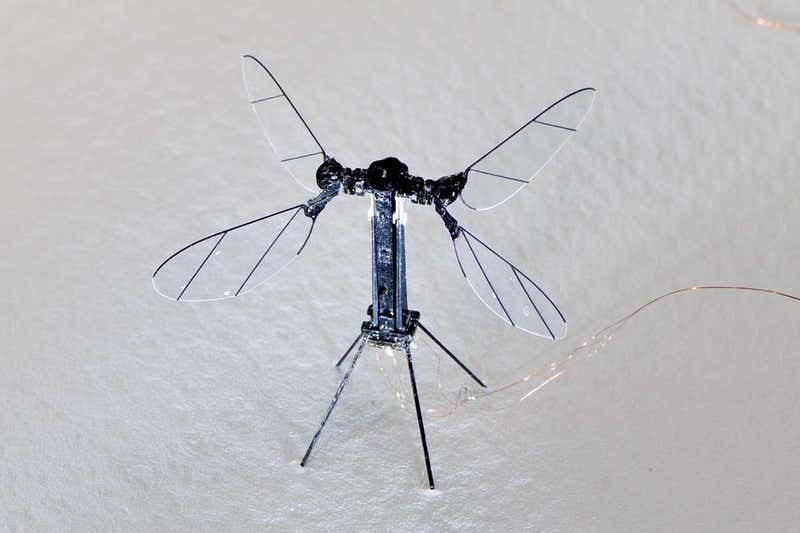
A solar-powered winged robot has become the lightest machine capable of flying without being attached to a power source. Weighing just 259 milligrams, the insect-inspired RoboBee X-Wing has four wings that flap 170 times per second. It has a wingspan of 3.5 centimetres and stands 6.5 centimetres high. The flying robot was developed by Noah Jafferis and his colleagues at Harvard University. Its wings are controlled by two muscle-like plates that contract when voltage passes through them. They are powered by six tiny solar cells weighing 10 milligrams each,which are located above the wings so as not to interfere with flight. The insect robot’s wings begin flapping when exposed to light. Currently, it has only been tested in the lab, where it is powered by a combination of halogen and LED lighting, says Jafferis.
Limited by the positioning of the artificial lighting, the robot normally flies for around half a second before it leaves the field of light. The robot currently requires the equivalent of three times the intensity of natural sunlight, so isn’t yet able to fly outside. Jafferis says the robot could one day be used for monitoring the environment or manoeuvring through small spaces. “It’s very light for its size,” he says. “If you needed to land on a leaf, you could, whereas a commercial quadcopter would be too heavy to do that.” In future versions, the team hopes to enable the robot to fly in sunlight and incorporate sensing mechanisms. “It can then really control what it’s doing when it’s flying around,” says Jafferis.
Other researchers at the University of Washington have created a 43-milligram robot that flies with no moving parts, but it still requires external wires for power. Unlike the RoboBee X-Wing, the powered robot propels itself upwards using electrohydrodynamic thrust. An electric field creates charged air molecules that smack into neutral air molecules, generating upward momentum.
While the North Taurid Meteor Shower isn’t the most productive meteor shower of the year, it can produce some of the year’s biggest and brightest meteors.
Also known as ‘fireballs,’ these meteors are associated with the Comet Enckeet, and often appear enormous in the night sky. In fact, Severe Weather Europe notes that the fireball-meteors appeared as big as the moon in the night sky in 2015.
The Beta Taurids Meteor Shower started on June 5 and runs through July 18 – they peak around June 28 – 29. Later this year, the North Taurid meteor shower takes place in the evenings on Nov. 11 – 12 in the northern hemisphere; the South Taurid takes place Oct. 9 – 10 in the southern hemisphere.
According to Space.com, stargazers can spot the origin of the meteors by locating the constellation of Taurus the Bull. In order to find Taurus, viewers should look for the, “constellation Orion and then peer to the northeast to find the red star Aldebaran, the star in the bull’s eye.” However, the shooting stars will appear across the night sky.
Meteor showers take place when the earth moves through debris left behind by comets and asteroids. Space.com notes that Comet Enckeet leaves crumbs in its wake as it orbits the sun. When Jupiter’s orbit brings it close to the comet’s trail, “the gas giant’s gravity nudges the comet particle stream toward Earth, so more meteors are visible to observers here. Astronomers call this an “outburst.”
What’s more, meteor experts predict that one of these productive “outbursts” will take place this year.
Stargazers should opt to travel as far away from city lights as possible in order to avoid light pollution that will obscure the clarity of heavenly bodies. While this works best in more remote places, anywhere that has a higher elevation will also provide more ideal viewing conditions.
Scientists in Europe said Tuesday they’ve successfully transferred a test tube rhino embryo back into a female whose eggs were fertilized in vitro, as part of an effort to save another nearly extinct subspecies of the giant horned mammal. The procedure was performed last month on a southern white rhino at Chorzow zoo in Poland, said Thomas Hildebrandt of the Leibniz Institute for Zoo and Wildlife Research in Berlin.
Hildebrandt is part of BioRescue, an international team of scientists and conservationists trying to use IVF to save the rare northern white rhino.
Only two northern white rhinos — both females — are left. The last male northern white rhino, named Sudan, died in March 2018. Scientists had preserved frozen sperm samples from several males that they now hope to use to revive the species.
(TMU) — In the latest attempt to cope with the spiraling crisis of plastic waste blighting the world’s oceans, a giant floating machine meant to capture plastic waste is being deployed for a second time. The machine’s operators hope to put a dent in the swelling Great Pacific Garbage Patch floating between California and Hawaii.
According to Boyan Slat, a creator of The Ocean Cleanup Project, the 2,000-foot long floating boom will be redeployed in the area of the island of trash on Tuesday.
After only four months of design, procurement, and assembly, the crew is now on their way to the Great Pacific Garbage Patch with the upgraded System 001/B. Time to put it to the test. pic.twitter.com/wbUUvrihbh
— The Ocean Cleanup (@TheOceanCleanup) June 21, 2019
The machine was shipped out to the patch last September to capture some of the floating trash. Unfortunately, due to rough weather conditions, the boom was unable to retain the plastic that was caught during its four months at sea and ultimately broke apart, according toAssociated Press.
“Hopefully nature doesn’t have too many surprises in store for us this time.
Either way, we’re set to learn a lot from this campaign.”
The machine has a plastic barrier with a tapered 10-foot-deep screen that simulates a coastline in order to trap some of the 1.8 trillion pieces of plastic debris estimated to be swirling around in the patch.
The high-tech system is fitted with a variety of devices such as solar-powered lights, sensors, cameras, and satellite antennae that allow The Ocean Cleanup Project to keep tabs on it via GPS while also using a dedicated support vessel to collect the trapped plastic every few months before bringing it back to dry land.
Ocean life is able to safely swim around the gigantic boom and, according to the marine biologists who accompanied its first run from the support vessel, no adverse environmental impact has resulted from the system’s deployment.
Slat hopes that if the system proves useful, 60 such devices will one day be deployed to skim garbage from the ocean’s surface.
In recent years, experts and conservationists have sounded the alarm over the plastics and microplastics that are inundating the world’s oceans and water supplies, leaching carcinogenic toxins and chemicals into the marine environment. In the meantime, plastic drink containers and trash used by fishers are trapping, confining, and ultimately killing marine wildlife such as birds and fish.
The plastic pollution has reached such massive proportions that an estimated 100 million tons of it can now be found in the world’s oceans, according to the UN. Between 80 and 90 percent of it comes from land-based sources. And according to a report prepared for the 2016 World Economic Forum in Davos, Switzerland, by 2050 it is estimated that plastic waste in the ocean will outweigh all fish.
In 1997, ocean researcher Charles Moore discovered the Great Pacific Garbage Patch. Years later, he toldCBS News that plastics are a leading cause of environmental devastation across the world, adding:
“Humanity’s plastic footprint is probably more dangerous than its carbon footprint.”
Immature amygdala neurons (green and red) in a 13-year-old brain. As the brain’s mood circuits mature during adolescence, most of these cells would be replaced by mature neurons (blue). Credit: Alvarez-Buylla lab / UCSF
Researchers have discovered a mysterious group of neurons in the amygdala—a key center for emotional processing in the brain—that stay in an immature, prenatal developmental state throughout childhood. Most of these cells mature rapidly during adolescence, suggesting a key role in the brain’s emotional development, but some stay immature throughout life, suggesting new ideas about how the brain keeps its emotional responses flexible throughout life.
“Most brain cells have matured far beyond this stage by the time you are born,” said study lead author Shawn Sorrells, Ph.D., a former UCSF researcher who is now assistant professor of neuroscience at the University of Pittsburgh. “It’s fascinating that these are some of the very last cells to mature in the human brain, and most do so during puberty, precisely when huge developments in emotional intelligence are going on.”
The amygdala is an almond-shaped brain structure located deep in the brain’s temporal lobes (you actually have two, one on each side of the brain) that plays a key role in learning appropriate emotional responses to our environment. During childhood and adolescence—long after most of the rest of the human brain is finished growing—the amygdala continues to expand by as many as two million neurons, a late growth spurt that researchers believe is likely to play a key role in human emotional development, and which may go awry in neurodevelopmental disorders. For example, this expansion is absent in children with autism, and mood disorders that frequently emerge in adolescence, such as depression, anxiety, bipolar disorder, and post-traumatic stress disorder (PTSD), have also been linked to problems with amygdala development.
Recent studies had detected a unique group of immature neurons in a region of the amygdala called the paralaminar nuclei (PL), which could help explain the amygdala’s rapid growth, but researchers had little idea where these cells came from or what role they play in mature brain circuits—even whether they are excitatory or inhibitory, the two main functional classes of neurons.
In the new study, published June 21, 2019, in Nature Communications, researchers from the lab of Arturo Alvarez-Buylla, Ph.D., the Heather and Melanie Muss Endowed Chair and Professor of Neurological Surgery and a member of the Eli and Edythe Broad Center of Regeneration Medicine and Stem Cell Research at UCSF, set out to understand the identity of these cells and their role in the amygdala’s rapid growth during childhood.
The researchers examined postmortem human amygdala tissue from 49 human brains—ranging in age from 20 gestational weeks to 78 years of age. Using both anatomical and molecular techniques to classify individual neurons’ maturity and function within neural circults, they found that the percentage of immature cells in the PL region of the amygdala remains high throughout childhood, but declines rapidly during adolescence: from birth to age 13, the number of immature cells declines from approximately 90 percent to just under 70 percent, but by the end of adolescence, only about 20 percent of PL cells remain immature.
Based on quantification of neurons in different stages of development coupled with analysis of gene expression patterns in individual neurons extracted from PL, the researchers showed that as the immature cells disappear, they are replaced by mature excitatory neurons—suggesting that the cells have taken their place in the amygdala’s maturing emotion processing circuitry. Since this is the first time these neurons have been clearly studied, scientists don’t know exactly what function the neurons serve, but the timing of their maturation suggests they may play a role in the rapid emotional development that occurs during human adolescence.
“Anyone who’s met a teenager knows that they are going through a rapid and sometimes tumultuous process of emotional learning about how to respond to stress, how to form positive social bonds, and so on,” Sorrells said. “At the same time, adolescence is when many psychiatric disorders known to involve the amygdala first manifest, suggesting that perhaps something has gone wrong with the normal process of emotional and cognitive development—though whether these cells are involved is a matter for future study.”
Notably, the researchers also found that some immature neurons appear to remain in the amygdala throughout life, and were even found in one 77-year-old brain. These results were in stark contrast to the hippocampus—a nearby structure in which the authors recently found that newborn and immature neurons completely decline to undetectable levels by adolescence.
Researchers found that the percentage of immature cells in a region of the amygdala remains high throughout childhood, but declines rapidly during adolescence. Immature (green and blue) and mature (red) amygdala neurons in a 13-year-old brain. Credit: Alvarez Buylla lab / UCSF
“This is consistent with what we have seen before: that immature neurons are vanishingly rare in the adult hippocampus, but they do appear to persist in the amygdala,” Alvarez-Buylla said. “As far as we can tell, these cells aren’t being born throughout life, but seem to be maintained in an immature state from birth, though we can’t say this for sure given the techniques we’ve used here.”
In other animals, such as mice, new neurons continue to be born throughout life in the memory-forming hippocampus—and possibly at low rates in the amygdala—which researchers believe allows the brain to continuously rewire neural circuits to adapt to new experiences and environments. Following on the authors’ 2018 study showing that the birth of new neurons declines in the human brain during childhood and is very rare or absent in adults, the new study suggests that the human brain may maintain reserves of immature neurons throughout life, using these “Peter Pan” cells in a similar manner to the neurogenesis seen in other species—as new cells to be called on as needed to keep the brain’s emotional responses flexible and adaptable into old age.
“You could imagine these immature cells let the brain continue to sculpt the structure of neural circuits and their growth once you are out in the world experiencing what it’s like,” Sorrells said. “Of course, that’s just speculation at this point—one of the fascinating questions these findings open up for future study.”
Neurogenesis Debate: New or Long-Lived Immature Neurons?
Whether new neurons are born in the adult primate or human brain remains controversial. In 2018, Alvarez-Buylla, Sorrells and colleagues published results of the most rigorous search yet for new neurons in the human hippocampus, and they found that the birth of new neurons declined rapidly in childhood and was undetectable in adults.
Subsequently, other groups published data that appears to show newborn neurons in the adult human hippocampus, but Alvarez-Buylla and colleagues believe these studies rely too strongly on a small number of molecular markers for newborn neurons. They have shown that these markers can also be found in fully mature neurons and in non-neuronal cells called glia—which are known to continue dividing throughout life.
“Identifying new neurons is technically very challenging,” Alvarez-Buylla said. “It’s easy to forget that the molecular markers we use to identify particular molecules are not produced for our benefit—cells are using these molecules for their own biological needs, which are always going to be messy from the perspective of someone looking for simple classification. This is why we have endeavored to examine as many lines of evidence as possible—not just molecular markers but also cells’ shape and appearance—to make sure we are confident in what types of cells we are actually looking at in these analyses.”
The new study in the amygdala uses comprehensive single-cell gene expression techniques to sensitively detect immature neurons based on multiple lines of molecular evidence, and reinforces the group’s earlier findings in the hippocampus—showing that the precursors that divide to give birth to new neurons disappear within the first two years of life in the human amygdala, and that most immature neurons disappear during adolescence.
“Single-cell sequencing not only clearly identifies these long-lived immature neurons, but also shows that they express many developmental genes involved in axon development, synaptogenesis, dendrite morphogenesis, and even neuronal migration,” Sorrells said. “These cells could be erroneously assumed to be newborn neurons, but based on our developmental perspective, and the fact that we see few dividing cells present nearby, it looks as though they are already present at birth and decline throughout life.”