Category: Science&Technology

  • Self-cloning ticks that suck animals’ blood dry spark concern humans may be next

    Self-cloning ticks that suck animals’ blood dry spark concern humans may be next

    Self-cloning super-ticks are sparking worry in some as the insects recently were linked with killing five cows by sucking their blood dry in North Carolina. Asian long horned ticks were first found in the U.S. in 2017. Earlier this year, an article published in the journal Clinical Infectious Diseases noted that the first man was bitten by one of the pests in New York State. Dr. Bobbi S. Pritt, director of the Clinical Parasitology Laboratory in Mayo Clinic, said the finding was “extremely worrisome for several reasons,” she wrote in a commentary for the journal Clinical Infectious Diseases, as reported by Arts Technica. Although ticks are common in the U.S., the Asian long horned species has sparked concern as females can lay eggs and reproduce without mating, as stated by the CDC. An individual animal may have thousands of ticks on it at one time.

    Ticks carry multiple infections and viruses outside the U.S., but to date the ticks have not been found carrying any diseases in the country. However, bites from the ticks have made people in other countries seriously ill, according to the CDC, which has sparked concern as the ticks were found responsible for the death of five cattle. The North Carolina Department of Agriculture and CS Veterinary Division shared an advisory to livestock owners to watch out for the ticks after five cows were ruled dead by acute anemia — which occurs when there is an “abrupt drop” in red blood cells, typically caused by acute hemorrhage or the destruction of red blood cells.

    “Ticks attack people, domestic animals and wildlife. Prevention remains the best method to deter tick-borne illnesses. Protect yourself while outdoors by wearing long clothing, wearing permethrin-treated clothing, and using DEET, picaridin, and other EPA-approved repellants. It is also good practice to shower immediately once you return home. Checking for ticks can help deter tick attachment or allow for early removal. For domestic animals, talk to your veterinarian about effective options to treat your pets and livestock for ticks,” the advisory read. So far, Asian long horned ticks have been found in Arkansas, Connecticut, Kentucky, Maryland, North Carolina, New Jersey, New York, Pennsylvania, Tennessee, Virginia and West Virginia.

  • Visualizing A 2º C Increase In Temperature In Major World Cities & Melting Of Thwaites Glacier In Antarctica.

    Visualizing A 2º C Increase In Temperature In Major World Cities & Melting Of Thwaites Glacier In Antarctica.

    Published on July 11th, 2019 | by Steve Hanley

    Visualizing A 2º C Increase In Temperature In Major World Cities & Melting Of Thwaites Glacier In Antarctica. 

    July 11th, 2019 by  

    A team of researchers at ETH Zurich headed by Jean-Francois Bastin has produced a report that shows how a 2º C rise in temperature would affect cities around the world. “We wanted to know what’s the most conservative estimate of what the climate will be for 520 major cities in 2050,” said Tom Crowther, a researcher at ETH Zürich. “The changes we found are huge,” he says according to a report by National Geographic.

    Credit: Copyright Bastin et al., via PLOS.org

    What is the purpose of this study? The authors believe people can better visualize and understand the impact of a warming planet if they can compare where they live now to another city they are familiar with. They say it does little good to demonize climate skeptics. It’s better to describe the predicted future in terms that are comprehensible to the audience.

    [Note: The materials below and the graphic  shown above are copyright Bastin, et als, and are taken from a study published by PLOS.org. This is an open access article distributed under the terms of the Creative Commons Attribution License, which permits unrestricted use, distribution, and reproduction in any medium, provided the original author and source are credited.]

    The gap between the scientific and public understanding of climate change, referred to as the “Consensus Gap”, is largely attributed to failures in climate change communication [which is] Often limited to ad-hoc reporting of extreme weather events or intangible, long-term climate impacts such as changes in average temperature by 2100.

    Despite an exhaustive list of risks associated to climate change such as heat stress, air and water quality, food supply, distribution of vectors of diseases, social factors, the intangible nature of reporting on climate change fails to adequately convey the urgency of this issue to a public audience on a consistent basis.

    It is hard for most people to envision how an additional 2°C of warming might affect daily life. This ineffective communication of climate change facts, compounded by uncertainty about the extent of expected changes, has left the door open for widespread misinterpretation about the existence of this global phenomenon.

    History has repeatedly shown us that data and facts alone do not inspire humans to change their beliefs or act. Increased scientific literacy has no correlation with the acceptance of climate change facts. A growing body of research demonstrates that visualization — the ability to create a mental image of the problem — is the most effective approach for motivating behavior change.

    As iconic locations, cities are associated with distinct sets of environmental conditions. As such, shifts in the climate conditions of these urban areas could provide a unique opportunity for people to visualize the impacts of climate change, and to establish effective response strategies to address the effects.

    Several studies and press reports have shown that the use of ‘cities geographic shift’ or “city analogues” can help to understand and visualize the effects of climate change. In particular, cities can serve as useful climate analog, enabling people to visualize their own climate future via comparison with other cities that currently experience those climate conditions.

    Specifically, we aim to test three questions: (i) What proportion of the world’s major cities of the future most closely resemble their own current climate conditions vs. the climate conditions of other cities in different geographic regions? (ii) What proportion of cities will experience novel climate conditions that are outside the range experiences by cities today? (iii) If cities do shift their climate conditions, is this spatial shift uniform in direction across the planet?

    Tom Crowther, one of the study authors, has created an interactive map that allows viewers to mouse over a city to see what other urban area today most closely approximates what that city will be like in 2050.

    The study results suggest several things.

    “77% of future cities are very likely to experience a climate that is closer to that of another existing city than to its own current climate. In addition, 22% of cities will experience climate conditions that are not currently experienced by any existing major cities.

    “As a general trend, we found that all the cities tend to shift towards the sub-tropics, with cities from the Northern hemisphere shifting to warmer conditions, on average ~1000 km south and cities from the tropics shifting to drier conditions. We notably predict that Madrid’s climate in 2050 will resemble Marrakech’s climate today, Stockholm will resemble Budapest, London to Barcelona, Moscow to Sofia, Seattle to San Francisco, Tokyo to Changsha.”

    Professor Bastin of ETZ Zurich says, “We want to help people visualize the impact of climate change in their own city, within their lifetime.” It should be noted that the calculations made by the researchers are based on a more or less optimum assessment of where average global temperatures will be by 2050 assuming a 2º C rise in average global temperatures by that date.

    Many climate scientists believe up to 4º C is likely with some predicting an increase of as much as 7º C is possible. Using the best case scenario helps to offset the yapping of climate deniers like Andrew Wheeler, head of the EPA, that climate scientists are focusing only on extreme scenarios.

    The likely temperature increases are quite similar regardless of which scenario is used, but after 2050 the increase in average temperatures sky rockets if the more aggressive scenario is followed to its logical conclusion according to preeminent climate scientist Michael Mann of Penn State University. That’s why the US government now limits all discussion of future temperatures to 2050 or sooner.

    Will Antarctica Be The New Europe?

    An aerial view of Thwaites glacier, which shows growth of gaps between the ice and bedrock. Photo credit: NASA/OIB/Jeremy Harbeck/Handout/EPA

    Regardless of which climate change model you choose — the best case scenario preferred by the current administration or the worst case scenario that some scientists argue is not extreme enough — a new study by NASA finds the Thwaites Glacier in Antarctica is melting faster than anyone predicted. Never heard of the Thwaites Glacier? Here’s a little perspective, courtesy of The Guardian.

    Antarctica has nearly eight times more land-based ice than Greenland and 50 times more than all mountain glaciers combined. The Thwaites glacier alone contains enough ice to increase global sea levels by about 50 centimeters. Sea level rise linked to warming has already been linked with increased coastal flooding and storm surges. 50 centimeters, in case you live in the US and are not familiar with the metric system, is just about 19 inches — enough to endanger many world cities.

    It is not possible to estimate the effect of rising sea and air temperatures on Thwaites because the land beneath it is impossible to study accurately as it has always been covered by ice in modern times. Yet studies show that if the entire West Antarctica ice shelf melts, sea levels will rise 16 feet, dooming many coastal cities. While it may take hundreds of years for that to happen, the point, NASA scientists say, is that Antarctica will soon reach a tipping point after which catastrophic melting will proceed no matter how much global carbon emissions are reduced.

    Given that the world community has failed to reduce emissions significantly even knowing the emergency confronting it, the prospect of actually doing so in the future is unlikely at best. Another study published recently finds that melting of the Antarctic ice sheet suddenly picked up speed in 2014 for reasons no one knows. Since then, satellite data shows Antarctica lost as much sea ice in four years as the Arctic lost in 34 years.

    Sea ice does not contribute directly to sea level changes, but when it melts, the dark water underneath absorbs more heat from the sun, heat that previously was radiated back into the atmosphere by the reflectivity of the ice. Warmer seas lead to more melting which lead to warmer seas. It is this feedback loop effect that many climate deniers do not understand.

    The Takeaway

    Whether the discussion is about warming cities or rising seas, it is clear that something is going on with the world we live in. Evolutionary theory suggests that land creatures, including humans, evolved from aquatic species. If things continue as they are going, someday humans may need to grow flippers, fins, and gills again as the seas close over the land. Maybe that’s what Rex Tillerson meant when he said we will just adapt to changes in climate. The problem is biological changes require thousands of years to happen. We simply don’t have the luxury of that much time. 
     

    Steve writes about the interface between technology and sustainability from his home in Rhode Island and anywhere else the Singularity may lead him. His motto is, “Life is not measured by how many breaths we take but by the number of moments that take our breath away!” You can follow him on Google + and on Twitter.

    This content was originally published here.

  • There’s a Strange Whistling Coming From The Caribbean Sea That Can Be Heard From Space | Spirit Science

    There’s a Strange Whistling Coming From The Caribbean Sea That Can Be Heard From Space | Spirit Science

    The University of Liverpool ocean scientists found an area of the ocean that is reverberating with ‘oscillations of the Earth’s gravity field’ in such a way that they can be ‘heard’ from space.

    Despite all of the noise coming from the ocean worldwide, there is a region in the Caribbean Sea where the synchronistic waves are allowing a whistle like effect that is blowing very loudly.shutterstock_369078077

    The Caribbean Sea is south-east of the Gulf of Mexico and is part of the Atlantic Ocean. This area has the Caribbean islands, Central America, and South America surrounding it.  The region is a very large area of around 1,063,000 square miles (2,754,000 km2).

    By measuring the various pressures and sea level readings from the bottom of the ocean in combination with ocean activity spanning over 50 years and observing satellite measurements of gravity the university was able to discover what they are calling the ‘Rossby Whistle’.

    The `Rossby Whistle’

    This strange phenomenon, or whistle, is created when a large wave moves slowly across the ocean in a westward direction and interacts with the seafloor.  While normal waves would cancel each other out this wave is able to die out on the west side of the basin and then reappear on the east side.

    This strange wave system is named the ‘Rossby wormhole’ and they are able to hold together and oscillate for a sharply-defined period of time.

    A-flat Tone

    The water moves in and out of the basin in a cycle that takes 120 years. The massive movement of this wave also changes the shutterstock_391714783Earth’s gravity field in such a way that we can measure it from a satellite. The whistling itself is actually a very low octave tone far below what we can normally hear and is playing an A-flat.

    “We can compare the ocean activity in the Caribbean Sea to that of a whistle. When you blow into a whistle, the jet of air becomes unstable and excites the resonant sound wave which fits into the whistle cavity. Because the whistle is open, the sound radiates out so you can hear it.” –Professor Chris Hughes, who is an expert of Sea Level Science.

    “Similarly, an ocean current flowing through the Caribbean Sea becomes unstable and excites a resonance of a rather strange kind of ocean wave called a ‘Rossby wave’. Because the Caribbean Sea is partly open, this causes an exchange of water with the rest of the ocean which allows us to ‘hear’ the resonance using gravity measurements.”

    When you speed up the footage and audio recorded from the ocean it actually makes it high-pitched enough that you can hear what is going on. In the video clip below you can see the measured pressure changes across the region and also hear the tone it produces repeating several times.

    Listen to the Whistle Below:

    Coastal flooding from this wave

    “This phenomenon can vary sea level by as much as 10 cm along the Colombian and Venezuelan coast, so understanding it can help predict the likelihood of coastal flooding.”

    As we are able to gather more data about the large-scale cycles of the earth we are more able to predict big weather changes that haven’t happened since before everyone on earth was born.

    These seemingly small sea level changes can actually create a great deal of flooding in Colombia. Sometimes it only takes a sea level change of 20 cm in order to create a huge problem for us.

    The scientists who studied this phenomenon believe that it may also have an effect on the Northern Atlantic ocean since the Caribbean Current flows in that direction turning into the Gulf Stream. This may be a big core part of the ocean’s climate engine.

    Sources-

    This content was originally published here.
  • 4.6 earthquake shakes Seattle region overnight

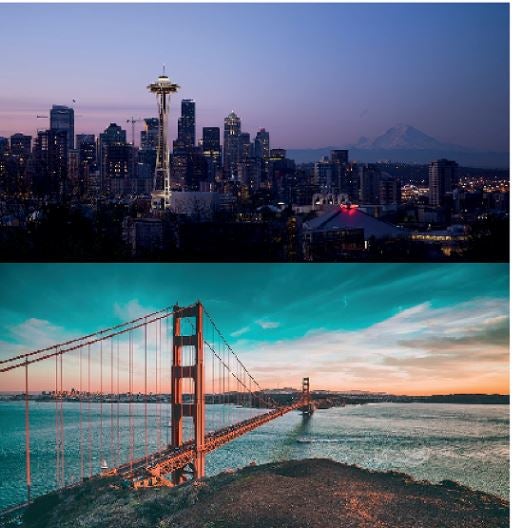
    A magnitude 4.6 earthquake shook Seattle and the Puget Sound region just before 3 a.m. Friday, according to the United States Geological Survey. “It’s been widely felt throughout the Seattle area,” said Paul Caruso, a USGS geophysicist. The shaking emanated from Three Lakes, Snohomish County, about nine miles east of downtown Everett. The earthquake was relatively shallow, originating about 14 miles beneath the surface, according to a USGS map. At most, the earthquake lasted a “couple seconds,” said Joan Gomberg, a USGS seismologist and affiliate faculty member at the University of Washington, though shaking can feel longer “because some houses reverberate a little bit.”  There were no immediate reports of damage in Snohomish County, according to a tweet from the Sheriff’s Office. Police in nearby Lake Stevens reported no damage to city infrastructure. The Washington State Department of Transportation said in a tweet that the agency would be inspecting bridgesFriday morning, but had no reports of damage.

    source

  • Scientific Breakthrough: Octopus DNA Is Not From This World | Spirit Science

    Scientific Breakthrough: Octopus DNA Is Not From This World | Spirit Science

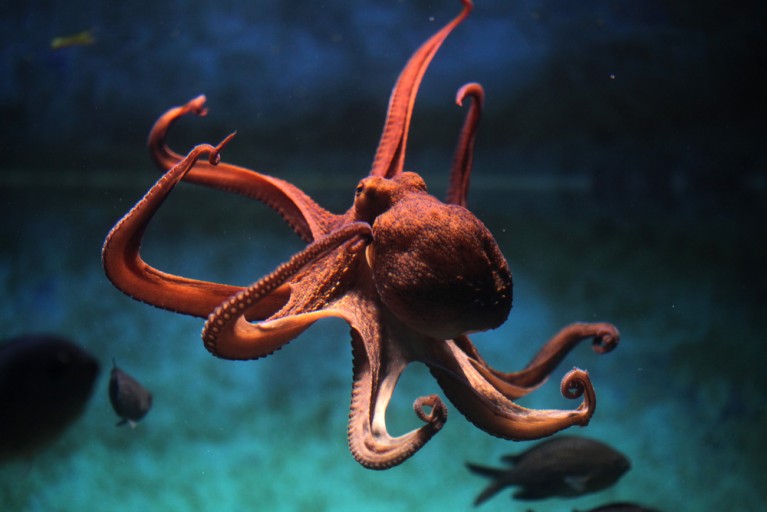
    According to a new breakthrough study, the Octopuses DNA is not of this world! That is right, their genome is far more complex than a human and contains around 33,000 protein-coding genes! This never before seen Alien DNA is nothing like anything else we have studied here on earth.

    The Oceans are full of mysteries that we are still unlocking every year as marine biologists are able to go deeper and study with better technologies. Recently a group of researchers decided to look into the DNA codes around the cephalopods in order to better understand them.shutterstock_246512482

    This classification covers various mollusks such as the squid, cuttlefish and of course the octopus. Scientists believe that their evolution goes back at least 500 million years which means they would even predate land plant species! The Octopus species are so versatile that they are at every depth and in every corner of the ocean.

    They have some incredibly advanced biotechnology on them especially when you think about their sophisticated chameleonic skin color changing response, camera-like eyes, and extremely flexible bodies. Considering these are all invertebrates, they have a very large nervous systems as well.

    These highly developed brains are considered to be extremely intelligent and they have been able to prove their skills by solving complex puzzles. Just check out this video of an octopus opening up a jar!

    This revolutionary new DNA sequencing was able to show that the Octopus is unlike any other creature on this planet. This never-before-seen complexity  was more complex than the human genome and a very exciting discovery for marine biologists worldwide.

    Dr. Clifton Ragsdale from the University of Chicago, U.S. said:

    “The octopus appears to be utterly different from all other animals, even other molluscs, with its eight prehensile arms, its large brain, and its clever problem-solving abilities.

    The late British zoologist Martin Wells said the octopus is an alien. In this sense, then, our paper describes the first sequenced genome from an alien.”

    One of the reasons why biologists wanted to study the octopus to such great lengths is because they seem to naturally be able to adapt and solve very complex problems. The Octopus’s ability to learn and remember baffled scientists which led to a DNA sequencing test.

    This new genome may help explain why they are able to rapidly change colors and even communicate with the color of their skin.

    The scientists also found that the genome is full of transposons which are also known as “Jumping Genes”. These genes rearrange themselves within the genome. Though the scientists aren’t sure what these highly advanced genes do, there is something really alien going on inside the neurons of the Octopus.

    Imagine your body being full of stem cells that could rapidly change based on what you needed from moment to moment. This would be an incredibly advanced biology that could make a huge difference in our ability to adapt to changes in the environment and survive extreme conditions.

    “With a few notable exceptions, the octopus basically has a typical invertebrate genome that’s just been completely rearranged, like it’s been put into a blender and mixed,” said Caroline Albertin, graduate student in Organismal Biology and Anatomy at the University of Chicago. “This leads to genes being placed in new genomic environments with different regulatory elements, and was an entirely unexpected finding.” (Source)

    The scientific report concludes that Octopuses have ‘Alien’ genes that are both shocking and intriguing the marine biologist community.

    It may be time to look deeper in our own oceans and see what other Alien mysteries are buried in the depths.

    Sources:

    This content was originally published here.
  • Apple co-founder Steve Wozniak says you should get off Facebook because ‘there’s almost no way to stop’ companies from spying on your habits

    Apple co-founder Steve Wozniak says you should get off Facebook because ‘there’s almost no way to stop’ companies from spying on your habits

    Steve Wozniak is the latest high-profile naysayer to speak out against Facebook.

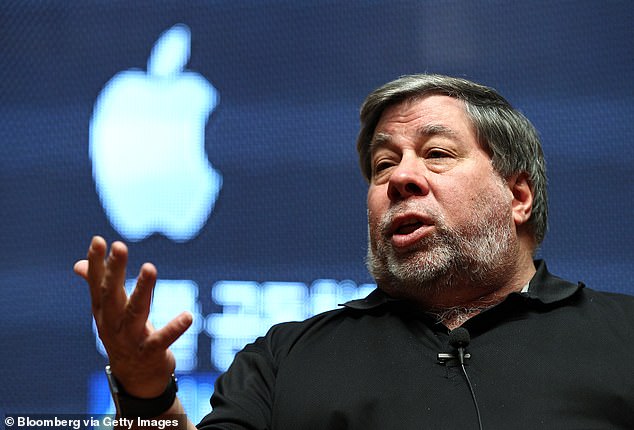
    The Apple co-founder, who deleted his own Facebook profile last year, told TMZ recently that he recommends most people ‘figure out a way to get off’ the site due to ongoing privacy concerns.

    Wozniak warned that people often assume they have much more privacy online than they really do, and said he’s now ‘worried about everything’ when it comes to potential eavesdropping and data sharing.

    And according to Wozniak, the answer is yes.

    ‘I’m worried about everything,’ Wozniak said. ‘I don’t think you can stop it, though.

    ‘Who knows if my cell phone is listening right now? Alexa has already been in the news a lot.’

    The prevalence of connected devices today means your conversations might not be as private as you think they are, Wozniak said.

    ‘There’s almost no way to stop it,’ he added. ‘People think they have a level of privacy that they don’t.

    ‘Why don’t they give me a choice? Let me pay a certain amount and you’ll keep my data more secure and private than everyone else handing it to advertisers.’

    While you may not be able to stop it entirely, there are ways the average person can clamp down on their personal data – including getting rid of Facebook.

    When asked if Facebook and Instagram users should delete their accounts, Wozniak said most would be smart to do so.

    ‘There are many different kinds of people, and for some the benefits of Facebook are worth the loss of privacy,’ Wozniak said.

    ‘But, to many like myself, my recommendation is, to most people, you should figure out a way to get off Facebook.’

    Despite his own role in bringing technology to consumers’ hands, Wozniak has increasingly spoken out about the risks and limitations of today’s systems.

    In the past, he’s also flip-flopped on the topic of autonomous cars. As of last fall, Wozniak said he’s ‘lost faith’ in the abilities of self-driving technology.

    source

  • Lab grown STEAKS could soon be on the menu:

    Lab grown STEAKS could soon be on the menu:

    And with cell biology and tissue engineering, it is possible to grow just muscle and fat tissue. It’s called cultured meat.  Scientists provide cells with the same inputs they need to grow, just outside an animal: nutrients, oxygen, moisture and molecular signals from their cell neighbors. So far researchers have cultivated bunches of cells that can be turned into processed meat like a burger or a sausage.  This cultured meat technology is still in the early phases of research and development, as prototypes are scaled-up and fine-tuned to prepare for the challenges of commercialization. But already bioengineers are taking on the next tougher challenge: growing structured cuts of meat like a steak or a chicken cutlet.

    What meat’s made of

    If you look at a piece of raw meat under the microscope, you can see what you’re eating on the cellular level.  Each bite is a matrix of muscle and fat cells, interlaced with blood vessels and enrobed by connective tissue. The muscle cells are full of proteins and nutrients and the fat cells are full of, well, fats.  These two cell types contribute to most of the taste and mouth-feel a carnivore experiences when biting into a burger or steak. The blood vessels supply an animal’s tissue with nutrients and oxygen while it’s alive; after slaughter, the blood adds a unique, metallic, umami nuance to the meat. The connective tissue, composed of proteins like collagen and elastin, organizes the muscle fibers into aligned bundles, oriented in the direction of contraction. This connective tissue changes during cooking and adds texture – and gristle – to meat. The challenge for cellular agriculture researchers is to emulate this complexity of meat from the bottom up.  We can grow muscle and fat cells in a petri dish – but blood vessels and connective tissue don’t spontaneously generate as they do in an animal.  How can we engineer biomaterials and bioreactors to provide nutrient diffusion and induce organization so we end up with a thick, structured cut of meat?

  • Strongest earthquake in decades a reminder that California is “way overdue” for the “big one,” expert says

    Strongest earthquake in decades a reminder that California is “way overdue” for the “big one,” expert says

    Strongest earthquake in decades a reminder that California is “way overdue” for the “big one,” expert says

    Michio Kaku on imminent California earthquak
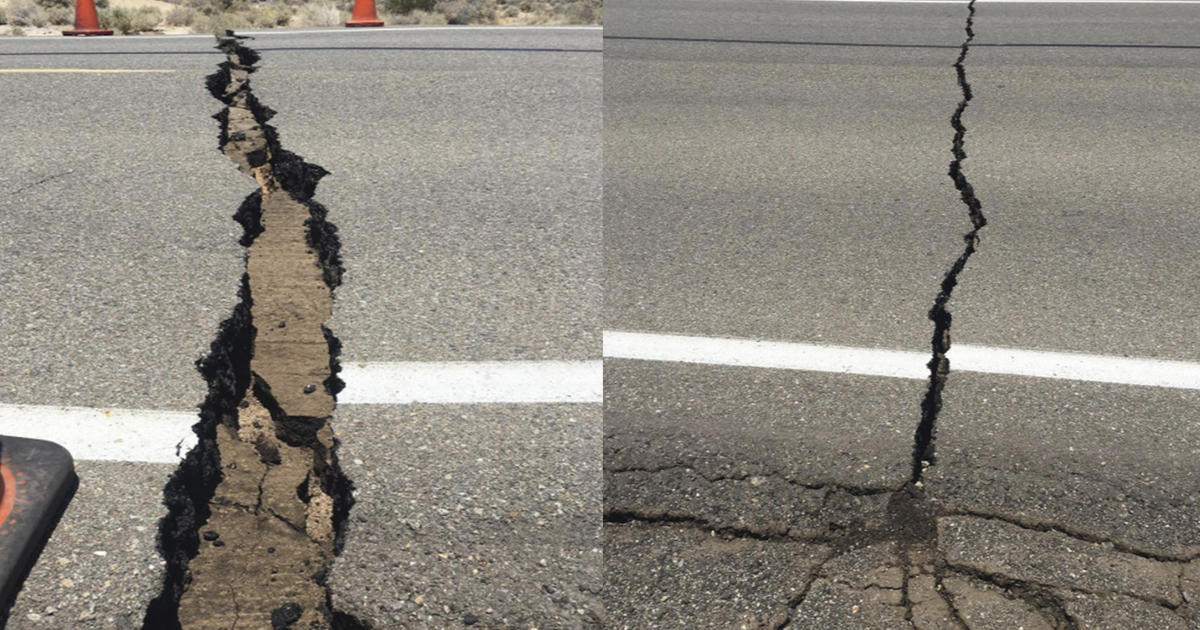
    A Southern California county is shaken after the region’s strongest earthquake in 20 years damaged homes, sparked fires and injured several people. The good news about Thursday’s 6.4-magnitude quake, according to CBS News contributor and physicist Michio Kaku, is that it happened in an unpopulated area of the Mojave Desert about 100 miles from the main San Andreas fault. The bad news? “The probability of a ‘big one’ hasn’t changed at all,” he said.

    “We’re playing Russian roulette with Mother Nature. You realize the last big earthquake to hit the L.A. segment of the San Andreas fault was 1680. That’s over 300 years ago. But the cycle time for breaks and earthquakes on the San Andreas fault is 130 years, so we are way overdue. In any given year, the probability of the big one is 3% in any given year. Think about that,” he said.

    Seismologists in California are predicting another major earthquake may strike in the days ahead. There have already been more than 100 aftershocks in the region. But predicting an earthquake isn’t easy. It all comes down to probability, according to Kaku.


    “Look, I’ll be blunt. It’s voodoo black magic trying to predict when an earthquake is going to take place. The Japanese are the world’s leader in this area, and they can only predict an earthquake perhaps maybe a few seconds to a minute before it actually hits. So we are children when it comes to understanding earthquake prediction,” he said. “In 30 years’ time the probability of the big one is about 100%. So we will see the big one. It’s inevitable. It’s going to happen. It’s the law of physics.”

    Because of that inevitability, he said California residents should get prepared now.

    “Learn about things you can do for the family. Talk to your family, kids, loved ones, what to do, stock up on food, water in case of an emergency. Go have an escape route. Get hooked up to the internet or radio or whatever. Be prepared, basically, because it will happen.”

    This content was originally published here.

  • Four asteroids on COLLISION course with Earth — RT World News

    Four asteroids on COLLISION course with Earth — RT World News

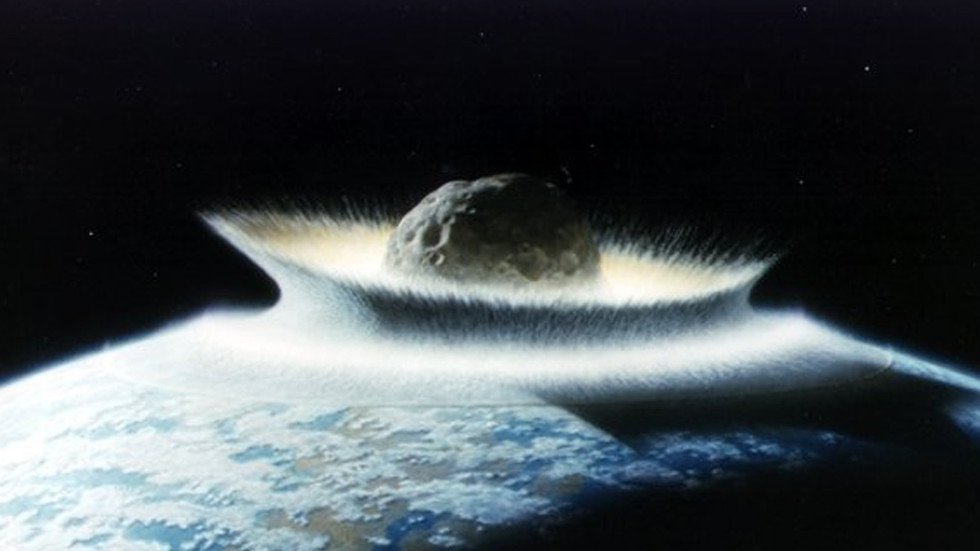
    The United Nations fears that the possibility of an asteroid smashing into a densely populated area isn’t being taken seriously enough, so it designated June 30 as International Asteroid Day to raise awareness about the potentially catastrophic occurrence.

    The date was chosen because the largest asteroid impact in recorded history took place over Tunguska, Russia on that day in 1908 when an enormous asteroid exploded and destroyed hundreds of acres of forest. 

    To mark the event, here are four asteroids that could wallop into Earth.

    1979 XB

    With its 900-meter diameter, if this enormous rock hits our planet the impact would be devastating. It’s currently hurtling through the solar system at nearly 70,000kph and is getting almost 30km closer to Earth every second.

    The European Space Agency (ESA) has put it in second place on its ‘Risk List’ for Near-Earth Asteroids. The orbit of this minor planet is unreliable but it’s predicted to have a chance of hitting Earth midway through this century.  

    Experts warn that 1979 XB could suddenly come a lot closer to Earth, given only a tiny variation in its orbit. Its next predicted approach of Earth is set to come in 2024.

    Roughly the size of four football fields, Apophis is in very close orbit to Earth. It’s currently more than 200 million kilometers away but gets half a kilometer closer every second. 

    It regularly passes Earth on its orbit but the latest radar and optical data suggests we’re in for a close shave when it blazes past our planet at a distance of just 30,000km in 2029. This is less than a tenth of the distance to the Moon.

    It will next fly by Earth in mid-October this year when it will pass us at a safe distance of around 30 million kilometers. If Apophis did blast into Earth the impact is calculated to be similar to about 15,000 nuclear weapons detonating at once.

    2010 RF12

    This asteroid holds the dubious honor of topping both the Sentry List (Earth Impact Monitoring system) and the ESA impact risk list. It’s currently around 215 million kilometers from Earth and is traveling at a speed of 117,935kph. 

    The danger from this asteroid isn’t forecast to come until the end of the century when it’s calculated to come as much as 40 times closer than the Moon. Luckily it weighs, a relatively small, 500 tons and is about seven meters in diameter. The impact is forecast to be slightly less than the meteor that hit the Russian city of Chelyabinsk in 2013, which damaged thousands of buildings and injured hundreds of people. 

    2010 RF12 is set to pass Earth on August 13, 2022 when astronomers around the world will train their telescopes on the object to learn as much as possible about it and its trajectory.

    2000 SG344 

    2000 SG344 is part of a group called the Aten Asteroids, which have orbits aligned very closely with Earth’s. It is predicted to have a chance of impact in the next three or four decades. With just a 50-meter diameter, it’s relatively small but is still twice as big as the Chelyabinsk meteor which caused so much damage six years ago. 

    It’s currently traveling through space at more than 112,000kph and is getting 1.3km closer to Earth every second. Interestingly, it travels around the Sun in almost the exact same time as Earth, 353 days versus Earth’s 365 days. This gives astronomers regular chances to observe the asteroid and assess the risk it poses.

    Undetected asteroids

    Of course, a big part of the danger with hazardous space objects is that we are not good at detecting them and some of the most dangerous ones have caught us by surprise. When the Chelyabinsk meteor entered Earth’s atmosphere undetected, its explosion released up to 30 times more energy than the atomic bombs the US dropped on Japan in 1945.

    As recently as last December, another asteroid broke apart over the Bering Sea that was 10 times more powerful than the bombs dropped on Hiroshima and Nagasaki. Neither Near Earth Objects (NEOs) were tracked in advance. It’s hoped that International Asteroid Day will prompt authorities around the world to improve how they detect the potentially cataclysmic space rocks.

    Like this story? Share it with a friend!

    This content was originally published here.

  • Space miners race to an asteroid worth quintillions

    Space miners race to an asteroid worth quintillions


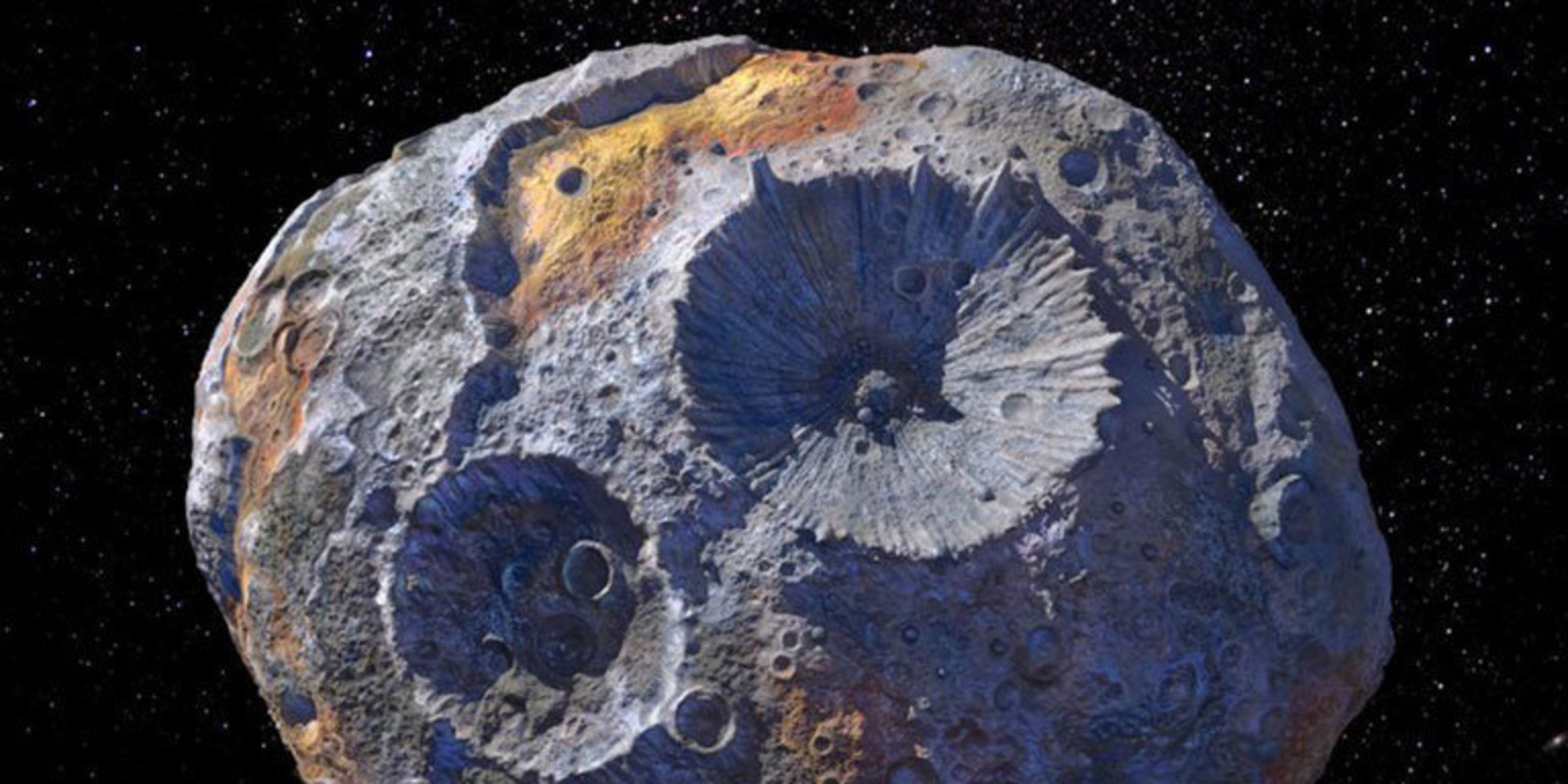
    • 16 Psyche is an asteroid full of metal in the asteroid belt that could be worth $700 quintillion.
    • NASA plans to visit 16 Psyche by 2026.
    • Commercial mining of faraway asteroids could still be decades away and some set closer targets, like the moon.

    None


    Would you like to be a billionaire? All you have to do is figure out how to go into space and mine 16 Psyche, an asteroid made of gold and other metals like iron and nickel. Flying somewhere between Mars and Jupiter, this amazing space rock is estimated to be worth as much as $700 quintillion, thanks to all the metals it contains.

    Quintillion, if you are wondering, is 1 with 18 zeroes. It’s such a large amount of money that if you divide it up between everyone alive on Earth currently, each person would get about $93 billion.

    Of course, don’t pack your bags for your new palace just yet – the prospect of actually getting such a giant chunk of precious metals back to Earth is difficult and hasn’t been accomplished yet even on much smaller scales. And 16 Psyche is a truly massive space rock at over 200 km (120 mi) in diameter. It is one of the largest asteroids flying in the asteroid belt.

    Experts, like Professor Zarnecki of the Royal Astronomical Society, conjecture we may be up to 50 years away from being able to carry out commercial mining operations of that size. To start things off, NASA is planning to send a Discovery Mission to the asteroid in 2022, which will arrive there by 2026.

    None


    Some skeptics also don’t believe the asteroid is as full of expensive things as we think, with Peter Schiff of Euro Pacific Capital tweeting that 16 Psyche may just be “made almost entirely of an iron-nickel alloy, with small amounts of other metals, likely to include gold.” He thinks the news about the asteroid are just out there to help bitcoin, which would benefit from the price of gold going down.

    There are also other questions to consider – if it really is so full of gold and other riches, the asteroid could actually crash Earth’s economy, which at $75.5 trillion is a pittance against the amount of money one could get from the asteroid.

    None

    None


    Veteran miner Scott Moore, CEO of the mining company EuroSun Mining, explained to Oil Price that: “The ‘Titans of Gold’ now control hundreds of the best-producing properties around the world, but the 4-5 million ounces of gold they bring to the market every year pales in comparison to the conquests available in space.”

    Of course, the thinking that a space gold rush that discovers a vast amount of heavy metals could bring down Earth’s affairs is based on the current state of economy and the needs of the present day. Decades from now our requirements for metal might be entirely different.

    None


    16 Psyche was actually discovered back in 1852 by the Italian astronomer Annibale de Gasparis, and named after the Greek mythological character Psyche.

    Besides this giant rock in the asteroid belt, there are other mining opportunities much closer to Earth. Moore points out that while Psyche “may be the Holy Grail of space exploration for gold,” near-Earth asteroids are much better first targets for mining. Even our moon might be a better place to start such operations. It also has gold as well as platinum and other rare earth metals.

    In other nearer goals, Deep Space Industries and Planetary Resources each plan to mine the 2011 UW158 asteroid, worth up to $5.7 trillion.

    Lest you think this is all science fiction, Morgan Stanley projects the global space economy to be already worth $350 billion, which it thinks will grow to trillions by 2040. The race is on between the U.S., China, Japan and even small Luxembourg, which has 10 space-mining companies registered.

    This content was originally published here.