Category: US News

  • Covington Catholic Student Sandmann Sue NBC Universal for $275M for Defamation

    Covington Catholic Student Sandmann Sue NBC Universal for $275M for Defamation

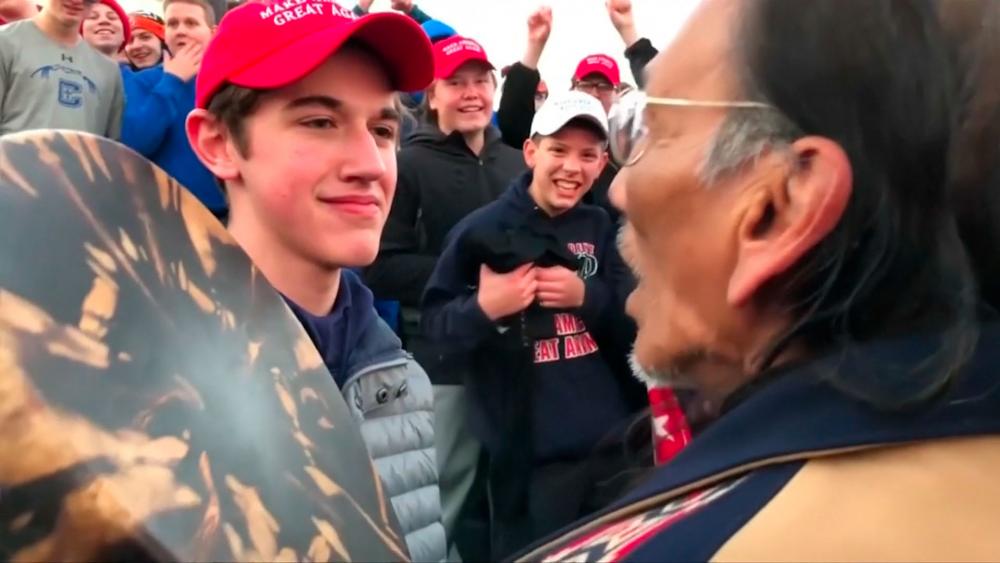
    Covington Catholic High School student Nicholas Sandmann’s attorney is suing NBC Universal for $275 million.  Sandmann is the teenager who found himself at the center of controversy after attending a March for Life event in January.  Video of him standing face-to-face with a Native American man went viral. Reports went out that he and other schoolmates were mocking the Native Americans at rallies that day, and that he had blocked a Native American activist from walking to the Lincoln Memorial.  Sandmann’s lawyer says the NBC Universal media corporation “created a false narrative by portraying the alleged ‘confrontation’ as a ‘hate crime’ committed by Nicholas.”  “Today, @LLinWood and I filed a $275,000,000 lawsuit against NBCUniversal on behalf of Nicholas Sandmann.  The facts of the suit show the anti-Trump narrative NBC pushed so hard,” attorney Todd V. McMurtry posted on Twitter

    The lawsuit later states:

    NBCUniversal’s attacks on Nicholas included at least fifteen (15) defamatory television broadcasts, six (6) defamatory online articles, and many tweets falsely accusing Nicholas and his Covington Catholic High School (“CovCath”) classmates of racists acts…  NBCUniversal created a false narrative by portraying the “confrontation” as a “hate crime” committed by Nicholas.

    It continues:

    NBCUniversal created panels on its talk shows to frame the January 18 incident as one involving a “hate crime” and demonstrating “white supremacy” as a result of “whites” being “emboldened” by President Trump’s presence in the White House and repeated these premises over and over, while continuously showing a carefully selected few seconds from the heavily edited videos that omitted the entire context of the incident.

    Sandmann’s attorneys have already filed defamation lawsuits against CNN and the Washington Post as well.

    After the wall-to-wall media coverage, Sandmann and other students at Covington faced violent threats that escalated to the point where their school had to be closed down for security reasons.
    source

  • George Washington was a great man and needs to be see as that!

    George Washington was a great man and needs to be see as that!

    Yes, a better mural would do better!

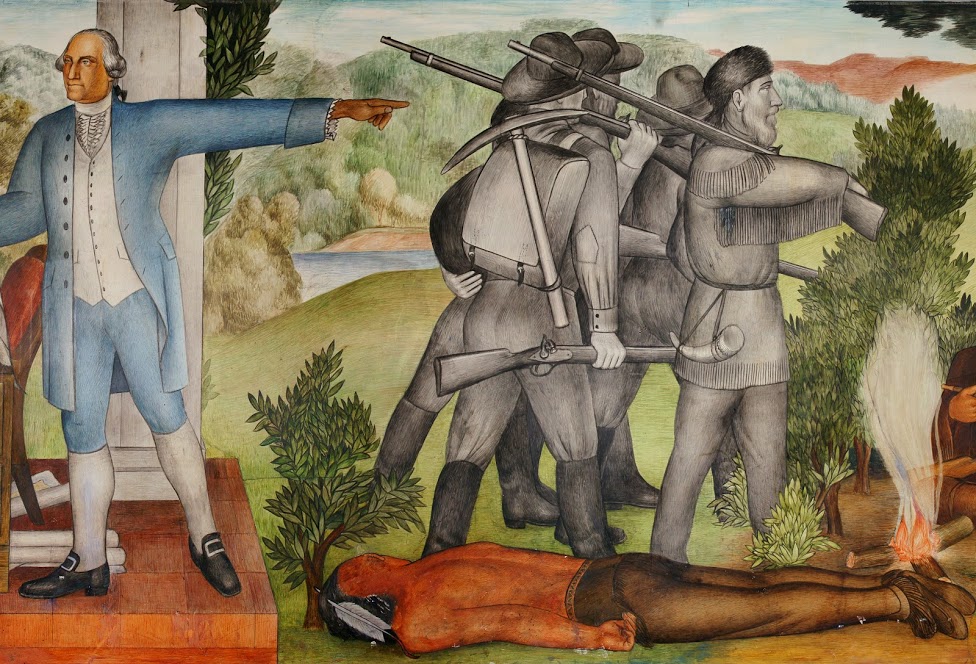
    A Northern California public school district may remove a mural of George Washington from the halls of George Washington High School due to concerns that it’s offensive and demeaning to Native Americans and African-Americans.  The controversy comes after a working group determined the mural, made up of several panels, “traumatizes students and community members.” But advocates for keeping the 83-year-old mural say that removing it ignores the intent of the artist and represents an attempt to erase history.  In 1936, Victor Arnautoff painted the 13 panels that make up the “Life of Washington” mural at the San Francisco Unified School District campus. Arnautoff was a prominent Russian-American painter who created the murals as part of a Works Progress Administration project undertaken during the New Deal.  But a working group that met in recent months determined the artwork is highly problematic and should be archived after being removed from the walls of the school.

    Read more

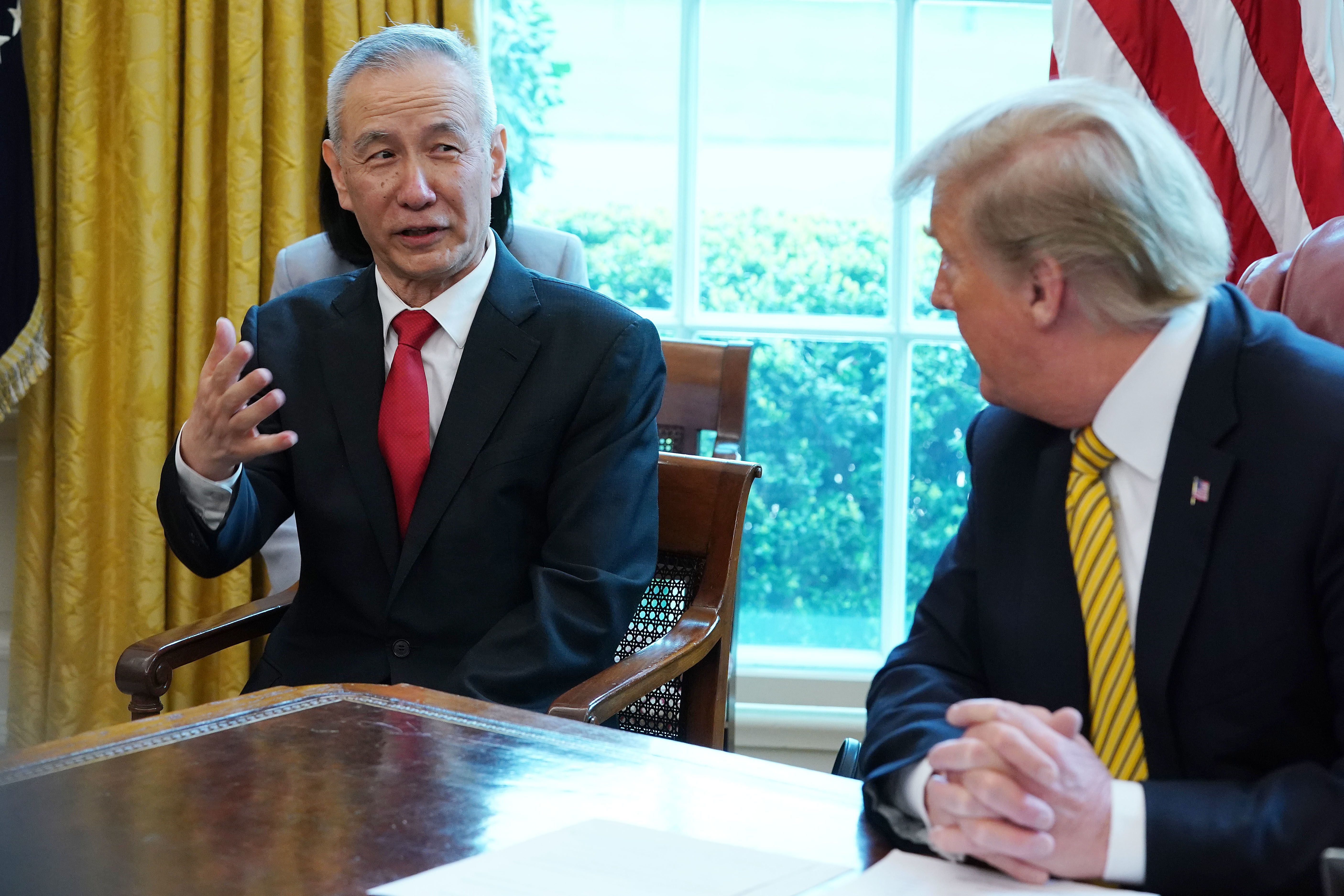
  • In a trade deal with China, the US may get an empty shell – commentary

    In a trade deal with China, the US may get an empty shell – commentary

    As always, the Europeans are happy to pocket the benefits of U.S. pressure that forced Beijing to change its trade rules and practices.

    But they also do things differently. Here is the German example.

    During his speech in Beijing last Friday, German Minister for Economic Affairs and Energy Peter Altmaier said that “we shall take seriously (Xi’s) promises.” Washington, however, wants to codify the Chinese “promises” in the form of binding legal documents, drawing out the negotiating process and allowing China to keep recording surpluses on U.S. trades.

    Germans did not negotiate; they ran down China’s trade surpluses 27.1% over the last three years. But Washington wanted to talk while its trade deficit with China soared 11.6% last year.

    A much more interesting difference is the way Germany and the U.S. manage their trade with China.

    A decline of China’s trade surplus with Germany over the last three years was due to a 22.5% increase of German exports.

    By contrast, U.S. exports to China last year fell 7.5%, and in the first two months of this year they crashed 20.4% from the same period of 2018.

    Clearly, Germany relies on pragmatic and reciprocal measures to manage trade and investments with China, while the U.S. wants structural reforms of the Chinese economy, with changes in the way China manages its aggregate demand and industrial policies. And to make sure China does all that, Washington insists on an enforcement mechanism with a permanent threat of trade sanctions.

    Germany, and the EU trade commissioner, are not asking China for a similar bilateral trading regime.

    The other much more important difference is that, unlike Germany and the rest of the EU, the U.S. is locked into an adversarial strategic posture with China in a number of acute security crises in the Indo-Pacific region. The U.S. is also competing with China for technologies that will determine global military and political dominance in the years to come.

    U.S.-China trade is an essential part of that nexus.

    This content was originally published here.

  • Trump weighs labeling Muslim Brotherhood a terrorist group

    Trump weighs labeling Muslim Brotherhood a terrorist group

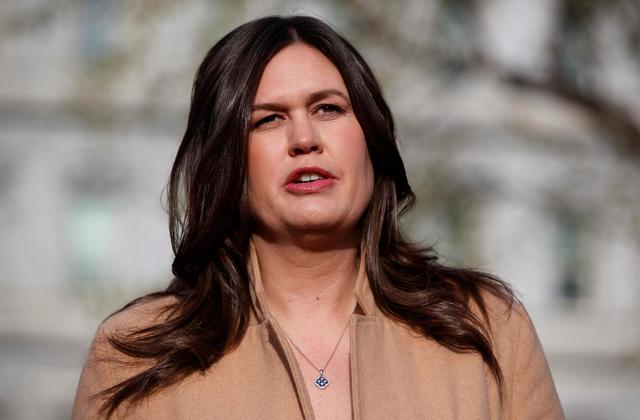
    “The president has consulted with his national security team and leaders in the region who share his concern and this designation is working its way through the internal process,” White House press secretary Sarah Sanders said in an email.  Egyptian President Abdel Fattah al-Sisi asked Trump to make the designation during an April 9 visit to Washington, a senior U.S. official said, confirming a report in the New York Times on Tuesday.  After the meeting, Trump praised Sisi as a “great president” while a bipartisan group of U.S. lawmakers raised concerns about Sisi’s human rights record, his efforts to stay in office until 2034 and Egypt’s planned Russian arms purchases.  The White House did not say on what basis it might label the group a terrorist organization and former officials questioned whether the group met the legal standard of engaging in “terrorist activity” that threatens U.S. citizens or national security.  The Brotherhood, which estimates its membership at up to 1 million people, came to power in Egypt’s first modern free election in 2012, a year after long-serving autocrat and U.S. ally Hosni Mubarak was toppled in a popular uprising.  As Egypt’s army chief in 2013, Sisi engineered the removal of elected President Mohamed Mursi, a senior Brotherhood figure, and a subsequent crackdown on its supporters as well as liberal opposition in Egypt. Sisi was then elected president in 2014.  After Mursi’s overthrow, the Brotherhood was swiftly banned in Egypt. Authorities declared it a terrorist organization and jailed thousands of followers as well as much of its leadership, including Mursi.  The Brotherhood, founded in Egypt in 1928, says it is a non-violent movement and denies any relationship to violent insurgencies waged by al Qaeda and Islamic State militants.  “We will remain … steadfast in our work in accordance with our moderate and peaceful thinking,” the Brotherhood said in a statement on its website.

  • Donald Trump Offers Aid to Rebuild Notre Dame and Flint and Puerto Rico Ask What About Us?

    Donald Trump Offers Aid to Rebuild Notre Dame and Flint and Puerto Rico Ask What About Us?

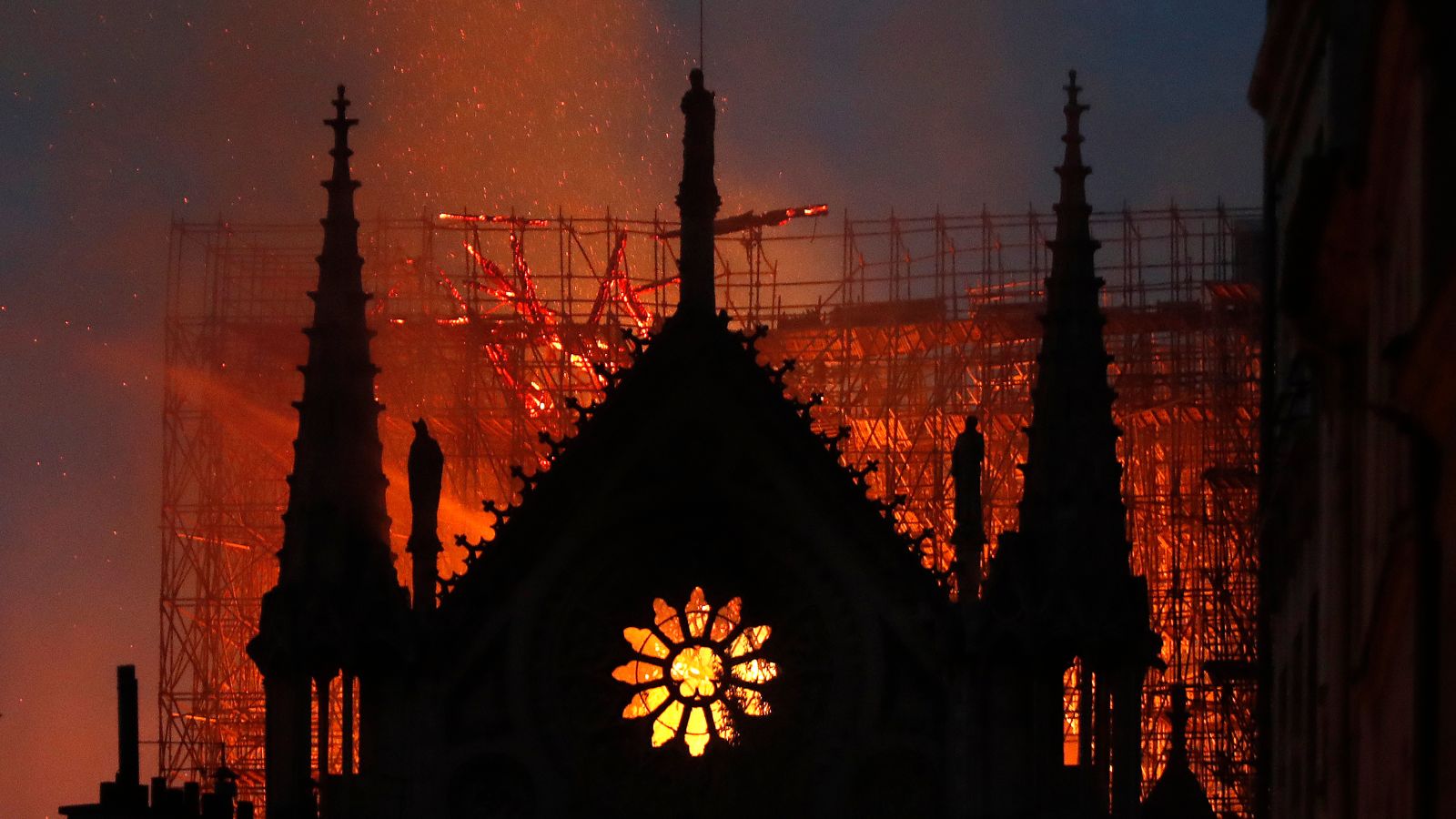
    The glow of flames can be seen through the windows of Notre Dame as fire ravaged the centuries-old cathedral in Paris April 15, 2019. Photo: Associated Press Five years have gone by, some 1,825 days, since the people of Flint, Mich., were doomed to a life with no clean water, with no clear end in sight. ( Nestle just pledged to continue providing bottled water for the town at least through August of this year.) And it’s been more than 18 months since Hurricane Maria devastated Puerto Rico, killing nearly 3,000 people , destroying much of the infrastructure and leaving much of the island U.S. territory still without adequate power. It remains a struggle for both the people of Flint and Puerto Rico to get the federal funds needed to make full recoveries, and so it was that on Tuesday, the day after flames ravaged France’s historic Notre Dame cathedral, some found irony in the speed with which the U.S. pledged to come through with cash to support efforts to rebuild the almost-1,000-year-old edifice. They and many others ( #Flint was trending much of the day on Twitter) were reacting to news announced by Donald Trump’s administration that the U.S. would be sending aid to France to assist in the rebuilding of Notre Dame. As White House press secretary Sarah Huckabee Sanders put it, according to The Hill, the U.S. will offer “assistance in the rehabilitation of this irreplaceable symbol of Western civilization.” On the same day, word came in that Flint was receiving a remaining $77.7 million in federal funding to assist in that community now almost five-year-long battle to again have clean water flowing through its taps. But as MLive pointed out, rather than being new monies to help speed progress along: The funds are from a $120 million federal and state loan granted to Flint in March 2017 by the Water Infrastructure Improvements for the Nation Act of 2016. The funds support several Flint water infrastructure projects. And as NPR reports, funding for Puerto Rico is at at standstill due to infighting among federal lawmakers on the Hill. So, it would seem that critics aren’t so much questioning whether the U.S. should put dollars into remaking Notre Dame as much as voicing that old saying: Charity, or, in this case, taxpayer-funded legislative aid, should perhaps begin at home.

    This content was originally published here.

  • Find the American Voice

    Find the American Voice

    How important is the radio in your car, home, office or anywhere?  It was very important at one time and the evenings entertainment too.

    For decades, AM radio has felt as commonplace as a utility, such a basic fact of life that it’s taken for granted. But that’s changing: Across America, AM radio stations are dwindling in number and profitability, as better-sounding FM signals become cheaper to broadcast and would-be listeners turn to the internet for entertainment.

    Yet even in decline, it has a strength that politicians and media insiders who want to understand America would do well to heed. In 2019, thousands of AM stations remain on the air, many of them thriving—in part because they serve unique sets of people whose voices aren’t always heard loudly. For generations, it was considerably cheaper to buy or start an AM station than any other form of mass media, making ownership more accessible to people of color, immigrants, non-English speakers and those with political views outside the mainstream. Without the line-of-sight restrictions of FM radio, AM radio can also cover vast geographic areas, and so remains a staple of rural media. Even now, if you tune into the right frequency on a clear summer night, you can hear a broadcast from half a continent away—listening in on the kinds of conversations that shape identity and politics far outside the Beltway.

    For devotees eager to preserve the format, AM has a would-be savior in Washington: Federal Communications Commission Chairman Ajit Pai. Better known  as a free-market “net neutrality” deregulator, Pai launched an effort to revitalize AM several years ago, shortly after becoming an FCC commissioner. Growing up in Parsons, Kansas, in the 1970s and ’80s, Pai has said he listened to AM radio with his parents, who had come to the United States from India with “little more than $10 in their pockets and a radio.” But purists are concerned that in his efforts to save AM radio, Pai might be inadvertently killing off what makes it unique, potentially curtailing long-distance AM broadcasters and moving more of its broadcasts to FM.

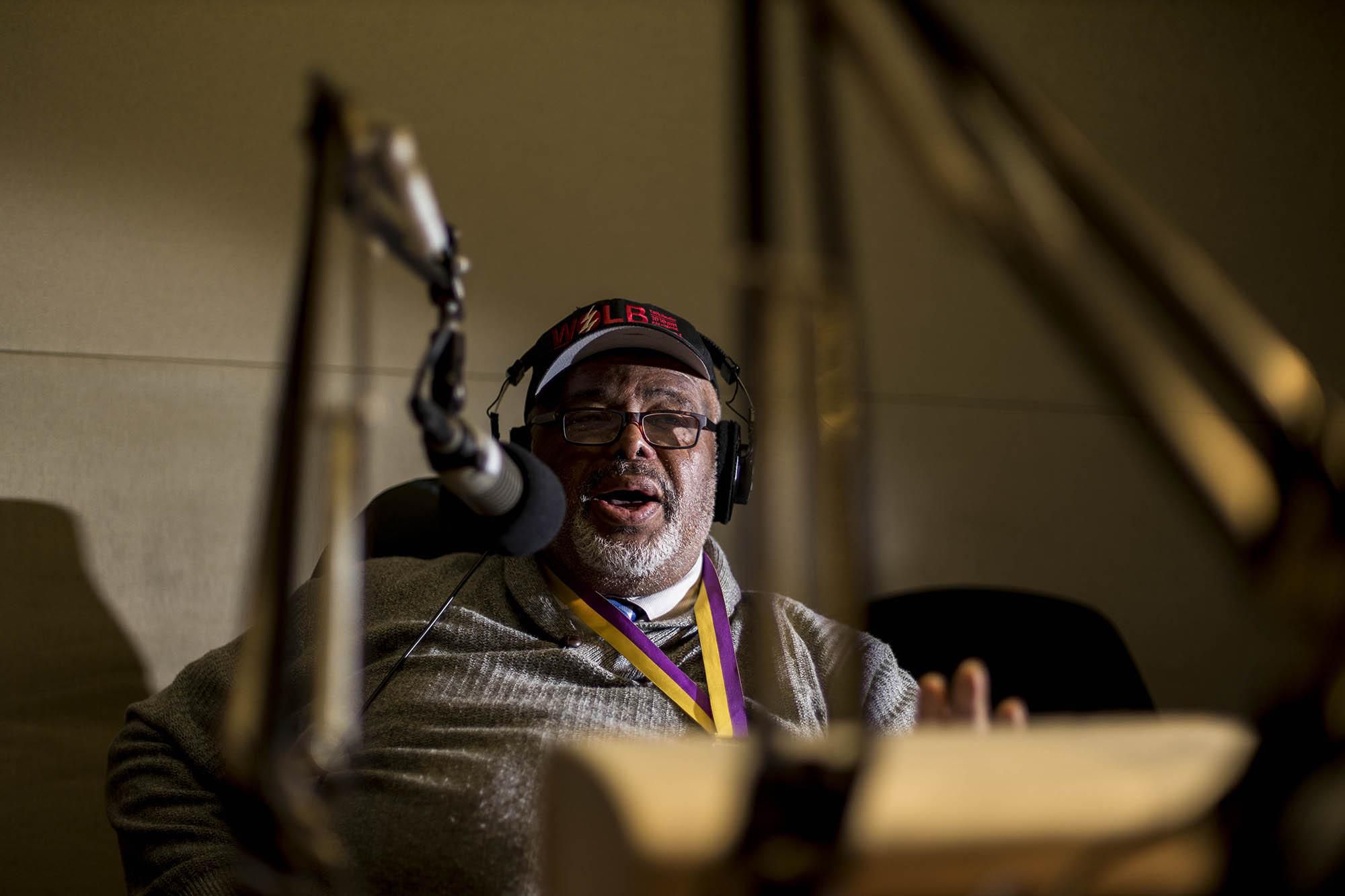
    Over the past few months, Politico Magazine has drawn on radio ratings and conversations with broadcasting experts to identify some of the most distinct voices on the AM dial. They include a sheep farmer who reports on the agricultural industry for a vast rural audience; an icon of inner-city Baltimore who inspired a character on “The Wire”; and one of the only on-air personalities who broadcasts in the Navajo language. Some are conservative, some are liberal, some avoid politics altogether. In these photos, by Politico’s M. Scott Mahaskey, we glimpse what is being lost when AM radio stations disappear: not just call signs, but places where community is built.

    source and more

  • DHS Releases 7K Illegal Aliens into U.S. in Five Days; 1.4K Released Every Day

    DHS Releases 7K Illegal Aliens into U.S. in Five Days; 1.4K Released Every Day

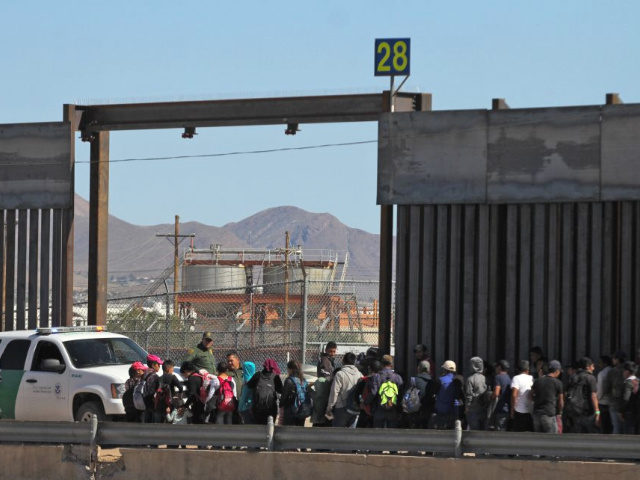
    The latest catch and release totals obtained by Breitbart News revealed that, currently, DHS is releasing about 1,400 border crossers and illegal aliens into the interior of the U.S. every day. Between April 18 to April 22, DHS released about 7,000 border crossers and illegal aliens into the country.

    The catch and release process often entails federal immigration officials busing border crossers into nearby border cities and dropping them off with the promise that they will show up for their immigration and asylum hearings, sometimes years later. The overwhelming majority of border crossers and illegal aliens are never deported from the country once they are released into the U.S.

    source

  • This is a  High School Textbook, Referring to Trump ‘Mental Stability’ and ‘Not Very Hidden Racism’?

    This is a High School Textbook, Referring to Trump ‘Mental Stability’ and ‘Not Very Hidden Racism’?

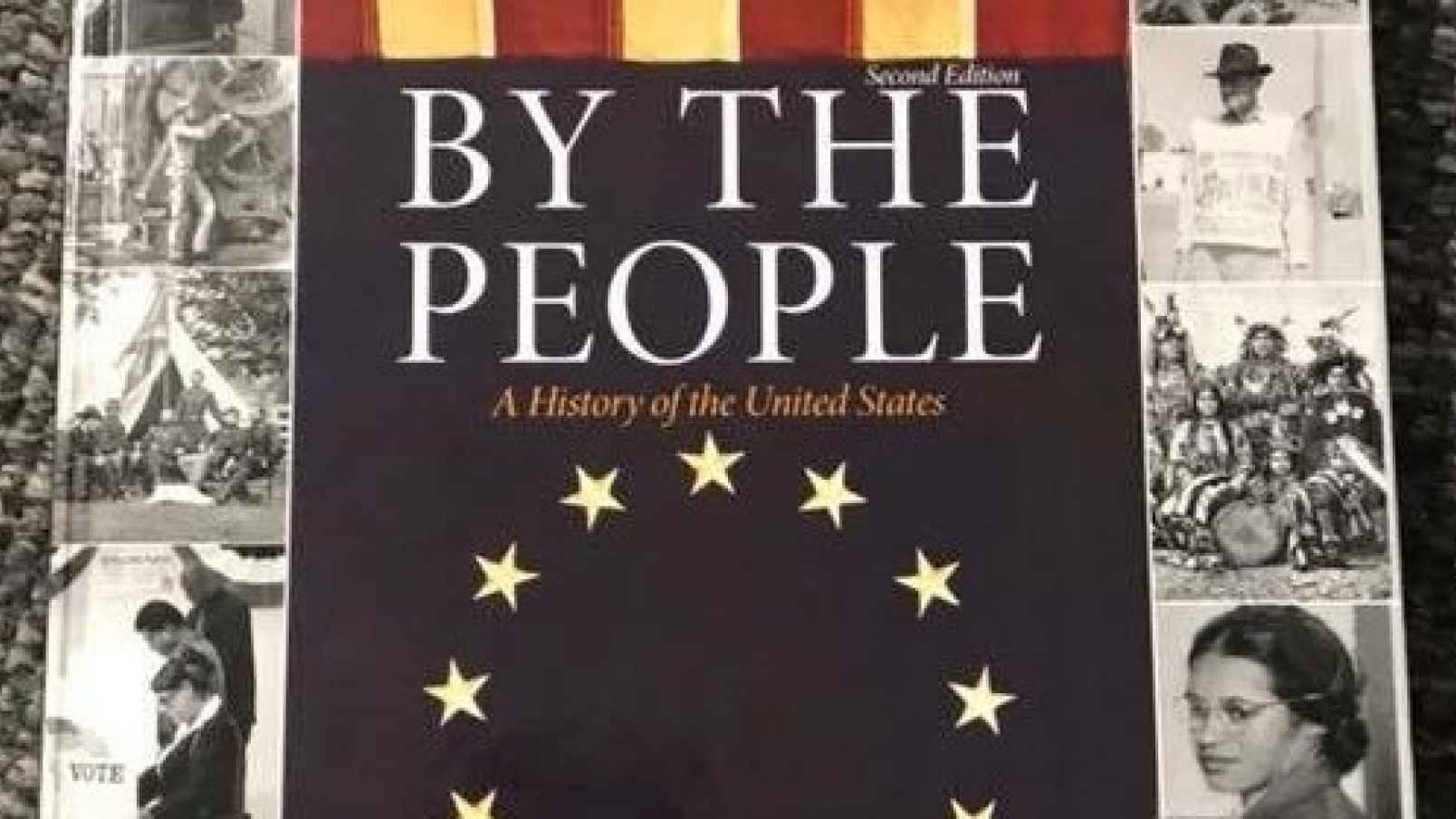
    High school students are being taught US history from a textbook that focuses on arguments made by Hillary Clinton’s supporters, labeling Donald Trump as mentally ill and racist, and his supporters as white and angry. The American history textbook By the People: A History of the United States has a section entitled “The Angry Election of 2016” which is critical of the president.  According to The Federalist, the textbook is published by Pearson Education and authored by New York University professor James Fraser, and it started being rolled out to public schools in 2018.  Fox News’ Todd Starnes reports one student, Tarra Snyder of Rosemount High School in Minnesota, obtained a copy of the book from her school. She said she was “appalled” after seeing the election section and how the textbook ignored the Democratic presidential issues at the time.

    “It was really, really surprising to me,” she said. “I really believe that learning should be objective and that students can make their own decisions based on what they’re able to learn in a classroom, and if the facts are skewed then students aren’t able to make well-rounded decisions on what they believe.”  The author wrote in the textbook, “Most thought that Trump was too extreme a candidate to win the nomination, but his extremism, his anti-establishment rhetoric, and, some said, his not very hidden racism connected with a significant number of primary voters.”  The author went on to state the president’s supporters were “mostly older, often rural or suburban, and overwhelmingly white.”  “Clinton’s supporters feared that the election had been determined by people who were afraid of a rapidly developing ethnic diversity of the country, discomfort with their candidate’s gender and nostalgia for an earlier time in the nation’s history,” the author continues. “They also worried about the mental stability of the president-elect and the anger that he and his supporters brought to the nation.”

    Scott Overland, a spokesperson for the British-based Pearson Education, told CBN News, “AP History ‘By the People’ was developed by an expert author and underwent rigorous peer review to ensure academic integrity… This work is designed to convey college-level information to high school students and meet specific Advanced Placement standards.”  But critics say the book crosses a line.  “In case you didn’t think there was an effort going on in public schools to indoctrinate kids with an anti-conservative agenda, a friend of mine took pictures and highlighted parts of this AP US History book,” tweeted Alex Clark, co-host of The Joe and Alex Show on WNOW in Indianapolis, Ind.

    source


  • Is LGBT status a protected class?  How about aged, unborn babies, do they really care?

    Is LGBT status a protected class? How about aged, unborn babies, do they really care?

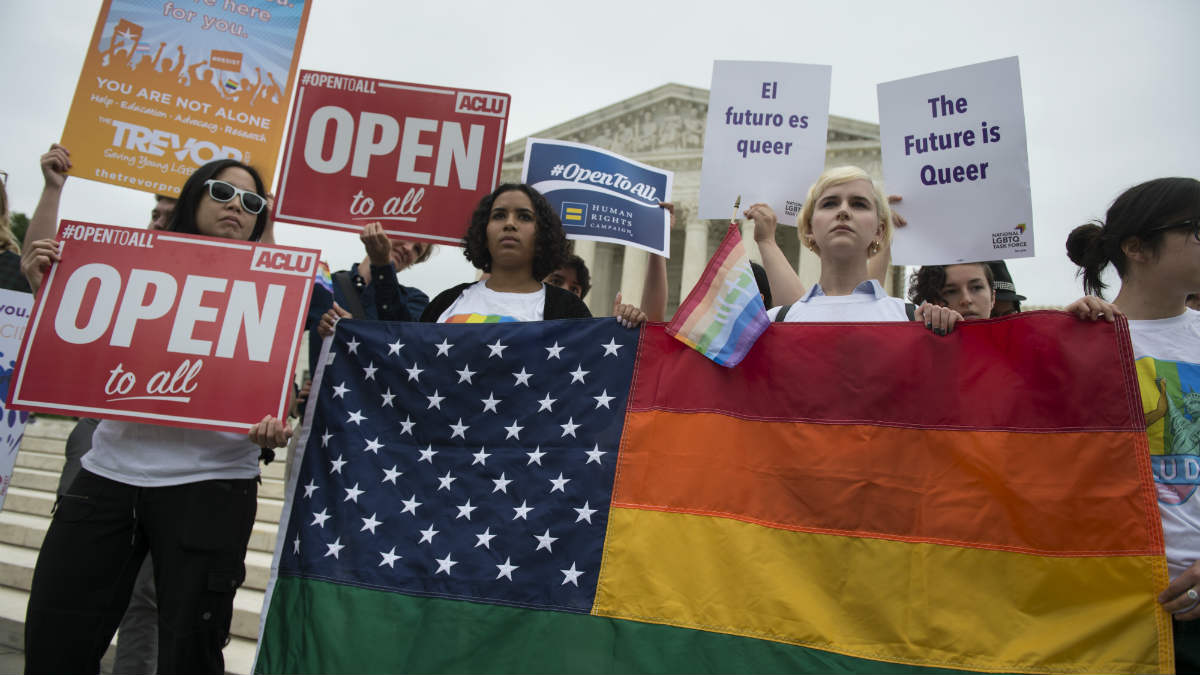
    The Supreme Court has agreed to rule on whether or not the Civil Rights Act needs further clarification to include LGBT people specifically as a protected class.

    What’s the background?

    Title VII of the 1964 Civil Rights Act “prohibits employment discrimination based on race, color, religion, sex and national origin.” The question before the Supreme Court now is whether or not this protection for employers against sex-based discrimination already extends to sexual orientation, making it a protected class.  One of the plaintiffs in the cases being brought before the court involves a New York skydiving instructor named Donald Zarda. According to the lawsuit, Zarda told a female skydiving client that he was gay to ease her mind about being strapped to him while skydiving. He claimed he was fired in 2010 for divulging this information after the woman’s boyfriend complained to his employer.

    Zarda would later die in a BASE-jumping accident in 2014, four years before the Second Circuit Court of Appeals ruled that he had been wrongfully terminated under Title VII.  Along with Zarda’s case, the court will hear the case of a Georgia child welfare services coordinator and a transgender funeral home worker from Michigan, who both attest that they were fired because of their sexual orientation or gender identity. Lower courts have disagreed about whether or not Title VII protections apply in these cases, with the 6th Circuit Court ruling they do, and the 11th Circuit Court ruling that they do not. The Trump administration has also argued that Title VII only applies to discrimination based on birth gender and not orientation or transgender identity.

    What else?

    In addition to answering more general questions about discrimination, this ruling could also determine whether or not religious organizations or business owners have a right to refuse to employ or do business with gay or transgender people on the basis of their personal convictions.  The Supreme Court had refused to hear a similar case in 2017.

    source

  • Russians meddled in our democracy while Obama administration did nothing about it.

    Russians meddled in our democracy while Obama administration did nothing about it.

    The Mueller report flatly states that Russia began interfering in American democracy in 2014. Over the next couple of years, the effort blossomed into a robust attempt to interfere in our 2016 presidential election. The Obama administration knew this was going on and yet did nothing. In 2016, Obama’s National Security Adviser Susan Rice told her staff to “stand down” and “knock it off” as they drew up plans to “strike back” against the Russians, according to an account from Michael Isikoff and David Corn in their book “Russian Roulette: The Inside Story of Putin’s War on America and the Election of Donald Trump”.  Why did Obama go soft on Russia? My opinion is that it was because he was singularly focused on the nuclear deal with Iran. Obama wanted Putin in the deal, and to stand up to him on election interference would have, in Obama’s estimation, upset that negotiation. This turned out to be a disastrous policy decision.

    Obama’s supporters claim he did stand up to Russia by deploying sanctions after the election to punish them for their actions. But, Obama, according to the Washington Post, “approved a modest package… with economic sanctions so narrowly targeted that even those who helped design them describe their impact as largely symbolic.” In other words, a toothless response to a serious incursion.
    But don’t just take my word for it that Obama failed. Congressman Adam Schiff, who disgraced himself in this process by claiming collusion when Mueller found that none exists, once said that “the Obama administration should have done a lot more.” The Washington Post reported that a senior Obama administration official said they “sort of choked” in failing to stop the Russian government’s brazen activities. And Obama’s ambassador to Russia, Michael McFaul, said, “The punishment did not fit the crime” about the weak sanctions rolled out after the 2016 election.
    A legitimate question Republicans are asking is whether the potential “collusion” narrative was invented to cover up the Obama administration’s failures. Two years have been spent fomenting the idea that Russia only interfered because it had a willing, colluding partner: Trump. Now that Mueller has popped that balloon, we must ask why this collusion narrative was invented in the first place.
    Given Obama’s record on Russia, one operating theory is that his people needed a smokescreen to obscure just how wrong they were. They’ve blamed Trump. They’ve even blamed Mitch McConnell, in some twisted attempt to deflect blame to another branch of government. Joe Biden once claimed McConnell refused to sign a letter condemning the Russians during the 2016 election. But McConnell’s office counters that the White House asked him to sign a letter urging state electors to accept federal help in securing local elections — and he did.
    But the Mueller report makes it clear that the Russian interference failure was Obama’s alone. He was the commander-in-chief when all of this happened. In 2010, he and Eric Holder, his Attorney General, declined to prosecute Julian Assange, who then went on to help Russia hack the Democratic National Committee’s emails in 2016. He arguably chose to prioritize his relationship with Putin vis-à-vis Iran over pushing back against Russian election interference that had been going on for at least two years.