Category: Conversation Starters

  • Kids want Friday off from Primary School

    Kids want Friday off from Primary School

    Ask any kid and they will tell you this is a great idea!  Who would not agree to this?

    Primary school is to give pupils Friday afternoons off as they say that children “lack focus” by the end of the week.  From September, Neyland Community School in Pembrokeshire, west Wales will close its gates at 12.15pm rather than 3.20pm on Fridays.  The move is not a way to “give teachers an afternoon off” nor is it a money-saving mechanism, the school said.  Instead, they argue that Friday afternoon lessons are pointless since youngsters lack “attention and focus” to learn after a full week of classes.  The school claims that the move will improve children’s education, as well as enable families to spend more quality time together.  In a letter to parents, the school said that it is implementing the change after finding that on Friday afternoons “pupils often suffer from a greater lack of attention/ focus than at other times in the week”.

    The school hopes the early finish will “further raise standards and improve outcomes for learners across the school”.  The move was greeted with a mixed response from parents, with one mother saying: “It is a really good idea – I know that by Friday afternoon the kids are burnt out and don’t take anything in.”  Meanwhile, another pupil’s father said: “This is ridiculous. Both my wife and I work so this will mean one of us having to take Fridays off too to look after our kids.”  A spokeswoman for Pembrokeshire County Council said: “We want to establish a culture of inquiry, innovation and exploration where teaching approaches and interventions used in class are research and evidence based on an on-going basis. This is a change to existing arrangements.

    “The intention is not to give teachers an afternoon off as has been mistakenly suggested by some. Teachers will have no change in their current contracted working hours – just in the way they work them.  “If we cannot utilise Friday afternoons in this way then teachers will be end up being regularly taken out of class for training. Naturally this results in disruption for the children and supply teacher costs, both of which we really want to avoid.  “This is a schools’ initiative which we wish to see implemented because we see real benefits for the children by improving their learning experiences and making them the best that they can be.”  Dozens of schools have warned that they may need to close early on Friday in order to save money. Other schools have started their classes later in the day to allow “bleary eyed” students to have a lie in rather than come to school feeling tired.

  • 30 Of The Best License Plates That People Have Spotted On Cars

    30 Of The Best License Plates That People Have Spotted On Cars

    There’s something about vanity license plates that can cause a severe case of eye-roll; this person refuses to make do with a random assortment of letters and numbers like the rest of us and insists on making a statement. “Oh, look at me everybody!”

    Well not always. While some use the opportunity to promote themselves, their wealth and their lack of class, others take advantage of this tiny piece of advertising real-estate to make us laugh. Because on a long drive, any piece of entertainment on the roads should be welcomed, shouldn’t it?

    While the DMV and other automobile authorities do try to keep things civilized and take the fun out of it, these people have found a way regardless. From puns and Pokemon to even getting their puppy involved, this list compiled by Bored Panda is the very best of license plate creativity!

    read more

  • Leyland runner ‘saved by dogs’ after hill fall

    Leyland runner ‘saved by dogs’ after hill fall

    Pita Oates, 48, was left unable to stand after she fell on a three-mile run in Lancashire with her blue collies Buddy and Merlyn.  One of the dogs stayed with her as she inched down the hill, while the other ran around barking for help.  This attracted the attention of another dog walker who contacted emergency services.  Ms Oates, from Leyland, said: “They were like a tag team, Buddy never left me while Merlyn went for help.  “I would have died without a doubt, I wouldn’t have lasted the night.”

    When help arrived Ms Oates, who had left her mobile phone in her camper van, was drifting in and out of consciousness and starting to suffer the effects of hypothermia.  She said: “It was the tail-end of Storm Gareth, it was freezing and I was soaking wet. The winds were horrendous.” “I couldn’t stand up, I was having to bum-shuffle all the way down,” she said.  Every time my leg touched the ground I was in pain so I rigged up a sling using the dog’s lead to keep my leg up.” It took her 90 minutes to get down the hill by which time it had gone dark.

    “Buddy never left me and Merlyn kept barking back at him – when this man came with his dog he knew something wasn’t right,” she said.  Paramedics and members of the Bowland Mountain Rescue Team, as well as two from Bolton Mountain Rescue, arrived to help rescue Ms Oates. She spent eight days in hospital and had a titanium plate fitted but still needs another operation.

    source

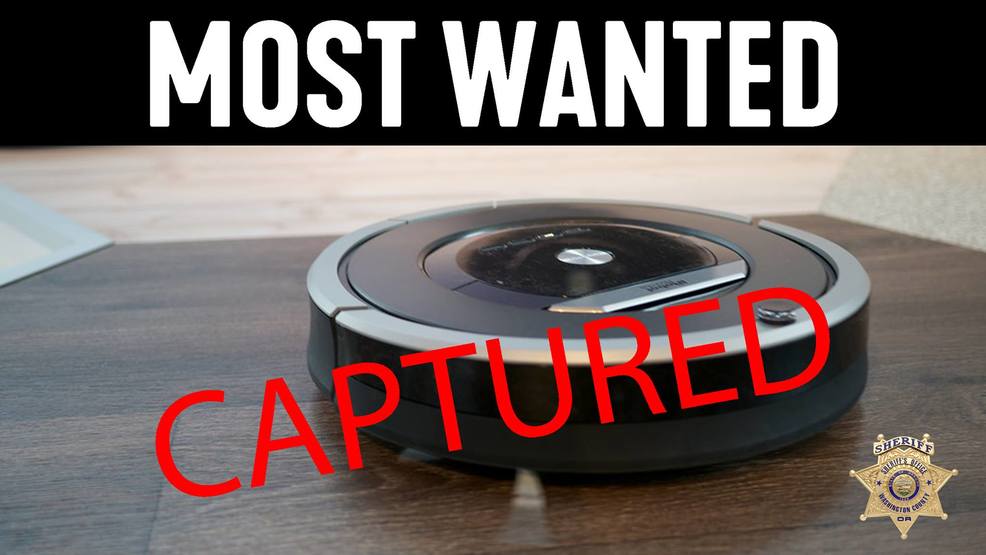
  • Deputies surround burglar in Oregon home, find out suspect is Roomba trapped in bathroom

    Deputies surround burglar in Oregon home, find out suspect is Roomba trapped in bathroom

    WASHINGTON COUNTY, Ore. (KATU) – Deputies responding to a 911 call for a “burglary in progress” at an Oregon woman’s home ended up catching the culprit – a robotic vacuum that was trapped in her bathroom.  The initial call came in from someone reporting that a stranger was in her bathroom, and that the person had the bathroom door locked, the sheriff’s office said Tuesday in a post online.  She said she could see shadows moving under the door.  Within minutes several deputies surround the home, calling for a K9 team as backup. They say they could hear a rustling noise coming from the bathroom.  After calling to the “suspect” several times over a loudspeaker, deputies went into the home with their guns drawn. After opening the bathroom door, deputies say they found an automated robot vacuum crashing around on the floor.

    “As we entered the home we could hear rustling in the bathroom. We made several announcements and the ‘rustling’ became more frequent. We breached the bathroom door and encountered a very thorough vacuuming job being done by a Roomba Robotic Vacuum cleaner,” the Washington County Sheriff’s Deputy Rogers wrote in his report of the incident.

    source

  • World’s Oldest Woman Attributes Her Long Life to Marijuana

    World’s Oldest Woman Attributes Her Long Life to Marijuana

    After living to the ripe old age of 125, Fulla Nayak became the world’s oldest woman before she died peacefully in her home. In the years before her death, many curious reporters and researchers came to interview Fulla, seeking answers to good health and longevity. Her answer seemed to stun them all. Fulla believed she lived so long because she smoked marijuana every day. Family members said she was routinely seen sipping hot tea and smoking ganja. Apart from weak eyesight, she suffered from no major health problems up until the time of her death.

    Fulla’s story has inspired many baby boomers to consider the possibilities of medical marijuana to slow the signs of aging and preserve good health. We know that marijuana can offer some incredible health benefits, particularly among the world’s aging population. Much research has been devoted to how marijuana can be used as a treatment for Alzheimer’s disease, which currently impacts more than five million Americans annually. Alzheimer’s is one of the cruelest possibilities for a person to face because it strips away your memories and leaves you with depression, anxiety, and an inability to even exercise basic self-care. Fulla never experienced Alzheimer’s and relatives reported that her mind remained sharp up until the day she died.

    Marijuana is also a powerful treatment for loss of appetite. Wasting syndrome is increasingly common among elderly patients as well as those who suffer from AIDS. But marijuana serves as a natural appetite stimulant that encourages patients to eat and maintain a healthy weight, which gives enough energy to continue fighting against chronic disease.

    There are many additional ways that marijuana could be beneficial for aging Americans. It can ease depression, prevent osteoporosis, treat insomnia, and even ease joint pain related to arthritic. In many cases, it can replace pharmaceutical drugs that cost a host of unpleasant side effects. The life of Fulla Nayak makes it clear that marijuana is truly a wonder drug and it’s time that we embrace it’s real potential.

    The post World’s Oldest Woman Attributes Her Long Life to Marijuana appeared first on Vaporizer Nerd.

    This content was originally published here.

  • Scottish Man Decides To Cycle Across The Globe Solo But Finds A Stray Cat Which Accompanies Him

    Scottish Man Decides To Cycle Across The Globe Solo But Finds A Stray Cat Which Accompanies Him


    In September 2018, Dean Nicholson had one goal – to cycle across the globe solo – and he began his long journey riding from his hometown Dunbar, Scotland. The 31-year-old Scottish traveler was tired from his nine-to-five job as a welder so he wanted to change his lifestyle and see the world from a bicycle seat.

    The trip went great as he traveled south, passing through eight different countries and sharing his wild adventures online. But when he was crossing the Bosnian border into Montenegro, his plans had to change a little bit.

    He knew that since they were in the middle of nowhere and the kitty was desperately hungry, her previous owner had intentionally dumped her. After a trip to the vet, Nicholson named her Nala, after one of the characters in his favorite movie ‘The Lion King’ and took her on his journey.

    At first, Nicholson didn’t have a place for kitty so he had to be creative. He made some space in his front basket, clearing out some of his digital equipment and carefully placed her there. In that way, his new companion was granted the best seat in the front and had the honor to lead the way.

    Nala quickly showed her loving personality and adventurous soul. She loves traveling and is super relaxed and chill showing no signs of discomfort traveling long distances. Sometimes she jumps out of the box and sits on Nicholson’s shoulder. She attracts everyone’s attention and they always ask for a picture of her.

    Read more and see great pictures of the two of them!

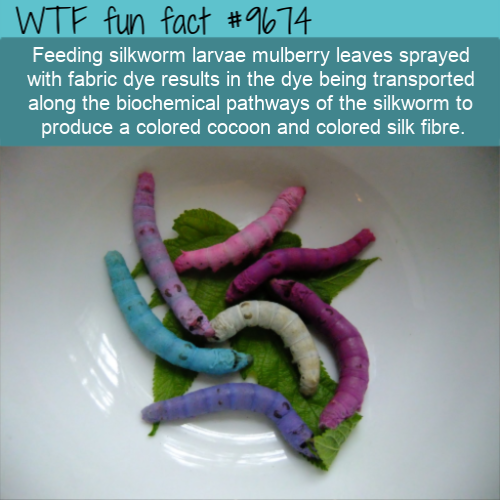
  • Feeding silkworm larvae mulberry leaves sprayed…

    Feeding silkworm larvae mulberry leaves sprayed…

    Feeding silkworm larvae mulberry leaves sprayed with fabric dye results in the dye being transported along the biochemical pathways of the silkworm to produce a colored cocoon and colored silk fibre….

    This content was originally published here.

  • German Professor Who Is A Hardcore Star Wars Fan Has Just Repainted An Observatory Into R2-D2

    German Professor Who Is A Hardcore Star Wars Fan Has Just Repainted An Observatory Into R2-D2

    In a galaxy far far away (Germany) Hubert Zitt, a professor at the Zweibrücken University of Applied Sciences and known for Star Trek andStar Wars lectures, along with a small team, transformed the Zweibrück Observatory of the Natural Science Association into a giant R2-D2 – and it is out of this world.

    The sci-fi professor completed the project in September 2018, aided by his father-in-law Horst Helle, the master painter Klaus Ruffing and several helping students and it has caught the eyes of Star Wars fans everywhere. The most notable fan of the re-design was Star Wars actor Mark Hamill who tweeted about it, “R2-D2 Observatory Transformed Germans Into Giant Nerds.”

    While spectacular, Zitt and his team aren’t the first fans to complete a Star Wars design challenge. Goodsell Observatory at Carleton College in Minnesota was also transformed into an R2-D2 back in 2010.

    read more

  • Media Silence Surrounds Muslim Massacre of Christians | Breitbart

    Media Silence Surrounds Muslim Massacre of Christians | Breitbart

    Political leaders and public figures were falling over themselves this weekend to condemn the mosque attacks in New Zealand, while dozens of Christians were slaughtered by Muslims in Nigeria to the sound of crickets.

    The mosque attacks were indeed a horrific affair and worthy of universal condemnation. Presidents, prime ministers, royalty, and religious leaders rushed to extend their condolences to victims and their families — as well they should — while decrying the hate that purportedly motivated the shootings.

    Without exception, the mainstream media gave top billing to the shootings, with newspapers carrying the story on their front pages and television news channels leading off their broadcasts with the story.

    The bizarre aspect of the coverage was not, in fact, the attention paid to a heinous crime committed in New Zealand, but the absolute silence surrounding the simultaneous massacre of scores of Christians by Muslim militants in Africa.

    As Breitbart News alone reported among major news outlets, Fulani jihadists racked up a death toll of over 120 Christians over the past three weeks in central Nigeria, employing machetes and gunfire to slaughter men, women, and children, burning down over 140 houses, destroying property, and spreading terror.

    The New York Times did not place this story on the front page; in fact, they did not cover it at all. Apparently, when assessing “all the news that’s fit to print,” the massacre of African Christians did not measure up. The same can be said for the Washington Post, the Chicago Tribune, the Detroit Free Press, the LA Times, and every other major paper in the United States.

    The news shows from the three major television channels did not mention the story, and nor did CNN or MSNBC.

    There are several possible explanations for this remarkable silence, and none of them is good.

    Since, in point of fact, Muslim radicals kill Christians around the world with alarming frequency, it is probable that one more slaughter did not seem particularly newsworthy to the decision-makers at major news outlets. Muslims being killed, on the other hand, may strike many as newsworthy precisely because it is so rare.

    A second motive for the media silence around the massacre of Christians in Nigeria may be geo-political and racial. New Zealand is a first-world country where such things are not supposed to happen, whereas many people still consider Africa to be a backwards place where brutal killings are par for the course.

    Moreover, the slaughter of black Christians in Africa may not enkindle rage among westerners the way that the murder of white and brown Muslims in New Zealand would.

    Finally, the story simply does not play to the political agenda that many mainstream media would like to advance. How much mileage can be gained from Muslims murdering Christians, when Christians in America are often seen as an obstacle to the “progress” desired by liberals? The left sees Christians in the United States as part of the problem and seeks to undermine their credibility and influence at every turn rather than emboldening them.

    Anti-Christian bias has been rightly called “the last acceptable prejudice,” one that few bother condemning.

    “No one much cares about offending Christians,” wrote the coalition of African-American pastors in an essay last Tuesday. “In fact, mocking, belittling, and blaspheming Christianity is becoming a bit of a trend in our culture. Anti-Christian bigotry truly is the last acceptable prejudice.”

    “The hypocrisy on display is astounding,” the pastors continued. “Christianity is the dominant religion of our country. It is the foundation of our government and morality. And yet, Christians are treated as fair game for mockery and insult.”

    Christians are by far the most persecuted religious group in the world, but the mainstream media routinely ignore this fact as if it were unimportant or uninteresting. As a result, many people do not even realize how widespread the persecution is or that 75 percent of the victims of religious persecution around the world are Christians.

    Whatever the reason — or reasons — for the media silence surrounding the most recent massacres of Christians in Nigeria as well as numerous other such events, it should give right-thinking people pause.

    By all means, the lethal shootings of dozens of Muslims in New Zealand is a massive story and merits extensive coverage. But it only stands to reason that similar coverage should be devoted to the slaughter of Christians.

    For the moment, it serves as a poignant reminder that a double standard is at work when it comes to news coverage, and that it is Christians who inevitably draw the short straw.

    Follow Thomas D. Williams on Twitter

    This content was originally published here.

  • #Plasticfree: how to handle the scary plastic threat on our own backs

    #Plasticfree: how to handle the scary plastic threat on our own backs

    Doing the laundry for a family of four every week has always been tedious, but now it is burdened by knowing that almost every item we wash is releasing hundreds of thousands of tiny synthetic fibers into our waterways and the ocean beyond.

    Like most people, I only learned about plastic microfiber pollution in the last couple of years. I had never really even thought about it, beyond wondering where the bizarre lint scraped from the dryer filter comes from. Washing machines produce a similar emission, but we don’t see it because it gets washed down the drain.

    Thanks to increasingly high-profile research, we know that decades of washing synthetic clothes has contributed to vast, irreversible plastic pollution, with microscopic fibers now found embedded in sea ice, in a remote Mongolian mountain lake and in sludge at the bottom of the deepest oceans. A recent survey of water samples found that plastic fibers accounted for 91% of marine particles and 92% of freshwater particles. Tiny fibers from our clothes have been found in our drinking water, beer and table salt.

    And then there’s the discovery of synthetic fibers in human feces, confirming that plastic pollution is making its way into our bodies either from our food, our drink, or both. Some researchers have speculated that plastic particles in the gut could affect our immune response, or transmit toxic chemicals.

    There is limited research so far on the impact of microfibers on human health, but previous studies do indicate the possible health problems associated with ingesting plastics and the chemicals they are made and coated with. Bisphenol A (BPA) is used to manufacture most plastics with the recycling codes 3, 7 or the letters PC. It mimics the human hormone estrogen, and research has linked the chemical to fertility problems, impotence, high blood pressure and heart disease, as well as concerns over problems caused by fatal exposure to the drug. BPA is banned in several states and in the EU for use in baby bottles but is still widely used in rigid clear plastics such as water cooler bottles. Other studies into the impact of prenatal exposure to plastic additives such as phthalates found they triggered cognitive development problems such as lower IQ, hyperactivity and attention issues.

    Other researchers have focused on the damage caused to marine life when they eat these fibers, with animals from plankton to crabs and fish confusing them for food, and suffering reduced food consumption and energy levels as a result.

    It’s a global problem with no obvious solution and yet, like climate change, it’s everybody’s responsibility

    “This is a really tough issue because it’s a global problem with no obvious solution and yet, like climate change, it’s everybody’s responsibility,” says Katie Christiansen, who leads various environmental research project for Montana-based not-for-profit Adventure Scientists. “Government and manufacturers are really important because they have an outsized impact on the result, but without the pressure from consumers there is no motivation for them to change.”

    There are things we can do in our own homes to make a difference, she tells me. Common sense says we should simply wash clothes only when really necessary, and fiber-collecting devices such as the Cora Ball or Guppy Bag have been shown to help.

    More speculative advice – not backed up by solid academic research – suggests washing with cold water, using liquid instead of powder detergent and using front-loading machines.

    But is it better to keep wearing and washing an old synthetic garment, or buy a new one? Does a cheap synthetic garment shed more fibers than an old, high quality synthetic fabric? There simply isn’t enough research to say, though we do know that fast fashion is an enormous contributor to global pollution.

    Buying clothes exclusively made of natural fibers is one option, but cultivating more cotton or grazing more sheep has its own environmental consequences. Plus we’ve become reliant on synthetic fibers for things like waterproof clothing and performance gear. A few companies are offering high-performance alternatives, making running gear from Colorado merino wool, or waxed cotton jackets that can stand up to the elements. Still, it’s going to take some convincing to get most people to ditch their kids’ rain jackets.

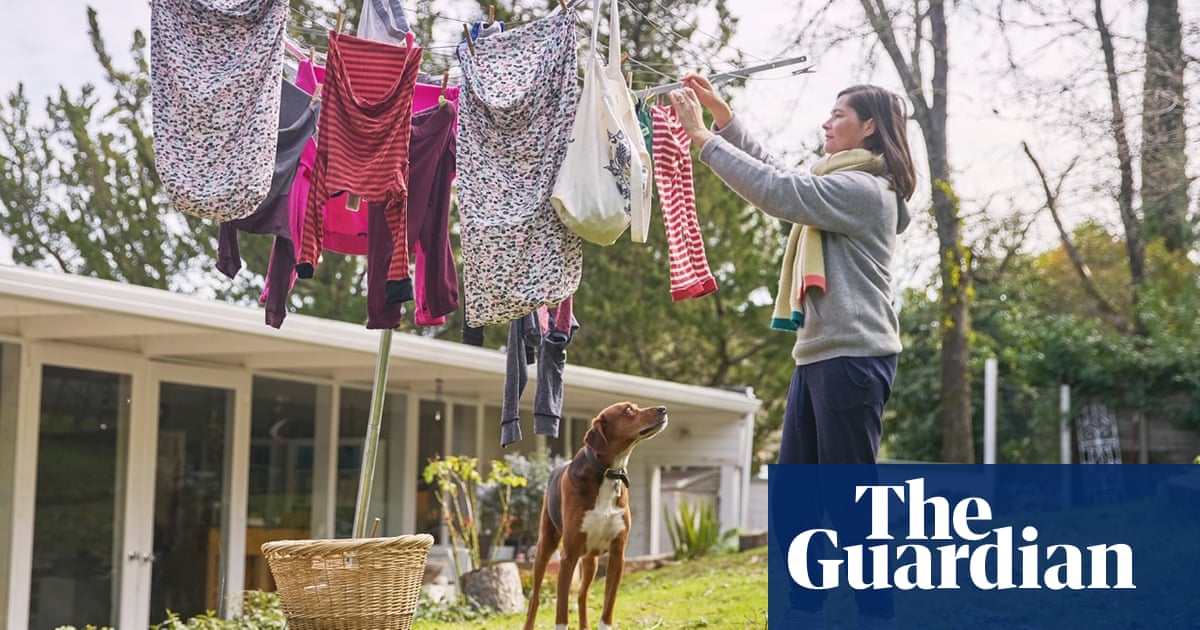
    I’m hardly a walking advert for fast (or indeed any kind of) fashion, but we have cut down on the quantity of new clothing we buy and get much of it secondhand. We wash our loads cold using a Cora Ball, and I try to encourage my kids not to use their clothes as napkins so that we can get another day’s wear out of them. We now dry our clothes outside on a line so they don’t get beaten up as much. (Despite our near perfect drying weather I feel like the only person in my northern California neighborhood that does this. In England most of our neighbors dried their clothes outside, doggedly leaving it out for a week in the hope it would actually dry between rainstorms.) I’m also about to invest $140 in a washing machine filter. But – will any of this help?

    Few researchers have studied microfibers longer than professor Richard Thompson of the University of Plymouth in the UK, who began exploring microfibers as part of his work on plastic pollution 18 years ago. Working with PhD Imogen Napper in 2016, their research found that as many as 700,000 fibers could be released in a single standard washing machine load. By far the biggest factor, he tells me, is the type of fiber: a poly-cotton blend releases about 137,000, polyester about 500,000 and acrylic more than 700,000.

    “The evidence so far is that we could achieve a lot through better design,” Thompson says. “It’s fundamental. Think about what happened with microbeads in cosmetics – some individual containers had 3m microbeads in them. Did nobody at the design stage ask where those would all go? With clothes, we need a better understanding of how to design them to last longer and shed less.”

    Some clothing companies are taking the issue seriously. Patagonia, which has commissioned research on microfiber pollution, said it was working to develop an industry standard for measuring fibers shed from clothing during washing. Elissa Foster, the head of product responsibility, told me they hope to help manufacturers make more informed decisions about the fabrics they choose.

    Meanwhile, a handful of Japanese manufacturers have already outfitted their washing machines with microfiber filters, though US and European firms seem slow off the mark. When I asked Whirlpool if it was planning to add filters to its machines, it said it met all legal requirements and has asked both clothing manufacturers and consumers to consider sustainable fabrics. Which seems to suggest they won’t be adding filters unless there’s a change in the law or unavoidable consumer pressure.

    After 20 years researching this issue, Thompson says the view of industry and academia is united; the focus should be on stopping the flow of microfiber pollution into the oceans. How, exactly, that happens to open to debate, he says. “The gaping hole is the specifics of what we do about it.” He points to some estimates that microplastic pollution could triple by 2025, and is adamant that rather than trying to hoover up plastic in the oceans, we should be focusing 95% of our efforts on turning off the tap. “Otherwise we are saying it’s acceptable to litter, and condemning our children’s children to another generation of littering. I don’t think that’s sufficient. The priority should be to reduce the flow of plastic to the ocean.”

    For now, I’m doing what I can at home. When I ask Thompson what he thinks about washing machine filters, he’s cautious because there has not been much research about their efficacy. Eventually he says I should just give it a try, but politely reminds me not to clean the filter by – yes – rinsing it down the sink.

    This content was originally published here.