Since 2007, the suicide rate for girls ages 10 to 14 has increased by about 13% per year. It’s gone up about 7% per year for boys in the same age group.
For girls ages 15 to 19, the rate has gone up about 8%; for boys, 3.5%.
The study — authored by Donna Ruch of the Nationwide Children’s Hospital in Columbus, Ohio; Arielle Sheftall of the Ohio State University College of Medicine; and Paige Schlagbaum of West Virginia University — did not analyze the cause of the trend.
“What we’re seeing is alarming,” Ruch told Time. “On top of the fact that females are thinking about suicide more and attempting suicide more, now they’re actually completing suicide.”
If all women, or even half, got together and battled this mess on the legal level, it would go down in flames. But so many women are weak, silly, and easily intimidated by mere words.
So what if they call you transphobic? Who cares? As a black woman in America, I’ve been called way worse and none of it bothers me because I am confident in who I am.
Kelsey Bolar’s report is outstanding–well written and right on target. We know those on the left are insane, but to allow them to get away with what they are doing is also insane.
Boys shouldn’t be allowed to compete as athletes on the girls team because they are not equal in strength, and common sense should prevail. Transgender athletes should have their own teams; that is the only fair way to do this.
Parents must speak out and remove their daughters from a team that wants to allow trans athletes to compete. Speak up!
Putting it plainly, they have no right to compete with natural born females because biology doesn’t lie. Not only is it unfair, it also opens the door to a great deal of corruption.
Imagine this: A transgender female wins all sorts of awards and sets records for female athletes. A college board is impressed and awards said student a scholarship with all the benefits to go with it.
That student proceeds to higher education and then suddenly has a change of mind. The athlete decides that, through counseling, feelings, yada yada yada, he is indeed male and won’t proceed to a complete gender change. What then?
The only way for normally oriented athletes to combat this issue is to pass legislation that forbids athletic ability to be used as a benefit toward higher education. No longer would sports be a crutch, and only intelligence shall be considered toward higher ed. After all, it is fair.
No child has the right to upset an entire community’s equilibrium in the school system. The parents of transgender athletes are being extremely selfish to think that their kids are entitled to upset a local, regional, or national competition.
The parents of these transgender kids are at fault, and so are the officials of those sports. There is one fair solution: Transgender athletes must compete with their equals–other transgender athletes. If too few exist in one school, the schools must bring enough kids together to make a reasonable competition.
It is time for transgender individuals to take full responsibility for their choices and shoulder the tough realities of those choices. Destroying the status quo of school activities is the last result their choices should entail.
These people need to help each other in their own organizations, not usurp the places of rightful competitors in the schools, as if they have a right to upset everyone else’s lives just for their sexual conveniences.
Watercolor depicting the relationship between trees, fungi and bacteria globally. Credit: Sora Hasler
In and around the tangled roots of the forest floor, fungi and bacteria grow with trees, exchanging nutrients for carbon in a vast, global marketplace. A new effort to map the most abundant of these symbiotic relationships—involving more than 1.1 million forest sites and 28,000 tree species—has revealed factors that determine where different types of symbionts will flourish. The work could help scientists understand how symbiotic partnerships structure the world’s forests and how they could be affected by a warming climate.
Stanford University researchers worked alongside a team of over 200 scientists to generate these maps, published May 16 in Nature. From the work, they revealed a new biological rule, which the team named Read’s Rule after pioneer in symbiosis research Sir David Read.
In one example of how they could apply this research, the group used their map to predict how symbioses might change by 2070 if carbon emissions continue unabated. This scenario resulted in a 10 percent reduction in the biomass of tree species that associate with a type of fungi found primarily in cooler regions. The researchers cautioned that such a loss could lead to more carbon in the atmosphere because these fungi tend to increase the amount of carbon stored in soil.
“There’s only so many different symbiotic types and we’re showing that they obey clear rules,” said Brian Steidinger, a postdoctoral researcher at Stanford and lead author of the paper. “Our models predict massive changes to the symbiotic state of the world’s forests—changes that could affect the kind of climate your grandchildren are going to live in.”
One of three maps showing the distribution of trees likely to associate with the three major types of symbiotic bacteria or fungi. Credit: Brian Steidinger
Three symbioses
Hidden to most observers, these inter-kingdom collaborations between microbes and trees are highly diverse. The researchers focused on mapping three of the most common types of symbioses: arbuscular mycorrhizal fungi, ectomycorrhizal fungi and nitrogen-fixing bacteria. Each of these types encompasses thousands of species of fungi or bacteria that form unique partnerships with different tree species.
Thirty years ago, Read drew maps by hand of where he thought different symbiotic fungi might reside, based on the nutrients they provide. Ectomycorrhizal fungi feed trees nitrogen directly from organic matter—like decaying leaves—so, he proposed, they would be more successful in cooler places where decomposition is slow and leaf litter is abundant. In contrast, he thought arbuscular mycorrhizal fungi would dominate in the tropics where tree growth is limited by soil phosphorous. Research by others has added that nitrogen-fixing bacteria seem to grow poorly in cool temperatures.
Testing Read’s ideas had to wait, however, because proof required gathering data from large numbers of trees in diverse parts of the globe. That information became available with the Global Forest Biodiversity Initiative (GFBI), which surveyed forests, woodlands and savannas from every continent (except Antarctica) and ecosystem on Earth.
The team fed the location of 31 million trees from that database along with information about what symbiotic fungi or bacteria most often associates with those species into a learning algorithm that determined how different variables such as climate, soil chemistry, vegetation and topography seem to influence the prevalence of each symbiosis. From this, they found that nitrogen-fixing bacteria are probably limited by temperature and soil acidity, whereas the two types of fungal symbioses are heavily influenced by variables that affect decomposition rates—the rate at which organic matter breaks down in the environment—such as temperature and moisture.
One of three maps showing the distribution of trees likely to associate with the three major types of symbiotic bacteria or fungi. Credit: Brian Steidinger
“These are incredibly strong global patterns, as striking as other fundamental global biodiversity patterns out there,” said Kabir Peay, assistant professor of biology in the School of Humanities and Sciences and senior author of the study. “But before this hard data, knowledge of these patterns was limited to experts in mycorrhizal or nitrogen-fixer ecology, even though it is important to a wide range of ecologists, evolutionary biologists and earth scientists.”
Although the research supported Read’s hypothesis—finding arbuscular mycorrhizal fungi in warmer forests and ectomycorrhizal fungi in colder forests—the transitions across biomes from one symbiotic type to another were much more abrupt than expected, based on the gradual changes in variables that affect decomposition. This supports another hypothesis, the researchers thought: that ectomycorrhizal fungi change their local environment to further reduce decomposition rates.
This feedback loop may help explain why the researchers saw the 10 percent reduction in ectomycorrhizal fungi when they simulated what would happen if carbon emissions continued unabated to 2070. Warming temperatures could force ectomycorrhizal fungi over a climatic tipping point, beyond the range of environments they can alter to their liking.
Mapping collaboration
The data behind this map represents real trees from more than 70 countries and collaboration, led by Jingjing Liang of Purdue University and Tom Crowther of ETH Zürich, between hundreds of researchers who speak different languages, study different ecosystems and confront different challenges.
“There are more than 1.1 million forest plots in the dataset and every one of those was measured by a person on the ground. In many cases, as part of these measurements, they essentially gave the tree a hug,” said Steidinger. “So much effort—hikes, sweat, ticks, long days—is in that map.”
The maps from this study will be made freely available, in hopes of helping other scientists include tree symbionts in their work. In the future, the researchers intend to expand their work beyond forests and to continue trying to understand how climate change affects ecosystems.
I grew up in upstate New York. The beautiful rolling hills, the Great Lakes. The lovely farm country. I would never go back if you paid me millions of dollars. Never. But for the better part of a decade I have resided well south of the Mason-Dixon line. In fact, when I spoke to a relative a short time ago from New York State, they were shocked I didn’t sound like a Yankee, or even speak like one. “You’ve gone native,” they told me. Which is well and good in my book. These Solar Backup Generators Deliver 4 Times More Power Than Other Models! New York is about as liberal/progressive of a state as you can get. It’s a state that does not honor life, the sanctity of marriage or gun rights. It taxes its residents to death, does not value homeschoolers and has no more respect for Almighty God than does Richard Dawkins. Since I have left, the New York government has only worsened. For many of us who homestead and farm on a small scale, we also raise families, own firearms, go to church and desire a quiet life lived in peace. Sadly judging by the moral and political climate in some places in North America, we often have to leave the place we call home in order to find these things. I believe there are still good places out there to put down roots and farm and raise your children, while other places in the USA have gone quite authoritarian. Here are three areas in the United States for those seeking fair land prices, less government involvement, a religious friendly atmosphere, low taxes, and a place friendly toward gun owners. Preparedness Hacks: Once a nuke is heading your way, you might think that there isn’t much left to do, but you would be wrong! Because we will show you America’s natural nuclear bunkers that are also EMP proof. When the sirens start wailing, all you need to do is pick the closest one to your home, where you can take cover before it hits. South The land of cotton has changed much in the past half century, but the area is well-known as a bastion of conservative and Christian values in the USA. The land is good for agriculture and there are many homesteaders and small-time farmers who have flocked to this region over the past two to three decades from all over the USA and Canada. My pick for the southeast: Tennessee. The state’s motto of “Agriculture and Commerce” speaks of the beautiful and lush farmlands — and low taxes. There is no state income tax in Tennessee. Gun freedoms are very good, and in fact after a recent shooting, Tennessee’s lieutenant governor urged people to go and get their handgun carry permits. No such thing as an “assault weapons ban” or magazine restrictions exist in the Volunteer State. Land prices are expensive toward the Blue Ridge Mountains, but Middle and West Tennessee land prices are affordable. Homeschooling conditions are great for families. Here are 23 survival uses for honey that you didn’t knowabout. Southwest Texas. Don’t mess with the Lone Star State. A conservative government, coupled with excellent gun laws, makes Texas one of the top places to live for the small farmer or homesteader. While not as fertile as some states, ranching is big business in Texas. A farm on the Edwards Plateau will provide your family with water from the aquifer with the same name. In the more fertile east, row crop farming as well as vegetable growing does reasonably well. With the end of the recent drought, Texas received more rainwater this year than it had in seven years. Beware of buying land near the Mexican-US border and stay away from the more progressive cities like Austin or Dallas. Most Texans value liberty and independence, a great thing for the homesteader or farmer. New Survival Energy Product Makes Every Window A Powerful Solar Charger West Idaho and Wyoming. Both of these states tie for the best places to live out west. Excellent gun laws, conservative government, a fierce independent spirit, and excellent farm country make these Rocky Mountain states ideal for the homesteader/farmer. Rich soil is available, and land prices are cheap. If you want to be away from people, this is the perfect place for you. You want to hunt and fish? This is the ideal location for the sportsman, with teeming populations of deer, elk, pronghorn and even bison. Idaho is the more temperate state, whereas Wyoming is known for its brutally cold winters. Northeast New Hampshire. The last bastion of any freedom in the Northeast is the Granite State, but even this state is slipping slowly toward the liberalism that has transformed the Northeast. If you must live in the North, New Hampshire or perhaps the north woods of Maine are really the only two viable options I see Here’s just a glimpse of what you’ll find in The Lost Ways: You’ll discover the lost remedies used by our ancestors for centuries. And I’m not talking about rare and complicated insights that only a botanist knows. I’m talking about plants that grow in your backyard or around your house. Very common weeds. For example, I’m sure you’ve already seen this plant…
Federal Labor’s home battery storage support policies could help Australian families slash their annual electricity costs by up to 80%, a new report has found.
The analysis, from the Smart Energy Council, says the Labor Party’s “ambitious but achievable” target of 1 million home battery systems by 2025 – and the rebate and financing policies that underpin that target – could combine with existing solar rebates to deliver massive savings for households.
Bill Shorten’s Labor has promised, if elected in just over two weeks’ time, to provide a $2,000 rebate for 100,000 battery installations in households with a gross annual income of less than $180,000.
The party has also committed to providing low-cost financing through the Clean Energy Finance Corporation and has set a target of 1 million household battery storage systems by 2025.
As David Leitch said here at the time of their announcement, “these are excellent policies” which will not only catch the attention of power bill-obsessed voters, but could kick-start an industry that is “perhaps for the first time, ready to be kickstarted.”
Batteries have been poised to boom in Australia’s residential sector for some time now, with many expecting uptake to follow the trajectory of rooftop solar, which has now been installed by more than 2 million households – and counting.
But this has not happened, with battery prices remaining too high for mass uptake. And that’s a shame, says Smart Energy Council CEO John Grimes, because adding battery storage to rooftop solar would make sense for so many families.
The SEC uses the example of a suburban family with two adults and one pre-schooler, living in a free-standing house that uses 6,570 kWh of electricity a year, or an average of 18kWh per day, at a cost of $2,336 a year.
“If they install an average sized 5kW solar panel system and a 6kWh solar battery, their power bill could be reduced by 60-80 per cent to as little as $467 a year,” the report says.
The upfront discount of $2,000 on the cost of a solar battery system would also reduce the payback period to somewhere within the warranty period – usually 10 years – in all states and the ACT, removing another major barrier to uptake.
On top of these benefits, the report says home solar battery systems would also offer consumers energy independence; protection from black outs; reduced emissions; increased property values; and a head start on cheap and clean electric vehicle charging.
“(Our) analysis shows that Federal Labor’s commitment to reduce the cost of batteries by $2,000 means 100,000 families will be able to slash their power bills by up to 80 per cent. That is fantastic news,” Grimes said in comments on Wednesday.
“The Smart Energy Council strongly welcomes a national target of one million battery storage systems by 2025. With battery prices falling and electric vehicle battery manufacturing powering ahead, 1 million batteries by 2025 is ambitious but achievable.”
In its own comments on the SEC report, Labor described home battery subsidisation by governments as part of the “next big step” in helping families to reduce their energy bills.
“This is good for consumers – giving them more control over their power bills, as well as lowering power prices and improving reliability for all Australians by reducing demand on the electricity grid in peak times,” Labor energy spokesperson Mark Butler said on Wednesday.
“Scott Morrison and the Coalition don’t have a plan to support the uptake of household batteries – instead all they have are baseless scare campaigns and no plans to bring down power bills for Australian households and businesses.
“The Liberals and Nationals have pushed up power prices and pollution by undermining investment in renewable energy and backing power privatisations – and their chaos and division means industry can’t adequately plan and invest in the future.
“Only Labor will deliver real action on climate change and lower pollution, lower power prices and build a stronger economy.”
Sophie is editor of One Step Off The Grid and deputy editor of its sister site, Renew Economy. Sophie has been writing about clean energy for more than a decade.
In a factory in Nevada, a large 3D printer prints the pieces of new prefab tiny homes that can work fully off the grid. When complete, the houses will run on solar power, including heating and cooling. An optional system generates water from moisture in the outdoor air so it isn’t necessary to connect to a city water supply. In the bathroom, the home is among the first in the U.S. to use a new shower that cleans and recycles water.
[Photos: courtesy PassivDom]
The house, from a startup called PassivDom, is designed to use as few resources as possible. The company didn’t initially aim to create an off-the-grid home, but realized it was possible as it experimented with materials to improve energy efficiency, landing on a polymer composite. “It was strong and efficient, and it helped us build houses with 20 times less energy consumption than usual buildings,” says Max Gerbut, CEO and founder of the company. “A side effect of this technology was that we’ve discovered that we can generate enough energy using solar panels on the roof to heat the house.” Typically, he says, houses with solar panels can’t cover the energy needed for electric heat, especially in cold climates.
[Photo: courtesy PassivDom]
The shower was the next problem to solve, since heating water for showering uses a lot of energy. The home uses a shower from Sweden-based Orbital Systems with technology that recycles water in a closed loop. As someone showers, the water flowing into the drain is monitored with sensors. If the water is deemed worth purifying, it flows through filters that can remove impurities as small as bacteria, and further cleaned with an ultraviolet light before it’s recirculated. The water is continuously heated.
“We save water and energy in real time,” says Orbital Systems CEO and founder Mehrdad Mahdjoubi, who was inspired to design the shower after collaborating on a NASA project to design a habitat for Mars. The system saves as much as 90% of the water used in a typical shower, and 80% of the energy. Unlike many other showerheads designed to save water, it doesn’t have to restrict water pressure. Because it can also carefully maintain a precise water temperature, he says that consumers prefer it to regular showers.
[Image: courtesy PassivDom]
Orbital was interested in working with PassivDom because the company was rethinking the entire house, not just adding a handful of disparate eco-friendly features. Mahdjoubi says that Orbital may eventually expand its technology so that it can be used in a bigger closed-loop system in future houses, potentially sending filtered shower water to the laundry, for example, and laundry water to a toilet so people don’t have to flush with what is essentially drinking water.
The new PassivDom homes that are currently in assembly at the Nevada factory will go to early beta customers in Arizona this year. The final version of the homes will hit the market in 2020.
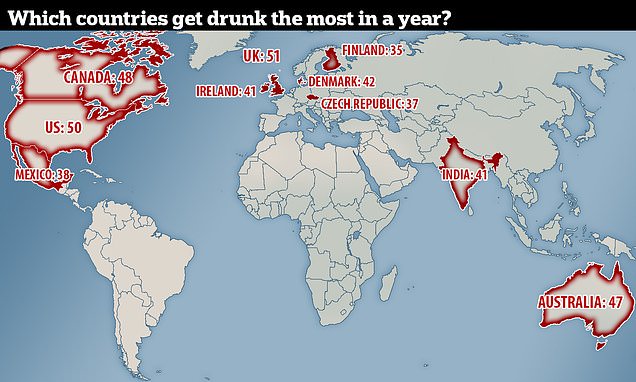
Teenage drinking has declined more dramatically in the UK than many other European countries, a World Health Organisation (WHO) report found last year.
A large reduction in weekly alcohol use among adolescents was observed between 2002 and 2014 in the majority of the 36 countries featured in the report.
The largest decline in prevalence for both boys and girls was in England, where spirit and beer consumption has also fallen significantly.
The WHO report, which examines alcohol-related behaviour among 15-year-olds in Europe, was led by researchers at the University of St Andrews.
More than half (50.3 per cent) of teenage boys in England drank weekly in 2002, compared with just 10 per cent in 2014, the research found.
Wales had the second largest drop in prevalence for boys, from 47.6 per cent to 11.8 per cent across the same period.
More than two in five (43.1 per cent) girls in England drank alcohol weekly in 2002, falling to fewer than one in 10 (8.9 per cent) in 2014.
This was the largest decline for girls across the 36 countries, followed by Scotland which saw prevalence drop from 41.1 per cent to 10.7 per cent.
Dr Jo Inchley, lead editor of the report, said: ‘Overall reductions in harmful drinking have been greatest in countries that traditionally have had higher prevalence, such as Great Britain and the Nordic region.
‘This makes it clear that change is possible; however, more should be done to ensure that adolescents are effectively protected from the harms caused by alcohol.’
The largest decreases in beer consumption were observed among 15-year-old boys in Wales, Denmark and England.
Almost two in five (39.7 per cent) boys in England drank beer weekly in 2002, compared with just 7.6 per cent in 2014.
The largest decline in spirit drinking was among teenagers in England, Scotland and Denmark, the report said.
Almost a third (32.8 per cent) of boys and girls in England drank spirits weekly in 2002, dropping to 4.1 per cent by 2014.
Meanwhile, only 28.1 per cent of teenagers said they had been drunk two or more times in their life in 2014.
This compares with more than half (54.9 per cent) 12 years previously.
Last month, the Ecuadorian indigenous community of Waorani won a landmark lawsuit against three government bodies for putting their territory up for sale in an international oil auction.
The ruling indicates that the government took advantage of the Waorani people and used legal loopholes to sell land that belonged to the tribe. The unprecedented ruling immediately suspends any possibility of selling the community’s land for oil exploration. This case gives other communities in Ecuador’s southern Amazon rainforest hope that they can also prevent their land from being sold to oil companies.
Nemonte Nenquimo, one of the Waorani plaintiffs and representative of the Coordinating Council of the Waorani Nationality Ecuador Pastaza, said that the government has not respected human life as much as they have respected money and oil.
“The government tried to sell our lands to the oil companies without our permission. Our rainforest is our life. We decide what happens in our lands. We will never sell our rainforest to the oil companies. Today, the courts recognized that the Waorani people, and all indigenous peoples have rights over our territories that must be respected. The government’s interests in oil is not more valuable than our rights, our forests, our lives,” she said.
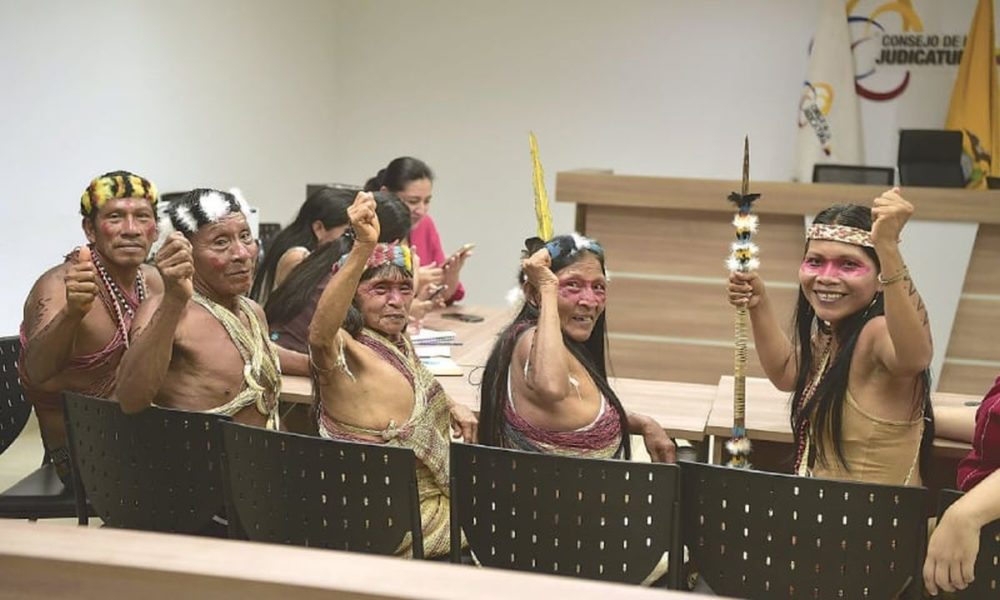
Nemonte Nenquimo and other representatives of the Waorani people marched in Puyo, Ecuador, on the day they won a lawsuit against the government, over plans to lease oil rights on their land / Photo Credit: Rodrigo Buendia / AFP / Getty
Oswando Nenquimo, a spokesperson for the Waorani of Pastaza, added that, “Today we have protected our forest from oil drilling; we have protected our water from contamination; we have protected our children from sickness. This is a legal precedent for indigenous rights. But the fight is far from over. The government will appeal because they still want the oil beneath our land. Indigenous Nations across the Amazon and the world must band together to protect our homes.”
The ruling stems from a March lawsuit, in which the Waorani community sued the Ministry of Energy and Non-Renewable Natural Resources, the Secretary of Hydrocarbons and the Ministry of Environment, for using what was described as a “faulty consultation process” to steal the community’s land and place it on auction. These faulty consultations reportedly happened in 2012.
International law states that indigenous communities must be consulted by the local governments before any natural resources are extracted from their land, but Ecuador broke these laws and attempted to strong-arm their way into a deal.
In the trial, it took just three days for judges to come to their conclusion. In the ruling, the judges pointed to a number of different ways that the consultation process violated international law. One of the most obvious examples of these violations was the fact that there were no clear translations into the local Waorani language.
“This is undoubtedly a historic day for the advancement of rights and constitutional development in Ecuador. It is the demonstration that state development plans cannot be executed over the life and integrity of the people,” said Lina Maria Espinosa, the community’s lawyer with the local non-government organization Amazon Frontlines.
Waorani women celebrating their victory in court against corrupt government agencies and oil companies. This ruling could set an important precedent for other tribes in the region / Photo Credit: Dolores Ochoa / AP
Mitch Anderson, executive director of Amazon Frontlines, said that this ruling could be used to help other tribes protect their land.
“This is a major precedent for indigenous rights across the Amazon. Today, the court has recognized a pattern of deceit, bad-faith and manipulative tactics in the Ecuadorian Government’s attempt to earmark the Waorani people’s lands for oil extraction. This is a huge step forward in the battle to ensure indigenous people’s rights over their lands are respected. Guaranteeing indigenous peoples’ rights to decide over their future and to say ‘No’ to destructive extractive projects is key to protecting the Amazon rainforest and halting climate change,” Anderson said.
This is actually the second time an indigenous community has been able to win a major lawsuit against the Ecuadorian government in recent years. Just last year the indigenous Kofan community in the northern Amazon won a similar lawsuit against the same three government agencies named in the recent case.
Alabama legislators passed the bill 25-6 after denying an amendment that would have made exemptions for cases of rape and incest.
Alabama House Rep. Terri Collins, who sponsored the bill, told NBC News on Tuesday evening that legislators wanted to keep the bill’s text as clean as possible, specifically to address the language in Roe v. Wade, and revisit the question on whether a baby in the womb is considered a person.
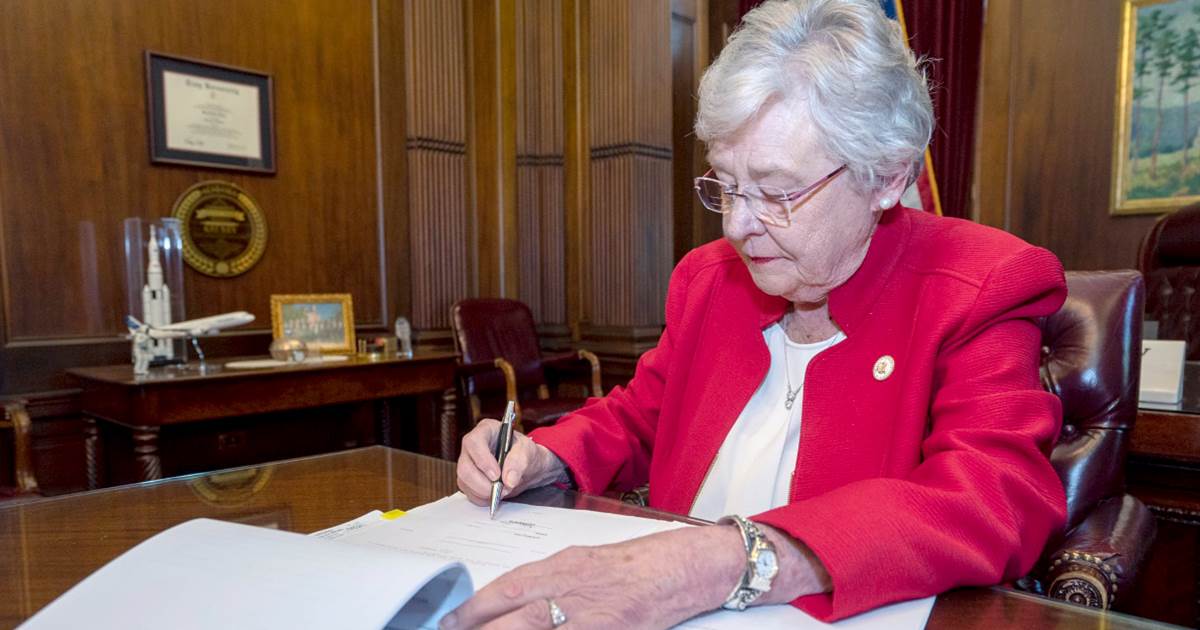
Today, I signed into law the Alabama Human Life Protection Act. To the bill’s many supporters, this legislation stands as a powerful testament to Alabamians’ deeply held belief that every life is precious & that every life is a sacred gift from God. https://t.co/DwKJyAjSs8pic.twitter.com/PIUQip6nmw
— Governor Kay Ivey (@GovernorKayIvey)
The state’s Republican governor said in a statement Wednesday that she personally disagrees with the 1973 Roe v. Wade decision and that the legislation was a testament to “Alabamians’ deeply held belief that every life is precious and that every life is a sacred gift from God.”
“No matter one’s personal view on abortion, we can all recognize that, at least for the short term, this bill may similarly be unenforceable,” Ivey said. “As citizens of this great country, we must always respect the authority of the U.S. Supreme Court even when we disagree with their decisions.”
The American Civil Liberties Union’s Alabama chapter promised in a tweet Tuesday night to file a lawsuit against the state in order to “stop this unconstitutional ban and protect every woman’s right to make her own choice about her health care, her body, and her future.”
With the new conservative majority on the Supreme Court, lawmakers across the country are pushing for tougher abortion laws to challenge the high court’s 1973 Roe v. Wade ruling.
“Heartbeat abortion” bans have also been signed into law in Mississippi, Kentucky and Ohio this year. Lawmakers in Tennessee, Missouri, South Carolina, Florida, Texas, Louisiana and West Virginia are considering similar proposals.
In a statement on the Alabama bill, the White House said that President Donald Trump is “defending the dignity of life.”
“Unlike radical Democrats who have cheered legislation allowing a baby to be ripped from the mother’s womb moments from birth, President Trump is protecting our most innocent and vulnerable, defending the dignity of life, and called on Congress to prohibit late-term abortions,” the statement said.
Doha Madani
Doha Madani is a breaking news reporter for NBC News.
FORMER Corrie star Catherine Tyldesley has hit out at the 12-hour days she spent filming the show, saying they took over her life.
The 35-year-old actress told how the gruelling “7am to 7pm” stretches on set kept her from her family – calling it time she would “never get back.”
Splash News
The actress said: It was ‘7am to 7pm every day at Corrie’[/caption]
And in perhaps the biggest blow, Catherine – who played Eva Price – insisted she doesn’t even watch the show these days.
The actress, who was on the soap between 2011 and 2018, added she was spending more time with four-year-old son Archie after quitting last year, the Star reports.
They quote her as saying: “It was 7am to 7pm every day at Corrie. Those are moments in your life you never get back.
“I love spending more time with my little boy now. I’ve not managed to watch it. I’m too busy.”
Rex Features
Catherine with husband Tom and son Alfie in 2015[/caption]
She quit the soap to try different roles and spend more time with her family
Most read in TV & Showbiz
REALITY CHECK
Jeremy Kyle ‘utterly devastated’ that show axed after guest’s ‘suicide’
‘HE’S A PAEDO!’
Dead Jeremy Kyle guest Steve Dymond ‘was a PAEDOPHILE’, says estranged wife
‘shaken & upset’
Traumatised Jeremy Kyle staff ‘hung out to dry’ & left scrambling for jobs
Danniella bumped
Danniella Westbrook bootted off Loose Women after Jeremy Kyle suspension
ALLOT TO ADMIRE
Inside Emmerdale’s Zoe Henry & Jeff Hordley’s home with huge allotment
GENIEUS OR SMURF?
How Aladdin is Will Smith’s last attempt to save his flagging career
‘find him a job’
Jeremy Kyle fans fear for security guard Big Steve after show is axed
CHRIS IN 7TH EVANS
Virgin Radio host Chris Evans’ Breakfast Show tops 1m listeners a week
KYLE SCRAPPED
Jeremy Kyle Show AXED forever by ITV after 14 years over guest’s death
SWEARY DYER
Baftas in chaos as foul-mouthed Danny Dyer calls David Cameron a ‘t**t’ again
Catherine announced she was having her first child with then-boyfriend Tom Pitfield in August 2014, with the pair getting engaged the following month.
Son Alfie was born in March 2015, with the couple marrying surrounded by her Coronation Street co-stars the following year.
Seven stars have quit Corrie in the past three months with Lucy Fallon the latest to announce she would be leaving the soap.